Tag Archives: PassCypher

Dropbox Security Breach 2024: Phishing, Exploited Vulnerabilities

A realistic depiction of the 2024 Dropbox security breach, featuring a cracked Dropbox logo with compromised data such as emails, user credentials, and security tokens spilling out. The background includes red flashing alerts and warning symbols, highlighting the seriousness of the breach.

Delving into the 2░0░2░4░Dropbox Security Breach: A Chronicle of Vulnerabilities, Exfiltrated Data

In 2024, a shadow fell over cloud storage security. The Dropbox breach exposed a shocking vulnerability, leaving user data at risk. This deep dive explores the attack, the data compromised, and why encryption remains your ultimate defense. Dive in and learn how to fortify your digital assets.

Dropbox Security Breach. Stay updated with our latest insights.

Europol

Dropbox Security Breach: Password Managers and Encryption as Defense By Jacques Gascuel, this article examines the crucial role password managers and encryption play in mitigating the risks of cyberattacks like the Dropbox Security Breach

Phishing Tactics: The Bait and Switch in the Aftermath of the Dropbox Security Breach

The 2024 Dropbox Security Breach stands as a stark reminder of the ever-evolving cyberthreat landscape and the urgent need for robust security measures. In this comprehensive article, we’ll unravel the intricate details of this breach, examining the tactics employed by attackers, the vast amount of sensitive data compromised, and the far-reaching consequences for affected users. We’ll also delve into the underlying security vulnerabilities exploited and discuss essential measures to prevent similar incidents in the future. Finally, we’ll explore the crucial role of advanced encryption solutions, such as DataShielder and PassCypher, in safeguarding sensitive data stored in the cloud. Through this in-depth analysis, you’ll gain a clear understanding of the Dropbox breach, its impact, and the proactive steps you can take to enhance your own cybersecurity posture.

Crafting Convincing Emails

Attackers meticulously crafted phishing emails, often disguised as notifications or security alerts, to deceive employees.

  • Crafting Convincing Emails: Attackers meticulously crafted phishing emails, often disguised as notifications or security alerts, to deceive employees.
  • Exploiting Human Trust: By leveraging the trust employees had in Dropbox, attackers successfully persuaded them to divulge sensitive information.
  • MFA Circumvention: The compromise of MFA codes highlights the need for additional layers of security beyond passwords.
Diagram illustrating the stages of the 2024 Dropbox Security Breach attack flow.
This diagram depicts the stages of the 2024 Dropbox Security Breach, from phishing emails to data exfiltration and its aftermath.

Dropbox Security Breach Attack Flow: Unraveling the Steps of the Cyberattack

  • Phishing Emails: Attackers send out phishing emails to Dropbox employees, mimicking legitimate communications.
  • Credential Harvesting: Employees fall victim to phishing tactics and reveal their credentials, including MFA codes.
  • Unauthorized Access: Attackers gain unauthorized access to Dropbox Sign infrastructure using compromised credentials.
  • Exploiting Automated Tools: Attackers exploit automated system configuration tools to manipulate accounts and escalate privileges.
  • Data Exfiltration: Attackers extract a vast amount of sensitive data, including emails, usernames, phone numbers, hashed passwords, API keys, OAuth tokens, and MFA data.

Exploited Vulnerabilities: A Technical Analysis

The attackers behind the Dropbox breach exploited a combination of vulnerabilities to gain unauthorized access and exfiltrate sensitive data.

Specific CVEs Exploited

  • CVE-2019-12171: This vulnerability allowed attackers to store credentials in cleartext in memory, posing a significant security risk.
  • CVE-2022-4768: This critical vulnerability in Dropbox Merou affected the add_public_key function, leading to injection attacks.
  • Automated System Configuration Tools: The exploitation of these tools highlights the need for robust access controls and security measures.

Exfiltrated Data: The Scope of the Breach

The sheer volume of data compromised in the Dropbox breach is staggering, raising serious concerns about the potential impact on affected users.

Types of Data Exposed

  • Exposed Emails: Attackers now possess email addresses, potentially enabling them to launch targeted phishing attacks or engage in email scams.
  • Vulnerable Usernames: Usernames, often coupled with leaked passwords or other personal information, could be used to gain unauthorized access to other online accounts.
  • Misused Phone Numbers: Exposed phone numbers could be used for unwanted calls, text messages, or even attempts to reset passwords or gain access to other accounts.
  • Hashed Passwords: A Target for Cracking: While not directly readable, hashed passwords could be subjected to brute-force attacks or other cracking techniques to recover the original passwords.
  • Compromised Authentication Tokens: API keys and OAuth tokens, used for app authentication, could enable attackers to impersonate users and access their Dropbox accounts or other connected services.

The Dropbox Breach Fallout: Unraveling the Impact and Consequences

The ramifications of the Dropbox breach extend far beyond the compromised data itself. The incident has had a profound impact on both affected users and Dropbox as a company.

Consequences of the Breach

  • User Privacy Concerns: The exposure of personal information has left users feeling vulnerable and at risk of identity theft, phishing attacks, and other cyber threats.
  • Reputational Damage: Dropbox’s reputation as a secure cloud storage provider has taken a significant hit, potentially affecting user trust and future business prospects.
  • Financial Costs: Dropbox has incurred substantial expenses in investigating the breach, notifying affected users, and implementing additional security measures.

Lessons Learned: Preventing Future Breaches and Strengthening Security

In the aftermath of the Dropbox breach, it’s crucial to identify key takeaways and implement preventive measures to safeguard against future incidents.

Essential Security Practices

  • Secure Service Accounts: Implement strong passwords for service accounts and enforce strict access controls, adhering to the principle of least privilege. Consider using Privileged Access Management (PAM) solutions to manage and monitor service account activity.
  • Regular Penetration Testing: Conduct regular penetration tests (pen tests) to identify and remediate vulnerabilities in systems and networks before they can be exploited by attackers. Engage qualified security professionals to simulate real-world attack scenarios.
  • Continuous Monitoring and Incident Response: Establish a robust incident response plan to effectively address security breaches. This plan should include procedures for identifying, containing, and remediating incidents.
  • Patch Management: Prioritize timely patching of software and systems with the latest security updates. Implement a comprehensive patch management strategy to ensure the prompt deployment of critical security updates.

Beyond the Breach: Enhancing Proactive Defense with Advanced Encryption

While robust security practices are essential for preventing breaches, additional layers of protection can further safeguard data. Advanced encryption solutions play a pivotal role in this regard. Here, we’ll delve into two such solutions – DataShielder HSM PGP and NFC HSM, and PassCypher HSM PGP and NFC HSM – and explore how they address the vulnerabilities exploited in the 2024 Dropbox breach.

DataShielder HSM PGP and NFC HSM

DataShielder HSM PGP and NFC HSM provide client-side encryption for data stored in the cloud. By encrypting data at rest and in transit (as depicted in the following diagram [Insert DataShielder Diagram Here]), DataShielder ensures that even if an attacker gains access to cloud storage, the data remains inaccessible. This robust protection is achieved through:

  • Client-Side Encryption: Data is encrypted on the user’s device before being uploaded to the cloud.
  • Hardware Security Module (HSM) or NFC HSM: Encryption keys are stored within a secure HSM or NFC HSM, offering physical separation and robust protection against unauthorized access.
  • Offsite Key Management: Encryption keys are never stored on the cloud or user devices, further minimizing the risk of compromise (as illustrated in the diagram).
  • Post-Quantum Encryption: Additionally, DataShielder incorporates post-quantum encryption algorithms to safeguard against future advancements in code-breaking techniques.

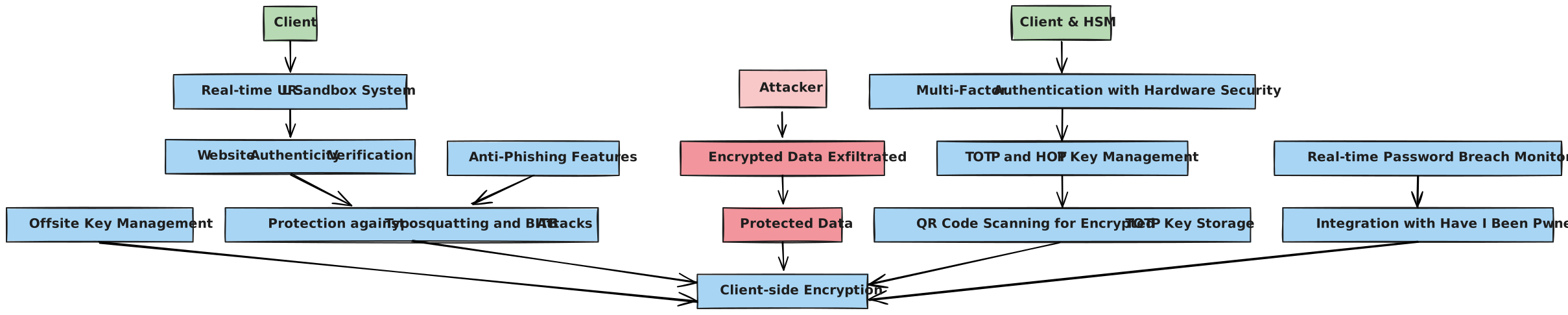
Diagram showing DataShielder HSM PGP and DataShielder NFC HSM encryption process for Dropbox security breach protection.

DataShielder HSM PGP and NFC HSM: Ensuring Dropbox security breach protection with AES-256 encryption and offsite key management

PassCypher HSM PGP and NFC HSM

PassCypher HSM PGP and NFC HSM go beyond traditional password management, offering a comprehensive security suite that directly addresses the vulnerabilities exploited in the 2024 Dropbox breach. Here’s how PassCypher strengthens your defenses:

  • Multi-Factor Authentication (MFA) with Hardware Security: PassCypher NFC HSM offers additional protection for logins by securely managing Time-based One-Time Passwords (TOTP) and HOTP keys. Users can scan a QR code to automatically store the encrypted TOTP secret key within the NFC HSM, adding a layer of hardware-based authentication beyond passwords.
  • Real-Time Password Breach Monitoring: PassCypher HSM PGP integrates with Have I Been Pwned (HIBP), a constantly updated database of compromised passwords. This real-time monitoring allows users to be instantly notified if their passwords appear in any known breaches.
  • Phishing Prevention: In addition to the URL sandbox system and protection against typosquatting and BITB attacks mentioned earlier, PassCypher’s comprehensive approach empowers users to identify and avoid malicious attempts (as detailed in the diagram).
  • Client-Side Encryption: PassCypher utilizes client-side encryption to ensure data remains protected even if attackers manage to exfiltrate it (as shown in the diagram).


Diagram illustrating PassCypher HSM PGP and PassCypher NFC HSM, focusing on Dropbox security breach protection

By combining these features, PassCypher HSM PGP and NFC HSM provide a robust defense against the social engineering tactics and credential theft exploited in the Dropbox breach.

Statistics of the 2024 Dropbox Security Breach

While verifying the exact number of users affected by data breaches can be challenging, security experts estimate that the Dropbox breach could have impacted a substantial number of users. Some reports suggest that the breach may have affected up to 26 billion records, making it one of the largest data breaches in history. However, it is crucial to note that this figure is unconfirmed and may not reflect the actual number of individuals impacted.

Key Takeaways for Enhanced Cybersecurity

  • Uncertain Numbers: The exact number of affected users remains unclear, highlighting the challenges in verifying breach statistics.
  • Potential for Massive Impact: The estimated 26 billion records underscore the potential scale of the breach and its far-reaching consequences.
  • Importance of Reliable Sources: Relying on reputable sources for breach information is crucial to ensure accurate and up-to-date data.

Conclusion: A Call for Vigilance and Enhanced Security in the Wake of the Dropbox Security Breach

The 2024 Dropbox security breach serves as a stark reminder of the ever-evolving cyberthreat landscape and the urgent need for vigilant security practices. Organizations must prioritize robust security measures, including strong access controls, regular vulnerability assessments, and timely patching. Additionally, advanced encryption solutions, such as DataShielder HSM PGP and NFC HSM and PassCypher HSM PGP and NFC HSM, can provide an extra layer of protection for sensitive data.

Key Takeaways for Enhanced Cybersecurity

  • Collective Responsibility: Cybersecurity is a shared responsibility, requiring collaboration between organizations and individuals.
  • Continuous Learning and Awareness: Staying informed about emerging threats and adopting best practices are essential for effective cybersecurity.
  • Protecting Sensitive Data: Prioritizing data protection through robust security measures and advanced encryption is paramount.

The 2024 Dropbox security breach serves as a cautionary tale, highlighting the vulnerabilities that can exist even in large, established organizations. By learning from this incident and implementing the recommendations discussed, we can collectively strengthen our cybersecurity posture and protect our valuable data from the ever-evolving threat landscape.

Terrapin attack: How to Protect Yourself from this New Threat to SSH Security

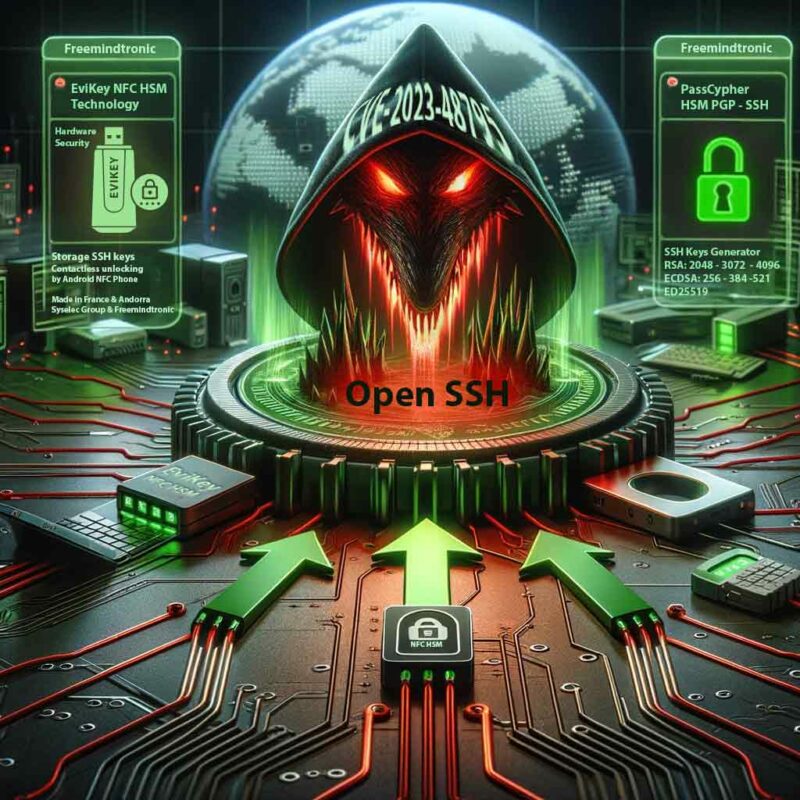
SSH handshake with Terrapin attack and EviKey NFC HSM

Terrapin Attack: How to Protect Your SSH Security

The Terrapin attack is a serious vulnerability in the SSH protocol that can be used to downgrade the security of your SSH connections. This can allow attackers to gain access to your sensitive data. In this article, we will explain what the Terrapin attack is, how it works, and how you can protect yourself from it.

Terrapin attack: CVE-2023-48795 SSH security vulnerability articles for in-depth threat reviews and solutions. Stay informed by clicking on our scrolling topics.

Shield Your SSH Security from the Sneaky Terrapin Attack written by Jacques Gascuel, inventor of sensitive data safety and security systems. Are you safeguarding your SSH connections? Stay vigilant against the Terrapin attack, a stealthy vulnerability that can compromise your SSH security and expose your sensitive data.

Protect Yourself from the Terrapin Attack: Shield Your SSH Security with Proven Strategies

SSH is a widely used protocol for secure communication over the internet. It allows you to remotely access and control servers, transfer files, and encrypt data. However, SSH is not immune to attacks, and a recent vulnerability OpenSSH before 9.6 (CVE-2023-48795) has exposed a serious flaw in the protocol itself. This flaw, dubbed the Terrapin attack, can downgrade the security of SSH connections by truncating cryptographic information. In this article, we will explain what the Terrapin attack is, how it works, and how you can protect yourself from it.

Why you should care about the Terrapin attack

The Terrapin attack is not just a theoretical threat. It is a real and dangerous attack that can compromise the security of your SSH connections and expose your sensitive data. The consequences of a successful Terrapin attack can be severe, such as:

  • Data breaches: The attacker can access your confidential information, such as passwords, keys, files, or commands, and use them for malicious purposes.
  • Financial losses: The attacker can cause damage to your systems, services, or assets, and demand ransom or extort money from you.
  • Reputation damage: The attacker can leak your data to the public or to your competitors, and harm your credibility or trustworthiness.

Therefore, it is important to be aware of the Terrapin attack and take the necessary measures to prevent it. In the following sections, we will show you how the Terrapin attack works, how to protect yourself from it, and how to use PassCypher HSM PGP and EviKey NFC HSM to enhance the security of your SSH keys.

A prefix truncation attack on the SSH protocol

The Terrapin attack is a prefix truncation attack that targets the SSH protocol. It exploits a deficiency in the protocol specification, namely not resetting sequence numbers and not authenticating certain parts of the handshake transcript. By carefully adjusting the sequence numbers during the handshake, an attacker can remove an arbitrary amount of messages sent by the client or server at the beginning of the secure channel without the client or server noticing it.

This manipulation allows the attacker to perform several malicious actions, such as:

  • Downgrade the connection’s security by forcing it to use less secure client authentication algorithms
  • Bypass the keystroke timing obfuscation feature in OpenSSH, which may allow the attacker to brute-force SSH passwords by inspecting the network packets
  • Exploit vulnerabilities in SSH implementations, such as AsyncSSH, which may allow the attacker to sign a victim’s client into another account without the victim noticing

To pull off a Terrapin attack, the attacker must already be able to intercept and modify the data sent from the client or server to the remote peer. This makes the attack more feasible to be performed on the local network.

Unveiling the SSH Handshake: Exposing the Terrapin Attack’s Weakness

The SSH Handshake Process

The SSH handshake is a crucial process that establishes a secure channel between a client and server. It consists of the following steps:

  1. TCP connection establishment: The client initiates a TCP connection to the server.
  2. Protocol version exchange: The client and server exchange their protocol versions and agree on a common one. Then, the algorithm negotiation takes place.
  3. Algorithm negotiation: The client and server exchange lists of supported algorithms for key exchange, encryption, MAC, and compression. Then, they select the first matching algorithm.
  4. Key exchange: The client and server use the agreed-upon key exchange algorithm to generate a shared secret key. They also exchange and verify each other’s public keys. Then, the service request is sent.
  5. Service request: The client requests a service from the server, such as ssh-userauth or ssh-connection. Then, the client authenticates itself to the server using a supported method, such as password, public key, or keyboard-interactive.
  6. User authentication: The client authenticates itself to the server using a supported method, such as password, public key, or keyboard-interactive. Then, the channel request is sent.
  7. Channel request: The client requests a channel from the server, such as a shell, a command, or a subsystem. Thus, encrypted communication is enabled.

The Terrapin Attack

The Terrapin attack exploits a vulnerability in the SSH handshake by manipulating the sequence numbers and removing specific messages without compromising the secure channel integrity. This stealthy attack is difficult to detect because it doesn’t alter the overall structure or cryptographic integrity of the handshake.

For example, the attacker can eliminate the service request message sent by the client, which contains the list of supported client authentication methods. This forces the server to resort to the default method, typically password-based authentication. The attacker can then employ keystroke timing analysis to crack the password.

Alternatively, the attacker can target the algorithm negotiation message sent by the server, which lists the supported server authentication algorithms. By removing this message, the attacker forces the client to use the default algorithm, usually ssh-rsa. This opens the door for the attacker to forge a fake public key for the server and deceive the client into accepting it.

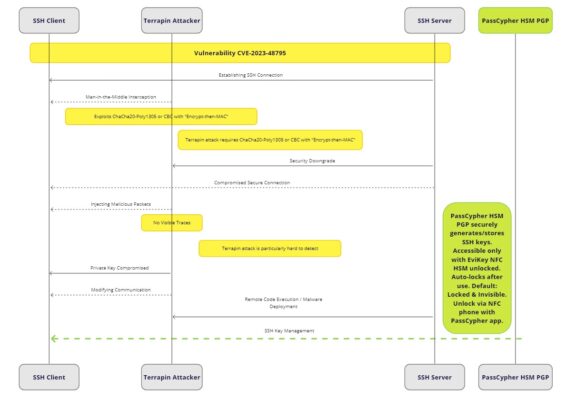
To illustrate the process of a Terrapin attack, we have created the following diagram:

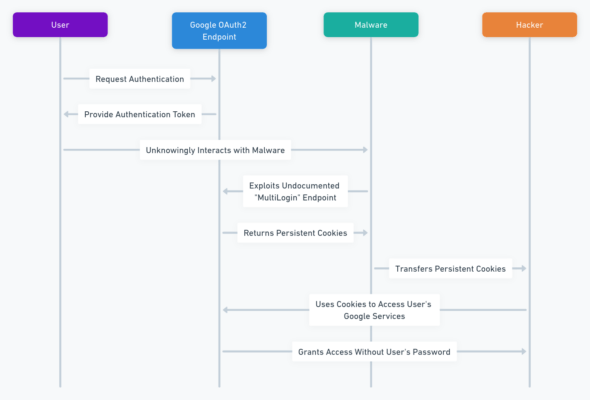
Hackers exploit OAuth2 flaw to bypass 2FA on google accounts google account security flaw

As you can see, the diagram shows the steps from the interception of the communication by the attacker to the injection of malicious packets. It also highlights the stealthiness and the difficulty of detection of the attack.

Summery

The Terrapin attack is a serious threat to SSH security. By understanding how it works, you can take steps to protect yourself from it. Here are some tips:

  1. Make sure your SSH server is up to date with the latest security patches.
  2. Use strong passwords or public key authentication.
  3. Enable SSH key fingerprint verification.

How to protect yourself from the Terrapin attack: Best practices and tools

The Terrapin attack is a serious threat to SSH security, and it affects many SSH client and server implementations, such as OpenSSH, PuTTY, FileZilla, and more. Here are some steps you can take to protect yourself from it:

  • Update your SSH client and server to the latest versions. Many vendors have released patches that fix the vulnerability or introduce a strict key exchange option that prevents the attack. You can check if your SSH software is vulnerable by using the Terrapin vulnerability scanner.
  • Use strong passwords and public key authentication. Avoid using weak or default passwords that can be easily guessed by the attacker. Use public key authentication instead of password authentication, and make sure your public keys are verified and trusted.
  • Use secure encryption modes. Avoid using vulnerable encryption modes, such as ChaCha20-Poly1305 or AES-CBC with default MACs. Use encryption modes that use authenticated encryption with associated data (AEAD), such as AES-GCM or Chacha20-Poly1305@openssh.com.
  • Use a VPN or a firewall. If possible, use a VPN or a firewall to encrypt and protect your SSH traffic from being intercepted and modified by the attacker. This will also prevent the attacker from performing other types of attacks, such as DNS spoofing or TCP hijacking.
  • Implement a strict security policy on your local networks. Limit the access to your SSH servers to authorized users and devices, and monitor the network activity for any anomalies or intrusions.

How to use PassCypher HSM PGP and EviKey NFC HSM to protect your SSH keys: A secure and convenient solution

A good way to enhance the security of your SSH keys is to use PassCypher HSM PGP and EviKey NFC HSM. These are products from PassCypher), a company specialized in data security. They offer a secure and convenient solution for generating and storing your SSH keys.

PassCypher HSM PGP is a system that embeds a SSH key generator, allowing you to choose the type of algorithm – RSA (2048, 3072, 4096) or ECDSA (256,384, 521), and ED25519. The private key is generated and stored in a secure location, making it inaccessible to attackers.

EviKey NFC HSM is a contactless USB drive that integrates with PassCypher HSM PGP. It provides an additional layer of security and convenience for users who can easily unlock their private SSH key with their smartphone.

To show how PassCypher HSM PGP and EviKey NFC HSM can protect your SSH keys from the Terrapin attack, we have created the following diagram:

SSH handshake process with Terrapin attack illustration
This image illustrates the Terrapin attack, a stealthy attack that exploits a vulnerability in the SSH handshake. The attacker can manipulate the sequence numbers and remove specific messages without compromising the secure channel integrity. This can lead to a variety of security risks, including password cracking and man-in-the-middle attacks.

As you can see, the diagram shows how this solution effectively protects your SSH keys from the Terrapin attack. It also shows the benefits of using a contactless USB drive, such as:

  • Enhanced security: The private key is physically externalized and protected with a contactless authentication mechanism.
  • Convenience: Easy unlocking with a smartphone.
  • Ease of use: No additional software required.
  • Industrial-grade security: Equivalent to SL4 according to the standard IEC 62443-3-3.

Safeguarding Your SSH Keys with a Contactless USB Drive: A Comprehensive Guide

If you’re seeking a comprehensive guide to securely store your SSH keys using a contactless USB drive, look no further than this detailed resource: [Link to the article ([https://freemindtronic.com/how-to-create-an-ssh-key-and-use-a-nfc-hsm-usb-drive-to-store-it-securely/])]

This guide meticulously walks you through the process of:

  1. Generating an SSH key pair leveraging PassCypher HSM PGP
  2. Protecting the private SSH key within the EviKey NFC HSM USB drive
  3. Unlocking the private SSH key employing your smartphone
  4. Establishing a secure connection to an SSH server using the EviKey NFC HSM USB drive

Alongside step-by-step instructions, the guide also includes illustrative screenshots. By adhering to these guidelines, you’ll effectively safeguard and conveniently manage your SSH keys using a contactless USB drive.

Statistics on the Terrapin attack: Facts and figures

Statistics on the Terrapin attack: Facts and figures

The Terrapin attack is a serious cybersecurity threat that affects SSH connections. We have collected some statistics from various sources to show you the scale and impact of this attack. Here are some key facts and figures:

  • The Shadowserver Foundation reports that nearly 11 million SSH servers exposed on the internet are vulnerable to the Terrapin attack. This is about 52% of all IPv4 and IPv6 addresses scanned by their monitoring system.
  • The most affected countries are the United States (3.3 million), China (1.3 million), Germany (1 million), Russia (704,000), Singapore (392,000), Japan (383,000), and France (379,000).
  • The Terrapin attack affects many SSH client and server implementations, such as OpenSSH, PuTTY, FileZilla, Dropbear, libssh, and more. You can see the complete list of known affected implementations here).
  • You can prevent the Terrapin attack by updating your SSH software to the latest version, using secure encryption modes, and enabling strict key exchange. You can also use the Terrapin vulnerability scanner, available on GitHub, to check your SSH client or server for vulnerability.
  • A team of researchers from the Horst Görtz Institute for IT Security at Ruhr University Bochum in Germany discovered and disclosed the Terrapin attack. They published a detailed paper and a website with the technical details and the implications of the attack. Conclusion: How to stay safe from the Terrapin attack

The Terrapin attack is a serious threat to SSH security. It lets hackers break into SSH servers by exploiting a vulnerability in the protocol. To protect yourself effectively, you need to do the following:

  • Update your SSH software to the latest version
  • Use two-factor authentication
  • Store your SSH keys securely
  • Use PassCypher HSM PGP and EviKey NFC HSM

Conclusion: How to stay safe from the Terrapin attack

The Terrapin attack is a serious threat to SSH security. It allows hackers to break into SSH servers by exploiting a vulnerability in the protocol. To protect yourself effectively, you need to update your SSH software, use two-factor authentication, store your SSH keys securely, and use PassCypher HSM PGP and EviKey NFC HSM. If you found this article useful, please feel free to share it with your contacts or leave us a comment.

PassCypher NFC HSM: Secure and Convenient Password Management

PassCypher NFC HSM contactless hardware password manager Freemindtronic Technology from Andorra

PassCypher NFC HSM by Jacques Gascuel This article will be updated with any new information on the topic, and readers are encouraged to leave comments or contact the author with any suggestions or additions.

Discover Secure Password Management with PassCypher NFC HSM and PassCypher Pro NFC HSM

Protect your passwords with innovative solutions from PassCypher. From contactless management to invention patents, enhanced security, and versatility, find out how PassCypher provides you with a convenient and secure solution for password management. Don’t let data vulnerability be a concern anymore. Dive into our dedicated article on PassCypher products and take control of your password security.

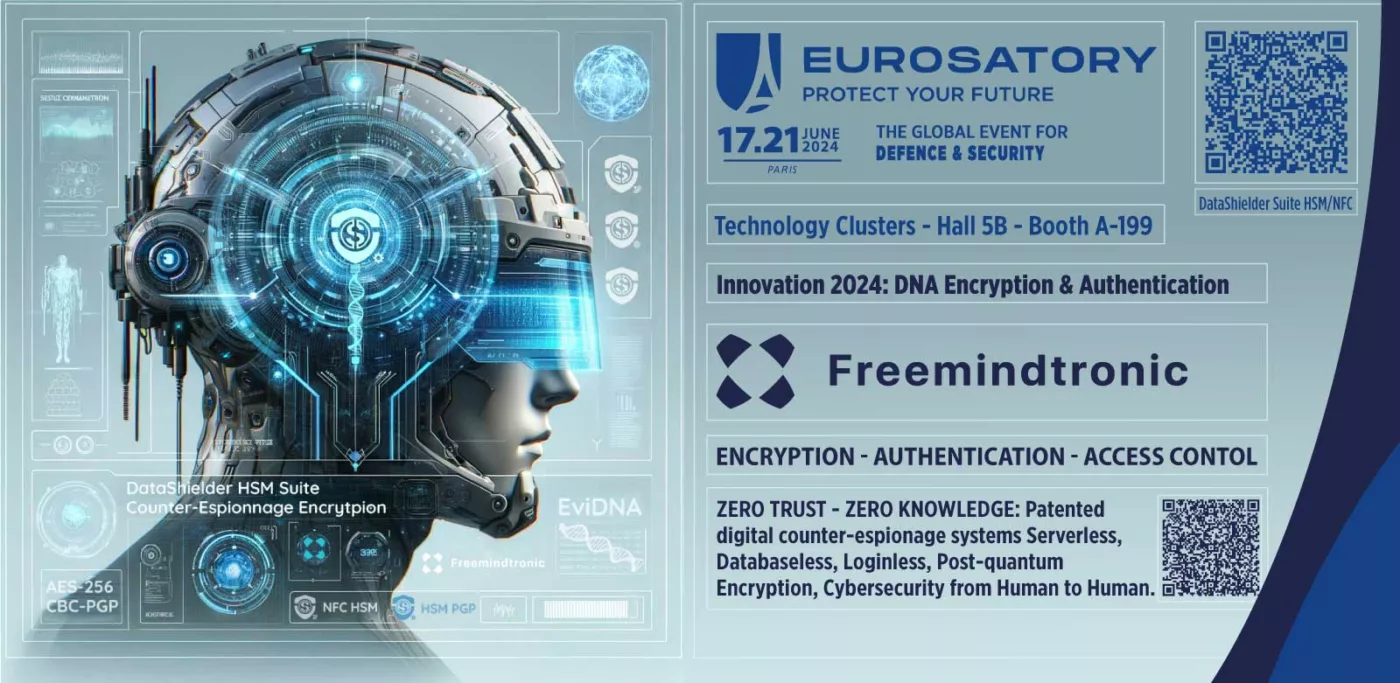
2024 Eurosatory Events Exhibitions Press release

Eurosatory 2024 Technology Clusters: Innovation 2024 DataShielder Defence

Articles Electronics News Press release Technologies

Freemindtronic’s Legacy: Rediscovering Excellence

2022 CyberStealth Eurosatory Press release

EviStealth Technology at Eurosatory 2022

2022 Cyber Computer Eurosatory Press release

Cyber Computer at Eurosatory 2022

2022 Contactless Dual Strongbox Eurosatory Press release

The Contactless Dual Strongbox for sensitive data at Eurosatory 2022

Discover our other articles on digital security

PassCypher NFC HSM and PassCypher Pro NFC HSM: Secure and Convenient Password Management

Introduction

PassCypher offers a range of contactless hardware password managers known as PassCypher NFC HSM and PassCypher Pro NFC HSM. These products are protected by three invention patents and incorporate EviPass, EviOTP, and EviCore NFC HSM technologies, along with Freemindtronic’s NFC HSM devices, EviTag, and Evicard. PassCypher allows you to securely and conveniently store and manage passwords, one-time passwords (OTP), and HMAC-based passwords. It eliminates the need for a power source or internet connection. Additionally, PassCypher features a built-in RSA 4096 key manager with a random generator capable of changing the key up to one million times without any risk of error. It seamlessly works on Android NFC-enabled phones with fingerprint access control and is compatible with computers supporting Chromium-based or Firefox-based web browsers with autofill and auto login functionalities. For computer use, users need to install the PassCypher NFC Web Browser Extension and EviDNS software, which acts as a hotspot for pairing the extension with the PassCypher NFC HSM application through the local network. PassCypher is not compatible with Safari.


Features and Benefits

PassCypher’s web browser extension offers several convenient features, including:

Management of Paired Phones

With PassCypher, you can easily manage the phones paired with the EviCore NFC HSM for Web Browser extension. You can add phones to the list of paired devices, manage favorites, make direct calls, and delete paired phones.

Create a New Label (Secret)

PassCypher enables you to create labels containing sensitive information such as login IDs, passwords, OTPs, or HOTPs. You can define the name of the label and use an intelligent random password generator for login IDs and segmented keys. Additionally, PassCypher allows you to create a compatible QR Code for each label.

Digital Post-it

Retrieve labels from the NFC HSM in clear text using the Digital Post-it feature. This enables you to manually use the information for copying and pasting, including login IDs.

Free Tools: Advanced Password Manager

PassCypher offers a real-time entropy state bar based on Shannon’s mathematical function and a passphrase generator. It also includes various features such as checking if your password has been compromised in a data breach, generating personalized password and segmented key labels, and fetching login credentials and cloud keys.

Authenticator Sandbox

The Authenticator Sandbox function provides automatic anti-phishing protection by verifying the URL before authorizing auto-filling login fields. It leverages EviCore NFC HSM technology to store the URL during the first automatic login to a favorite site. Upon subsequent logins, PassCypher checks if the URL matches the auto-login request, ensuring seamless and secure authentication.

Segmented Key Generator

PassCypher introduces an innovative segmented key generator that requires multiple parties to reconstruct the key. The extension automatically populates the appropriate fields for each key component, ensuring the key’s integrity and security.

Pwned Function (Enhanced Cybersecurity)

Pwned offers proactive monitoring for online credentials. By leveraging a database of compromised usernames and passwords, PassCypher securely checks if your login information has been compromised in past data breaches. This feature helps prevent identity theft by promptly alerting you to compromised credentials and enabling you to change your password immediately.

Secret Phrase Generator (Passphrase)

Generate mnemonic phrases with basic salting using PassCypher’s Secret Phrase Generator. You can customize the number of words in your passphrase and choose special characters for separation. The real-time entropy control based on Shannon’s mathematical function enhances the security of your passphrases.


Advantages of PassCypher

PassCypher offers numerous advantages to its users:

  1. High-level Security: High-level security: PassCypher provides optimal security with AES 256-bit segmented key post-quantum encryption in NFC HSM memories, zero-knowledge architecture, patented technology and an integrated RSA 4096 key that enhances share security and remote backup of OTP passwords, segmented keys and secret keys.
  2. User-Friendly: PassCypher is easy to use with its contactless NFC card or tag, which can be conveniently placed on smartphones, computers, or other compatible devices.
  3. Environmentally Friendly and Cost-effective: PassCypher eliminates the need for batteries, cables, or power sources, making it eco-friendly and cost-effective.
  4. Versatility: PassCypher can manage passwords, OTPs, and HOTPs, providing two-factor authentication capabilities.
  5. Compatibility: PassCypher is compatible with various operating systems (Windows, Linux, MacOS, Android, iOS) and web browsers based on Chromium or Firefox.
  6. One-time Purchase: There are no financial commitments or subscriptions required to purchase PassCypher products.
  7. Absolute Anonymity: PassCypher follows the principles of zero-trust and plug-and-play, requiring no account creation or collection of personal or hardware information. It ensures complete user anonymity.
  8. Built-in Black Box: The NFC HSM Tag and Card devices feature a black box that records certain events, such as the number of incorrect password attempts, providing traceability and security.
  9. Air Gap Functionality: PassCypher operates in an air gap mode, independent of servers or secret databases. It securely stores all data in real-time on the volatile memory of the phone or computer.
  10. Physically Decentralized Authenticator Sandbox: The Authenticator Sandbox autofill and auto login feature is securely stored within the Evicypher application on Android phones. This allows for extreme portability across multiple computers, utilizing the energy harvested from the phone’s NFC signal without contact.
Freemindtronic win awards 2021 Next-Gen in Secrets Management with EviCypher & EviToken Technologies
Freemindtronic win awards 2021 Most Innovative in Hardware Password Manager with EviCypher & EviToken Technologies

Freemindtronic Receives Global InfoSec Awards for Innovative PassCypher NFC HSM Technology

Freemindtronic, the proud developer of PassCypher NFC HSM, has been recognized as a winner of the prestigious Global InfoSec Awards during the RSA Conference 2021. The company was honored with three awards, including the titles of “Most Innovative Hardware Password Manager” and “Next-Gen in Secrets Management” by Cyber Defense Magazine. This achievement highlights Freemindtronic’s commitment to delivering cutting-edge cybersecurity solutions. With PassCypher NFC HSM’s advanced technology, users can enjoy secure and convenient password management. Join us as we celebrate this remarkable accomplishment and learn more about the exceptional features that make PassCypher a standout choice for safeguarding sensitive information.

Disadvantages of PassCypher

Despite its many advantages, PassCypher has a few limitations:

  1. NFC Device Requirement: PassCypher requires an NFC-compatible device to function, which may limit its use on certain devices or in specific situations.
  2. Risk of Loss or Theft: Like any portable device, PassCypher can be lost or stolen, necessitating backup and recovery measures.
  3. Incompatibility with Safari: PassCypher is not compatible with the Safari browser, which may be inconvenient for Mac or iPhone users.

Lifecycle

PassCypher has an exceptionally long lifecycle, estimated to be over 40 years without maintenance or a power source. It can handle up to 1,000,000 guaranteed error-free read/write cycles, equivalent to daily use for over a millennium. PassCypher is designed to withstand extreme temperatures ranging from -40°C to +85°C. It is also resistant to shocks, scratches, magnetic fields, X-rays, and its TAG version is enveloped in military-grade resin, surpassing IP89K standards for superior waterproofing. As a result, PassCypher offers exceptional durability and resilience against external factors.

Comparison with Competitors

PassCypher stands out from its competitors in several ways:

  1. Contactless Hardware Manager: PassCypher is the only password manager that operates without requiring physical contact, providing a more convenient and hygienic solution compared to USB keys or biometric readers.
  2. Patent Protection: PassCypher is protected by three international invention patents, ensuring exclusivity and reliability compared to other solutions in the market.
  3. Innovative Technology: PassCypher incorporates EviPass, EviOTP, and EviCore NFC HSM technologies, along with Freemindtronic’s NFC HSM devices, EviTag and Evicard, providing unparalleled performance and features.
  4. RSA 4096 Key Manager: PassCypher is the only password manager that offers an RSA 4096 key manager with a random generator, allowing for one million key changes without the risk of error. This provides an additional level of security and flexibility..
  5. Value Proposition for Customers: PassCypher brings significant value to its customers by enabling them to:
    • Protect their data: PassCypher ensures the security of personal and professional data, guarding against hacking, theft, or loss.
    • Simplify password management: PassCypher centralizes the management of passwords and access codes, offering a user-friendly solution for securely handling them.
    • Securely access online accounts: PassCypher enables secure access to online accounts, even without an internet connection or power source.
    • Benefit from innovative technology: By choosing PassCypher, customers gain access to innovative and patented technology developed by Freemindtronic, a leading company in the NFC HSM field.
    • Flexibly secure secrets: PassCypher offers various options for securely backing up secrets, including cloning between NFC HSM devices (EviCard or EviTag), partial or complete copying between nearby or remote devices using RSA 4096 public key encryption, or encrypted archiving on any encrypted storage media using the RSA 4096 public key of an NFC HSM EviCard or EviTag. This flexibility provides peace of mind and adaptability to customers.
    • Choose the appropriate storage format: PassCypher is available in three different formats with varying secret storage capacities, allowing customers to choose the one that best suits their needs and budget.
    • Multilingual Support: The PassCypher Android application and web browser extension are available in 14 different languages. Users can use PassCypher in their preferred language, including Arabic (AR), Catalan (CA), Chinese (CN), German (DE), English (EN), Spanish (ES), French (FR), Italian (IT), Japanese (JA), Portuguese (PT), Romanian (RO), Russian (RU), Ukrainian (UK), and Bengali (BIN). This feature provides a personalized experience and facilitates the use of PassCypher in various international contexts.

Comparison with Competitors

To better understand the advantages of PassCypher compared to other solutions in the market, here is a comparative table:

Features PassCypher NFC HSM Competitor A Competitor B
Contactless Management Yes Yes No
Invention Patents Yes (3 international patents) No Yes (1 national patent)
NFC HSM Technology Yes (EviPass, EviOTP, EviCore) No Yes (proprietary technology)
RSA 4096 Key Manager Yes No Yes (RSA 2048 key)
Versatility Passwords, TOTP, HOTP, Fingerprint Passwords Passwords, Fingerprint
OS Compatibility Windows, Linux, MacOS, Android, iOS Windows, MacOS Windows, Linux, MacOS, Android
Browser Compatibility Chromium- or Firefox-based browsers Chrome, Firefox, Safari Chrome, Firefox
One-Time Purchase Yes Subscription Yes
Data Protection AES 256-bit, Zero-knowledge architecture for NFC memory AES 128-bit AES 256-bit, ECC, RSA 4096
Virtual Keyboard Support USB Bluetooth Multilingual No No
Biometric Authentication Fingerprint (from NFC-enabled phone) No Fingerprint (selected devices)
RSA-4096 Key Regeneration Yes (up to 1 million times without errors) N/A N/A
PassCypher Pro Compatibility All OS, Computers, TVs, NFC-enabled phones Limited compatibility Limited compatibility

This table highlights the unique features of PassCypher, such as contactless management, invention patents, NFC HSM technology, RSA 4096 key manager, and extensive compatibility with operating systems and browsers. Compared to competitors, PassCypher offers superior versatility, enhanced security, and flexibility in purchasing options.

Comparison with Competitors

PassCypher stands out from its competitors in several key aspects. Let’s compare PassCypher NFC HSM and PassCypher Pro NFC HSM with two major competitors in the market, Competitor A and Competitor B.

PassCypher NFC HSM vs. Competitor A

PassCypher NFC HSM offers contactless management, protected by three international invention patents, and utilizes advanced NFC HSM technology (EviPass, EviOTP, EviCore). It includes an RSA 4096 key manager, enabling secure key changes and flexibility. PassCypher NFC HSM supports passwords, OTPs, and HOTPs for versatile authentication. It is compatible with various operating systems and browsers, including Windows, Linux, MacOS, Android, and iOS, as well as Chromium and Firefox. PassCypher NFC HSM is available for one-time purchase, providing long-term value and eliminating subscription fees. With AES 256-bit data protection and a zero-knowledge architecture, PassCypher ensures the highest level of security.

In comparison, Competitor A also offers contactless management and AES 128-bit data protection. However, it lacks the extensive patent protection, advanced NFC HSM technology, and RSA 4096 key manager provided by PassCypher. Additionally, Competitor A may have limited compatibility with operating systems and browsers, restricting its usability for some users.

PassCypher NFC HSM vs. Competitor B

PassCypher NFC HSM surpasses Competitor B with its contactless management, three international invention patents, and NFC HSM technology (EviPass, EviOTP, EviCore). It includes an RSA 4096 key manager for secure and flexible key changes. PassCypher NFC HSM supports passwords, OTPs, and HOTPs, providing versatile authentication options. It offers compatibility with a wide range of operating systems and browsers, including Windows, Linux, MacOS, Android, and iOS, as well as Chromium and Firefox. The one-time purchase model of PassCypher NFC HSM eliminates ongoing subscription fees. With AES 256-bit data protection and a zero-knowledge architecture, PassCypher ensures the utmost security for user data.

In comparison, Competitor B offers contactless management, AES 256-bit data protection, and compatibility with multiple operating systems. However, it lacks the advanced NFC HSM technology, invention patents, and RSA 4096 key manager offered by PassCypher, limiting its capabilities and security features.

Conclusion

PassCypher NFC HSM and PassCypher Pro NFC HSM are cutting-edge solutions for secure and convenient password management. With advanced NFC HSM technology, patent protection, and versatile features, PassCypher offers unparalleled security and flexibility. Whether it’s protecting personal or professional data, simplifying password management, or securely accessing online accounts, PassCypher provides a comprehensive solution.

By choosing PassCypher, users gain access to innovative technology, a one-time purchase model, and multilingual support. PassCypher’s ability to securely back up secrets and its compatibility with various operating systems and browsers further enhance its appeal. In comparison to its competitors, PassCypher demonstrates superior versatility, advanced security measures, and a user-friendly approach.

Discover the next level of password management with PassCypher NFC HSM and PassCypher Pro NFC HSM, and experience the peace of mind that comes with secure and convenient password management.

To contact us click here

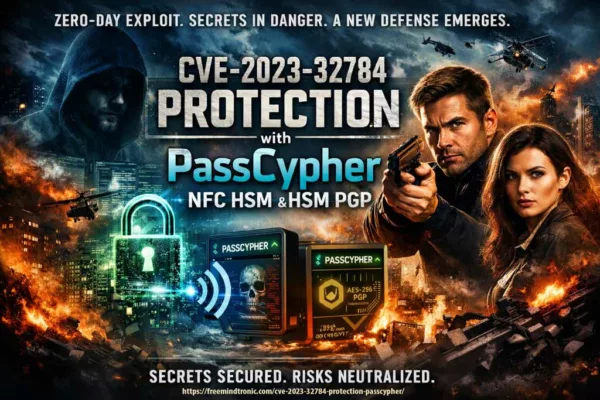
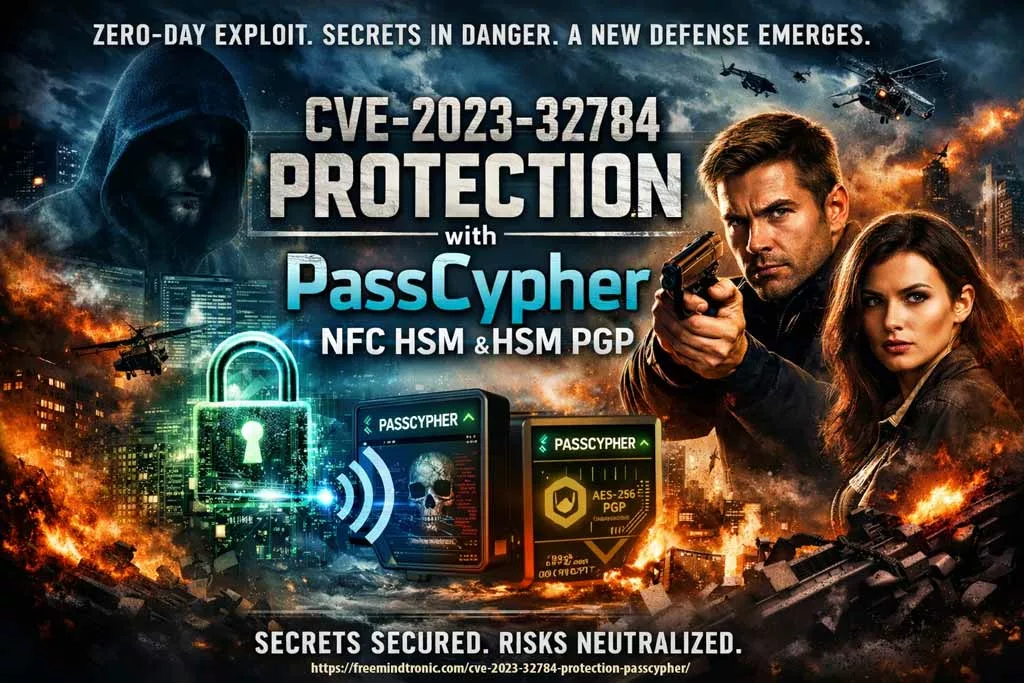
CVE-2023-32784 : Pourquoi PassCypher protège vos secrets

Affiche de cinéma pour CVE-2023-32784, illustrant comment PassCypher protège vos secrets numériques contre les vulnérabilités de mémoire et les attaques zero-day.

PassCypher HSM protège les secrets numériques. Il protège vos secrets numériques hors du périmètre du système d’exploitation compromis. Il utilise des dispositifs NFC /HSM PGP chiffrés en AES-256 CBC. Cela garantit une protection optimale contre des attaques avancées comme CVE-2023-32784, où les secrets stockés dans des fichiers mémoire comme hiberfil.sys et pagefile.sys peuvent être vulnérables à l’exfiltration. Découvrez comment PassCypher peut sécuriser vos données même en cas de compromission du système.

Résumé express — Sécurisez vos secrets numériques contre CVE-2023-32784 avec PassCypher

D’abord, ce résumé express (≈ 4 minutes) vous donnera une vue d’ensemble des enjeux de la vulnérabilité CVE-2023-32784 et de la protection des secrets avec PassCypher. Ensuite, le résumé avancé détaillera les mécanismes de cette vulnérabilité, les risques associés aux fichiers d’hibernation et de pagination, ainsi que les solutions spécifiques de PassCypher pour contrer ces attaques.

⚡ Découverte et Mécanismes de Sécurisation

La vulnérabilité CVE-2023-32784 a été découverte en avril 2023 et permet à un attaquant d’exfiltrer des secrets sensibles stockés dans des fichiers mémoire comme hiberfil.sys et pagefile.sys. Le patch correctif pour cette vulnérabilité a été publié en mai 2023 pour sécuriser ces points d’accès vulnérables et limiter les risques d’exfiltration. Vous pouvez consulter le lien officiel du patch ici : CVE Details – CVE-2023-32784.

PassCypher NFC HSM utilise une architecture Zero Trust et des mécanismes avancés tels que le chiffrement segmenté et l’authentification sans contact NFC pour protéger vos secrets contre ces attaques. Ces technologies garantissent que même si un attaquant parvient à accéder à la mémoire, les secrets restent protégés.

Source : CVE Details – CVE-2023-32784

✦ Impacts immédiats

  • D’une part, la compromission devient un état durable du terminal, et non un incident ponctuel. Une fois que les artefacts mémoire ont été extraits, il est difficile de garantir que le système n’est plus compromis.
  • D’autre part, les agents de sécurité logiciels perdent leur capacité à prouver qu’ils fonctionnent correctement sur un environnement potentiellement compromis.
  • Par conséquent, l’attribution et la réponse deviennent plus incertaines, tandis que la fenêtre d’exposition s’allonge.

Source : NIST Cybersecurity Framework

⚠ Message stratégique

Cependant, l’élément clé n’est pas seulement la vulnérabilité en elle-même, mais la logique de la confiance : un système compromis, même sans signature connue, ne peut plus garantir une sécurité fiable. La confiance dans un environnement où les secrets sont stockés devient fragile si ces secrets sont vulnérables à une exfiltration discrète via la mémoire.

Source : NIST Special Publication 800-53: Security and Privacy Controls for Information Systems and Organizations

🛑 Quand ne pas agir

  • Tout d’abord, ne réintroduisez pas de secrets (identifiants, clés, données sensibles) sur un terminal dont l’intégrité n’est pas attestée.
  • Ensuite, n’empilez pas des couches de sécurité logicielle qui peuvent compliquer l’audit et étendre la surface d’attaque.
  • Enfin, ne confondez pas retour au service et restauration de confiance : une reprise rapide peut masquer des compromissions persistantes.

✓ Principe de contre-espionnage souverain

Ainsi, la réduction du risque ne consiste pas à “nettoyer” un système compromis, mais à déplacer la confiance hors du périmètre compromis : hors OS, hors mémoire, et si nécessaire hors réseau. Cela garantit que les secrets restent protégés même si l’environnement principal du système est compromis.

Paramètres de lecture

Temps de lecture résumé express : ≈ 4 minutes
Temps de lecture résumé avancé : ≈ 6 minutes
Temps de lecture chronique complète : ≈ 35–40 minutes
Date de publication : 2023-05-10
Dernière mise à jour : 2026-01-23
Niveau de complexité : Avancé — Cyber-sécurité & souveraineté numérique
Densité technique : ≈ 65%
Langue principale : FR. EN.
Spécificité : Chronique stratégique — vulnérabilité CVE-2023-32784 & protection des secrets
Ordre de lecture : Résumé express → Résumé avancé → Exploits Zero-Day → Solutions passCypher → Risques résiduels

Note éditoriale

Cette chronique s’inscrit dans la rubrique Digital Security. Elle prolonge l’analyse des vulnérabilités zero-day et des implications de la perte de secrets via la mémoire, en explorant la manière dont PassCypher se positionne comme une solution robuste face à ce type de compromission. Elle ne propose pas de solution miracle, mais un cadre de sécurité alternatif, basé sur des points d’arrêt souverains. Cette chronique suit la déclaration de transparence IA de Freemindtronic Andorra — FM-AI-2025-11-SMD5.

Illustration showing the CVE-2023-32784 vulnerability and memory exfiltration risks, including hiberfil.sys, pagefile.sys, and RAM.
Pour aller plus loin Ensuite, le Résumé avancé explore la gestion de la vulnérabilité CVE-2023-32784 et les implications de la sécurité numérique avancée.
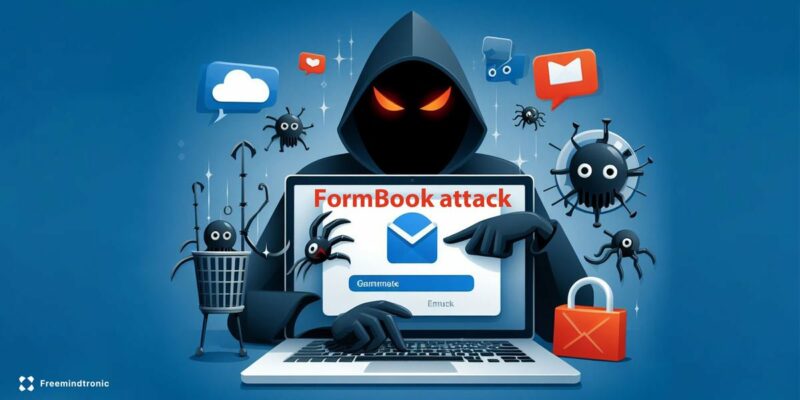
FormBook Malware: How to Protect Your Gmail and Other Data

How to Protect Your Gmail Account from FormBook Malware Introduction Imagine that you receive an [...]

Failles de sécurité Ledger : Analyse 2017-2026 & Protections

Les failles de sécurité Ledger sont au cœur des préoccupations des investisseurs depuis 2017. Cette [...]

1 Comment

Strong Passwords in the Quantum Computing Era

How to create strong passwords in the era of quantum computing? Quantum computing is a [...]

2 Comments

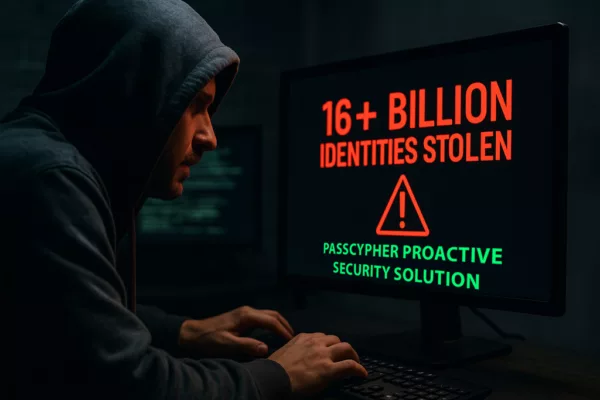
Darknet Credentials Breach 2025 – 16+ Billion Identities Stolen

Underground Market: The New Gold Rush for Stolen Identities The massive leak of over 16 [...]

SSH Key PassCypher HSM PGP — Sécuriser l’accès multi-OS à un VPS

SSH Key PassCypher HSM PGP fournit une chaîne souveraine : génération locale de clés SSH [...]

1 Comment

Fuite données ministère interieur : messageries compromises et ligne rouge souveraine

Fuite données ministère intérieur. L’information n’est pas arrivée par une fuite anonyme ni par un [...]

Side-Channel Attacks via HDMI and AI: An Emerging Threat

Understanding the Impact and Evolution of Side-Channel Attacks in Modern Cybersecurity Side-channel attacks, also known [...]

How BIP39 helps you create and restore your Bitcoin wallets

How BIP39 helps you create and restore your Bitcoin wallets Do you struggle to manage [...]

OpenVPN Security Vulnerabilities Pose Global Security Risks

Critical OpenVPN Vulnerabilities Pose Global Security Risks OpenVPN security vulnerabilities have come to the forefront, [...]

Cybersecurity Breach at IMF: A Detailed Investigation

Cybersecurity Breach at IMF: A Detailed Investigation Cybersecurity breaches are a growing concern worldwide. The [...]

Protect Meta Account Identity Theft with EviPass and EviOTP

Protecting Your Meta Account from Identity Theft Meta is a family of products that includes [...]

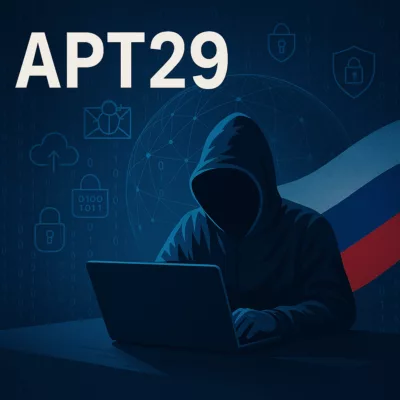
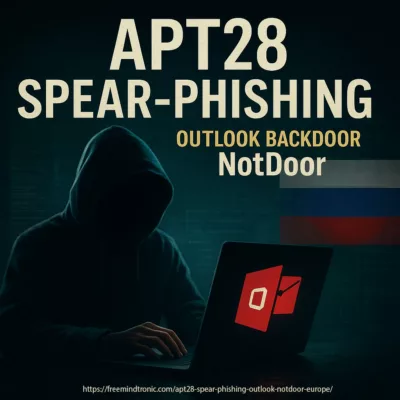
APT28 spear-phishing: Outlook backdoor NotDoor and evolving European cyber threats

Russian cyberattack on Microsoft by Midnight Blizzard (APT29) highlights the strategic risks to digital sovereignty. [...]

3 Comments

Russia Blocks WhatsApp: Max and the Sovereign Internet

Step by step, Russia blocks WhatsApp and now openly threatens to “completely block” the messaging [...]

2 Comments

BITB Attacks: How to Avoid Phishing by iFrame

BITB Attacks: How to Avoid Phishing by iFrame We have all seen phishing attacks aren’t [...]

Google Workspace Vulnerability Exposes User Accounts to Hackers

How Hackers Exploited the Google Workspace Vulnerability Hackers found a way to bypass the email [...]

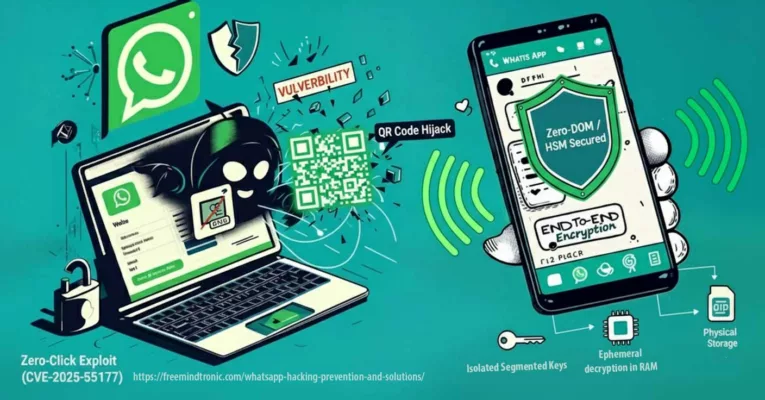
WhatsApp Hacking: Prevention and Solutions

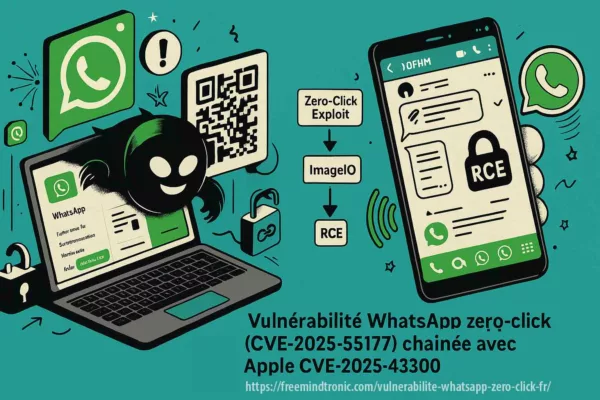
WhatsApp hacking zero-click exploit (CVE-2025-55177) chained with Apple CVE-2025-43300 enables remote code execution via crafted [...]

6 Comments

Vulnérabilité WhatsApp Zero-Click — Actions & Contremesures

Vulnérabilité WhatsApp zero-click (CVE-2025-55177) chaînée avec Apple CVE-2025-43300 permet l’exécution de code à distance via [...]

1 Comment

Chrome V8 confusió RCE — Actualitza i postura Zero-DOM

Chrome V8 confusió RCE: aquesta edició exposa l’impacte global i les mesures immediates per reduir [...]

Spyware ClayRat Android : faux WhatsApp espion mobile

Spyware ClayRat Android illustre la mutation du cyberespionnage : plus besoin de failles, il exploite [...]

2 Comments

Russian Espionage Hacking Tools Revealed

Russian Espionage Hacking Tools: Discovery and Initial Findings Russian espionage hacking tools were uncovered by [...]

Snake Malware: The Russian Spy Tool

Snake: The Russian malware that steals sensitive information for 20 years Snake is a malware [...]

ZenRAT: The malware that hides in Bitwarden and escapes antivirus software

How this malware hides in Bitwarden and escapes antivirus software to steal your information ZenRAT [...]

Protect US emails from Chinese hackers with EviCypher NFC HSM?

How EviCypher NFC HSM technology can protect emails from Chinese hackers The Chinese hack on [...]

How the attack against Microsoft Exchange on December 13, 2023 exposed thousands of email accounts

How the attack against Microsoft Exchange on December 13, 2023 exposed thousands of email accounts [...]

1 Comment

Brute Force Attacks: What They Are and How to Protect Yourself

Brute-force Attacks: A Comprehensive Guide to Understand and Prevent Them Brute Force: danger and protection [...]

Browser Fingerprinting Tracking: Metadata Surveillance in 2026

Browser Fingerprinting Tracking today represents one of the true cores of metadata intelligence. Far beyond [...]

2 Comments

WhatsApp Gold arnaque mobile : typologie d’un faux APK espion

WhatsApp Gold arnaque mobile — clone frauduleux d’application mobile, ce stratagème repose sur une usurpation [...]

Quantum computer 6100 qubits ⮞ Historic 2025 breakthrough

A 6,100-qubit quantum computer marks a turning point in the history of computing, raising unprecedented [...]

1 Comment

Espionnage invisible WhatsApp : quand le piratage ne laisse aucune trace

Espionnage invisible WhatsApp n’est plus une hypothèse marginale, mais une réalité technique rendue possible par [...]

Ledger Security Breaches from 2017 to 2026: How to Protect Yourself from Hackers

Ledger Security Breaches have become a major indicator of vulnerabilities in the global crypto ecosystem. [...]

4 Comments

Remote activation of phones by the police: an analysis of its technical, legal and social aspects

What is the new bill on justice and why is it raising concerns about privacy? [...]

Europol Data Breach: A Detailed Analysis

May 2024: Europol Security Breach Highlights Vulnerabilities In May 2024, Europol, the European law enforcement [...]

Cyberattaque HubEE : Rupture silencieuse de la confiance numérique

Cyberattaque HubEE : rupture silencieuse de la confiance numérique. Cette attaque, qui a permis l’exfiltration [...]

Browser Fingerprinting : le renseignement par métadonnées en 2026

Le browser fingerprinting constitue aujourd’hui l’un des instruments centraux du renseignement par métadonnées appliqué aux [...]

Enhancing Crypto Wallet Security: How EviSeed and EviVault Could Have Prevented the $41M Crypto Heist

EviSeed and EviVault NFC HSM Technologies could have prevented the $41 million crypto theft by [...]

Email Metadata Privacy: EU Laws & DataShielder

Email metadata privacy sits at the core of Europe’s digital sovereignty: understand the risks, the [...]

1 Comment

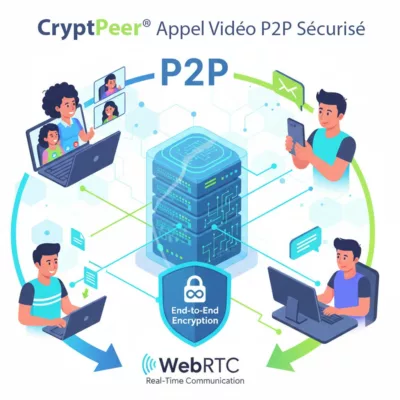
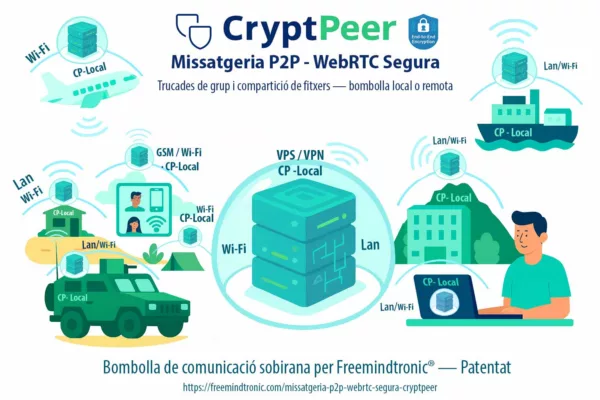
CryptPeer messagerie P2P WebRTC : appels directs chiffrés de bout en bout

La messagerie P2P WebRTC sécurisée constitue le fondement technique et souverain de la communication directe [...]

2 Comments

Clickjacking des extensions DOM : DEF CON 33 révèle 11 gestionnaires vulnérables

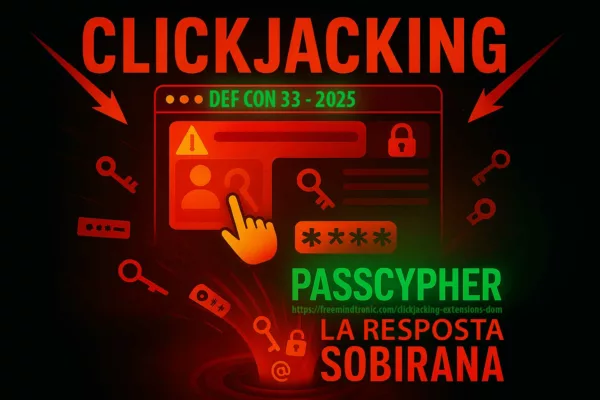
Clickjacking d’extensions DOM : DEF CON 33 révèle une faille critique et les contre-mesures Zero-DOM

14 Comments

Phishing Cyber victims caught between the hammer and the anvil

Phishing is a fraudulent technique that aims to deceive internet users and to steal their [...]

Midnight Blizzard Cyberattack Against Microsoft and HPE: What are the consequences?

Midnight Blizzard Cyberattack against Microsoft and HPE: A detailed analysis of the facts, the impacts [...]

2 Comments

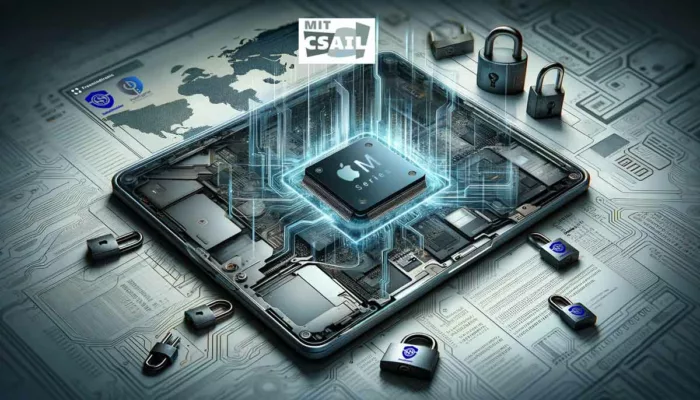
Apple M chip vulnerability: A Breach in Data Security

Apple M chip vulnerability: uncovering a breach in data security Researchers at the Massachusetts Institute [...]

APT29 Spear-Phishing Europe: Stealthy Russian Espionage

APT29 SpearPhishing Europe: A Stealthy LongTerm Threat APT29 spearphishing Europe campaigns highlight a persistent and [...]

3 Comments

TETRA Security Vulnerabilities: How to Protect Critical Infrastructures

TETRA Security Vulnerabilities: How to Protect Critical Infrastructures from Cyberattacks TETRA (Terrestrial Trunked Radio) is [...]

Google Sheets Malware: The Voldemort Threat

Sheets Malware: A Growing Cybersecurity Concern Google Sheets, a widely used collaboration tool, has shockingly [...]

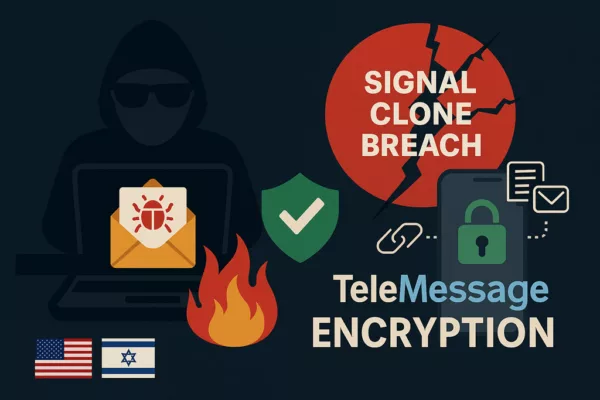
Signal Clone Breached: Critical Flaws in TeleMessage

TeleMessage: A Breach That Exposed Cloud Trust and National Security Risks TeleMessage, marketed as a [...]

1 Comment

Protect yourself from Pegasus spyware with EviCypher NFC HSM

How to protect yourself from Pegasus spyware with EviCypher NFC HSM Pegasus Spyware: what it [...]

RockYou2024: 10 Billion Reasons to Use Free PassCypher

RockYou2024: A Cybersecurity Earthquake The RockYou2024 data leak has shaken the very foundations of global [...]

APT44 QR Code Phishing: New Cyber Espionage Tactics

APT44 Sandworm: The Elite Russian Cyber Espionage Unit Unmasking Sandworm’s sophisticated cyber espionage strategies and [...]

1 Comment

Kismet iPhone: How to protect your device from the most sophisticated spying attack?

Kismet iPhone: How to protect your device from the most sophisticated spying attack using Pegasus [...]

Cyber espionnage zero day : marché, limites et doctrine souveraine
Cyber espionnage zero day : la fin des spywares visibles marque l’entrée dans une économie [...]

Passkeys Faille Interception WebAuthn | DEF CON 33 & PassCypher

Conseil RSSI / CISO – Protection universelle & souveraine EviBITB (Embedded Browser‑In‑The‑Browser Protection) est une [...]

3 Comments

Kapeka Malware: Comprehensive Analysis of the Russian Cyber Espionage Tool

Kapeka Malware: The New Russian Intelligence Threat   In the complex world of cybersecurity, a [...]

Leidos Holdings Data Breach: A Significant Threat to National Security

A Major Intrusion Unveiled In July 2024, the Leidos Holdings data breach came to light, [...]

Ordinateur quantique 6100 qubits ⮞ La percée historique 2025

Ordinateur quantique 6100 qubits marque un tournant dans l’histoire de l’informatique, soulevant des défis sans [...]

Microsoft Vulnerabilities 2025: 159 Flaws Fixed in Record Update

Microsoft: 159 Vulnerabilities Fixed in 2025 Microsoft has released a record-breaking security update in January [...]

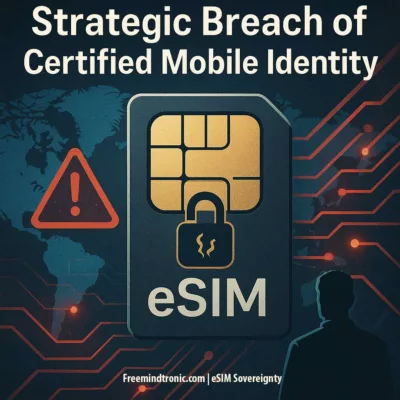
eSIM Sovereignty Failure: Certified Mobile Identity at Risk

  Runtime Threats in Certified eSIMs: Four Strategic Blind Spots While geopolitical campaigns exploit the [...]

What is Juice Jacking and How to Avoid It?

Juice Jacking: How to Avoid This Cyberattack Do you often use public USB chargers to [...]

Générateur de mots de passe souverain – PassCypher Secure Passgen WP

Générateur de mots de passe souverain PassCypher Secure Passgen WP pour WordPress — le premier [...]

ViperSoftX How to avoid the malware that steals your passwords

ViperSoftX: The Malware that Steals Your Cryptocurrencies and Passwords ViperSoftX is a malware that steals [...]

1 Comment

PrintListener: How to Betray Fingerprints

PrintListener: How this Technology can Betray your Fingerprints and How to Protect yourself PrintListener revolutionizes [...]

Bot Telegram Usersbox : l’illusion du contrôle russe

Le bot Telegram Usersbox n’était pas un simple outil d’OSINT « pratique » pour curieux [...]

Chrome V8 Zero-Day CVE-2025-10585 — Ton navigateur était déjà espionné ?

Chrome V8 zero-day CVE-2025-10585 — Votre navigateur n’était pas vulnérable. Vous étiez déjà espionné !

2 Comments

Quantum-Resistant Passwordless Manager — PassCypher finalist, Intersec Awards 2026 (FIDO-free, RAM-only)

Quantum-Resistant Passwordless Manager 2026 (QRPM) — Best Cybersecurity Solution Finalist by PassCypher sets a new [...]

4 Comments

CVE-2023-32784 : Pourquoi PassCypher protège vos secrets

PassCypher HSM protège les secrets numériques. Il protège vos secrets numériques hors du périmètre du [...]

1 Comment

KingsPawn A Spyware Targeting Civil Society

  QuaDream: KingsPawn spyware vendor shutting down in may 2023 QuaDream was a company that [...]

Sovereign SSH Authentication with PassCypher HSM PGP — Zero Key in Clear

SSH Key PassCypher HSM PGP establishes a sovereign SSH authentication chain for zero-trust infrastructures, where [...]

1 Comment

Ivanti Zero-Day Flaws: Comprehensive Guide to Secure Your Systems Now

What are Zero-Day Flaws and Why are They Dangerous? A zero-day flaw is a previously [...]

Android Spyware Threat Clayrat : 2025 Analysis and Exposure

Android Spyware Threat: ClayRat illustrates the new face of cyber-espionage — no exploits needed, just [...]

1 Comment

Confidentialité métadonnées e-mail — Risques, lois européennes et contre-mesures souveraines

La confidentialité des métadonnées e-mail est au cœur de la souveraineté numérique en Europe : [...]

1 Comment

CVE-2023-32784 Protection with PassCypher NFC HSM

CVE-2023-32784 Protection with PassCypher NFC HSM safeguards your digital secrets. It protects your secrets beyond [...]

OpenAI Mixpanel Breach Metadata – phishing risks and sovereign security with PassCypher

AI Mixpanel breach metadata is a blunt reminder of a simple rule: the moment sensitive [...]

1 Comment

BadPilot Cyber Attacks: Russia’s Threat to Critical Infrastructures

BadPilot Cyber Attacks: Sandworm’s New Weaponized Subgroup Understanding the rise of BadPilot and its impact [...]

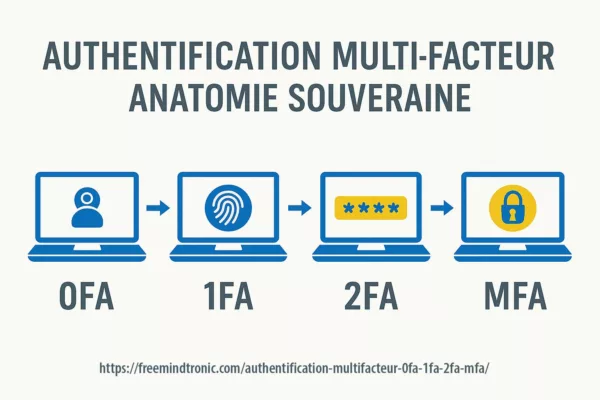
Authentification multifacteur : anatomie, OTP, risques

Authentification Multifacteur : Anatomie souveraine Explorez les fondements de l’authentification numérique à travers une typologie [...]

How to protect yourself from stalkerware on any phone

What is Stalkerware and Why is it Dangerous? Stalkerware, including known programs like FlexiSpy, mSpy, [...]

Dropbox Security Breach 2024: Phishing, Exploited Vulnerabilities

Phishing Tactics: The Bait and Switch in the Aftermath of the Dropbox Security Breach The [...]

APT36 SpearPhishing India: Targeted Cyberespionage | Security

Understanding Targeted Attacks of APT36 SpearPhishing India APT36 cyberespionage campaigns against India represent a focused [...]

2 Comments

Andorra National Cyberattack Simulation: A Global First in Cyber Defense

Andorra Cybersecurity Simulation: A Vanguard of Digital Defense Andorra-la-Vieille, April 15, 2024 – Andorra is [...]

How to Recover and Protect Your SMS on Android

Recover and Protect Your SMS on Android: A Complete Guide First of all, SMS are [...]

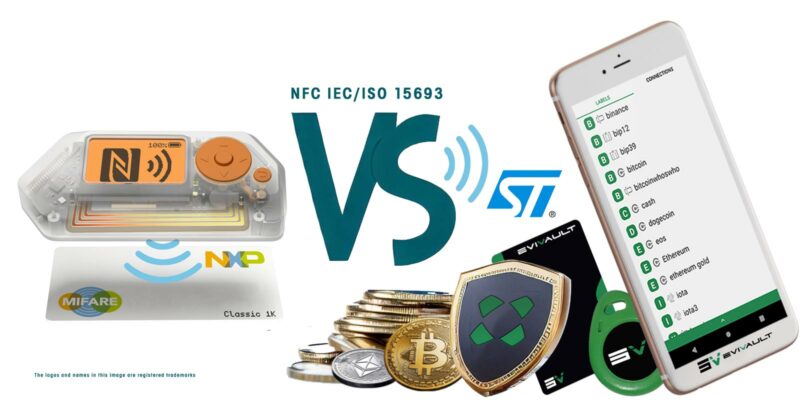
EviVault NFC HSM vs Flipper Zero: The duel of an NFC HSM and a Pentester

EviVault NFC HSM vs Flipper Zero: The duel of an NFC HSM and a Pentester [...]

Clickjacking extensions DOM: Vulnerabilitat crítica a DEF CON 33

DOM extension clickjacking — el clickjacking d’extensions basat en DOM, mitjançant iframes invisibles, manipulacions del [...]

4 Comments

EviCore NFC HSM Credit Cards Manager | Secure Your Standard and Contactless Credit Cards

EviCore NFC HSM Credit Cards Manager is a powerful solution designed to secure and manage [...]

OpenAI fuite Mixpanel : métadonnées exposées, phishing et sécurité souveraine

OpenAI fuite Mixpanel rappelle que même les géants de l’IA restent vulnérables dès qu’ils confient [...]

1 Comment

Microsoft Outlook Zero-Click Vulnerability: Secure Your Data Now

Microsoft Outlook Zero-Click Vulnerability: How to Protect Your Data Now A critical Zero-Click vulnerability (CVE-2025-21298) [...]

BitLocker Security: Safeguarding Against Cyberattacks

Introduction to BitLocker Security If you use a Windows computer for data storage or processing, [...]

1 Comment

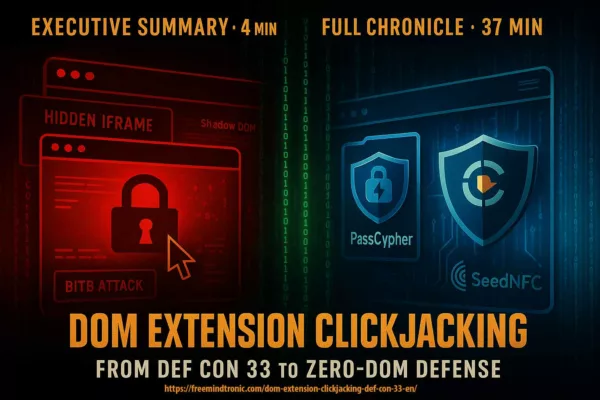
DOM Extension Clickjacking — Risks, DEF CON 33 & Zero-DOM fixes

DOM extension clickjacking — a technical chronicle of DEF CON 33 demonstrations, their impact, and [...]

5 Comments

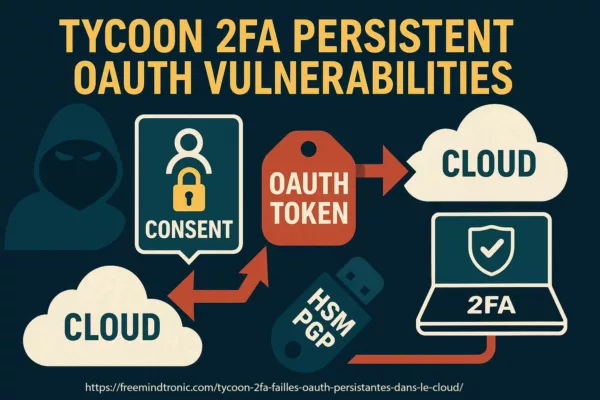
Persistent OAuth Flaw: How Tycoon 2FA Hijacks Cloud Access

Persistent OAuth Flaw — Tycoon 2FA Exploited — When a single consent becomes unlimited cloud [...]

1 Comment

Coinbase blockchain hack: How It Happened and How to Avoid It

How to Prevent Coinbase Blockchain Hack with EviVault NFC HSM Technology What happened to Coinbase [...]

5Ghoul: 5G NR Attacks on Mobile Devices

5Ghoul: How Contactless Encryption Can Secure Your 5G Communications from Modem Attacks 5Ghoul is a [...]

1 Comment

Terrapin attack: How to Protect Yourself from this New Threat to SSH Security

Protect Yourself from the Terrapin Attack: Shield Your SSH Security with Proven Strategies SSH is [...]

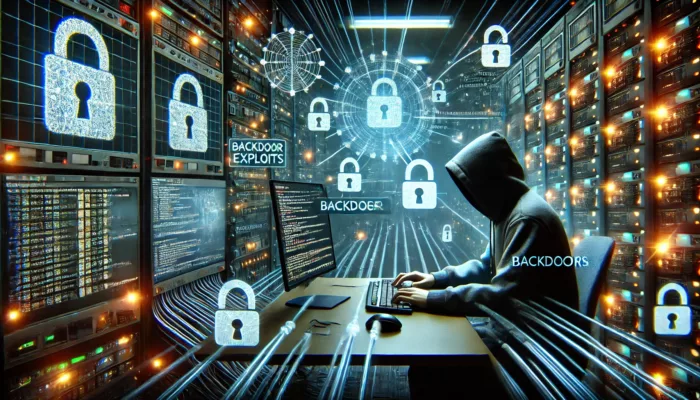
Cyberattack Exploits Backdoors: What You Need to Know

Cyberattack Exploits Backdoors: What You Need to Know In October 2024, a cyberattack exploited backdoors [...]

Google OAuth2 security flaw: How to Protect Yourself from Hackers

Google OAuth2 security flaw: Strategies Against Persistent Cookie Threats in Online Services Google OAuth2 security [...]

Pegasus: The cost of spying with one of the most powerful spyware in the world

Pegasus: The Cost of Spying with the Most Powerful Spyware in the World Pegasus is [...]

Les chroniques affichées ci-dessus ↑ appartiennent à la section Digital Security. Elles prolongent l’analyse des vulnérabilités zero-day et des risques systémiques dans le domaine de la cybersécurité. En conséquence, elles fournissent une perspective stratégique sur la réduction des risques en matière de secrets numériques et l’importance de “points d’arrêt” souverains.

Résumé avancé — Comprendre la vulnérabilité CVE-2023-32784

⮞ Reading Note

D’abord, ce résumé avancé propose une analyse détaillée de la vulnérabilité CVE-2023-32784, ses implications techniques et les risques d’exfiltration de secrets à travers des artefacts de mémoire comme les fichiers d’hibernation et de pagination. Ensuite, la chronique complète fournira des stratégies pratiques pour minimiser l’impact de cette vulnérabilité, y compris les solutions de sécurité robustes comme PassCypher.

Exploitation de CVE-2023-32784 — L’attaque Zero-Day sur les secrets numériques

Tout d’abord, il est essentiel de comprendre comment la vulnérabilité CVE-2023-32784 peut être exploitée. Cette faille permet à un attaquant d’accéder à des secrets numériques stockés dans des fichiers mémoire sensibles, comme les fichiers d’hibernation (hiberfil.sys) et de pagination (pagefile.sys). Ces fichiers peuvent contenir des informations critiques, telles que des mots de passe, des clés de chiffrement et d’autres secrets utilisateurs.

En effet, les attaquants peuvent utiliser cette vulnérabilité pour exfiltrer des données sans laisser de traces visibles, rendant l’attaque difficile à détecter jusqu’à ce que des informations sensibles aient déjà été compromises.

Dump mémoire et vulnérabilités de pagefile

Les fichiers d’hibernation et de pagination sont des composants essentiels pour la gestion des ressources système dans les environnements Windows. Cependant, ces fichiers peuvent devenir des cibles privilégiées pour les attaquants, car ils contiennent des portions de la mémoire du système, qui peuvent inclure des secrets non chiffrés.

En effet, lorsque des informations sensibles sont présentes dans la mémoire, elles sont souvent écrites dans ces fichiers sans aucune forme de protection, ce qui les rend vulnérables à l’accès non autorisé. Une fois cette vulnérabilité exploitée, un attaquant peut extraire ces secrets et les utiliser à des fins malveillantes, comme le vol d’identifiants ou l’accès à des systèmes sécurisés.

Hiberfil et exfiltration de données sensibles

Un autre vecteur d’attaque majeur est l’exfiltration des secrets stockés dans le fichier hiberfil.sys. Ce fichier, utilisé pour la gestion des états de mise en veille prolongée, contient une copie complète du contenu de la mémoire vive. Par conséquent, si un attaquant parvient à accéder à ce fichier, il peut facilement y extraire des données sensibles.

Cependant, l’utilisation de solutions de sécurité comme PassCypher permet de chiffrer ces fichiers mémoire sensibles, de manière à empêcher l’exfiltration de données en cas de compromission.

Protéger vos secrets : PassCypher NFC HSM

PassCypher NFC HSM protège vos secrets numériques en les stockant en dehors du système d’exploitation compromis, avec un chiffrement segmenté et un authentification sans contact NFC. Ces mécanismes offrent une protection maximale contre les attaques de type CVE-2023-32784, qui exploitent les vulnérabilités dans les fichiers mémoire sensibles comme hiberfil.sys et pagefile.sys. Grâce à ces technologies, même en cas de compromission du système d’exploitation, vos secrets restent protégés.

Par conséquent, cette solution offre une couche supplémentaire de protection qui limite les risques associés aux attaques zero-day, tout en permettant une gestion de la sécurité des données au niveau physique et réseau, en dehors du périmètre OS compromis.

Recommandations stratégiques pour la gestion de CVE-2023-32784

Les entreprises et les utilisateurs doivent mettre en place des stratégies de défense multi-couches pour contrer les risques liés à cette vulnérabilité. Voici quelques recommandations stratégiques :

  • Chiffrez les fichiers d’hibernation et de pagination : Cela permet d’empêcher l’accès non autorisé aux informations sensibles stockées dans la mémoire système.
  • Utilisez des solutions de protection avancées : Comme PassCypher, qui protège vos secrets, même en dehors du système d’exploitation.
  • Surveillez les accès aux fichiers mémoire sensibles : Mettre en place une surveillance continue des fichiers d’hibernation et de pagination pour détecter toute tentative d’accès non autorisé.
  • Revue des mécanismes de stockage sécurisé : Utiliser des solutions de stockage sécurisé hors du périmètre système pour les données sensibles, telles que des clés physiques NFC ou des dispositifs de stockage chiffrés.

En résumé, la protection des secrets sensibles dans un environnement numérique devient une priorité à mesure que les vulnérabilités comme CVE-2023-32784 sont découvertes et exploitées. PassCypher se présente comme une solution de défense efficace, mais il est essentiel de maintenir une approche proactive de la sécurité en appliquant des mesures de prévention et en intégrant des outils robustes dans l’architecture de votre système de sécurité.

Transition
À présent, la chronique complète détaillera les implications à long terme de cette vulnérabilité et la manière dont des solutions comme PassCypher contribuent à sécuriser les systèmes dans un environnement numérique en constante évolution.

Chronique complète — Comprendre et contrer CVE-2023-32784

D’abord, cette chronique complète explore en profondeur la vulnérabilité CVE-2023-32784 et ses impacts sur la sécurité numérique. Ensuite, nous examinerons les mécanismes de cette faille et les meilleures pratiques pour la prévenir. Vous découvrirez également comment des solutions comme PassCypher peuvent vous protéger.

Analyse de CVE-2023-32784 : Une faille critique dans la gestion de la mémoire

La vulnérabilité CVE-2023-32784 est liée à une faille dans la gestion de la mémoire des systèmes informatiques. Les artefacts de mémoire, tels que les fichiers d’hibernation (hiberfil.sys) et de pagination (pagefile.sys), peuvent contenir des informations sensibles. Ces fichiers, utilisés pour améliorer la performance du système, deviennent une cible idéale pour les attaquants.

En effet, ces fichiers peuvent stocker des secrets tels que des identifiants, des clés de chiffrement et d’autres informations sensibles. Une fois extraites, ces données peuvent être utilisées pour des attaques malveillantes. Ce phénomène représente un risque majeur pour la confidentialité des entreprises.

Oui : des failles liées à la mémoire existent toujours

Les vulnérabilités qui exposent des secrets numériques en mémoire — que ce soit dans :

  • le fichier d’hibernation (hiberfil.sys),
  • le fichier de pagination (pagefile.sys),
  • ou même la mémoire RAM active

continuent d’être une préoccupation réelle en 2025–2026.

Cela tient à la nature fondamentale de l’informatique : pour exécuter des programmes, des données sensibles doivent parfois vivre temporairement en mémoire vive, y compris des clés, mots de passe ou jetons d’authentification. C’est un risque inhérent, et pas une vulnérabilité ponctuelle unique.

Comment ces classes de failles se manifestent aujourd’hui

Exfiltration mémoire

C’est une classe d’attaque où un attaquant accède à la mémoire ou à des artefacts système pour extraire des secrets. Ce type d’attaque peut se produire par :

  • Dump mémoire (extraction complète de la RAM)
  • Accès aux fichiers d’échange/pagination
  • Débogage accessible
  • Malware avec privilèges élevés
  • Exploits zero-day dans le système d’exploitation ou dans des pilotes

Même si un patch corrige une vulnérabilité spécifique, un autre vecteur mémoire pourrait être exploité tant que des données sensibles transitent en clair en mémoire.

Failles Zero-Day plus larges

Chaque année, de nouvelles vulnérabilités de type zero-day sont découvertes. Certaines permettent à un attaquant de lire la mémoire ou d’intercepter des secrets en clair — indépendamment des fichiers d’hibernation/pagination. Par exemple :

  • Failles dans le noyau OS
  • Failles dans des pilotes systèmes
  • Failles dans des outils de virtualisation
  • Failles dans des gestionnaires de mémoire

La simplicité d’exécution varie, mais l’effet potentiel reste : exfiltration de données sensibles en mémoire.

Fuites de mémoire dans les applications

Beaucoup de logiciels, notamment ceux lisant des secrets et clés, ont encore :

  • des buffers non nettoyés
  • des allocations de mémoire non effacées
  • des chaînes sensibles laissées en clair en RAM

Même des produits modernes peuvent présenter ce type de risque si l’accès à la mémoire n’est pas strictement géré.

Évolution des contre‑mesures en 2025–2026

Les éditeurs ont continué à améliorer les protections :

  • Chiffrement renforcé en mémoire
  • Windows utilise Virtual Secure Mode,
  • Linux intègre des distributions avec protections renforcées (SELinux, AppArmor),
  • et macOS a des protections en écriture de la mémoire (AMFI).

Mais aucune mesure n’élimine complètement la mémoire non chiffrée tant que des secrets y transitent en clair.

Caractéristiques modernes de mitigation

Mitigation But
Memory encryption (TPM/SEV/SME) Chiffrement de la mémoire vive en hardware
ASLR / CFG / DEP Mitigation d’exploitation d’applications
Credential Guard (Windows) Isolation des secrets dans un conteneur protégé
Kernel hardening Réduction des vecteurs d’exploitation

Ces technologies réduisent les risques mais ne les éliminent pas complètement.

Exemples récents (2024–2026)

Bien qu’aucune faille ne soit exactement identique à CVE-2023-32784, plusieurs vulnérabilités récentes ont montré que :

  • des secrets pouvaient être extraits via des attaques mémoire
  • des clés sensibles pouvaient être récupérées si elles furent stockées non protégées en RAM.

Par exemple, dans les années 2024–2025, il y a eu :

  • Vulnérabilités dans les hyperviseurs permettant d’accéder à la mémoire VM
  • Exploits dans des outils de conteneurs laissant les secrets en mémoire
  • Défaillances de sécurité dans certains antivirus ou outils de diagnostic exposant la mémoire

Ces vulnérabilités sont souvent classées CVE avec des amplitudes différentes mais une conséquence similaire : données sensibles en mémoire exposées.

Leçons et bonnes pratiques durables

Ce qui cause encore des risques aujourd’hui :

  • Les programmes stockant des secrets en clair
  • Les dumps mémoire accessibles à un attaquant
  • Les processus mal isolés
  • Les privilèges inadéquats

Source pour l’évolution des failles mémoire :

PassCypher : Une solution pour protéger vos secrets numériques

Pour contrer cette vulnérabilité, PassCypher offre une protection de haute qualité. PassCypher utilise un chiffrement segmenté et une authentification à clé segmentée pour sécuriser vos secrets numériques. Cela garantit que, même si un attaquant accède à la mémoire, les données restent protégées.

En plus, PassCypher permet de stocker vos clés et secrets à l’extérieur du système d’exploitation compromis. Cette sécurité supplémentaire limite l’impact d’une compromission. De ce fait, vous pouvez garder vos informations sensibles en sécurité contre les attaques zero-day.

Risques de la compromission de la mémoire système avec CVE-2023-32784

L’exploitation de CVE-2023-32784 a des conséquences importantes. L’impact principal réside dans la compromission de la confiance logicielle. Une fois qu’un attaquant accède aux artefacts mémoire, il peut modifier ou exfiltrer des données sensibles sans laisser de trace.

Ainsi, la compromission devient un état persistant. L’intégrité du système est alors mise en question, ce qui complique les tâches de détection et de réparation. Les mécanismes de sécurité traditionnels ne suffisent plus face à de telles menaces.

Stratégie de contre-espionnage souverain : La confiance au-delà de l’OS

La solution efficace face à ces menaces repose sur le principe de “contre-espionnage souverain”. Ce principe consiste à déplacer la confiance hors du périmètre compromis : hors OS, hors mémoire, et même hors réseau. Ainsi, même en cas de compromission du terminal, vos secrets restent protégés.

Par conséquent, PassCypher joue un rôle crucial en garantissant la sécurité de vos données sensibles. Il protège vos informations critiques, même lorsque l’OS est compromis. Cela minimise les risques d’exfiltration et garantit la souveraineté numérique de vos systèmes.

Recommandations stratégiques pour les entreprises

Voici quelques recommandations pratiques pour les entreprises et les utilisateurs afin de se protéger contre la vulnérabilité CVE-2023-32784 :

  • Chiffrez toutes les informations sensibles : Utilisez des solutions robustes pour protéger les secrets dans la mémoire et les fichiers système.
  • Appliquez une sécurité multi-couches : Combinez des stratégies physiques et logiques pour renforcer la protection des secrets numériques.
  • Optez pour un stockage sécurisé : Protégez vos secrets avec des dispositifs comme PassCypher NFC, stockés hors du système compromis.
  • Surveillez les fichiers sensibles : Mettez en place une surveillance continue des fichiers tels que hiberfil.sys et pagefile.sys pour détecter toute tentative d’accès non autorisé.
  • Formez vos équipes : Sensibilisez vos équipes à la sécurité des secrets et à la gestion proactive des attaques zero-day.

Résilience et défense contre les attaques zero-day

Face aux attaques zero-day, il est essentiel de renforcer la résilience des systèmes. La protection ne se limite pas aux failles connues, mais inclut aussi la préparation face aux menaces inconnues. Une approche proactive de la sécurité est cruciale, intégrant des outils avancés comme le chiffrement et la gestion des secrets hors OS.

En résumé, une défense multi-couches et proactive est primordiale pour se prémunir contre les attaques complexes et persistantes.

À présent, explorez la section suivante sur les solutions de détection des failles CVE, où nous détaillerons les stratégies de détection avancée des vulnérabilités et des attaques zero-day pour renforcer la résilience de vos systèmes.

L’Impact de CVE-2023-32784 sur la Confidentialité des Utilisateurs

L’exploitation de CVE-2023-32784 met en lumière un problème majeur concernant la confidentialité des informations personnelles et professionnelles. Les artefacts mémoire, tels que les fichiers d’hibernation (hiberfil.sys) et de pagination (pagefile.sys), peuvent contenir des données sensibles. Si un attaquant parvient à y accéder, il peut récupérer des informations critiques, souvent sans que la victime ne le sache. Ce genre de compromission peut impacter la réputation des entreprises et entraîner des pertes financières.

Une étude menée par le Ponemon Institute sur le coût des violations de données révèle que les entreprises dépensent en moyenne 3,86 millions de dollars pour une violation de données, ce qui montre l’ampleur de l’impact financier pour une organisation.

Les Meilleures Pratiques pour Contourner les Failles Zero-Day

Face à la nature insidieuse des attaques zero-day, il est essentiel pour les entreprises de prendre des mesures proactives pour éviter de devenir une cible. Cela inclut non seulement l’application régulière de mises à jour et de correctifs mais aussi l’adoption de stratégies de défense en profondeur qui rendent difficile l’accès à des secrets numériques, même si un attaquant parvient à exploiter une vulnérabilité inconnue.

Des pratiques telles que la gestion rigoureuse des clés de chiffrement et le chiffrement des fichiers mémoire sensibles (hiberfil.sys, pagefile.sys) peuvent réduire le risque d’exploitation de CVE-2023-32784. CIS Controls recommande des stratégies de sécurité efficaces pour la gestion des risques liés à ces vulnérabilités.

La Sécurisation de la Mémoire du Système : Un Combat Permanent

Les fichiers mémoire, comme hiberfil.sys et pagefile.sys, sont des éléments critiques pour le fonctionnement des systèmes Windows. Toutefois, leur gestion pose un dilemme pour les administrateurs en matière de sécurité. En effet, bien qu’ils améliorent les performances du système, leur contenu peut être utilisé à des fins malveillantes si une vulnérabilité est exploitée.

Les meilleures pratiques de sécurité recommandent de désactiver les fichiers d’hibernation et de pagination lorsque cela est possible. Si ces fichiers doivent être utilisés, leur chiffrement doit être appliqué pour assurer qu’aucune donnée sensible n’est exposée lors d’une intrusion. Source : Microsoft Docs – Windows Hibernation and Paging Files

Exploitation de CVE-2023-32784 — L’attaque invisible

Tout d’abord, il est essentiel de comprendre comment la vulnérabilité CVE-2023-32784 peut être exploitée. Cette faille permet à un attaquant d’accéder à des secrets numériques stockés dans des fichiers mémoire sensibles, comme les fichiers d’hibernation (hiberfil.sys) et de pagination (pagefile.sys). Ces fichiers peuvent contenir des informations critiques telles que des mots de passe, des clés de chiffrement et d’autres secrets utilisateurs.

En effet, les attaquants peuvent utiliser cette vulnérabilité pour exfiltrer des données sans laisser de traces visibles, rendant l’attaque difficile à détecter jusqu’à ce que des informations sensibles aient déjà été compromises. Cette exploitation rend la compromission d’autant plus insidieuse et difficile à contrer avec les mécanismes de sécurité traditionnels.

Dump mémoire et vulnérabilités de pagefile

Les fichiers d’hibernation et de pagination sont des composants essentiels pour la gestion des ressources système dans les environnements Windows. Cependant, ces fichiers peuvent devenir des cibles privilégiées pour les attaquants, car ils contiennent des portions de la mémoire du système, qui peuvent inclure des secrets non chiffrés.

En effet, lorsque des informations sensibles sont présentes dans la mémoire, elles sont souvent écrites dans ces fichiers sans aucune forme de protection, ce qui les rend vulnérables à l’accès non autorisé. Une fois cette vulnérabilité exploitée, un attaquant peut extraire ces secrets et les utiliser à des fins malveillantes, comme le vol d’identifiants ou l’accès à des systèmes sécurisés.

Hiberfil et exfiltration de données sensibles

Un autre vecteur d’attaque majeur est l’exfiltration des secrets stockés dans le fichier hiberfil.sys. Ce fichier, utilisé pour la gestion des états de mise en veille prolongée, contient une copie complète du contenu de la mémoire vive. Par conséquent, si un attaquant parvient à accéder à ce fichier, il peut facilement y extraire des données sensibles.

Cependant, l’utilisation de solutions de sécurité comme PassCypher permet de chiffrer ces fichiers mémoire sensibles, de manière à empêcher l’exfiltration de données en cas de compromission.

Exfiltration de données sensibles via la mémoire : un risque pour tous les gestionnaires de mots de passe

La faille CVE-2023-32784 dans KeePass est un exemple de ce que l’on appelle une vulnérabilité de “dump mémoire”, où un attaquant peut récupérer un mot de passe maître depuis la mémoire d’un système compromis. Bien que cette vulnérabilité concerne directement KeePass, elle met en lumière un problème plus large qui touche tous les logiciels qui manipulent des données sensibles telles que des mots de passe, des clés de chiffrement et des tokens d’authentification.

Gestionnaires de mots de passe et logiciels vulnérables

Bien que la vulnérabilité CVE-2023-32784 soit spécifique à des attaques d’exfiltration via des artefacts mémoire (hiberfil.sys et pagefile.sys), d’autres gestionnaires de mots de passe, tels que Bitwarden, LastPass, et Dashlane, peuvent également être vulnérables à des attaques de clickjacking et exploitation DOM lorsqu’ils utilisent des extensions de navigateur non sécurisées. Ces vulnérabilités peuvent permettre à un attaquant de manipuler les données sensibles via l’interface du navigateur, bien que la gestion en mémoire des données sensibles dans ces outils soit généralement protégée par des mécanismes de chiffrement.
Cependant, les fichiers mémoire (hiberfil.sys, pagefile.sys) restent une cible théorique pour les attaquants si les données ne sont pas correctement protégées en mémoire. Bien que ces gestionnaires chiffrent généralement les données stockées, la mémoire volatile (RAM), où les informations sont temporairement stockées pendant une session active, reste une cible potentielle si elle n’est pas correctement sécurisée.

De plus, PassCypher se distingue en offrant un stockage sécurisé hors du périmètre du système d’exploitation, assurant que les données sensibles restent protégées même si le système est compromis. Cette approche élimine le risque d’exfiltration de données depuis la RAM ou des fichiers système.

Solutions de protection : chiffrement et stockage sécurisé hors OS

Le chiffrement avancé AES-256 CBC et la gestion des clés segmentées de PassCypher NFC HSM permettent de protéger les secrets numériques, même si les fichiers mémoire comme hiberfil.sys et pagefile.sys sont compromis. De plus, le stockage sécurisé hors OS garantit que vos informations restent protégées, même dans des environnements hostiles.
Pour contrer ce type d’attaque, il est essentiel de mettre en place des solutions de sécurité robustes. L’utilisation de dispositifs comme PassCypher NFC HSM permet de sécuriser les données sensibles hors du périmètre du système d’exploitation. Ces dispositifs utilisent des mécanismes de chiffrement avancés (AES-256 CBC) et des clés segmentées, garantissant que même si un attaquant parvient à accéder à la mémoire, les secrets restent protégés. L’intégration de ces solutions réduit considérablement le risque d’exfiltration de données sensibles via la mémoire.

PassCypher NFC HSM : Une Solution Avancée pour la Sécurisation des Secrets

PassCypher NFC HSM protège les secrets numériques en stockant les données sensibles hors du périmètre du système d’exploitation compromis. Utilisant un dispositif NFC sans contact, PassCypher assure une sécurité maximale grâce au chiffrement avancé AES-256 CBC. Cela permet de se prémunir contre les attaques de type CVE-2023-32784, où les secrets stockés dans les fichiers mémoire comme hiberfil.sys et pagefile.sys sont vulnérables.

PassCypher NFC HSM est un gestionnaire de mots de passe matériel sans contact qui permet de stocker et protéger vos secrets numériques, même face à des attaques avancées comme celles exploitant des vulnérabilités telles que vulnérabilité CVE-2023-32784. Ce système de gestion sans contact élimine le besoin d’une connexion Internet ou d’une source d’alimentation pour fonctionner, tout en assurant une sécurité maximale grâce à des technologies comme la segmentation des clés et le chiffrement AES 256 CBC.

Avec sa technologie NFC HSM, PassCypher sécurise vos données en dehors du système d’exploitation, garantissant que vos informations sensibles restent protégées même si le système est compromis. L’authentification sans contact avec une carte NFC ou un dispositif compatible protège vos informations sans exposer vos identifiants ou mots de passe à des attaques de type keylogging ou shoulder surfing.

Stockage sécurisé hors OS avec PassCypher NFC

Pour améliorer encore la sécurité des secrets numériques, PassCypher offre une fonctionnalité de stockage sécurisé hors OS via des dispositifs de stockage NFC. Cette approche permet de protéger les secrets clés et autres données sensibles en dehors des systèmes compromis, garantissant leur sécurité même dans les environnements les plus hostiles.

En effet, l’utilisation de dispositifs NFC comme PassCypher ajoute une couche physique de protection qui empêche l’accès aux secrets, même en cas de compromission totale du système d’exploitation. Ces dispositifs sont également équipés de mécanismes de chiffrement avancés, assurant que les données restent protégées contre toute tentative d’exfiltration ou de vol.

Stockage Sécurisé Hors OS avec PassCypher NFC HSM

Pour renforcer la sécurité des secrets numériques, PassCypher NFC HSM propose un stockage sécurisé hors OS via des dispositifs NFC. En cas de vulnérabilité comme CVE-2023-32784, où des fichiers sensibles comme hiberfil.sys et pagefile.sys peuvent être compromis, PassCypher assure que ces informations restent hors de portée grâce à son système de stockage décentralisé.

L’usage de dispositifs NFC comme PassCypher ajoute une couche de sécurité physique qui empêche l’accès non autorisé aux secrets, même si l’intégrité du système d’exploitation est mise en péril. Grâce à un chiffrement avancé, les données sont protégées contre les tentatives d’exfiltration, qu’elles proviennent d’un logiciel malveillant ou d’un attaquant ayant compromis le terminal.

Technologie NFC et Architecture Zero Trust

L’architecture Zero Trust de PassCypher NFC HSM assure qu’aucune donnée n’est jamais stockée sur un serveur ou une base de données externe. Toutes les données restent localisées sur le dispositif physique, garantissant une sécurité renforcée. En plus, grâce à l’authentification sans contact NFC, l’accès aux secrets numériques est ultra-sécurisé, ne nécessitant aucune intervention manuelle pour gérer les clés de chiffrement ou les mots de passe.

Avantages et Flexibilité de PassCypher NFC HSM

PassCypher NFC HSM se distingue par sa flexibilité, sa compatibilité avec différents systèmes d’exploitation (Windows, Linux, MacOS, Android, iOS) et navigateurs web (Chromium, Firefox). Ce dispositif vous permet de sécuriser vos mots de passe, clé secréte OTP (TOTP/HOTP), et autres informations sensibles sans avoir besoin d’une connexion réseau constante, tout en offrant des fonctionnalités avancées comme la gestion des clés segmentées et la protection contre le phishing grâce à son Authenticator Sandbox.

PassCypher HSM PGP : Protection Avancée Contre les Exfiltrations de Secrets (CVE-2023-32784)

PassCypher HSM PGP est une solution de gestion des mots de passe de pointe, entièrement automatisée, conçue pour protéger vos secrets numériques même en cas de compromission système. Grâce à son chiffrement AES-256 CBC PGP, PassCypher HSM PGP garantit la sécurité des informations, en particulier contre des vulnérabilités telles que CVE-2023-32784, où des secrets stockés dans des fichiers mémoire comme hiberfil.sys et pagefile.sys peuvent être compromis. L’architecture Zero Trust et Zero Knowledge assure que les secrets restent privés et sécurisés, sans laisser d’accès non autorisé à vos informations.

Le système chiffre vos identifiants de connexion à l’aide de l’AES-256 CBC PGP, les stocke dans des conteneurs sécurisés, et les décrypte instantanément en mémoire volatile. Cette approche garantit qu’aucune information sensible n’est exposée en clair, même en cas d’attaque exploitant des vulnérabilités comme CVE-2023-32784. Les données sont immédiatement effacées de la mémoire une fois utilisées, minimisant ainsi le risque d’exfiltration via des artefacts mémoire compromis.
Cela garantit une sécurité maximale tout en assurant un accès instantané et sans compromis à vos identifiants.

Grâce à PassCypher HSM PGP, même si un attaquant exploite une vulnérabilité comme CVE-2023-32784, vos secrets sont protégés par des technologies de chiffrement de pointe, et ils sont éliminés de la mémoire immédiatement après leur utilisation, ce qui réduit considérablement le risque d’exfiltration de données.

Pour plus de détails sur son fonctionnement, consultez la documentation officielle de PassCypher HSM PGP.

Protection Automatisée et Stockage Sécurisé des Secrets

PassCypher HSM PGP offre un système de conteneurs sécurisés qui chiffre automatiquement vos informations sensibles, telles que vos mots de passe et identifiants, en utilisant le chiffrement AES-256 CBC PGP. Ces informations sont stockées sur des supports physiques sécurisés (USB, SSD, NAS, etc.), et sont instantanément décryptées en mémoire volatile uniquement lors de l’utilisation. Même si un attaquant parvient à accéder à la mémoire du système via des vulnérabilités comme CVE-2023-32784, les informations restent protégées grâce au stockage sécurisé et à l’effacement immédiat des données après leur utilisation.

Une fois que vos identifiants sont injectés dans les champs de connexion, les données décryptées sont immédiatement effacées de la mémoire, garantissant ainsi qu’aucune trace de vos informations ne demeure après leur utilisation. Cette approche garantit la sécurité de vos informations même si un système est compromis.

Zero Trust et Zero Knowledge : Des Architectures de Sécurité Renforcées

L’architecture Zero Trust de PassCypher HSM PGP repose sur l’idée fondamentale que rien ni personne ne peut être implicitement approuvé. Cela signifie que chaque demande d’accès aux secrets est validée, qu’elle provienne d’un utilisateur interne ou externe.

En combinant cette architecture avec Zero Knowledge, PassCypher HSM PGP garantit que le système ne conserve aucune donnée sensible sur des serveurs externes et ne nécessite aucune identification ou création de comptes utilisateurs. Tout est traité localement sur l’appareil, ce qui réduit considérablement les risques liés à l’exfiltration de données.

Cela permet à PassCypher HSM PGP de se protéger contre des attaques comme CVE-2023-32784, en veillant à ce que les données ne soient jamais exposées en clair ou stockées sur un serveur, ce qui rend l’accès à vos informations extrêmement difficile pour un attaquant.

Gestion des Clés Segmentées : Sécurisation Maximale des Informations

PassCypher HSM PGP utilise une approche innovante de gestion des clés segmentées, où chaque clé de chiffrement est divisée en plusieurs segments stockés sur des dispositifs physiques séparés (comme des clés USB, SSD externes, etc.). Même si un segment de la clé est compromis, les autres segments restent protégés, assurant ainsi que les informations ne peuvent pas être décryptées sans un accès complet aux différents segments de la clé.

Ce modèle ajoute une couche supplémentaire de sécurité et empêche toute extraction non autorisée des données. Si un attaquant parvient à accéder à une partie de votre système, il ne pourra pas déchiffrer vos identifiants sans l’accès aux autres segments physiques de la clé.

Protection Anti-Phishing et Détection des Menaces Avancées

PassCypher HSM PGP intègre des mécanismes de protection avancée contre le phishing et autres attaques malveillantes, comme les redirections vers des sites malveillants (typosquatting). La technologie Sandbox URL encapsule et chiffre l’URL du site de connexion, empêchant toute tentative de manipulation ou de redirection vers un site malveillant. Cette protection est renforcée contre les attaques exploitant des vulnérabilités comme CVE-2023-32784, bloquant les tentatives avant qu’elles ne réussissent.

En outre, PassCypher HSM PGP détecte et neutralise automatiquement les attaques Browser-in-the-Browser (BITB) et les redirections malveillantes. Ces protections renforcent la sécurité des utilisateurs, garantissant qu’ils se connectent toujours à des sites légitimes, même si l’attaquant tente de les induire en erreur.

Pourquoi PassCypher HSM est une solution de confiance

Dans un environnement numérique de plus en plus complexe et vulnérable aux attaques comme CVE-2023-32784, PassCypher HSM se distingue comme une solution de sécurité essentielle. PassCypher HSM protège les secrets numériques en les stockant à l’extérieur du système d’exploitation compromis et en utilisant des mécanismes avancés comme le chiffrement segmenté et l’authentification sans contact NFC.

Récompensé parmi les meilleures solutions de cybersécurité 2026

PassCypher HSM a récemment été reconnu comme l’une des 5 meilleures solutions de cybersécurité en 2026 lors des InterSec Awards, une distinction qui témoigne de son efficacité et de sa fiabilité face aux menaces avancées, comme celles introduites par CVE-2023-32784. Cette reconnaissance confirme l’engagement de PassCypher à offrir une protection de pointe contre les attaques visant les données sensibles, même lorsque le système d’exploitation est compromis.

Pour en savoir plus sur cette distinction et comment PassCypher continue de repousser les limites de la cybersécurité, vous pouvez consulter PassCypher : Finaliste aux InterSec Awards 2026.

Pourquoi PassCypher HSM est une solution de confiance

Dans un environnement numérique de plus en plus complexe et vulnérable aux attaques comme CVE-2023-32784, PassCypher HSM se distingue comme une solution de sécurité essentielle. PassCypher HSM protège les secrets numériques en les stockant à l’extérieur du système d’exploitation compromis et en utilisant des mécanismes avancés comme le chiffrement segmenté et l’authentification sans contact NFC.

Récompensé parmi les meilleures solutions de cybersécurité 2026

PassCypher HSM a récemment été reconnu comme l’une des 5 meilleures solutions de cybersécurité en 2026 lors des InterSec Awards, une distinction qui témoigne de son efficacité et de sa fiabilité face aux menaces avancées, comme celles introduites par CVE-2023-32784. Cette reconnaissance confirme l’engagement de PassCypher à offrir une protection de pointe contre les attaques visant les données sensibles, même lorsque le système d’exploitation est compromis.

Pour en savoir plus sur cette distinction et comment PassCypher continue de repousser les limites de la cybersécurité, vous pouvez consulter PassCypher : Finaliste aux InterSec Awards 2026.

Solutions de détection des failles CVE

La détection des failles CVE comme CVE-2023-32784 nécessite l’utilisation de solutions avancées pour repérer les tentatives d’exploitation de vulnérabilités avant qu’elles n’entraînent une compromission. L’intégration de solutions de détection en temps réel permet de surveiller l’intégrité des fichiers mémoire sensibles et d’identifier rapidement les tentatives d’accès non autorisé.

En plus, des outils d’analyse de comportement peuvent être utilisés pour détecter les activités suspectes sur les fichiers système, notamment les fichiers hiberfil.sys et pagefile.sys, afin d’interrompre les attaques avant qu’elles ne causent des dommages.

Analyse des menaces avancées : CVE et attaques Zero-Day

Les attaques zero-day, comme celles exploitant CVE-2023-32784, sont particulièrement difficiles à détecter, car elles utilisent des vulnérabilités inconnues des éditeurs de logiciels. Ces attaques ciblent souvent des failles dans les composants critiques du système, tels que la gestion de la mémoire, pour voler des informations sensibles sans déclencher d’alertes.

Par conséquent, une analyse des menaces avancées est essentielle pour renforcer la résilience des systèmes contre ces attaques. L’utilisation d’outils de détection comportementale et d’analyse des menaces permet d’identifier les indicateurs de compromission avant qu’une attaque ne réussisse à exfiltrer des données sensibles.

L’Approche Zero Trust et la Protection des Secrets

Le modèle Zero Trust repose sur le principe fondamental qu’aucun utilisateur ou appareil, interne ou externe, ne doit être implicitement approuvé. Chaque tentative d’accès, qu’elle provienne d’un utilisateur interne ou d’un système externe, doit être vérifiée. En appliquant ce modèle, les entreprises peuvent limiter l’accès aux secrets numériques, en s’assurant qu’aucune donnée sensible n’est accessible par des systèmes compromis.

Recommandations stratégiques de sécurité

Face à la vulnérabilité CVE-2023-32784, il est impératif de mettre en place des mesures de sécurité robustes et d’adopter une stratégie de défense multi-couches. Voici quelques recommandations pratiques :

  • Chiffrez les fichiers d’hibernation et de pagination : Cela permet d’empêcher l’accès non autorisé aux informations sensibles stockées dans la mémoire système.
  • Utilisez des solutions de protection avancées : Comme PassCypher, qui protège vos secrets, même en dehors du système d’exploitation.
  • Surveillez les accès aux fichiers mémoire sensibles : Mettre en place une surveillance continue des fichiers d’hibernation et de pagination pour détecter toute tentative d’accès non autorisé.
  • Revue des mécanismes de stockage sécurisé : Utiliser des solutions de stockage sécurisé hors du périmètre système pour les données sensibles, telles que des clés physiques NFC ou des dispositifs de stockage chiffrés.

Défense multi-couches : comprendre la résilience avec PassCypher NFC HSM

Pour renforcer la résilience des systèmes contre les vulnérabilités de type Zero-Day, une approche multi-couches est indispensable. PassCypher NFC HSM offre une protection robuste avec le chiffrement des fichiers mémoire sensibles, le stockage hors OS, et la surveillance proactive des fichiers système sensibles comme hiberfil.sys et pagefile.sys.

La Gestion de la Souveraineté Numérique Face aux Attaques Zero-Day

La souveraineté numérique est une question clé dans la gestion des risques associés aux attaques zero-day. Les entreprises et les gouvernements doivent être capables de protéger leurs infrastructures critiques contre des intrusions invisibles. L’implémentation de solutions comme PassCypher, qui offre une protection au-delà du système d’exploitation, garantit la confidentialité et la sécurité des données sensibles, même face à des vulnérabilités encore non découvertes.

L’adoption de technologies qui garantissent une souveraineté numérique est essentielle pour limiter l’exposition aux cybermenaces internationales. Source : The Role of Digital Sovereignty in Cybersecurity

Réduire les risques : Sécurisation des secrets numériques

Face aux vulnérabilités de type “exfiltration mémoire”, il est crucial de protéger les secrets numériques via des solutions de sécurité avancées. PassCypher NFC HSM offre une solution robuste pour le stockage sécurisé des données sensibles hors du périmètre du système d’exploitation, garantissant ainsi que même en cas de compromission du système, les secrets restent protégés grâce à des mécanismes de sécurité renforcés, comme le chiffrement AES-256 CBC et la segmentation des clés.

FAQ – CVE-2023-32784 et mesures de mitigation

Q : Comment la vulnérabilité CVE-2023-32784 est-elle exploitée ?
R : Cette vulnérabilité permet à un attaquant d’exfiltrer des données sensibles en accédant aux fichiers mémoire, comme les fichiers d’hibernation (hiberfil.sys) et de pagination (pagefile.sys).
Q : Quelle est la solution pour protéger mes secrets contre cette vulnérabilité ?
R : Utilisez des solutions de chiffrement avancées comme PassCypher, qui sécurisent les fichiers mémoire sensibles et les données stockées hors OS.

Glossaire : Terminologie CVE et sécurité

CVE : Common Vulnerabilities and Exposures. Base de données publique des vulnérabilités de sécurité qui permet de référencer des failles découvertes.
Zero-Day : Attaque qui exploite une vulnérabilité non corrigée et inconnue des développeurs.
Hiberfil.sys : Fichier d’hibernation utilisé pour stocker l’état du système lors de la mise en veille prolongée.
Pagefile.sys : Fichier de pagination utilisé pour stocker des informations de la mémoire virtuelle lorsque la RAM est insuffisante.

Ressources supplémentaires

Pour des informations supplémentaires sur les failles CVE, la sécurité numérique et les attaques zero-day, consultez les ressources suivantes :

CVE-2023-32784 Protection with PassCypher NFC HSM

CVE-2023-32784 Protection with PassCypher NFC HSM and HSM PGP - Digital security solutions

CVE-2023-32784 Protection with PassCypher NFC HSM safeguards your digital secrets. It protects your secrets beyond the compromised operating system perimeter by using NFC/HSM PGP devices encrypted with AES-256 CBC. This ensures optimal protection against advanced attacks like CVE-2023-32784, where secrets stored in memory files like hiberfil.sys and pagefile.sys may be vulnerable to exfiltration. Learn how PassCypher can secure your data even in the event of a system compromise.

Executive Summary — Protect Your Digital Secrets Against CVE-2023-32784 with PassCypher

First, this executive summary (≈ 4 minutes) will provide an overview of the CVE-2023-32784 vulnerability and how PassCypher protects your secrets. Then, the advanced summary will delve into the mechanics of this vulnerability, the risks associated with hibernation and pagefile memory, and specific PassCypher solutions to counter these attacks.

⚡ Discovery and Security Mechanisms

The CVE-2023-32784 vulnerability was discovered in April 2023 and allows attackers to exfiltrate sensitive secrets stored in memory files such as hiberfil.sys and pagefile.sys. The patch to fix this vulnerability was released in May 2023 to secure these vulnerable access points and mitigate the risk of exfiltration. You can review the official patch link here: CVE Details – CVE-2023-32784.

PassCypher NFC HSM uses a Zero Trust architecture and advanced mechanisms such as segmented encryption and NFC contactless authentication to protect your secrets from these attacks. These technologies ensure that even if an attacker gains access to memory, the secrets remain protected.

Source: CVE Details – CVE-2023-32784

✦ Immediate Impacts

  • On the one hand, compromise becomes a persistent state of the terminal, not a one-time incident. Once memory artifacts are extracted, it is difficult to ensure that the system is no longer compromised.
  • On the other hand, security agents lose their ability to prove they are functioning correctly on a potentially compromised environment.
  • As a result, attribution and response become more uncertain, while the exposure window lengthens.

Source: NIST Cybersecurity Framework

⚠ Strategic Message

However, the key element is not just the vulnerability itself, but the trust logic: a compromised system, even without a known signature, can no longer guarantee reliable security. Trust in an environment where secrets are stored becomes fragile if these secrets are vulnerable to covert exfiltration through memory.

Source: NIST Special Publication 800-53: Security and Privacy Controls for Information Systems and Organizations

🛑 When Not to Act

  • First, do not reintroduce secrets (credentials, keys, sensitive data) on a terminal whose integrity has not been verified.
  • Next, do not stack layers of security software that may complicate auditing and increase the attack surface.
  • Finally, do not confuse service return with trust restoration: a quick recovery can mask persistent compromises.

✓ Sovereign Counter-Espionage Principle

Thus, reducing risk does not mean “cleaning” a compromised system but moving trust out of the compromised perimeter: off the OS, off memory, and if necessary off the network. This ensures that secrets remain protected even if the main system environment is compromised.

Reading Time Settings

Executive Summary Reading Time: ≈ 4 minutes
Advanced Summary Reading Time: ≈ 6 minutes
Full Chronicle Reading Time: ≈ 35–40 minutes
Publication Date: 2023-05-10
Last Updated: 2026-01-23
Complexity Level: Advanced — Cybersecurity & Digital Sovereignty
Technical Density: ≈ 65%
Primary Language: EN. FR.
Specificity: Strategic Chronicle — CVE-2023-32784 Vulnerability & Secrets Protection
Reading Order: Executive Summary → Advanced Summary → Zero-Day Exploits → PassCypher Solutions → Residual Risks

Editorial Note

This chronicle is part of the Digital Security section. It extends the analysis of zero-day vulnerabilities and the implications of losing secrets through memory, exploring how PassCypher positions itself as a robust solution against this type of compromise. It does not offer a miracle solution but an alternative security framework, based on sovereign points of failure. This chronicle follows the AI transparency statement of Freemindtronic Andorra — FM-AI-2025-11-SMD5.

Illustration showing the CVE-2023-32784 vulnerability and memory exfiltration risks, including hiberfil.sys, pagefile.sys, and RAM.

For Further Reading

Then, the Advanced Summary delves into the management of the CVE-2023-32784 vulnerability and the implications of advanced digital security.

Chrome V8 Zero-Day CVE-2025-10585 — Ton navigateur était déjà espionné ?

Chrome V8 zero-day CVE-2025-10585 — Votre navigateur n’était pas vulnérable. Vous étiez déjà espionné !

2 Comments

CVE-2023-32784 : Pourquoi PassCypher protège vos secrets

PassCypher HSM protège les secrets numériques. Il protège vos secrets numériques hors du périmètre du [...]

1 Comment

Cyberattack Exploits Backdoors: What You Need to Know

Cyberattack Exploits Backdoors: What You Need to Know In October 2024, a cyberattack exploited backdoors [...]

Email Metadata Privacy: EU Laws & DataShielder

Email metadata privacy sits at the core of Europe’s digital sovereignty: understand the risks, the [...]

1 Comment

Clickjacking extensions DOM: Vulnerabilitat crítica a DEF CON 33

DOM extension clickjacking — el clickjacking d’extensions basat en DOM, mitjançant iframes invisibles, manipulacions del [...]

4 Comments

EviVault NFC HSM vs Flipper Zero: The duel of an NFC HSM and a Pentester

EviVault NFC HSM vs Flipper Zero: The duel of an NFC HSM and a Pentester [...]

Failles de sécurité Ledger : Analyse 2017-2026 & Protections

Les failles de sécurité Ledger sont au cœur des préoccupations des investisseurs depuis 2017. Cette [...]

1 Comment

OpenAI Mixpanel Breach Metadata – phishing risks and sovereign security with PassCypher

AI Mixpanel breach metadata is a blunt reminder of a simple rule: the moment sensitive [...]

1 Comment

Andorra National Cyberattack Simulation: A Global First in Cyber Defense

Andorra Cybersecurity Simulation: A Vanguard of Digital Defense Andorra-la-Vieille, April 15, 2024 – Andorra is [...]

Russia Blocks WhatsApp: Max and the Sovereign Internet

Step by step, Russia blocks WhatsApp and now openly threatens to “completely block” the messaging [...]

2 Comments

How the attack against Microsoft Exchange on December 13, 2023 exposed thousands of email accounts

How the attack against Microsoft Exchange on December 13, 2023 exposed thousands of email accounts [...]

1 Comment

PrintListener: How to Betray Fingerprints

PrintListener: How this Technology can Betray your Fingerprints and How to Protect yourself PrintListener revolutionizes [...]

Cybersecurity Breach at IMF: A Detailed Investigation

Cybersecurity Breach at IMF: A Detailed Investigation Cybersecurity breaches are a growing concern worldwide. The [...]

Kevin Mitnick’s Password Hacking with Hashtopolis

Password hacking tool: how it works and how to protect yourself Password hacking is a [...]

Ordinateur quantique 6100 qubits ⮞ La percée historique 2025

Ordinateur quantique 6100 qubits marque un tournant dans l’histoire de l’informatique, soulevant des défis sans [...]

Pegasus: The cost of spying with one of the most powerful spyware in the world

Pegasus: The Cost of Spying with the Most Powerful Spyware in the World Pegasus is [...]

Snake Malware: The Russian Spy Tool

Snake: The Russian malware that steals sensitive information for 20 years Snake is a malware [...]

Dropbox Security Breach 2024: Phishing, Exploited Vulnerabilities

Phishing Tactics: The Bait and Switch in the Aftermath of the Dropbox Security Breach The [...]

Terrapin attack: How to Protect Yourself from this New Threat to SSH Security

Protect Yourself from the Terrapin Attack: Shield Your SSH Security with Proven Strategies SSH is [...]

ViperSoftX How to avoid the malware that steals your passwords

ViperSoftX: The Malware that Steals Your Cryptocurrencies and Passwords ViperSoftX is a malware that steals [...]

1 Comment

Google OAuth2 security flaw: How to Protect Yourself from Hackers

Google OAuth2 security flaw: Strategies Against Persistent Cookie Threats in Online Services Google OAuth2 security [...]

BITB Attacks: How to Avoid Phishing by iFrame

BITB Attacks: How to Avoid Phishing by iFrame We have all seen phishing attacks aren’t [...]

Silent Whisper espionnage WhatsApp Signal : une illusion persistante

Silent Whisper espionnage WhatsApp Signal est présenté comme une méthode gratuite permettant d’espionner des communications [...]

Android Spyware Threat Clayrat : 2025 Analysis and Exposure

Android Spyware Threat: ClayRat illustrates the new face of cyber-espionage — no exploits needed, just [...]

1 Comment

FormBook Malware: How to Protect Your Gmail and Other Data

How to Protect Your Gmail Account from FormBook Malware Introduction Imagine that you receive an [...]

Leidos Holdings Data Breach: A Significant Threat to National Security

A Major Intrusion Unveiled In July 2024, the Leidos Holdings data breach came to light, [...]

APT28 spear-phishing: Outlook backdoor NotDoor and evolving European cyber threats

Russian cyberattack on Microsoft by Midnight Blizzard (APT29) highlights the strategic risks to digital sovereignty. [...]

3 Comments

Microsoft Vulnerabilities 2025: 159 Flaws Fixed in Record Update

Microsoft: 159 Vulnerabilities Fixed in 2025 Microsoft has released a record-breaking security update in January [...]

What is Juice Jacking and How to Avoid It?

Juice Jacking: How to Avoid This Cyberattack Do you often use public USB chargers to [...]

Kismet iPhone: How to protect your device from the most sophisticated spying attack?

Kismet iPhone: How to protect your device from the most sophisticated spying attack using Pegasus [...]

Spyware ClayRat Android : faux WhatsApp espion mobile

Spyware ClayRat Android illustre la mutation du cyberespionnage : plus besoin de failles, il exploite [...]

2 Comments

Tycoon 2FA failles OAuth persistantes dans le cloud | PassCypher HSM PGP

Faille OAuth persistante — Tycoon 2FA exploitée — Quand une simple autorisation devient un accès [...]

2 Comments

Protect yourself from Pegasus spyware with EviCypher NFC HSM

How to protect yourself from Pegasus spyware with EviCypher NFC HSM Pegasus Spyware: what it [...]

TETRA Security Vulnerabilities: How to Protect Critical Infrastructures

TETRA Security Vulnerabilities: How to Protect Critical Infrastructures from Cyberattacks TETRA (Terrestrial Trunked Radio) is [...]

How to Recover and Protect Your SMS on Android

Recover and Protect Your SMS on Android: A Complete Guide First of all, SMS are [...]

Securing IEO STO ICO IDO and INO: The Challenges and Solutions

Securing IEO STO ICO IDO and INO: How to Protect Your Crypto Investments Cryptocurrencies are [...]

KingsPawn A Spyware Targeting Civil Society

  QuaDream: KingsPawn spyware vendor shutting down in may 2023 QuaDream was a company that [...]

Quantum-Resistant Passwordless Manager — PassCypher finalist, Intersec Awards 2026 (FIDO-free, RAM-only)

Quantum-Resistant Passwordless Manager 2026 (QRPM) — Best Cybersecurity Solution Finalist by PassCypher sets a new [...]

4 Comments

Browser Fingerprinting Tracking: Metadata Surveillance in 2026

Browser Fingerprinting Tracking today represents one of the true cores of metadata intelligence. Far beyond [...]

2 Comments

APT29 Exploits App Passwords to Bypass 2FA

A silent cyberweapon undermining digital trust Two-factor authentication (2FA) was supposed to be the cybersecurity [...]

eSIM Sovereignty Failure: Certified Mobile Identity at Risk

  Runtime Threats in Certified eSIMs: Four Strategic Blind Spots While geopolitical campaigns exploit the [...]

Sovereign SSH Authentication with PassCypher HSM PGP — Zero Key in Clear

SSH Key PassCypher HSM PGP establishes a sovereign SSH authentication chain for zero-trust infrastructures, where [...]

1 Comment

Strong Passwords in the Quantum Computing Era

How to create strong passwords in the era of quantum computing? Quantum computing is a [...]

2 Comments

APT36 SpearPhishing India: Targeted Cyberespionage | Security

Understanding Targeted Attacks of APT36 SpearPhishing India APT36 cyberespionage campaigns against India represent a focused [...]

2 Comments

BadPilot Cyber Attacks: Russia’s Threat to Critical Infrastructures

BadPilot Cyber Attacks: Sandworm’s New Weaponized Subgroup Understanding the rise of BadPilot and its impact [...]

RockYou2024: 10 Billion Reasons to Use Free PassCypher

RockYou2024: A Cybersecurity Earthquake The RockYou2024 data leak has shaken the very foundations of global [...]

Predator Files: The Spyware Scandal That Shook the World

Predator Files: How a Spyware Consortium Targeted Civil Society, Politicians and Officials Cytrox: The maker [...]

Confidentialité métadonnées e-mail — Risques, lois européennes et contre-mesures souveraines

La confidentialité des métadonnées e-mail est au cœur de la souveraineté numérique en Europe : [...]

1 Comment

Missatgeria P2P WebRTC segura — comunicació directa amb CryptPeer

Missatgeria P2P WebRTC segura al navegador és l’esquelet tècnic i sobirà de la comunicació directa [...]

1 Comment

WhatsApp Hacking: Prevention and Solutions

WhatsApp hacking zero-click exploit (CVE-2025-55177) chained with Apple CVE-2025-43300 enables remote code execution via crafted [...]

6 Comments

CryptPeer messagerie P2P WebRTC : appels directs chiffrés de bout en bout

La messagerie P2P WebRTC sécurisée constitue le fondement technique et souverain de la communication directe [...]

2 Comments

How BIP39 helps you create and restore your Bitcoin wallets

How BIP39 helps you create and restore your Bitcoin wallets Do you struggle to manage [...]

OpenAI fuite Mixpanel : métadonnées exposées, phishing et sécurité souveraine

OpenAI fuite Mixpanel rappelle que même les géants de l’IA restent vulnérables dès qu’ils confient [...]

1 Comment

Darknet Credentials Breach 2025 – 16+ Billion Identities Stolen

Underground Market: The New Gold Rush for Stolen Identities The massive leak of over 16 [...]

Protect US emails from Chinese hackers with EviCypher NFC HSM?

How EviCypher NFC HSM technology can protect emails from Chinese hackers The Chinese hack on [...]

ZenRAT: The malware that hides in Bitwarden and escapes antivirus software

How this malware hides in Bitwarden and escapes antivirus software to steal your information ZenRAT [...]

Passkeys Faille Interception WebAuthn | DEF CON 33 & PassCypher

Conseil RSSI / CISO – Protection universelle & souveraine EviBITB (Embedded Browser‑In‑The‑Browser Protection) est une [...]

3 Comments

Ivanti Zero-Day Flaws: Comprehensive Guide to Secure Your Systems Now

What are Zero-Day Flaws and Why are They Dangerous? A zero-day flaw is a previously [...]

Are fingerprint systems really secure? How to protect your data and identity against BrutePrint

Fingerprint Biometrics: An In-Depth Exploration of Security Mechanisms and Vulnerabilities It is a widely recognized [...]

Clickjacking des extensions DOM : DEF CON 33 révèle 11 gestionnaires vulnérables

Clickjacking d’extensions DOM : DEF CON 33 révèle une faille critique et les contre-mesures Zero-DOM

14 Comments

Russian Cyberattack Microsoft: An Unprecedented Threat

Russian cyberattack on Microsoft by Midnight Blizzard (APT29) highlights the strategic risks to digital sovereignty. [...]

1 Comment

Phishing Cyber victims caught between the hammer and the anvil

Phishing is a fraudulent technique that aims to deceive internet users and to steal their [...]

Brute Force Attacks: What They Are and How to Protect Yourself

Brute-force Attacks: A Comprehensive Guide to Understand and Prevent Them Brute Force: danger and protection [...]

Russian Espionage Hacking Tools Revealed

Russian Espionage Hacking Tools: Discovery and Initial Findings Russian espionage hacking tools were uncovered by [...]

DOM Extension Clickjacking — Risks, DEF CON 33 & Zero-DOM fixes

DOM extension clickjacking — a technical chronicle of DEF CON 33 demonstrations, their impact, and [...]

5 Comments

Cyberattaque HubEE : Rupture silencieuse de la confiance numérique
Cyberattaque HubEE : rupture silencieuse de la confiance numérique. Cette attaque, qui a permis l’exfiltration [...]

Espionnage invisible WhatsApp : quand le piratage ne laisse aucune trace

Espionnage invisible WhatsApp n’est plus une hypothèse marginale, mais une réalité technique rendue possible par [...]

OpenVPN Security Vulnerabilities Pose Global Security Risks

Critical OpenVPN Vulnerabilities Pose Global Security Risks OpenVPN security vulnerabilities have come to the forefront, [...]

5Ghoul: 5G NR Attacks on Mobile Devices

5Ghoul: How Contactless Encryption Can Secure Your 5G Communications from Modem Attacks 5Ghoul is a [...]

1 Comment

Bot Telegram Usersbox : l’illusion du contrôle russe

Le bot Telegram Usersbox n’était pas un simple outil d’OSINT « pratique » pour curieux [...]

WhatsApp Gold arnaque mobile : typologie d’un faux APK espion

WhatsApp Gold arnaque mobile — clone frauduleux d’application mobile, ce stratagème repose sur une usurpation [...]

Ledger Security Breaches from 2017 to 2026: How to Protect Yourself from Hackers

Ledger Security Breaches have become a major indicator of vulnerabilities in the global crypto ecosystem. [...]

4 Comments

Persistent OAuth Flaw: How Tycoon 2FA Hijacks Cloud Access

Persistent OAuth Flaw — Tycoon 2FA Exploited — When a single consent becomes unlimited cloud [...]

1 Comment

Signal Clone Breached: Critical Flaws in TeleMessage

TeleMessage: A Breach That Exposed Cloud Trust and National Security Risks TeleMessage, marketed as a [...]

1 Comment

Europol Data Breach: A Detailed Analysis

May 2024: Europol Security Breach Highlights Vulnerabilities In May 2024, Europol, the European law enforcement [...]

Side-Channel Attacks via HDMI and AI: An Emerging Threat

Understanding the Impact and Evolution of Side-Channel Attacks in Modern Cybersecurity Side-channel attacks, also known [...]

Chrome V8 confusió RCE — Actualitza i postura Zero-DOM

Chrome V8 confusió RCE: aquesta edició exposa l’impacte global i les mesures immediates per reduir [...]

Google Sheets Malware: The Voldemort Threat

Sheets Malware: A Growing Cybersecurity Concern Google Sheets, a widely used collaboration tool, has shockingly [...]

Remote activation of phones by the police: an analysis of its technical, legal and social aspects

What is the new bill on justice and why is it raising concerns about privacy? [...]

Browser Fingerprinting : le renseignement par métadonnées en 2026

Le browser fingerprinting constitue aujourd’hui l’un des instruments centraux du renseignement par métadonnées appliqué aux [...]

EviCore NFC HSM Credit Cards Manager | Secure Your Standard and Contactless Credit Cards

EviCore NFC HSM Credit Cards Manager is a powerful solution designed to secure and manage [...]

Cyber espionnage zero day : marché, limites et doctrine souveraine

Cyber espionnage zero day : la fin des spywares visibles marque l’entrée dans une économie [...]

SSH Key PassCypher HSM PGP — Sécuriser l’accès multi-OS à un VPS

SSH Key PassCypher HSM PGP fournit une chaîne souveraine : génération locale de clés SSH [...]

1 Comment

Kapeka Malware: Comprehensive Analysis of the Russian Cyber Espionage Tool

Kapeka Malware: The New Russian Intelligence Threat   In the complex world of cybersecurity, a [...]

Coinbase blockchain hack: How It Happened and How to Avoid It

How to Prevent Coinbase Blockchain Hack with EviVault NFC HSM Technology What happened to Coinbase [...]

CVE-2023-32784 Protection with PassCypher NFC HSM

CVE-2023-32784 Protection with PassCypher NFC HSM safeguards your digital secrets. It protects your secrets beyond [...]

Authentification multifacteur : anatomie, OTP, risques

Authentification Multifacteur : Anatomie souveraine Explorez les fondements de l’authentification numérique à travers une typologie [...]

Protect Meta Account Identity Theft with EviPass and EviOTP

Protecting Your Meta Account from Identity Theft Meta is a family of products that includes [...]

Google Workspace Vulnerability Exposes User Accounts to Hackers

How Hackers Exploited the Google Workspace Vulnerability Hackers found a way to bypass the email [...]

Quantum computer 6100 qubits ⮞ Historic 2025 breakthrough

A 6,100-qubit quantum computer marks a turning point in the history of computing, raising unprecedented [...]

1 Comment

APT44 QR Code Phishing: New Cyber Espionage Tactics

APT44 Sandworm: The Elite Russian Cyber Espionage Unit Unmasking Sandworm’s sophisticated cyber espionage strategies and [...]

1 Comment

Enhancing Crypto Wallet Security: How EviSeed and EviVault Could Have Prevented the $41M Crypto Heist

EviSeed and EviVault NFC HSM Technologies could have prevented the $41 million crypto theft by [...]

Générateur de mots de passe souverain – PassCypher Secure Passgen WP

Générateur de mots de passe souverain PassCypher Secure Passgen WP pour WordPress — le premier [...]

The chronicles displayed above ↑ belong to the Digital Security section. They extend the analysis of zero-day vulnerabilities and systemic risks in cybersecurity. Therefore, they provide a strategic perspective on reducing risks regarding digital secrets and the importance of “sovereign points of failure.”

Advanced Summary — Understanding the CVE-2023-32784 Vulnerability

⮞ Reading Note

First, this advanced summary provides a detailed analysis of the CVE-2023-32784 vulnerability, its technical implications, and the risks of secret exfiltration through memory artifacts like hiberfil.sys and pagefile.sys. Then, the full chronicle will offer practical strategies to minimize the impact of this vulnerability, including robust security solutions like PassCypher.

Exploitation of CVE-2023-32784 — Zero-Day Attack on Digital Secrets

First, it is crucial to understand how the CVE-2023-32784 vulnerability can be exploited. This flaw allows an attacker to access digital secrets stored in sensitive memory files such as hiberfil.sys and pagefile.sys. These files may contain critical information such as passwords, encryption keys, and other user secrets. Indeed, attackers can use this vulnerability to exfiltrate data without leaving visible traces, making the attack difficult to detect until sensitive information has already been compromised.

Memory Dump and Pagefile Vulnerabilities

Hibernation and pagefile files are essential components for managing system resources in Windows environments. However, these files can become prime targets for attackers, as they contain portions of system memory, which may include unencrypted secrets. Indeed, when sensitive information is present in memory, it is often written to these files without any form of protection, making them vulnerable to unauthorized access. Once this vulnerability is exploited, an attacker can extract these secrets and use them for malicious purposes, such as credential theft or unauthorized access to secure systems.

Hiberfil and Sensitive Data Exfiltration

Another major attack vector is the exfiltration of secrets stored in the hiberfil.sys file. This file, used for managing hibernation states, contains a full copy of the RAM contents. As a result, if an attacker gains access to this file, they can easily extract sensitive data. However, using security solutions like PassCypher allows these sensitive memory files to be encrypted, preventing data exfiltration in case of a compromise.

Protect Your Secrets: PassCypher NFC HSM

PassCypher NFC HSM protects your digital secrets by storing them outside the compromised operating system, using segmented encryption and contactless NFC authentication. These mechanisms provide maximum protection against attacks like CVE-2023-32784, which exploit vulnerabilities in sensitive memory files like hiberfil.sys and pagefile.sys. Thanks to these technologies, even if the operating system is compromised, your secrets remain protected. Therefore, this solution offers an additional layer of protection, mitigating risks associated with zero-day attacks while enabling data security management at both the physical and network levels, outside the compromised OS perimeter.

Strategic Recommendations for Managing CVE-2023-32784

Businesses and users should implement multi-layered defense strategies to counter the risks associated with this vulnerability. Here are some strategic recommendations:

  • Encrypt hibernation and pagefile files: This prevents unauthorized access to sensitive information stored in system memory.
  • Use advanced protection solutions: Such as PassCypher, which protects your secrets even outside the operating system.
  • Monitor access to sensitive memory files: Implement continuous monitoring of hibernation and pagefile files to detect any unauthorized access attempts.
  • Review secure storage mechanisms: Use secure storage solutions outside the system perimeter for sensitive data, such as NFC physical keys or encrypted storage devices.

In summary, protecting sensitive secrets in a digital environment is becoming a priority as vulnerabilities like CVE-2023-32784 are discovered and exploited. PassCypher stands as an effective defense solution, but it is essential to maintain a proactive security approach by applying preventive measures and integrating robust tools into your system security architecture.

The full chronicle will detail the long-term implications of this vulnerability and how solutions like PassCypher help secure systems in an ever-evolving digital landscape.

Full Chronicle — Understanding and Countering CVE-2023-32784

First, this full chronicle explores in-depth the CVE-2023-32784 vulnerability and its impacts on digital security. Then, we will examine the mechanics of this flaw and best practices for preventing it. You will also discover how solutions like PassCypher can protect you.

Analysis of CVE-2023-32784: A Critical Flaw in Memory Management

The CVE-2023-32784 vulnerability is related to a flaw in the memory management of computer systems. Memory artifacts, such as hibernation files (hiberfil.sys) and pagefile files (pagefile.sys), can contain sensitive information. These files, used to improve system performance, become prime targets for attackers.

Indeed, these files can store secrets such as credentials, encryption keys, and other sensitive data. Once extracted, these data can be used for malicious attacks. This poses a major risk to business confidentiality.

Yes: Memory-Related Flaws Are Still a Concern

Vulnerabilities exposing digital secrets in memory — whether in:

  • the hibernation file (hiberfil.sys),
  • the pagefile (pagefile.sys),
  • or even active RAM memory

continue to be a real concern in 2025–2026.

This is due to the fundamental nature of computing: in order to run programs, sensitive data must sometimes temporarily reside in RAM, including keys, passwords, or authentication tokens. It’s an inherent risk, not a one-time unique vulnerability.

How These Types of Flaws Manifest Today

Memory Exfiltration

This is an attack type where an attacker accesses memory or system artifacts to extract secrets. This type of attack can occur via:

  • Memory dump (complete RAM extraction)
  • Access to swap/pagefile files
  • Accessible debugging
  • High-privilege malware
  • Zero-day exploits in the OS or drivers

Even if a patch fixes a specific vulnerability, another memory vector could be exploited as long as sensitive data is passing through memory unencrypted.

Wider Zero-Day Flaws

Every year, new zero-day vulnerabilities are discovered. Some allow an attacker to read memory or intercept unencrypted secrets — independent of hibernation/pagefile files. For example:

  • Flaws in the OS kernel
  • Flaws in system drivers
  • Flaws in virtualization tools
  • Flaws in memory managers

The ease of execution varies, but the potential impact remains: exfiltration of sensitive memory data.

Memory Leaks in Applications

Many applications, especially those handling secrets and keys, still have:

  • un cleaned buffers
  • uncleared memory allocations
  • clear-text sensitive strings left in RAM

Even modern products can present this type of risk if memory access is not strictly managed.

Evolution of Mitigation Measures in 2025–2026

Vendors have continued to improve protections:

  • Enhanced memory encryption
  • Windows uses Virtual Secure Mode,
  • Linux integrates distributions with strengthened protections (SELinux, AppArmor),
  • and macOS has memory write protections (AMFI).

However, no measure fully eliminates unencrypted memory as long as secrets are passing through it unencrypted.

Modern Mitigation Features

Mitigation Purpose
Memory encryption (TPM/SEV/SME) Hardware memory encryption
ASLR / CFG / DEP Application exploitation mitigation
Credential Guard (Windows) Isolation of secrets in a protected container
Kernel hardening Reducing exploitation vectors

These technologies reduce risks but do not eliminate them completely.

Recent Examples (2024–2026)

Although no flaw is exactly like CVE-2023-32784, several recent vulnerabilities have shown that:

  • secrets could be extracted through memory attacks
  • sensitive keys could be retrieved if they were stored unprotected in RAM.

For example, in the 2024–2025 years, there were:

  • Vulnerabilities in hypervisors allowing access to VM memory
  • Exploits in container tools leaving secrets in memory
  • Security failures in some antivirus or diagnostic tools exposing memory

These vulnerabilities are often classified as CVE with varying severity but a similar consequence: sensitive data in memory exposed.

Lessons and Sustainable Best Practices

What still causes risks today:

  • Programs storing secrets in clear text
  • Accessible memory dumps to attackers
  • Improperly isolated processes
  • Inadequate privileges

Source for Evolution of Memory Flaws:

PassCypher: A Solution to Protect Your Digital Secrets

To counter this vulnerability, PassCypher provides high-quality protection. PassCypher uses segmented encryption and segmented key authentication to secure your digital secrets. This ensures that, even if an attacker accesses memory, the data remains protected.

Furthermore, PassCypher allows you to store your keys and secrets outside the compromised operating system. This added security limits the impact of a compromise. As a result, you can keep your sensitive information secure against zero-day attacks.

Risks of System Memory Compromise with CVE-2023-32784

Exploiting CVE-2023-32784 has significant consequences. The main impact lies in the compromise of software trust. Once an attacker gains access to memory artifacts, they can modify or exfiltrate sensitive data without leaving traces.

Therefore, compromise becomes a persistent state. The integrity of the system is then questioned, making detection and repair tasks more difficult. Traditional security mechanisms are no longer sufficient against such threats.

Sovereign Counter-Espionage Strategy: Trust Beyond the OS

The effective solution to these threats relies on the principle of “sovereign counter-espionage.” This principle involves moving trust outside the compromised perimeter: off the OS, off memory, and even off the network. Thus, even in the event of terminal compromise, your secrets remain protected.

Therefore, PassCypher plays a crucial role in ensuring the security of your sensitive data. It protects your critical information even when the OS is compromised. This minimizes the risk of exfiltration and ensures the digital sovereignty of your systems.

Strategic Recommendations for Businesses

Here are some practical recommendations for businesses and users to protect against CVE-2023-32784:

  • Encrypt all sensitive information: Use robust solutions to protect secrets in memory and system files.
  • Apply multi-layered security: Combine physical and logical strategies to strengthen the protection of digital secrets.
  • Opt for secure storage: Protect your secrets with devices like PassCypher NFC, stored outside the compromised system.
  • Monitor sensitive files: Implement continuous monitoring of files like hiberfil.sys and pagefile.sys to detect unauthorized access attempts.
  • Train your teams: Educate your teams on secrets security and proactive management of zero-day attacks.

Resilience and Defense Against Zero-Day Attacks

In the face of zero-day attacks, it is essential to strengthen system resilience. Protection is not limited to known flaws but also includes preparation for unknown threats. A proactive security approach is critical, integrating advanced tools like encryption and secret management outside the OS perimeter.

In summary, a multi-layered and proactive defense is paramount to defend against complex and persistent attacks.

Now, explore the next section on CVE Detection Solutions, where we will detail advanced strategies for detecting vulnerabilities and zero-day attacks to strengthen the resilience of your systems.

Digital Sovereignty in the Face of Zero-Day Attacks

Digital sovereignty is a key issue in managing the risks associated with zero-day attacks. Businesses and governments must be capable of protecting their critical infrastructures from invisible intrusions. Implementing solutions like PassCypher, which provides protection beyond the operating system perimeter, ensures the confidentiality and security of sensitive data, even against vulnerabilities yet to be discovered.

The adoption of technologies that guarantee digital sovereignty is essential to limit exposure to international cyber threats. Source: The Role of Digital Sovereignty in Cybersecurity

Reducing Risks: Securing Digital Secrets

Facing vulnerabilities like “memory exfiltration,” it is crucial to protect digital secrets through advanced security solutions. PassCypher NFC HSM offers a robust solution for secure storage of sensitive data outside the operating system perimeter, ensuring that even in the event of system compromise, secrets remain protected using enhanced security mechanisms like AES-256 CBC encryption and key segmentation.


CVE Vulnerability Detection Solutions

Detecting CVE flaws like CVE-2023-32784 requires the use of advanced solutions to spot exploitation attempts before they lead to a compromise. Real-time detection solutions should be integrated to monitor the integrity of sensitive memory files and quickly identify unauthorized access attempts.

Additionally, behavior analysis tools can be used to detect suspicious activities on system files, such as hiberfil.sys and pagefile.sys, to interrupt attacks before they cause damage.

Advanced Threat Analysis: CVE and Zero-Day Attacks

Zero-day attacks, such as those exploiting CVE-2023-32784, are particularly difficult to detect as they use vulnerabilities that are unknown to software vendors. These attacks often target flaws in critical system components, such as memory management, to steal sensitive information without triggering alerts.

Therefore, advanced threat analysis is crucial to strengthen systems’ resilience against these attacks. Using behavior detection and threat analysis tools helps identify indicators of compromise before an attack can successfully exfiltrate sensitive data.

The Zero Trust Approach and Secret Protection

The Zero Trust model is based on the fundamental principle that no user or device, internal or external, should be implicitly trusted. Every access attempt, whether from an internal user or an external system, must be verified. By applying this model, companies can limit access to digital secrets, ensuring that no sensitive data is accessible by compromised systems.

Strategic Security Recommendations

In the face of CVE-2023-32784 vulnerability, it is essential to implement robust security measures and adopt a multi-layered defense strategy. Here are some practical recommendations:

  • Encrypt hibernation and pagefile files: This prevents unauthorized access to sensitive information stored in system memory.
  • Use advanced protection solutions: Such as PassCypher, which protects your secrets even outside the operating system.
  • Monitor access to sensitive memory files: Implement continuous monitoring of hibernation and pagefile files to detect any unauthorized access attempts.
  • Review secure storage mechanisms: Use secure storage solutions outside the system perimeter for sensitive data, such as NFC physical keys or encrypted storage devices.

Multi-Layer Defense: Understanding Resilience with PassCypher NFC HSM

To strengthen system resilience against zero-day vulnerabilities, a multi-layered approach is essential. PassCypher NFC HSM offers robust protection with encryption of sensitive memory files, off-OS storage, and proactive monitoring of sensitive system files like hiberfil.sys and pagefile.sys.

PassCypher HSM PGP: Advanced Protection Against Secrets Exfiltration (CVE-2023-32784)

PassCypher HSM PGP is an advanced, fully automated password management solution designed to protect your digital secrets even in the event of system compromise. Using AES-256 CBC PGP encryption, PassCypher HSM PGP ensures the security of information, particularly against vulnerabilities such as CVE-2023-32784, where secrets stored in memory files like hiberfil.sys and pagefile.sys may be compromised. The Zero Trust and Zero Knowledge architecture ensures that secrets remain private and secure, without leaving unauthorized access to your information.

The system encrypts your login credentials using AES-256 CBC PGP, stores them in secure containers, and decrypts them instantly in volatile memory. This approach ensures that no sensitive information is exposed in clear text, even in the event of an attack exploiting vulnerabilities like CVE-2023-32784. Data is immediately erased from memory once used, thus minimizing the risk of exfiltration through compromised memory artifacts.
This guarantees maximum security while ensuring immediate and uncompromised access to your credentials.

With PassCypher HSM PGP, even if an attacker exploits a vulnerability like CVE-2023-32784, your secrets are protected by cutting-edge encryption technologies, and they are wiped from memory immediately after use, significantly reducing the risk of data exfiltration.

For more details on how it works, check the official PassCypher HSM PGP Documentation.

Automated Protection and Secure Storage of Secrets

PassCypher HSM PGP offers a secure container system that automatically encrypts your sensitive information, such as passwords and credentials, using AES-256 CBC PGP encryption. This information is stored on secure physical media (USB, SSD, NAS, etc.), and is instantly decrypted in volatile memory only when used. Even if an attacker gains access to system memory via vulnerabilities like CVE-2023-32784, the data remains protected thanks to secure storage and immediate erasure after use.

Once your credentials are injected into the login fields, the decrypted data is immediately erased from memory, ensuring that no trace of your information remains after use. This approach guarantees the security of your data even if a system is compromised.

Zero Trust and Zero Knowledge: Strengthened Security Architectures

The Zero Trust architecture of PassCypher HSM PGP is based on the fundamental idea that nothing and no one can be implicitly trusted. This means that each access attempt, whether from an internal user or an external system, must be validated.

By combining this architecture with Zero Knowledge, PassCypher HSM PGP ensures that no sensitive data is stored on external servers and that no user identification or account creation is necessary. Everything is processed locally on the device, greatly reducing risks related to data exfiltration.

This allows PassCypher HSM PGP to protect against attacks like CVE-2023-32784, ensuring that data is never exposed in clear text or stored on a server, making it extremely difficult for attackers to access your information.

Segmented Key Management: Maximizing Information Security

PassCypher HSM PGP uses an innovative segmented key management approach, where each encryption key is divided into multiple segments stored on separate physical devices (such as USB keys, external SSDs, etc.). Even if one segment of the key is compromised, the other segments remain protected, ensuring that the information cannot be decrypted without full access to the various key segments.

This model adds an extra layer of security and prevents unauthorized data extraction. If an attacker gains access to part of your system, they will not be able to decrypt your credentials without access to the other physical segments of the key.

Anti-Phishing Protection and Advanced Threat Detection

PassCypher HSM PGP incorporates advanced protection mechanisms against phishing and other malicious attacks, such as redirects to malicious sites (typosquatting). The URL Sandbox technology encapsulates and encrypts the login site URL, preventing any manipulation or redirection to a malicious site. This protection is strengthened against attacks exploiting vulnerabilities like CVE-2023-32784, blocking attempts before they succeed.

Additionally, PassCypher HSM PGP detects and automatically neutralizes Browser-in-the-Browser (BITB) attacks and malicious redirects. These protections enhance user security, ensuring that they always connect to legitimate sites, even if the attacker tries to mislead them.

CVE Detection Solutions

Detecting CVE flaws like CVE-2023-32784 requires the use of advanced solutions to detect exploitation attempts before they cause a compromise. Integrating real-time detection solutions allows monitoring of the integrity of sensitive memory files and quickly identifying unauthorized access attempts.

Additionally, behavior analysis tools can be used to detect suspicious activities on system files, including hiberfil.sys and pagefile.sys, to stop attacks before they cause damage.

Advanced Threat Analysis: CVE and Zero-Day Attacks

Zero-day attacks, such as those exploiting CVE-2023-32784, are particularly difficult to detect because they target vulnerabilities unknown to software vendors. These attacks often exploit flaws in critical system components, such as memory management, to steal sensitive information without triggering alerts.

Therefore, advanced threat analysis is essential for reinforcing system resilience against these attacks. Using behavioral detection and threat analysis tools helps identify indicators of compromise before an attack can successfully exfiltrate sensitive data.

Digital Sovereignty in the Face of Zero-Day Attacks

Digital sovereignty is a key issue in managing the risks associated with zero-day attacks. Companies and governments must be able to protect their critical infrastructures against invisible intrusions. The implementation of solutions like PassCypher, which offers protection beyond the operating system, ensures the confidentiality and security of sensitive data, even when facing vulnerabilities that have not yet been discovered.

Adopting technologies that ensure digital sovereignty is essential to limit exposure to international cyber threats. Source: The Role of Digital Sovereignty in Cybersecurity

Reducing Risks: Securing Digital Secrets

In the face of “memory exfiltration” vulnerabilities, it is crucial to protect digital secrets through advanced security solutions. PassCypher NFC HSM offers a robust solution for securely storing sensitive data outside the operating system perimeter, ensuring that even in the case of a system compromise, secrets remain protected through enhanced security mechanisms such as AES-256 CBC encryption and key segmentation.

PassCypher HSM: A Trusted Solution

In an increasingly complex and vulnerable digital environment, attacks such as CVE-2023-32784 make it essential to have robust security solutions. PassCypher HSM provides advanced protection by storing data outside the compromised operating system and using mechanisms like segmented encryption and NFC contactless authentication.

Awarded as One of the Best Cybersecurity Solutions of 2026

PassCypher HSM was recently recognized as one of the top 5 cybersecurity solutions in 2026 at the InterSec Awards, a distinction that highlights its effectiveness and reliability in tackling advanced threats like those posed by CVE-2023-32784. This recognition further emphasizes PassCypher’s commitment to providing cutting-edge protection for sensitive data, even when the operating system is compromised.

To learn more about this recognition and how PassCypher continues to innovate in cybersecurity, visit PassCypher: Finalist at the InterSec Awards 2026.

Detection Solutions for CVE Vulnerabilities

Detecting CVE vulnerabilities like CVE-2023-32784 requires the use of advanced solutions to spot exploitation attempts before they lead to a breach. Real-time detection solutions can monitor the integrity of sensitive memory files and quickly identify unauthorized access attempts.

Additionally, behavioral analysis tools can be used to detect suspicious activities on system files, particularly hiberfil.sys and pagefile.sys, interrupting attacks before they cause harm.

Advanced Threat Analysis: CVE and Zero-Day Attacks

Zero-day attacks, such as those exploiting CVE-2023-32784, are particularly difficult to detect because they use vulnerabilities unknown to software vendors. These attacks often target critical system components, such as memory management, to steal sensitive information without triggering alerts.

Therefore, advanced threat analysis is essential for strengthening system resilience against such attacks. The use of behavioral detection tools and threat analysis allows for the identification of compromise indicators before an attack successfully exfiltrates sensitive data.

The Zero Trust Approach and Secret Protection

The Zero Trust model is based on the fundamental principle that no user or device, whether internal or external, should be implicitly trusted. Every access attempt, whether from an internal user or an external system, must be verified. By applying this model, businesses can limit access to digital secrets, ensuring that no sensitive data is accessible by compromised systems.

Strategic Security Recommendations

In the face of the CVE-2023-32784 vulnerability, it is imperative to implement robust security measures and adopt a multi-layer defense strategy. Here are some practical recommendations:

  • Encrypt hibernation and paging files: This prevents unauthorized access to sensitive data stored in system memory.
  • Use advanced protection solutions: Like PassCypher, which protects your secrets even outside the operating system.
  • Monitor access to sensitive memory files: Implement continuous monitoring of hibernation and paging files to detect any unauthorized access attempts.
  • Review secure storage mechanisms: Use secure storage solutions outside the system perimeter for sensitive data, such as NFC physical keys or encrypted storage devices.

Multi-Layer Defense: Understanding Resilience with PassCypher NFC HSM

To strengthen system resilience against Zero-Day vulnerabilities, a multi-layer defense approach is crucial. PassCypher NFC HSM offers robust protection with encryption of sensitive memory files, secure off-OS storage, and proactive monitoring of sensitive system files like hiberfil.sys and pagefile.sys.

Managing Digital Sovereignty in the Face of Zero-Day Attacks

Digital sovereignty is an essential concept when managing the risks associated with zero-day attacks. Governments and businesses need to ensure their critical infrastructures are protected from invisible intrusions. By implementing solutions like PassCypher, which offers protection beyond the compromised operating system, the confidentiality and security of sensitive data can be assured, even when vulnerabilities have not yet been discovered.

Adopting technologies that ensure digital sovereignty is key to reducing exposure to international cyber threats. Source: The Role of Digital Sovereignty in Cybersecurity

Reducing Risks: Securing Digital Secrets

With “memory exfiltration” vulnerabilities, it’s critical to protect digital secrets through advanced security solutions. PassCypher NFC HSM offers a robust solution for securely storing sensitive data outside of the operating system perimeter, ensuring that even if the system is compromised, your secrets remain protected through enhanced security mechanisms such as AES-256 CBC encryption and key segmentation.

FAQ – CVE-2023-32784 and Mitigation Measures

Q: What is CVE-2023-32784 and how does it work?

Definition of CVE-2023-32784

A: CVE-2023-32784 is a vulnerability that affects Windows operating systems. It allows attackers to exfiltrate sensitive data from memory files such as hiberfil.sys and pagefile.sys. These files, used for hibernation and virtual memory, may contain unencrypted data like passwords and encryption keys, making them susceptible to unauthorized access if exploited.

Q: How can I mitigate CVE-2023-32784 vulnerabilities?

Mitigation Measures

A: To mitigate CVE-2023-32784, it’s essential to implement encryption on sensitive memory files (like hiberfil.sys and pagefile.sys). Solutions such as PassCypher, which store secrets outside the compromised operating system perimeter and utilize AES-256 CBC encryption, provide an additional layer of protection even if the OS is compromised.

Q: What is the significance of the hiberfil.sys and pagefile.sys files?

Importance of Memory Files

A: These files store system memory contents when the computer is hibernating or when virtual memory is used. hiberfil.sys contains a snapshot of the system’s memory during hibernation, and pagefile.sys stores data from the system’s RAM to disk. Both can be vulnerable if they contain unencrypted sensitive information, making them attractive targets for attackers exploiting CVE-2023-32784.

Q: How does PassCypher protect against this vulnerability?

PassCypher Protection

A: PassCypher protects secrets by storing them outside the operating system and encrypting them with AES-256 CBC. It uses NFC/HSM devices for secure authentication and ensures that sensitive data, including encryption keys and passwords, remains protected even if the system memory is compromised. This reduces the risk of exfiltration through vulnerabilities like CVE-2023-32784.

Q: What are zero-day attacks and how are they related to CVE-2023-32784?

Zero-Day Attacks Explained

A: Zero-day attacks exploit vulnerabilities that are unknown to the software vendor and have not yet been patched. CVE-2023-32784 is a type of zero-day vulnerability that allows attackers to gain unauthorized access to sensitive data in memory files. Since this vulnerability was discovered after it had been exploited, it is classified as a zero-day attack.

Glossary: CVE and Security Terminology

CVE

What is CVE?

Common Vulnerabilities and Exposures. A publicly accessible database that catalogues and references security vulnerabilities discovered in software. CVEs are given unique identifiers to track and provide details about security weaknesses that may impact organizations and users.

Zero-Day

Understanding Zero-Day

An attack that exploits a previously unknown vulnerability in a software application or system, typically before the developer has had a chance to patch it. Zero-day vulnerabilities are dangerous because there are no available defenses against them at the time they are discovered.

Hiberfil.sys

The Role of Hiberfil.sys

A system file used by Windows to store the system’s state during hibernation. When the system enters hibernation, the contents of the RAM are saved to this file, allowing the system to resume where it left off upon rebooting. It may contain sensitive data, which can be targeted by attackers if not encrypted.

Pagefile.sys

About Pagefile.sys

A system file used by Windows to manage virtual memory. When the physical RAM is full, the system writes data to pagefile.sys to free up space. Like hiberfil.sys, pagefile.sys may contain sensitive data and is a potential target for attackers looking to exfiltrate information.

AES-256 CBC

What is AES-256 CBC?

Advanced Encryption Standard (AES) is a symmetric encryption algorithm widely used for securing data. AES-256 CBC (Cipher Block Chaining) is a specific mode of AES encryption that uses a 256-bit key and a chaining mechanism to ensure each block of data is encrypted with the previous one, enhancing security.

NFC/HSM

What is NFC/HSM?

NFC (Near Field Communication) is a short-range wireless technology used for secure data transfer. HSM (Hardware Security Module) is a physical device used to manage and safeguard digital keys. PassCypher uses NFC/HSM for secure authentication and encryption of sensitive data, even in the event of a system compromise.

Additional Resources

For more information on CVE vulnerabilities, digital security, and zero-day attacks, refer to the following resources:

Trophée du commerce 2009 Freemindtronic — Mister Ink & Invention FullProtect

Trophée du Commerce 2009 décerné à FREEMINDTRONIC / MISTER-INK par la CCI de Toulouse pour une activité de R&D électronique à Boulogne-sur-Gesse.

Trophée du Commerce 2009 Freemindtronic – FullProtect & Mister Ink, décerné par la Chambre de Commerce et d’Industrie de Toulouse pour une activité de recherche et développement électronique à Boulogne-sur-Gesse. Derrière ce projet de recharge de cartouches d’encre d’origine se cache une innovation de rupture en protection électrique intelligente : FullProtect, disjoncteur–régulateur capable de diagnostiquer un impact de foudre de catégorie 5 et d’enregistrer chaque anomalie dans une boîte noire infalsifiable, distinguée par une médaille d’argent au Salon International des Inventions de Genève 2010 et protégée par le brevet FR2941572 (voir Patentscope et Freemindtronic — FullProtect Genève 2010).

Résumé express

Lecture rapide (≈ 2 min) : En 2009, au cœur de la CCI de Toulouse, le Trophée du Commerce 2009 Freemindtronic attribué à Jacques Gascuel pour le projet Freemindtronic dépasse largement le cadre d’un simple magasin informatique de proximité. En arrière-plan, une activité de recherche et développement électronique conçoit, dans un cadre vertueux, une machine de recharge de cartouches d’encre d’origine pour réduire les déchets et prolonger la vie des cartouches d’imprimantes, sans recourir aux cartouches compatibles. C’est dans ce contexte de R&D qu’émerge une autre innovation de rupture : un système électronique avancé de protection électrique intelligente, capable de surveiller, analyser et consigner les anomalies sur les réseaux électriques continu et alternatif, jusqu’à diagnostiquer un impact de foudre de catégorie 5 (INERIS – Normes NF EN 62305).

Le Trophée du Commerce 2009 Freemindtronic, organisé par la CCI de Toulouse, marque une étape clé : il fait émerger une innovation qui, l’année suivante, sera médaillée d’argent au Salon International des Inventions de Genève et, en 2011, consolidée par la délivrance du brevet FR2941572. Cette distinction locale s’inscrit dans la continuité des concours consulaires pour le commerce de proximité, tout en révélant ici une technologie de sûreté électrique de niveau international.

Ce récit montre comment un Trophée consulaire local peut devenir le point de départ d’une trajectoire internationale en ingénierie de sûreté électrique et en protection d’infrastructures sensibles.

Points clés

  • Un Trophée du Commerce 2009 décerné par la CCI de Toulouse à un projet de recharge de cartouches d’encre.
  • Derrière l’activité commerciale : un système embarqué FullProtect de protection électrique intelligente avec boîte noire infalsifiable.
  • Une continuité très nette : → Trophée local 2009 → Demande de brevet FR2941572 (2009) → Médaille d’argent mondiale Genève 2010

Paramètres de lecture

Temps de lecture résumé express : ≈ 2 minutes
Temps de lecture résumé enrichi : ≈ 3 minutes
Temps de lecture chronique complète : ≈ 22 minutes
Date de publication : 2009-10-28
Dernière mise à jour : 2025-11-28
Niveau de complexité : Intermédiaire + — Innovation électronique & histoire consulaire
Densité technique : ≈ 55 %
Langue principale : FR . CAT .EN
Spécificité : Chronique historique — Trophée du Commerce 2009 & invention FullProtect
Ordre de lecture : Résumé → Résumé enrichi → Trophée 2009 & innovation → Genève & brevet → Contexte CCI → Portée actuelle
Accessibilité : Optimisé pour lecteurs d’écran — ancres & balises structurées
Type éditorial : Chronique stratégique — Distinction consulaire & innovation
Niveau d’enjeu : 7.6 / 10impact technologique & territorial
À propos de l’auteur : Jacques Gascuel, inventeur, lauréat du Trophée du Commerce 2009 et médaille d’argent au Salon International des Inventions de Genève 2010, fondateur des technologies Freemindtronic.

Note éditoriale — Cette chronique est rédigée conformément à la méthode Freemindtronic (Express / Enrichi / Chronicle) et sera enrichie au fil de l’évolution des Trophées du Commerce et des usages modernes de la protection électrique intelligente.

2026 Awards Cyberculture Digital Security Distinction Excellence EviOTP NFC HSM Technology EviPass EviPass NFC HSM technology EviPass Technology finalists PassCypher PassCypher

Quantum-Resistant Passwordless Manager — PassCypher finalist, Intersec Awards 2026 (FIDO-free, RAM-only)

2025 Cyberculture Cybersecurity Digital Security EviLink

CryptPeer messagerie P2P WebRTC : appels directs chiffrés de bout en bout

Awards EviCypher Technology International Inventions Geneva

Geneva International Exhibition of Inventions 2021

2021 Awards International Inventions Geneva

EviCypher Gold Medal 2021 of the Geneva International Inventions

Awards CES Awards Keepser New

Keepser Group Award CES 2022

Les billets affichés ci-dessus ↑ appartiennent à la même rubrique éditoriale Awards — Sécurité électronique & infrastructures. Ils prolongent l’analyse des liens entre Trophées consulaires, brevets d’invention, protection électrique et cybersécurité souveraine dans l’écosystème Freemindtronic.

⮞ Préambule — Un Trophée consulaire, une trajectoire internationale

Freemindtronic adresse ses remerciements sincères à la Chambre de Commerce et d’Industrie de Toulouse, aux membres du jury et aux institutions partenaires pour la qualité et la rigueur des Trophées du Commerce 2009. Cette distinction, décernée dans un cadre consulaire local, a servi de catalyseur à une innovation en protection électrique intelligente qui sera ensuite reconnue au niveau mondial. Elle illustre la capacité des concours CCI à détecter très tôt des projets dont la portée dépasse le territoire qui les a vus naître.

Résumé enrichi

Filiation consulaire et trajectoire 2001–2011

Ce résumé enrichi complète ce premier niveau de lecture. Il replace l’épisode Freemindtronic dans une histoire consulaire plus vaste, structurée par les Chambres de Commerce et d’Industrie.

Depuis plusieurs décennies, le réseau des CCI anime un grand concours national, le Challenge national du commerce et des services. Ce concours distingue commerçants et unions commerciales à travers les Mercure d’Or et les Panonceaux d’Or. Au tournant des années 2000, cette culture de distinction ne reste plus cantonnée au niveau national. Elle descend dans les territoires sous forme de Trophées du Commerce portés par les CCI locales.

Dès 2001, la CCI de Toulouse met en place ses propres Trophées du Commerce pour valoriser le commerce de proximité, l’innovation de service et la revitalisation des centres-villes en Haute-Garonne. Lorsque l’édition 2009 récompense Freemindtronic, elle ne distingue pas seulement une machine de recharge de cartouches d’encre d’origine. Elle révèle aussi une architecture électronique avancée de sûreté électrique, capable de quitter l’échelle du magasin pour rejoindre celle des infrastructures critiques.

Entre 2001 et 2011, la trajectoire qui se dessine est claire : un socle de concours consulaires à l’échelle nationale et une déclinaison territoriale à Toulouse. Elle montre ensuite la capacité de cet écosystème à accompagner une innovation locale jusqu’à la scène internationale (Genève) et à sa consolidation juridique (brevet FR2941572). Le Trophée du Commerce 2009 Freemindtronic apparaît ainsi comme l’un des maillons visibles d’une chaîne de reconnaissance, construite sur plus d’un demi-siècle d’ingénierie consulaire.

⮞ Key Insights — Ce qu’il faut retenir

  • Le Trophée du Commerce 2009 s’inscrit dans une filiation consulaire qui remonte au Challenge national du commerce et des services et à ses Mercure d’Or / Panonceaux d’Or.
  • Au début des années 2000, les CCI territoriales, dont la CCI de Toulouse, créent leurs propres Trophées pour territorialiser cette culture de distinction.
  • L’édition 2009 de Haute-Garonne repère, derrière un service de proximité, une innovation de sûreté électrique à potentiel international.
  • La période 2001–2011 montre comment un dispositif consulaire local peut servir de levier de trajectoire à une invention. Elle illustre le passage depuis la vitrine commerciale jusqu’aux plateformes internationales de l’innovation.

Chronique complète sur les Trophées du Commerce Français

La chronique du Trophée du Commerce 2009 Freemindtronic commence dans une salle consulaire de Toulouse et se poursuit sur les plateformes internationales de la protection électrique. Elle relie une petite commune rurale, Boulogne-sur-Gesse, aux scènes prestigieuses du Salon International des Inventions de Genève et aux bases de données de l’Organisation Mondiale de la Propriété Intellectuelle.

Timeline 2009–2011 — Du Trophée au brevet

  • 2009 : Trophée du Commerce 2009 Freemindtronic — reconnaissance consulaire au niveau local.
  • 2010 : médaille d’argent au Salon International des Inventions de Genève pour la technologie FullProtect.
  • 2011 : délivrance du brevet FR2941572 pour le système de protection électrique avec boîte noire infalsifiable.

Innovation Freemindtronic — Cœur du Trophée du Commerce 2009

Le projet Freemindtronic, lauréat du Trophée du Commerce 2009, est officiellement présenté comme une solution de recharge de cartouches d’encre d’origine. L’objectif est clair : limiter les déchets, prolonger la durée de vie des imprimantes et proposer une alternative crédible aux logiques de remplacement systématique.

De M@X Informatique à la naissance de Freemindtronic

En 2005, Jacques Gascuel fonde le réseau de magasins M@X Informatique, centré sur un service alors atypique : la réparation immédiate d’ordinateurs au comptoir devant le client. Cette approche directe et transparente instaure un lien de confiance avec une clientèle de proximité. À cette activité s’ajoute bientôt une première en France : la recharge de cartouches d’encre sous la marque Mister Ink, d’abord à Boulogne-sur-Gesse, puis à Saint-Gaudens, Tarbes, Samatan et Toulouse. Cette étape illustre comment un service de proximité devient le socle d’une trajectoire innovante.

Traçabilité animale — un premier jalon technologique

Avant même FullProtect, l’inventeur explore un autre domaine. Il pose un premier jalon technologique avec un système de traçabilité des animaux, objet d’une demande de brevet en 2007 (FR2898011). Basé sur le protocole ZigBee, technologie émergente depuis 2003, ce dispositif couvre les NAC et les animaux de compagnie. Il s’applique aussi aux cheptels bovins et ovins issus d’élevages labellisés. Grâce à des capteurs de température, il permet un pré‑diagnostic vétérinaire, incluant la détection du vêlage. Il assure également une traçabilité complète jusqu’au consommateur de viande. Sous la forme d’un véritable passeport électronique, ce projet est mené avec un docteur vétérinaire enseignant à Samatan. Il révèle déjà la démarche de l’inventeur : concevoir des systèmes embarqués capables de collecter, tracer et sécuriser des événements réels.

Naissance de Freemindtronic et émergence de FullProtect

En 2008, Jacques Gascuel crée la marque Freemindtronic, dédiée à la recherche et développement de systèmes électroniques embarqués. C’est dans ce cadre que naît une rupture : une architecture de protection électrique intelligente capable de surveiller, diagnostiquer et consigner les anomalies. La technologie FullProtect s’intègre d’abord discrètement aux activités de maintenance informatique et de recyclage de cartouches portées par M@X Informatique et Mister Ink, préparant le terrain pour une reconnaissance internationale.

L’innovation Mister Ink — une machine pour recycler les cartouches d’encre

Au cœur de Mister Ink, une pièce maîtresse illustre cet esprit : une machine de recharge de cartouches par dépression automatique, conçue en co‑conception franco‑chinoise. Elle permet de traiter les cartouches d’origine en contrôlant précisément les paramètres de recharge afin de garantir leur fiabilité, sans recourir aux cartouches compatibles, grands générateurs de déchets. L’objectif est clair : recycler l’existant plutôt que produire du jetable.

FullProtect — le cœur électronique caché derrière la vitrine

Mais derrière cette vitrine commerciale se cache un cœur électronique beaucoup plus ambitieux :

  • un système embarqué de protection électrique intelligente, capable de surveiller finement les variations de tension, de courant et la qualité du réseau ;
  • une boîte noire infalsifiable enregistrant chaque anomalie électrique (surtensions, microcoupures, perturbations aléatoires, défauts de charge) ;
  • une capacité à détecter, analyser et diagnostiquer un impact de foudre de catégorie 5.

Ce noyau électronique, qui deviendra FullProtect, dépasse rapidement le seul usage de la machine de recharge : il pose les bases d’une architecture de sûreté électrique applicable à de nombreux environnements (industrie, infrastructures critiques, télécommunications, IT, etc.). Sa fiabilité a été confirmée par des tests réalisés chez Airbus à Toulouse, démontrant la pertinence de cette innovation dans des contextes industriels exigeants.

Genève 2010 — Médaille d’argent mondiale

En 2010, cette innovation issue du Trophée du Commerce 2009 Freemindtronic franchit une nouvelle étape. Présentée au Salon International des Inventions de Genève dans la catégorie computer science, electronics, software, communications media, electricity, multimedia, la technologie FullProtect obtient la médaille d’argent mondiale de l’invention.
Cette distinction confirme deux éléments majeurs :

  • la solidité technique de la solution (capacité à surveiller et protéger finement des systèmes électriques complexes) ;
  • la pertinence internationale d’une invention née dans le cadre d’un Trophée consulaire local.

La page officielle Freemindtronic — FullProtect Genève 2010 retrace cette étape, qui ancre définitivement l’histoire du Trophée du Commerce 2009 dans une trajectoire d’innovation mondiale.
Brevet FR2941572 — Boîte noire & protection électrique intelligente

Pour sécuriser juridiquement l’invention, un brevet est déposé en 2009. Publié en 2010 et délivré en 2011, le brevet FR2941572 décrit un système de protection électrique intelligente avec enregistrement infalsifiable des événements.
Ce brevet couvre notamment :

  • la détection et l’analyse des défauts électriques (variations, surcharges, défauts d’alimentation, perturbations aléatoires),
  • la mise en sécurité des équipements connectés (coupure, limitation, isolation),
  • le journal horodaté et sécurisé des événements critiques, dans une logique de boîte noire.
Accessible via Patentscope (WIPO), ce brevet donne une base solide à la diffusion industrielle de la technologie et consacre le passage du projet Trophée du Commerce à un statut d’invention protégée à l’international.
Jury & partenaires — CCI Toulouse & Haute-Garonne

La cérémonie 2009 se déroule à la CCI de Toulouse, en présence d’un jury présidé par Michel Roux et incluant notamment Claude Tranzoni, aux côtés de représentants des services départementaux et des structures consulaires.

Sur le certificat remis au lauréat, les logos racontent une histoire de coopération :

  • CCI Toulouse
  • Conseil Général de la Haute-Garonne
  • Mairie de Toulouse
  • Chambre de Métiers et de l’Artisanat
  • Chambre de Commerce et d’Industrie de Toulouse
  • et plusieurs partenaires économiques locaux

Ce dispositif illustre le rôle structurant des institutions consulaires dans l’accompagnement des commerces et l’émergence de projets innovants.

Impact aujourd’hui — Héritage du Trophée du Commerce 2009 Freemindtronic

Aujourd’hui, les Trophées du Commerce poursuivent cette mission dans un format national renouvelé, coordonné par le réseau des CCI. Ils restent centrés sur :

  • le commerce de proximité et la revitalisation des centres-villes ;
  • l’innovation dans les services, la relation client et la transformation des points de vente ;
  • la mise en avant d’initiatives exemplaires susceptibles d’inspirer d’autres territoires.

Le Trophée du Commerce 2009 de Freemindtronic reste un cas d’école : un exemple où un concours consulaire repère une innovation de fond dont la portée s’étend bien au-delà de la vitrine commerciale et des frontières du département.

Contexte consulaire — Du Challenge national aux Trophées du Commerce

Derrière les sigles CCI, Mercure d’Or ou Panonceau d’Or, il y a surtout des histoires d’hommes, de femmes et de commerces de terrain, parfois perdus dans des bourgs ruraux, qui décrochent une reconnaissance nationale.

Avant et après 2009, le Trophée Freemindtronic s’inscrit dans une histoire consulaire plus large. Les Trophées du Commerce prolongent en réalité un grand concours national qui a structuré la reconnaissance des commerçants pendant plus d’un demi-siècle.

Les origines — Challenge national du commerce et des services

Pendant des décennies, CCI France et le réseau des Chambres de Commerce et d’Industrie organisent le Challenge national du commerce et des services, en partenariat avec la FFAC et la Fondation MMA.

  • Récompenses phares : Mercure d’Or (commerçants) et Panonceaux d’Or (associations de commerçants).
  • Objectifs : valoriser les commerces indépendants, les unions commerciales et la revitalisation des centres-villes.

On trouve encore des Mercure d’Or 2023 : ce socle historique sert de base aux futurs Trophées du Commerce.

2001–2010 — Trophées du Commerce locaux

Au tournant des années 2000, les CCI territoriales créent leurs propres Trophées du Commerce locaux (ou « Trophées du commerce et de l’artisanat ») :

  • Portés par les CCI territoriales (par exemple la CCI de Toulouse pour la Haute-Garonne),
  • en lien avec les collectivités locales (ville, département, région),
  • centrés sur le commerce de proximité, les centres-villes, les vitrines et l’innovation commerciale.

Des sources locales (comme Entreprise Toulouse – 2009 ou La Dépêche du Midi – 10e édition) attestent que ces Trophées existaient déjà bien avant le rebranding national de 2024–2025. Le Trophée du Commerce 2009 Freemindtronic s’inscrit dans cette génération de concours locaux, organisés par la CCI de Toulouse / Haute-Garonne.

2024–2026 — Refonte nationale « Les Trophées du Commerce »

À partir de 2024–2025, CCI France opère un rebranding national :

  • les Trophées du Commerce « succèdent au Challenge national du commerce et des services » ;
  • le concours est structuré à trois niveaux : départemental, régional, national ;
  • des campagnes « Trophées du Commerce 2025–2026 » sont déployées dans de nombreux territoires.

Les Trophées conservent leur ADN : commerce de proximité, centres-villes, innovation, développement durable et transition écologique. Le cycle 2025–2026 renforce cette visibilité nationale, avec partenaires récurrents et cérémonies à l’échelle de la France entière.

Dans cette perspective, le Trophée du Commerce 2009 de Haute-Garonne n’est pas un épisode isolé. Il devient un maillon identifiable d’une chaîne continue allant du Challenge national des années 1970 aux Trophées du Commerce nationaux 2025–2026, et un exemple emblématique de la manière dont un prix local peut révéler une innovation de niveau international.

Les points clés à retenir sont :

  • Les Trophées du Commerce agissent comme un dispositif pérenne de valorisation du commerce de proximité, issu d’une architecture consulaire construite depuis plus de 50 ans.
  • Le Trophée 2009 a servi de tremplin à une invention de sûreté électrique distinguée à Genève et protégée par brevet international.
  • Les concours consulaires peuvent être de véritables accélérateurs d’innovation pour des technologies critiques (énergie, infrastructures, sécurité).

Signaux forts identifiés

Ces éléments ne relèvent plus de simples indices émergents : ils traduisent des dynamiques fortes déjà à l’œuvre.

  • Schéma : Des concours « commerce » révèlent des innovations de niveau « infrastructures critiques ».
  • Facteur : Besoin croissant de traçabilité des anomalies électriques (boîtes noires, diagnostics d’incidents).
  • Tendance : Convergence entre sûreté électrique, cybersécurité et protection de données dans un paradigme souverain.

Cas d’usage souverain Freemindtronic — FullProtect embarqué dans Evikey & Evidisk NFC

⮞ Continuité technologique réelle — FullProtect dans Evikey & Evidisk NFC

Le système de protection électrique intelligente FullProtect — disjoncteur–régulateur avec boîte noire infalsifiable — n’est pas intégré aux familles PassCypher ou DataShielder. Il est physiquement embarqué dans des supports de stockage souverains de type clés USB et SSD sécurisés, conçus par Freemindtronic.

Evikey NFC Secure USB Flash Drive Premium — Clé USB sécurisée, déverrouillable sans contact via NFC, intégrant un disjoncteur–régulateur FullProtect avec boîte noire. Elle protège à la fois :

  • les données (accès conditionné, verrouillage automatique, effacement logique),
  • et l’électronique elle-même (surtensions, anomalies électriques, événements extrêmes).

Evikey NFC Secure USB Drive Pro — Version professionnelle de la clé USB sécurisée sans contact, intégrant également le noyau FullProtect. Elle bénéficie d’un disjoncteur–régulateur embarqué avec journalisation des événements électriques, offrant un niveau de résilience physique rarement atteint sur un support de stockage amovible.

EviDisk SSD NFC (hors catalogue) — Support SSD sécurisé sans contact, également équipé du système FullProtect. Il transpose la logique de disjoncteur–régulateur avec boîte noire au monde du stockage SSD, pour des usages nécessitant une combinaison de :

  • protection du stockage de données,
  • protection contre les risques électriques, thermiques et d’usage,
  • traçabilité par boîte noire d’événements aléatoires et extrêmes,
  • auto-diagnostic de l’origine des défaillances (électriques, thermiques ou liées à l’utilisation).

⮞ Triple rôle des supports Evikey NFC / Evidisk SSD NFC

Les dispositifs Evikey NFC et EviDisk SSD NFC incarnent une convergence rare entre :

  • Protection logique des données : accès conditionné, verrouillage souverain et contrôle par détenteur légitime via NFC.
  • Protection physique & électrique : présence d’un disjoncteur–régulateur FullProtect qui limite, coupe ou adapte l’alimentation en cas d’anomalie électrique, thermique ou de défaut d’usage.
  • Traçabilité embarquée : boîte noire infalsifiable enregistrant les événements électriques et thermiques critiques (surtensions, sous-tensions, surintensités, régulations anormales, défauts d’usage et cyber sûreté contre les attaques par force brute).

Cette combinaison fait d’Evikey / Evidisk NFC non pas de simples supports de stockage, mais de véritables modules souverains de confiance, capables de protéger à la fois :

  • l’information (données stockées),
  • le support lui-même (composants électroniques),
  • et de fournir des preuves techniques en cas d’incident électrique majeur.

Ainsi, la filiation directe entre le Trophée du Commerce 2009 Freemindtronic et l’invention FullProtect se lit aujourd’hui dans les produits Evikey NFC et Evidisk SSD NFC : ce sont eux qui portent concrètement, dans le catalogue Freemindtronic, le disjoncteur–régulateur avec boîte noire infalsifiable issu de cette innovation récompensée.

Questions fréquentes sur le Trophée du Commerce 2009 & FullProtect

Le Trophée du Commerce 2009 est-il un prix local ou national ?

Un prix local inscrit dans une tradition nationale

Le Trophée du Commerce 2009 est un prix local organisé par la CCI de Toulouse pour la Haute-Garonne. Il s’inscrit cependant dans une tradition nationale portée par le réseau des CCI depuis les années 1970, à travers le Challenge national du commerce et des services, qui a longtemps structuré la reconnaissance des commerçants en France. Le Trophée 2009 constitue ainsi une déclinaison territoriale de cette filiation consulaire.

De la vitrine commerciale à l’innovation de rupture

Dès l’origine, Freemindtronic n’est pas un simple magasin informatique. L’entreprise propose une innovation de service : la réparation immédiat d’ordinateurs au comptoir devant le client, pratique encore marginale à l’époque. Elle investit ensuite dans la recherche et développement pour créer un service inédit en France : la recharge de cartouches d’encre par dépression, via une machine spécialement conçue. Cette activité, baptisée Mister Ink, est implantée dans le Comminges (Haute-Garonne). Derrière cette vitrine commerciale se développe pourtant une innovation de rupture : un système embarqué de protection électrique intelligente, capable d’auto-diagnostiquer des défauts électriques allant de la très basse tension à la haute tension.

  • Mesure et analyse des anomalies électriques.
  • Mise en sécurité des équipements connectés.
  • Enregistrement infalsifiable des événements critiques dans une « boîte noire ».

Ce noyau technologique dépasse donc largement le cadre du commerce de proximité et ouvre la voie à une reconnaissance internationale :

  • Médaille d’argent au Salon International des Inventions de Genève 2010.
  • Brevet FR2941572 délivré en 2011.

Deux étapes complémentaires de reconnaissance

Le Trophée du Commerce 2009 constitue un premier niveau de reconnaissance pour l’innovation FullProtect, dans un cadre consulaire local. La médaille d’argent obtenue au Salon International des Inventions de Genève 2010 valide ensuite cette invention dans un environnement international spécialisé en recherche et développement, confirmant sa portée technique et inventive.

Le socle juridique et technique de FullProtect

Le brevet FR2941572 (demandé en 2009, publié en 2010 et délivré en 2011) formalise juridiquement l’invention FullProtect. Il décrit un système de protection électrique intelligente doté d’une boîte noire infalsifiable, capable de consigner les incidents électriques, y compris un impact de foudre de catégorie 5. Ce brevet constitue le socle de la propriété intellectuelle de FullProtect et une base pour ses applications industrielles.

Une tradition consulaire toujours vivante

Les Trophées du Commerce existent toujours, sous une forme renouvelée coordonnée par CCI France. Depuis 2024, ils succèdent officiellement au Challenge national du commerce et des services et sont désormais structurés en étapes départementales, régionales et nationales. Ils continuent ainsi à valoriser le commerce de proximité, l’innovation et la revitalisation des centres-villes.

De la sûreté électrique à la sécurité souveraine

FullProtect représente une première génération d’architecture embarquée de protection, centrée sur la sûreté électrique et la traçabilité des événements. Les solutions souveraines actuelles de Freemindtronic (DataShielder, PassCypher, SeedNFC, etc.) prolongent cette logique dans le domaine de la protection des données, des identités numériques et des secrets cryptographiques. Elles n’intègrent pas directement le module électrique FullProtect, mais s’inscrivent dans la même philosophie de sécurité souveraine et de maîtrise des risques.

Ce que nous n’avons pas (encore) couvert

Cette chronique ne détaille pas :

  • les spécifications électroniques complètes du système FullProtect (schémas, composants, algorithmes de détection),
  • les déclinaisons industrielles ultérieures de la technologie dans des environnements critiques (énergie, transport, défense),
  • les autres projets lauréats des Trophées du Commerce 2009 en Haute-Garonne ou au niveau national.

Ces points feront l’objet de billets dédiés, centrés respectivement sur l’analyse technique détaillée, les cas d’usage sectoriels et la cartographie des concours consulaires dans le temps.

Perspective stratégique — Vers de nouveaux standards de protection

En retraçant le chemin qui mène d’un Trophée du Commerce 2009 à une médaille internationale et à un brevet d’invention, cette chronique met en lumière un mouvement de fond : les concours consulaires peuvent jouer un rôle stratégique dans la détection précoce de technologies critiques.

L’exemple de Freemindtronic et de la technologie FullProtect montre qu’un projet né dans le cadre du commerce de proximité peut ouvrir la voie à de futurs standards de protection, à la fois électriques et numériques.

À l’heure où les infrastructures deviennent à la fois plus interconnectées et plus vulnérables, l’approche combinant :

  • détection fine des anomalies,
  • boîte noire infalsifiable,
  • architecture embarquée souveraine,

préfigure des modèles de résilience globale qui lient désormais sûreté électrique, cybersécurité et protection des données.

Dans cette perspective, le Trophée du Commerce 2009 ne relève pas d’un simple souvenir de vitrine : il devient un repère dans l’histoire des innovations de confiance issues des territoires et appelées à structurer la sécurité des infrastructures de demain.