Mobile Cyber Threats: Protecting Government Communications

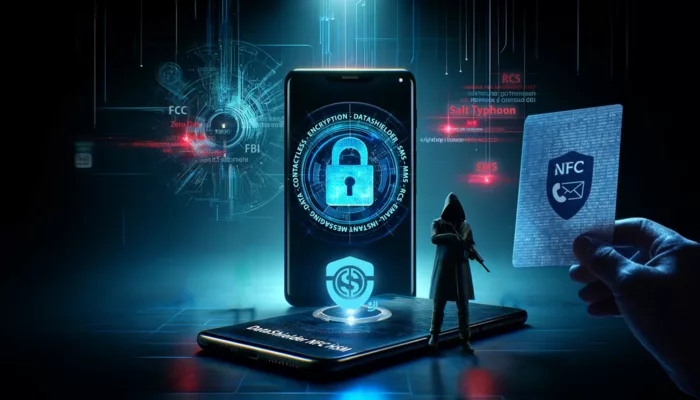
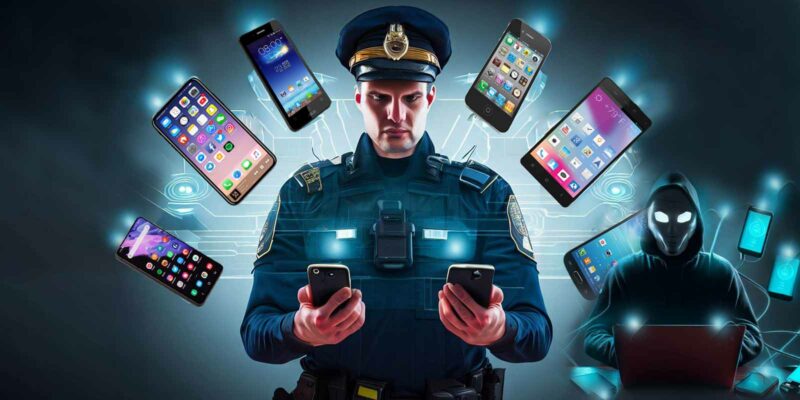
Mobile Cyber Threats for Government Agencies – smartphone with cyber threat notifications on white background.

Mobile Cyber Threats in Government Agencies by Jacques Gascuel: This subject will be updated with any new information on mobile cyber threats and secure communication solutions for government agencies. Readers are encouraged to leave comments or contact the author with suggestions or additions.  

Protecting Government Mobile Communications Against Cyber Threats like Salt Typhoon

Mobile Cyber Threats like Salt Typhoon are increasingly targeting government agencies, putting sensitive data at risk. This article explores the rising risks for mobile security and explains how DataShielder NFC HSM offers a robust, anonymous encryption solution to protect government communications and combat emerging cyber threats.

2025 Cyberculture Cybersecurity Digital Security EviLink

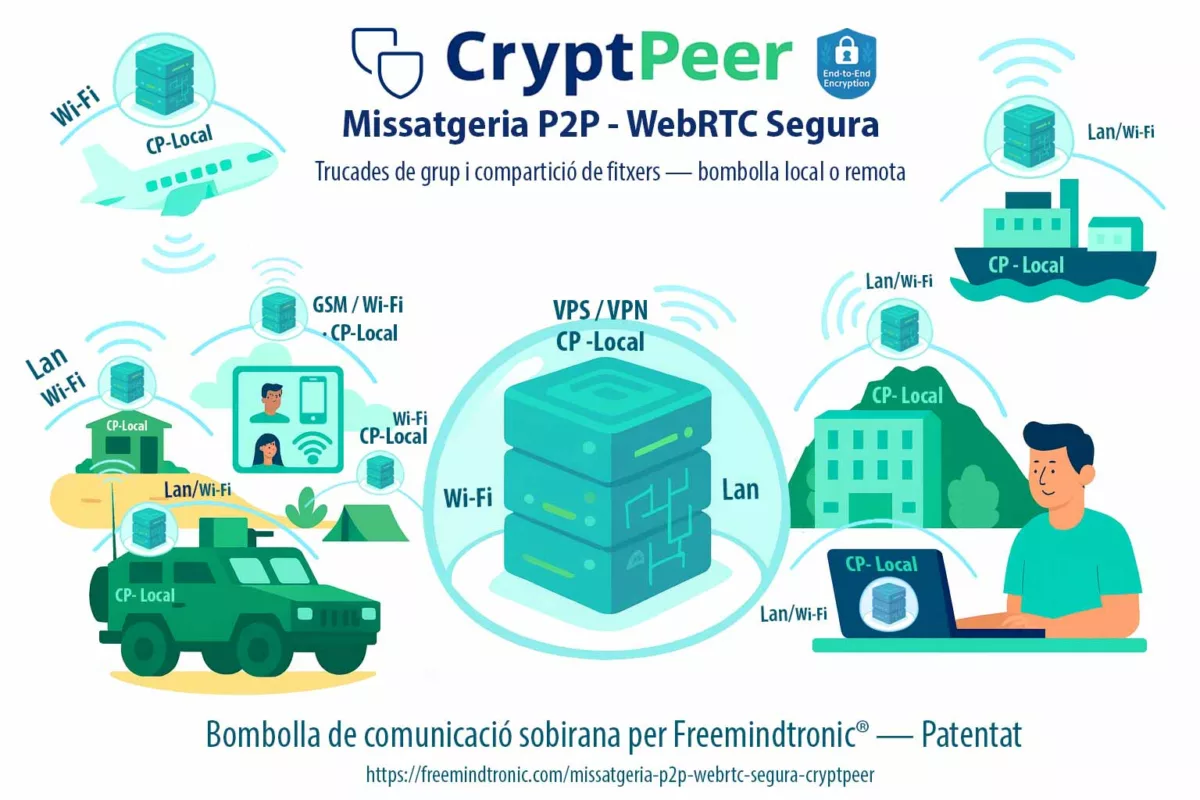
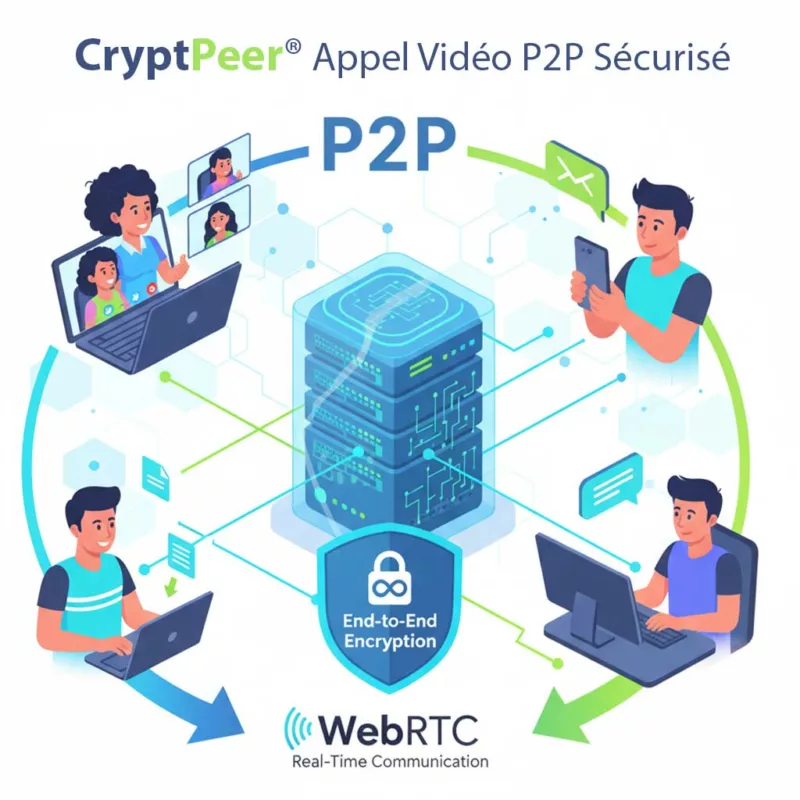
CryptPeer messagerie P2P WebRTC : appels directs chiffrés de bout en bout

2025 Cyberculture

Louvre Security Weaknesses — ANSSI Audit Fallout

2026 Awards Cyberculture Digital Security Distinction Excellence EviOTP NFC HSM Technology EviPass EviPass NFC HSM technology EviPass Technology finalists PassCypher PassCypher

Quantum-Resistant Passwordless Manager — PassCypher finalist, Intersec Awards 2026 (FIDO-free, RAM-only)

US Gov Agency Urges Employees to Limit Mobile Use Amid Growing Cyber Threats

Reports indicate that the U.S. government’s Consumer Financial Protection Bureau (CFPB) has directed its employees to minimize the use of cellphones for work-related activities. This advisory follows recent cyber threats, particularly the “Salt Typhoon” attack, allegedly conducted by Chinese hackers. Although no direct threat to the CFPB has been confirmed, this recommendation highlights vulnerabilities in mobile communication channels and the urgent need for federal agencies to prioritize secure communication methods. For more details, you can refer to the original article from The Wall Street Journal: (wsj.com).

Mobile Cyber Threats: A Growing Risk for Government Institutions

Cyberattacks targeting government employees’ smartphones and tablets are rising, with mobile devices providing a direct gateway to sensitive information. The Salt Typhoon attack serves as a recent example of these risks, but various other espionage campaigns also target mobile vulnerabilities in government settings. Given these threats, the CFPB is now advising employees to limit mobile use and to prioritize more secure platforms for communication.

Focus on Government Employees as Cyberattack Targets

Government employees, especially those with access to confidential data, are prime targets for cybercriminals. These individuals often handle sensitive information, making their devices and accounts particularly appealing. Attacks like Salt Typhoon seek to access:

  • Login Credentials: Stolen credentials can provide direct access to restricted databases and communication channels, leading to potentially devastating breaches.
  • Location Data: Tracking government employees’ locations in real-time offers strategic information about operations and movements, which is especially valuable for foreign intelligence.
  • Sensitive Communications: Intercepting messages between government employees can expose classified information, disrupt operations, or provide insight into internal discussions.

Past cases demonstrate the real-world impact of such cyberattacks. For instance, a 2015 breach targeted the U.S. Office of Personnel Management (OPM), compromising personal information of over 20 million current and former federal employees. This breach revealed details such as employees’ job histories, fingerprints, and social security numbers, underscoring the security risks government personnel face.

Key Cyber Threats Facing Mobile Devices

  1. Phishing and Mobile Scams: Cybercriminals increasingly use SMS phishing (smishing) and other tactics to lure government employees into revealing sensitive information or unknowingly installing spyware.
  2. Spyware and Malicious Apps: Tools like Pegasus spyware have demonstrated the capability to access private calls, messages, and even activate cameras and microphones to monitor private communications.
  3. Exploiting System Flaws and Zero-Day Vulnerabilities: Hackers exploit unpatched vulnerabilities in operating systems to covertly install malware on devices.
  4. Network Attacks and IMSI Catchers: Fake cell towers (IMSI catchers) allow cybercriminals to intercept calls and messages near the target, compromising sensitive information.
  5. Bluetooth and Wi-Fi Interception: Public Wi-Fi and Bluetooth connections are particularly vulnerable to interception, especially in public or shared spaces, where attackers can access devices.

Notorious Spyware Threats: Pegasus and Predator

Beyond targeted cyberattacks like Salt Typhoon, sophisticated spyware such as Pegasus and Predator pose severe threats to government agencies and individuals responsible for sensitive information. These advanced spyware tools enable covert surveillance, allowing attackers to intercept valuable data without detection.

  • Pegasus: This spyware is one of the most powerful and notorious tools globally, widely known for its capabilities to infiltrate smartphones and monitor high-stakes targets. Pegasus can access calls, messages, and even activate the camera and microphone of infected devices, making it a potent tool in espionage. Learn more about Pegasus’s extensive reach and impact in our in-depth article: Pegasus – The Cost of Spying with One of the Most Powerful Spyware in the World.
  • Predator: Like Pegasus, Predator has been employed in covert surveillance campaigns that threaten both governmental and private sector security. This spyware can capture and exfiltrate data, offering attackers a silent but powerful tool for gathering sensitive information. To understand the risks associated with Predator, visit our detailed guide: Predator Files Spyware.

These examples underscore the urgent need for robust encryption solutions. Spyware like Pegasus and Predator make it clear that advanced security tools, such as DataShielder NFC HSM, are essential. DataShielder offers an anonymous, fully encrypted communication platform that protects against sophisticated surveillance, ensuring that sensitive data remains secure and beyond reach.

Impacts on National Security and the Role of Cybersecurity

Cybersecurity failures in government agencies can have serious national security repercussions. The potential consequences underscore the importance of cybersecurity for sensitive government communications.

  1. Repercussions of a Security Breach: A security breach within a government agency can lead to the disclosure of confidential information, impact diplomatic relations, or even compromise critical negotiations. In some cases, such breaches can disrupt operations or expose weaknesses within government structures. A major breach could also undermine the public’s trust in the government’s ability to safeguard national interests.
  2. New Cybersecurity Standards and Policies: In response to increasing threats, federal agencies may adopt stricter policies. This can include expanded training programs for employees, emphasizing vigilance in detecting phishing attempts and other suspicious activity. Agencies may also implement policies restricting the use of personal devices for work tasks and investing in stronger security frameworks. By enforcing such policies, agencies aim to create a more resilient defense against sophisticated cyber threats.

Statistics: The Rise of Mobile Cyber Threats

Recent data highlights the scale of mobile cyber threats and the importance of robust security measures:

  • Increase in Mobile Phishing Attacks: According to the National Institute of Standards and Technology (NIST), mobile phishing attacks rose by 85% between 2020 and 2022, with smishing campaigns increasingly targeting government employees to infiltrate networks. (NIST Source)
  • Zero-Day Vulnerabilities: The National Security Agency (NSA) reports a 200% increase in zero-day vulnerability exploitation on mobile devices over the past five years. These flaws enable hackers to infiltrate devices undetected. (NSA Security Guidance)
  • Spyware and Surveillance: The use of spyware for surveillance in government settings has tripled since 2019. Tools like Pegasus enable hackers to capture calls and messages, threatening confidentiality. (NIST Mobile Security)
  • Centralized Device Management: NIST recommends centralized management of devices within agencies, securing both issued and personal devices. This approach reportedly reduced mobile security incidents by 65% in 2022.
  • Financial Impact of Mobile Cyberattacks: According to Cybersecurity Ventures, mobile cyberattacks are expected to cost organizations around $1.5 billion per year by 2025, covering data repair, breach management, and information loss.

Security Guidelines from the NSA and NIST

To address these threats, agencies like the NSA and NIST recommend critical security practices:

  • NSA: Disabling Wi-Fi, Bluetooth, and location services when not in use reduces risks from vulnerable wireless connections. (NSA Security Guidance)
  • NSA – Securing Wireless Devices in Public Settings: This guide explains how to identify risky public connections and secure devices in public spaces.
  • NIST: NIST suggests centralized device management and enforces regular security updates for work and personal devices used in agencies. (NIST Mobile Security Guide)

DataShielder NFC HSM: A Comprehensive Solution for Secure, Anonymous Communication

In response to escalating mobile cyber threats, government agencies are prioritizing more secure communication methods. Traditional security measures often rely on servers or cloud storage, which can be vulnerable to interception or data breaches. DataShielder NFC HSM provides a breakthrough solution tailored specifically to meet the stringent security and privacy needs of sensitive government communications.

DataShielder NFC HSM Products for Android Devices

  1. DataShielder NFC HSM Master: Provides robust encryption for emails, files, and secure communications on mobile and desktop platforms, protecting against brute force attacks and espionage.
  2. DataShielder NFC HSM Lite: Offers essential encryption capabilities for secure communications, balancing security and usability.
  3. DataShielder NFC HSM Auth: Prevents identity theft and AI-assisted fraud, offering secure, anonymous authentication.
  4. DataShielder NFC HSM M-Auth: Designed for secure authentication in mobile environments, keeping mobile communications protected in less secure networks.

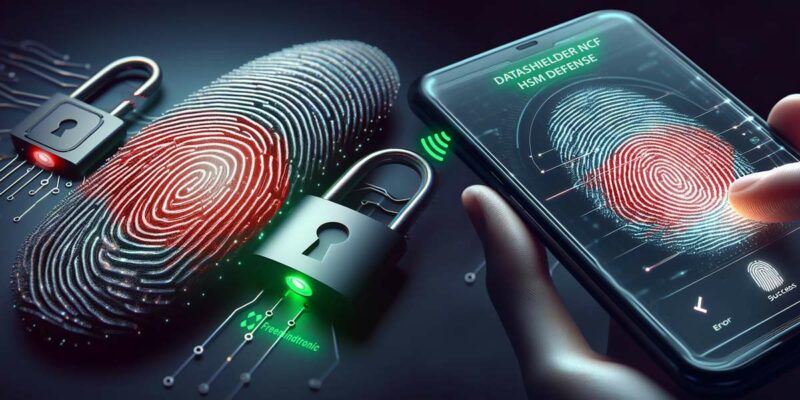
Enhanced Security for Sovereign Communications: DataShielder NFC HSM Defense

The DataShielder NFC HSM Defense version enables secure phone calls where contacts are stored solely within the NFC HSM, ensuring no traces of call logs, SMS, MMS, or RCS remain on the device after use. This feature is invaluable for agencies handling highly confidential information.

How to Defending Against Keyloggers: A Complete Guide

Protect Against Keyloggers - Shadowy hands reaching for a laptop keyboard with digital security icons and warning signs
Defending Against Keyloggers with advanced and effective strategies is essential in today’s cybersecurity landscape. This post provides comprehensive steps for Defending Against Keyloggers, enabling you to secure your digital life effectively. By following our expert guidance, you’ll enhance the security of your sensitive data and be better prepared against emerging keylogger tactics.

How to Shield Your Digital Life from Keystroke Loggers: An Expert’s Guide

Defending Against Keyloggers is essential to protect your sensitive data. Keyloggers are silent tools that record every keystroke, exposing sensitive data to cyber threats. This guide explores high-profile breaches, innovative attack methods, and strategic defenses. It offers a comprehensive strategy to secure your sensitive data against these ubiquitous threats and provides effective solutions for enhanced protection. Stay informed and proactive with our expert advice in the constantly evolving cybersecurity landscape.

2025 Digital Security Tech Fixes Security Solutions Technical News

SSH Key PassCypher HSM PGP — Sécuriser l’accès multi-OS à un VPS

2025 Tech Fixes Security Solutions

Secure SSH key for VPS with PassCypher HSM PGP

2025 Tech Fixes Security Solutions Technical News

SSH VPS Sécurisé avec PassCypher HSM

2025 Tech Fixes Security Solutions

NFC HSM SSL Cert IP: Trigger HTTPS Certificate Issuance DNS-less

2025 Tech Fixes Security Solutions

Let’s Encrypt IP SSL: Secure HTTPS Without a Domain

2025 Tech Fixes Security Solutions

Emoji and Character Equivalence: Accessible & Universal Alternatives

2024 Tech Fixes Security Solutions

How to Defending Against Keyloggers: A Complete Guide

2024 Tech Fixes Security Solutions

Unlock Write-Protected USB Easily (Free Methods)

What is a keylogger?

Successfully Defending Against Keyloggers involves understanding that they are software or hardware tools specifically designed to track and record keystrokes, usually without the user’s knowledge. They are used in both legitimate (e.g., parental controls) and malicious (e.g., spying and password theft) contexts.

History of Keyloggers

Keyloggers started as simple hardware devices in the early eras of computing. Originally, they were used for legitimate monitoring purposes, such as tracking employee performance or collecting data for ergonomic studies.

Over time, these devices have evolved into more sophisticated software tools. In the 1990s, the first keylogging software emerged, often used by system administrators to diagnose technical problems. However, these tools were quickly misused for malicious purposes.

Today, keyloggers are advanced cyber threats. They can be embedded in malware, disguised in legitimate applications, and even deployed remotely. Thanks to advances in artificial intelligence and machine learning, some keyloggers can adapt to user behavior, making them even more difficult to detect.
In summary, the history of keyloggers illustrates a significant transformation. Defending against keyloggers has become crucial to protect sensitive data and prevent complex cybercrimes. To do this, it is essential to implement robust security strategies and remain vigilant against these evolving threats.
This historical transformation underscores why Defending Against Keyloggers is vital today for data security and cybercrime prevention. With this historical perspective, it’s clear that Defending Against Keyloggers requires a proactive approach that adapts to evolving technology.

Keyloggers: The Maelstrom of Cyberattacks

Defending Against Keyloggers is crucial as these threats become increasingly invasive, representing a serious and growing danger in the digital era.

Considered one of the most invasive forms of cyberattacks, keyloggers represent a significant and growing threat in the digital age, requiring a robust and adaptive cybersecurity posture.

The Evolution of Keyloggers

Keyloggers have evolved from simple monitoring tools to sophisticated cyber threats capable of stealing large amounts of personal and corporate data. Understanding their history and mechanisms can significantly improve our defensive strategies.

Keyloggers pose a serious security threat because they silently capture keystrokes to steal sensitive data. Whether software or hardware, they discreetly record every keystroke you make on your keyboard without your knowledge. They can capture sensitive data such as passwords, credit card numbers, and private conversations. Software keyloggers run silently in the background of your system, while hardware keyloggers are physically connected to the device, often via a USB port. This guide explores how they work, introduces real-world attacks, and offers robust strategies to protect against them.
Future Trends in Keylogger Technology

Keylogger technology is rapidly evolving, posing new challenges in cybersecurity. With the expansion of the Internet of Things (IoT), the number of connected devices is increasing, creating more entry points for cyberattacks, including keyloggers. Thus, robust IoT security measures are required to protect sensitive data (CISAs).

Additionally, advances in artificial intelligence (AI) and machine learning (ML) have led to more sophisticated keyloggers. Attackers use AI-based keyloggers that adapt to user behavior, making them more difficult to detect. Therefore, AI-based defensive strategies are essential to identify and mitigate these threats (NISTs).

Finally, the increasing reliance on cloud services introduces new vulnerabilities. Cybercriminals target cloud environments with keyloggers to capture data from remote sessions or shared virtual machines. To counter these threats, organizations must adopt enhanced cloud security protocols, such as Zero Trust architectures and continuous remote access point (CISA) monitoring.

Implementing advanced AI-based defense tactics is crucial for Defending Against Keyloggers, as these threats continue to evolve with new technologies.

Distinction Between System Monitors and Keyloggers

While both tools monitor user activity, system monitors monitor overall system operations without necessarily logging keystrokes, unlike keyloggers that specifically capture and record keystrokes.

Keylogger Definitions: Distinguishing Between System Monitors and Keyloggers

  • System Monitor : These tools offer comprehensive monitoring capabilities, including keylogging, screen capture, and user activity monitoring, to ensure thorough security assessments.
  • Keystroke Logger : Focused on recording keystrokes typed on a keyboard, keystroke loggers discreetly capture sensitive information without the user’s knowledge.

Types of Keyloggers and How to Protect Yourself from Them

  • Hardware keyloggers : These devices are physically connected to the computer and can intercept keystrokes directly from the hardware before the data reaches the operating system. They require physical access to install and are undetectable by software security solutions.
  • Software keyloggers : These are programs installed on a computer that run invisibly and record every keystroke. They can be installed remotely via malware and are more versatile than hardware keyloggers, capturing screenshots and clipboard data in addition to keystrokes.

Alarming Statistics on Keylogger Attacks

Recent trends reveal a slight decline in keylogger detection, from 1,682 cases in the first quarter to 1,343 in the second quarter of 2024. However, the risk persists significantly. In 2023, keylogger attacks increased by 30%, causing major financial losses and data breaches affecting thousands of individuals:

  • Average cost of a breach : Each incident costs approximately $4.24 million.
  • Time to detection : It takes an average of 287 days to identify and contain a breach.
  • Business impact : 60% of small businesses go out of business within six months of an attack.

These figures underscore the urgency of implementing robust and adaptive security strategies to protect IT systems against this persistent cyber threat.

Real-life examples of keylogger attacks

Keylogger Acoustic Attack (March 2024)

Researchers have recently developed a side-channel acoustic attack that can identify keystrokes based on keystroke patterns. This sophisticated method highlights how even ambient noise can be used to infer sensitive information, illustrating the evolution of keylogging techniques.

Misuse of Apple’s “Find My” network (November 2023)

Innovative keylogging attacks exploited Apple’s “Find My” network, using it to transmit data captured by keyloggers into keyboards. This shows how standard network services can be hijacked for data theft.

Campagne Snake Keylogger (2024)

A recent variant of the Snake Keylogger has proven to be very effective, usually spreading through phishing campaigns with malicious Office documents. Once opened, these files initiate keylogger downloads, highlighting the need for vigilance with attachments.

Androxgh0st Trojan Surge (avril 2024)

The Androxgh0st Trojan, now widely used in botnet operations on Windows, Mac, and Linux, targets sensitive information through complex, cross-platform attacks. The increase in activity of this Trojan underscores the importance of multi-layered defenses.

Phishing with built-in keylogger (September 2022)

In a particularly targeted phishing campaign, the attackers used fake state reimbursement platforms to capture keystrokes in real-time, demonstrating the risks posed by sophisticated and localized phishing methods.

The LastPass Attack (November 2022)

A major attack on LastPass involved a keylogger installed on a DevOps engineer’s computer, which had serious repercussions for users and the company. This incident underscores the critical need for secure device management.

The Evolution of Agent Tesla (August 2020)

The infamous Agent Tesla keylogger has been updated to target credentials on web browsers, VPNs, and various apps, marking its evolution into a versatile tool for credential theft.

How Keyloggers Are Designed

Defending Against Keyloggers involves understanding how these threats are designed as both software and hardware. While software-based keyloggers integrate with systems to monitor digital keystrokes, hardware keyloggers physically attach to keyboards to intercept data before it reaches the computer.

Keylogger Attack Methods

Keyloggers work by:

  • Keystroke timing: Recording the exact moment when each key is pressed.
  • Duration and speed : Measures the duration and speed of pressing the keys.
  • Key identity : Identification of the specific keys used.
  • Screen Capture : Taking snapshots of the screen to capture information captured during secure sessions.

Detailed Keylogger Mechanics

Keyloggers work by monitoring keyboard input, storing data, and then transmitting it to a third party. Advanced versions can also capture screenshots, track user behavior, and record app usage.

Keylogger Design and Implementation

Keyloggers can be implemented as software installed directly on a device or as hardware plugged into a keyboard connection. They integrate deeply with the operating system to stay hidden from the user and antivirus programs.

The Consequences of Keylogger Infiltration

Victims of keyloggers can suffer significant financial losses, identity theft, and a serious breach of privacy, leading to long-term security issues.

Effective Steps for Defending Against Keyloggers

Use advanced antivirus solutions, perform regular system audits, and use safe browsing practices to protect against the stealthy nature of keyloggers.

Types of Keyloggers: Exploring Software Keylogger Logging

  • User-mode keyloggers : These work at the application layer and are easier to install, but also easier to detect and remove.
  • Kernel-mode keyloggers : These work at the core of the operating system, capturing keystrokes with elevated privileges and are significantly harder to combat.

API-Based, Form-Based, and Kernel-Based Keyloggers

  • API-based keyloggers : Intercept API calls to capture keystrokes.
  • Form-based keyloggers : Target data entered into forms on websites and apps.
  • Kernel-based keyloggers : Work in the operating system kernel to record keystrokes, often bypassing conventional security measures.

Recognize emerging variants of keyloggers

Keylogger technology is advancing rapidly, with new forms designed to target cloud-based services and IoT devices, areas once thought to be less vulnerable to keylogging. In addition, AI-driven keyloggers adapt their methods, making them even more stealthy and efficient. Staying on top of these trends allows you to better protect yourself from keyloggers as they evolve.

Leverage advanced defensive tools

Newly developed real-time behavioral analytics tools can detect unusual typing patterns, quickly identifying suspicious behavior associated with keyloggers. Some of these tools even leverage AI to predict and block keylogging attempts before data can be compromised.

Advanced Protection with PassCypher Tools for Defending Against Keyloggers

When Defending Against Keyloggers, traditional measures like antivirus software are essential, yet PassCypher HSP PGP offers more advanced protection, but tools like PassCypher HSP PGP offer enhanced protection.

Strengthen your security with PassCypher HSM PGP and PassCypher NFC HSM. These tools incorporate 2FA OTP (TOTP and HOTP), providing robust defenses against keyloggers on NFC-enabled computers and Android devices.

When it comes to defending against keylogger attacks, traditional approaches such as antivirus software or system audits provide essential layers of protection, but don’t necessarily eliminate all vulnerabilities. However, PassCypher HSP PGP and PassCypher NFC HSM offer an advanced solution by completely bypassing common keylogging vulnerabilities.

Why are PassCypher solutions keylogger-proof?

PassCypher HSP PGP and PassCypher NFC HSM are designed to neutralize keylogger threats by eliminating keystroke dependency, clipboard access, and on-screen password visibility:

  • No keystroke or clipboard usage: PassCypher does not rely on the keyboard or clipboard, making keyloggers inefficient because they cannot capture keystrokes or clipboard data.
  • Invisible display of credentials: Credentials are never displayed in plain text, preventing screenshot keyloggers or malware from intercepting.
  • Strong encryption and NFC security: Using NFC technology, PassCypher NFC HSM directly transfers encrypted credentials, protecting the login data within the NFC computer or android phone.

Learn more about the PassCypher ecosystem:

The hardware password manager:

Navigating Between Legal and Illegal Uses of Keyloggers: Legal and Ethical Perspectives

While some companies legitimately use keyloggers to monitor employee activities, cybercriminals exploit them to perpetrate crimes such as identity theft and financial fraud. These opposing uses generate significant ethical and legal controversies.

Legal and Ethical Considerations

Exploring the legal framework for keyloggers is complex, as their use raises important privacy and consent issues. Legally, the use of keyloggers may be permitted under certain conditions, such as monitoring employees with explicit consent and valid justification. However, their misuse can lead to serious privacy violations, which are severely regulated by strict data protection laws like the General Data Protection Regulation (GDPR) in Europe. It is imperative that organizations understand and comply with regulatory frameworks to avoid legal and ethical consequences, while balancing the needs of security with the rights of individuals.

Clarifying Legal Ambiguities

Understanding the fluctuating laws regarding keyloggers is essential, as they can vary between legitimate surveillance and a violation of privacy. This legal ambiguity underscores the importance for users and businesses to familiarize themselves with the legal nuances in order to remain compliant.

International Legal Responses

Faced with the misuse of keylogging technologies, global legislatures are strengthening regulation. In the United States, laws like the Electronic Communications Privacy Act (ECPA) protect against the unlawful interception of electronic communications. These measures aim to strictly regulate the use of these technologies and to sanction their illegitimate use, thus ensuring the protection of personal data and confidentiality.

The Current State of Keystroke Logging Threats in 2024/2025

With the rise of remote work and the rise of digital communication, keylogging threats are more prevalent than ever, highlighting the need for continued advancements in cybersecurity measures.

Industry-Specific Keylogger Attacks

Keyloggers target industries such as finance and healthcare because of their valuable data. For example, bank keyloggers capture account information and passwords, resulting in financial fraud.

Recognize emerging variants of keyloggers

Emerging keyloggers use AI to adapt to user behaviors, making detection even more difficult. They can predict typing patterns and adjust their methods accordingly.

Real-life examples of keylogger attacks

Recent keylogger attacks include using audio-based side-channel attacks to crack keystrokes and exploiting network services such as Apple’s “Find My” to transmit recorded data.

Advanced defensive tactics for Defending Against Keyloggers

Keylogger protection requires strategies that go beyond basic antivirus tools. For a complete defense, the combination of advanced techniques with simpler and accessible methods strengthens your cybersecurity.

Behavioral Biometrics

Behavioral biometrics analyzes your unique patterns, detecting unusual behaviors that could signal a keylogger. Although the configuration can be complex, this method is particularly effective in high-security environments. For many users, simpler biometric data, such as fingerprints or facial recognition, provides strong and accessible layers of security. In fact, the National Institute of Standards and Technology (NIST) SP 800-63B highlights the power of multi-factor and biometric authentication, explaining how unique user characteristics enhance security

System Audits and File Integrity Monitoring

Regular system audits help identify unauthorized changes in files or configurations where keyloggers may be hiding. The tools built into most operating systems can make this task manageable:

  • Windows Defender has file integrity monitoring that notifies you of changes.
  • The macOS Activity Monitor and Task Manager on Windows reveal unexpected apps and activities.

These tools may seem technical but are effective. Even for individual users, simply checking for unusual behavior or unexpected pop-ups is a convenient and straightforward approach to staying vigilant.

AI-driven security tools

AI-powered security software is evolving and becoming more user-friendly for individuals, not just businesses. Programs such as Malwarebytes and Norton Antivirus use AI to detect suspicious behavior in real-time. By learning and adapting to new threats, these tools are especially useful against the evolution of keylogger techniques. On this topic, the MIT Technology Review on AI and Cybersecurity discusses the role of AI in cybersecurity, showing how it effectively detects sophisticated threats like keyloggers.

Proactive measures to prevent keystrokes from being logged

Implementing strong cybersecurity practices, such as using secure password managers, enabling multi-factor authentication, and educating users about phishing, can effectively mitigate keylogging risks.

Defensive Strategies Against Keyloggers

Deploying AI-based security tools, conducting regular system audits, and using behavioral biometrics are effective against keyloggers. Programs like Malwarebytes offer real-time threat detection and response capabilities.

Key Criteria for Choosing Anti-Keylogger Software

Select the software based on its detection capabilities, ease of use, and support. Consider features such as heuristic analysis, which identifies potentially harmful software based on behavior.

Creating a complete cybersecurity ecosystem with PassCypher

Defending Against Keyloggers successfully requires more than tools—it necessitates a holistic cybersecurity strategy, integrating solutions like PassCypher HSM PGP, integrating strategies like PassCypher HSM PGP. PassCypher, with its free and advanced solutions such as PassCypher HSM PGP and PassCypher NFC HSM, plays a pivotal role in this strategy. Beyond technology solutions, implementing robust security policies, ongoing training programs, and rigorous procedures is critical to fortifying cybersecurity. These measures ensure comprehensive protection against cyber threats, allowing businesses and individuals to safely navigate the digital age. By adopting this holistic approach, which integrates preventive measures and cutting-edge solutions, cyber resilience against keylogging threats and other cybercrimes is strengthened.

Leverage reliable resources and benchmarks

Use guidelines from the National Institute of Standards and Technology (NIST) and updates from the Cybersecurity and Infrastructure Security Agency (CISA) to stay informed about best practices and the latest threats.

PassCypher Integration: A Robust Technology Ecosystem

PassCypher HSM PGP, with its 100% free version, offers an extra layer of security that is accessible to everyone, ranging from privacy-conscious individuals to companies looking to protect their sensitive data. By integrating NFC technology and state-of-the-art encryption, PassCypher creates an ecosystem where data is effectively protected from keyloggers, while being easy to deploy and use.

Impacts on businesses and individuals

Keyloggers pose a significant threat to both businesses and individuals, leading to financial losses, reputational damage, and privacy violations. The free version of PassCypher HSM PGP allows every user, regardless of financial capacity, to access high-level security tools. For businesses, this translates into a reduced risk of cyberattacks and for individuals, it provides peace of mind by securing their daily transactions and communications.

Why choose PassCypher?

PassCypher stands out not only for its free but also for its ability to offer enhanced security without increased complexity. This tool allows users to browse the internet, make financial transactions or communicate securely, without worrying that their keystrokes will be recorded by malware. For businesses, using PassCypher can also be a point of differentiation, building customer confidence in their ability to protect user data.

Stay up to date with the latest keylogger incidents

To protect against keyloggers, it’s essential to stay informed about the most recent incidents, as new keylogger-based attacks and phishing campaigns emerge every year. In 2023-2024, keyloggers have been used in sophisticated cyberattacks around the world, targeting industries and users in new ways. The evidence of these incidents shows that keylogger threats continue to evolve. By understanding how these attacks occur, you can better prepare your defenses.

Understanding Keylogger Threats: Frequently Asked Questions

Keyloggers are a hidden but significant threat to cybersecurity. In this FAQ section, we answer the most common inquiries on keyloggers to help clarify complex concepts and provide actionable insights.

FAQ

Software keyloggers

These programs run discreetly in the background of the computer, recording every keystroke. They can be installed through malware or accidentally downloaded together with other applications. These keyloggers can not only capture keystrokes but also record screenshots and monitor internet activity.

Hardware keyloggers

These devices are usually small physical devices that connect between the keyboard and the computer’s USB or PS/2 port. They log keystrokes directly from the keyboard before the information is transmitted to the operating system. Their physical presence makes them detectable by visual inspection, but they are often very discreet and difficult to notice.

No, keyloggers are tools that can be used for both legitimate monitoring and malicious activities.

Regular scans with updated antivirus software and monitoring for unusual system behavior are effective detection methods.

Although less common, mobile devices can indeed be compromised by keyloggers, especially through malicious apps or compromised security software.

Using comprehensive security solutions like PassCypher and maintaining vigilant cybersecurity practices are your best defenses.

Disconnect from the internet, change all passwords on a secure device, and use a trusted malware removal tool to clean the infected system.

Software keyloggers

These programs run discreetly in the background of the computer, recording every keystroke. They can be installed through malware or accidentally downloaded together with other applications. These keyloggers can not only capture keystrokes but also record screenshots and monitor internet activity.

Hardware keyloggers

These devices are usually small physical devices that connect between the keyboard and the computer’s USB or PS/2 port. They log keystrokes directly from the keyboard before the information is transmitted to the operating system. Their physical presence makes them detectable by visual inspection, but they are often very discreet and difficult to notice.

Detection of software keyloggers:

  1. Use of antivirus and anti-malware software: Make sure your security software is up to date and perform regular scans. Many modern security software programs are equipped to detect keyloggers.
  2. System Process Monitoring: Use the Task Manager to monitor running processes. Unknown or suspicious processes that use high resources can be signs of a keylogger.
  3. Checking startup programs: Review the programs that launch when your computer starts. Keyloggers can set up an auto-start to stay active.

Hardware Keylogger Detection:

  1. Physical inspection: Regularly check the connections between your keyboard and your computer. Look for any unusual devices plugged into the USB or PS/2 port where the keyboard connects.
  2. Check for unknown devices: Monitor your device manager for any unknown or unrecognized hardware that might be connected to your system.

Use our password management software

PassCypher HSM PGP in its free or advanced version or hardware version with PassCyppher NFC HSM to secure your NFC Android phone as well

Robust security

Install and maintain trusted antivirus software that includes protection against keyloggers.

Update your operating system and applications

Regular updates often fix security vulnerabilities that could be exploited by keyloggers.

Be careful with downloads

Avoid downloading software from unverified sources. Favor the official websites of the publishers to reduce the risk of downloading malicious applications.

Education and awareness

Learn how to recognize phishing attempts and other techniques used to install keyloggers. Don’t click on suspicious links or attachments in emails or messages.

Use of password managers

Password managers can autofill your login information without you having to hit the keys, reducing the risks associated with software keyloggers.

Multi-factor authentication (MFA)

Use PassCypher NFC HSM also handles 2FA/MFA OTP two-factor authentication keys (TOTP and HOTP) when possible, especially for important accounts like email and bank accounts. This adds an extra layer of security that doesn’t rely solely on passwords.

Use robust security software

Install and maintain trusted antivirus software that includes protection against keyloggers.

Update your operating system and applications

Regular updates often fix security vulnerabilities that could be exploited by keyloggers.

Be careful with downloads

Avoid downloading software from unverified sources. Favor the official websites of the publishers to reduce the risk of downloading malicious applications.

Education and awareness

Learn how to recognize phishing attempts and other techniques used to install keyloggers. Don’t click on suspicious links or attachments in emails or messages.

Use of password managers

Password managers can autofill your login information without you having to hit the keys, reducing the risks associated with software keyloggers.

Electronic Warfare in Military Intelligence

Realistic depiction of electronic warfare in military intelligence with modern equipment and personnel analyzing communication signals on white background

Electronic Warfare in Military Intelligence by Jacques gascuel I will keep this article updated with any new information, so please feel free to leave comments or contact me with suggestions or additions.his article will be updated with any new information on the topic, and readers are encouraged to leave comments or contact the author with any suggestions or additions.  

The Often Overlooked Role of Electronic Warfare in Military Intelligence

Electronic Warfare in Military Intelligence has become a crucial component of modern military operations. This discipline discreetly yet vitally protects communications and gathers strategic intelligence, providing armed forces with a significant tactical advantage in an increasingly connected world.

2025 Cyberculture Cybersecurity Digital Security EviLink

CryptPeer messagerie P2P WebRTC : appels directs chiffrés de bout en bout

2025 Cyberculture

Louvre Security Weaknesses — ANSSI Audit Fallout

2026 Awards Cyberculture Digital Security Distinction Excellence EviOTP NFC HSM Technology EviPass EviPass NFC HSM technology EviPass Technology finalists PassCypher PassCypher

Quantum-Resistant Passwordless Manager — PassCypher finalist, Intersec Awards 2026 (FIDO-free, RAM-only)

Historical Context: The Evolution of Electronic Warfare in Military Intelligence

From as early as World War II, electronic warfare established itself as a critical strategic lever. The Allies utilized jamming and interception techniques to weaken Axis forces. This approach was notably applied through “Operation Ultra,” which focused on deciphering Enigma messages. During the Cold War, major powers refined these methods. They incorporated intelligence and countermeasures to secure their own networks.

Today, with rapid technological advancements, electronic warfare combines state-of-the-art systems with sophisticated intelligence strategies. It has become a cornerstone of modern military operations.

These historical foundations underscore why electronic warfare has become indispensable. Today, however, even more advanced technologies and strategies are essential to counter new threats.

Interception and Monitoring Techniques in Electronic Warfare for Military Intelligence

In military intelligence, intercepting enemy signals is crucial. France’s 54th Electronic Warfare Regiment (54e RMRT), the only regiment dedicated to electronic warfare, specializes in intercepting adversary radio and satellite communications. By detecting enemy frequencies, they enable the armed forces to collect critical intelligence in real time. This capability enhances their ability to anticipate enemy actions.

DataShielder NFC HSM Master solutions bolster these capabilities by securing the gathered information with Zero Trust and Zero Knowledge architecture. This ensures the confidentiality of sensitive data processed by analysts in the field.

Current technological advancements paired with electronic warfare also spotlight the modern threats that armed forces must address.

Emerging Technologies and Modern Threats

Electronic warfare encompasses interception, jamming, and manipulation of signals to gain a strategic edge. In a context where conflicts occur both on the ground and in the invisible spheres of communications, controlling the electromagnetic space has become essential. Powers such as the United States, Russia, and China invest heavily in these technologies. This investment serves to disrupt enemy communications and safeguard their own networks.

Recent conflicts in Ukraine and Syria have highlighted the importance of these technologies in disrupting adversary forces. Moreover, new threats—such as cyberattacks, drones, and encrypted communications—compel armies to innovate. Integrating artificial intelligence (AI) and 5G accelerates these developments. DataShielder HSM PGP Encryption meets the need for enhanced protection by offering robust, server-free encryption, ideal for high-security missions where discretion is paramount.

While these technological advancements are crucial, they also pose complex challenges for the military and engineers responsible for their implementation and refinement.

Change to: Challenges of Electronic Warfare in Military Intelligence: Adaptation and Innovation

Despite impressive advancements, electronic warfare must continually evolve. The rapid pace of innovation renders cutting-edge equipment quickly obsolete. This reality demands substantial investments in research and development. It also requires continuous training for electronic warfare specialists.

DataShielder products, such as DataShielder NFC HSM Auth, play a pivotal role in addressing these challenges. For instance, NFC HSM Auth provides secure, anonymous authentication, protecting against identity theft and AI-assisted threats. By combining advanced security with ease of use, these solutions facilitate adaptation to modern threats while ensuring the protection of sensitive information.

These advances pave the way for emerging technologies, constantly reshaping the needs and methods of electronic warfare.

Analyzing Emerging Technologies: The Future of Electronic Warfare

Integrating advanced technologies like AI is vital for optimizing electronic warfare operations. AI automates interception and jamming processes, increasing military system responsiveness. DataShielder NFC HSM Auth fits seamlessly into this technological environment by protecting against identity theft, even when AI is involved. Post-quantum cryptography and other advanced security techniques in the DataShielder range ensure lasting protection against future threats.

To better understand the real-world application of these technologies, insights from field experts are essential.

Case Studies and Operational Implications: The Testimony of Sergeant Jérémy

Insights from the Field: The Realities of Electronic Warfare Operations

In the field of electronic warfare, the testimony of Sergeant Jérémy, a member of the 54th Transmission Regiment (54e RMRT), provides a deeper understanding of the challenges and operational reality of a job that is both technical, discreet, and demanding. Through his accounts of operations in Afghanistan, Jérémy illustrates how electronic warfare can save lives by providing essential support to ground troops.

Real-Time Threat Detection and Protection in Combat Zones

During his mission in Afghanistan, at just 19, Jérémy participated in radiogoniometry operations, identifying the location of electromagnetic emissions. In one convoy escort mission, his equipment detected signals from enemy forces, indicating a potential ambush. Thanks to this detection, he alerted his patrol leader, allowing the convoy to take defensive measures. This type of mission demonstrates how electronic warfare operators combine technical precision and composure to protect deployed units.

Tactical Jamming and Strategic Withdrawals

In another operation, Jérémy and his team helped special forces withdraw from a combat zone by jamming enemy communications. This temporary disruption halted adversary coordination, giving allied troops the necessary time to retreat safely. However, this technique is not without risks: while crucial, jamming also prevents allied forces from communicating, adding complexity and stress for operators. This mission underscores the delicate balance between protecting allies and disorganizing the enemy, a daily challenge for electronic warfare specialists.

The Role of Advanced Equipment in Electronic Warfare Missions

On missions, the 54e RMRT uses advanced interception, localization, and jamming equipment. These modern systems, such as radiogoniometry and jamming devices, have become essential for the French Army in electronic intelligence and neutralizing adversary communications. However, these missions are physically and psychologically demanding, requiring rigorous training and a capacity to work under high pressure. Sergeant Jérémy’s testimony reminds us of the operational reality behind each technology and demonstrates the rigor with which electronic warfare operators must adapt and respond.

To listen to the complete testimony of Sergeant Jérémy and learn more about his journey, you can access the full podcast here.

Examining the methods of other nations also reveals the varied approaches to electronic warfare.

International Military Doctrines in Electronic Warfare for Military Intelligence

Military doctrines in electronic warfare vary from one country to another. For example, the United States integrates electronic warfare and cyber operations under its “multi-domain operations.” Meanwhile, Russia makes electronic warfare a central element of hybrid operations, combining jamming, cyberattacks, and disinformation. This diversity shows how each country adapts these technologies based on its strategic goals and specific threats.

The growing importance of electronic warfare is also reflected in international alliances, where cooperation is essential to address modern threats.

NATO’s Role in Electronic Warfare

Electronic warfare is also crucial for military alliances such as NATO. Multinational exercises allow for testing and perfecting electronic warfare capabilities, ensuring that allied forces can protect their communications and disrupt those of the enemy. This cooperation strengthens the effectiveness of electronic warfare operations. It maximizes the resilience of allied networks against modern threats.

Recent events demonstrate how electronic warfare continues to evolve to meet the demands of modern battlefields.

Recent Developments in Electronic Warfare

In 2024, the U.S. military spent $5 billion on improving electronic warfare capabilities, notably during the Valiant Shield 2024 exercise. During this event, innovative technologies like DiSCO™ (Distributed Spectrum Collaboration and Operations) were tested. This technology enables real-time spectrum data sharing for the rapid reprogramming of electronic warfare systems. These developments highlight the growing importance of spectral superiority in modern conflicts.

In Ukraine, electronic warfare allowed Russian forces to jam communications and simulate signals to disorient opposing units. This capability underscores the need to strengthen GPS systems and critical communications.

In response to these developments, advanced technological solutions like those of DataShielder provide concrete answers.

Integrating DataShielder Solutions

In the face of rising identity theft and AI-assisted cyber espionage threats, innovative solutions like DataShielder NFC HSM Auth and DataShielder HSM PGP Encryption have become indispensable. Each DataShielder device operates without servers, databases, or user accounts, enabling end-to-end anonymity in real time. By encrypting data through a segmented AES-256 CBC, these products ensure that no trace of sensitive information remains on NFC-enabled Android phones or computers.

  • DataShielder NFC HSM Master: A robust counter-espionage tool that provides AES-256 CBC encryption with segmented keys, designed to secure communications without leaving any traces.
  • DataShielder NFC HSM Auth: A secure authentication module essential for preventing identity theft and AI-assisted fraud in high-risk environments.
  • DataShielder NFC HSM Starter Kit: This all-in-one kit offers complete data security with real-time, contactless encryption and authentication, ideal for organizations seeking to implement comprehensive protection from the outset.
  • DataShielder NFC HSM M-Auth: A flexible solution for mobile authentication, enabling secure identity verification and encryption without dependence on external networks.
  • DataShielder PGP HSM Encryption: Offering advanced PGP encryption, this tool ensures secure communication even in compromised network conditions, making it ideal for sensitive exchanges.

By leveraging these solutions, military intelligence and high-security organizations can securely encrypt and authenticate communications. DataShielder’s technology redefines how modern forces protect themselves against sophisticated cyber threats, making it a crucial component in electronic warfare.

The convergence between cyberwarfare and electronic warfare amplifies these capabilities, offering new opportunities and challenges.

Cyberwarfare and Electronic Warfare in Military Intelligence: A Strategic Convergence

Electronic warfare operations and cyberattacks, though distinct, are increasingly interconnected. While electronic warfare neutralizes enemy communications, cyberattacks target critical infrastructure. Together, they create a paralyzing effect on adversary forces. This technological convergence is now crucial for modern armies. Products like DataShielder NFC HSM Master and DataShielder HSM PGP Encryption guarantee secure communications against combined threats.

This convergence also raises essential ethical and legal questions for states.

Legal and Ethical Perspectives on Electronic Warfare

With its growing impact, electronic warfare raises ethical and legal questions. Should international conventions regulate its use? Should new laws be created to govern the interception and jamming of communications? These questions are becoming more pressing as electronic warfare technologies improve.

In this context, the future of electronic warfare points toward ever more effective technological innovations.

Looking Ahead: New Perspectives for Electronic Warfare in Military Intelligence

The future of electronic warfare will be shaped by AI integration and advanced cryptography—key elements for discreet and secure communications. DataShielder NFC HSM Master and DataShielder HSM PGP Encryption are examples of modern solutions. They ensure sensitive data remains protected against interception, highlighting the importance of innovation to counter emerging threats.

Restart Your Phone Weekly for Mobile Security and Performance

A modern smartphone displaying a notification to 'Restart Your Phone Weekly', emphasizing cybersecurity on a clean white background with a security shield icon.

Restart your phone weekly by Jacques gascuel I will keep this article updated with any new information, so please feel free to leave comments or contact me with suggestions or additions.his article will be updated with any new information on the topic, and readers are encouraged to leave comments or contact the author with any suggestions or additions.  

Restart Your Phone Weekly to Enhance Mobile Security

Restarting your phone weekly is a simple yet powerful action to disrupt malware and improve device performance. By building this habit, you actively protect your data from threats like zero-click exploits and memory-resident malware. Additionally, cybersecurity experts and agencies such as the NSA recommend regular reboots to reinforce device security. Discover how advanced tools and essential practices can elevate your mobile security. Explore NSA’s full guidance here.

2025 Cyberculture Cybersecurity Digital Security EviLink

CryptPeer messagerie P2P WebRTC : appels directs chiffrés de bout en bout

2025 Cyberculture

Louvre Security Weaknesses — ANSSI Audit Fallout

2026 Awards Cyberculture Digital Security Distinction Excellence EviOTP NFC HSM Technology EviPass EviPass NFC HSM technology EviPass Technology finalists PassCypher PassCypher

Quantum-Resistant Passwordless Manager — PassCypher finalist, Intersec Awards 2026 (FIDO-free, RAM-only)

The Importance of Restarting Your Phone Weekly for Enhanced Mobile Security

Restarting your phone weekly is a proactive step that not only disrupts persistent malware but also prevents zero-click exploits from establishing a foothold. By making this a regular habit, you strengthen your mobile security routine and shield sensitive data from cyber threats. Both the NSA and cybersecurity experts emphasize the necessity of weekly restarts to secure devices against today’s advanced threats.

Why Restarting Your Phone Weekly Matters for Cybersecurity

Simply taking a few seconds each week to restart your smartphone can be one of the easiest yet most powerful ways to guard against cyber threats. Whether clearing out memory-based malware or preventing fileless attacks, a weekly reboot reduces these risks. This article explores why experts endorse this practice and how it safeguards your device. Learn how this small step can significantly enhance your mobile security.

Benefits of Restarting Your Phone Weekly

Because various types of malware exploit active system processes or reside in memory, restarting your phone flushes RAM and prevents malware from operating undetected. This step is particularly crucial against complex threats like zero-click attacks that don’t require user action.

Emphasis on Remote and Physical Attack Risks

In today’s mobile security landscape, your phone is vulnerable to multiple attack vectors. For instance, remote threats like zero-click exploits are particularly dangerous since they require no user interaction. Attackers use these techniques to install malware remotely, exploiting vulnerabilities in the operating system. Spyware, such as Pegasus, can infiltrate devices without any user action. Rebooting your phone disrupts these attacks, removing malware from memory, even if only temporarily.

Physical access to your device, however, poses equally significant risks. Malicious actors can install malware if they briefly access your device, particularly through compromised USB charging stations or public Wi-Fi networks. Additionally, attackers use juice jacking—installing harmful software or stealing data through public charging ports—as a common method. By disabling unused features like Bluetooth and location services, you reduce the likelihood of proximity-based attacks.

Types of Malware Removed by Restarting

  1. Memory-Resident Malware: Malware hiding in RAM is eliminated when memory clears during a reboot.
  2. Temporary Spyware: Spyware that monitors user behavior is disabled when sessions end.
  3. Zero-Click Exploits: Malware like Pegasus is disrupted temporarily by restarting.
  4. Session Hijacking Attempts: Malicious scripts exploiting browser or network sessions are stopped after a phone reboot.
  5. Memory-Based Rootkits: Rootkits modifying system files in RAM can be temporarily removed by restarting.

Best Practices from Security Agencies

In addition to restarting, the NSA recommends several best practices to secure your mobile device fully:

  • Update software regularly: Patch security holes by keeping your operating system up-to-date.
  • Enable multi-factor authentication (MFA): Secure accounts with an extra layer of protection.
  • Turn off unnecessary services: Disable Bluetooth, Wi-Fi, and location services when not in use, limiting exposure to threats like juice jacking.

Additionally, the NSA emphasizes avoiding public USB charging stations, as these can be hotspots for malware injections. Access the NSA’s complete mobile security guidelines to further enhance your mobile security.

Best Practices from Security Agencies

In addition to restarting, the NSA recommends a range of mobile security practices, which include updating your software regularly, enabling multi-factor authentication, and turning off unnecessary services to limit exposure to cyber risks.

  • Update your software regularly: Patch any security holes by keeping your operating system updated.
  • Enable multi-factor authentication (MFA): Secure your accounts with an extra layer of protection.
  • Turn off unnecessary services: Disable Bluetooth, Wi-Fi, and location services when not in use. This limits exposure to potential attacks, such as juice jacking from public USB ports.

Mobile Malware Statistics

In 2023, mobile devices faced heightened security challenges, with Kaspersky reporting over 5.6 million mobile malware and adware attacks blocked in the third quarter alone. Threats like Trojan-Droppers and zero-click exploits increased significantly, highlighting the need for stronger mobile security practices to combat persistent and evolving malware​..

As of Q1 2024, Kaspersky’s data shows a continued rise in mobile malware activity, blocking over 10.1 million attacks globally. Adware represented 46% of these threats, and Trojan-type malware attacks rose to include 35% of detected malicious programs. Memory-resident malware, zero-click attacks, and financial-targeted Trojans continue to compromise legitimate platforms and apps, with new exploits targeting modified versions of popular applications like WhatsApp​

Rising Concerns

Increasing zero-click malware, like Pegasus spyware, which bypasses user actions, has raised alarms about mobile device security. As mobile devices carry more sensitive data, attackers find new ways to exploit them. To counter these risks, security practices like weekly device reboots are recommended to temporarily disrupt these threats.

For a more in-depth view of these statistics and trends, you can view the latest report from Kaspersky here.

Elevate Mobile Security with DataShielder, PassCypher, and EviCall NFC HSM Solutions

Restarting your phone weekly is an effective way to disrupt temporary malware, but protecting your sensitive communications requires advanced tools. DataShielder NFC HSM, a dual-use hybrid encryption product designed for NFC-enabled Android devices, offers robust protection. Paired with PassCypher NFC HSM and EviCall NFC HSM, this suite provides comprehensive protection for encryption keys, passwords, and communication data, ensuring that your sensitive information stays secure.

How DataShielder NFC HSM Secures Messaging

DataShielder NFC HSM offers real-time encryption for all messaging services, including SMS, emails, and instant messaging apps like WhatsApp and Telegram. This system encrypts data in volatile memory, ensuring that sensitive information isn’t stored permanently. Even if your phone is compromised, attackers can’t access encrypted data, as DataShielder operates offline without servers or databases.

Managing Secure Communication with EviCall NFC HSM

With EviCall NFC HSM, you can make calls directly from contacts stored in the NFC HSM, leaving no trace on the phone itself. After calls, the system automatically erases call logs, SMS, and related data, ensuring that sensitive information remains secure.

Managing Passwords and Keys with PassCypher NFC HSM

PassCypher NFC HSM securely manages passwords, TOTP, and HOTP keys. Storing encryption keys and sensitive credentials in volatile memory ensures that no data persists after use, preventing phishing attacks or malware from accessing crucial credentials.

Comprehensive Security with DataShielder NFC HSM Solutions

By combining DataShielder NFC HSM, PassCypher, and EviCall, users gain a complete security solution protecting encryption keys, communications, and passwords. Paired with regular phone reboots, these tools offer robust defense against modern cyber threats, ensuring privacy and security across personal and professional data.

Cyberattack Exploits Backdoors: What You Need to Know

Cyberattack exploits backdoors in telecom systems showing a breach of sensitive data through legal surveillance vulnerabilities.

Cyberattack Cyberattacks Exploiting Hidden Vulnerabilities: What You Need to Know

Cyberattacks Exploiting Hidden Vulnerabilities: In October 2024, a cyberattack exploited backdoors in major U.S. telecom providers. Salt Typhoon exposed serious vulnerabilities in legal backdoors. Salt Typhoon, a Chinese hacker group, exploited these backdoors. Consequently, they accessed sensitive data intercepted through wiretaps. This cyberattack exploits backdoors, highlighting the risks associated with legal surveillance tools that hackers can manipulate. This incident highlights the risks associated with backdoors. Designed for legal surveillance, malicious actors can exploit these backdoors. Learn how to protect yourself effectively.

2025 Digital Security

Russia Blocks WhatsApp: Max and the Sovereign Internet

2025 Digital Security

Bot Telegram Usersbox : l’illusion du contrôle russe

2025 CyptPeer Digital Security EviLink

Missatgeria P2P WebRTC segura — comunicació directa amb CryptPeer

2025 Cyberculture Cybersecurity Digital Security EviLink

CryptPeer messagerie P2P WebRTC : appels directs chiffrés de bout en bout

2026 Awards Cyberculture Digital Security Distinction Excellence EviOTP NFC HSM Technology EviPass EviPass NFC HSM technology EviPass Technology finalists PassCypher PassCypher

Quantum-Resistant Passwordless Manager — PassCypher finalist, Intersec Awards 2026 (FIDO-free, RAM-only)

2025 Digital Security

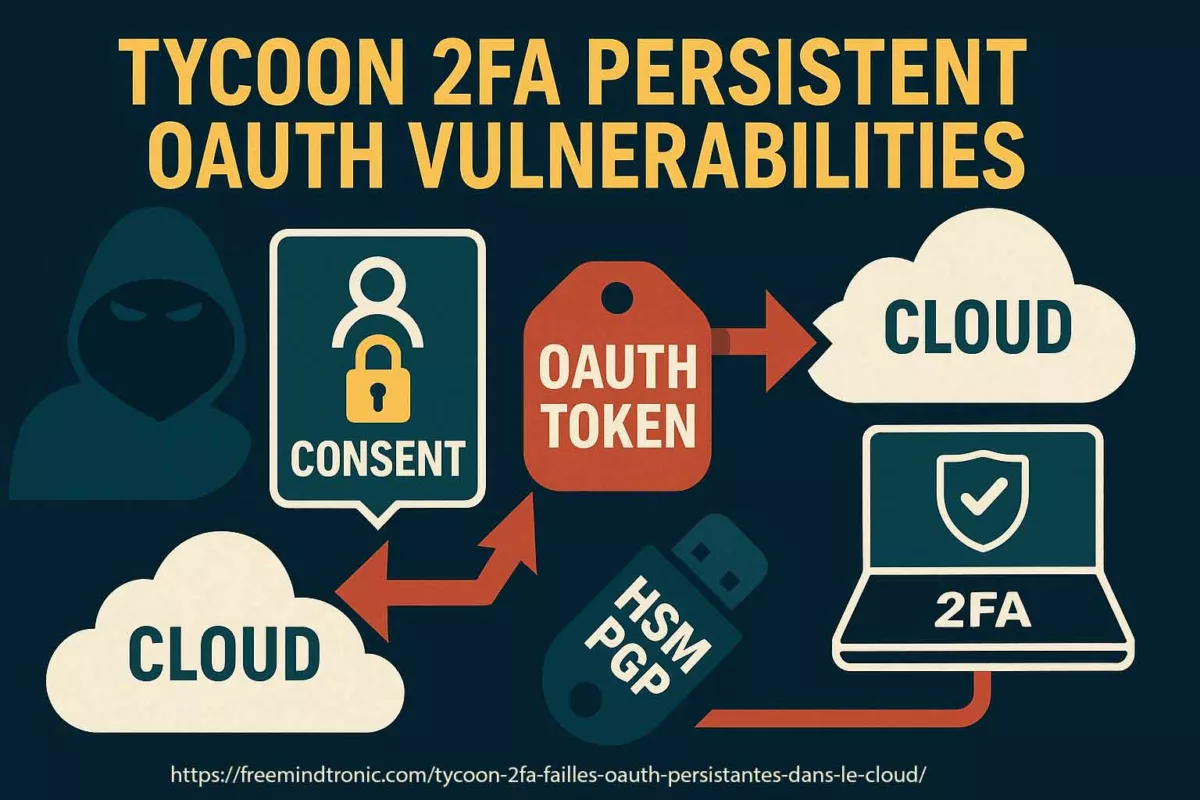
Persistent OAuth Flaw: How Tycoon 2FA Hijacks Cloud Access
Jacques Gascuel offers an in-depth analysis of the recent cyberattacks exploiting hidden vulnerabilities in the telecom sector. He explores the technical intricacies, legal ramifications, and broader global impact on cybersecurity. Stay updated on emerging threats and cutting-edge defense strategies, with insights into how innovators like Freemindtronic are shaping international cybersecurity practices.

Cyberattack Exploits Backdoors: What You Need to Know

In October 2024, a cyberattack exploited backdoors within U.S. telecom systems, revealing critical vulnerabilities. Salt Typhoon, a Chinese hacker group, leveraged legal backdoors designed for lawful surveillance to access sensitive data intercepted through wiretaps. This incident highlights the growing global risk of backdoor exploitation, where tools intended for government use can be weaponized by malicious actors.

What Are Legal Backdoors?

Legal backdoors are deliberate entry points built into software systems, designed to give government agencies access to encrypted data for lawful surveillance. They enable agencies to intercept communications or obtain data based on legal orders such as warrants. This type of backdoor is intended to support law enforcement in protecting national security and public safety.

However, the presence of these backdoors creates significant security concerns. While they are built for lawful purposes, they can introduce vulnerabilities. Cybercriminals often exploit these weaknesses. For example, Salt Typhoon, a Chinese hacker group, leveraged these legal backdoors to bypass security protocols and access sensitive wiretapped communications. By exploiting these vulnerabilities, hackers turn a system intended for lawful use into a weapon for unauthorized access.

The concept of legal backdoors contrasts with illegal backdoors, which are created by attackers without the knowledge or consent of the system owners. Although law enforcement intends legal backdoors for surveillance, they weaken overall system security and pose significant risks. Once organizations implement these backdoors, cyber attackers often discover and exploit them, as seen in the October 2024 cyberattack. The lesson is clear: even systems designed with legal purposes can expose critical data to malicious actors when backdoors are present.

In summary, legal backdoors serve a government function but introduce significant cybersecurity risks. This reality demands robust encryption technologies, like those offered by Freemindtronic, which protect data even in systems compromised by backdoors.

How Cyberattack Exploits Backdoors and Key Insights

Hackers from Salt Typhoon successfully launched a cyberattack exploiting backdoors within telecom systems against telecom providers like Verizon, AT&T, and Lumen Technologies. By exploiting the backdoors legally built into these systems, Salt Typhoon gained unauthorized access to wiretapped communications. Salt Typhoon transformed the vulnerabilities in these backdoors, originally designed for legal surveillance, into entry points for a sophisticated cyberespionage operation, posing a significant threat to national security.

When developers design backdoors for law enforcement access, they often create unintended weaknesses. Salt Typhoon’s use of these backdoors demonstrates the inherent dangers of embedding vulnerabilities into systems, even when for lawful purposes.

Encryption Solutions to Prevent Cyberattack Exploits Backdoors

Freemindtronic’s encryption technologies offer robust defense mechanisms against cyberattacks exploiting backdoors, securing data even in compromised systems.
DataShielder NFC HSM and PassCypher HSM PGP, for example, ensure that even when systems are compromised, Freemindtronic’s encryption ensures that hackers cannot access the encrypted data. Freemindtronic encrypts data before it passes through any vulnerable system and safely stores encryption keys in NFC HSM modules. This externalization prevents attackers from using backdoors to access or decrypt sensitive information.

Explore these solutions here:

Physical Key Segmentation as a Layer of Protection

Freemindtronic’s physical key segmentation adds an extra layer of defense. This method divides encryption keys into multiple segments, ensuring that access to the full key is virtually impossible without all the physical components. Hackers, even if they manage to breach backdoors, are left without the necessary tools to decrypt the data.

Cyberattack Exploits Backdoors: Global Examples and Risks

The cyberattack exploits backdoors in telecom systems. This has been seen in Verizon, AT&T, and Lumen Technologies. Other instances include several significant cases. These illustrate how backdoors, created for lawful surveillance, have been used for malicious purposes.

Historical Examples of Backdoor Exploits

  1. Clipper Chip (1993): The U.S. government tried to introduce a backdoor into telecommunications devices to enable lawful surveillance. However, privacy concerns led to the abandonment of this project. This example shows early recognition of the dangers posed by such vulnerabilities.
  2. EncroChat (2020): European law enforcement successfully exploited backdoors in EncroChat, an encrypted communication platform used by criminals. This led to numerous arrests but sparked privacy concerns and raised ethical questions about how surveillance tools are used.

Recent Exploits Using Backdoors

  1. Pegasus Spyware (2021): Governments used Pegasus spyware for legitimate surveillance purposes. However, investigators later discovered that Pegasus targeted journalists, activists, and political figures, leading to widespread criticism of its misuse for political gain. The incident highlighted the thin line between security and abuse.
  2. Microsoft Exchange Server Hack (2021): Chinese hackers exploited vulnerabilities in Microsoft Exchange Server, originally designed for lawful access by governments. The attack compromised data from over 30,000 organizations in the U.S. This case emphasizes the risks of building access points into critical systems.

Why Are Backdoors So Dangerous?

Governments install backdoors to assist with surveillance, but malicious actors often abuse them. The examples above demonstrate how hackers and sometimes even governments can exploit these backdoor vulnerabilities for cyberespionage. This underscores the need for stronger encryption and better security protocols to protect sensitive data.

How Backdoors Become Double-Edged Swords

Backdoors are often justified as essential tools for government surveillance and law enforcement, but their inherent vulnerabilities make them dangerous. In the case of Salt Typhoon, the hackers turned a backdoor meant for lawful use into a vector for cyberespionage. This raises serious concerns about the long-term security of systems that include built-in vulnerabilities, even when used for legitimate purposes.

Solutions to Secure Your Future Against Backdoor Exploits

Why Encryption Is Critical to Combat Backdoor Exploits

As cyberattacks exploiting backdoors continue to rise, it becomes more important than ever to implement robust encryption solutions. These solutions prevent unauthorized access, even when systems are vulnerable to cyberattacks exploiting backdoors. These solutions prevent unauthorized access, even when backdoors exist within systems. Freemindtronic’s encryption technologies, such as the DataShielder NFC HSM and PassCypher NFC HSM, ensure that Freemindtronic stores encryption keys externally. This externalized storage effectively blocks attackers from accessing or decrypting sensitive data, even if they breach the system. Consequently, organizations can maintain security regardless of potential vulnerabilities.

Explore the NFC HSM Encryption Tools

To better protect your systems, explore the following NFC HSM encryption tools:

  • DataShielder NFC HSM Lite: This tool is perfect for lightweight encryption and secure password management. It is well-suited for small teams or individual users.
  • DataShielder NFC HSM Master: This advanced solution offers full encryption key management, ideal for large-scale operations dealing with sensitive data.
  • PassCypher NFC HSM Master: Besides managing passwords, this tool includes OTP secret key management (supporting both TOTP and HOTP) for multi-factor authentication (MFA), which greatly enhances security.
  • DataShielder NFC HSM M-Auth: This solution allows for remote key creation via encrypted QR codes, which is crucial for teams needing secure mobile access.
  • DataShielder NFC HSM Auth: Specifically focused on authentication, this tool helps prevent unauthorized access by managing user credentials securely.

Managing Passwords and Secret Keys with PassCypher and DataShielder Technologies

PassCypher HSM PGP

PassCypher HSM PGP is a patented password manager that operates server-free, without a database, user identifier, or master password. It leverages AES-256 CBC PGP encryption with segmented keys to create secure encrypted containers for storing login credentials, URLs, and passwords. This solution guarantees complete anonymity and offers 1-click auto-login for rapid and secure access. Furthermore, its anonymized architecture makes it an excellent choice for environments requiring digital signatures and secure communications. This also protects against phishing attacks and minimizes human error.

PassCypher NFC HSM Master

In addition to its advanced password management capabilities, PassCypher NFC HSM Master integrates OTP secret key management. It supports both TOTP (Time-based One-Time Password) and HOTP (HMAC-based One-Time Password), offering multi-factor authentication (MFA). This added layer of security ensures that your systems remain secure with time-sensitive passwords, making it an ideal solution for organizations that require secure user authentication alongside efficient password management.

DataShielder NFC HSM Series

The DataShielder NFC HSM series offers flexible encryption tools designed for different levels of security needs:

  • DataShielder NFC HSM Lite: This lightweight solution provides basic encryption and password management. It’s particularly suited for individuals or small teams that require external key storage for enhanced security.
  • DataShielder NFC HSM Master: A more comprehensive tool, this solution offers full encryption key management for large-scale, highly sensitive operations. It is ideal for organizations managing multiple encryption keys while needing extensive security features.
  • DataShielder NFC HSM Auth: Specifically designed for authentication, this tool focuses on preventing unauthorized access by securely managing credentials. It’s essential for any system where protecting access is paramount.
  • DataShielder NFC HSM M-Auth: Perfect for remote access needs, this tool allows for remote key creation via encrypted QR codes. This is especially useful for highly mobile teams or individuals who need secure access on the go.

The Importance of Chiffrement in Protecting Sensitive Data

Chiffrement, or encryption, plays a critical role in protecting sensitive data by transforming it into an unreadable format unless decrypted by the correct key. Freemindtronic’s NFC HSM solutions provide externalized key storage, ensuring that even if a system is breached, attackers cannot access the encrypted data. These solutions cover everything from password management and OTP secret keys to full encryption key management. This guarantees that your organization’s most sensitive information remains safe from cyberattacks and backdoor exploits.

By implementing these advanced NFC HSM encryption solutions, your organization can effectively secure its data, authenticate user access, and stay protected against the increasing threats posed by backdoor vulnerabilities. With external key management, multi-factor authentication, and robust encryption protocols, you ensure that your critical data remains safe, even in the face of sophisticated cyberattacks.

Strengthen Your Cybersecurity Through Proactive Defense

The cyberattack executed by Salt Typhoon on U.S. telecom systems underscores the urgent need for organizations to anticipate vulnerabilities and take proactive steps. To protect your systems effectively, you must implement robust encryption technologies. By adopting Freemindtronic’s encryption solutions, you actively ensure that your data stays secure, even in the presence of backdoors or system breaches.

First, use chiffrement to protect sensitive information. Then, enhance security with external encryption key management and physical key segmentation. These tools offer a strong defense against both current and future cyber threats. In today’s rapidly evolving cyber landscape, cyberattacks exploiting backdoors target every available vulnerability. Implementing these solutions now will safeguard your systems and prevent backdoor exploits from compromising your operations.

For more insights, you can review the detailed analysis provided by The Cybersecurity and Infrastructure Security Agency (CISA). Their resources cover essential cybersecurity best practices that help organizations stay resilient against emerging threats.

Your cybersecurity strategy must continuously adapt to the threats you face. By investing in strong encryption technologies and addressing key vulnerabilities, you actively shield your data from both current and future cyberattacks. Stay ahead of cybercriminals by using the right tools and employing proactive defense strategies.

ANSSI Cryptography Authorization: Complete Declaration Guide

Flags of France and the European Union on a white background representing ANSSI cryptography authorization

Comprehensive Guide: Navigating Cryptographic Means Authorization

ANSSI cryptography authorization: Learn how to navigate the regulatory landscape for importing and exporting cryptographic products in France. This comprehensive guide covers the necessary steps, deadlines, and documentation required to comply with both national and European standards. Read on to ensure your operations meet all legal requirements.

2025 Digital Security Technical News

Sovereign SSH Authentication with PassCypher HSM PGP — Zero Key in Clear

2025 Digital Security Tech Fixes Security Solutions Technical News

SSH Key PassCypher HSM PGP — Sécuriser l’accès multi-OS à un VPS

2025 Digital Security Technical News

Générateur de mots de passe souverain – PassCypher Secure Passgen WP

2025 Digital Security Technical News

Quantum computer 6100 qubits ⮞ Historic 2025 breakthrough

2025 Digital Security Technical News

Ordinateur quantique 6100 qubits ⮞ La percée historique 2025

2025 Tech Fixes Security Solutions Technical News

SSH VPS Sécurisé avec PassCypher HSM

2025 PassCypher Password Products Technical News

Passwordless Password Manager: Secure, One-Click Simplicity to Redefine Access

Stay informed with our posts dedicated to Cyberculture to track its evolution through our regularly updated topics.

ANSSI cryptography authorization, authored by Jacques Gascuel, CEO of Freemindtronic, provides a detailed overview of the regulatory framework governing cryptographic products. This guide addresses the essential steps for compliance, including how to fill out the necessary forms, meet deadlines, and provide the required documentation. Stay informed on these critical updates and more through our tech solutions.

Complete Guide: Declaration and Application for Authorization for Cryptographic Means

In France, the import, export, supply, and transfer of cryptographic products are strictly regulated by Decree n°2007-663 of 2 May 2007. This decree sets the rules to ensure that operations comply with national and European standards. At the same time, EU Regulation 2021/821 imposes additional controls on dual-use items, including cryptographic products.

This guide explains in detail the steps to correctly fill in the declaration or authorization request form, as well as the deadlines and documents to be provided to comply with the ANSSI cryptography authorization requirements.

Download the XDA Form

Click this link to Download the declaration and authorization application form

Regulatory Framework: Decree No. 2007-663 and Regulation (EU) 2021/821

Decree No. 2007-663 of 2 May 2007 regulates all operations related to the import, export, supply, and transfer of cryptographic means. It clearly sets out the conditions under which these operations may be carried out in France by defining declaration and authorization regimes. To consult the decree, click this link: Decree n°2007-663 of 2 May 2007.

At the European level, Regulation (EU) 2021/821 concerns dual-use items, including cryptographic products. This regulation imposes strict controls on these products to prevent their misuse for military or criminal purposes. To view the regulation, click this link: Regulation (EU) 2021/821.

By following these guidelines, you can ensure that your operations comply with both national and European standards for cryptographic products. If you need further assistance or have any questions, feel free to reach out!

Fill out the XDA PDF Form

The official form must be completed and sent in two copies to the ANSSI. It is essential to follow the instructions carefully and to tick the appropriate boxes according to the desired operations (declaration, application for authorisation or renewal).

Address for submitting forms

French National Agency for the Security of Information Systems (ANSSI)Regulatory Controls Office51, boulevard de La Tour-Maubourg75700 PARIS 07 SP.

Contact:

  • Phone: +33 (0)1 71 75 82 75
  • Email: controle@ssi.gouv.fr

This form allows several procedures to be carried out according to Chapters II and III of the decree.
You can download the official form by following this PDF link.

  • Declaration of supply, transfer, import or export from or to the European Union or third countries.
  • Application for authorization or renewal of authorization for similar operations.

Paperless submission: new simplified procedure

Since 13 September 2022, an electronic submission procedure has been put in place to simplify the formalities. You can now submit your declarations and authorisation requests by email. Here are the detailed steps:

Steps to submit an online application:

  1. Email address: Send your request to controle@ssi.gouv.fr.
  2. Subject of the email: [formalities] Name of your company – Name of the product. Important: The object must follow this format without modification.
  3. Documents to be attached:
    • Completed form  (electronic version).
    • Scanned  and signed form.
    • All required attachments (accepted formats: .pdf, .xls, .doc).
  4. Large file management: If the size of the attachments exceeds 10 MB, divide your mailing into several emails according to the following nomenclature:
    • [Formalities] Name of your company – Product name – Part 1/x
    • [Formalities] Your Company Name – Product Name – Part 2/x

1. Choice of formalities to be carried out

The form offers different boxes to tick, depending on the formalities you wish to complete:

  • Reporting and Requesting Authorization for Any Cryptographic Medium Operation: By ticking this box, you submit a declaration for all supply, transfer, import or export operations, whether inside or outside the European Union. This covers all types of operations mentioned in the decree.
  • Declaration of supply, transfer from or to a Member State of the European Union, import and export to a State not belonging to the European Union of a means of cryptology: Use this box if you are submitting only a simple declaration without requesting authorisation for the operations provided for in Chapter II of the Decree.
  • Application for authorisation to transfer a cryptographic method to a Member State of the European Union and export to a State that does not belong to the European Union: This box is specific to operations that require prior authorisation, pursuant to Chapter III of the Decree.
  • Renewal of authorisation for the transfer to a Member State of the European Union and for the export of a means of cryptology: If you already have an authorization for certain operations and want to renew it, you will need to check this box.

1.1 Time Limits for Review and Notification of Decisions

This section should begin by explaining the time limits for the processing of applications or declarations based on the operation being conducted. Each subsequent point must address a specific formal procedure in the order listed in your request.

1.1.1 Declaration and Application for Authorization of Any Transaction Relating to a Means of Cryptology

This relates to general declarations for any cryptographic operation, whether it involves supply, transfer, import, or export of cryptographic means.

  • Examination Period: ANSSI will review the declaration or application for 1 month (extended to 2 months for cryptographic services or export to non-EU countries).
  • Result: If the declaration is compliant, ANSSI issues a certificate.
  • In Case of Silence: You may proceed with your operation and request a certificate confirming that the declaration was received if no response is provided within the specified time frame.

1.1.2 Declaration of Supply, Transfer, Import, and Export to Non-EU Countries of a Means of Cryptology

This section involves simple declarations of cryptographic means being supplied, transferred within the EU, imported, or exported outside the EU.

  • Examination Period: For supply, transfer, import, or export operations, ANSSI has 1 month to review the file. For services or exports outside the EU, the review period is 2 months.
  • Result: ANSSI will issue a certificate if the file is compliant.
  • In Case of Silence: After the deadlines have passed, you may proceed and request a certificate confirming compliance.

1.1.3 Application for Authorization to Transfer Cryptographic Means within the EU and Export to Non-EU Countries

This applies to requests for prior authorization required for transferring cryptographic means within the EU or exporting them to non-EU countries.

  • Examination Period: ANSSI will examine the application for authorization within 2 months.
  • Notification of Decision: The Prime Minister will make a final decision within 4 months.
  • In Case of Silence: If no response is provided, you receive implicit authorization valid for 1 year. You can also request a certificate confirming this authorization.

1.1.4 Application for Renewal of Authorization for Transfer within the EU and Export of Cryptographic Means

This relates to renewing an existing authorization for the transfer of cryptographic means.

  • Review Period: ANSSI will review the renewal application within 2 months.
  • Notification of Decision: The Prime Minister will issue a decision within 4 months.
  • In Case of Silence: If no decision is made, an implicit authorization valid for 1 year is granted. You can request a formal certificate to confirm this authorization.

1.1.5 Example Response from ANSSI for Cryptography Authorization Requests

When you submit a declaration or request for authorization, ANSSI typically provides a confirmation of receipt, which includes:

  • Subject: Confirmation of Receipt for Cryptography Declaration/Authorization
  • Date and Time of Submission: For example, “Monday 23 October 2022 13:15:13.”

The response confirms that ANSSI has received the request and outlines the next steps for review.

A: Information on the Registrant and/or Applicant, Person in charge of the administrative file and Person in charge of the technical elements.

This section must be filled in with the information of the declarant or applicant, whether it is a legal person (company, association) or a natural person. You should include information such as:

  • The name and address of the entity or individual.
  • Company name and SIRET number for companies.
  • Contact details of the person responsible for the administrative file and the person in charge of the technical aspects of the cryptology product.

Person in charge of technical aspects: This person is the direct contact with the ANSSI for technical questions relating to the means of cryptology.

B: Cryptographic Medium to which the Declaration and/or Application for Authorization Applies

This part concerns the technical information of the cryptology product:

B.2.1 Classify the medium into the corresponding category(ies)

You must indicate whether the product is hardware, software, or both, and specify its primary role (e.g., information security, network, etc.).

B.2.2 General description of the means

The technical part of the form requires a specific description of the cryptographic means. You will need to provide information such as:

  • Generic name of the medium (photocopier, telephone, antivirus software, etc.).
  • Brand, trade number, and product version .
  • Manufacturer and date of release.

Comments in the form:

  • The cryptographic means must identify the final product to be reported (not its subsets).
  • Functional description: Describe the use of the medium (e.g., secure storage, encrypted transmission).

B.2.3 Indicate which category the main function of the means (tick) relates to

  • Information security (means of encryption, cryptographic library, etc.)
  • Computer (operating system, server, virtualization software, etc.)
  • Sending, storing, receiving information (communication terminal, communication software,
  • management, etc.)
  • Network (monitoring software, router, base station, etc.)
  • If yes, specify:

B.3. Technical description of the cryptology services provided

B.3.2. Indicate which category(ies) the cryptographic function(s) of the means to be ticked refers to:

  • Authentification
  • Integrity
  • Confidentiality
  • Signature

B.3.3. Indicate the secure protocol(s) used by:

  • IPsec
  • SSH
  • VoIP-related protocols (such as SIP/RTP)
  • SSL/TLS
  • If yes, specify:

Comments in the form:

  • Cryptographic functionality: Specify how the product encrypts data (e.g., protection of files, messages, etc.).
  • Algorithms: List the algorithms and how they are used. For example, AES in CBC mode with a 256-bit key for data encryption.

B.3.4. Specify the cryptographic algorithms used and their maximum key lengths:

Table to be filled in: Algorithm / Mode / Associated key size / Function

This section requires detailing the cryptographic services that the product offers:

  • Secure protocol (SSL/TLS, IPsec, SSH, etc.).
  • Algorithms used and key size (RSA 2048, AES 256, etc.).
  • Encryption mode (CBC, CTR, CFB).

C: Case of a cryptographic device falling within category 3 of Annex 2 to Decree No. 2007-663 of 2 May 2007

This section must be completed if your product falls under category 3 of Annex 2 of the decree, i.e. cryptographic means marketed on the consumer market. You must provide specific explanations about:

  • Present the method of marketing the means of cryptology and the market for which it is intended
  • Explain why the cryptographic functionality of the medium cannot be easily changed by the user
  • Explain how the installation of the means does not require significant subsequent assistance from the supplier

D: Renewal of transfer or export authorization

If you are applying for the renewal of an existing authorisation, you must mention the references of the previous authorisation, including the file number, the authorisation number and the date of issue.

E: Attachments (check the boxes for the attachments)

To complete your file, you must provide a set of supporting documents, including:

  • General document presenting the company (electronic format preferred)
  • extract K bis from the Trade and Companies Register dated less than three months (or a
  • equivalent document for companies incorporated under foreign law)
  • Cryptographic Medium Commercial Brochure (electronic format preferred)
  • Technical brochure of the means of cryptology (electronic format preferred)
  • User manual (if available) (electronic format preferred)
  • Administrator Guide (if available) (electronic format preferred)

All of these documents must be submitted in accepted electronic formats, such as .pdf, .xls, or .doc.

F: Attestation

The person representing the notifier or applicant must sign and attest that the information provided in the form and attachments is accurate. In the event of a false declaration, the applicant is liable to sanctions in accordance with Articles 34 and 35 of Law No. 2004-575 on confidence in the digital economy.

G: Elements and technical characteristics to be communicated at the request of the national agency for the security of information systems (preferably to be provided in electronic format)

In addition, the ANSSI may request additional technical information to evaluate the cryptology product, such as:

  1. The elements necessary to implement the means of cryptology:
  2. two copies of the cryptographic medium;
  3. the installation guides of the medium;
  4. devices for activating the medium, if applicable (license number, activation number, hardware device, etc.);
  5. key injection or network activation devices, if applicable.
  6. The elements relating to the protection of the encryption process, namely the description of the measures

Techniques used to prevent tampering with encryption or management associated keys.

  1. Elements relating to data processing:
  2. the description of the pre-processing of the clear data before it is encrypted (compression, formatting, adding a header, etc.);
  3. the description of the post-processing of the encrypted data, after it has been encrypted (adding a header, formatting, packaging, etc.);
  4. three reference outputs of the means, in electronic format, made from a clear text and an arbitrarily chosen key, which will also be provided, in order to verify the implementation of the means in relation to its description.
  5. Elements relating to the design of the means of cryptology:
  6. the source code of the medium and the elements allowing a recompilation of the source code or the references of the associated compilers;
  7. the part numbers of the components incorporating the cryptology functions of the medium and the names of the manufacturers of each of these components;
  8. the cryptology functions implemented by each of these components;
  9. the technical documentation of the component(s) performing the cryptology functions;
  10. the types of memories (flash, ROM, EPROM, etc.) in which the cryptographic functions and parameters are stored as well as the references of these memories.

Validity and Renewal of ANSSI Cryptography Authorization

When ANSSI grants an authorization for cryptographic operations, it comes with a limited validity period. For operations that require explicit authorization, such as the transfer of cryptographic means within the EU or exports outside the EU, the certificate of authorization issued by ANSSI is valid for one year if no express decision is made within the given timeframe.

The renewal process must be initiated before the expiry of the certificate. ANSSI will review the completeness of the application within two months, and the decision is issued within four months. If ANSSI remains silent, implicit authorization is granted, which is again valid for a period of one year. This renewal ensures that your cryptographic operations remain compliant with the regulations established by Decree n°2007-663 and EU Regulation 2021/821, avoiding any legal or operational disruptions.

For further details on how to initiate a renewal or first-time application, refer to the official ANSSI process, ensuring all deadlines are respected for uninterrupted operations.

Legal Framework for Cryptographic Means: Key Requirements Under Decree No. 2007-663

Understanding the legal implications of Decree No. 2007-663 is crucial for any business engaged in cryptology-related operations, such as the import, export, or transfer of cryptographic products. This section outlines the legal framework governing declarations, authorizations, and specific cases for cryptographic means. Let’s delve into the essential points:

1. Formalities Under Chapters II and III of Decree No. 2007-663

Decree No. 2007-663 distinguishes between two regulatory regimes—declaration and authorization—depending on the nature of the cryptographic operation. These formalities aim to safeguard national security by ensuring cryptographic means are not misused.

  • Chapter II: Declaration Regime
    This section requires businesses to notify the relevant authorities, particularly ANSSI, when cryptographic products are supplied, transferred, imported, or exported. For example, when transferring cryptographic software within the European Union, companies must submit a declaration to ANSSI. This formality ensures that the movement of cryptographic products adheres to ANSSI cryptography authorization protocols. The primary goal is to regulate the flow of cryptographic tools and prevent unauthorized or illegal uses.
  • Chapter III: Authorization Regime
    Operations involving cryptographic means that pose higher security risks, especially when exporting to non-EU countries, require explicit authorization from ANSSI. The export of cryptographic products, such as encryption software, outside the European Union is subject to strict scrutiny. In these cases, companies must obtain ANSSI cryptography authorization, which evaluates potential risks before granting permission. Failure to secure this authorization could result in significant legal consequences, such as operational delays or penalties.

2. Request for Authorization or Renewal

If your operations involve cryptographic means that require prior approval, the Decree mandates that you apply for authorization or renewal. This is particularly relevant for:

  • Transfers within the EU: Even though the product remains within the European Union, if the cryptographic tool is sensitive, an authorization request must be submitted. This helps mitigate risks associated with misuse or unauthorized access to encrypted data.
  • Exports outside the EU: Exporting cryptographic means to non-EU countries is subject to even stricter controls. Businesses must renew their authorization periodically to ensure that all their ongoing operations remain legally compliant. This step is non-negotiable for companies dealing with dual-use items, as defined by EU Regulation 2021/821.

3. Category 3 Cryptographic Means (Annex 2)

Category 3 cryptographic means, outlined in Annex 2 of the Decree, apply to consumer-facing products that are less complex but still critical for security. These are often products marketed to the general public and must meet specific criteria:

  • Unmodifiable by End-Users: Cryptographic products under Category 3 must not be easily altered by end-users. This ensures the integrity of the product’s security features.
  • Limited Supplier Involvement: These products should be user-friendly, not requiring extensive assistance from the supplier for installation or continued use.

An example of a Category 3 product might be a mobile application that offers end-to-end encryption, ensuring ease of use for consumers while adhering to strict cryptographic security protocols.

Regulatory Framework and Implications

Decree No. 2007-663, alongside EU Regulation 2021/821, sets the groundwork for regulating cryptographic means in France and the broader European Union. Businesses must comply with these regulations, ensuring they declare or obtain the proper ANSSI cryptography authorization for all cryptographic operations. Compliance with these legal frameworks is non-negotiable, as they help prevent the misuse of cryptographic products for malicious purposes, such as espionage or terrorism.

Displaying ANSSI Cryptography Authorization: Transparency and Trust

Publicly showcasing your ANSSI cryptography authorization not only demonstrates regulatory compliance but also strengthens your business’s credibility. In fact, there are no legal restrictions preventing companies from making their authorization certificates visible. By displaying this certification, you reinforce transparency and trustworthiness, especially when dealing with clients or partners who prioritize data security and regulatory adherence.

Moreover, doing so can provide a competitive edge. Customers and stakeholders are reassured by visible compliance with both French and European standards, including Decree No. 2007-663 and EU Regulation 2021/821. Displaying this certificate prominently, whether on your website or in official communications, signals your business’s proactive stance on cybersecurity.

Final Steps to Ensure Compliance

Now that you understand the steps involved in ANSSI cryptography authorization, you are better equipped to meet the regulatory requirements for importing and exporting cryptographic means. By diligently completing the necessary forms, submitting the required documentation, and adhering to the outlined deadlines, you can streamline your operations and avoid potential delays or penalties. Moreover, by staying up-to-date with both French and European regulations, such as Decree No. 2007-663 and EU Regulation 2021/821, your business will maintain full compliance.

For any additional guidance, don’t hesitate to reach out to the ANSSI team or explore their resources further on their official website. By taking these proactive steps, you can ensure that your cryptographic operations remain fully compliant and seamlessly integrated into global standards.

New Microsoft Uninstallable Recall: Enhanced Security at Its Core

laptop displaying Microsoft Uninstallable Recall feature, highlighting TPM-secured data and uninstall option, with a user's hand interacting, on a white background.

Unveil Microsoft’s Enhanced Uninstallable Recall for Total Data Security

Microsoft Uninstallable Recall: Learn how Microsoft has significantly upgraded the security of its Recall activity journal, now featuring an easy-to-use uninstall option and protection through a secure enclave with stronger authentication. Read the full article to explore these advanced security features and improvements.

2025 Digital Security Technical News

Sovereign SSH Authentication with PassCypher HSM PGP — Zero Key in Clear

2025 Digital Security Tech Fixes Security Solutions Technical News

SSH Key PassCypher HSM PGP — Sécuriser l’accès multi-OS à un VPS

2025 Digital Security Technical News

Générateur de mots de passe souverain – PassCypher Secure Passgen WP

2025 Digital Security Technical News

Quantum computer 6100 qubits ⮞ Historic 2025 breakthrough

2025 Digital Security Technical News

Ordinateur quantique 6100 qubits ⮞ La percée historique 2025

2025 Tech Fixes Security Solutions Technical News

SSH VPS Sécurisé avec PassCypher HSM

2025 PassCypher Password Products Technical News

Passwordless Password Manager: Secure, One-Click Simplicity to Redefine Access

Stay informed with our posts dedicated to Technical News to track its evolution through our regularly updated topics.

Microsoft’s Uninstallable Recall, written by Jacques Gascuel, CEO of Freemindtronic, fixes earlier security issues by processing data in a TPM-secured enclave and giving users complete control over data. You can uninstall Recall easily, wiping all data for enhanced privacy. Stay informed on these security updates and more in our tech solutions.

Microsoft’s Revamped Recall System

Microsoft recently overhauled its Recall feature, which had faced criticism for security and privacy issues. The new version delivers enhanced protection and better control over personal data, responding directly to concerns raised by users and privacy experts.

Key Features of Microsoft’s New Uninstallable Recall

Recall is an activity journal that allows users to retrieve information based on past actions, utilizing AI-analyzed screenshots. In its first iteration, the tool faced backlash because data was stored insecurely, making it easily accessible to others sharing the same device.

Microsoft responded by overhauling the architecture of Recall. Now, all data processing occurs within a Trusted Platform Module (TPM)-protected secure enclave. Access to information requires Windows Hello authentication or a PIN, ensuring that only authorized users can unlock the encrypted data.

Enhanced Data Protection with Microsoft’s Uninstallable Recall

Microsoft significantly improved the security architecture of Recall. All data is now encrypted and stored within the TPM chip, and multi-factor authentication further protects user information. Recent updates to Recall ensure that sensitive information is automatically filtered out, including passwords, personal identification numbers, and credit card details.

These changes align with the security mechanisms found in BitLocker, which also uses TPM to safeguard encryption keys. Freemindtronic has noted the similarities between Recall and BitLocker’s multi-layer encryption and user-focused security enhancements.

How to Enable and Remove Microsoft’s New Recall

With the updated Uninstallable Recall, Microsoft gives users full control over the feature. Recall is opt-in—it remains off unless activated by the user, and it can be uninstalled easily at any time. Microsoft has confirmed that when Recall is uninstalled, all related data is permanently deleted, further addressing privacy concerns.

Additional Security Measures

Microsoft also introduced several improvements to Recall, including:

  • Private browsing compatibility: Users can now prevent Recall from saving sessions during private browsing.
  • Sensitive content filtering: By default, Recall filters out sensitive data such as passwords and personal details.
  • Custom permissions: Users can choose what data Recall tracks and restrict it to specific apps or activities.

These updates reflect Microsoft’s commitment to providing robust data protection, and as seen in similar tools like BitLocker, Microsoft emphasizes TPM-based encryption to secure user data​. Freemindtronic highlighted that BitLocker uses multi-layer encryption and TPM to secure sensitive information from unauthorized access​.

Business and Consumer Advantages of Microsoft’s Enhanced Recall

These enhancements have significant implications for both businesses and individual users. Companies can benefit from the enhanced data protection, especially when managing sensitive information across multiple devices. Users working in shared environments can rest assured knowing their personal data is encrypted and secured, even if the device is shared.

Moreover, this follows a pattern of Microsoft’s continuous security efforts, as seen in the resolution of BitLocker access issues caused by a faulty Crowdstrike update. The incident demonstrated the importance of robust encryption and key management tools like PassCypher NFC HSM.

Availability of the Uninstallable Recall Feature

The new Recall feature will be available to Windows Insiders in October 2024. It is integrated with Copilot+ PCs, designed to provide comprehensive security without sacrificing usability​.

Why Microsoft’s Recall Is a Step Forward in Data Security

With the Uninstallable Recall, Microsoft demonstrates its commitment to developing tools that balance user privacy and productivity. The integration of TPM-encrypted data storage, biometric authentication, and flexible permissions makes Recall one of the most secure data management systems available today, alongside established solutions like BitLocker.

SeedNFC HSM Products Warranty

Futuristic padlock symbolizing the SeedNFC HSM Products Warranty with digital circuitry in the background, representing security and protection.

SeedNFC HSM Products Warranty

Freemindtronic guarantees that all SeedNFC HSM products are free from hidden defects, manufacturing faults, and non-conformities. This warranty protects you under specific conditions and complies with all applicable laws.

Manufacturer Identification

Freemindtronic SL is based at 14 Avenue Copríncep de Gaulle, AD700 Escaldes-Engordany, Principality of Andorra. The company is registered in the Trade and Companies Register of Andorra under registration number 16501.

What the SeedNFC HSM Products Warranty Covers

Freemindtronic guarantees that SeedNFC HSM products do not have hidden defects or manufacturing faults. We ensure that our products, including all components, meet high standards of quality. This warranty applies under normal usage as specified in the user manual.

Warranty Period

The SeedNFC HSM Products Warranty starts on the date of the original purchase. It lasts for two (2) years for professional customers and three (3) years for individual customers. You may activate the manufacturer’s warranty after all commercial or contractual remedies from the seller have been exhausted. If the seller no longer exists, the warranty also applies. You can view the seller’s terms and conditions here.

Additionally, we warrant that any replaced product, part, or component is free from defects for thirty (30) days from the replacement date. This coverage will extend to the end of the original warranty period if that time is longer.

Consumer Protection

This warranty applies only to the original purchaser and is non-transferable. Products purchased second-hand or in a non-new condition are not covered.

We assume no responsibility for incidental or consequential damages, including loss of profits or business opportunities. The warranty limits our liability strictly to the product itself. Freemindtronic reserves the right to improve or modify the products without any obligation to update products previously sold.

Intellectual Property Protection

SeedNFC HSM products are protected by international patents, including WO2018/154258 and WO2017/129887. These patents are valid in the USA, Europe, China, South Korea, Japan, and Algeria. Additionally, products are safeguarded by copyrights and Soleau envelopes.

It is the customer’s responsibility to ensure that the seller holds valid licenses from the manufacturer. If not, the customer may unknowingly purchase counterfeit products.

Software Usage License

Freemindtronic grants you a personal, non-transferable, and non-exclusive worldwide license to use the software associated with the SeedNFC HSM products. This license allows you to use the product and its functionalities.

You may not copy, modify, or distribute any part of the software. Additionally, you cannot decompile or attempt to extract the software’s source code. Decompiling is only allowed under specific legal mandates or with prior approval from Freemindtronic.

Eligibility for the SeedNFC HSM Products Warranty

To benefit from the SeedNFC HSM Products Warranty, you or the seller must adhere to the following conditions:

  • Do not reproduce or allow others to reproduce any part of the product.
  • Do not disclose information that could lead to the reproduction of the product.
  • Do not engage in the sale of counterfeit products.
  • Follow all applicable laws regarding the import, sale, and use of cryptographic technologies.
  • Do not export SeedNFC HSM products to regions where export control laws prohibit it without the appropriate licenses.

Failure to meet these conditions could result in legal action.

Warranty Limitations and Technical Specifications

Freemindtronic makes no specific promises regarding product features, performance, or compatibility for specific uses. All SeedNFC HSM products are sold “as is.” You are responsible for using the product in accordance with the user manual.

Cold Wallet and Hardware Wallet Specifications

SeedNFC HSM products may include cold wallet and hardware wallet functionalities. These products allow users to access their cryptocurrency balances securely. However, SeedNFC HSM does not support signing transactions. You can use the private and public keys stored on the NFC HSM device to view balances and check account information. At no point do your private keys leave the device.

  • Private Key Protection: SeedNFC HSM securely generates and stores your private keys locally. These keys are never exposed to the internet.
  • Unique Pairing Key: Each SeedNFC HSM product comes with a unique pairing key. You must provide this key for any after-sales service requests. Without it, Freemindtronic will not be able to process your service request.
  • Black Box System: The product features a black box that records key events, including first use and administrator password attempts.
  • Trust Criteria for Data Protection: Before sending your device for service, you must delete all personal data or lock access using trust criteria like passwords or geolocation. These measures ensure that even the manufacturer cannot access sensitive information during service.

Specific Exclusions for Cold Wallets and Hardware Wallets

The SeedNFC HSM Products Warranty does not cover:

  • Loss or theft of cryptocurrency stored on the device.
  • User mismanagement of private keys.
  • Recovery of private keys or cryptocurrency if data is lost or deleted.

Warranty Service Procedure

To request warranty service for your SeedNFC HSM product:

  1. Contact the seller’s support team via this link.
  2. Follow the Return Merchandise Authorization (RMA) process and obtain a return code.
  3. Provide the unique pairing key and send the product to the seller for inspection.

Before shipping the product, ensure you have backed up or locked your personal data to protect it during service.

Applicable Law and Jurisdiction

These warranty conditions are governed by the laws of the Principality of Andorra. Any disputes arising from this warranty will be exclusively settled by the Andorran courts. If you violate or threaten to violate our intellectual property rights, we reserve the right to seek injunctive relief in any court of our choice.

Key Definitions

  • Customer: The individual or entity that purchases a SeedNFC HSM product.
  • Hidden Defect: A defect that is not immediately visible but renders the product unfit for use, or greatly reduces its usefulness, that the customer would not have purchased or would have paid less for the product if they had known about the defect.
  • SeedNFC HSM Brand: Refers to the owner or legally authorized company using the SeedNFC HSM trademark.
  • Professional Customer: A person or entity who purchases SeedNFC HSM products for business, industrial, or professional activities.
  • Manufacturer: Freemindtronic SL, which guarantees the products manufactured under the SeedNFC HSM brand.
  • Non-Conformity: A product that does not meet its description or has manufacturing defects.

Digital Authentication Security: Protecting Data in the Modern World

Digital Authentication Security showing a laptop and smartphone with biometric login, two-factor authentication, and security keys on a bright white background.


Digital Authentication Security by Jacques gascuel This article will be updated with any new information on the topic, and readers are encouraged to leave comments or contact the author with any suggestions or additions.  


How Digital Authentication Security Shields Our Data

Digital authentication security is essential in today’s connected world. Whether accessing bank accounts, social media, or work emails, authentication ensures that only authorized individuals can access sensitive information. With the growing sophistication of cyberattacks, securing our identity online has become critical. This article will explore the evolution of authentication methods, from simple passwords to multi-factor authentication, and how these technologies are essential for protecting both personal and professional data.


2025 Cyberculture Cybersecurity Digital Security EviLink

CryptPeer messagerie P2P WebRTC : appels directs chiffrés de bout en bout

2025 Cyberculture

Louvre Security Weaknesses — ANSSI Audit Fallout

2026 Awards Cyberculture Digital Security Distinction Excellence EviOTP NFC HSM Technology EviPass EviPass NFC HSM technology EviPass Technology finalists PassCypher PassCypher

Quantum-Resistant Passwordless Manager — PassCypher finalist, Intersec Awards 2026 (FIDO-free, RAM-only)

Digital Authentication Security: The Guardian of Our Digital World

In today’s digital life, authentication has become a vital process. Whether you are accessing your bank accounts, social media, or work emails, you are constantly required to prove your identity. But what is authentication exactly, and why has it become so essential in our digital world?

Authentication is the process of verifying a person’s or device’s identity before granting access to specific resources. While often seen as a simple formality, it plays a crucial role in protecting both personal and professional data.

The Stakes of Security

In a world where cyberattacks are becoming increasingly sophisticated and frequent, securing information systems has become a top priority. The consequences of a compromised account can be disastrous—identity theft, fraud, financial loss. The most common threats include phishing, brute force attacks, dictionary attacks, and injection attacks.

To combat these threats, authentication methods have evolved significantly. From the simple password, often considered an easy barrier to breach, we have transitioned to multi-factor authentication systems that are much more robust.

The Evolution of Digital Authentication Security Methods

Over the years, authentication methods have continuously evolved to meet the growing security demands. We have moved from simple password-based authentication, which relies on something you know, to methods that combine several factors:

  • Something you know (password)
  • Something you possess (security key)
  • Something you are (biometrics)

Let’s dive into the various authentication methods, their pros, cons, and applications. We’ll also see how these methods enhance the security of our online accounts and protect our personal data.

Fundamentals of Authentication

Password Authentication: The Historical Pillar

Password authentication is undoubtedly the oldest and most widespread method of verifying a user’s identity. This simple system, which associates a username with a secret password, was long considered enough to secure access to our online accounts.

Advantages:

  • Simplicity: Easy to implement and understand for users.
  • Universality: Used by almost all online services.

Disadvantages:

  • Vulnerability: Passwords can be easily compromised by brute force, dictionary attacks, or phishing.
  • Frequent Forgetfulness: Users tend to forget their passwords or create weak ones for easier memorization.
  • Reuse: Users often reuse the same password across multiple accounts, increasing the risk of data breaches.

Best Practices for Creating Strong Passwords

To enhance the security of your accounts, it is essential to create strong and unique passwords. Here are some tips:

  • Length: A password should ideally be at least 12 characters long.
  • Complexity: Use a combination of uppercase and lowercase letters, numbers, and special characters.
  • Originality: Avoid using easily found personal information (birth dates, family names, etc.).
  • Variety: Use different passwords for each account.

Types of Attacks and How to Protect Yourself

Passwords are regularly targeted by cybercriminals. The main threats include:

  • Brute Force Attacks: The hacker tries all possible character combinations until the correct password is found.
  • Dictionary Attacks: The hacker uses a list of common words or phrases to guess the password.
  • Phishing: The hacker sends fake emails or SMS messages to trick the user into revealing their login credentials.

To protect yourself from these attacks:

  • Use a Password Manager: This tool allows you to generate and store strong, unique passwords securely for all your accounts.
  • Activate Two-Factor Authentication (2FA): This method adds an extra layer of security by requiring an additional verification during login.
  • Be Vigilant About Phishing Attempts: Do not click on suspicious links and always verify the sender’s email address.

Limitations of Password Authentication Alone

Despite following best practices, password authentication has inherent limitations. Passwords can be lost, stolen, or forgotten. Moreover, remembering many complex passwords is challenging for users.

To dive deeper into secure authentication best practices and how to defend against common attacks, refer to the OWASP Authentication Cheat Sheet.

In summary, password authentication has been a pillar of computer security for many years. However, its limitations have become more apparent as threats evolve. It is now necessary to combine passwords with other authentication factors to enhance the security of online accounts.

Now, let’s dive into multi-factor authentication methods that offer more robust protection than passwords alone.

Multi-Factor Authentication (MFA) and Digital Authentication Security

In the previous section, we discussed the limitations of password authentication. To strengthen security, both companies and individuals are increasingly turning to multi-factor authentication methods.

Two-Factor Authentication (2FA)

Two-factor authentication (2FA) is a method that requires the user to provide two distinct proofs of identity to access an account. This approach significantly enhances security by adding an extra layer of protection.

The Principle of 2FA:
2FA relies on combining two different authentication factors. These factors can be:

  • Something you know: The password
  • Something you possess: A mobile phone, security key, or smart card
  • Something you are: A biometric characteristic (fingerprint, facial recognition)

Different Types of 2FA:

  • SMS: A one-time code is sent via SMS to the phone number associated with the account.
  • Authentication Apps: Apps like Google Authenticator or Microsoft Authenticator generate one-time passcodes.
  • Security Keys: Physical devices (USB keys, U2F security keys) that must be inserted into a USB port for login.

Advantages of 2FA for Enhancing Security

Even if an attacker obtains your password, they cannot access your account without the second authentication factor. As a result, 2FA makes brute force and phishing attacks much more difficult.

Multi-Factor Authentication (MFA)

Multi-factor authentication (MFA) is an extension of 2FA. It uses more than two authentication factors to further enhance security.

Difference Between 2FA and MFA:
The primary difference between 2FA and MFA lies in the number of factors used. MFA can combine several factors, such as a password, an authentication app, and a fingerprint.

Common Factor Combinations:

  • Password + SMS Code
  • Password + Security Key
  • Password + Fingerprint
  • Password + Facial Recognition

Advantages of MFA for Strengthening Security

For comprehensive guidelines on implementing multi-factor authentication securely, consult the NIST Multi-Factor Authentication Guide.

MFA offers an even higher level of security than 2FA by making attacks more difficult.

Comparison Between 2FA and MFA

Characteristic 2FA MFA
Number of Factors 2 2 or more
Security More secure than password alone Even more secure than 2FA
Complexity More complex than password alone More complex than 2FA
User Experience Can be less convenient than password alone Can be less convenient than 2FA

Let’s now explore other advanced authentication methods, such as biometric authentication and token-based systems.

Advanced Methods for Digital Authentication Security

Biometric Authentication: The Unique Signature of Each Individual

Biometric authentication is based on the idea that each individual has unique physical or behavioral traits that can serve as identification methods. These characteristics are known as biometric traits.

Different Biometric Technologies:

  • Fingerprints: One of the most common methods, based on analyzing the ridges and valleys on the fingers.
  • Facial Recognition: Uses unique facial features to identify a person.
  • Iris Scans: The iris is a complex and unique structure that can be analyzed for authentication.
  • Voice Recognition: Analyzes vocal characteristics like tone, rhythm, and timbre to identify a person.
  • Hand Geometry: Analyzes hand shape, finger length, and joint position.
  • Dynamic Signature: Analyzes how a person signs their name, including speed, pressure, and angle.

Advantages of Biometrics:

  • Enhanced Security: Biometric traits are hard to falsify or steal.
  • Ease of Use: Biometric authentication is often more convenient than typing a password or PIN.
  • No Forgetfulness: It’s impossible to forget your face or fingerprint.

Disadvantages of Biometrics:

  • Privacy Concerns: Storing and using biometric data raises significant privacy issues.
  • Cost: Implementing biometric authentication systems can be expensive.
  • Vulnerabilities: Although rare, security breaches can allow bypassing of biometric systems.

Security and Privacy Challenges

  • Forgery: Techniques exist to forge biometric data, such as creating molds of fingerprints or using facial masks.
  • Data Protection: Biometric data is considered sensitive information and must be protected from unauthorized access.
  • Consent: Users must give informed consent before collecting and processing their biometric data.

EviOTP NFC HSM: Secure Device-Based Authentication

Another approach to strengthening authentication security involves using secure physical devices. EviOTP NFC HSM is an excellent example of this category. EviOTP NFC HSM technology is embedded in two key products: PassCypher NFC HSM Lite and PassCypher NFC HSM Master, both from Fullsecure Andorra. These products are equipped with quantum security features and are protected by two international invention patents, ensuring cutting-edge protection and international security compliance. These patents ensure a high level of security and protection across borders.This system combines several technologies to offer optimal protection and unmatched flexibility:

  • NFC (Near Field Communication): Users can generate unique OTP codes simply by bringing their smartphone close to an NFC reader.
  • HSM (Hardware Security Module): Cryptographic keys are securely stored in a dedicated hardware module, making software attacks much more difficult.
  • TOTP and HOTP: These algorithms ensure the generation of one-time-use codes, making replay attacks nearly impossible.
  • Advanced Customization: EviOTP NFC HSM allows customization of access to each secret key by adding passwords, fingerprints, geolocation, or other additional authentication factors.
  • Autonomy: This system operates without servers, databases, or the need to create an account, ensuring absolute anonymity and maximum security.

Advantages of EviOTP NFC HSM:

  • Maximum Security: Combining these technologies provides unparalleled security, especially through hardware key protection and customizable access.
  • Ease of Use: NFC technology makes authentication simple and intuitive.
  • Flexibility: This system can be adapted to different environments and easily integrates with many applications.
  • Compliance: EviOTP NFC HSM often meets the strictest security standards, ensuring regulatory compliance.
  • Anonymity and Privacy: Operating without servers or databases ensures user privacy.
  • Versatility: EviOTP NFC HSM allows for the generation of all types of PIN codes, regardless of length.

Protection Against Common Attacks

Phishing is one of the biggest threats to online account security. By generating one-time-use OTP codes directly on the secure device, EviOTP NFC HSM makes these attacks far less effective. Even if a user is tricked into entering credentials on a fake website, the OTP code generated will be invalid a few seconds later. Additionally, storing cryptographic keys in an HSM makes software-based attacks much more difficult. Even if a device is compromised, the keys cannot be extracted.

In summary, EviOTP NFC HSM represents a cutting-edge authentication solution, ideal for organizations seeking maximum security and flexibility. This solution is particularly suited for sectors where data protection is critical, such as banking, healthcare, and industry. EviOTP NFC HSM offers a multi-layered defense that makes attacks extremely difficult, if not impossible, to carry out.

Comparison Table of Authentication Methods

Method Authentication Factors Security Ease of Use Cost Flexibility
Password Something you know Low Very easy Low Very high
PIN Something you know Medium Easy Low Medium
Security Key Something you possess Medium-High Medium Medium Medium
Authenticator Apps Something you possess Medium Medium Low Medium
SMS Something you possess Low Easy Low Medium
Biometrics (fingerprint, facial) Something you are High Very easy Medium-High Medium
EviOTP NFC HSM Something you possess (NFC) Very High Very easy Medium High

Specific Explanations for EviOTP NFC HSM:

  • Very High Security: Thanks to secure key storage in an HSM, dynamic OTP generation, and the ability to customize access with passwords, fingerprints, or geolocation.
  • Very High Ease of Use: NFC technology makes authentication simple and intuitive.
  • Medium Cost: The cost depends on the number of licenses and additional features chosen.
  • High Flexibility: EviOTP NFC HSM can be used in many contexts and adapted to various needs.

Other Advanced Authentication Methods

Token, Certificate, and Smart Card Authentication: Enhanced Security

These authentication methods rely on using physical or digital devices that contain secure identification information.

  • Token Authentication: A token is a small physical device (often USB-sized) that generates one-time-use codes. These codes are used in addition to a password to access an account. Tokens are generally more secure than SMS codes, as they are not vulnerable to interception.
  • Certificate Authentication: A digital certificate is an electronic file that links an identity to a public key. This public key can be used to verify the authenticity of a digital signature or encrypt data. Certificates are often stored on smart cards.
  • Smart Card Authentication: A smart card is a small plastic card with an integrated circuit that can store secure digital information, such as private keys and certificates. Smart cards are widely used in banking and security.

Advantages of These Methods:

  • Enhanced Security: Identification information is stored on a secure physical device, making it harder to compromise.
  • Flexibility: These methods can be used for various applications, from corporate network access to digitally signing documents.
  • Interoperability: Digital certificates are based on open standards, facilitating their interoperability with different systems.

Disadvantages and Challenges:

  • Cost: Implementing an authentication infrastructure based on tokens, certificates, or smart cards can be expensive.
  • Complexity: These methods can be more complex to implement and manage than traditional authentication methods.
  • Loss or Theft: Losing a token or smart card can compromise account security.

Behavioral Authentication

Behavioral authentication analyzes an individual’s habits and behavior to verify their identity. This approach can complement traditional authentication methods.

Principle:
The system analyzes different aspects of the user’s behavior, such as typing speed, dynamic signature, browsing habits, etc. Any significant deviation from usual behavior can trigger an alert.

Advantages:

  • Intrusion Detection: This method can detect suspicious activity, even if the attacker knows the user’s credentials.
  • Adaptation: Behavioral authentication systems can adapt to changes in user behavior.

Disadvantages:

  • False Positives: The system may trigger false alerts if the user’s behavior legitimately changes.
  • Complexity: Implementing behavioral authentication systems can be complex and expensive.

In summary, token, certificate, smart card, and behavioral authentication methods offer high levels of security and can complement traditional methods. The choice of the most suitable authentication method will depend on the specific needs of each organization or individual.

Authentication Protocols

Authentication protocols define a set of standardized rules and procedures for verifying a user’s or system’s identity. They enable secure communication between different systems and applications.

Single Sign-On (SSO): One Access for All

Single Sign-On (SSO) is a protocol that allows a user to log in to multiple applications using a single authentication. Once authenticated, the user does not need to re-enter their credentials to access other applications.

How SSO Works:
During the first login, the user authenticates with an identity provider (IdP). The provider verifies the credentials and issues an authentication token. This token is then sent to the destination application (relying service), which validates it and grants the user access.

SSO Protocols (SAML, OAuth, OpenID Connect):

  • SAML (Security Assertion Markup Language): A standard XML protocol for exchanging authentication information between an identity provider and a relying service.
  • OAuth: An authorization protocol that allows third-party applications to access a user’s resources on another service without needing the user’s credentials.
  • OpenID Connect: An authentication protocol based on OAuth 2.0 that provides an additional identity layer, enabling applications to know the user’s identity.

Advantages of SSO:

  • Improved User Experience: Users only need to enter their credentials once.
  • Increased Productivity: Users can access the applications they need faster.
  • Enhanced Security: SSO centralizes identity and access management, making it easier to implement security policies.

Disadvantages of SSO:

  • Single Point of Failure: If the identity provider is compromised, all connected services may be affected.
  • Complexity: Implementing an SSO system can be complex, especially in heterogeneous environments.

OAuth/OpenID Connect: Third-Party Authentication

OAuth and OpenID Connect are two closely related protocols that allow third-party applications to access a user’s resources on another service.

Principle of Third-Party Authentication:
A user logs into a third-party application (such as Facebook or Google) using existing credentials. The third-party application then requests the user’s permission to access certain information. If the user agrees, the third-party application receives an access token that allows it to access the requested resources.

Differences Between OAuth and OpenID Connect:

  • OAuth focuses on authorization, while OpenID Connect adds an identity layer, allowing applications to know the user’s identity.

Typical Use Cases:

  • Social Login: Logging into an application using Facebook, Google, etc.
  • Mobile App Development: Using authentication services from third-party providers to simplify the login process.

The Stakes of Authentication in the Modern Digital World

Authentication has become a central issue in our digital society. Threats are constantly evolving, regulations are multiplying, and user expectations regarding security are increasing.

Recent Threats

  • Sophisticated Phishing: Phishing attacks are becoming increasingly sophisticated, using social engineering techniques and highly realistic fake websites to deceive users.
  • Password Attacks: Brute force, dictionary, and password-spray attacks remain significant threats.
  • Injection Attacks: Injection attacks (SQL injection, XSS) allow attackers to execute malicious code on servers.
  • Session Hijacking: Attackers can steal session cookies to log into accounts without the legitimate user’s credentials.

Data Security Regulations

Many regulations have been put in place to protect personal data and strengthen information system security. Some of the most well-known include:

  • GDPR (General Data Protection Regulation): This European regulation requires companies to implement appropriate technical and organizational measures to ensure a level of security adapted to the risks.
  • CCPA (California Consumer Privacy Act): This Californian law grants consumers additional rights regarding the protection of their personal data.

Future Trends in Authentication

  • Passwordless Authentication: As passwords are a prime target for attacks, many initiatives aim to replace them with more secure authentication methods like biometrics or security keys.
  • Passkeys: Passkeys are a new authentication technology that allows users to log in to websites and apps without needing to create or remember passwords.
  • Artificial Intelligence: AI can be used to improve fraud detection and personalize the user experience by adapting authentication methods based on context.

Summary of Authentication Methods

Authentication is a constantly evolving field. To combat growing threats, it is essential to adopt strong authentication methods and stay informed about the latest trends.

Summary of Various Methods:
Throughout this article, we’ve seen that many authentication methods exist, each with advantages and disadvantages. The choice of the most appropriate method will depend on factors such as:

  • The required level of security
  • Ease of use
  • Implementation cost
  • Regulatory constraints

Recommendations for Choosing the Most Appropriate Authentication Method

  • Combine Multiple Authentication Factors: Combining multiple factors (something you know, something you possess, something you are) is the most effective way to enhance security.
  • Use Strong Authentication Methods: Prioritize biometric authentication, security keys, and digital certificates.
  • Implement Strict Security Policies: Set clear rules for creating and managing passwords, raising user awareness, and responding to security incidents.
  • Stay Updated on the Latest Threats and Best Practices: Stay informed about the latest security trends and regularly update authentication systems.

Future Challenges in Authentication

The future challenges of authentication are numerous:

  • Balancing Security and Usability: It is essential to find a balance between security and ease of use so that users adopt new authentication methods.
  • Privacy Protection: Biometric authentication methods raise significant privacy concerns.
  • Interoperability: Developing open standards to facilitate interoperability between different authentication systems is necessary.

Building a Future of Resilient Digital Authentication Security

The continuous evolution of threats in the digital landscape demands a proactive approach to Digital Authentication Security. Scientific research consistently highlights the importance of layered security systems, combining various authentication factors to mitigate vulnerabilities. By integrating advanced solutions such as multi-factor authentication (MFA), biometric systems, and hardware-based security like EviOTP NFC HSM, organizations and individuals can significantly reduce their exposure to cyber risks.

Understanding the science behind authentication algorithms, such as the cryptographic protocols securing biometric data or the OTP generation process, is essential for developing robust defenses. As future technologies like quantum computing emerge, the security models we rely on today will need adaptation and reinforcement. Hence, a commitment to ongoing research and technological advancements is crucial for maintaining resilient Digital Authentication Security systems.

Looking forward, the focus must shift toward creating secure, user-friendly authentication frameworks that also respect privacy concerns. This will ensure that as we move deeper into the digital age, our data remains secure without sacrificing convenience. Maintaining vigilance, investing in new technologies, and continuously refining our approaches will be key to staying ahead of the next wave of cyber threats.