Embedded Trophy 2014 Freemindtronic

Embedded Trophy 2014 Freemindtronic Award 2014 Bercy Paris France EviKey NFC rugged USB Stick contactless unlock & NFC SSD Sata 3 Technology patented Andorra Copyright

Embedded Trophy 2014 Freemindtronic 

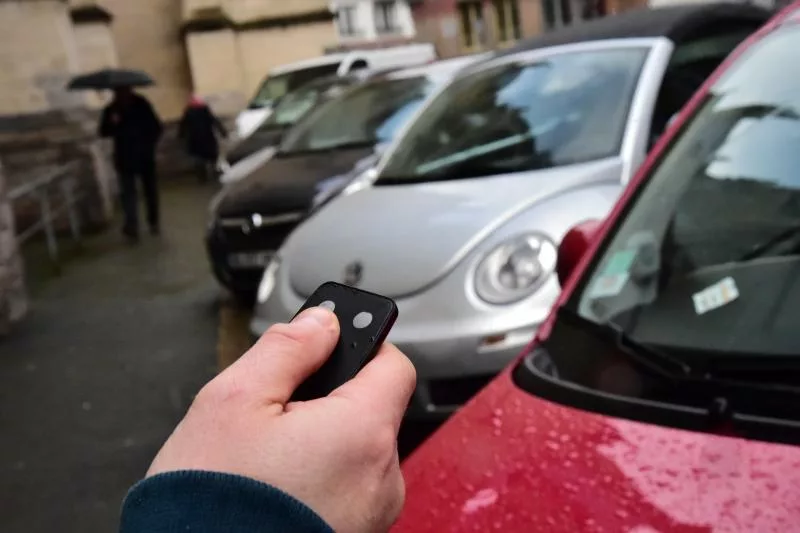
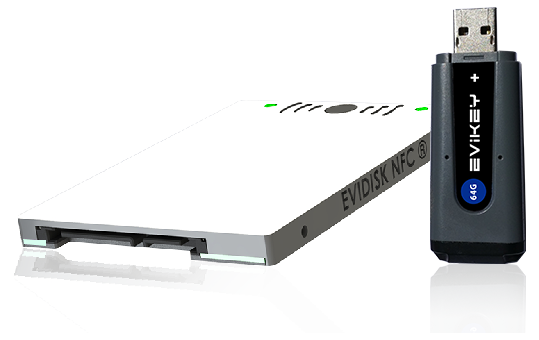
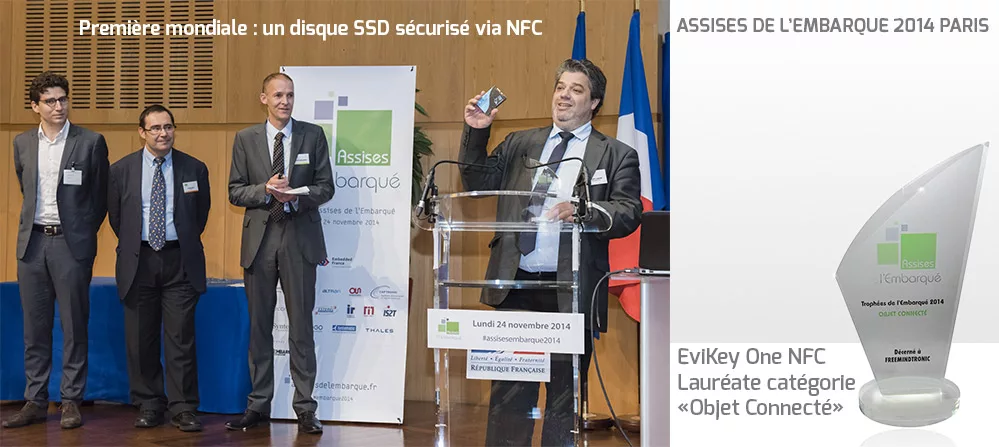
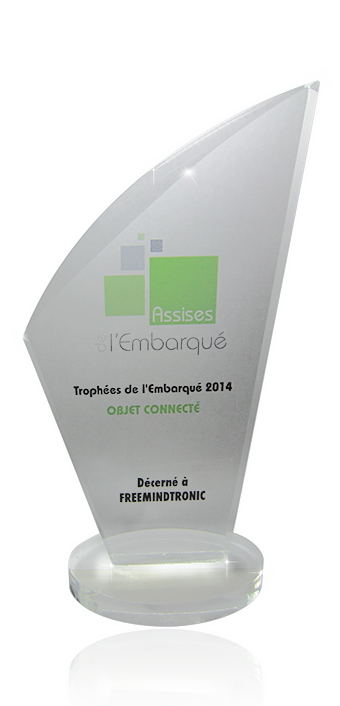
Embedded Trophy 2014 Freemindtronic receives the award for the best secure connected object with EvIkey NFC, a secure contactless USB key.

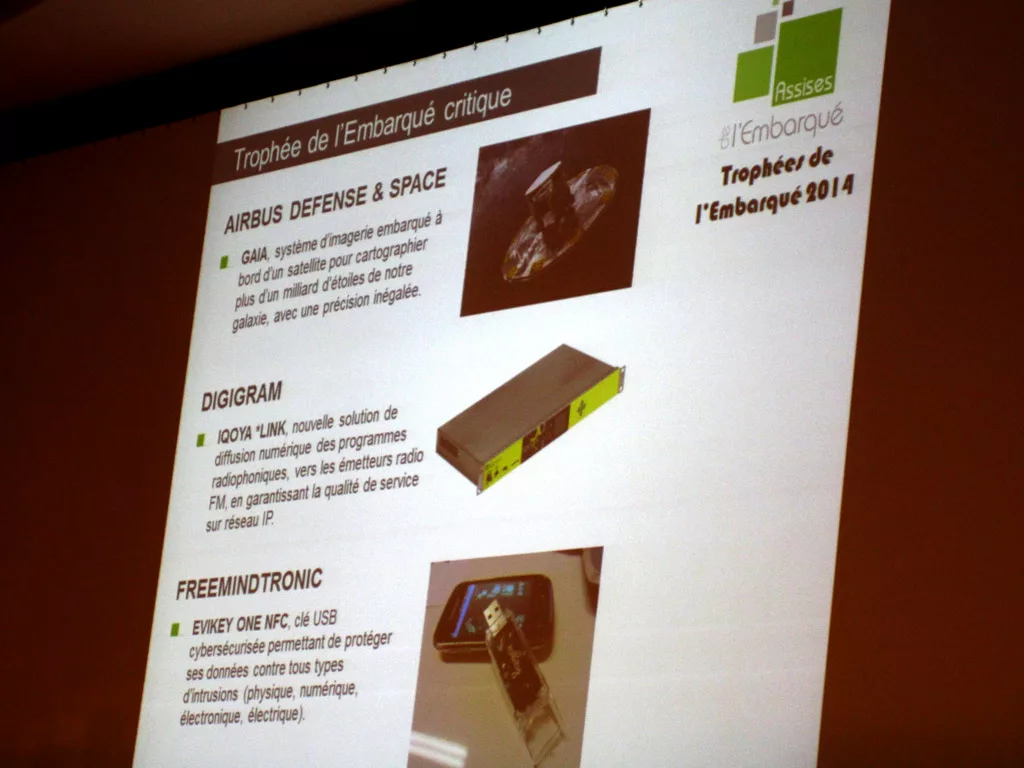
At the 2014 Embedded Awards, EviKey was nominated twice in the “critical embedded system” and “connected object” categories. 
 
Its inventor Jacques Gascuel, CEO of Freemindtronic, received the 2014 Trophy for secure connected objects.
 
Jacques Gascuel announced his latest innovation EviDisk, a 2.5″ – 7mm – Sata 3 SSD that is also contactless secure like EviKey. The secure contactless USB stick that wins the award.

Discover in this video, all the pictures of the Embedded Systems Conference with all the participants to this coveted Embedded Systems competition.

Discover the story behind the first EviKey NFC-enhanced USB flash drive by click here.

Discover now our other videos on our youtube channel Click here

Three Awards 2021

Embedded Trophy 2014 Freemindtronic Award 2014 Bercy Paris France EviKey NFC rugged USB Stick contactless unlock and NFC SSD Sata 3 Technology patented Andorra Copyright
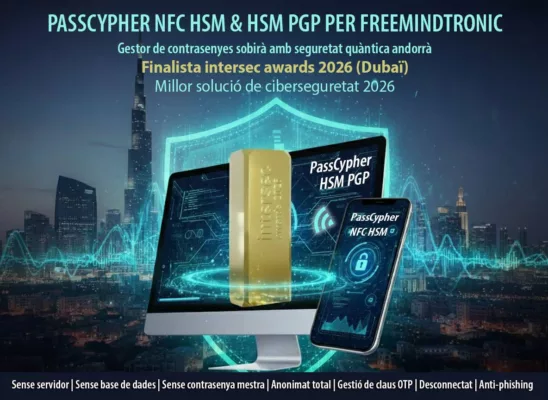
PassCypher finalista Intersec Awards 2026: gestor offline

PassCypher finalista Intersec Awards 2026 — Gestor sense contrasenya resistent a [...]

2 Comments

PassCypher Finaliste Intersec Awards 2026 — Souveraineté validée

PassCypher Finaliste officiel des Intersec Awards 2026 dans la catégorie “Best [...]

3 Comments

Quantum-Resistant Passwordless Manager — PassCypher finalist, Intersec Awards 2026 (FIDO-free, RAM-only)

Quantum-Resistant Passwordless Manager 2026 (QRPM) — Best Cybersecurity Solution Finalist by [...]

4 Comments

Freemindtronic’s Legacy: Rediscovering Excellence

Resurrecting Excellence: Freemindtronic’s Legacy in Nanotechnology and the ‘Fullprotect’ Revolution In [...]

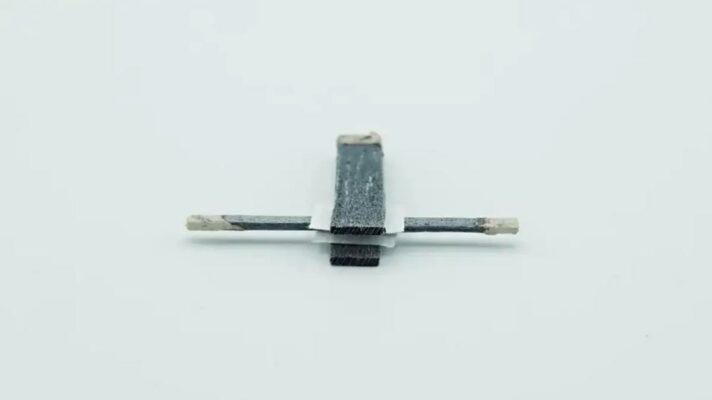
The first wood transistor for green electronics

What is a wood transistor? A transistor is a device that [...]

NEWS PROVIDED BY
CAP’TRONIC / Embedded France / DGE
March 2013
Related Links
https://www.captronic.fr/Les-laureats-des-Trophees-de-l-embarque-2014.html

https://freemindtronic.com/electroniques-biz-trophy-2014-freemindtronic-evikey-nfc

https://freemindtronic.com/lembarque-trophy-2014

Lauréats 2014: Trophées de l’Embarqué

SHARE THIS ARTICLE

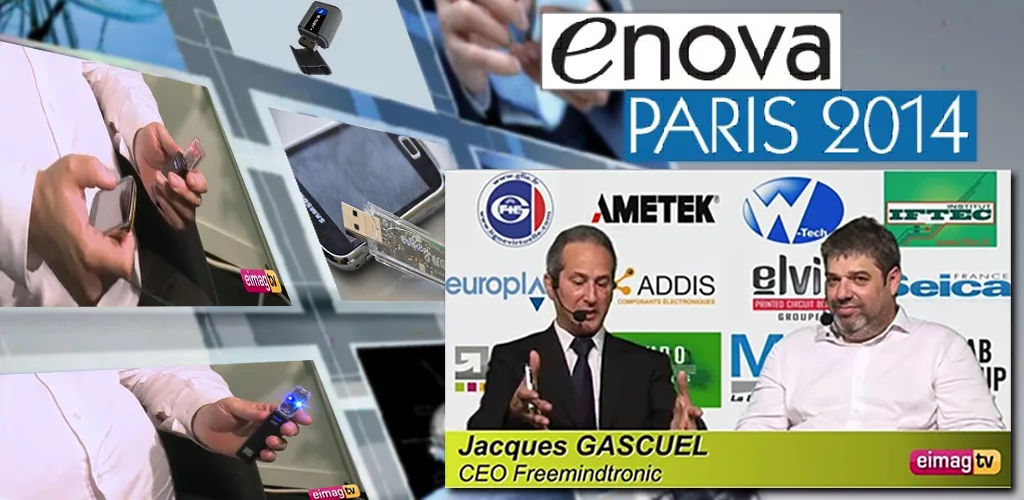
Enova Paris 2014 interview by Jacques Gascuel Electronique Mag

Enova Paris 2014 interview by Jacques Gascuel electronique mag interview EviKey NFC Rugged USB stick unlock contactless Freemindtronic Andorra


Enova Paris 2014 🎙️ Interview with the inventor Jacques Gascuel by Electronique. The inventor presents EviKey NFC an electronic safe in the format of a hardened secure USB key.

EviKey is invisible to computer systems when it auto-locking. It is a contactless unlocked electronic safe via an NFC phone. EviKey also carries a tamper-proof black box that ensures the traceability of random events. EviKey also has a technology for self-diagnosing the origin of these events.

Discover the story behind the first EviKey NFC-enhanced USB flash drive by click here.

Discover now our other videos on our youtube channel Click here

Watch below the video of the interview conducted during the Enova Paris 2014 exhibition.


Interviews 


Embedded Trophy 2014 Freemindtronic Award 2014 Bercy Paris France EviKey NFC rugged USB Stick contactless unlock and NFC SSD Sata 3 Technology patented Andorra Copyright


PassCypher finalista Intersec Awards 2026: gestor offline

PassCypher finalista Intersec Awards 2026 — Gestor sense contrasenya resistent a [...]

2 Comments

PassCypher Finaliste Intersec Awards 2026 — Souveraineté validée

PassCypher Finaliste officiel des Intersec Awards 2026 dans la catégorie “Best [...]

3 Comments

Quantum-Resistant Passwordless Manager — PassCypher finalist, Intersec Awards 2026 (FIDO-free, RAM-only)

Quantum-Resistant Passwordless Manager 2026 (QRPM) — Best Cybersecurity Solution Finalist by [...]

4 Comments

Freemindtronic’s Legacy: Rediscovering Excellence

Resurrecting Excellence: Freemindtronic’s Legacy in Nanotechnology and the ‘Fullprotect’ Revolution In [...]

The first wood transistor for green electronics

What is a wood transistor? A transistor is a device that [...]


NEWS PROVIDED BY
http://www.electronique-mag.com
9 Octobre 2014
Related Links

https://freemindtronic.com/2014/10/08/rfid-award-2014-jacques-gascuel-presents-nfc-usb-stick-evikey/


SHARE THIS ARTICLE


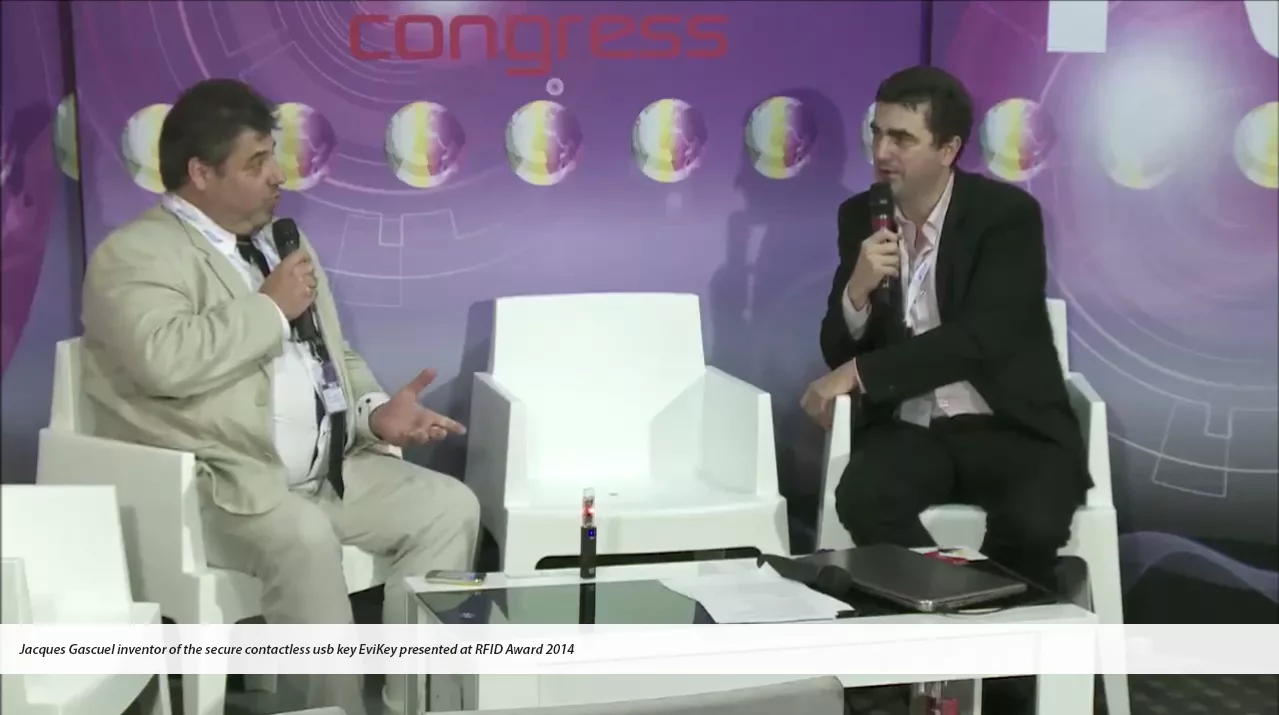
RFID Award 2014 🎙️ Jacques gascuel presents NFC USB Stick EviKey

RFID Award 2014 Interview Jacques Gascuel presents EviKey NFC Rugged USB stick secured unlocked contactless

RFID Award 2014 🎙️ Interview with the inventor Jacques Gascuel on 7-8 October 2014 in Marseille (France) participating in the RFID AWARD 2014 competitions of the 5th edition International RFID Congress scientific conferences organized by the CNRFID. The inventor presents EviKey NFC an electronic safe in the format of a hardened secure USB key.

EviKey is invisible to computer systems when it locks itself. It is a contactless unlocked electronic safe via an NFC phone. EviKey also carries a tamper-proof black box that ensures the traceability of random events. EviKey also has a technology for self-diagnosing the origin of these events.

Discover the story behind the first EviKey NFC-enhanced USB flash drive by click here.

Discover now our other videos on our youtube channel Click here

Three Awards 2021

Embedded Trophy 2014 Freemindtronic Award 2014 Bercy Paris France EviKey NFC rugged USB Stick contactless unlock and NFC SSD Sata 3 Technology patented Andorra Copyright
PassCypher finalista Intersec Awards 2026: gestor offline

PassCypher finalista Intersec Awards 2026 — Gestor sense contrasenya resistent a [...]

2 Comments

PassCypher Finaliste Intersec Awards 2026 — Souveraineté validée

PassCypher Finaliste officiel des Intersec Awards 2026 dans la catégorie “Best [...]

3 Comments

Quantum-Resistant Passwordless Manager — PassCypher finalist, Intersec Awards 2026 (FIDO-free, RAM-only)

Quantum-Resistant Passwordless Manager 2026 (QRPM) — Best Cybersecurity Solution Finalist by [...]

4 Comments

Freemindtronic’s Legacy: Rediscovering Excellence

Resurrecting Excellence: Freemindtronic’s Legacy in Nanotechnology and the ‘Fullprotect’ Revolution In [...]

The first wood transistor for green electronics

What is a wood transistor? A transistor is a device that [...]

NEWS PROVIDED BY
CNRFID / Connectwave 
Octobre 2014
Related Links

https://www.connectwave.fr

https://www.investinprovence.com/actualites

SHARE THIS ARTICLE

European Mechatronics Award 2013 Freemindtronic

Award 2013 Freemindtronic TOP10 European mechatronic companies for Argos One NFC device emm2013

European Mechatronics Award 2013 Freemindtronic

European Mechatronics Award 2013 Freemindtronic receives a trophy for the 10 most innovative mechatronics startups for the best solution Argos One NFC.

The ARGOS ONE NFC is a secure, multi-criteria electrical and environmental micro power circuit breaker with a sealed intelligent micro black box, which integrates NFC technology as standard.

Argos One NFC Smart Safety Electrical Hardware with Black Box electronics & embedded system by freemindtronic Andorra

ARGOS ONE NFC is self-sufficient in electrical energy and operates without batteries. This mechatronic innovation allows to add new functions of real time electrical and environmental sensors in an autonomous and communicating way.

In the video below, you can watch the award ceremony of the 10 best mechatronics startups. Freemindtronic receives Award 2013 with the 10 other startups.

Mechatronic Award 2013

European Mechatronics Award 2013 Freemindtronic receives a trophy for the 10 most innovative mechatronics startups Jacques Gascuel Andorra copyright
PassCypher finalista Intersec Awards 2026: gestor offline

PassCypher finalista Intersec Awards 2026 — Gestor sense contrasenya resistent a [...]

2 Comments

PassCypher Finaliste Intersec Awards 2026 — Souveraineté validée

PassCypher Finaliste officiel des Intersec Awards 2026 dans la catégorie “Best [...]

3 Comments

Quantum-Resistant Passwordless Manager — PassCypher finalist, Intersec Awards 2026 (FIDO-free, RAM-only)

Quantum-Resistant Passwordless Manager 2026 (QRPM) — Best Cybersecurity Solution Finalist by [...]

4 Comments

Freemindtronic’s Legacy: Rediscovering Excellence

Resurrecting Excellence: Freemindtronic’s Legacy in Nanotechnology and the ‘Fullprotect’ Revolution In [...]

The first wood transistor for green electronics

What is a wood transistor? A transistor is a device that [...]

NEWS PROVIDED BY
Thesame tech & Innovation
September 25-26th, 2013
Related Links
https://www.thesame-innovation.com

SHARE THIS ARTICLE

Freemindtronic Electrons d’Or 2013

Freemindtronic electrons d'Or 2013 finalist logo electrons d'or 2018 of


Freemindtronic Electrons d’Or 2013 finalist Most innovative french start-ups

Freemindtronic Electrons d’Or 2013 was published in the May 2013 issue number 38 of the French magazine “ElectroniqueS” on page 12.
The 16th edition of the Electrons d’or awards was held on 19 June 2013 by the magazine ElectroniqueS. These prizes reward the 12 best products of the year in their respective categories as well as the most innovative French start-up.
The list of finalist in these 13 categories was published in the magazine number 38.
The article on the startup of the month Freemindtronic published in March 2013 number 36 page 36 titled Freemindtronic invents a dynamic protection technology for electronic systems.
In 2013, the Electrons d’Or awards distinguished twelve innovative products and one star-up chosen by a jury of experts from the world of industry and R&D who are recognised in their field of excellence.
This jury awarded its trophies from a list of products judged to be outstanding by the editors and which had been the subject of articles in the magazine ElectroniqueS or on the website www.ElectroniqueS.biz over the last twelve months.
Freemindtronic nominated for the Electrons d’Or for the technology that enables secure, forgery-proof event-based traceability of electronic systems.
Freemindtronic is also one of the top 10 most innovative European start-ups in Mechatronics. Read more ici

Argos One NFC Smart Safety Electrical Hardware with Black Box electronics & embedded system by freemindtronic Andorra

Argos One NFC was invented by Jacques Gascuel using his patent issued internationally under numbers FR2941572 on a device for monitoring and protecting the power supply of an electrical appliance and the process for implementing this device.
The winner of the most innovative start-up in France was Mr Joël Monnier of the company lKalray. The winners of the Golden Electrons were published in the magazine number 40 page 10-11.
Discover also the electrons d’or website here


Finalist 2013


top 4 best startup deep tech nominated award cybersecurity safety technology freemindtronic andorra jacques gascuel copyrignt 2021


PassCypher finalista Intersec Awards 2026: gestor offline

PassCypher finalista Intersec Awards 2026 — Gestor sense contrasenya resistent a [...]

2 Comments

PassCypher Finaliste Intersec Awards 2026 — Souveraineté validée

PassCypher Finaliste officiel des Intersec Awards 2026 dans la catégorie “Best [...]

3 Comments

Quantum-Resistant Passwordless Manager — PassCypher finalist, Intersec Awards 2026 (FIDO-free, RAM-only)

Quantum-Resistant Passwordless Manager 2026 (QRPM) — Best Cybersecurity Solution Finalist by [...]

4 Comments

Freemindtronic’s Legacy: Rediscovering Excellence

Resurrecting Excellence: Freemindtronic’s Legacy in Nanotechnology and the ‘Fullprotect’ Revolution In [...]

The first wood transistor for green electronics

What is a wood transistor? A transistor is a device that [...]


NEWS PROVIDED BY
www.electronique.biz
March 2013


SHARE THIS ARTICLE


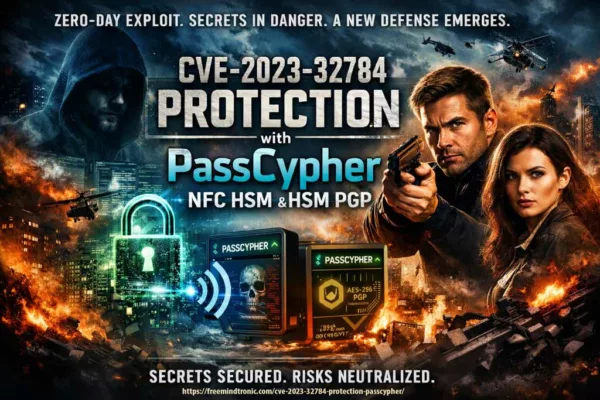
CVE-2023-32784 Protection with PassCypher NFC HSM

CVE-2023-32784 Protection with PassCypher NFC HSM and HSM PGP - Digital security solutions

CVE-2023-32784 Protection with PassCypher NFC HSM safeguards your digital secrets. It protects your secrets beyond the compromised operating system perimeter by using NFC/HSM PGP devices encrypted with AES-256 CBC. This ensures optimal protection against advanced attacks like CVE-2023-32784, where secrets stored in memory files like hiberfil.sys and pagefile.sys may be vulnerable to exfiltration. Learn how PassCypher can secure your data even in the event of a system compromise.


Executive Summary — Protect Your Digital Secrets Against CVE-2023-32784 with PassCypher

First, this executive summary (≈ 4 minutes) will provide an overview of the CVE-2023-32784 vulnerability and how PassCypher protects your secrets. Then, the advanced summary will delve into the mechanics of this vulnerability, the risks associated with hibernation and pagefile memory, and specific PassCypher solutions to counter these attacks.

⚡ Discovery and Security Mechanisms

The CVE-2023-32784 vulnerability was discovered in April 2023 and allows attackers to exfiltrate sensitive secrets stored in memory files such as hiberfil.sys and pagefile.sys. The patch to fix this vulnerability was released in May 2023 to secure these vulnerable access points and mitigate the risk of exfiltration. You can review the official patch link here: CVE Details – CVE-2023-32784.

PassCypher NFC HSM uses a Zero Trust architecture and advanced mechanisms such as segmented encryption and NFC contactless authentication to protect your secrets from these attacks. These technologies ensure that even if an attacker gains access to memory, the secrets remain protected.

Source: CVE Details – CVE-2023-32784

✦ Immediate Impacts

  • On the one hand, compromise becomes a persistent state of the terminal, not a one-time incident. Once memory artifacts are extracted, it is difficult to ensure that the system is no longer compromised.
  • On the other hand, security agents lose their ability to prove they are functioning correctly on a potentially compromised environment.
  • As a result, attribution and response become more uncertain, while the exposure window lengthens.

Source: NIST Cybersecurity Framework

⚠ Strategic Message

However, the key element is not just the vulnerability itself, but the trust logic: a compromised system, even without a known signature, can no longer guarantee reliable security. Trust in an environment where secrets are stored becomes fragile if these secrets are vulnerable to covert exfiltration through memory.

Source: NIST Special Publication 800-53: Security and Privacy Controls for Information Systems and Organizations

🛑 When Not to Act

  • First, do not reintroduce secrets (credentials, keys, sensitive data) on a terminal whose integrity has not been verified.
  • Next, do not stack layers of security software that may complicate auditing and increase the attack surface.
  • Finally, do not confuse service return with trust restoration: a quick recovery can mask persistent compromises.

✓ Sovereign Counter-Espionage Principle

Thus, reducing risk does not mean “cleaning” a compromised system but moving trust out of the compromised perimeter: off the OS, off memory, and if necessary off the network. This ensures that secrets remain protected even if the main system environment is compromised.


Reading Time Settings

Executive Summary Reading Time: ≈ 4 minutes
Advanced Summary Reading Time: ≈ 6 minutes
Full Chronicle Reading Time: ≈ 35–40 minutes
Publication Date: 2023-05-10
Last Updated: 2026-01-23
Complexity Level: Advanced — Cybersecurity & Digital Sovereignty
Technical Density: ≈ 65%
Primary Language: EN. FR.
Specificity: Strategic Chronicle — CVE-2023-32784 Vulnerability & Secrets Protection
Reading Order: Executive Summary → Advanced Summary → Zero-Day Exploits → PassCypher Solutions → Residual Risks

Editorial Note

This chronicle is part of the Digital Security section. It extends the analysis of zero-day vulnerabilities and the implications of losing secrets through memory, exploring how PassCypher positions itself as a robust solution against this type of compromise. It does not offer a miracle solution but an alternative security framework, based on sovereign points of failure. This chronicle follows the AI transparency statement of Freemindtronic Andorra — FM-AI-2025-11-SMD5.


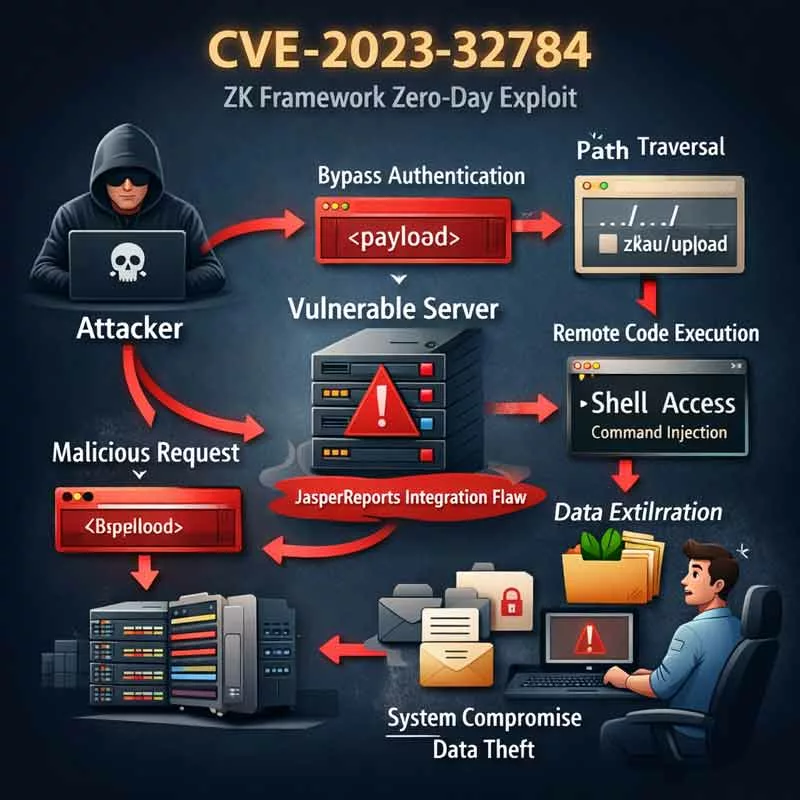
Illustration showing the CVE-2023-32784 vulnerability and memory exfiltration risks, including hiberfil.sys, pagefile.sys, and RAM.


For Further Reading

Then, the Advanced Summary delves into the management of the CVE-2023-32784 vulnerability and the implications of advanced digital security.


KingsPawn A Spyware Targeting Civil Society

  QuaDream: KingsPawn spyware vendor shutting down in may 2023 QuaDream was a company that [...]

Leidos Holdings Data Breach: A Significant Threat to National Security

A Major Intrusion Unveiled In July 2024, the Leidos Holdings data breach came to light, [...]

Side-Channel Attacks via HDMI and AI: An Emerging Threat

Understanding the Impact and Evolution of Side-Channel Attacks in Modern Cybersecurity Side-channel attacks, also known [...]

Pegasus: The cost of spying with one of the most powerful spyware in the world

Pegasus: The Cost of Spying with the Most Powerful Spyware in the World Pegasus is [...]

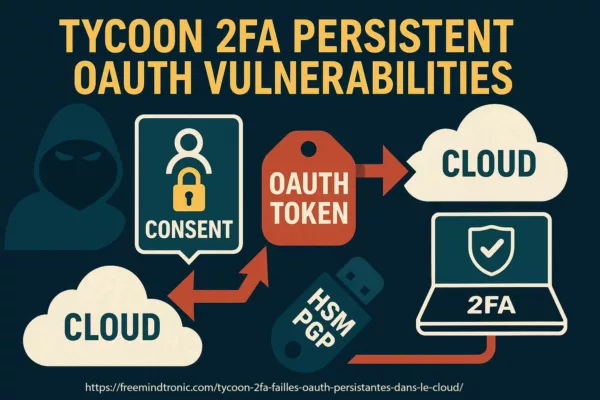
Persistent OAuth Flaw: How Tycoon 2FA Hijacks Cloud Access

Persistent OAuth Flaw — Tycoon 2FA Exploited — When a single consent becomes unlimited cloud [...]

1 Comment

Chrome V8 confusion RCE — Your browser was already spying

Chrome v8 confusion RCE: This edition addresses impacts and guidance relevant to major English-speaking markets [...]

2 Comments

Bot Telegram Usersbox : l’illusion du contrôle russe

Le bot Telegram Usersbox n’était pas un simple outil d’OSINT « pratique » pour curieux [...]

Quantum computer 6100 qubits ⮞ Historic 2025 breakthrough

A 6,100-qubit quantum computer marks a turning point in the history of computing, raising unprecedented [...]

1 Comment

BitLocker Security: Safeguarding Against Cyberattacks

Introduction to BitLocker Security If you use a Windows computer for data storage or processing, [...]

1 Comment

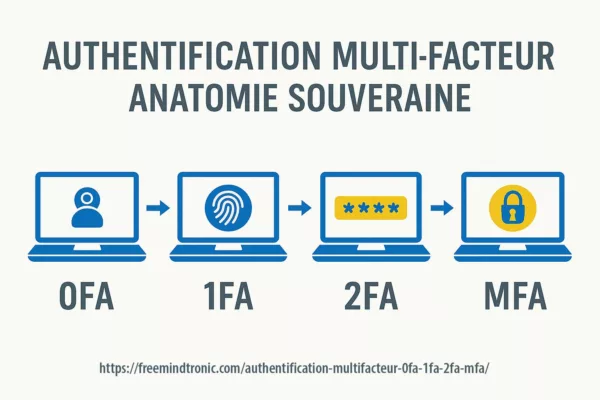
Authentification multifacteur : anatomie, OTP, risques

Authentification Multifacteur : Anatomie souveraine Explorez les fondements de l’authentification numérique à travers une typologie [...]

Brute Force Attacks: What They Are and How to Protect Yourself

Brute-force Attacks: A Comprehensive Guide to Understand and Prevent Them Brute Force: danger and protection [...]

Fuite données ministère interieur : messageries compromises et ligne rouge souveraine

Fuite données ministère intérieur. L’information n’est pas arrivée par une fuite anonyme ni par un [...]

How to protect yourself from stalkerware on any phone

What is Stalkerware and Why is it Dangerous? Stalkerware, including known programs like FlexiSpy, mSpy, [...]

Cyber espionnage zero day : marché, limites et doctrine souveraine

Cyber espionnage zero day : la fin des spywares visibles marque l’entrée dans une économie [...]

CVE-2023-32784 : Pourquoi PassCypher protège vos secrets

PassCypher HSM protège les secrets numériques. Il protège vos secrets numériques hors du périmètre du [...]

1 Comment

What is Juice Jacking and How to Avoid It?

Juice Jacking: How to Avoid This Cyberattack Do you often use public USB chargers to [...]

DOM Extension Clickjacking — Risks, DEF CON 33 & Zero-DOM fixes

DOM extension clickjacking — a technical chronicle of DEF CON 33 demonstrations, their impact, and [...]

5 Comments

Phishing Cyber victims caught between the hammer and the anvil

Phishing is a fraudulent technique that aims to deceive internet users and to steal their [...]

APT28 spear-phishing: Outlook backdoor NotDoor and evolving European cyber threats

Russian cyberattack on Microsoft by Midnight Blizzard (APT29) highlights the strategic risks to digital sovereignty. [...]

3 Comments

WhatsApp Hacking: Prevention and Solutions

WhatsApp hacking zero-click exploit (CVE-2025-55177) chained with Apple CVE-2025-43300 enables remote code execution via crafted [...]

6 Comments

Cyberattaque HubEE : Rupture silencieuse de la confiance numérique

Cyberattaque HubEE : rupture silencieuse de la confiance numérique. Cette attaque, qui a permis l’exfiltration [...]

BITB Attacks: How to Avoid Phishing by iFrame

BITB Attacks: How to Avoid Phishing by iFrame We have all seen phishing attacks aren’t [...]

WhatsApp Gold arnaque mobile : typologie d’un faux APK espion

WhatsApp Gold arnaque mobile — clone frauduleux d’application mobile, ce stratagème repose sur une usurpation [...]

Sovereign SSH Authentication with PassCypher HSM PGP — Zero Key in Clear

SSH Key PassCypher HSM PGP establishes a sovereign SSH authentication chain for zero-trust infrastructures, where [...]

1 Comment

Microsoft Vulnerabilities 2025: 159 Flaws Fixed in Record Update

Microsoft: 159 Vulnerabilities Fixed in 2025 Microsoft has released a record-breaking security update in January [...]

Russian Cyberattack Microsoft: An Unprecedented Threat

Russian cyberattack on Microsoft by Midnight Blizzard (APT29) highlights the strategic risks to digital sovereignty. [...]

1 Comment

Snake Malware: The Russian Spy Tool

Snake: The Russian malware that steals sensitive information for 20 years Snake is a malware [...]

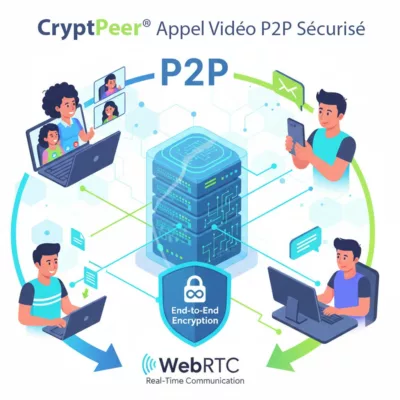
CryptPeer messagerie P2P WebRTC : appels directs chiffrés de bout en bout

La messagerie P2P WebRTC sécurisée constitue le fondement technique et souverain de la communication directe [...]

2 Comments

How the attack against Microsoft Exchange on December 13, 2023 exposed thousands of email accounts

How the attack against Microsoft Exchange on December 13, 2023 exposed thousands of email accounts [...]

1 Comment

Chrome V8 confusió RCE — Actualitza i postura Zero-DOM

Chrome V8 confusió RCE: aquesta edició exposa l’impacte global i les mesures immediates per reduir [...]

Email Metadata Privacy: EU Laws & DataShielder

Email metadata privacy sits at the core of Europe’s digital sovereignty: understand the risks, the [...]

1 Comment

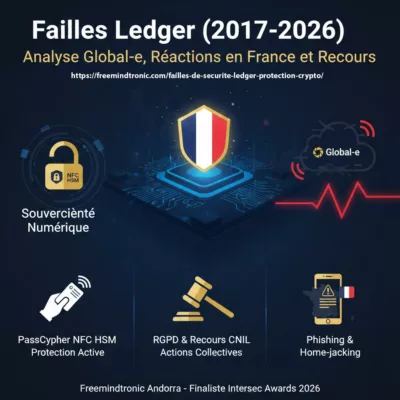
Ledger Security Breaches from 2017 to 2026: How to Protect Yourself from Hackers

Ledger Security Breaches have become a major indicator of vulnerabilities in the global crypto ecosystem. [...]

4 Comments

OpenAI Mixpanel Breach Metadata – phishing risks and sovereign security with PassCypher

AI Mixpanel breach metadata is a blunt reminder of a simple rule: the moment sensitive [...]

1 Comment

Are fingerprint systems really secure? How to protect your data and identity against BrutePrint

Fingerprint Biometrics: An In-Depth Exploration of Security Mechanisms and Vulnerabilities It is a widely recognized [...]

How BIP39 helps you create and restore your Bitcoin wallets

How BIP39 helps you create and restore your Bitcoin wallets Do you struggle to manage [...]

Enhancing Crypto Wallet Security: How EviSeed and EviVault Could Have Prevented the $41M Crypto Heist

EviSeed and EviVault NFC HSM Technologies could have prevented the $41 million crypto theft by [...]

CVE-2023-32784 Protection with PassCypher NFC HSM

CVE-2023-32784 Protection with PassCypher NFC HSM safeguards your digital secrets. It protects your secrets beyond [...]

Confidentialité métadonnées e-mail — Risques, lois européennes et contre-mesures souveraines

La confidentialité des métadonnées e-mail est au cœur de la souveraineté numérique en Europe : [...]

1 Comment

Russia Blocks WhatsApp: Max and the Sovereign Internet

Step by step, Russia blocks WhatsApp and now openly threatens to “completely block” the messaging [...]

2 Comments

RockYou2024: 10 Billion Reasons to Use Free PassCypher

RockYou2024: A Cybersecurity Earthquake The RockYou2024 data leak has shaken the very foundations of global [...]

APT29 Exploits App Passwords to Bypass 2FA

A silent cyberweapon undermining digital trust Two-factor authentication (2FA) was supposed to be the cybersecurity [...]

ViperSoftX How to avoid the malware that steals your passwords

ViperSoftX: The Malware that Steals Your Cryptocurrencies and Passwords ViperSoftX is a malware that steals [...]

1 Comment

Missatgeria P2P WebRTC segura — comunicació directa amb CryptPeer

Missatgeria P2P WebRTC segura al navegador és l’esquelet tècnic i sobirà de la comunicació directa [...]

1 Comment

eSIM Sovereignty Failure: Certified Mobile Identity at Risk

  Runtime Threats in Certified eSIMs: Four Strategic Blind Spots While geopolitical campaigns exploit the [...]

Chrome V8 Zero-Day CVE-2025-10585 — Ton navigateur était déjà espionné ?

Chrome V8 zero-day CVE-2025-10585 — Votre navigateur n’était pas vulnérable. Vous étiez déjà espionné !

2 Comments

Cyberattack Exploits Backdoors: What You Need to Know

Cyberattack Exploits Backdoors: What You Need to Know In October 2024, a cyberattack exploited backdoors [...]

Kapeka Malware: Comprehensive Analysis of the Russian Cyber Espionage Tool

Kapeka Malware: The New Russian Intelligence Threat   In the complex world of cybersecurity, a [...]

Protect yourself from Pegasus spyware with EviCypher NFC HSM

How to protect yourself from Pegasus spyware with EviCypher NFC HSM Pegasus Spyware: what it [...]

Kevin Mitnick’s Password Hacking with Hashtopolis

Password hacking tool: how it works and how to protect yourself Password hacking is a [...]

OpenAI fuite Mixpanel : métadonnées exposées, phishing et sécurité souveraine

OpenAI fuite Mixpanel rappelle que même les géants de l’IA restent vulnérables dès qu’ils confient [...]

1 Comment

Predator Files: The Spyware Scandal That Shook the World

Predator Files: How a Spyware Consortium Targeted Civil Society, Politicians and Officials Cytrox: The maker [...]

Google Sheets Malware: The Voldemort Threat

Sheets Malware: A Growing Cybersecurity Concern Google Sheets, a widely used collaboration tool, has shockingly [...]

SSH Key PassCypher HSM PGP — Sécuriser l’accès multi-OS à un VPS

SSH Key PassCypher HSM PGP fournit une chaîne souveraine : génération locale de clés SSH [...]

1 Comment

Strong Passwords in the Quantum Computing Era

How to create strong passwords in the era of quantum computing? Quantum computing is a [...]

2 Comments

Securing IEO STO ICO IDO and INO: The Challenges and Solutions

Securing IEO STO ICO IDO and INO: How to Protect Your Crypto Investments Cryptocurrencies are [...]

TETRA Security Vulnerabilities: How to Protect Critical Infrastructures

TETRA Security Vulnerabilities: How to Protect Critical Infrastructures from Cyberattacks TETRA (Terrestrial Trunked Radio) is [...]

Failles de sécurité Ledger : Analyse 2017-2026 & Protections

Les failles de sécurité Ledger sont au cœur des préoccupations des investisseurs depuis 2017. Cette [...]

1 Comment

APT44 QR Code Phishing: New Cyber Espionage Tactics

APT44 Sandworm: The Elite Russian Cyber Espionage Unit Unmasking Sandworm’s sophisticated cyber espionage strategies and [...]

1 Comment

Salt Typhoon & Flax Typhoon: Cyber Espionage Threats Targeting Government Agencies

Salt Typhoon – The Cyber Threat Targeting Government Agencies Salt Typhoon and Flax Typhoon represent [...]

2 Comments

Google OAuth2 security flaw: How to Protect Yourself from Hackers

Google OAuth2 security flaw: Strategies Against Persistent Cookie Threats in Online Services Google OAuth2 security [...]

Silent Whisper espionnage WhatsApp Signal : une illusion persistante

Silent Whisper espionnage WhatsApp Signal est présenté comme une méthode gratuite permettant d’espionner des communications [...]

Coinbase blockchain hack: How It Happened and How to Avoid It

How to Prevent Coinbase Blockchain Hack with EviVault NFC HSM Technology What happened to Coinbase [...]

EviCore NFC HSM Credit Cards Manager | Secure Your Standard and Contactless Credit Cards

EviCore NFC HSM Credit Cards Manager is a powerful solution designed to secure and manage [...]

How to Recover and Protect Your SMS on Android

Recover and Protect Your SMS on Android: A Complete Guide First of all, SMS are [...]

Dropbox Security Breach 2024: Phishing, Exploited Vulnerabilities

Phishing Tactics: The Bait and Switch in the Aftermath of the Dropbox Security Breach The [...]

Cybersecurity Breach at IMF: A Detailed Investigation

Cybersecurity Breach at IMF: A Detailed Investigation Cybersecurity breaches are a growing concern worldwide. The [...]

Tycoon 2FA failles OAuth persistantes dans le cloud | PassCypher HSM PGP

Faille OAuth persistante — Tycoon 2FA exploitée — Quand une simple autorisation devient un accès [...]

2 Comments

Remote activation of phones by the police: an analysis of its technical, legal and social aspects

What is the new bill on justice and why is it raising concerns about privacy? [...]

Browser Fingerprinting Tracking: Metadata Surveillance in 2026

Browser Fingerprinting Tracking today represents one of the true cores of metadata intelligence. Far beyond [...]

2 Comments

Kismet iPhone: How to protect your device from the most sophisticated spying attack?

Kismet iPhone: How to protect your device from the most sophisticated spying attack using Pegasus [...]

Chinese hackers Cisco routers: how to protect yourself?

How Chinese hackers infiltrate corporate networks via Cisco routers A Chinese-backed hacker group, known as [...]

Spyware ClayRat Android : faux WhatsApp espion mobile

Spyware ClayRat Android illustre la mutation du cyberespionnage : plus besoin de failles, il exploite [...]

2 Comments

Russian Espionage Hacking Tools Revealed

Russian Espionage Hacking Tools: Discovery and Initial Findings Russian espionage hacking tools were uncovered by [...]

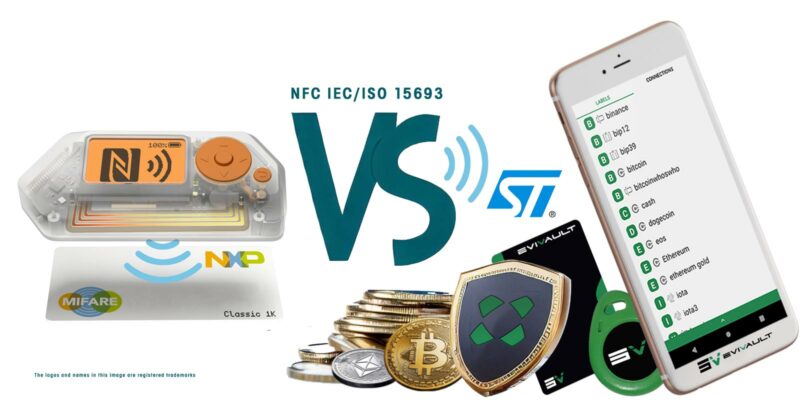
EviVault NFC HSM vs Flipper Zero: The duel of an NFC HSM and a Pentester

EviVault NFC HSM vs Flipper Zero: The duel of an NFC HSM and a Pentester [...]

APT29 Spear-Phishing Europe: Stealthy Russian Espionage

APT29 SpearPhishing Europe: A Stealthy LongTerm Threat APT29 spearphishing Europe campaigns highlight a persistent and [...]

3 Comments

Andorra National Cyberattack Simulation: A Global First in Cyber Defense

Andorra Cybersecurity Simulation: A Vanguard of Digital Defense Andorra-la-Vieille, April 15, 2024 – Andorra is [...]

ZenRAT: The malware that hides in Bitwarden and escapes antivirus software

How this malware hides in Bitwarden and escapes antivirus software to steal your information ZenRAT [...]

Apple M chip vulnerability: A Breach in Data Security

Apple M chip vulnerability: uncovering a breach in data security Researchers at the Massachusetts Institute [...]

Ivanti Zero-Day Flaws: Comprehensive Guide to Secure Your Systems Now

What are Zero-Day Flaws and Why are They Dangerous? A zero-day flaw is a previously [...]

Android Spyware Threat Clayrat : 2025 Analysis and Exposure

Android Spyware Threat: ClayRat illustrates the new face of cyber-espionage — no exploits needed, just [...]

1 Comment

Clickjacking des extensions DOM : DEF CON 33 révèle 11 gestionnaires vulnérables

Clickjacking d’extensions DOM : DEF CON 33 révèle une faille critique et les contre-mesures Zero-DOM

14 Comments

BadPilot Cyber Attacks: Russia’s Threat to Critical Infrastructures

BadPilot Cyber Attacks: Sandworm’s New Weaponized Subgroup Understanding the rise of BadPilot and its impact [...]

OpenVPN Security Vulnerabilities Pose Global Security Risks

Critical OpenVPN Vulnerabilities Pose Global Security Risks OpenVPN security vulnerabilities have come to the forefront, [...]

Générateur de mots de passe souverain – PassCypher Secure Passgen WP

Générateur de mots de passe souverain PassCypher Secure Passgen WP pour WordPress — le premier [...]

Signal Clone Breached: Critical Flaws in TeleMessage

TeleMessage: A Breach That Exposed Cloud Trust and National Security Risks TeleMessage, marketed as a [...]

1 Comment

Passkeys Faille Interception WebAuthn | DEF CON 33 & PassCypher

Conseil RSSI / CISO – Protection universelle & souveraine EviBITB (Embedded Browser‑In‑The‑Browser Protection) est une [...]

3 Comments

FormBook Malware: How to Protect Your Gmail and Other Data

How to Protect Your Gmail Account from FormBook Malware Introduction Imagine that you receive an [...]

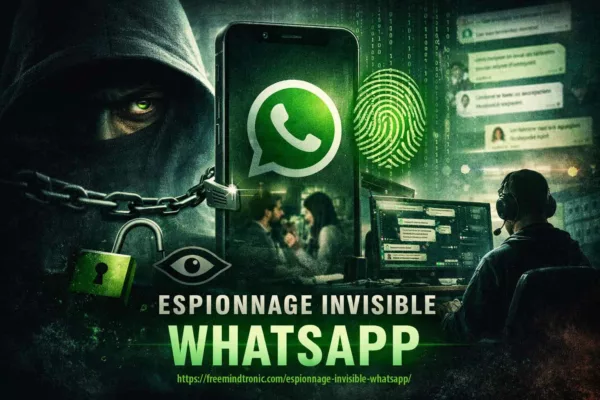
Espionnage invisible WhatsApp : quand le piratage ne laisse aucune trace

Espionnage invisible WhatsApp n’est plus une hypothèse marginale, mais une réalité technique rendue possible par [...]

Midnight Blizzard Cyberattack Against Microsoft and HPE: What are the consequences?

Midnight Blizzard Cyberattack against Microsoft and HPE: A detailed analysis of the facts, the impacts [...]

2 Comments

PrintListener: How to Betray Fingerprints

PrintListener: How this Technology can Betray your Fingerprints and How to Protect yourself PrintListener revolutionizes [...]

Microsoft Outlook Zero-Click Vulnerability: Secure Your Data Now

Microsoft Outlook Zero-Click Vulnerability: How to Protect Your Data Now A critical Zero-Click vulnerability (CVE-2025-21298) [...]

Vulnérabilité WhatsApp Zero-Click — Actions & Contremesures

Vulnérabilité WhatsApp zero-click (CVE-2025-55177) chaînée avec Apple CVE-2025-43300 permet l’exécution de code à distance via [...]

1 Comment

Clickjacking extensions DOM: Vulnerabilitat crítica a DEF CON 33

DOM extension clickjacking — el clickjacking d’extensions basat en DOM, mitjançant iframes invisibles, manipulacions del [...]

4 Comments

Protect US emails from Chinese hackers with EviCypher NFC HSM?

How EviCypher NFC HSM technology can protect emails from Chinese hackers The Chinese hack on [...]

The chronicles displayed above ↑ belong to the Digital Security section. They extend the analysis of zero-day vulnerabilities and systemic risks in cybersecurity. Therefore, they provide a strategic perspective on reducing risks regarding digital secrets and the importance of “sovereign points of failure.”


Advanced Summary — Understanding the CVE-2023-32784 Vulnerability

⮞ Reading Note

First, this advanced summary provides a detailed analysis of the CVE-2023-32784 vulnerability, its technical implications, and the risks of secret exfiltration through memory artifacts like hiberfil.sys and pagefile.sys. Then, the full chronicle will offer practical strategies to minimize the impact of this vulnerability, including robust security solutions like PassCypher.

Exploitation of CVE-2023-32784 — Zero-Day Attack on Digital Secrets

First, it is crucial to understand how the CVE-2023-32784 vulnerability can be exploited. This flaw allows an attacker to access digital secrets stored in sensitive memory files such as hiberfil.sys and pagefile.sys. These files may contain critical information such as passwords, encryption keys, and other user secrets. Indeed, attackers can use this vulnerability to exfiltrate data without leaving visible traces, making the attack difficult to detect until sensitive information has already been compromised.

Memory Dump and Pagefile Vulnerabilities

Hibernation and pagefile files are essential components for managing system resources in Windows environments. However, these files can become prime targets for attackers, as they contain portions of system memory, which may include unencrypted secrets. Indeed, when sensitive information is present in memory, it is often written to these files without any form of protection, making them vulnerable to unauthorized access. Once this vulnerability is exploited, an attacker can extract these secrets and use them for malicious purposes, such as credential theft or unauthorized access to secure systems.

Hiberfil and Sensitive Data Exfiltration

Another major attack vector is the exfiltration of secrets stored in the hiberfil.sys file. This file, used for managing hibernation states, contains a full copy of the RAM contents. As a result, if an attacker gains access to this file, they can easily extract sensitive data. However, using security solutions like PassCypher allows these sensitive memory files to be encrypted, preventing data exfiltration in case of a compromise.

Protect Your Secrets: PassCypher NFC HSM

PassCypher NFC HSM protects your digital secrets by storing them outside the compromised operating system, using segmented encryption and contactless NFC authentication. These mechanisms provide maximum protection against attacks like CVE-2023-32784, which exploit vulnerabilities in sensitive memory files like hiberfil.sys and pagefile.sys. Thanks to these technologies, even if the operating system is compromised, your secrets remain protected. Therefore, this solution offers an additional layer of protection, mitigating risks associated with zero-day attacks while enabling data security management at both the physical and network levels, outside the compromised OS perimeter.
Strategic Recommendations for Managing CVE-2023-32784

Businesses and users should implement multi-layered defense strategies to counter the risks associated with this vulnerability. Here are some strategic recommendations:

  • Encrypt hibernation and pagefile files: This prevents unauthorized access to sensitive information stored in system memory.
  • Use advanced protection solutions: Such as PassCypher, which protects your secrets even outside the operating system.
  • Monitor access to sensitive memory files: Implement continuous monitoring of hibernation and pagefile files to detect any unauthorized access attempts.
  • Review secure storage mechanisms: Use secure storage solutions outside the system perimeter for sensitive data, such as NFC physical keys or encrypted storage devices.

In summary, protecting sensitive secrets in a digital environment is becoming a priority as vulnerabilities like CVE-2023-32784 are discovered and exploited. PassCypher stands as an effective defense solution, but it is essential to maintain a proactive security approach by applying preventive measures and integrating robust tools into your system security architecture.

The full chronicle will detail the long-term implications of this vulnerability and how solutions like PassCypher help secure systems in an ever-evolving digital landscape.


Full Chronicle — Understanding and Countering CVE-2023-32784

First, this full chronicle explores in-depth the CVE-2023-32784 vulnerability and its impacts on digital security. Then, we will examine the mechanics of this flaw and best practices for preventing it. You will also discover how solutions like PassCypher can protect you.

Analysis of CVE-2023-32784: A Critical Flaw in Memory Management

The CVE-2023-32784 vulnerability is related to a flaw in the memory management of computer systems. Memory artifacts, such as hibernation files (hiberfil.sys) and pagefile files (pagefile.sys), can contain sensitive information. These files, used to improve system performance, become prime targets for attackers.

Indeed, these files can store secrets such as credentials, encryption keys, and other sensitive data. Once extracted, these data can be used for malicious attacks. This poses a major risk to business confidentiality.

Yes: Memory-Related Flaws Are Still a Concern

Vulnerabilities exposing digital secrets in memory — whether in:

  • the hibernation file (hiberfil.sys),
  • the pagefile (pagefile.sys),
  • or even active RAM memory

continue to be a real concern in 2025–2026.

This is due to the fundamental nature of computing: in order to run programs, sensitive data must sometimes temporarily reside in RAM, including keys, passwords, or authentication tokens. It’s an inherent risk, not a one-time unique vulnerability.

How These Types of Flaws Manifest Today

Memory Exfiltration

This is an attack type where an attacker accesses memory or system artifacts to extract secrets. This type of attack can occur via:

  • Memory dump (complete RAM extraction)
  • Access to swap/pagefile files
  • Accessible debugging
  • High-privilege malware
  • Zero-day exploits in the OS or drivers

Even if a patch fixes a specific vulnerability, another memory vector could be exploited as long as sensitive data is passing through memory unencrypted.

Wider Zero-Day Flaws

Every year, new zero-day vulnerabilities are discovered. Some allow an attacker to read memory or intercept unencrypted secrets — independent of hibernation/pagefile files. For example:

  • Flaws in the OS kernel
  • Flaws in system drivers
  • Flaws in virtualization tools
  • Flaws in memory managers

The ease of execution varies, but the potential impact remains: exfiltration of sensitive memory data.

Memory Leaks in Applications

Many applications, especially those handling secrets and keys, still have:

  • un cleaned buffers
  • uncleared memory allocations
  • clear-text sensitive strings left in RAM

Even modern products can present this type of risk if memory access is not strictly managed.

Evolution of Mitigation Measures in 2025–2026

Vendors have continued to improve protections:

  • Enhanced memory encryption
  • Windows uses Virtual Secure Mode,
  • Linux integrates distributions with strengthened protections (SELinux, AppArmor),
  • and macOS has memory write protections (AMFI).

However, no measure fully eliminates unencrypted memory as long as secrets are passing through it unencrypted.

Modern Mitigation Features

Mitigation Purpose
Memory encryption (TPM/SEV/SME) Hardware memory encryption
ASLR / CFG / DEP Application exploitation mitigation
Credential Guard (Windows) Isolation of secrets in a protected container
Kernel hardening Reducing exploitation vectors

These technologies reduce risks but do not eliminate them completely.

Recent Examples (2024–2026)

Although no flaw is exactly like CVE-2023-32784, several recent vulnerabilities have shown that:

  • secrets could be extracted through memory attacks
  • sensitive keys could be retrieved if they were stored unprotected in RAM.

For example, in the 2024–2025 years, there were:

  • Vulnerabilities in hypervisors allowing access to VM memory
  • Exploits in container tools leaving secrets in memory
  • Security failures in some antivirus or diagnostic tools exposing memory

These vulnerabilities are often classified as CVE with varying severity but a similar consequence: sensitive data in memory exposed.

Lessons and Sustainable Best Practices

What still causes risks today:

  • Programs storing secrets in clear text
  • Accessible memory dumps to attackers
  • Improperly isolated processes
  • Inadequate privileges

Source for Evolution of Memory Flaws:

PassCypher: A Solution to Protect Your Digital Secrets

To counter this vulnerability, PassCypher provides high-quality protection. PassCypher uses segmented encryption and segmented key authentication to secure your digital secrets. This ensures that, even if an attacker accesses memory, the data remains protected.

Furthermore, PassCypher allows you to store your keys and secrets outside the compromised operating system. This added security limits the impact of a compromise. As a result, you can keep your sensitive information secure against zero-day attacks.

Risks of System Memory Compromise with CVE-2023-32784

Exploiting CVE-2023-32784 has significant consequences. The main impact lies in the compromise of software trust. Once an attacker gains access to memory artifacts, they can modify or exfiltrate sensitive data without leaving traces.

Therefore, compromise becomes a persistent state. The integrity of the system is then questioned, making detection and repair tasks more difficult. Traditional security mechanisms are no longer sufficient against such threats.

Sovereign Counter-Espionage Strategy: Trust Beyond the OS

The effective solution to these threats relies on the principle of “sovereign counter-espionage.” This principle involves moving trust outside the compromised perimeter: off the OS, off memory, and even off the network. Thus, even in the event of terminal compromise, your secrets remain protected.

Therefore, PassCypher plays a crucial role in ensuring the security of your sensitive data. It protects your critical information even when the OS is compromised. This minimizes the risk of exfiltration and ensures the digital sovereignty of your systems.

Strategic Recommendations for Businesses

Here are some practical recommendations for businesses and users to protect against CVE-2023-32784:

  • Encrypt all sensitive information: Use robust solutions to protect secrets in memory and system files.
  • Apply multi-layered security: Combine physical and logical strategies to strengthen the protection of digital secrets.
  • Opt for secure storage: Protect your secrets with devices like PassCypher NFC, stored outside the compromised system.
  • Monitor sensitive files: Implement continuous monitoring of files like hiberfil.sys and pagefile.sys to detect unauthorized access attempts.
  • Train your teams: Educate your teams on secrets security and proactive management of zero-day attacks.

Resilience and Defense Against Zero-Day Attacks

In the face of zero-day attacks, it is essential to strengthen system resilience. Protection is not limited to known flaws but also includes preparation for unknown threats. A proactive security approach is critical, integrating advanced tools like encryption and secret management outside the OS perimeter.

In summary, a multi-layered and proactive defense is paramount to defend against complex and persistent attacks.

Now, explore the next section on CVE Detection Solutions, where we will detail advanced strategies for detecting vulnerabilities and zero-day attacks to strengthen the resilience of your systems.


Digital Sovereignty in the Face of Zero-Day Attacks

Digital sovereignty is a key issue in managing the risks associated with zero-day attacks. Businesses and governments must be capable of protecting their critical infrastructures from invisible intrusions. Implementing solutions like PassCypher, which provides protection beyond the operating system perimeter, ensures the confidentiality and security of sensitive data, even against vulnerabilities yet to be discovered.

The adoption of technologies that guarantee digital sovereignty is essential to limit exposure to international cyber threats. Source: The Role of Digital Sovereignty in Cybersecurity


Reducing Risks: Securing Digital Secrets

Facing vulnerabilities like “memory exfiltration,” it is crucial to protect digital secrets through advanced security solutions. PassCypher NFC HSM offers a robust solution for secure storage of sensitive data outside the operating system perimeter, ensuring that even in the event of system compromise, secrets remain protected using enhanced security mechanisms like AES-256 CBC encryption and key segmentation.


CVE Vulnerability Detection Solutions

Detecting CVE flaws like CVE-2023-32784 requires the use of advanced solutions to spot exploitation attempts before they lead to a compromise. Real-time detection solutions should be integrated to monitor the integrity of sensitive memory files and quickly identify unauthorized access attempts.

Additionally, behavior analysis tools can be used to detect suspicious activities on system files, such as hiberfil.sys and pagefile.sys, to interrupt attacks before they cause damage.

Advanced Threat Analysis: CVE and Zero-Day Attacks

Zero-day attacks, such as those exploiting CVE-2023-32784, are particularly difficult to detect as they use vulnerabilities that are unknown to software vendors. These attacks often target flaws in critical system components, such as memory management, to steal sensitive information without triggering alerts.

Therefore, advanced threat analysis is crucial to strengthen systems’ resilience against these attacks. Using behavior detection and threat analysis tools helps identify indicators of compromise before an attack can successfully exfiltrate sensitive data.


The Zero Trust Approach and Secret Protection

The Zero Trust model is based on the fundamental principle that no user or device, internal or external, should be implicitly trusted. Every access attempt, whether from an internal user or an external system, must be verified. By applying this model, companies can limit access to digital secrets, ensuring that no sensitive data is accessible by compromised systems.

Strategic Security Recommendations

In the face of CVE-2023-32784 vulnerability, it is essential to implement robust security measures and adopt a multi-layered defense strategy. Here are some practical recommendations:

  • Encrypt hibernation and pagefile files: This prevents unauthorized access to sensitive information stored in system memory.
  • Use advanced protection solutions: Such as PassCypher, which protects your secrets even outside the operating system.
  • Monitor access to sensitive memory files: Implement continuous monitoring of hibernation and pagefile files to detect any unauthorized access attempts.
  • Review secure storage mechanisms: Use secure storage solutions outside the system perimeter for sensitive data, such as NFC physical keys or encrypted storage devices.

Multi-Layer Defense: Understanding Resilience with PassCypher NFC HSM

To strengthen system resilience against zero-day vulnerabilities, a multi-layered approach is essential. PassCypher NFC HSM offers robust protection with encryption of sensitive memory files, off-OS storage, and proactive monitoring of sensitive system files like hiberfil.sys and pagefile.sys.


PassCypher HSM PGP: Advanced Protection Against Secrets Exfiltration (CVE-2023-32784)

PassCypher HSM PGP is an advanced, fully automated password management solution designed to protect your digital secrets even in the event of system compromise. Using AES-256 CBC PGP encryption, PassCypher HSM PGP ensures the security of information, particularly against vulnerabilities such as CVE-2023-32784, where secrets stored in memory files like hiberfil.sys and pagefile.sys may be compromised. The Zero Trust and Zero Knowledge architecture ensures that secrets remain private and secure, without leaving unauthorized access to your information.

The system encrypts your login credentials using AES-256 CBC PGP, stores them in secure containers, and decrypts them instantly in volatile memory. This approach ensures that no sensitive information is exposed in clear text, even in the event of an attack exploiting vulnerabilities like CVE-2023-32784. Data is immediately erased from memory once used, thus minimizing the risk of exfiltration through compromised memory artifacts.
This guarantees maximum security while ensuring immediate and uncompromised access to your credentials.

With PassCypher HSM PGP, even if an attacker exploits a vulnerability like CVE-2023-32784, your secrets are protected by cutting-edge encryption technologies, and they are wiped from memory immediately after use, significantly reducing the risk of data exfiltration.

For more details on how it works, check the official PassCypher HSM PGP Documentation.

Automated Protection and Secure Storage of Secrets

PassCypher HSM PGP offers a secure container system that automatically encrypts your sensitive information, such as passwords and credentials, using AES-256 CBC PGP encryption. This information is stored on secure physical media (USB, SSD, NAS, etc.), and is instantly decrypted in volatile memory only when used. Even if an attacker gains access to system memory via vulnerabilities like CVE-2023-32784, the data remains protected thanks to secure storage and immediate erasure after use.

Once your credentials are injected into the login fields, the decrypted data is immediately erased from memory, ensuring that no trace of your information remains after use. This approach guarantees the security of your data even if a system is compromised.

Zero Trust and Zero Knowledge: Strengthened Security Architectures

The Zero Trust architecture of PassCypher HSM PGP is based on the fundamental idea that nothing and no one can be implicitly trusted. This means that each access attempt, whether from an internal user or an external system, must be validated.

By combining this architecture with Zero Knowledge, PassCypher HSM PGP ensures that no sensitive data is stored on external servers and that no user identification or account creation is necessary. Everything is processed locally on the device, greatly reducing risks related to data exfiltration.

This allows PassCypher HSM PGP to protect against attacks like CVE-2023-32784, ensuring that data is never exposed in clear text or stored on a server, making it extremely difficult for attackers to access your information.

Segmented Key Management: Maximizing Information Security

PassCypher HSM PGP uses an innovative segmented key management approach, where each encryption key is divided into multiple segments stored on separate physical devices (such as USB keys, external SSDs, etc.). Even if one segment of the key is compromised, the other segments remain protected, ensuring that the information cannot be decrypted without full access to the various key segments.

This model adds an extra layer of security and prevents unauthorized data extraction. If an attacker gains access to part of your system, they will not be able to decrypt your credentials without access to the other physical segments of the key.

Anti-Phishing Protection and Advanced Threat Detection

PassCypher HSM PGP incorporates advanced protection mechanisms against phishing and other malicious attacks, such as redirects to malicious sites (typosquatting). The URL Sandbox technology encapsulates and encrypts the login site URL, preventing any manipulation or redirection to a malicious site. This protection is strengthened against attacks exploiting vulnerabilities like CVE-2023-32784, blocking attempts before they succeed.

Additionally, PassCypher HSM PGP detects and automatically neutralizes Browser-in-the-Browser (BITB) attacks and malicious redirects. These protections enhance user security, ensuring that they always connect to legitimate sites, even if the attacker tries to mislead them.


CVE Detection Solutions

Detecting CVE flaws like CVE-2023-32784 requires the use of advanced solutions to detect exploitation attempts before they cause a compromise. Integrating real-time detection solutions allows monitoring of the integrity of sensitive memory files and quickly identifying unauthorized access attempts.

Additionally, behavior analysis tools can be used to detect suspicious activities on system files, including hiberfil.sys and pagefile.sys, to stop attacks before they cause damage.

Advanced Threat Analysis: CVE and Zero-Day Attacks

Zero-day attacks, such as those exploiting CVE-2023-32784, are particularly difficult to detect because they target vulnerabilities unknown to software vendors. These attacks often exploit flaws in critical system components, such as memory management, to steal sensitive information without triggering alerts.

Therefore, advanced threat analysis is essential for reinforcing system resilience against these attacks. Using behavioral detection and threat analysis tools helps identify indicators of compromise before an attack can successfully exfiltrate sensitive data.


Digital Sovereignty in the Face of Zero-Day Attacks

Digital sovereignty is a key issue in managing the risks associated with zero-day attacks. Companies and governments must be able to protect their critical infrastructures against invisible intrusions. The implementation of solutions like PassCypher, which offers protection beyond the operating system, ensures the confidentiality and security of sensitive data, even when facing vulnerabilities that have not yet been discovered.


Adopting technologies that ensure digital sovereignty is essential to limit exposure to international cyber threats. Source: The Role of Digital Sovereignty in Cybersecurity

Reducing Risks: Securing Digital Secrets

In the face of “memory exfiltration” vulnerabilities, it is crucial to protect digital secrets through advanced security solutions. PassCypher NFC HSM offers a robust solution for securely storing sensitive data outside the operating system perimeter, ensuring that even in the case of a system compromise, secrets remain protected through enhanced security mechanisms such as AES-256 CBC encryption and key segmentation.


PassCypher HSM: A Trusted Solution

In an increasingly complex and vulnerable digital environment, attacks such as CVE-2023-32784 make it essential to have robust security solutions. PassCypher HSM provides advanced protection by storing data outside the compromised operating system and using mechanisms like segmented encryption and NFC contactless authentication.

Awarded as One of the Best Cybersecurity Solutions of 2026

PassCypher HSM was recently recognized as one of the top 5 cybersecurity solutions in 2026 at the InterSec Awards, a distinction that highlights its effectiveness and reliability in tackling advanced threats like those posed by CVE-2023-32784. This recognition further emphasizes PassCypher’s commitment to providing cutting-edge protection for sensitive data, even when the operating system is compromised.

To learn more about this recognition and how PassCypher continues to innovate in cybersecurity, visit PassCypher: Finalist at the InterSec Awards 2026.


Detection Solutions for CVE Vulnerabilities

Detecting CVE vulnerabilities like CVE-2023-32784 requires the use of advanced solutions to spot exploitation attempts before they lead to a breach. Real-time detection solutions can monitor the integrity of sensitive memory files and quickly identify unauthorized access attempts.

Additionally, behavioral analysis tools can be used to detect suspicious activities on system files, particularly hiberfil.sys and pagefile.sys, interrupting attacks before they cause harm.

Advanced Threat Analysis: CVE and Zero-Day Attacks

Zero-day attacks, such as those exploiting CVE-2023-32784, are particularly difficult to detect because they use vulnerabilities unknown to software vendors. These attacks often target critical system components, such as memory management, to steal sensitive information without triggering alerts.

Therefore, advanced threat analysis is essential for strengthening system resilience against such attacks. The use of behavioral detection tools and threat analysis allows for the identification of compromise indicators before an attack successfully exfiltrates sensitive data.


The Zero Trust Approach and Secret Protection

The Zero Trust model is based on the fundamental principle that no user or device, whether internal or external, should be implicitly trusted. Every access attempt, whether from an internal user or an external system, must be verified. By applying this model, businesses can limit access to digital secrets, ensuring that no sensitive data is accessible by compromised systems.

Strategic Security Recommendations

In the face of the CVE-2023-32784 vulnerability, it is imperative to implement robust security measures and adopt a multi-layer defense strategy. Here are some practical recommendations:

  • Encrypt hibernation and paging files: This prevents unauthorized access to sensitive data stored in system memory.
  • Use advanced protection solutions: Like PassCypher, which protects your secrets even outside the operating system.
  • Monitor access to sensitive memory files: Implement continuous monitoring of hibernation and paging files to detect any unauthorized access attempts.
  • Review secure storage mechanisms: Use secure storage solutions outside the system perimeter for sensitive data, such as NFC physical keys or encrypted storage devices.

Multi-Layer Defense: Understanding Resilience with PassCypher NFC HSM

To strengthen system resilience against Zero-Day vulnerabilities, a multi-layer defense approach is crucial. PassCypher NFC HSM offers robust protection with encryption of sensitive memory files, secure off-OS storage, and proactive monitoring of sensitive system files like hiberfil.sys and pagefile.sys.


Managing Digital Sovereignty in the Face of Zero-Day Attacks

Digital sovereignty is an essential concept when managing the risks associated with zero-day attacks. Governments and businesses need to ensure their critical infrastructures are protected from invisible intrusions. By implementing solutions like PassCypher, which offers protection beyond the compromised operating system, the confidentiality and security of sensitive data can be assured, even when vulnerabilities have not yet been discovered.

Adopting technologies that ensure digital sovereignty is key to reducing exposure to international cyber threats. Source: The Role of Digital Sovereignty in Cybersecurity


Reducing Risks: Securing Digital Secrets

With “memory exfiltration” vulnerabilities, it’s critical to protect digital secrets through advanced security solutions. PassCypher NFC HSM offers a robust solution for securely storing sensitive data outside of the operating system perimeter, ensuring that even if the system is compromised, your secrets remain protected through enhanced security mechanisms such as AES-256 CBC encryption and key segmentation.


FAQ – CVE-2023-32784 and Mitigation Measures

Q: What is CVE-2023-32784 and how does it work?

Definition of CVE-2023-32784

A: CVE-2023-32784 is a vulnerability that affects Windows operating systems. It allows attackers to exfiltrate sensitive data from memory files such as hiberfil.sys and pagefile.sys. These files, used for hibernation and virtual memory, may contain unencrypted data like passwords and encryption keys, making them susceptible to unauthorized access if exploited.

Q: How can I mitigate CVE-2023-32784 vulnerabilities?

Mitigation Measures

A: To mitigate CVE-2023-32784, it’s essential to implement encryption on sensitive memory files (like hiberfil.sys and pagefile.sys). Solutions such as PassCypher, which store secrets outside the compromised operating system perimeter and utilize AES-256 CBC encryption, provide an additional layer of protection even if the OS is compromised.

Q: What is the significance of the hiberfil.sys and pagefile.sys files?

Importance of Memory Files

A: These files store system memory contents when the computer is hibernating or when virtual memory is used. hiberfil.sys contains a snapshot of the system’s memory during hibernation, and pagefile.sys stores data from the system’s RAM to disk. Both can be vulnerable if they contain unencrypted sensitive information, making them attractive targets for attackers exploiting CVE-2023-32784.

Q: How does PassCypher protect against this vulnerability?

PassCypher Protection

A: PassCypher protects secrets by storing them outside the operating system and encrypting them with AES-256 CBC. It uses NFC/HSM devices for secure authentication and ensures that sensitive data, including encryption keys and passwords, remains protected even if the system memory is compromised. This reduces the risk of exfiltration through vulnerabilities like CVE-2023-32784.

Q: What are zero-day attacks and how are they related to CVE-2023-32784?

Zero-Day Attacks Explained

A: Zero-day attacks exploit vulnerabilities that are unknown to the software vendor and have not yet been patched. CVE-2023-32784 is a type of zero-day vulnerability that allows attackers to gain unauthorized access to sensitive data in memory files. Since this vulnerability was discovered after it had been exploited, it is classified as a zero-day attack.


Glossary: CVE and Security Terminology

CVE

What is CVE?

Common Vulnerabilities and Exposures. A publicly accessible database that catalogues and references security vulnerabilities discovered in software. CVEs are given unique identifiers to track and provide details about security weaknesses that may impact organizations and users.

Zero-Day

Understanding Zero-Day

An attack that exploits a previously unknown vulnerability in a software application or system, typically before the developer has had a chance to patch it. Zero-day vulnerabilities are dangerous because there are no available defenses against them at the time they are discovered.

Hiberfil.sys

The Role of Hiberfil.sys

A system file used by Windows to store the system’s state during hibernation. When the system enters hibernation, the contents of the RAM are saved to this file, allowing the system to resume where it left off upon rebooting. It may contain sensitive data, which can be targeted by attackers if not encrypted.
Pagefile.sys

About Pagefile.sys

A system file used by Windows to manage virtual memory. When the physical RAM is full, the system writes data to pagefile.sys to free up space. Like hiberfil.sys, pagefile.sys may contain sensitive data and is a potential target for attackers looking to exfiltrate information.

AES-256 CBC

What is AES-256 CBC?

Advanced Encryption Standard (AES) is a symmetric encryption algorithm widely used for securing data. AES-256 CBC (Cipher Block Chaining) is a specific mode of AES encryption that uses a 256-bit key and a chaining mechanism to ensure each block of data is encrypted with the previous one, enhancing security.

NFC/HSM

What is NFC/HSM?

NFC (Near Field Communication) is a short-range wireless technology used for secure data transfer. HSM (Hardware Security Module) is a physical device used to manage and safeguard digital keys. PassCypher uses NFC/HSM for secure authentication and encryption of sensitive data, even in the event of a system compromise.


Additional Resources

For more information on CVE vulnerabilities, digital security, and zero-day attacks, refer to the following resources:


Freemindtronic startup of the month March 2013

freemindtronic startup of the month march 2013 Magazine ElectroniqueS electronics.biz argos one nfc Page 36 invente une technologie de protection dynamique invents dynamic protection technology

Freemindtronic Startup of the month march 2013 by ElectroniqueS magazine & electroniques.biz

Freemindtronic invents a technology to dynamically protect electronic systems

The Toulouse-based start-up has set itself the mission of implementing a technology that allows for secure, unfalsifiable event traceability of electronic systems. It is of particular interest to insurance companies.
The Toulouse-based start-up Freemindtronic, founded in 2010, has set itself the mission of implementing a technology called “Fullprotect” that protects electronic systems from electrical or environmental risks and records all random events in a “black box” called “Evidence Box”. This technology allows for unfalsifiable secure event traceability and is of particular interest to insurance companies that are willing to promote the technology to their members. Protected by an international patent, this technology is “unprecedented and unique in the world.” It offers “dynamic, intelligent, interactive” protection in the sense of M2M (Machine to Machine) but also IHM (Human-Machine Interaction), and not passive like that usually present in electronic devices.
The company was founded by Jacques Gascuel, inventor of the “Fullprotect” technology for which he was awarded the Silver Medal of Innovation at the Geneva International Motor Show in 2010 in the categories of electricity, electronics, computer, communication, multimedia. The device comes in the form of an electronic module, intended to be later integrated on silicon, which is associated with a “black box”. It has a communication system based on NFC technology and an accelerometer. The proliferation of NFC readers in mobile phones have thus allowed a wide variety of applications. Examples include the possibility of recovering information about the life of electronic systems, setting a limited duration of use for a product, knowing its actual duration of use or its remaining warranty duration, or enslaving a product to become an anti-theft device.
 

Argos One NFC Smart Safety Electrical Hardware with Black Box electronics & embedded system by freemindtronic Andorra

Providing evidence at a level of evidence

It incorporates three elements: an electronic circuit breaker, a para-surge device and the “Evidence Box” black box. The circuit breaker maintains the conditions for the proper operation of the electronic system. Once the operating parameters are defined (tension, current, temperature, shocks and others), it automatically regulates voltage and current and protects the device in the event of a passing of these criteria. The short-circuit control para-surge device adds an alternative to the existing para-on-voltage device. Finally, the “Evidence Box” records all actions and events that occurred outside the parameters defined by the hardware manufacturer. It irrefutably formalizes physical evidence at a level of evidence, hence its name. The device can therefore be used in a legal dispute in the case of a dispute that causes litigation and thus absolve the user or manufacturer (or both parties) of the liability related to the injury. It guarantees the durability of electronic devices since it includes a traceability of many events, such as time of use, temperature, shock, electrical failure, type of use and user…
 

Excerpt from the article by Mr. Jacques Marouani journalist of the magazine Electronics ” Freemindtronic Startup of the month march 2013″.

Freemindtronic was one of the 4 finalists for the 16th “Electrons d’Or” 2013 trophy organized for 24 years by Electronics. Click here for more information.
You can also read the full article “Freemindtronic Startup of the month march 2013  in the March 2013” issue of this magazine via the website of www.electroniques.biz.

Argos One NFC was invented by Jacques Gascuel using his patent issued internationally under numbers FR2941572 on a device for monitoring and protecting the power supply of an electrical appliance and the process for implementing this device.

 
Discover also the electrons d’or website here


Startup of the month March 2013


freemindtronic named in the top by the press


PassCypher finalista Intersec Awards 2026: gestor offline

PassCypher finalista Intersec Awards 2026 — Gestor sense contrasenya resistent a [...]

2 Comments

PassCypher Finaliste Intersec Awards 2026 — Souveraineté validée

PassCypher Finaliste officiel des Intersec Awards 2026 dans la catégorie “Best [...]

3 Comments

Quantum-Resistant Passwordless Manager — PassCypher finalist, Intersec Awards 2026 (FIDO-free, RAM-only)

Quantum-Resistant Passwordless Manager 2026 (QRPM) — Best Cybersecurity Solution Finalist by [...]

4 Comments

Freemindtronic’s Legacy: Rediscovering Excellence

Resurrecting Excellence: Freemindtronic’s Legacy in Nanotechnology and the ‘Fullprotect’ Revolution In [...]

The first wood transistor for green electronics

What is a wood transistor? A transistor is a device that [...]


SHARE THIS ARTICLE


Award 2010 Silver Medal International Inventions Geneva FullProtect

Award 2010 Silver Medal International Inventions Geneva Fullprotect by Freemindtronic Andorra Jacques Gascuel

Award 2010 Silver Medal International Inventions Geneva for FullProtect Technology.

SAFER EVOLUTION embedded FullProtect Technology was awarded the Silver Medal for Invention 2010 in category C (computer science, electronics, software, communications media, electricity, multimedia) at the International Exhibition of Inventions in Geneva.


11 years later, Jacques Gascuel CEO of Freemindtronic, won the gold medal at the Geneva International Invention Awards with new technology EviCypher.

https://freemindtronic.com/2021/05/16/evicypher-gold-medal-2021-of-the-geneva-international-inventions/

Trophée du commerce 2009 Freemindtronic — Mister Ink & Invention FullProtect

Trophée du Commerce 2009 décerné à FREEMINDTRONIC / MISTER-INK par la CCI de Toulouse pour une activité de R&D électronique à Boulogne-sur-Gesse.

Trophée du Commerce 2009 Freemindtronic – FullProtect & Mister Ink, décerné par la Chambre de Commerce et d’Industrie de Toulouse pour une activité de recherche et développement électronique à Boulogne-sur-Gesse. Derrière ce projet de recharge de cartouches d’encre d’origine se cache une innovation de rupture en protection électrique intelligente : FullProtect, disjoncteur–régulateur capable de diagnostiquer un impact de foudre de catégorie 5 et d’enregistrer chaque anomalie dans une boîte noire infalsifiable, distinguée par une médaille d’argent au Salon International des Inventions de Genève 2010 et protégée par le brevet FR2941572 (voir Patentscope et Freemindtronic — FullProtect Genève 2010).


Résumé express

Lecture rapide (≈ 2 min) : En 2009, au cœur de la CCI de Toulouse, le Trophée du Commerce 2009 Freemindtronic attribué à Jacques Gascuel pour le projet Freemindtronic dépasse largement le cadre d’un simple magasin informatique de proximité. En arrière-plan, une activité de recherche et développement électronique conçoit, dans un cadre vertueux, une machine de recharge de cartouches d’encre d’origine pour réduire les déchets et prolonger la vie des cartouches d’imprimantes, sans recourir aux cartouches compatibles. C’est dans ce contexte de R&D qu’émerge une autre innovation de rupture : un système électronique avancé de protection électrique intelligente, capable de surveiller, analyser et consigner les anomalies sur les réseaux électriques continu et alternatif, jusqu’à diagnostiquer un impact de foudre de catégorie 5 (INERIS – Normes NF EN 62305).

Le Trophée du Commerce 2009 Freemindtronic, organisé par la CCI de Toulouse, marque une étape clé : il fait émerger une innovation qui, l’année suivante, sera médaillée d’argent au Salon International des Inventions de Genève et, en 2011, consolidée par la délivrance du brevet FR2941572. Cette distinction locale s’inscrit dans la continuité des concours consulaires pour le commerce de proximité, tout en révélant ici une technologie de sûreté électrique de niveau international.

Ce récit montre comment un Trophée consulaire local peut devenir le point de départ d’une trajectoire internationale en ingénierie de sûreté électrique et en protection d’infrastructures sensibles.

Points clés

  • Un Trophée du Commerce 2009 décerné par la CCI de Toulouse à un projet de recharge de cartouches d’encre.
  • Derrière l’activité commerciale : un système embarqué FullProtect de protection électrique intelligente avec boîte noire infalsifiable.
  • Une continuité très nette : → Trophée local 2009 → Demande de brevet FR2941572 (2009) → Médaille d’argent mondiale Genève 2010


Paramètres de lecture

Temps de lecture résumé express : ≈ 2 minutes
Temps de lecture résumé enrichi : ≈ 3 minutes
Temps de lecture chronique complète : ≈ 22 minutes
Date de publication : 2009-10-28
Dernière mise à jour : 2025-11-28
Niveau de complexité : Intermédiaire + — Innovation électronique & histoire consulaire
Densité technique : ≈ 55 %
Langue principale : FR . CAT .EN
Spécificité : Chronique historique — Trophée du Commerce 2009 & invention FullProtect
Ordre de lecture : Résumé → Résumé enrichi → Trophée 2009 & innovation → Genève & brevet → Contexte CCI → Portée actuelle
Accessibilité : Optimisé pour lecteurs d’écran — ancres & balises structurées
Type éditorial : Chronique stratégique — Distinction consulaire & innovation
Niveau d’enjeu : 7.6 / 10impact technologique & territorial
À propos de l’auteur : Jacques Gascuel, inventeur, lauréat du Trophée du Commerce 2009 et médaille d’argent au Salon International des Inventions de Genève 2010, fondateur des technologies Freemindtronic.

Note éditoriale — Cette chronique est rédigée conformément à la méthode Freemindtronic (Express / Enrichi / Chronicle) et sera enrichie au fil de l’évolution des Trophées du Commerce et des usages modernes de la protection électrique intelligente.


2026 Awards Cyberculture Digital Security Distinction Excellence EviOTP NFC HSM Technology EviPass EviPass NFC HSM technology EviPass Technology finalists PassCypher PassCypher

Quantum-Resistant Passwordless Manager — PassCypher finalist, Intersec Awards 2026 (FIDO-free, RAM-only)

2025 Cyberculture Cybersecurity Digital Security EviLink

CryptPeer messagerie P2P WebRTC : appels directs chiffrés de bout en bout

Awards EviCypher Technology International Inventions Geneva

Geneva International Exhibition of Inventions 2021

2021 Awards International Inventions Geneva

EviCypher Gold Medal 2021 of the Geneva International Inventions

Awards CES Awards Keepser New

Keepser Group Award CES 2022


Les billets affichés ci-dessus ↑ appartiennent à la même rubrique éditoriale Awards — Sécurité électronique & infrastructures. Ils prolongent l’analyse des liens entre Trophées consulaires, brevets d’invention, protection électrique et cybersécurité souveraine dans l’écosystème Freemindtronic.


⮞ Préambule — Un Trophée consulaire, une trajectoire internationale

Freemindtronic adresse ses remerciements sincères à la Chambre de Commerce et d’Industrie de Toulouse, aux membres du jury et aux institutions partenaires pour la qualité et la rigueur des Trophées du Commerce 2009. Cette distinction, décernée dans un cadre consulaire local, a servi de catalyseur à une innovation en protection électrique intelligente qui sera ensuite reconnue au niveau mondial. Elle illustre la capacité des concours CCI à détecter très tôt des projets dont la portée dépasse le territoire qui les a vus naître.


Résumé enrichi

Filiation consulaire et trajectoire 2001–2011

Ce résumé enrichi complète ce premier niveau de lecture. Il replace l’épisode Freemindtronic dans une histoire consulaire plus vaste, structurée par les Chambres de Commerce et d’Industrie.

Depuis plusieurs décennies, le réseau des CCI anime un grand concours national, le Challenge national du commerce et des services. Ce concours distingue commerçants et unions commerciales à travers les Mercure d’Or et les Panonceaux d’Or. Au tournant des années 2000, cette culture de distinction ne reste plus cantonnée au niveau national. Elle descend dans les territoires sous forme de Trophées du Commerce portés par les CCI locales.

Dès 2001, la CCI de Toulouse met en place ses propres Trophées du Commerce pour valoriser le commerce de proximité, l’innovation de service et la revitalisation des centres-villes en Haute-Garonne. Lorsque l’édition 2009 récompense Freemindtronic, elle ne distingue pas seulement une machine de recharge de cartouches d’encre d’origine. Elle révèle aussi une architecture électronique avancée de sûreté électrique, capable de quitter l’échelle du magasin pour rejoindre celle des infrastructures critiques.

Entre 2001 et 2011, la trajectoire qui se dessine est claire : un socle de concours consulaires à l’échelle nationale et une déclinaison territoriale à Toulouse. Elle montre ensuite la capacité de cet écosystème à accompagner une innovation locale jusqu’à la scène internationale (Genève) et à sa consolidation juridique (brevet FR2941572). Le Trophée du Commerce 2009 Freemindtronic apparaît ainsi comme l’un des maillons visibles d’une chaîne de reconnaissance, construite sur plus d’un demi-siècle d’ingénierie consulaire.

⮞ Key Insights — Ce qu’il faut retenir

  • Le Trophée du Commerce 2009 s’inscrit dans une filiation consulaire qui remonte au Challenge national du commerce et des services et à ses Mercure d’Or / Panonceaux d’Or.
  • Au début des années 2000, les CCI territoriales, dont la CCI de Toulouse, créent leurs propres Trophées pour territorialiser cette culture de distinction.
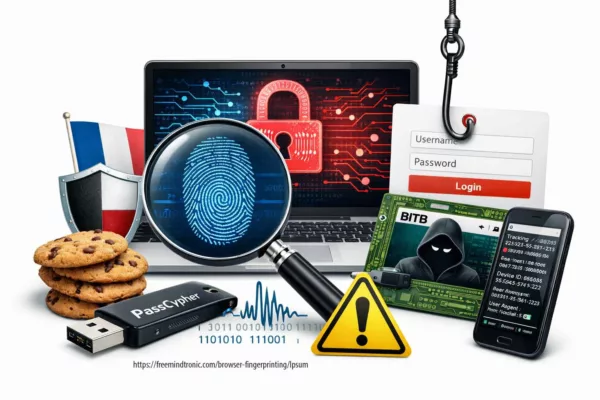
  • L’édition 2009 de Haute-Garonne repère, derrière un service de proximité, une innovation de sûreté électrique à potentiel international.
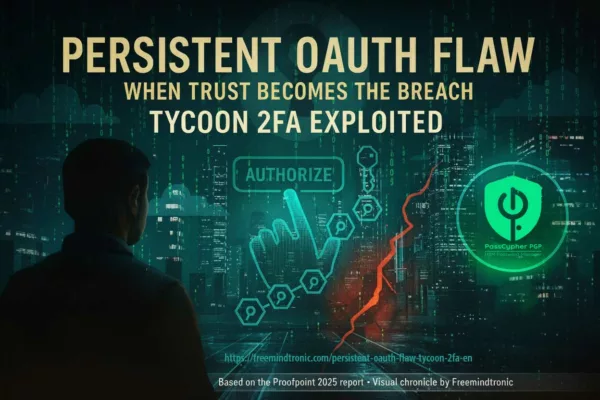
  • La période 2001–2011 montre comment un dispositif consulaire local peut servir de levier de trajectoire à une invention. Elle illustre le passage depuis la vitrine commerciale jusqu’aux plateformes internationales de l’innovation.


Chronique complète sur les Trophées du Commerce Français

La chronique du Trophée du Commerce 2009 Freemindtronic commence dans une salle consulaire de Toulouse et se poursuit sur les plateformes internationales de la protection électrique. Elle relie une petite commune rurale, Boulogne-sur-Gesse, aux scènes prestigieuses du Salon International des Inventions de Genève et aux bases de données de l’Organisation Mondiale de la Propriété Intellectuelle.

Timeline 2009–2011 — Du Trophée au brevet

  • 2009 : Trophée du Commerce 2009 Freemindtronic — reconnaissance consulaire au niveau local.
  • 2010 : médaille d’argent au Salon International des Inventions de Genève pour la technologie FullProtect.
  • 2011 : délivrance du brevet FR2941572 pour le système de protection électrique avec boîte noire infalsifiable.

Innovation Freemindtronic — Cœur du Trophée du Commerce 2009

Le projet Freemindtronic, lauréat du Trophée du Commerce 2009, est officiellement présenté comme une solution de recharge de cartouches d’encre d’origine. L’objectif est clair : limiter les déchets, prolonger la durée de vie des imprimantes et proposer une alternative crédible aux logiques de remplacement systématique.

De M@X Informatique à la naissance de Freemindtronic

En 2005, Jacques Gascuel fonde le réseau de magasins M@X Informatique, centré sur un service alors atypique : la réparation immédiate d’ordinateurs au comptoir devant le client. Cette approche directe et transparente instaure un lien de confiance avec une clientèle de proximité. À cette activité s’ajoute bientôt une première en France : la recharge de cartouches d’encre sous la marque Mister Ink, d’abord à Boulogne-sur-Gesse, puis à Saint-Gaudens, Tarbes, Samatan et Toulouse. Cette étape illustre comment un service de proximité devient le socle d’une trajectoire innovante.

Traçabilité animale — un premier jalon technologique

Avant même FullProtect, l’inventeur explore un autre domaine. Il pose un premier jalon technologique avec un système de traçabilité des animaux, objet d’une demande de brevet en 2007 (FR2898011). Basé sur le protocole ZigBee, technologie émergente depuis 2003, ce dispositif couvre les NAC et les animaux de compagnie. Il s’applique aussi aux cheptels bovins et ovins issus d’élevages labellisés. Grâce à des capteurs de température, il permet un pré‑diagnostic vétérinaire, incluant la détection du vêlage. Il assure également une traçabilité complète jusqu’au consommateur de viande. Sous la forme d’un véritable passeport électronique, ce projet est mené avec un docteur vétérinaire enseignant à Samatan. Il révèle déjà la démarche de l’inventeur : concevoir des systèmes embarqués capables de collecter, tracer et sécuriser des événements réels.

Naissance de Freemindtronic et émergence de FullProtect

En 2008, Jacques Gascuel crée la marque Freemindtronic, dédiée à la recherche et développement de systèmes électroniques embarqués. C’est dans ce cadre que naît une rupture : une architecture de protection électrique intelligente capable de surveiller, diagnostiquer et consigner les anomalies. La technologie FullProtect s’intègre d’abord discrètement aux activités de maintenance informatique et de recyclage de cartouches portées par M@X Informatique et Mister Ink, préparant le terrain pour une reconnaissance internationale.

L’innovation Mister Ink — une machine pour recycler les cartouches d’encre

Au cœur de Mister Ink, une pièce maîtresse illustre cet esprit : une machine de recharge de cartouches par dépression automatique, conçue en co‑conception franco‑chinoise. Elle permet de traiter les cartouches d’origine en contrôlant précisément les paramètres de recharge afin de garantir leur fiabilité, sans recourir aux cartouches compatibles, grands générateurs de déchets. L’objectif est clair : recycler l’existant plutôt que produire du jetable.

FullProtect — le cœur électronique caché derrière la vitrine

Mais derrière cette vitrine commerciale se cache un cœur électronique beaucoup plus ambitieux :

  • un système embarqué de protection électrique intelligente, capable de surveiller finement les variations de tension, de courant et la qualité du réseau ;
  • une boîte noire infalsifiable enregistrant chaque anomalie électrique (surtensions, microcoupures, perturbations aléatoires, défauts de charge) ;
  • une capacité à détecter, analyser et diagnostiquer un impact de foudre de catégorie 5.

Ce noyau électronique, qui deviendra FullProtect, dépasse rapidement le seul usage de la machine de recharge : il pose les bases d’une architecture de sûreté électrique applicable à de nombreux environnements (industrie, infrastructures critiques, télécommunications, IT, etc.). Sa fiabilité a été confirmée par des tests réalisés chez Airbus à Toulouse, démontrant la pertinence de cette innovation dans des contextes industriels exigeants.

Genève 2010 — Médaille d’argent mondiale

En 2010, cette innovation issue du Trophée du Commerce 2009 Freemindtronic franchit une nouvelle étape. Présentée au Salon International des Inventions de Genève dans la catégorie computer science, electronics, software, communications media, electricity, multimedia, la technologie FullProtect obtient la médaille d’argent mondiale de l’invention.

Cette distinction confirme deux éléments majeurs :

  • la solidité technique de la solution (capacité à surveiller et protéger finement des systèmes électriques complexes) ;
  • la pertinence internationale d’une invention née dans le cadre d’un Trophée consulaire local.

La page officielle Freemindtronic — FullProtect Genève 2010 retrace cette étape, qui ancre définitivement l’histoire du Trophée du Commerce 2009 dans une trajectoire d’innovation mondiale.

Brevet FR2941572 — Boîte noire & protection électrique intelligente

Pour sécuriser juridiquement l’invention, un brevet est déposé en 2009. Publié en 2010 et délivré en 2011, le brevet FR2941572 décrit un système de protection électrique intelligente avec enregistrement infalsifiable des événements.

Ce brevet couvre notamment :

  • la détection et l’analyse des défauts électriques (variations, surcharges, défauts d’alimentation, perturbations aléatoires),
  • la mise en sécurité des équipements connectés (coupure, limitation, isolation),
  • le journal horodaté et sécurisé des événements critiques, dans une logique de boîte noire.

Accessible via Patentscope (WIPO), ce brevet donne une base solide à la diffusion industrielle de la technologie et consacre le passage du projet Trophée du Commerce à un statut d’invention protégée à l’international.

Jury & partenaires — CCI Toulouse & Haute-Garonne

La cérémonie 2009 se déroule à la CCI de Toulouse, en présence d’un jury présidé par Michel Roux et incluant notamment Claude Tranzoni, aux côtés de représentants des services départementaux et des structures consulaires.

Sur le certificat remis au lauréat, les logos racontent une histoire de coopération :

  • CCI Toulouse
  • Conseil Général de la Haute-Garonne
  • Mairie de Toulouse
  • Chambre de Métiers et de l’Artisanat
  • Chambre de Commerce et d’Industrie de Toulouse
  • et plusieurs partenaires économiques locaux

Ce dispositif illustre le rôle structurant des institutions consulaires dans l’accompagnement des commerces et l’émergence de projets innovants.

Impact aujourd’hui — Héritage du Trophée du Commerce 2009 Freemindtronic

Aujourd’hui, les Trophées du Commerce poursuivent cette mission dans un format national renouvelé, coordonné par le réseau des CCI. Ils restent centrés sur :

  • le commerce de proximité et la revitalisation des centres-villes ;
  • l’innovation dans les services, la relation client et la transformation des points de vente ;
  • la mise en avant d’initiatives exemplaires susceptibles d’inspirer d’autres territoires.

Le Trophée du Commerce 2009 de Freemindtronic reste un cas d’école : un exemple où un concours consulaire repère une innovation de fond dont la portée s’étend bien au-delà de la vitrine commerciale et des frontières du département.

Contexte consulaire — Du Challenge national aux Trophées du Commerce

Derrière les sigles CCI, Mercure d’Or ou Panonceau d’Or, il y a surtout des histoires d’hommes, de femmes et de commerces de terrain, parfois perdus dans des bourgs ruraux, qui décrochent une reconnaissance nationale.

Avant et après 2009, le Trophée Freemindtronic s’inscrit dans une histoire consulaire plus large. Les Trophées du Commerce prolongent en réalité un grand concours national qui a structuré la reconnaissance des commerçants pendant plus d’un demi-siècle.

Les origines — Challenge national du commerce et des services

Pendant des décennies, CCI France et le réseau des Chambres de Commerce et d’Industrie organisent le Challenge national du commerce et des services, en partenariat avec la FFAC et la Fondation MMA.

  • Récompenses phares : Mercure d’Or (commerçants) et Panonceaux d’Or (associations de commerçants).
  • Objectifs : valoriser les commerces indépendants, les unions commerciales et la revitalisation des centres-villes.

On trouve encore des Mercure d’Or 2023 : ce socle historique sert de base aux futurs Trophées du Commerce.

2001–2010 — Trophées du Commerce locaux

Au tournant des années 2000, les CCI territoriales créent leurs propres Trophées du Commerce locaux (ou « Trophées du commerce et de l’artisanat ») :

  • Portés par les CCI territoriales (par exemple la CCI de Toulouse pour la Haute-Garonne),
  • en lien avec les collectivités locales (ville, département, région),
  • centrés sur le commerce de proximité, les centres-villes, les vitrines et l’innovation commerciale.

Des sources locales (comme Entreprise Toulouse – 2009 ou La Dépêche du Midi – 10e édition) attestent que ces Trophées existaient déjà bien avant le rebranding national de 2024–2025. Le Trophée du Commerce 2009 Freemindtronic s’inscrit dans cette génération de concours locaux, organisés par la CCI de Toulouse / Haute-Garonne.

2024–2026 — Refonte nationale « Les Trophées du Commerce »

À partir de 2024–2025, CCI France opère un rebranding national :

  • les Trophées du Commerce « succèdent au Challenge national du commerce et des services » ;
  • le concours est structuré à trois niveaux : départemental, régional, national ;
  • des campagnes « Trophées du Commerce 2025–2026 » sont déployées dans de nombreux territoires.

Les Trophées conservent leur ADN : commerce de proximité, centres-villes, innovation, développement durable et transition écologique. Le cycle 2025–2026 renforce cette visibilité nationale, avec partenaires récurrents et cérémonies à l’échelle de la France entière.

Dans cette perspective, le Trophée du Commerce 2009 de Haute-Garonne n’est pas un épisode isolé. Il devient un maillon identifiable d’une chaîne continue allant du Challenge national des années 1970 aux Trophées du Commerce nationaux 2025–2026, et un exemple emblématique de la manière dont un prix local peut révéler une innovation de niveau international.

Les points clés à retenir sont :

  • Les Trophées du Commerce agissent comme un dispositif pérenne de valorisation du commerce de proximité, issu d’une architecture consulaire construite depuis plus de 50 ans.
  • Le Trophée 2009 a servi de tremplin à une invention de sûreté électrique distinguée à Genève et protégée par brevet international.
  • Les concours consulaires peuvent être de véritables accélérateurs d’innovation pour des technologies critiques (énergie, infrastructures, sécurité).


Signaux forts identifiés

Ces éléments ne relèvent plus de simples indices émergents : ils traduisent des dynamiques fortes déjà à l’œuvre.

  • Schéma : Des concours « commerce » révèlent des innovations de niveau « infrastructures critiques ».
  • Facteur : Besoin croissant de traçabilité des anomalies électriques (boîtes noires, diagnostics d’incidents).
  • Tendance : Convergence entre sûreté électrique, cybersécurité et protection de données dans un paradigme souverain.


Cas d’usage souverain Freemindtronic — FullProtect embarqué dans Evikey & Evidisk NFC

⮞ Continuité technologique réelle — FullProtect dans Evikey & Evidisk NFC

Le système de protection électrique intelligente FullProtect — disjoncteur–régulateur avec boîte noire infalsifiable — n’est pas intégré aux familles PassCypher ou DataShielder. Il est physiquement embarqué dans des supports de stockage souverains de type clés USB et SSD sécurisés, conçus par Freemindtronic.

Evikey NFC Secure USB Flash Drive Premium — Clé USB sécurisée, déverrouillable sans contact via NFC, intégrant un disjoncteur–régulateur FullProtect avec boîte noire. Elle protège à la fois :

  • les données (accès conditionné, verrouillage automatique, effacement logique),
  • et l’électronique elle-même (surtensions, anomalies électriques, événements extrêmes).

Evikey NFC Secure USB Drive Pro — Version professionnelle de la clé USB sécurisée sans contact, intégrant également le noyau FullProtect. Elle bénéficie d’un disjoncteur–régulateur embarqué avec journalisation des événements électriques, offrant un niveau de résilience physique rarement atteint sur un support de stockage amovible.

EviDisk SSD NFC (hors catalogue) — Support SSD sécurisé sans contact, également équipé du système FullProtect. Il transpose la logique de disjoncteur–régulateur avec boîte noire au monde du stockage SSD, pour des usages nécessitant une combinaison de :

  • protection du stockage de données,
  • protection contre les risques électriques, thermiques et d’usage,
  • traçabilité par boîte noire d’événements aléatoires et extrêmes,
  • auto-diagnostic de l’origine des défaillances (électriques, thermiques ou liées à l’utilisation).

⮞ Triple rôle des supports Evikey NFC / Evidisk SSD NFC

Les dispositifs Evikey NFC et EviDisk SSD NFC incarnent une convergence rare entre :

  • Protection logique des données : accès conditionné, verrouillage souverain et contrôle par détenteur légitime via NFC.
  • Protection physique & électrique : présence d’un disjoncteur–régulateur FullProtect qui limite, coupe ou adapte l’alimentation en cas d’anomalie électrique, thermique ou de défaut d’usage.
  • Traçabilité embarquée : boîte noire infalsifiable enregistrant les événements électriques et thermiques critiques (surtensions, sous-tensions, surintensités, régulations anormales, défauts d’usage et cyber sûreté contre les attaques par force brute).

Cette combinaison fait d’Evikey / Evidisk NFC non pas de simples supports de stockage, mais de véritables modules souverains de confiance, capables de protéger à la fois :

  • l’information (données stockées),
  • le support lui-même (composants électroniques),
  • et de fournir des preuves techniques en cas d’incident électrique majeur.

Ainsi, la filiation directe entre le Trophée du Commerce 2009 Freemindtronic et l’invention FullProtect se lit aujourd’hui dans les produits Evikey NFC et Evidisk SSD NFC : ce sont eux qui portent concrètement, dans le catalogue Freemindtronic, le disjoncteur–régulateur avec boîte noire infalsifiable issu de cette innovation récompensée.


Questions fréquentes sur le Trophée du Commerce 2009 & FullProtect


Le Trophée du Commerce 2009 est-il un prix local ou national ?

Un prix local inscrit dans une tradition nationale

Le Trophée du Commerce 2009 est un prix local organisé par la CCI de Toulouse pour la Haute-Garonne. Il s’inscrit cependant dans une tradition nationale portée par le réseau des CCI depuis les années 1970, à travers le Challenge national du commerce et des services, qui a longtemps structuré la reconnaissance des commerçants en France. Le Trophée 2009 constitue ainsi une déclinaison territoriale de cette filiation consulaire.


De la vitrine commerciale à l’innovation de rupture

Dès l’origine, Freemindtronic n’est pas un simple magasin informatique. L’entreprise propose une innovation de service : la réparation immédiat d’ordinateurs au comptoir devant le client, pratique encore marginale à l’époque. Elle investit ensuite dans la recherche et développement pour créer un service inédit en France : la recharge de cartouches d’encre par dépression, via une machine spécialement conçue. Cette activité, baptisée Mister Ink, est implantée dans le Comminges (Haute-Garonne). Derrière cette vitrine commerciale se développe pourtant une innovation de rupture : un système embarqué de protection électrique intelligente, capable d’auto-diagnostiquer des défauts électriques allant de la très basse tension à la haute tension.
  • Mesure et analyse des anomalies électriques.

  • Mise en sécurité des équipements connectés.
  • Enregistrement infalsifiable des événements critiques dans une « boîte noire ».

Ce noyau technologique dépasse donc largement le cadre du commerce de proximité et ouvre la voie à une reconnaissance internationale :

  • Médaille d’argent au Salon International des Inventions de Genève 2010.
  • Brevet FR2941572 délivré en 2011.


Deux étapes complémentaires de reconnaissance

Le Trophée du Commerce 2009 constitue un premier niveau de reconnaissance pour l’innovation FullProtect, dans un cadre consulaire local. La médaille d’argent obtenue au Salon International des Inventions de Genève 2010 valide ensuite cette invention dans un environnement international spécialisé en recherche et développement, confirmant sa portée technique et inventive.


Le socle juridique et technique de FullProtect

Le brevet FR2941572 (demandé en 2009, publié en 2010 et délivré en 2011) formalise juridiquement l’invention FullProtect. Il décrit un système de protection électrique intelligente doté d’une boîte noire infalsifiable, capable de consigner les incidents électriques, y compris un impact de foudre de catégorie 5. Ce brevet constitue le socle de la propriété intellectuelle de FullProtect et une base pour ses applications industrielles.


Une tradition consulaire toujours vivante

Les Trophées du Commerce existent toujours, sous une forme renouvelée coordonnée par CCI France. Depuis 2024, ils succèdent officiellement au Challenge national du commerce et des services et sont désormais structurés en étapes départementales, régionales et nationales. Ils continuent ainsi à valoriser le commerce de proximité, l’innovation et la revitalisation des centres-villes.


De la sûreté électrique à la sécurité souveraine

FullProtect représente une première génération d’architecture embarquée de protection, centrée sur la sûreté électrique et la traçabilité des événements. Les solutions souveraines actuelles de Freemindtronic (DataShielder, PassCypher, SeedNFC, etc.) prolongent cette logique dans le domaine de la protection des données, des identités numériques et des secrets cryptographiques. Elles n’intègrent pas directement le module électrique FullProtect, mais s’inscrivent dans la même philosophie de sécurité souveraine et de maîtrise des risques.


Ce que nous n’avons pas (encore) couvert

Cette chronique ne détaille pas :

  • les spécifications électroniques complètes du système FullProtect (schémas, composants, algorithmes de détection),
  • les déclinaisons industrielles ultérieures de la technologie dans des environnements critiques (énergie, transport, défense),
  • les autres projets lauréats des Trophées du Commerce 2009 en Haute-Garonne ou au niveau national.

Ces points feront l’objet de billets dédiés, centrés respectivement sur l’analyse technique détaillée, les cas d’usage sectoriels et la cartographie des concours consulaires dans le temps.


Perspective stratégique — Vers de nouveaux standards de protection

En retraçant le chemin qui mène d’un Trophée du Commerce 2009 à une médaille internationale et à un brevet d’invention, cette chronique met en lumière un mouvement de fond : les concours consulaires peuvent jouer un rôle stratégique dans la détection précoce de technologies critiques.

L’exemple de Freemindtronic et de la technologie FullProtect montre qu’un projet né dans le cadre du commerce de proximité peut ouvrir la voie à de futurs standards de protection, à la fois électriques et numériques.

À l’heure où les infrastructures deviennent à la fois plus interconnectées et plus vulnérables, l’approche combinant :

  • détection fine des anomalies,
  • boîte noire infalsifiable,
  • architecture embarquée souveraine,

préfigure des modèles de résilience globale qui lient désormais sûreté électrique, cybersécurité et protection des données.

Dans cette perspective, le Trophée du Commerce 2009 ne relève pas d’un simple souvenir de vitrine : il devient un repère dans l’histoire des innovations de confiance issues des territoires et appelées à structurer la sécurité des infrastructures de demain.