Finalist Contactless Services Challenge

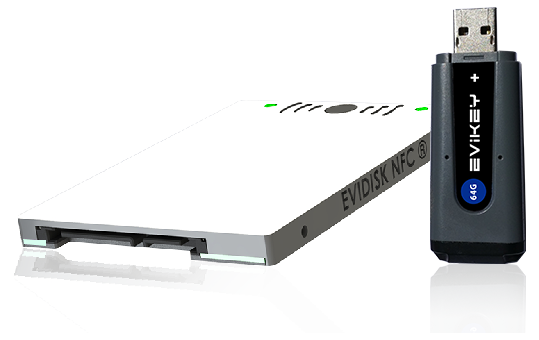
Finalist Contactless Services Challenge Award 2015 EviKey NFC rugged USB Stick unlock contactless and EviDisk SSD Sata 3 by Freemindtronic Andorra Made in France Syselec

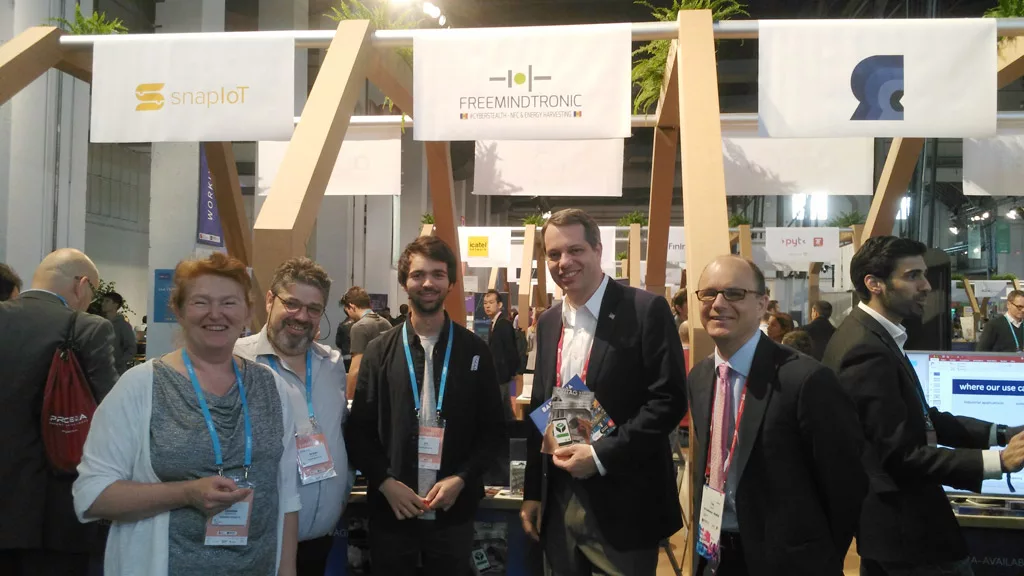
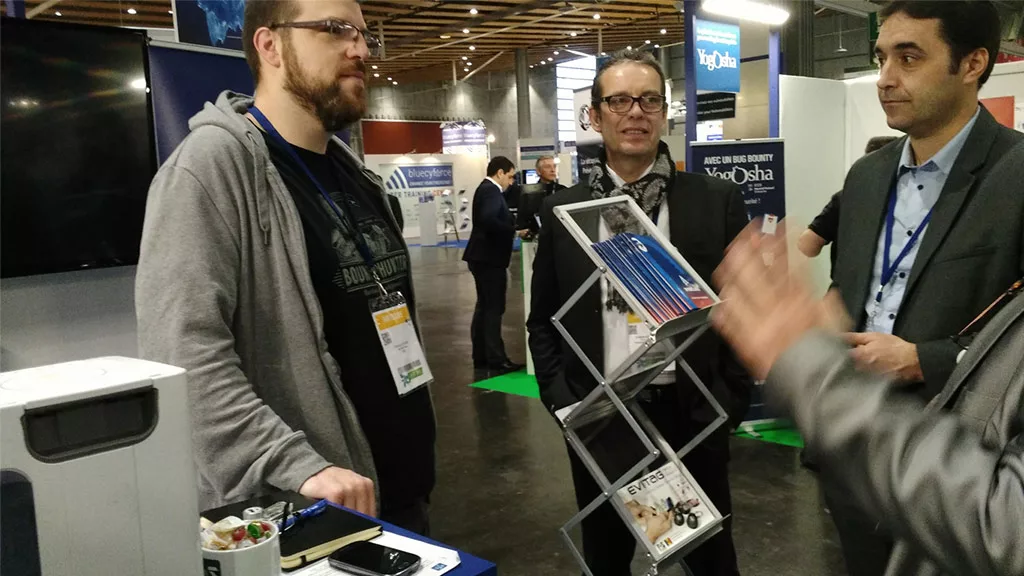
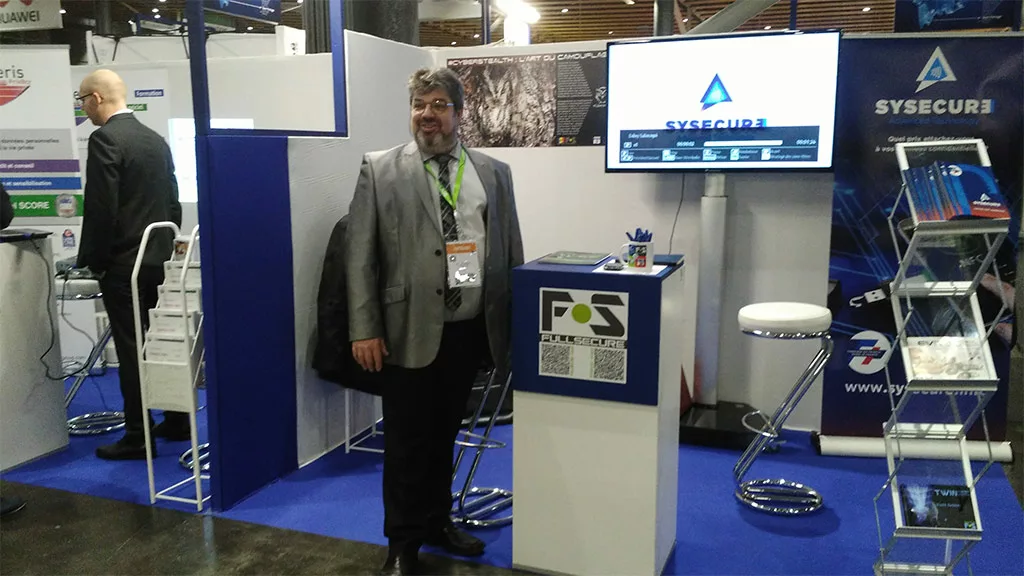
Finalist contactless services challenge Award 2015 Freemindtronic is nominated among the finalists of the most innovative companies in NFC system service.

3 minutes was not enough to convince the jury on 12 March 2015 at the Ministry of the Economy, Industry and Digital Affairs in Paris Bercy during the Contactless Services Challenge.
 
Freemindtronic heeft echter in 2016 een industriële partner gevonden de Syselec Group om EviKey en EviDisk te industrialiseren en internationaal te distribueren.
 
Freemindtronic won a prestigious award in 2015 at the same venue in Paris Bercy for EviKey and EviDisk. For more information click here.
 
Watch the video of Jacques Gascuel’s 3 minutes to convince the Jury of the 2015 Finalist contactless services challenge.
 

Top 10 – FIC 2017

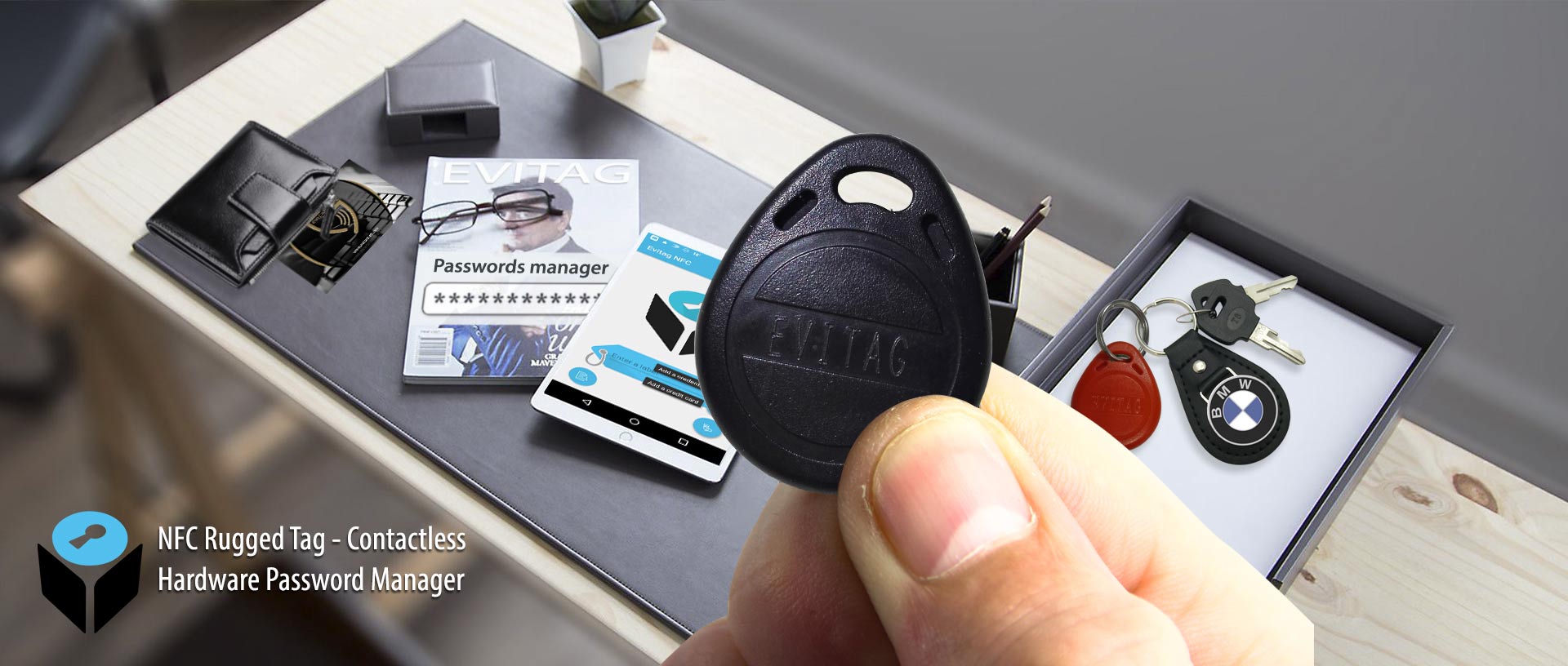
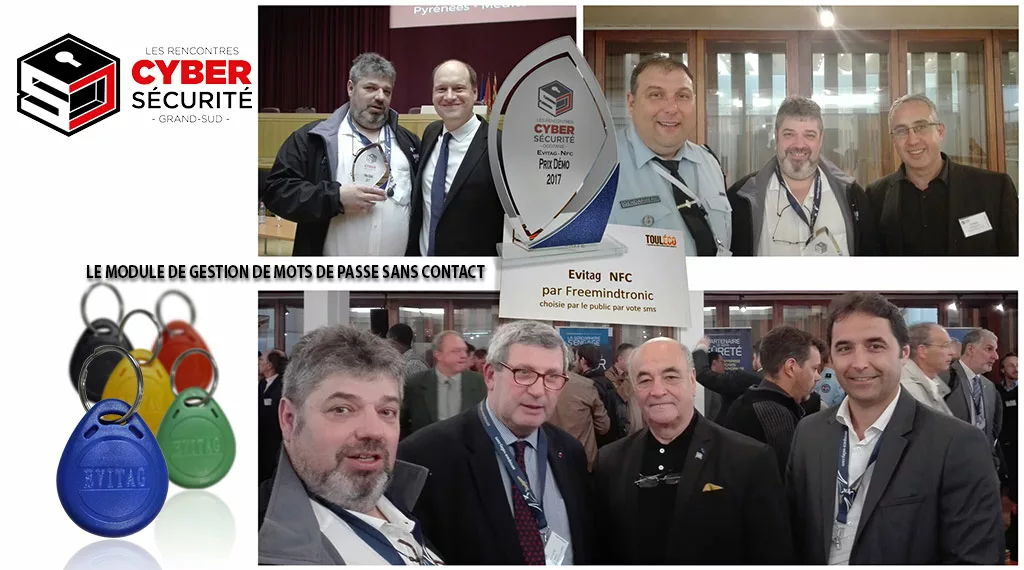
Award FIC 2017 Freemindtronic is nominated among the 10 finalists of the most innovative startup in Cybersecurity Andorra EviTag NFC hardware password manager EviAlpa Technology
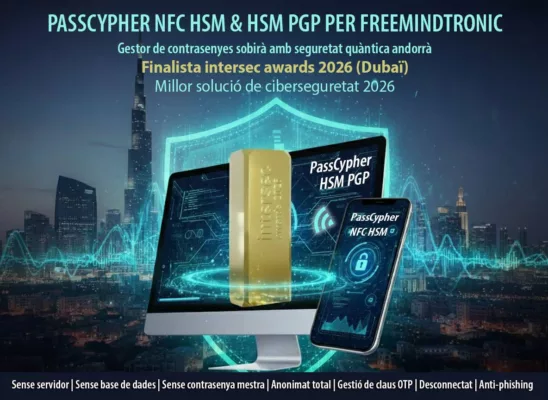
PassCypher finalista Intersec Awards 2026: gestor offline

PassCypher finalista Intersec Awards 2026 — Gestor sense contrasenya resistent a [...]

2 Comments

PassCypher Finaliste Intersec Awards 2026 — Souveraineté validée

PassCypher Finaliste officiel des Intersec Awards 2026 dans la catégorie “Best [...]

3 Comments

Quantum-Resistant Passwordless Manager — PassCypher finalist, Intersec Awards 2026 (FIDO-free, RAM-only)

Quantum-Resistant Passwordless Manager 2026 (QRPM) — Best Cybersecurity Solution Finalist by [...]

4 Comments

Freemindtronic’s Legacy: Rediscovering Excellence

Resurrecting Excellence: Freemindtronic’s Legacy in Nanotechnology and the ‘Fullprotect’ Revolution In [...]

The first wood transistor for green electronics

What is a wood transistor? A transistor is a device that [...]

NEWS PROVIDED BY
Challenge des Services Sans contact
March 2013
Related Links
Retour sur le « Challenge sans contact », un concours de startups réussi

SHARE THIS ARTICLE

FIC 2015 Distinction Excellence 19th Most innovative international startup

FIC 2015 Distinction Excellence 19th most innovative international cybersecurity startup with Freemindtronic EviKey USB stick unlock contactless by nfc phone invented by Jacques Gascuel

FIC 2015 Distinction Excellence Freemindtronic

The jury of the 9th FIC 2015 Distinction Excellence has nominated EviKey NFC Rugged USB Stick & EviDisk  NFC Rugged SSD Sata 3 unlock contactless via an NFC phone. 
 
Award FIC 2015 EviKey NFC rugged USB Stick & EviDisk NFC rugged SSD Sata 3 unlock contactless by nfc phone Freemindtronic Andorra.
 

Award FIC 2015 EviKey NFC rugged USB Stick & EviDisk NFC rugged SSD Sata 3 unlock contactless by nfc phone Freemindtronic Andorra

EviKey and EviDisk have won other awards such as the 2014 Embedded Systems Award. To learn more about this award click here.

Top 19 – FIC 2015

Award FIC 2015 Freemindtronic is nominated among the 19 finalists of the most innovative startup in cybersecurity Andorra EviKey nfc usb stick and EviDisk nfc ssd sata 3 unlock contactless
PassCypher finalista Intersec Awards 2026: gestor offline

PassCypher finalista Intersec Awards 2026 — Gestor sense contrasenya resistent a [...]

2 Comments

PassCypher Finaliste Intersec Awards 2026 — Souveraineté validée

PassCypher Finaliste officiel des Intersec Awards 2026 dans la catégorie “Best [...]

3 Comments

Quantum-Resistant Passwordless Manager — PassCypher finalist, Intersec Awards 2026 (FIDO-free, RAM-only)

Quantum-Resistant Passwordless Manager 2026 (QRPM) — Best Cybersecurity Solution Finalist by [...]

4 Comments

Freemindtronic’s Legacy: Rediscovering Excellence

Resurrecting Excellence: Freemindtronic’s Legacy in Nanotechnology and the ‘Fullprotect’ Revolution In [...]

The first wood transistor for green electronics

What is a wood transistor? A transistor is a device that [...]

NEWS PROVIDED BY
FIC 2015
20-21 Janvier 2015
Related Links
www.globalsecuritymag.fr

SHARE THIS ARTICLE

The story of the first NFC hardened USB stick EviKey

Award 2014 NFC EviKey® the story of the first hardened USB stick and NFC EviDisk® SSD Sata 3 unlockable contactless by Freemindtronic Andorra


The story of the first NFC hardened USB stick EviKey & EviDisk unlockable contactless

The story of the first NFC hardened USB stick EviKey that can be unlocked without contact and invisible computer systems begins with inventor Jacques Gascuel.

EviKey is a contactless USB stick which works via an NFC phone. It already has the principle of EviCypher technology. Indeed, it already carries a multi-criterion automated authentication system. It is the first physical multi-factor authentication (MFA) system that can be administered by an unfalsifiable black box.

Let’s start the story of the first contactless unlockable hardened USB stick created by the inventor, Jacques Gascuel  [1]. He  has implemented technology from his patented inventions internationally. For almost 10 years, he has been deeply convinced that the greatest risk will come from the hyperconnection of access controls and their centralization, under the guise of the public interest. That this risk will be all the greater when the burden of proof is reversed, so that user will be technically and financially unable to absolve himself of this legal responsibility.

The inventor includes in his reasoning for the design of electronic safes that there is a significant risk if the access control system is visible,such as a lockand/or keyboard and/or a screen and/or via software. That the best security in the world is human thinking, in contrast to other digitized biometric systems that can be corrupted. The password derived from human thought is becoming more and more complex to implement, due to the exponential increase in connected calculators. According to the inventor, it is necessary to design an augmented thought of man to oppose his own supercomputers.

A real challenge that the inventor will take up for several years to design electronic safes nomadic inviolable.

In the first phase of his research, he had to answer a first question. Is it possible to create real electronic safes for universal portable use without the use of data encryption? Can we create a universal, hyper-mobile security system that does not use an encryption system but only physical security in the sense of Cybersafety? A system, in fact, that can be used all over the world by people with no particular skill. A solution that is non-intrusive, for everyday use, always secure by default, that does not violate any of the rules of international law, and above all that allows to no longer expose man to the attainment of his physical and/or psychological integrity?

The inventor has entered into a disruptive reasoning of Cybersafety, as opposed to Cybersecurity solutions that refer to digital safes. The inventor believes that Cybersecurity is the physical security of Cybersecurity, which is digital. The inventor, a graduate in industrial electrical engineering, will base his research on the implementation of Cybernetic solutions. How can this physical security approach based on industrial normative elements such as ISA/IEC 62443  mitigate or even prevent an intrusive or non-intrusive cyberattack? The first lead was the implementation of its international patent FullProtect  WO/2010/086552,  a device to monitor and protect the power and/or environment of an electrical device, equipped with a black box. An invention that allows, in particular, to establish, by physical evidence, the implementation of the criteria  MTTF,  MTBF,  MTTR and establish the TDM index . To learn more about the features and added values of an electronic safe click HERE.

The inventor’s idea is to find a way to prevent, or greatly limit, the possibility of calculating machines. The inventor imagines an autonomous, unconnected electronic safe that uses various physical, analog, logical, digital, use and legal factors that combined make it extremely complicated, computing by the machine. This will require a physical brute force attack on this electronic safe.

The inventor then designed the first MFA Offline Cyber-sterity system to assist man and allow him to defend himself against his own quantum calculators.

We will tell you the story of the birth of the electronic safe of inventor Jacques Gascuel.

The inventor assumes that the only indisputable, and undisputed, way to secure access controls is that they are never connected and totally autonomous, under the control of the man and/or the legal person.

Such an implementation would make a physically remote attack physically impossible. It talks about the principle of the physical electronic safe unconnected MFA, which implies a proximity to open the door of the electronic safe. According to the very principle of an electronic safe, this system must form a block, without any door other than that locked by an access control, via a code defined by the user. The problem of user authentication remained, and thus the use of the code illegally.

This involved designing an unconnected system, capable of providing a set of factors that would establish the near certainty that it is indeed the user and/or a rightful person.

This risk is increased if this access control is connected to a computer system and/or connected to a local server and/or remote with databases. This is a major breach to carry out attacks via the computer systems where it is connected. This risk increases significantly when access control codes are contained in computer systems and/or remote databases. We all know that they are regularly attacked because they are always accessible from a distance.

The birth of the principle of material invisibility as a physical security component of Cybersecurity

The inventor is aware that the impossibility criterion is a bold claim to be implemented in Cybersecurity. However, if it adds physical security, the foundation of Cybersafety, it makes the solution physically invisible, undetectable and untraceable. Making a physically invisible electronic safe of computer systems has become the preferred focus of the inventor’s research and development.

The term impossibility can legitimately be used, within the limits of the state of the art. Similarly, the inventor considers cyber deterrence to be part of the impossibility factor, especially when the brute force attack means implemented are disproportionate to the interest of the attack. The inventor includes the psychological aspect, …. Doubt! Indeed, consider an attacker who has no certainty of finding the coveted data because it is not directly visible, this will generate a doubt strong enough to be a deterrent. According to this approach, the attacker is also not certain whether the time it will take will not exceed the time it would take the owner of this data to make it obsolete, and therefore worthless for the attacker. The inventor therefore includes doubt as a factor of Cyber Dissuasion in the implementation of the Cybersafety of his electronic safe.

The inventor believes that the absolute security of information systems must be two-headed in the sense that Cybersecurity is the digital component of physical security.

Cybersûreté VS Cybersécurité

Cybersecurity is the physical security in contrast to Cybersecurity which is digital security. This is an approach rarely taken into account in information systems engineering that considers it legitimate that Cybersecurity is outside the realm of Cybersecurity. However, experts in these two spheres of safety agree that the complementarity between safety and security is unquestionably complementary in order to prevent the risk of accidents and/or malicious acts.

Even on the margins in the development of specifications or in the offer of Cybersecurity solutions products and services, Cybersecurity is now essential as digital systems are networked. We are in the era of “hyper-connected.” Cybersafety according to the inventor must also be taken into account from the outset in terms of risk management as defined by various ISO/DIS 34001 (SMS), CNPP 1302 [FR], ISO/IEC 27032 (digital security), ISO/IEC 27001 (SMSI), ISO/IEC 29100, CENELEC 50131-1, 50133-1, 50134-1, 50136-1, 50518-1, IEC 60839-11 [series]. A recurring divide on the interpretation of standards, specifically in their translations of English into French; the word “Security” has been translated as “security” instead of “security” in the sense of physical security. This contributes to the marginalization of the consideration of Cybersafety, and consequently, the distinction between digital safe and electronic safe.

The implementation of the electronic safe has created technological locks to be lifted

How to design a physically invisible access control, totally autonomous in electrical energy, disconnected from computer systems, disconnected from any type of network? The inventor’s idea is to design a system that is physically isolated from computer systems. It seems impossible to attack what doesn’t physically exist, either remotely or nearby.

How can this approach be implemented?

To implement the theory of invisibility, it was necessary to be able to oppose an intrusive and/or non-intrusive brute force attack. The inventor had to find a way to resist physical attacks, especially on the electronics of access control, without reducing the speed of data transfer on the USB port and SATA. The inventor then devised an electronic system with many countermeasures against physical attacks. It is a system that locks access to the contents of the memories, permanently depending on the level of attack detected. The inventor finds a patented, military-grade resin to coat all the electronics, leaving only the USB or SATA connectors. Hardened to the extreme, close to steel, the electronic safe is now equipped with a shell capable of withstanding various mechanical stresses of several tons, thermal or acidic. Attempting to remove the shell is taking the risk of triggering the countermeasures, but also of irreversibly destroying the memories.

Hardening the electronic safe has spawned other technological locks

The complete coating of the electronic card makes it impossible to repair in case of electrical, thermal, component or assembly defects. This makes it very complex to diagnose the origin of the defect automatically, and be able to access from the outside, without going through the USB and SATA connectors. This is where the Fullprotect invention comes into play, an intelligent asymmetrical circuit breaker with a black box that traces any type of electrical, environmental and/or use event. This electronic safe is then equipped with a system of electric multi-protections by automatic galvanic insulation on the power supply, with electrostatic protection on the exchange of data via the USB port or SATA, making the whole resistant to surges. Another three-point thermal environment self-protection device is capable of self-locking the electronic safe, when the temperature is above 70 degrees.

These electronic devices are coupled with the Cybersafety system, which has several advantages. The controlled galvanic insulation protects electrical hazards and insulates it from computer systems, making the electronic safe undetectable. An intelligent maintenance system is then embedded in the system. Its mission is to prevent the electronic safe from being used in temperatures that could damage the electronics. The same device is also used to detect a thermal brute force attack on three points. This type of physical intrusive brute force attack involves exceeding the thermal resistance by more than 220oC.  Such an attack will in fact result in the destruction of electronic components, especially memory, irreversibly. Thanks to the implementation of the Fullprotect invention in these electronic chests, an unfalsifiable black box is present to preserve the various traces of these events and constitute an opposable physical proof.

How do I lift the MFA’s energy autonomy locks?

For the inventor, one last important problem remained to be solved: how, without a source of electrical energy, without using the electrical energy provided by the USB or SATA port, physically administer the access control through the coating and the case?

The solution found by the inventor is THAT of STMicroelectronics’ NFC technology in industrial version, NFC ISO/IEC 15693, which runs without battery, powered via a NFC-enabled Android-enabled computer (Smartphone). In addition, this component incorporates the recovery of energy capable of powering on-board subsystems, including the access control system. These industrial components have many other advantages. They have electronically secure non-volatile memory that can hold stored data for at least 40 years without an electrical source. They also allow 1 million cycles of writing per memory block, without error.

The mobile contactless electronic safes with black box were created under the technological name EviKey One NFC and EviDisk One NFC, under the trademarks of the inventor,  EviKey® for the USB stick and  EviDisk® for the 2.5-inch 7mm Sata III SSD.

But, beyond being able to dynamically carry out all types of actions via contactless technology, a new problem has beenborn, the Cybersecurity of the use of electronic safes. Indeed, it is necessary to have an Android/NFC smartphone to use the electronic safe. However, the smartphone is connected to it, thus exposed to the risk of remote attacks and/or proximity on the exchange of data via the NFC signal.

The Evikey NFC solution receives the 2014-2015 “Connected Object” Package with its Physical Cybersafety technology in a USB stick on November 24, 2014 in Paris Bercy. This innovation is twice nominated for the Boarding Assises: “critical on-board system” and “connected object.” This National Trophy recognizes the connected object project that has provided the most innovative service to the general public or professionals.

Paris Bercy 2014 : https://www.entreprises.gouv.fr/numerique/trophees-embarque-2014 (this page has been removed https://www.entreprises.gouv.fr)

The “Assises de l’Embarqué.fr: http://www.assisesdelembarque.fr/trophees-de-lembarque/trophees-de-lembarque-2014

Captronic : https://www.captronic.fr/Les-laureats-des-Trophees-de-l-embarque-2014.html

Electronic Press (http://www.electroniques.biz):

Embedded Trophies 2014: six companies rewarded for their innovations

lembarque.com : Freemindtronic EviKey Evidisk won the 2014 Embedded Technology Awards 

The inventor had to find other systems to increase the Cybersecurity and “Cybersecurity” of MFA access control for its mobile electronic safes

The various problems to be solved are known and bring up technological locks. How do I protect the access control of an attack from the smartphone? How to identify the hardware used and authenticate the right or user to unlock the electronic safe, knowing that the smartphone is connected and can be very easily corrupted? How do I detect a brute force attack on the NFC? How can I prevent listening to the NFC signal to pick up the information? How can you physically prevent a malicious person or robot from accessing the electronic safe? How do I prevent a keylogger-type attack? How can I prevent the code from being entered on the smartphone screen? How do I limit the number of code tests, even in unlocked mode? How do I identify the electronic safe in a no-use area? How to give the illusion that the electronic safe is broken? How can the electronic safe be used on a daily basis without the burden of security or even the cause of a loss of productivity? How do you detect the end of the use of the electronic safe without having access to the data flow? How do you systematically lock the electronic safe without taking the risk of damaging the data? How do you give up a passcode that you think is corrupt? How do I create a temporary passcode? How do you put all the information back from the black box to serve as physical evidence? How do you simply plot the geolocation of the use of the passcode and the type of code used? How do I notify the user, even if the electronic system fails, the origin of the malfunction? How do I tell the user how long it will take to use memory without error? How can we ensure that the electronic safe is never obsolescent in time? Finally, could this solution save a life?

The inventor has found an answer to all these and many other questions, thanks to another of his patents, Fullsecure[2]  , a stand-alone wireless access control system.

One of the most important challenges remained, the simplicity of use

The inventor’s goal is to offer individual, self-secure, unconnected, obsolescence-free, always accessible, extremely accessible, mobile, very simple to use on a daily basis, for personal and/or professional use, without financial commitment, without a license, multi-station, untraceable and undetectable.

He wanted to offer his owner the least intrusive electronic safe in the world, without drivers and software to install in his computer. An electronic safe compatible with all Windows, Linux, iOS, Raspbian, OS2, Android (OTG) operating systems that use a USB port.

A hardened electronic safe designed to last until the natural end of the components’ life. Multi-protection systems against electrical, electrostatic, thermal, mechanical, immersion in liquid, dust, ultraviolet light, heat source, magnetic field, X-rays.

An electronic safe with a black box that tells the user, in real time, the state of its physical functioning, capable of self-diagnosis and informing the user of the origin of the defect.

The freedom to adapt the level of security of these electronic safes to suit exposure to risk

A system freely set up by the user, via an administrator password, allows you to choose how to unlock the electronic safe. It can also be used in unlocked mode. In the latter case, the user uses his electronic safe in an environment where he feels there is no risk. It uses its EviKey®  or EviDisk® as a standard USB stick or SSD.

How do you make Cybersafety non-binding for the user to avoid being tempted or forced to use another unsecured system?

The inventor believes that the use of safety, when it is binding, generates counter-productivity and is naturally circumvented by man. In fact, the inventor has planned different scenarios that allow the man to change the unlock mode very easily. Man is therefore empowered to adapt the level of security of his electronic safe according to his exposure to risks. When the risk is zero, the man must be able to leave the electronic safe always unlocked. This point eliminates the risk of counter-productivity. This mode allows the man to have the comfort of using a standard USB stick or external disk.

A free mode of Cybersafety by use control

The mere fact that the electronic safe is permanently unlocked creates a risk to the use, because the contents of the electronic safe are always exposed, especially when the sensitive data is not encrypted. The inventor therefore took into account this problem of exposure to the risk of connected data via a removable medium. The right balance had to be struck between safety and comfort of use.

A major constraint for the inventor: the inability to access the fully deconstructive data flow of the MFA access control system and the absence of a battery excluding the use of a clock.

The inventor’s idea was the implementation of a timer in correlation with the Cybersafety system and the black box. The user defines a time, in seconds, during which the Cybersafety system counts, via Fullprotect’s electrical analysis device, the data flow. Thus, when the countdown is reached, the electronic vault is auto-locked and the data stream is inactive.

Thanks to this method, the inventor found the right balance in usage. A system that detects when the electronic safe is not used to self-lock. It is the user who defines how long the electronic safe remains unlocked. The user will need to identify himself to unlock the electronic safe.

With this feature, the user can adjust the use of the electronic safe to his environment, while maintaining a level of self-safety over time. A time that is automatically interrupted when the electronic safe is disconnected from the USB or SATA port. In the same way if the power of the USB or SATA port is disabled by the computer system.

Let’s discover the different ways of unlocking these electronic safes designed by the inventor

A mode that requires the entry of a password to unlock the electronicsafe. A proprietary secure keyboard is used with randomly changing keys, which has the effect of combating malware that records key inputs to the Keylogger type keyboard. This system also helps to limit the risk of visual corruption when entering the password (a person looking over your shoulder for example). Indeed, it is very complex to remember the order of keys that change randomly. In addition, this system allows you to participate in the authentication of a person.

Another mode allows you to unlock the electronic safe without the need to enter the password. After recording the identity of their smartphone in the electronic safe (pairing procedure), the user can unlock it by simply presenting his smartphone to the electronic safe, without contact. The user has the ability to register up to three smartphones.

These two modes can be used interchangeably, this has some advantages. Consider two users, one has knowledge of the password and the other does not. But the latter can unlock the electronic safe with his NFC smartphone, without entering the password.

This is a convenience to avoid having to enter a password or to manage two user profiles, one of which uses only the password. However, this comfort does not cover the risk when the smartphone and electronic safe are stolen or lost together. The electronic safe can then be unlocked without the need to enter the password. To cover this risk, the inventor has planned a multi-factor mode that includes three elements: the pairing key, the smartphone’s identity and the password; the concept of a simplified physical blockchain was born.

The safety of using the electronic safe

Let’s imagine a user on the move, which implies that the level of risk is very high. It must be able to choose the highest and, indeed, most restrictive mode of security. The user leaves the comfort of unlocking with his smartphone without a password, to include a multi-factor control chain in case of theft and/or loss of the electronic safe and/or his smartphone. In case of theft or loss of the electronic safe, the malicious person will have to guess the pairing key, the identity of the paired smartphone and the password. Knowing that after 3 unsuccessful tests, the electronic safe is temporarily blocked and that the maximum allowed test is 13 before a permanent blockage.

Cybersafety against the violation of human physical and/or psychological integrity

The inventor asked himself about the risk of an attack on the physical and/or psychological integrity of an electronic safe user in order to obtain the password?

The inventor’s idea was that the electronic safe must have an advanced system of administration and user management, permanent or temporary. The administrator of the electronic safe has the option to assign a specific passcode to the user of the electronic safe, without him being able to know the administrator password.

The emergency feature called “user password forgetlessness” is born, which allows a user to delete their password. This emergency system can be activated at any time, very quickly, if it feels that its password is corrupt or that it can be corrupted. In fact, only the administrator will be able to recreate a new user password. This is the birth of the physical blockchain simplified by use. A disruptive approach to the use of oblivion in the value chain of Cybersafety as a physical barrier. This protects the physical and/or psychological integrity of the man vis-à-vis an attacker who wishes to obtain the user’s password against his consent.

Imagine an investigative journalist who goes on a mission abroad to interrogate opponents of a dictatorial regime. The information collected by the journalist is digitally housed in the electronic vault. Such information may impair the physical integrity of the interviewees or the journalist. How can the journalist resist a physical and psychological constraint not to give the password to access the electronic safe? The inventor has found a solution! If the user no longer has access to the password because he has voluntarily abandoned it, and this fact is known to the attacker, it will be useless to try to obtain from the user the administrator password that he never knew about. Only the editor (administrator) has the power to unlock the electronic safe. This does not remove the risk that the attacker will remotely pressure the editor to obtain the admin password. However, the objective is achieved, the one where the attacker has no interest in attacking the journalist. And at the same time, the digital data in the electronic safe remains locked in access. The attacker will have to be able to force the electronic safe to access the data it contains.

This case demonstrates the clear role of the importance of cybersecurity vis-à-vis Cybersecurity, the first flaw of which would be humans. On closer inspection, the inventor’s innovations put man at the center of his own enhanced security in the face of malicious attacks by man or his machines.

Cybersafety by physical silos

The inventor performed a physical silo of the rights holders, i.e., an administrator profile and user profiles, indeterminate or limited-time. There is talk of an additional factor to unlock the electronic safe, so as to block any attempt to pair the electronic safe with another smartphone. The power of Cybersafety makes it physically impossible to simply connect with the electronic safe without the pairing key. Even if the pairing key is corrupted, you also need to know the administrator and/or user password to unlock the electronic safe.

The traceability of events by unfalsifiable embedded black box, accessible without contact via the smartphone

The inventor took into account the burden of physical proof in the legal sense of the term, capable of opposing other forms of evidence constituted in a numerical way; which can be manipulated. This is one of the aspects claimed in the internationally extended Fullprotect patent.

Thus, the inventor has integrated in his electronic safe a black box that traces all types of events, which depending on their importance are recorded, such as an attempt to attack physical or digital brute force.

Such a recording in the black box of the electronic safe is not without consequences in the implementation of countermeasures imagined by the inventor whose secrets he does not reveal.

The most extreme consequence is to render the electronic safe irreversibly unusable.

Intrusive and non-intrusive brute force countermeasures

The inventor considered several aspects of brute force attack targeting cyber safety.

Dismissing non-intrusive brute force attacks was quick. It was more complex for the physical attacks of the man of the trade, the electronics engineer.

With regard to non-intrusive attack, the inventor excluded the use of encryption systems in the implementation of Cybersafety, rendering it unnecessary to use thermal, magnetic, electrical, electromagnetic or radio frequency analysis to try to guess the encryption system used. Indeed, the security system is completely independent of the digital support of the electronic vault where digital data is stored. This system is completely autonomous in electrical energy, without battery, and has only one input and exit, the industrial NFC system. This excludes all these forms of brute force attacks.

Remains the physical brute force attack that involves being in contact with the electronics of the electronic safe. An extremely strong resin and very sticky to the components makes it very dangerous to remove the resin without irreversibly damaging the electronic system, especially the memory. Traps have been built to detect intrusions and cause the electronic safe to be permanently locked through the black box.

The digital brute force attack remained to unlock or activate denial of services. The inventor also predicted these cases of species.

All these attempts are managed and activate countermeasures that block this type of attempt.

In the case of a robotic attack the attacker must create algorithms that take into account random physical variables related to physical elements specific to the electronic components used. This makes it almost impossible to create an algorithm capable of guessing these time factors, some of which are variables derived from random physical elements that depend on various thermal, electrical and usage factors.

To maintain a known use of the public, the inventor uses a system used for bank cards or SIM cards of phones.

In this case, three tests (PIN and/or mobile) are authorized to unlock the electronic safe.

After 3 unsuccessful attempts, access is blocked for 15 minutes. The event is recorded in the black box that activates the light signaling of the electronic safe (two green and blue LEDs flash alternately).

The inventor added the requirement to leave the electronic safe connected to the USB or SATA port during the locking period. Any disconnection involves reseating the countdown. This forces the attacker to leave the robot connected to the key. The Cybersafety system has a very precise electrical analysis system; any positive or negative change results in the meter being reset.

After these first 15 minutes it is possible to try again. If the entered password is correct, the electronic safe unlocks and the test counter is reset. The event is kept in the black box. If the PIN or mobile is not correct, the electronic safe is blocked again for 30 minutes this time. With each new error, the delay is multiplied by 2.

This implementation, conceived by the inventor, was intended to deter an attacker from generating a denial of services, i.e., to prevent the user of the electronic safe from using it permanently.

Thus, the attacker will have to wait a few months to be able to seize the 13th unsuccessful test, and thus make the electronic safe permanently locked.

Visionary the cyber-safety of these electronic safes in the service of BYOD, CYOD, COPE already compatible before the birth of the RGPD

Meaning BYOD acronyms “Bring Your Personal Device,”  CYOD  “Choose Your Company-Approved Personal Device,”  COPE  “your personal device purchased by the company.”

10 years earlier, the visionary inventor took into account the problem of the use of private equipment for professional use, which posed a problem related to the privacy of mobile data of various origins, both private and professional or computer systems.

BYOD, CYOD and COP are not framed in the same way at the legal level, which complicates the implementation of the security charter in a company, especially on mobile data such as USB sticks and external discs connected via a USB port. The latter poses a greater risk due to the memory capacity of several terra Bytes.

The use of data encryption is recognized as the only way to secure the data. But the reality is different in the use and security of passwords, encryption keys and/or decryption.

The inventor knows that in everyday use, the complexity of implementing a trusted encryption system is time-consuming, which reduces productivity. In fact, humans bypass the problem by using the unsecured BYOD to transport sensitive data. Similarly, the password entered to decrypt may be corrupted by various brute force attack and/or espionage.

The inventor wonders how to ensure that the Cybersafety system is able to independently cover all these risks? To solve this problem, first, he splits the types of uses into two: an individual use that he identifies as “Premium” and a collective use that he identifies as “Pro”.

Then he comes to the conclusion that the electronic safe is upstream of the backup of the mobile or fixed data, making it a common core. Thus, the mere fact that the principle of the operation of the electronic safe is closed by default and that a password is required to access the data, whether encrypted or not, constitutes a common physical barrier to all these uses. In fact, it is enough to manage the type of use and their use rights.

The professional version was born, which has a separate administration system for users of the electronic safe and an individual version whose administrator is also the sole user.

In case of loss or theft, the electronic safe is always locked which prevents access to the data it contains whether it is private or professional.

Thus, regardless of the choice of the company, CYOD, BYOD or COPE, the inventor’s electronic safes are legitimately compatible with the rules of law in force, notably with the RGPD and the decree 2018-418 of May 19, 2018 coming into force on January 1, 2019. (See on LinkedIn the article of June 13, 2018 https://www.linkedin.com/pulse/pourquoi-les-coffres-forts-%C3%A9lecttronics-nfc-offline-de-gascuel)

As part of a COPE use, the company has a function that allows it to administer a profile of the use of the electronic safe that is required of the permanent and/or temporary user. The black box traceability, allows the administrator to have a history of use, some of which are geo-located.

A 100% stealth mode can be activated by disabling LEDs. In fact, the locked electronic safe, undetectable computer systems, simulates the symptoms of a USB stick that doesn’t work. Similarly, the extinction of LEDs makes it possible not to visually indicate that readings or writings are carried out with the electronic safe. Conversely, the choice of colors, and/or the extinction of one of the LEDs, makes it possible to identify the electronic safe among others. This mode is also convenient for viewing the use of an electronic safe in a prohibited or authorized area. Let’s take the example of an entire service that uses keys whose LED flashes pink when writing or reading data, if the manager sees a key flashing yellow, he will know that this key is an intruder.

The inventor aware of the problems related to the use of USB sticks and external discs in the company has provided a concrete response with the use of his electronic safes.

It was up to the inventor to lift the last locks! How can we make the connection to electronic safes universal to any type of computer system?

Finally, the inventor had to find a way to be as intrusive as possible, when the electronic vault is connected to a particularly professional computer system that prevents the installation of unauthorized software by the information systems manager.

This problem was naturally solved when the separation of the security system and the non-volatile physical memory where the data is housed was implemented.

Indeed, since the security of the electronic safe is separated from the support, there is no need to secure the USB port or the SATA of the SSD disk, so there is no need to install security software on a computer system. In fact, all computer systems that use a USB or SATA port are immediately compatible with safes. No need for drivers or software to install for these electronic safes. This allows to respect the security constraints imposed by the company, while remaining under the control of the user.

The inventor, perfectionist, uses the speed of analog electronics systems to secure the operation of Android applications

The inventor designed two separate applications that work in the volatile memory of the NFC smartphone. FullKey NFC for EviKey NFC Pro and EviDisk NFC Pro and FullKey NFC Premium for EviKey NFC Premium and EviDisk NFC Premium. The inventor used the extreme speed of analog systems and radio frequency to exchange passwords to unlock these safes. This is a machine-to-machine (M2M) transfer between the smartphone’s NFC and the electronic safe NFC.

An intelligent physical cyber safety system is implemented at various points in electronic design to combat brute force attacks that seek to copy the weft of a radio wave produced by the NFC signal:

  • a steering branch,
  • an energy recovery management system,
  • A single peer-to-peer NFC hooking system by pairing key,
  • self-locking electronic vault memories on data exchange,
  • analysis of the electrical energy recovered by the smartphone’s NFC signal,
  • management of the speed of data transfer on NFC signal,

This listening is extremely complex to achieve because of the proximity that must exist between the smartphone and the electronic safe and the fact that the exchange of data is impulse and totally random.

Offline e-mail safes

The inventor had an unstoppable idea to fight against listening to the NFC signal! Desynchronization when unlocking the electronic safe. It adds a new variable: the unpredictable! In fact, the user can unlock his electronic safe without needing to be connected to a USB or SATA port. In fact, an attacker cannot use a computer system and/or power source as a cue to perform his listening. This effectively excludes the use of espionage. Indeed, the unlocking can be carried out anywhere, anytime, in any situation (even underwater), it physically stops any attempt to listen to the NFC signal from the inventor’s electronic safe.

Cybersecurity of Fullkey NFC Pro and Premium applications

The inventor has no confidence in the resilience of a brute force attack on applications developed on Android. In fact, it has taken into consideration immediately in its innovations that its applications can be corrupted in seconds by experts. In fact, he designs applications with a relisence criterion equal to ZERO. Thus, if the application is corrupted, no sensitive information can be used to successfully unlock the electronic safe.

The finding of the implementation of Cybersecurity for the benefit of cybersecurity of electronic safes

The mere fact of not being able to connect to the electronic safe without a pairing key is enough to establish that the inventor’s electronic safe meets all the criteria of Cyber safety.

The simple fact of not being able to unlock the electronic safe without a password, and the fact that the passwords are physically in electronics, it is also not possible to establish a connection with the electronic safe.

The inventor goes all the way to the end of the reasoning of cybersafety by black box: an on-board after-sales service and the management of obsolescence

Obviously, no doubt, never has a USB stick or an SSD been able to inform their user in real time of any type of events, including brute force attacks and to self-diagnose the state of operation of the electronic safe as well as the origin of an electronic, environmental, embedded system, use and attack intrusive or non-intrusive brute force.

Of course, all this will be true, until Jacques Gascuel’s patents fall into the public domain.

Finally, the black box allows the manufacturer, as well as the user, to know the origin of the anomalies, but not only. A flash memory usage counter is built in to estimate the risk of writing or reading errors. The aim is for the inventor to give the user the opportunity to have a trusted benchmark on his ability to retain information without error in the electronic safe. Indeed, flash memories have all the natural wear and tear due to writing that includes data erasure. This is an approximation that varies according to the memories used in the manufacture of electronic safes.

About the company

Jacques Gascuel’s patents are managed by Freemindtronic SL in Andorra.

Electronic safes are currently manufactured in France under an exclusive manufacturing and distribution license for France awarded to the SYSELEC Group in Occitanie (France).

These NFC hardened USB stick EviKey ® and NFC hardened SSD EviDisk® electronic safes are available from Freemindtronic partner’s.

You want to know more about how it works, you can view the usage guides

Fullkey Plus Android app from Freemindtronic Andorra:  https://youtu.be/ckIc7PwedaE

You can also use secret keepers with  EviCypher technology to manage and unlock EviKey  USB sticks and EviDisk SSDs.  Automatically administer and manage  your pairing keys, administrator, user and guest passwords.

[1]  Jacques Gascuel owns various patents. The PATENT WO/2010/086552 published internationally since 2010 for the technology called Fullprotect, a monitoring and protection device for power and/or environmental of an electrical device equipped with an unfalsifiable black box device. And the 2017/129887 WO/2017 patent for the technology called Fullsecure, a wireless electronic access control device with multi-factors of authentication.

[2] Patent called Fullsecure NO.  WO/2017/129887  published in 2017 for the technology called Fullsecure, a wireless electronic access control device with multi-factors of administrative authentication.

Embedded Trophy 2014 Freemindtronic

Embedded Trophy 2014 Freemindtronic Award 2014 Bercy Paris France EviKey NFC rugged USB Stick contactless unlock & NFC SSD Sata 3 Technology patented Andorra Copyright


Embedded Trophy 2014 Freemindtronic 

Embedded Trophy 2014 Freemindtronic receives the award for the best secure connected object with EvIkey NFC, a secure contactless USB key.

At the 2014 Embedded Awards, EviKey was nominated twice in the “critical embedded system” and “connected object” categories. 
 
Its inventor Jacques Gascuel, CEO of Freemindtronic, received the 2014 Trophy for secure connected objects.
 
Jacques Gascuel announced his latest innovation EviDisk, a 2.5″ – 7mm – Sata 3 SSD that is also contactless secure like EviKey. The secure contactless USB stick that wins the award.

Discover in this video, all the pictures of the Embedded Systems Conference with all the participants to this coveted Embedded Systems competition.

Discover the story behind the first EviKey NFC-enhanced USB flash drive by click here.

Discover now our other videos on our youtube channel Click here


Three Awards 2021


Embedded Trophy 2014 Freemindtronic Award 2014 Bercy Paris France EviKey NFC rugged USB Stick contactless unlock and NFC SSD Sata 3 Technology patented Andorra Copyright


PassCypher finalista Intersec Awards 2026: gestor offline

PassCypher finalista Intersec Awards 2026 — Gestor sense contrasenya resistent a [...]

2 Comments

PassCypher Finaliste Intersec Awards 2026 — Souveraineté validée

PassCypher Finaliste officiel des Intersec Awards 2026 dans la catégorie “Best [...]

3 Comments

Quantum-Resistant Passwordless Manager — PassCypher finalist, Intersec Awards 2026 (FIDO-free, RAM-only)

Quantum-Resistant Passwordless Manager 2026 (QRPM) — Best Cybersecurity Solution Finalist by [...]

4 Comments

Freemindtronic’s Legacy: Rediscovering Excellence

Resurrecting Excellence: Freemindtronic’s Legacy in Nanotechnology and the ‘Fullprotect’ Revolution In [...]

The first wood transistor for green electronics

What is a wood transistor? A transistor is a device that [...]


NEWS PROVIDED BY
CAP’TRONIC / Embedded France / DGE
March 2013
Related Links
https://www.captronic.fr/Les-laureats-des-Trophees-de-l-embarque-2014.html

https://freemindtronic.com/electroniques-biz-trophy-2014-freemindtronic-evikey-nfc

https://freemindtronic.com/lembarque-trophy-2014

Lauréats 2014: Trophées de l’Embarqué


SHARE THIS ARTICLE


Enova Paris 2014 interview by Jacques Gascuel Electronique Mag

Enova Paris 2014 interview by Jacques Gascuel electronique mag interview EviKey NFC Rugged USB stick unlock contactless Freemindtronic Andorra


Enova Paris 2014 🎙️ Interview with the inventor Jacques Gascuel by Electronique. The inventor presents EviKey NFC an electronic safe in the format of a hardened secure USB key.

EviKey is invisible to computer systems when it auto-locking. It is a contactless unlocked electronic safe via an NFC phone. EviKey also carries a tamper-proof black box that ensures the traceability of random events. EviKey also has a technology for self-diagnosing the origin of these events.

Discover the story behind the first EviKey NFC-enhanced USB flash drive by click here.

Discover now our other videos on our youtube channel Click here

Watch below the video of the interview conducted during the Enova Paris 2014 exhibition.


Interviews 


Embedded Trophy 2014 Freemindtronic Award 2014 Bercy Paris France EviKey NFC rugged USB Stick contactless unlock and NFC SSD Sata 3 Technology patented Andorra Copyright


PassCypher finalista Intersec Awards 2026: gestor offline

PassCypher finalista Intersec Awards 2026 — Gestor sense contrasenya resistent a [...]

2 Comments

PassCypher Finaliste Intersec Awards 2026 — Souveraineté validée

PassCypher Finaliste officiel des Intersec Awards 2026 dans la catégorie “Best [...]

3 Comments

Quantum-Resistant Passwordless Manager — PassCypher finalist, Intersec Awards 2026 (FIDO-free, RAM-only)

Quantum-Resistant Passwordless Manager 2026 (QRPM) — Best Cybersecurity Solution Finalist by [...]

4 Comments

Freemindtronic’s Legacy: Rediscovering Excellence

Resurrecting Excellence: Freemindtronic’s Legacy in Nanotechnology and the ‘Fullprotect’ Revolution In [...]

The first wood transistor for green electronics

What is a wood transistor? A transistor is a device that [...]


NEWS PROVIDED BY
http://www.electronique-mag.com
9 Octobre 2014
Related Links

https://freemindtronic.com/2014/10/08/rfid-award-2014-jacques-gascuel-presents-nfc-usb-stick-evikey/


SHARE THIS ARTICLE


RFID Award 2014 🎙️ Jacques gascuel presents NFC USB Stick EviKey

RFID Award 2014 Interview Jacques Gascuel presents EviKey NFC Rugged USB stick secured unlocked contactless

RFID Award 2014 🎙️ Interview with the inventor Jacques Gascuel on 7-8 October 2014 in Marseille (France) participating in the RFID AWARD 2014 competitions of the 5th edition International RFID Congress scientific conferences organized by the CNRFID. The inventor presents EviKey NFC an electronic safe in the format of a hardened secure USB key.

EviKey is invisible to computer systems when it locks itself. It is a contactless unlocked electronic safe via an NFC phone. EviKey also carries a tamper-proof black box that ensures the traceability of random events. EviKey also has a technology for self-diagnosing the origin of these events.

Discover the story behind the first EviKey NFC-enhanced USB flash drive by click here.

Discover now our other videos on our youtube channel Click here

Three Awards 2021

Embedded Trophy 2014 Freemindtronic Award 2014 Bercy Paris France EviKey NFC rugged USB Stick contactless unlock and NFC SSD Sata 3 Technology patented Andorra Copyright
PassCypher finalista Intersec Awards 2026: gestor offline

PassCypher finalista Intersec Awards 2026 — Gestor sense contrasenya resistent a [...]

2 Comments

PassCypher Finaliste Intersec Awards 2026 — Souveraineté validée

PassCypher Finaliste officiel des Intersec Awards 2026 dans la catégorie “Best [...]

3 Comments

Quantum-Resistant Passwordless Manager — PassCypher finalist, Intersec Awards 2026 (FIDO-free, RAM-only)

Quantum-Resistant Passwordless Manager 2026 (QRPM) — Best Cybersecurity Solution Finalist by [...]

4 Comments

Freemindtronic’s Legacy: Rediscovering Excellence

Resurrecting Excellence: Freemindtronic’s Legacy in Nanotechnology and the ‘Fullprotect’ Revolution In [...]

The first wood transistor for green electronics

What is a wood transistor? A transistor is a device that [...]

NEWS PROVIDED BY
CNRFID / Connectwave 
Octobre 2014
Related Links

https://www.connectwave.fr

https://www.investinprovence.com/actualites

SHARE THIS ARTICLE

European Mechatronics Award 2013 Freemindtronic

Award 2013 Freemindtronic TOP10 European mechatronic companies for Argos One NFC device emm2013

European Mechatronics Award 2013 Freemindtronic

European Mechatronics Award 2013 Freemindtronic receives a trophy for the 10 most innovative mechatronics startups for the best solution Argos One NFC.

The ARGOS ONE NFC is a secure, multi-criteria electrical and environmental micro power circuit breaker with a sealed intelligent micro black box, which integrates NFC technology as standard.

Argos One NFC Smart Safety Electrical Hardware with Black Box electronics & embedded system by freemindtronic Andorra

ARGOS ONE NFC is self-sufficient in electrical energy and operates without batteries. This mechatronic innovation allows to add new functions of real time electrical and environmental sensors in an autonomous and communicating way.

In the video below, you can watch the award ceremony of the 10 best mechatronics startups. Freemindtronic receives Award 2013 with the 10 other startups.

Mechatronic Award 2013

European Mechatronics Award 2013 Freemindtronic receives a trophy for the 10 most innovative mechatronics startups Jacques Gascuel Andorra copyright
PassCypher finalista Intersec Awards 2026: gestor offline

PassCypher finalista Intersec Awards 2026 — Gestor sense contrasenya resistent a [...]

2 Comments

PassCypher Finaliste Intersec Awards 2026 — Souveraineté validée

PassCypher Finaliste officiel des Intersec Awards 2026 dans la catégorie “Best [...]

3 Comments

Quantum-Resistant Passwordless Manager — PassCypher finalist, Intersec Awards 2026 (FIDO-free, RAM-only)

Quantum-Resistant Passwordless Manager 2026 (QRPM) — Best Cybersecurity Solution Finalist by [...]

4 Comments

Freemindtronic’s Legacy: Rediscovering Excellence

Resurrecting Excellence: Freemindtronic’s Legacy in Nanotechnology and the ‘Fullprotect’ Revolution In [...]

The first wood transistor for green electronics

What is a wood transistor? A transistor is a device that [...]

NEWS PROVIDED BY
Thesame tech & Innovation
September 25-26th, 2013
Related Links
https://www.thesame-innovation.com

SHARE THIS ARTICLE

Freemindtronic Electrons d’Or 2013

Freemindtronic electrons d'Or 2013 finalist logo electrons d'or 2018 of


Freemindtronic Electrons d’Or 2013 finalist Most innovative french start-ups

Freemindtronic Electrons d’Or 2013 was published in the May 2013 issue number 38 of the French magazine “ElectroniqueS” on page 12.
The 16th edition of the Electrons d’or awards was held on 19 June 2013 by the magazine ElectroniqueS. These prizes reward the 12 best products of the year in their respective categories as well as the most innovative French start-up.
The list of finalist in these 13 categories was published in the magazine number 38.
The article on the startup of the month Freemindtronic published in March 2013 number 36 page 36 titled Freemindtronic invents a dynamic protection technology for electronic systems.
In 2013, the Electrons d’Or awards distinguished twelve innovative products and one star-up chosen by a jury of experts from the world of industry and R&D who are recognised in their field of excellence.
This jury awarded its trophies from a list of products judged to be outstanding by the editors and which had been the subject of articles in the magazine ElectroniqueS or on the website www.ElectroniqueS.biz over the last twelve months.
Freemindtronic nominated for the Electrons d’Or for the technology that enables secure, forgery-proof event-based traceability of electronic systems.
Freemindtronic is also one of the top 10 most innovative European start-ups in Mechatronics. Read more ici

Argos One NFC Smart Safety Electrical Hardware with Black Box electronics & embedded system by freemindtronic Andorra

Argos One NFC was invented by Jacques Gascuel using his patent issued internationally under numbers FR2941572 on a device for monitoring and protecting the power supply of an electrical appliance and the process for implementing this device.
The winner of the most innovative start-up in France was Mr Joël Monnier of the company lKalray. The winners of the Golden Electrons were published in the magazine number 40 page 10-11.
Discover also the electrons d’or website here


Finalist 2013


top 4 best startup deep tech nominated award cybersecurity safety technology freemindtronic andorra jacques gascuel copyrignt 2021


PassCypher finalista Intersec Awards 2026: gestor offline

PassCypher finalista Intersec Awards 2026 — Gestor sense contrasenya resistent a [...]

2 Comments

PassCypher Finaliste Intersec Awards 2026 — Souveraineté validée

PassCypher Finaliste officiel des Intersec Awards 2026 dans la catégorie “Best [...]

3 Comments

Quantum-Resistant Passwordless Manager — PassCypher finalist, Intersec Awards 2026 (FIDO-free, RAM-only)

Quantum-Resistant Passwordless Manager 2026 (QRPM) — Best Cybersecurity Solution Finalist by [...]

4 Comments

Freemindtronic’s Legacy: Rediscovering Excellence

Resurrecting Excellence: Freemindtronic’s Legacy in Nanotechnology and the ‘Fullprotect’ Revolution In [...]

The first wood transistor for green electronics

What is a wood transistor? A transistor is a device that [...]


NEWS PROVIDED BY
www.electronique.biz
March 2013


SHARE THIS ARTICLE


CVE-2023-32784 Protection with PassCypher NFC HSM

CVE-2023-32784 Protection with PassCypher NFC HSM and HSM PGP - Digital security solutions

CVE-2023-32784 Protection with PassCypher NFC HSM safeguards your digital secrets. It protects your secrets beyond the compromised operating system perimeter by using NFC/HSM PGP devices encrypted with AES-256 CBC. This ensures optimal protection against advanced attacks like CVE-2023-32784, where secrets stored in memory files like hiberfil.sys and pagefile.sys may be vulnerable to exfiltration. Learn how PassCypher can secure your data even in the event of a system compromise.


Executive Summary — Protect Your Digital Secrets Against CVE-2023-32784 with PassCypher

First, this executive summary (≈ 4 minutes) will provide an overview of the CVE-2023-32784 vulnerability and how PassCypher protects your secrets. Then, the advanced summary will delve into the mechanics of this vulnerability, the risks associated with hibernation and pagefile memory, and specific PassCypher solutions to counter these attacks.

⚡ Discovery and Security Mechanisms

The CVE-2023-32784 vulnerability was discovered in April 2023 and allows attackers to exfiltrate sensitive secrets stored in memory files such as hiberfil.sys and pagefile.sys. The patch to fix this vulnerability was released in May 2023 to secure these vulnerable access points and mitigate the risk of exfiltration. You can review the official patch link here: CVE Details – CVE-2023-32784.

PassCypher NFC HSM uses a Zero Trust architecture and advanced mechanisms such as segmented encryption and NFC contactless authentication to protect your secrets from these attacks. These technologies ensure that even if an attacker gains access to memory, the secrets remain protected.

Source: CVE Details – CVE-2023-32784

✦ Immediate Impacts

  • On the one hand, compromise becomes a persistent state of the terminal, not a one-time incident. Once memory artifacts are extracted, it is difficult to ensure that the system is no longer compromised.
  • On the other hand, security agents lose their ability to prove they are functioning correctly on a potentially compromised environment.
  • As a result, attribution and response become more uncertain, while the exposure window lengthens.

Source: NIST Cybersecurity Framework

⚠ Strategic Message

However, the key element is not just the vulnerability itself, but the trust logic: a compromised system, even without a known signature, can no longer guarantee reliable security. Trust in an environment where secrets are stored becomes fragile if these secrets are vulnerable to covert exfiltration through memory.

Source: NIST Special Publication 800-53: Security and Privacy Controls for Information Systems and Organizations

🛑 When Not to Act

  • First, do not reintroduce secrets (credentials, keys, sensitive data) on a terminal whose integrity has not been verified.
  • Next, do not stack layers of security software that may complicate auditing and increase the attack surface.
  • Finally, do not confuse service return with trust restoration: a quick recovery can mask persistent compromises.

✓ Sovereign Counter-Espionage Principle

Thus, reducing risk does not mean “cleaning” a compromised system but moving trust out of the compromised perimeter: off the OS, off memory, and if necessary off the network. This ensures that secrets remain protected even if the main system environment is compromised.


Reading Time Settings

Executive Summary Reading Time: ≈ 4 minutes
Advanced Summary Reading Time: ≈ 6 minutes
Full Chronicle Reading Time: ≈ 35–40 minutes
Publication Date: 2023-05-10
Last Updated: 2026-01-23
Complexity Level: Advanced — Cybersecurity & Digital Sovereignty
Technical Density: ≈ 65%
Primary Language: EN. FR.
Specificity: Strategic Chronicle — CVE-2023-32784 Vulnerability & Secrets Protection
Reading Order: Executive Summary → Advanced Summary → Zero-Day Exploits → PassCypher Solutions → Residual Risks

Editorial Note

This chronicle is part of the Digital Security section. It extends the analysis of zero-day vulnerabilities and the implications of losing secrets through memory, exploring how PassCypher positions itself as a robust solution against this type of compromise. It does not offer a miracle solution but an alternative security framework, based on sovereign points of failure. This chronicle follows the AI transparency statement of Freemindtronic Andorra — FM-AI-2025-11-SMD5.


Illustration showing the CVE-2023-32784 vulnerability and memory exfiltration risks, including hiberfil.sys, pagefile.sys, and RAM.


For Further Reading

Then, the Advanced Summary delves into the management of the CVE-2023-32784 vulnerability and the implications of advanced digital security.


Reputation Cyberattacks in Hybrid Conflicts — Anatomy of an Invisible Cyberwar

Synchronized APT leaks erode trust in tech, alliances, and legitimacy through narrative attacks timed with [...]

Coinbase blockchain hack: How It Happened and How to Avoid It

How to Prevent Coinbase Blockchain Hack with EviVault NFC HSM Technology What happened to Coinbase [...]

Phishing Cyber victims caught between the hammer and the anvil

Phishing is a fraudulent technique that aims to deceive internet users and to steal their [...]

Brute Force Attacks: What They Are and How to Protect Yourself

Brute-force Attacks: A Comprehensive Guide to Understand and Prevent Them Brute Force: danger and protection [...]

EviCore NFC HSM Credit Cards Manager | Secure Your Standard and Contactless Credit Cards

EviCore NFC HSM Credit Cards Manager is a powerful solution designed to secure and manage [...]

Confidentialité métadonnées e-mail — Risques, lois européennes et contre-mesures souveraines

La confidentialité des métadonnées e-mail est au cœur de la souveraineté numérique en Europe : [...]

1 Comment

Cyberattack Exploits Backdoors: What You Need to Know

Cyberattack Exploits Backdoors: What You Need to Know In October 2024, a cyberattack exploited backdoors [...]

Apple M chip vulnerability: A Breach in Data Security

Apple M chip vulnerability: uncovering a breach in data security Researchers at the Massachusetts Institute [...]

Clickjacking des extensions DOM : DEF CON 33 révèle 11 gestionnaires vulnérables

Clickjacking d’extensions DOM : DEF CON 33 révèle une faille critique et les contre-mesures Zero-DOM

14 Comments

Signal Clone Breached: Critical Flaws in TeleMessage

TeleMessage: A Breach That Exposed Cloud Trust and National Security Risks TeleMessage, marketed as a [...]

1 Comment

Kapeka Malware: Comprehensive Analysis of the Russian Cyber Espionage Tool

Kapeka Malware: The New Russian Intelligence Threat   In the complex world of cybersecurity, a [...]

DOM Extension Clickjacking — Risks, DEF CON 33 & Zero-DOM fixes

DOM extension clickjacking — a technical chronicle of DEF CON 33 demonstrations, their impact, and [...]

5 Comments

Espionnage invisible WhatsApp : quand le piratage ne laisse aucune trace

Espionnage invisible WhatsApp n’est plus une hypothèse marginale, mais une réalité technique rendue possible par [...]

Kevin Mitnick’s Password Hacking with Hashtopolis

Password hacking tool: how it works and how to protect yourself Password hacking is a [...]

Cybersecurity Breach at IMF: A Detailed Investigation

Cybersecurity Breach at IMF: A Detailed Investigation Cybersecurity breaches are a growing concern worldwide. The [...]

APT44 QR Code Phishing: New Cyber Espionage Tactics

APT44 Sandworm: The Elite Russian Cyber Espionage Unit Unmasking Sandworm’s sophisticated cyber espionage strategies and [...]

1 Comment

Authentification multifacteur : anatomie, OTP, risques

Authentification Multifacteur : Anatomie souveraine Explorez les fondements de l’authentification numérique à travers une typologie [...]

Protect Meta Account Identity Theft with EviPass and EviOTP

Protecting Your Meta Account from Identity Theft Meta is a family of products that includes [...]

How to protect yourself from stalkerware on any phone

What is Stalkerware and Why is it Dangerous? Stalkerware, including known programs like FlexiSpy, mSpy, [...]

How BIP39 helps you create and restore your Bitcoin wallets

How BIP39 helps you create and restore your Bitcoin wallets Do you struggle to manage [...]

APT29 Spear-Phishing Europe: Stealthy Russian Espionage

APT29 SpearPhishing Europe: A Stealthy LongTerm Threat APT29 spearphishing Europe campaigns highlight a persistent and [...]

3 Comments

CVE-2023-32784 Protection with PassCypher NFC HSM

CVE-2023-32784 Protection with PassCypher NFC HSM safeguards your digital secrets. It protects your secrets beyond [...]

Chinese hackers Cisco routers: how to protect yourself?

How Chinese hackers infiltrate corporate networks via Cisco routers A Chinese-backed hacker group, known as [...]

PrintListener: How to Betray Fingerprints

PrintListener: How this Technology can Betray your Fingerprints and How to Protect yourself PrintListener revolutionizes [...]

Générateur de mots de passe souverain – PassCypher Secure Passgen WP

Générateur de mots de passe souverain PassCypher Secure Passgen WP pour WordPress — le premier [...]

Google Sheets Malware: The Voldemort Threat

Sheets Malware: A Growing Cybersecurity Concern Google Sheets, a widely used collaboration tool, has shockingly [...]

Predator Files: The Spyware Scandal That Shook the World

Predator Files: How a Spyware Consortium Targeted Civil Society, Politicians and Officials Cytrox: The maker [...]

Ledger Security Breaches from 2017 to 2026: How to Protect Yourself from Hackers

Ledger Security Breaches have become a major indicator of vulnerabilities in the global crypto ecosystem. [...]

4 Comments

Ordinateur quantique 6100 qubits ⮞ La percée historique 2025

Ordinateur quantique 6100 qubits marque un tournant dans l’histoire de l’informatique, soulevant des défis sans [...]

Quantum-Resistant Passwordless Manager — PassCypher finalist, Intersec Awards 2026 (FIDO-free, RAM-only)

Quantum-Resistant Passwordless Manager 2026 (QRPM) — Best Cybersecurity Solution Finalist by PassCypher sets a new [...]

4 Comments

Securing IEO STO ICO IDO and INO: The Challenges and Solutions

Securing IEO STO ICO IDO and INO: How to Protect Your Crypto Investments Cryptocurrencies are [...]

Zero-knowledge governance 2026: cryptographic floors

Zero-knowledge gouvernance 2026 : l’expression ne décrit plus seulement une confidentialité “sans clé côté fournisseur”. [...]

OpenAI fuite Mixpanel : métadonnées exposées, phishing et sécurité souveraine

OpenAI fuite Mixpanel rappelle que même les géants de l’IA restent vulnérables dès qu’ils confient [...]

1 Comment

Salt Typhoon & Flax Typhoon: Cyber Espionage Threats Targeting Government Agencies

Salt Typhoon – The Cyber Threat Targeting Government Agencies Salt Typhoon and Flax Typhoon represent [...]

2 Comments

WhatsApp Gold arnaque mobile : typologie d’un faux APK espion

WhatsApp Gold arnaque mobile — clone frauduleux d’application mobile, ce stratagème repose sur une usurpation [...]

Chrome V8 confusió RCE — Actualitza i postura Zero-DOM

Chrome V8 confusió RCE: aquesta edició exposa l’impacte global i les mesures immediates per reduir [...]

Protect US emails from Chinese hackers with EviCypher NFC HSM?

How EviCypher NFC HSM technology can protect emails from Chinese hackers The Chinese hack on [...]

APT36 SpearPhishing India: Targeted Cyberespionage | Security

Understanding Targeted Attacks of APT36 SpearPhishing India APT36 cyberespionage campaigns against India represent a focused [...]

2 Comments

Snake Malware: The Russian Spy Tool

Snake: The Russian malware that steals sensitive information for 20 years Snake is a malware [...]

Google Workspace Vulnerability Exposes User Accounts to Hackers

How Hackers Exploited the Google Workspace Vulnerability Hackers found a way to bypass the email [...]

Kismet iPhone: How to protect your device from the most sophisticated spying attack?

Kismet iPhone: How to protect your device from the most sophisticated spying attack using Pegasus [...]

Terrapin attack: How to Protect Yourself from this New Threat to SSH Security

Protect Yourself from the Terrapin Attack: Shield Your SSH Security with Proven Strategies SSH is [...]

ViperSoftX How to avoid the malware that steals your passwords

ViperSoftX: The Malware that Steals Your Cryptocurrencies and Passwords ViperSoftX is a malware that steals [...]

1 Comment

Side-Channel Attacks via HDMI and AI: An Emerging Threat

Understanding the Impact and Evolution of Side-Channel Attacks in Modern Cybersecurity Side-channel attacks, also known [...]

Remote activation of phones by the police: an analysis of its technical, legal and social aspects

What is the new bill on justice and why is it raising concerns about privacy? [...]

Darknet Credentials Breach 2025 – 16+ Billion Identities Stolen

Underground Market: The New Gold Rush for Stolen Identities The massive leak of over 16 [...]

Protect yourself from Pegasus spyware with EviCypher NFC HSM

How to protect yourself from Pegasus spyware with EviCypher NFC HSM Pegasus Spyware: what it [...]

Browser Fingerprinting Tracking: Metadata Surveillance in 2026

Browser Fingerprinting Tracking today represents one of the true cores of metadata intelligence. Far beyond [...]

2 Comments

Leidos Holdings Data Breach: A Significant Threat to National Security

A Major Intrusion Unveiled In July 2024, the Leidos Holdings data breach came to light, [...]

5Ghoul: 5G NR Attacks on Mobile Devices

5Ghoul: How Contactless Encryption Can Secure Your 5G Communications from Modem Attacks 5Ghoul is a [...]

1 Comment

Dropbox Security Breach 2024: Phishing, Exploited Vulnerabilities

Phishing Tactics: The Bait and Switch in the Aftermath of the Dropbox Security Breach The [...]

EviVault NFC HSM vs Flipper Zero: The duel of an NFC HSM and a Pentester

EviVault NFC HSM vs Flipper Zero: The duel of an NFC HSM and a Pentester [...]

Russian Cyberattack Microsoft: An Unprecedented Threat

Russian cyberattack on Microsoft by Midnight Blizzard (APT29) highlights the strategic risks to digital sovereignty. [...]

1 Comment

Clickjacking extensions DOM: Vulnerabilitat crítica a DEF CON 33

DOM extension clickjacking — el clickjacking d’extensions basat en DOM, mitjançant iframes invisibles, manipulacions del [...]

4 Comments

KingsPawn A Spyware Targeting Civil Society

  QuaDream: KingsPawn spyware vendor shutting down in may 2023 QuaDream was a company that [...]

SSH Key PassCypher HSM PGP — Sécuriser l’accès multi-OS à un VPS

SSH Key PassCypher HSM PGP fournit une chaîne souveraine : génération locale de clés SSH [...]

1 Comment

Russian Espionage Hacking Tools Revealed

Russian Espionage Hacking Tools: Discovery and Initial Findings Russian espionage hacking tools were uncovered by [...]

ZenRAT: The malware that hides in Bitwarden and escapes antivirus software

How this malware hides in Bitwarden and escapes antivirus software to steal your information ZenRAT [...]

OpenVPN Security Vulnerabilities Pose Global Security Risks

Critical OpenVPN Vulnerabilities Pose Global Security Risks OpenVPN security vulnerabilities have come to the forefront, [...]

Google OAuth2 security flaw: How to Protect Yourself from Hackers

Google OAuth2 security flaw: Strategies Against Persistent Cookie Threats in Online Services Google OAuth2 security [...]

Microsoft Outlook Zero-Click Vulnerability: Secure Your Data Now

Microsoft Outlook Zero-Click Vulnerability: How to Protect Your Data Now A critical Zero-Click vulnerability (CVE-2025-21298) [...]

Chrome V8 confusion RCE — Your browser was already spying

Chrome v8 confusion RCE: This edition addresses impacts and guidance relevant to major English-speaking markets [...]

2 Comments

CVE-2023-32784 : Pourquoi PassCypher protège vos secrets

PassCypher HSM protège les secrets numériques. Il protège vos secrets numériques hors du périmètre du [...]

1 Comment

CryptPeer messagerie P2P WebRTC : appels directs chiffrés de bout en bout

La messagerie P2P WebRTC sécurisée constitue le fondement technique et souverain de la communication directe [...]

2 Comments

Cyberattaque HubEE : Rupture silencieuse de la confiance numérique

Cyberattaque HubEE : rupture silencieuse de la confiance numérique. Cette attaque, qui a permis l’exfiltration [...]

Pegasus: The cost of spying with one of the most powerful spyware in the world

Pegasus: The Cost of Spying with the Most Powerful Spyware in the World Pegasus is [...]

Midnight Blizzard Cyberattack Against Microsoft and HPE: What are the consequences?

Midnight Blizzard Cyberattack against Microsoft and HPE: A detailed analysis of the facts, the impacts [...]

2 Comments

Android Spyware Threat Clayrat : 2025 Analysis and Exposure

Android Spyware Threat: ClayRat illustrates the new face of cyber-espionage — no exploits needed, just [...]

1 Comment

Zero-knowledge vulnérable : attaques par downgrade contre Bitwarden, LastPass et Dashlane

Zero-knowledge vulnérable : les attaques par downgrade contre Bitwarden, LastPass et Dashlane révèlent comment la [...]

1 Comment

APT28 spear-phishing: Outlook backdoor NotDoor and evolving European cyber threats

Russian cyberattack on Microsoft by Midnight Blizzard (APT29) highlights the strategic risks to digital sovereignty. [...]

3 Comments

BadPilot Cyber Attacks: Russia’s Threat to Critical Infrastructures

BadPilot Cyber Attacks: Sandworm’s New Weaponized Subgroup Understanding the rise of BadPilot and its impact [...]

Sovereign SSH Authentication with PassCypher HSM PGP — Zero Key in Clear

SSH Key PassCypher HSM PGP establishes a sovereign SSH authentication chain for zero-trust infrastructures, where [...]

1 Comment

Quantum computer 6100 qubits ⮞ Historic 2025 breakthrough

A 6,100-qubit quantum computer marks a turning point in the history of computing, raising unprecedented [...]

1 Comment

Bot Telegram Usersbox : l’illusion du contrôle russe

Le bot Telegram Usersbox n’était pas un simple outil d’OSINT « pratique » pour curieux [...]

Russia Blocks WhatsApp: Max and the Sovereign Internet

Step by step, Russia blocks WhatsApp and now openly threatens to “completely block” the messaging [...]

2 Comments

Silent Whisper espionnage WhatsApp Signal : une illusion persistante

Silent Whisper espionnage WhatsApp Signal est présenté comme une méthode gratuite permettant d’espionner des communications [...]

Fuite données ministère interieur : messageries compromises et ligne rouge souveraine

Fuite données ministère intérieur. L’information n’est pas arrivée par une fuite anonyme ni par un [...]

Strong Passwords in the Quantum Computing Era

How to create strong passwords in the era of quantum computing? Quantum computing is a [...]

2 Comments

Browser Fingerprinting : le renseignement par métadonnées en 2026

Le browser fingerprinting constitue aujourd’hui l’un des instruments centraux du renseignement par métadonnées appliqué aux [...]

BITB Attacks: How to Avoid Phishing by iFrame

BITB Attacks: How to Avoid Phishing by iFrame We have all seen phishing attacks aren’t [...]

Passkeys Faille Interception WebAuthn | DEF CON 33 & PassCypher

Conseil RSSI / CISO – Protection universelle & souveraine EviBITB (Embedded Browser‑In‑The‑Browser Protection) est une [...]

3 Comments

Ivanti Zero-Day Flaws: Comprehensive Guide to Secure Your Systems Now

What are Zero-Day Flaws and Why are They Dangerous? A zero-day flaw is a previously [...]

Spyware ClayRat Android : faux WhatsApp espion mobile

Spyware ClayRat Android illustre la mutation du cyberespionnage : plus besoin de failles, il exploite [...]

2 Comments

TETRA Security Vulnerabilities: How to Protect Critical Infrastructures

TETRA Security Vulnerabilities: How to Protect Critical Infrastructures from Cyberattacks TETRA (Terrestrial Trunked Radio) is [...]

APT29 Exploits App Passwords to Bypass 2FA

A silent cyberweapon undermining digital trust Two-factor authentication (2FA) was supposed to be the cybersecurity [...]

OpenAI Mixpanel Breach Metadata – phishing risks and sovereign security with PassCypher

AI Mixpanel breach metadata is a blunt reminder of a simple rule: the moment sensitive [...]

1 Comment

How to Recover and Protect Your SMS on Android

Recover and Protect Your SMS on Android: A Complete Guide First of all, SMS are [...]

Enhancing Crypto Wallet Security: How EviSeed and EviVault Could Have Prevented the $41M Crypto Heist

EviSeed and EviVault NFC HSM Technologies could have prevented the $41 million crypto theft by [...]

FormBook Malware: How to Protect Your Gmail and Other Data

How to Protect Your Gmail Account from FormBook Malware Introduction Imagine that you receive an [...]

Chrome V8 Zero-Day CVE-2025-10585 — Ton navigateur était déjà espionné ?

Chrome V8 zero-day CVE-2025-10585 — Votre navigateur n’était pas vulnérable. Vous étiez déjà espionné !

2 Comments

Email Metadata Privacy: EU Laws & DataShielder

Email metadata privacy sits at the core of Europe’s digital sovereignty: understand the risks, the [...]

2 Comments

Are fingerprint systems really secure? How to protect your data and identity against BrutePrint

Fingerprint Biometrics: An In-Depth Exploration of Security Mechanisms and Vulnerabilities It is a widely recognized [...]

How the attack against Microsoft Exchange on December 13, 2023 exposed thousands of email accounts

How the attack against Microsoft Exchange on December 13, 2023 exposed thousands of email accounts [...]

1 Comment

Zero-Knowledge Downgrade Attacks — Structural Risks

Zero-Knowledge Downgrade Attacks: downgrade paths against Bitwarden, LastPass, and Dashlane show how cryptographic backward compatibility [...]

The chronicles displayed above ↑ belong to the Digital Security section. They extend the analysis of zero-day vulnerabilities and systemic risks in cybersecurity. Therefore, they provide a strategic perspective on reducing risks regarding digital secrets and the importance of “sovereign points of failure.”


Advanced Summary — Understanding the CVE-2023-32784 Vulnerability

⮞ Reading Note

First, this advanced summary provides a detailed analysis of the CVE-2023-32784 vulnerability, its technical implications, and the risks of secret exfiltration through memory artifacts like hiberfil.sys and pagefile.sys. Then, the full chronicle will offer practical strategies to minimize the impact of this vulnerability, including robust security solutions like PassCypher.

Exploitation of CVE-2023-32784 — Zero-Day Attack on Digital Secrets

First, it is crucial to understand how the CVE-2023-32784 vulnerability can be exploited. This flaw allows an attacker to access digital secrets stored in sensitive memory files such as hiberfil.sys and pagefile.sys. These files may contain critical information such as passwords, encryption keys, and other user secrets. Indeed, attackers can use this vulnerability to exfiltrate data without leaving visible traces, making the attack difficult to detect until sensitive information has already been compromised.

Memory Dump and Pagefile Vulnerabilities

Hibernation and pagefile files are essential components for managing system resources in Windows environments. However, these files can become prime targets for attackers, as they contain portions of system memory, which may include unencrypted secrets. Indeed, when sensitive information is present in memory, it is often written to these files without any form of protection, making them vulnerable to unauthorized access. Once this vulnerability is exploited, an attacker can extract these secrets and use them for malicious purposes, such as credential theft or unauthorized access to secure systems.

Hiberfil and Sensitive Data Exfiltration

Another major attack vector is the exfiltration of secrets stored in the hiberfil.sys file. This file, used for managing hibernation states, contains a full copy of the RAM contents. As a result, if an attacker gains access to this file, they can easily extract sensitive data. However, using security solutions like PassCypher allows these sensitive memory files to be encrypted, preventing data exfiltration in case of a compromise.

Protect Your Secrets: PassCypher NFC HSM

PassCypher NFC HSM protects your digital secrets by storing them outside the compromised operating system, using segmented encryption and contactless NFC authentication. These mechanisms provide maximum protection against attacks like CVE-2023-32784, which exploit vulnerabilities in sensitive memory files like hiberfil.sys and pagefile.sys. Thanks to these technologies, even if the operating system is compromised, your secrets remain protected. Therefore, this solution offers an additional layer of protection, mitigating risks associated with zero-day attacks while enabling data security management at both the physical and network levels, outside the compromised OS perimeter.
Strategic Recommendations for Managing CVE-2023-32784

Businesses and users should implement multi-layered defense strategies to counter the risks associated with this vulnerability. Here are some strategic recommendations:

  • Encrypt hibernation and pagefile files: This prevents unauthorized access to sensitive information stored in system memory.
  • Use advanced protection solutions: Such as PassCypher, which protects your secrets even outside the operating system.
  • Monitor access to sensitive memory files: Implement continuous monitoring of hibernation and pagefile files to detect any unauthorized access attempts.
  • Review secure storage mechanisms: Use secure storage solutions outside the system perimeter for sensitive data, such as NFC physical keys or encrypted storage devices.

In summary, protecting sensitive secrets in a digital environment is becoming a priority as vulnerabilities like CVE-2023-32784 are discovered and exploited. PassCypher stands as an effective defense solution, but it is essential to maintain a proactive security approach by applying preventive measures and integrating robust tools into your system security architecture.

The full chronicle will detail the long-term implications of this vulnerability and how solutions like PassCypher help secure systems in an ever-evolving digital landscape.


Full Chronicle — Understanding and Countering CVE-2023-32784

First, this full chronicle explores in-depth the CVE-2023-32784 vulnerability and its impacts on digital security. Then, we will examine the mechanics of this flaw and best practices for preventing it. You will also discover how solutions like PassCypher can protect you.

Analysis of CVE-2023-32784: A Critical Flaw in Memory Management

The CVE-2023-32784 vulnerability is related to a flaw in the memory management of computer systems. Memory artifacts, such as hibernation files (hiberfil.sys) and pagefile files (pagefile.sys), can contain sensitive information. These files, used to improve system performance, become prime targets for attackers.

Indeed, these files can store secrets such as credentials, encryption keys, and other sensitive data. Once extracted, these data can be used for malicious attacks. This poses a major risk to business confidentiality.

Yes: Memory-Related Flaws Are Still a Concern

Vulnerabilities exposing digital secrets in memory — whether in:

  • the hibernation file (hiberfil.sys),
  • the pagefile (pagefile.sys),
  • or even active RAM memory

continue to be a real concern in 2025–2026.

This is due to the fundamental nature of computing: in order to run programs, sensitive data must sometimes temporarily reside in RAM, including keys, passwords, or authentication tokens. It’s an inherent risk, not a one-time unique vulnerability.

How These Types of Flaws Manifest Today

Memory Exfiltration

This is an attack type where an attacker accesses memory or system artifacts to extract secrets. This type of attack can occur via:

  • Memory dump (complete RAM extraction)
  • Access to swap/pagefile files
  • Accessible debugging
  • High-privilege malware
  • Zero-day exploits in the OS or drivers

Even if a patch fixes a specific vulnerability, another memory vector could be exploited as long as sensitive data is passing through memory unencrypted.

Wider Zero-Day Flaws

Every year, new zero-day vulnerabilities are discovered. Some allow an attacker to read memory or intercept unencrypted secrets — independent of hibernation/pagefile files. For example:

  • Flaws in the OS kernel
  • Flaws in system drivers
  • Flaws in virtualization tools
  • Flaws in memory managers

The ease of execution varies, but the potential impact remains: exfiltration of sensitive memory data.

Memory Leaks in Applications

Many applications, especially those handling secrets and keys, still have:

  • un cleaned buffers
  • uncleared memory allocations
  • clear-text sensitive strings left in RAM

Even modern products can present this type of risk if memory access is not strictly managed.

Evolution of Mitigation Measures in 2025–2026

Vendors have continued to improve protections:

  • Enhanced memory encryption
  • Windows uses Virtual Secure Mode,
  • Linux integrates distributions with strengthened protections (SELinux, AppArmor),
  • and macOS has memory write protections (AMFI).

However, no measure fully eliminates unencrypted memory as long as secrets are passing through it unencrypted.

Modern Mitigation Features

Mitigation Purpose
Memory encryption (TPM/SEV/SME) Hardware memory encryption
ASLR / CFG / DEP Application exploitation mitigation
Credential Guard (Windows) Isolation of secrets in a protected container
Kernel hardening Reducing exploitation vectors

These technologies reduce risks but do not eliminate them completely.

Recent Examples (2024–2026)

Although no flaw is exactly like CVE-2023-32784, several recent vulnerabilities have shown that:

  • secrets could be extracted through memory attacks
  • sensitive keys could be retrieved if they were stored unprotected in RAM.

For example, in the 2024–2025 years, there were:

  • Vulnerabilities in hypervisors allowing access to VM memory
  • Exploits in container tools leaving secrets in memory
  • Security failures in some antivirus or diagnostic tools exposing memory

These vulnerabilities are often classified as CVE with varying severity but a similar consequence: sensitive data in memory exposed.

Lessons and Sustainable Best Practices

What still causes risks today:

  • Programs storing secrets in clear text
  • Accessible memory dumps to attackers
  • Improperly isolated processes
  • Inadequate privileges

Source for Evolution of Memory Flaws:

PassCypher: A Solution to Protect Your Digital Secrets

To counter this vulnerability, PassCypher provides high-quality protection. PassCypher uses segmented encryption and segmented key authentication to secure your digital secrets. This ensures that, even if an attacker accesses memory, the data remains protected.

Furthermore, PassCypher allows you to store your keys and secrets outside the compromised operating system. This added security limits the impact of a compromise. As a result, you can keep your sensitive information secure against zero-day attacks.

Risks of System Memory Compromise with CVE-2023-32784

Exploiting CVE-2023-32784 has significant consequences. The main impact lies in the compromise of software trust. Once an attacker gains access to memory artifacts, they can modify or exfiltrate sensitive data without leaving traces.

Therefore, compromise becomes a persistent state. The integrity of the system is then questioned, making detection and repair tasks more difficult. Traditional security mechanisms are no longer sufficient against such threats.

Sovereign Counter-Espionage Strategy: Trust Beyond the OS

The effective solution to these threats relies on the principle of “sovereign counter-espionage.” This principle involves moving trust outside the compromised perimeter: off the OS, off memory, and even off the network. Thus, even in the event of terminal compromise, your secrets remain protected.

Therefore, PassCypher plays a crucial role in ensuring the security of your sensitive data. It protects your critical information even when the OS is compromised. This minimizes the risk of exfiltration and ensures the digital sovereignty of your systems.

Strategic Recommendations for Businesses

Here are some practical recommendations for businesses and users to protect against CVE-2023-32784:

  • Encrypt all sensitive information: Use robust solutions to protect secrets in memory and system files.
  • Apply multi-layered security: Combine physical and logical strategies to strengthen the protection of digital secrets.
  • Opt for secure storage: Protect your secrets with devices like PassCypher NFC, stored outside the compromised system.
  • Monitor sensitive files: Implement continuous monitoring of files like hiberfil.sys and pagefile.sys to detect unauthorized access attempts.
  • Train your teams: Educate your teams on secrets security and proactive management of zero-day attacks.

Resilience and Defense Against Zero-Day Attacks

In the face of zero-day attacks, it is essential to strengthen system resilience. Protection is not limited to known flaws but also includes preparation for unknown threats. A proactive security approach is critical, integrating advanced tools like encryption and secret management outside the OS perimeter.

In summary, a multi-layered and proactive defense is paramount to defend against complex and persistent attacks.

Now, explore the next section on CVE Detection Solutions, where we will detail advanced strategies for detecting vulnerabilities and zero-day attacks to strengthen the resilience of your systems.


Digital Sovereignty in the Face of Zero-Day Attacks

Digital sovereignty is a key issue in managing the risks associated with zero-day attacks. Businesses and governments must be capable of protecting their critical infrastructures from invisible intrusions. Implementing solutions like PassCypher, which provides protection beyond the operating system perimeter, ensures the confidentiality and security of sensitive data, even against vulnerabilities yet to be discovered.

The adoption of technologies that guarantee digital sovereignty is essential to limit exposure to international cyber threats. Source: The Role of Digital Sovereignty in Cybersecurity


Reducing Risks: Securing Digital Secrets

Facing vulnerabilities like “memory exfiltration,” it is crucial to protect digital secrets through advanced security solutions. PassCypher NFC HSM offers a robust solution for secure storage of sensitive data outside the operating system perimeter, ensuring that even in the event of system compromise, secrets remain protected using enhanced security mechanisms like AES-256 CBC encryption and key segmentation.


CVE Vulnerability Detection Solutions

Detecting CVE flaws like CVE-2023-32784 requires the use of advanced solutions to spot exploitation attempts before they lead to a compromise. Real-time detection solutions should be integrated to monitor the integrity of sensitive memory files and quickly identify unauthorized access attempts.

Additionally, behavior analysis tools can be used to detect suspicious activities on system files, such as hiberfil.sys and pagefile.sys, to interrupt attacks before they cause damage.

Advanced Threat Analysis: CVE and Zero-Day Attacks

Zero-day attacks, such as those exploiting CVE-2023-32784, are particularly difficult to detect as they use vulnerabilities that are unknown to software vendors. These attacks often target flaws in critical system components, such as memory management, to steal sensitive information without triggering alerts.

Therefore, advanced threat analysis is crucial to strengthen systems’ resilience against these attacks. Using behavior detection and threat analysis tools helps identify indicators of compromise before an attack can successfully exfiltrate sensitive data.


The Zero Trust Approach and Secret Protection

The Zero Trust model is based on the fundamental principle that no user or device, internal or external, should be implicitly trusted. Every access attempt, whether from an internal user or an external system, must be verified. By applying this model, companies can limit access to digital secrets, ensuring that no sensitive data is accessible by compromised systems.

Strategic Security Recommendations

In the face of CVE-2023-32784 vulnerability, it is essential to implement robust security measures and adopt a multi-layered defense strategy. Here are some practical recommendations:

  • Encrypt hibernation and pagefile files: This prevents unauthorized access to sensitive information stored in system memory.
  • Use advanced protection solutions: Such as PassCypher, which protects your secrets even outside the operating system.
  • Monitor access to sensitive memory files: Implement continuous monitoring of hibernation and pagefile files to detect any unauthorized access attempts.
  • Review secure storage mechanisms: Use secure storage solutions outside the system perimeter for sensitive data, such as NFC physical keys or encrypted storage devices.

Multi-Layer Defense: Understanding Resilience with PassCypher NFC HSM

To strengthen system resilience against zero-day vulnerabilities, a multi-layered approach is essential. PassCypher NFC HSM offers robust protection with encryption of sensitive memory files, off-OS storage, and proactive monitoring of sensitive system files like hiberfil.sys and pagefile.sys.


PassCypher HSM PGP: Advanced Protection Against Secrets Exfiltration (CVE-2023-32784)

PassCypher HSM PGP is an advanced, fully automated password management solution designed to protect your digital secrets even in the event of system compromise. Using AES-256 CBC PGP encryption, PassCypher HSM PGP ensures the security of information, particularly against vulnerabilities such as CVE-2023-32784, where secrets stored in memory files like hiberfil.sys and pagefile.sys may be compromised. The Zero Trust and Zero Knowledge architecture ensures that secrets remain private and secure, without leaving unauthorized access to your information.

The system encrypts your login credentials using AES-256 CBC PGP, stores them in secure containers, and decrypts them instantly in volatile memory. This approach ensures that no sensitive information is exposed in clear text, even in the event of an attack exploiting vulnerabilities like CVE-2023-32784. Data is immediately erased from memory once used, thus minimizing the risk of exfiltration through compromised memory artifacts.
This guarantees maximum security while ensuring immediate and uncompromised access to your credentials.

With PassCypher HSM PGP, even if an attacker exploits a vulnerability like CVE-2023-32784, your secrets are protected by cutting-edge encryption technologies, and they are wiped from memory immediately after use, significantly reducing the risk of data exfiltration.

For more details on how it works, check the official PassCypher HSM PGP Documentation.

Automated Protection and Secure Storage of Secrets

PassCypher HSM PGP offers a secure container system that automatically encrypts your sensitive information, such as passwords and credentials, using AES-256 CBC PGP encryption. This information is stored on secure physical media (USB, SSD, NAS, etc.), and is instantly decrypted in volatile memory only when used. Even if an attacker gains access to system memory via vulnerabilities like CVE-2023-32784, the data remains protected thanks to secure storage and immediate erasure after use.

Once your credentials are injected into the login fields, the decrypted data is immediately erased from memory, ensuring that no trace of your information remains after use. This approach guarantees the security of your data even if a system is compromised.

Zero Trust and Zero Knowledge: Strengthened Security Architectures

The Zero Trust architecture of PassCypher HSM PGP is based on the fundamental idea that nothing and no one can be implicitly trusted. This means that each access attempt, whether from an internal user or an external system, must be validated.

By combining this architecture with Zero Knowledge, PassCypher HSM PGP ensures that no sensitive data is stored on external servers and that no user identification or account creation is necessary. Everything is processed locally on the device, greatly reducing risks related to data exfiltration.

This allows PassCypher HSM PGP to protect against attacks like CVE-2023-32784, ensuring that data is never exposed in clear text or stored on a server, making it extremely difficult for attackers to access your information.

Segmented Key Management: Maximizing Information Security

PassCypher HSM PGP uses an innovative segmented key management approach, where each encryption key is divided into multiple segments stored on separate physical devices (such as USB keys, external SSDs, etc.). Even if one segment of the key is compromised, the other segments remain protected, ensuring that the information cannot be decrypted without full access to the various key segments.

This model adds an extra layer of security and prevents unauthorized data extraction. If an attacker gains access to part of your system, they will not be able to decrypt your credentials without access to the other physical segments of the key.

Anti-Phishing Protection and Advanced Threat Detection

PassCypher HSM PGP incorporates advanced protection mechanisms against phishing and other malicious attacks, such as redirects to malicious sites (typosquatting). The URL Sandbox technology encapsulates and encrypts the login site URL, preventing any manipulation or redirection to a malicious site. This protection is strengthened against attacks exploiting vulnerabilities like CVE-2023-32784, blocking attempts before they succeed.

Additionally, PassCypher HSM PGP detects and automatically neutralizes Browser-in-the-Browser (BITB) attacks and malicious redirects. These protections enhance user security, ensuring that they always connect to legitimate sites, even if the attacker tries to mislead them.


CVE Detection Solutions

Detecting CVE flaws like CVE-2023-32784 requires the use of advanced solutions to detect exploitation attempts before they cause a compromise. Integrating real-time detection solutions allows monitoring of the integrity of sensitive memory files and quickly identifying unauthorized access attempts.

Additionally, behavior analysis tools can be used to detect suspicious activities on system files, including hiberfil.sys and pagefile.sys, to stop attacks before they cause damage.

Advanced Threat Analysis: CVE and Zero-Day Attacks

Zero-day attacks, such as those exploiting CVE-2023-32784, are particularly difficult to detect because they target vulnerabilities unknown to software vendors. These attacks often exploit flaws in critical system components, such as memory management, to steal sensitive information without triggering alerts.

Therefore, advanced threat analysis is essential for reinforcing system resilience against these attacks. Using behavioral detection and threat analysis tools helps identify indicators of compromise before an attack can successfully exfiltrate sensitive data.


Digital Sovereignty in the Face of Zero-Day Attacks

Digital sovereignty is a key issue in managing the risks associated with zero-day attacks. Companies and governments must be able to protect their critical infrastructures against invisible intrusions. The implementation of solutions like PassCypher, which offers protection beyond the operating system, ensures the confidentiality and security of sensitive data, even when facing vulnerabilities that have not yet been discovered.


Adopting technologies that ensure digital sovereignty is essential to limit exposure to international cyber threats. Source: The Role of Digital Sovereignty in Cybersecurity

Reducing Risks: Securing Digital Secrets

In the face of “memory exfiltration” vulnerabilities, it is crucial to protect digital secrets through advanced security solutions. PassCypher NFC HSM offers a robust solution for securely storing sensitive data outside the operating system perimeter, ensuring that even in the case of a system compromise, secrets remain protected through enhanced security mechanisms such as AES-256 CBC encryption and key segmentation.


PassCypher HSM: A Trusted Solution

In an increasingly complex and vulnerable digital environment, attacks such as CVE-2023-32784 make it essential to have robust security solutions. PassCypher HSM provides advanced protection by storing data outside the compromised operating system and using mechanisms like segmented encryption and NFC contactless authentication.
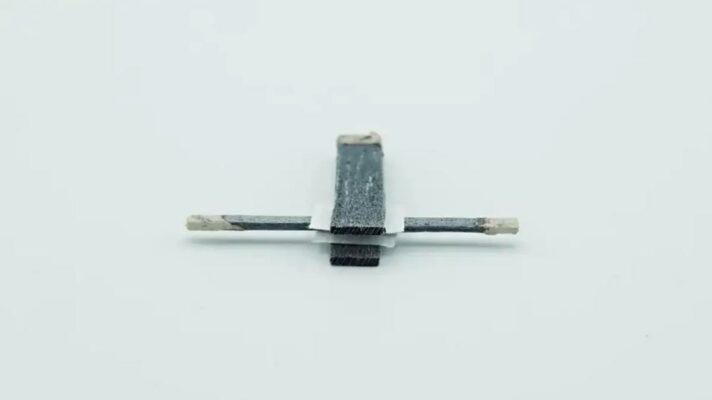
Awarded as One of the Best Cybersecurity Solutions of 2026

PassCypher HSM was recently recognized as one of the top 5 cybersecurity solutions in 2026 at the InterSec Awards, a distinction that highlights its effectiveness and reliability in tackling advanced threats like those posed by CVE-2023-32784. This recognition further emphasizes PassCypher’s commitment to providing cutting-edge protection for sensitive data, even when the operating system is compromised.

To learn more about this recognition and how PassCypher continues to innovate in cybersecurity, visit PassCypher: Finalist at the InterSec Awards 2026.


Detection Solutions for CVE Vulnerabilities

Detecting CVE vulnerabilities like CVE-2023-32784 requires the use of advanced solutions to spot exploitation attempts before they lead to a breach. Real-time detection solutions can monitor the integrity of sensitive memory files and quickly identify unauthorized access attempts.

Additionally, behavioral analysis tools can be used to detect suspicious activities on system files, particularly hiberfil.sys and pagefile.sys, interrupting attacks before they cause harm.

Advanced Threat Analysis: CVE and Zero-Day Attacks

Zero-day attacks, such as those exploiting CVE-2023-32784, are particularly difficult to detect because they use vulnerabilities unknown to software vendors. These attacks often target critical system components, such as memory management, to steal sensitive information without triggering alerts.

Therefore, advanced threat analysis is essential for strengthening system resilience against such attacks. The use of behavioral detection tools and threat analysis allows for the identification of compromise indicators before an attack successfully exfiltrates sensitive data.


The Zero Trust Approach and Secret Protection

The Zero Trust model is based on the fundamental principle that no user or device, whether internal or external, should be implicitly trusted. Every access attempt, whether from an internal user or an external system, must be verified. By applying this model, businesses can limit access to digital secrets, ensuring that no sensitive data is accessible by compromised systems.

Strategic Security Recommendations

In the face of the CVE-2023-32784 vulnerability, it is imperative to implement robust security measures and adopt a multi-layer defense strategy. Here are some practical recommendations:

  • Encrypt hibernation and paging files: This prevents unauthorized access to sensitive data stored in system memory.
  • Use advanced protection solutions: Like PassCypher, which protects your secrets even outside the operating system.
  • Monitor access to sensitive memory files: Implement continuous monitoring of hibernation and paging files to detect any unauthorized access attempts.
  • Review secure storage mechanisms: Use secure storage solutions outside the system perimeter for sensitive data, such as NFC physical keys or encrypted storage devices.

Multi-Layer Defense: Understanding Resilience with PassCypher NFC HSM

To strengthen system resilience against Zero-Day vulnerabilities, a multi-layer defense approach is crucial. PassCypher NFC HSM offers robust protection with encryption of sensitive memory files, secure off-OS storage, and proactive monitoring of sensitive system files like hiberfil.sys and pagefile.sys.


Managing Digital Sovereignty in the Face of Zero-Day Attacks

Digital sovereignty is an essential concept when managing the risks associated with zero-day attacks. Governments and businesses need to ensure their critical infrastructures are protected from invisible intrusions. By implementing solutions like PassCypher, which offers protection beyond the compromised operating system, the confidentiality and security of sensitive data can be assured, even when vulnerabilities have not yet been discovered.

Adopting technologies that ensure digital sovereignty is key to reducing exposure to international cyber threats. Source: The Role of Digital Sovereignty in Cybersecurity


Reducing Risks: Securing Digital Secrets

With “memory exfiltration” vulnerabilities, it’s critical to protect digital secrets through advanced security solutions. PassCypher NFC HSM offers a robust solution for securely storing sensitive data outside of the operating system perimeter, ensuring that even if the system is compromised, your secrets remain protected through enhanced security mechanisms such as AES-256 CBC encryption and key segmentation.



FAQ – CVE-2023-32784 and Mitigation Measures

Q: What is CVE-2023-32784 and how does it work?

Definition of CVE-2023-32784

A: CVE-2023-32784 is a vulnerability that affects Windows operating systems. It allows attackers to exfiltrate sensitive data from memory files such as hiberfil.sys and pagefile.sys. These files, used for hibernation and virtual memory, may contain unencrypted data like passwords and encryption keys, making them susceptible to unauthorized access if exploited.

Q: How can I mitigate CVE-2023-32784 vulnerabilities?

Mitigation Measures

A: To mitigate CVE-2023-32784, it’s essential to implement encryption on sensitive memory files (like hiberfil.sys and pagefile.sys). Solutions such as PassCypher, which store secrets outside the compromised operating system perimeter and utilize AES-256 CBC encryption, provide an additional layer of protection even if the OS is compromised.

Q: What is the significance of the hiberfil.sys and pagefile.sys files?

Importance of Memory Files

A: These files store system memory contents when the computer is hibernating or when virtual memory is used. hiberfil.sys contains a snapshot of the system’s memory during hibernation, and pagefile.sys stores data from the system’s RAM to disk. Both can be vulnerable if they contain unencrypted sensitive information, making them attractive targets for attackers exploiting CVE-2023-32784.

Q: How does PassCypher protect against this vulnerability?

PassCypher Protection

A: PassCypher protects secrets by storing them outside the operating system and encrypting them with AES-256 CBC. It uses NFC/HSM devices for secure authentication and ensures that sensitive data, including encryption keys and passwords, remains protected even if the system memory is compromised. This reduces the risk of exfiltration through vulnerabilities like CVE-2023-32784.

Q: What are zero-day attacks and how are they related to CVE-2023-32784?

Zero-Day Attacks Explained

A: Zero-day attacks exploit vulnerabilities that are unknown to the software vendor and have not yet been patched. CVE-2023-32784 is a type of zero-day vulnerability that allows attackers to gain unauthorized access to sensitive data in memory files. Since this vulnerability was discovered after it had been exploited, it is classified as a zero-day attack.


Glossary: CVE and Security Terminology

CVE

What is CVE?

Common Vulnerabilities and Exposures. A publicly accessible database that catalogues and references security vulnerabilities discovered in software. CVEs are given unique identifiers to track and provide details about security weaknesses that may impact organizations and users.

Zero-Day

Understanding Zero-Day

An attack that exploits a previously unknown vulnerability in a software application or system, typically before the developer has had a chance to patch it. Zero-day vulnerabilities are dangerous because there are no available defenses against them at the time they are discovered.

Hiberfil.sys

The Role of Hiberfil.sys

A system file used by Windows to store the system’s state during hibernation. When the system enters hibernation, the contents of the RAM are saved to this file, allowing the system to resume where it left off upon rebooting. It may contain sensitive data, which can be targeted by attackers if not encrypted.
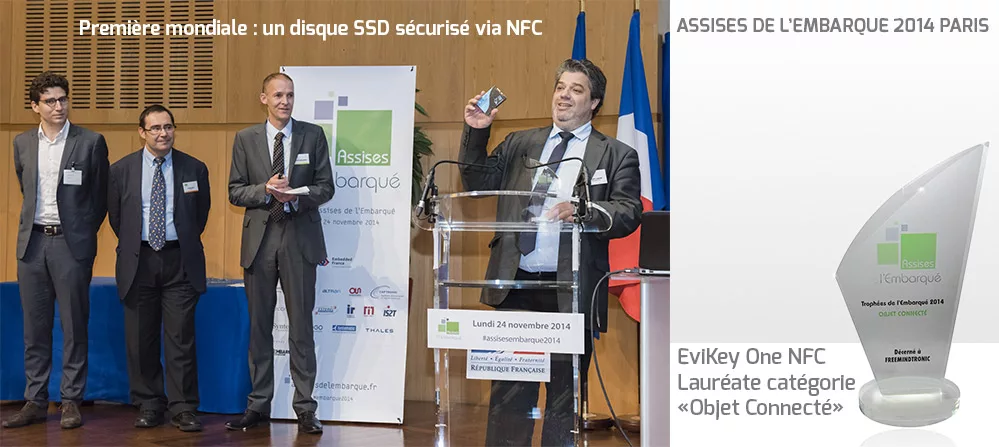
Pagefile.sys

About Pagefile.sys

A system file used by Windows to manage virtual memory. When the physical RAM is full, the system writes data to pagefile.sys to free up space. Like hiberfil.sys, pagefile.sys may contain sensitive data and is a potential target for attackers looking to exfiltrate information.
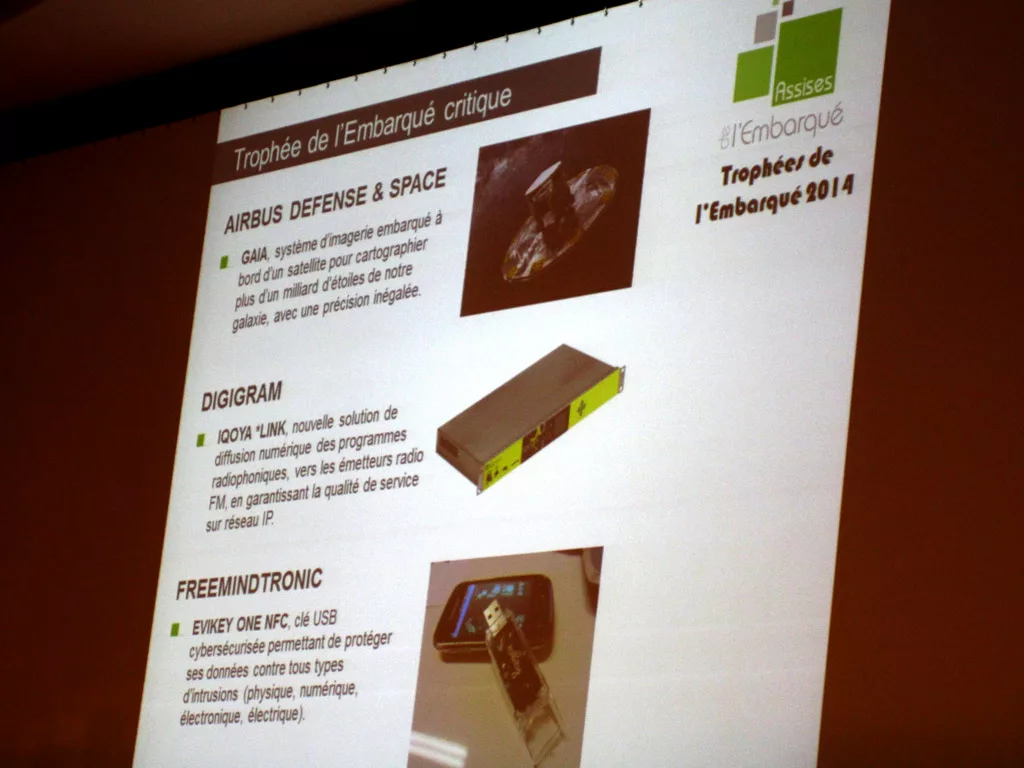
AES-256 CBC

What is AES-256 CBC?

Advanced Encryption Standard (AES) is a symmetric encryption algorithm widely used for securing data. AES-256 CBC (Cipher Block Chaining) is a specific mode of AES encryption that uses a 256-bit key and a chaining mechanism to ensure each block of data is encrypted with the previous one, enhancing security.

NFC/HSM

What is NFC/HSM?

NFC (Near Field Communication) is a short-range wireless technology used for secure data transfer. HSM (Hardware Security Module) is a physical device used to manage and safeguard digital keys. PassCypher uses NFC/HSM for secure authentication and encryption of sensitive data, even in the event of a system compromise.


Additional Resources

For more information on CVE vulnerabilities, digital security, and zero-day attacks, refer to the following resources:


Freemindtronic startup of the month March 2013

freemindtronic startup of the month march 2013 Magazine ElectroniqueS electronics.biz argos one nfc Page 36 invente une technologie de protection dynamique invents dynamic protection technology

Freemindtronic Startup of the month march 2013 by ElectroniqueS magazine & electroniques.biz

Freemindtronic invents a technology to dynamically protect electronic systems

The Toulouse-based start-up has set itself the mission of implementing a technology that allows for secure, unfalsifiable event traceability of electronic systems. It is of particular interest to insurance companies.
The Toulouse-based start-up Freemindtronic, founded in 2010, has set itself the mission of implementing a technology called “Fullprotect” that protects electronic systems from electrical or environmental risks and records all random events in a “black box” called “Evidence Box”. This technology allows for unfalsifiable secure event traceability and is of particular interest to insurance companies that are willing to promote the technology to their members. Protected by an international patent, this technology is “unprecedented and unique in the world.” It offers “dynamic, intelligent, interactive” protection in the sense of M2M (Machine to Machine) but also IHM (Human-Machine Interaction), and not passive like that usually present in electronic devices.
The company was founded by Jacques Gascuel, inventor of the “Fullprotect” technology for which he was awarded the Silver Medal of Innovation at the Geneva International Motor Show in 2010 in the categories of electricity, electronics, computer, communication, multimedia. The device comes in the form of an electronic module, intended to be later integrated on silicon, which is associated with a “black box”. It has a communication system based on NFC technology and an accelerometer. The proliferation of NFC readers in mobile phones have thus allowed a wide variety of applications. Examples include the possibility of recovering information about the life of electronic systems, setting a limited duration of use for a product, knowing its actual duration of use or its remaining warranty duration, or enslaving a product to become an anti-theft device.
 

Argos One NFC Smart Safety Electrical Hardware with Black Box electronics & embedded system by freemindtronic Andorra

Providing evidence at a level of evidence

It incorporates three elements: an electronic circuit breaker, a para-surge device and the “Evidence Box” black box. The circuit breaker maintains the conditions for the proper operation of the electronic system. Once the operating parameters are defined (tension, current, temperature, shocks and others), it automatically regulates voltage and current and protects the device in the event of a passing of these criteria. The short-circuit control para-surge device adds an alternative to the existing para-on-voltage device. Finally, the “Evidence Box” records all actions and events that occurred outside the parameters defined by the hardware manufacturer. It irrefutably formalizes physical evidence at a level of evidence, hence its name. The device can therefore be used in a legal dispute in the case of a dispute that causes litigation and thus absolve the user or manufacturer (or both parties) of the liability related to the injury. It guarantees the durability of electronic devices since it includes a traceability of many events, such as time of use, temperature, shock, electrical failure, type of use and user…
 

Excerpt from the article by Mr. Jacques Marouani journalist of the magazine Electronics ” Freemindtronic Startup of the month march 2013″.

Freemindtronic was one of the 4 finalists for the 16th “Electrons d’Or” 2013 trophy organized for 24 years by Electronics. Click here for more information.
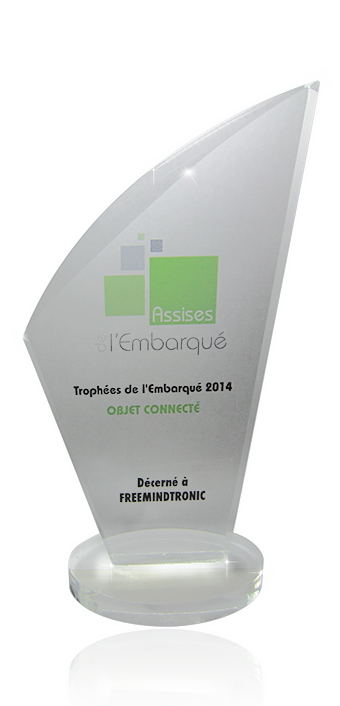
You can also read the full article “Freemindtronic Startup of the month march 2013  in the March 2013” issue of this magazine via the website of www.electroniques.biz.

Argos One NFC was invented by Jacques Gascuel using his patent issued internationally under numbers FR2941572 on a device for monitoring and protecting the power supply of an electrical appliance and the process for implementing this device.

 
Discover also the electrons d’or website here


Startup of the month March 2013


freemindtronic named in the top by the press


PassCypher finalista Intersec Awards 2026: gestor offline

PassCypher finalista Intersec Awards 2026 — Gestor sense contrasenya resistent a [...]

2 Comments

PassCypher Finaliste Intersec Awards 2026 — Souveraineté validée

PassCypher Finaliste officiel des Intersec Awards 2026 dans la catégorie “Best [...]

3 Comments

Quantum-Resistant Passwordless Manager — PassCypher finalist, Intersec Awards 2026 (FIDO-free, RAM-only)

Quantum-Resistant Passwordless Manager 2026 (QRPM) — Best Cybersecurity Solution Finalist by [...]

4 Comments

Freemindtronic’s Legacy: Rediscovering Excellence

Resurrecting Excellence: Freemindtronic’s Legacy in Nanotechnology and the ‘Fullprotect’ Revolution In [...]

The first wood transistor for green electronics

What is a wood transistor? A transistor is a device that [...]


SHARE THIS ARTICLE