Tag Archives: HSM PGP

PassCypher finalista Intersec Awards 2026: gestor offline

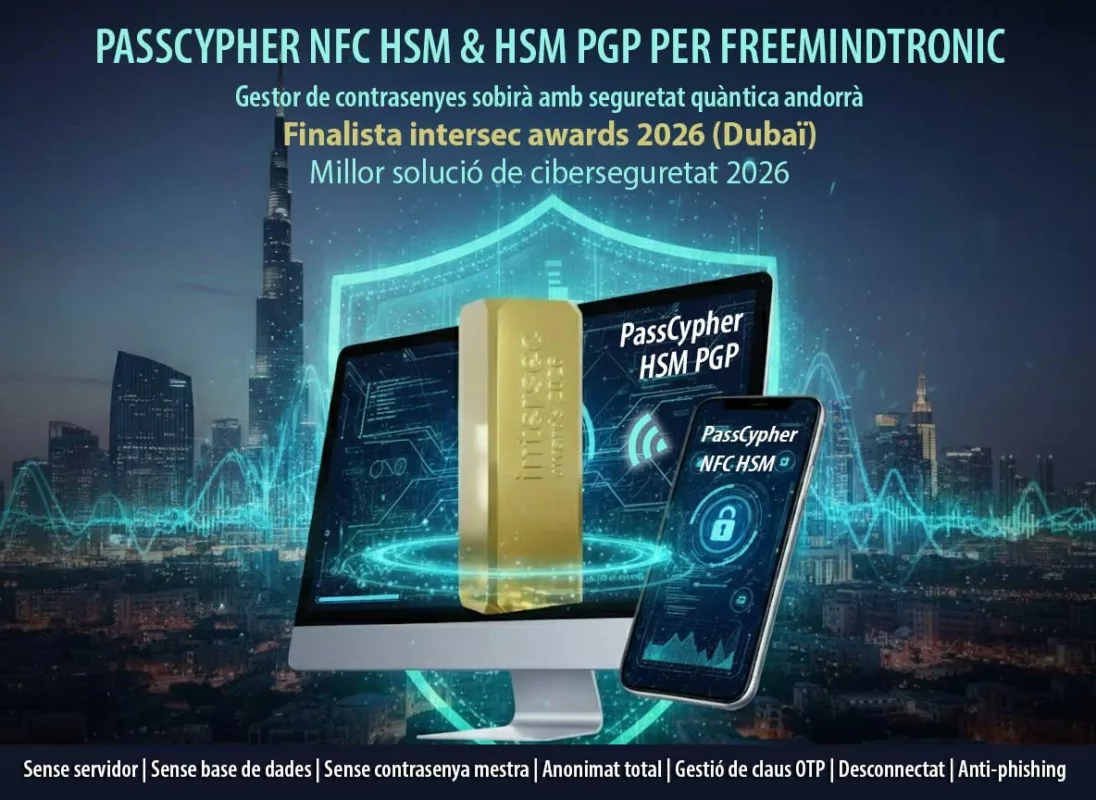
PassCypher finalista Intersec Awards 2026 a Dubai. Affiche ultra-réaliste amb el Gestor sense contrasenya resistent a l'impacte quàntic (QRPM), amb la doble representació (PC i mòbil) i el Trofeu Intersec. Freemindtronic Andorra.

PassCypher finalista Intersec Awards 2026 — Gestor sense contrasenya resistent a l’impacte quàntic (QRPM) a la categoria de Millor Solució de Ciberseguretat fixa un nou referent en seguretat sobirana fora de línia. Finalista a l’Intersec Dubai, funciona íntegrament en memòria volàtil —sense núvol ni servidors— i protegeix identitats i secrets per disseny. Com a gestor de contrasenyes fora de línia, PassCypher ofereix criptologia local amb claus PGP segmentades i AES-256-CBC per a operacions robustes en entorns aïllats (air-gapped). A diferència d’un gestor de contrasenyes tradicional, habilita la prova de possessió sense contrasenya a través de navegadors i sistemes amb interoperabilitat universal. El reconeixement internacional queda confirmat al web oficial: llista de finalistes dels Intersec Awards 2026. Freemindtronic Andorra agraeix cordialment  a l’equip d’Intersec Dubai i al seu jurat internacional pel seu reconeixement. PassCypher finalista Intersec Awards 2026.

Resum ràpid — Ecosistema sobirà fora de línia i sense contrasenya (QRPM)

Lectura ràpida (≈ 4 min): La nominació de Freemindtronic Andorra PassCypher finalista Intersec Awards 2026 — valida un ecosistema sobirà complet entre els finalistes dels Intersec Awards 2026 a la Millor Solució de Ciberseguretat al voltant de PassCypher HSM PGP i PassCypher NFC HSM. Dissenyat a partir de patents d’origen francès i pensat per executar-se íntegrament en memòria volàtil (només RAM), permet autenticació sense contrasenya sense FIDO — sense transferència, sense sincronització i sense persistència. Com a gestor sobirà fora de línia, PassCypher aplica PGP segmentat + AES-256-CBC per a seguretat sense contrasenya resistent a l’impacte quàntic, amb traduccions integrades (14 idiomes) per a ús air-gapped. Explora l’arquitectura completa al nostre resum d’gestor de contrasenyes sobirà fora de línia.

⚙ Un model sobirà en acció

PassCypher HSM PGP i PassCypher NFC HSM operen com a veritables mòduls físics de confiança. Executen totes les operacions crítiques localment — xifratge PGP, signatura, desxifratge i autenticació — sense servidor, sense núvol i sense tercers. Aquest model fora de línia i sense contrasenya es basa en la prova de possessió física i en criptologia embeguda, trencant amb enfocaments FIDO o SaaS centralitzats.

Per què PassCypher és un gestor de contrasenyes sobirà fora de línia

PassCypher HSM PGP i PassCypher NFC HSM actuen com a mòduls físics de confiança: tota la criptografia (xifratge, signatura, desxifratge i autenticació PGP) s’executa localment, sense servidor ni núvol. Aquest model sense FIDO es basa en la prova de possessió física i en criptologia embeguda, no pas en intermediaris d’identitat centralitzats.

Abast global

Aquesta distinció situa Freemindtronic Andorra entre les millors solucions de ciberseguretat del món — PassCypher finalista Intersec Awards 2026.
Aquesta distinció situa Freemindtronic Andorra entre les millors solucions de ciberseguretat del món. Reforça el seu paper pioner en protecció sobirana fora de línia i confirma la rellevància d’un model neutral, independent i interoperable — que combina enginyeria francesa, innovació andorrana i reconeixement emiratí a la fira mundial més gran de seguretat i resiliència digital.

Autenticació sense contrasenya sense FIDO — model sobirà fora de línia (QRPM)

PassCypher ofereix accés sense contrasenya sense FIDO/WebAuthn ni federació d’identitat. La validació es fa localment (prova de possessió física), completament fora de línia, sense servidors, sense núvol i sense magatzems persistents — pilar central de la doctrina Quantum-Resistant Passwordless Manager 2026.

  • Prova de possessió — NFC/HID o context local; sense validadors tercers.
  • Criptologia local — PGP segmentat + AES-256-CBC només en RAM (efímer).
  • Interoperabilitat universal — funciona entre navegadors/sistemes sense passkeys ni sincronització.

Paràmetres de lectura

Temps de lectura del resum ràpid: ≈ 4 minuts
Temps de lectura del resum avançat: ≈ 6 minuts
Temps de lectura de la crònica completa: ≈ 35 minuts
Data de publicació: 2025-10-30
Darrera actualització: 2025-10-31
Nivell de complexitat: Expert — Criptologia i sobirania
Densitat tècnica: ≈ 79%
Idiomes disponibles: FR· CAT· EN· ES ·AR
Enfocament específic: Anàlisi sobirana — Freemindtronic Andorra, Intersec Dubai, ciberseguretat fora de línia
Ordre de lectura: Resum → Doctrina → Arquitectura → Impactes → Abast internacional
Accessibilitat: Optimitzat per a lectors de pantalla — àncores i etiquetes estructurades
Tipologia editorial: reportatge especial de premis — PassCypher finalista Intersec Awards 2026 (Millor Solució de Ciberseguretat)
Nivell d’enjoc: 8,1 / 10 — internacional, criptològic, estratègic
Sobre l’autor: Jacques Gascuel, inventor i fundador de Freemindtronic Andorra, expert en arquitectures HSM, sobirania criptogràfica i seguretat fora de línia.

Nota editorial — Aquest article s’anirà enriquint progressivament d’acord amb la normalització internacional dels models sobirans sense contrasenya i les evolucions ISO/NIST relatives a l’autenticació fora de línia. El contingut s’ha redactat conforme a la Declaració de Transparència d’IA publicada per Freemindtronic Andorra FM-AI-2025-11-SMD5

Localització sobirana (fora de línia)

Tant el PassCypher HSM PGP com el PassCypher NFC HSM estan traduïts de manera nativa a més de 13 idiomes, inclòs l’àrab. Les traduccions estan embegudes en el dispositiu (sense crides a serveis de traducció en línia), garantint la confidencialitat i la disponibilitat en entorns aïllats.
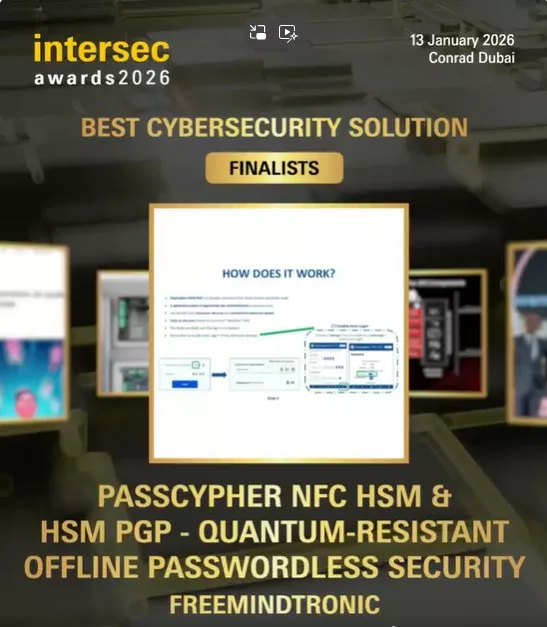
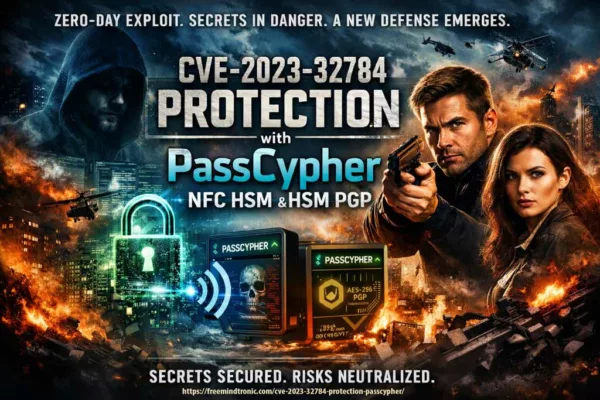
🇫🇷 Visuel officiel des Intersec Awards 2026 à Dubaï — PassCypher NFC HSM & HSM PGP de Freemindtronic Andorra finaliste dans la catégorie « Meilleure solution de cybersécurité ». 🇬🇧 Official Intersec Awards 2026 visual — PassCypher NFC HSM & HSM PGP by Freemindtronic Andorra, finalist for “Best Cybersecurity Solution” in Dubai, UAE. 🇦🇩 Imatge oficial dels Intersec Awards 2026 a Dubai — PassCypher NFC HSM i HSM PGP de Freemindtronic Andorra finalista a la categoria « Millor solució de ciberseguretat ». 🇪🇸 Imagen oficial de los Intersec Awards 2026 en Dubái — PassCypher NFC HSM y HSM PGP de Freemindtronic Andorra finalista en la categoría « Mejor solución de ciberseguridad ». 🇸🇦 الصورة الرسمية لجوائز إنترسيك ٢٠٢٦ في دبي — PassCypher NFC HSM و HSM PGP من فريميندترونيك أندورا من بين المرشحين النهائيين لجائزة « أفضل حل للأمن السيبراني ».

2023 Articles Cyberculture Technologies

NRE Cost Optimization for Electronics: A Comprehensive Guide

2026 Awards Cyberculture Digital Security Distinction Excellence EviOTP NFC HSM Technology EviPass EviPass NFC HSM technology EviPass Technology finalists PassCypher PassCypher

Quantum-Resistant Passwordless Manager — PassCypher finalist, Intersec Awards 2026 (FIDO-free, RAM-only)

2025 Cyberculture Cybersecurity Digital Security EviLink

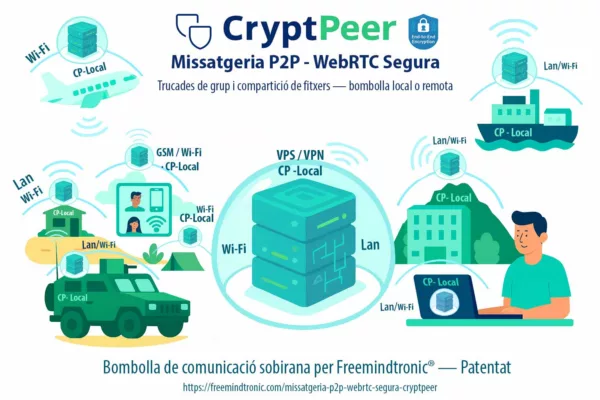
CryptPeer messagerie P2P WebRTC : appels directs chiffrés de bout en bout

2025 Cyberculture Digital Security

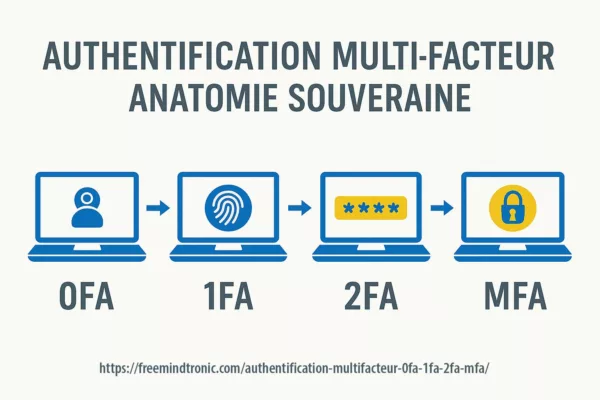
Authentification multifacteur : anatomie, OTP, risques

2024 Cyberculture Digital Security

Russian Cyberattack Microsoft: An Unprecedented Threat

2025 Cyberculture

NGOs Legal UN Recognition

2025 Cyberculture Legal information

French IT Liability Case: A Landmark in IT Accountability

2024 Articles Cyberculture Legal information

ANSSI Cryptography Authorization: Complete Declaration Guide

2021 Cyberculture Digital Security Phishing

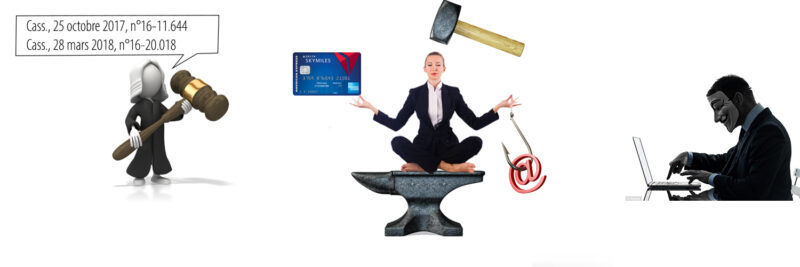
Phishing Cyber victims caught between the hammer and the anvil

2024 Cyberculture DataShielder

Google Workspace Data Security: Legal Insights

2024 Articles Cyberculture legal Legal information News

End-to-End Messaging Encryption Regulation – A European Issue

Articles Contactless passwordless Cyberculture EviOTP NFC HSM Technology EviPass NFC HSM technology multi-factor authentication Passwordless MFA

How to choose the best multi-factor authentication method for your online security

2024 Cyberculture Digital Security News Training

Andorra National Cyberattack Simulation: A Global First in Cyber Defense

Articles Cyberculture Digital Security Technical News

Protect Meta Account Identity Theft with EviPass and EviOTP

2024 Articles Cyberculture EviPass Password

Human Limitations in Strong Passwords Creation

2023 Articles Cyberculture EviCypher NFC HSM News Technologies

Telegram and the Information War in Ukraine

Articles Cyberculture EviCore NFC HSM Technology EviCypher NFC HSM EviCypher Technology

Communication Vulnerabilities 2023: Avoiding Cyber Threats

Articles Cyberculture NFC HSM technology Technical News

RSA Encryption: How the Marvin Attack Exposes a 25-Year-Old Flaw

2023 Articles Cyberculture Digital Security Technical News

Strong Passwords in the Quantum Computing Era

2023 Articles Cyberculture EviCore HSM OpenPGP Technology EviCore NFC HSM Browser Extension EviCore NFC HSM Technology Legal information Licences Freemindtronic

Unitary patent system: why some EU countries are not on board

2024 Crypto Currency Cryptocurrency Cyberculture Legal information

EU Sanctions Cryptocurrency Regulation: A Comprehensive Overview

2023 Articles Cyberculture Eco-friendly Electronics GreenTech Technologies

The first wood transistor for green electronics

2018 Articles Cyberculture Legal information News

Why does the Freemindtronic hardware wallet comply with the law?

Les publicacions mostrades a dalt ↑ pertanyen a la mateixa secció editorial Distincions i Premis — Seguretat Digital. Amplien l’anàlisi sobre sobirania, neutralitat andorrana i gestió de secrets fora de línia, directament connectada amb el reconeixement de PassCypher a l’Intersec Dubai.

⮞ Preàmbul — Reconeixement internacional i institucional

Freemindtronic Andorra expressa el seu agraïment sincer al jurat internacional i a Messe Frankfurt Middle East, organitzador dels Intersec Awards, per la qualitat, el rigor i l’abast global d’aquest certamen dedicat a la seguretat, la sobirania i la innovació. Atorgada a Dubai — al cor dels Emirats Àrabs Units —, aquesta distinció confirma el reconeixement d’una innovació andorrana amb arrels europees que constitueix un model d’autenticació sobirana, resistent a l’impacte quàntic i sense contrasenya fora de línia. També il·lustra el compromís compartit entre Europa i el món àrab per promoure arquitectures digitals basades en la confiança, la neutralitat i la resiliència tecnològica.

Resum avançat — Doctrina i abast estratègic de l’ecosistema sobirà fora de línia

Intersec 2026 — PassCypher finalista Intersec Awards 2026 (Millor Solució de Ciberseguretat)

L’estatus de finalista als Intersec Awards 2026 en la categoria de Millor Solució de Ciberseguretat diferencia PassCypher no només com a avenç tecnològic, sinó com una doctrina sobirana completa per a seguretat sense contrasenya resistent a l’impacte quàntic.Aquesta nominació marca una doble fita — a la nostra coneixença: (1) primera presència andorrana entre els finalistes dels Intersec Awards, i (2) primer gestor de contrasenyes “passwordless” i fora de línia seleccionat a la categoria «Best Cybersecurity Solution». Segons la llista oficial, PassCypher és un dels cinc finalistes d’aquesta categoria..

↪ Abast geopolític i doctrinal

Aquest reconeixement atorga a Andorra un nou paper: laboratori de neutralitat digital dins l’espai europeu. Freemindtronic impulsa un model d’innovació sobirana — andorrà per neutralitat, francès per herència, europeu per visió. En entrar a Millor Solució de Ciberseguretat, PassCypher simbolitza un equilibri estratègic entre independència criptològica i interoperabilitat normativa.

Seguretat només RAM per a sobirania sense contrasenya (QRPM)

↪ Una arquitectura fora de línia basada en memòria volàtil

L’ecosistema PassCypher es basa en un principi singular: totes les operacions crítiques — emmagatzematge, derivació, autenticació, gestió de claus — es fan exclusivament en memòria volàtil. No s’escriu ni es sincronitza cap dada en emmagatzematge persistent. Per disseny, aquest enfocament elimina vectors d’intercepció, espionatge i compromís postexecució, també sota amenaces quàntiques.

PGP segmentat + AES-256-CBC impulsant operacions sense contrasenya

↪ Segmentació i sobirania dels secrets

El sistema aplica segmentació dinàmica de claus que desacobla cada secret del seu context d’ús. Cada instància PassCypher actua com un micro-HSM autònom: aïlla identitats, verifica drets localment i destrueix instantàniament qualsevol dada després de l’ús. Aquest model d’esborrat per disseny contrasta amb paradigmes FIDO i SaaS, on la persistència i la delegació generen vulnerabilitats estructurals.

↪ Un reconeixement simbòlic per a la doctrina sobirana

Incloure Freemindtronic Andorra entre els finalistes 2026 eleva la sobirania tecnològica com a motor d’innovació internacional. En un panorama dominat per solucions centrades en el núvol, PassCypher demostra que la desconnexió controlada pot convertir-se en un actiu estratègic, assegurant independència regulatòria, alineació amb GDPR/NIS2 i resiliència davant interdependències industrials.

⮞ Reconeixement internacional ampliat

L’abast global de PassCypher s’estén també al domini de la seguretat de defensa. La solució serà presentada per AMG PRO a MILIPOL 2025 — estand 5T158 — com a soci oficial francès de Freemindtronic Andorra per a tecnologies de doble ús civil i militar. Aquesta presència confirma PassCypher com a solució de referència per a ciberseguretat sobirana adaptada a defensa, resiliència i indústries crítiques.

⮞ En síntesi

  • Arquitectura: seguretat només RAM amb claus PGP segmentades + AES-256-CBC.
  • Model: autenticació sense contrasenya sense FIDO, sense servidor, sense núvol, air-gapped.
  • Posicionament: gestor de contrasenyes sobirà fora de línia per a contextos regulats, desconnectats i crítics.
  • Reconeixement: finalista Intersec 2026 a la Millor Solució de Ciberseguretatseguretat sense contrasenya resistent a l’impacte quàntic per disseny.

PassCypher finalista Intersec Awards 2026 — Crònica: sobirania validada a Dubai (passwordless fora de línia)

La selecció oficial de Freemindtronic Andorra com a PassCypher finalista Intersec 2026 a la Millor Solució de Ciberseguretat marca un punt d’inflexió. Aquesta selecció oficial marca una doble fita — a la nostra coneixença: (1) primera presència andorrana entre els finalistes dels Intersec Awards, i (2) primer gestor de contrasenyes “passwordless” i fora de línia seleccionat a la categoria «Best Cybersecurity Solution». Segons la llista oficial, PassCypher és un dels cinc finalistes d’aquesta categoria gestor de contrasenyes sobirà.

↪ Resiliència algorísmica sobirana (resistent a l’impacte quàntic per disseny)

En lloc de confiar en esquemes post-quàntics experimentals, PassCypher aporta resiliència estructural: segmentació dinàmica de claus PGP combinada amb AES-256-CBC, executada íntegrament en memòria volàtil (només RAM). Les claus es divideixen en segments independents i efímers que trenquen rutes d’explotació — incloses les alineades amb Grover o Shor. No és PQC; és un model operatiu resistent a l’impacte quàntic per disseny.

↪ Innovació i independència

La nominació valida una doctrina de resiliència mitjançant la desconnexió: protegir secrets digitals sense servidor, sense núvol, sense rastre. L’autenticació i la gestió de secrets romanen totalment autònomes — autenticació sense contrasenya sense FIDO, sense WebAuthn i sense intermediaris d’identitat — perquè cada usuari conservi el control físic de les seves claus, identitats i perímetre de confiança.

↪ Intersec Awards 2026 — l’ecosistema al focus

Curat per Messe Frankfurt Middle East, Intersec posa en relleu innovacions que equilibren rendiment, compliment i independència. La presència de Freemindtronic Andorra subratlla l’abast internacional d’una doctrina de ciberseguretat sobirana fora de línia desenvolupada en un país neutral i posicionada com a alternativa creïble als estàndards globals.

⮞ Destaquem Intersec 2026

Presència a la gala: Freemindtronic Andorra serà present a Dubai per a l’entrega dels trofeus, representada per Thomas MEUNIER.

  • Esdeveniment: Intersec Awards 2026 — Conrad Dubai
  • Etiqueta oficial: PassCypher finalista Intersec Awards 2026
  • Categoria: Millor Solució de Ciberseguretat
  • Finalista: Freemindtronic Andorra — ecosistema PassCypher
  • Innovació: Gestió sobirana de secrets digitals fora de línia (només RAM, air-gapped)
  • Origen: Patents d’invenció franceses amb concessions internacionals
  • Arquitectura: Memòria volàtil · Segmentació de claus · Sense dependència del núvol
  • Valor doctrinal: Sobirania tecnològica, neutralitat geopolítica, independència criptològica
  • Validació oficial: Llista oficial de finalistes Intersec 2026

Aquesta peça examina la doctrina, els fonaments tècnics i l’abast estratègic d’aquest reconeixement — una validació institucional que demostra que les identitats digitals es poden salvaguardar sense connectivitat.

Punts clau:

  • “Passwordless” sobirà amb 0 núvol / 0 servidor: prova de possessió física.
  • Interoperabilitat universal (web/sistemes) sense dependència de protocols.
  • Resiliència estructural via segmentació de claus + memòria volàtil (només RAM).

Context oficial — Intersec Awards 2026 per a seguretat sense contrasenya resistent a l’impacte quàntic

🇫🇷 Visuel officiel des Intersec Awards 2026 à Dubaï — PassCypher NFC HSM & HSM PGP de Freemindtronic Andorra finaliste dans la catégorie « Meilleure solution de cybersécurité ». 🇬🇧 Official Intersec Awards 2026 visual — PassCypher NFC HSM & HSM PGP by Freemindtronic Andorra, finalist for “Best Cybersecurity Solution” in Dubai, UAE. 🇦🇩 Imatge oficial dels Intersec Awards 2026 a Dubai — PassCypher NFC HSM i HSM PGP de Freemindtronic Andorra finalista a la categoria « Millor solució de ciberseguretat ». 🇪🇸 Imagen oficial de los Intersec Awards 2026 en Dubái — PassCypher NFC HSM y HSM PGP de Freemindtronic Andorra finalista en la categoría « Mejor solución de ciberseguridad ». 🇸🇦 الصورة الرسمية لجوائز إنترسيك ٢٠٢٦ في دبي — PassCypher NFC HSM و HSM PGP من فريميندترونيك أندورا من بين المرشحين النهائيين لجائزة « أفضل حل للأمن السيبراني ».
(https://freemindtronic.com/wp-content/uploads/2025/11/intersec-awards-2026-security-intersec-expo-best-cybersecurity-solution.mp4)” size=”120″]

Celebrats a Dubai, els Intersec Awards s’han convertit, des del 2022, en un referent global en seguretat, ciberseguretat i resiliència tecnològica. La 5a edició, prevista per al 13 de gener de 2026 al Conrad Dubai, distingirà l’excel·lència en 17 categories que cobreixen ciberseguretat, seguretat contra incendis, defensa civil i protecció d’infraestructures crítiques. A la categoria Millor Solució de Ciberseguretat, només cinc finalistes han estat preseleccionats després d’un procés d’avaluació meticulós, liderat per un jurat internacional de 23 experts de cinc països — els Emirats Àrabs Units, Aràbia Saudita, el Regne Unit, Canadà i els Estats Units — que representen les institucions capdavanteres del món en seguretat, defensa civil i ciberseguretat.

Com a context, l’edició anterior — Intersec Awards 2025 — va rebre més de 1.400 propostes internacionals en 15 categories, confirmant l’abast global i la competitivitat de l’esdeveniment. Font oficial: Nota de premsa Intersec 2025 — Messe Frankfurt Middle East.

⮞ Informació oficial

↪ Jurat internacional de prestigi

El jurat 2026 reuneix 23 experts de primer nivell de les principals institucions dels EAU, Aràbia Saudita, el Regne Unit, Canadà i els Estats Units — un reflex de la credibilitat global de l’esdeveniment i de l’equilibri entre expertesa de l’Orient Mitjà i d’Occident.

  • Dubai Civil Defence — Tinent Coronel Dr. Essa Al Mutawa, Cap del Departament d’Intel·ligència Artificial
  • UL Solutions — Gaith Baqer, Enginyer Regulador Sènior
  • NFPA — Olga Caldonya, Directora de Desenvolupament Internacional
  • IOSH (Regne Unit) — Richard Bate, President electe
  • WSP Middle East — Rob Davies i Emmanuel Yetch, Directors Executius
  • ASIS International — Hamad Al Mulla i Yassine Benaman, líders de seguretat sènior

↪ Sobirania algorísmica — Resistència quàntica per disseny

En lloc d’algorismes post-quàntics experimentals, PassCypher aconsegueix resistència estructural mitjançant segmentació dinàmica de claus PGP protegida amb AES-256-CBC, executada íntegrament en memòria volàtil (només RAM). Les claus es divideixen en fragments temporals i aïllats que s’autodestrueixen després de l’ús — eliminant vectors d’explotació, inclosos atacs quàntics teòrics com Grover i Shor. No és PQC en sentit acadèmic, sinó una arquitectura sobirana resistent a l’impacte quàntic per disseny.

↪ PassCypher — Primera suite HSM nativament traduïda a l’àrab

PassCypher és el primer gestor de contrasenyes i suite HSM que ofereix una interfície àrab plenament localitzada amb suport RTL (dreta-esquerra), operant completament fora de línia. Aquest disseny vincula l’enginyeria europea amb la identitat lingüística i cultural àrab, i proporciona un model únic de sobirania digital independent del núvol o de sistemes d’autenticació centralitzats.

↪ Doble fita històrica

Aquesta nominació representa una doble fita històrica:
la primera presència andorrana seleccionada com a finalista en una competició tecnològica internacional als EAU,
i — segons el nostre coneixement — el primer gestor de contrasenyes seleccionat com a
finalista als EAU a la categoria Best Cybersecurity Solution.
Aquesta distinció valida les arquitectures desconnectades com a alternatives globals creïbles als models centralitzats en el núvol.

↪ Convergència euro-emiratiana en seguretat sobirana

El reconeixement 2026 posa en relleu l’emergència d’un diàleg euro-emiratià sobre sobirania digital i arquitectures de resiliència per disseny. PassCypher actua com a pont entre la neutralitat andorrana, l’enginyeria francesa, l’expertesa institucional britànica i el reconeixement de patents transatlàntic — amb tecnologies patentades al Regne Unit, als Estats Units i a la Unió Europea. Aquesta convergència exemplifica com interoperabilitat, confiança i innovació sobirana poden coexistir dins una visió internacional compartida de la seguretat. Amb aquest marc institucional i tecnològic establert, la secció següent explora l’arquitectura sobirana i la doctrina criptogràfica que han merescut el reconeixement internacional d’Intersec Dubai.

PassCypher finalista Intersec Awards 2026 — innovació “passwordless” sobirana fora de línia (QRPM)

En un mercat dominat per stacks al núvol i passkeys FIDO, l’ecosistema PassCypher es posiciona com una alternativa sobirana i disruptiva. Desenvolupat per Freemindtronic Andorra sobre patents d’origen francès, se sustenta en una base criptogràfica executada en memòria volàtil (només RAM) amb AES-256-CBC i segmentació de claus PGP — un enfocament alineat amb l’estratègia Quantum-Resistant Passwordless Manager 2026.

↪ Dos pilars d’un sol ecosistema sobirà

  • PassCypher HSM PGP: gestor sobirà de secrets i contrasenyes per a escriptori, totalment fora de línia. Tota la criptografia s’executa a RAM per a autenticació sense contrasenya i fluxos air-gapped.
  • PassCypher NFC HSM: variant de maquinari portàtil per a Android amb NFC, que converteix qualsevol suport NFC en un mòdul físic de confiança per a autenticació universal sense contrasenya.

Interoperables per disseny, ambdós funcionen sense servidor, sense núvol, sense sincronització i sense confiança en tercers. Secrets, claus i identitats romanen locals, aïllats i temporals — nucli de la ciberseguretat sobirana a Andorra i territoris catalanoparlants.

↪ Localització sobirana — traduccions embegudes (fora de línia)

  • Suport nadiu per a més de 13 idiomes, inclòs l’àrab (UI/UX i ajuda).
  • Traduccions embegudes: sense crides de xarxa, sense telemetria, sense API externes.
  • Compatibilitat RTL completa per a l’àrab, amb tipografia coherent i maquetació segura fora de línia.

↪ Autenticació sobirana sense contrasenya — sense FIDO, sense núvol

A diferència dels models FIDO vinculats a validadors centralitzats o claus biomètriques, PassCypher opera 100% de forma independent i fora de línia. L’autenticació es basa en la prova de possessió física i comprovacions criptològiques locals — sense serveis externs, sense API de núvol, sense cookies persistents. El resultat: un gestor de contrasenyes sense contrasenya, compatible amb tots els principals sistemes operatius, navegadors i plataformes web, i amb NFC d’Android per a ús sense contacte — interoperabilitat universal sense bloqueig per protocols.

⮞ Etiquetat com a “seguretat fora de línia sense contrasenya resistent a l’impacte quàntic”

En el procés oficial d’Intersec, PassCypher es descriu com a seguretat fora de línia sense contrasenya resistent a l’impacte quàntic. Mitjançant AES-256-CBC i una arquitectura PGP multicapa amb claus segmentades, cada fragment és inútil de manera aïllada — interrompent rutes d’explotació algorísmica (p. ex., Grover, Shor). Això no és un esquema PQC; és resistència estructural via fragmentació lògica i efimeritat controlada. Consulta la crònica de la distinció.

↪ Un model d’independència i confiança digital

La ciberseguretat sense núvol pot superar dissenys centralitzats quan l’autonomia del maquinari, la criptologia local i la no-persistència són primers principis. PassCypher restableix la confiança digital al seu fonament — seguretat per disseny — i ho demostra en contextos civils, industrials i de defensa com a gestor de contrasenyes sobirà fora de línia. Amb la base tècnica establerta, la següent secció aborda els orígens territorials i doctrinals que han modelat aquest finalista a Millor Solució de Ciberseguretat.

Innovació andorrana — Arrels europees d’un gestor sobirà sense contrasenya resistent a l’impacte quàntic

Després d’exposar la base tècnica de l’ecosistema PassCypher, cal cartografiar-ne l’abast institucional i territorial. Més enllà de l’enginyeria, l’estatus de finalista a la Millor Solució de Ciberseguretat 2026 confirma una innovació andorrana — d’herència europea i governança neutral — avui visible a l’escenari mundial de la ciberseguretat sobirana.

↪ Entre arrels franceses i neutralitat andorrana

Nascut a Andorra el 2016 i construït sobre patents d’origen francès concedides internacionalment, PassCypher es dissenya, es desenvolupa i es produeix a Andorra. El seu NFC HSM es fabrica a Andorra i França amb Groupe Syselec, soci industrial de llarga trajectòria. Aquesta identitat dual — llinatge franco-andorrà amb governança sobirana andorrana — ofereix un model concret de cooperació industrial europea. Aquesta posició permet a Freemindtronic actuar com a actor neutral, independent de blocs polítics però alineat amb una visió compartida d’innovació de confiança.

↪ Per què la neutralitat importa en un gestor sobirà

La neutralitat històrica d’Andorra i la seva geografia entre França i Espanya creen condicions idònies per a tecnologies de confiança i sobirania. L’enfocament de gestor de contrasenyes a Andorra — només RAM, sense núvol, sense contrasenya — pot adoptar-se sota marcs reguladors diversos sense dependències d’infraestructures estrangeres.

↪ Reconeixement amb abast simbòlic i estratègic

La selecció als Intersec Awards 2026 assenyala un enfocament europeu independent que triomfa en una arena internacional exigent, els Emirats Àrabs Units — centre global d’innovació en seguretat. Demostra que territoris europeus neutrals com Andorra poden equilibrar blocs tecnològics dominants mentre impulsen seguretat sense contrasenya resistent a l’impacte quàntic.

↪ Un pont entre dues visions de sobirania

Europa promou sobirania digital via GDPR, NIS2 i DORA; els EAU impulsen ciberseguretat d’estat centrada en resiliència i autonomia. El reconeixement a Dubai enllaça aquestes visions i prova que la innovació sobirana neutral pot unir el compliment europeu i les necessitats estratègiques emiratianes amb arquitectures sense núvol i interoperables.

↪ Doctrina andorrana de sobirania digital

Freemindtronic Andorra encarna la sobirania digital neutral: innovació al capdavant, independència reguladora i interoperabilitat universal. Aquesta doctrina sustenta l’adopció de PassCypher en sectors públics i privats com a gestor de contrasenyes sobirà que opera fora de línia per disseny.

⮞ Transició

Aquest reconeixement institucional prepara el següent capítol: la primera fita històrica d’un gestor passwordless preseleccionat en una competició tecnològica dels EAU — ancorant PassCypher en la història dels grans premis internacionals de ciberseguretat.

Primera fita històrica — Finalista “passwordless” als EAU (fora de línia, sobirà)

PassCypher NFC HSM & HSM PGP, desenvolupats per Freemindtronic Andorra, són — segons el nostre coneixement — els primers gestors de contrasenyes (de qualsevol tipus: núvol, SaaS, biomètric, codi obert, sobirà, fora de línia) seleccionats com a finalistes en una competició tecnològica als EAU. Aquesta fita segueix esdeveniments clau com GITEX Technology Week (2005), Dubai Future Accelerators (2015) i els Intersec Awards (des de 2022), cap dels quals havia preseleccionat abans un gestor de contrasenyes fins a PassCypher el 2026. Valida una aproximació de quantum-resistant passwordless manager 2026 arrelada en sobirania i disseny fora de línia.

Contrast — Històric de competicions tecnològiques als EAU

Competició Any de creació Abast Gestors de contrasenyes finalistes
GITEX Global / Cybersecurity Awards 2005 Tecnologia global, IA, núvol, ciutats intel·ligents ❌ Cap
Dubai Future Accelerators 2015 Start-ups disruptives ❌ Cap
UAE Cybersecurity Council Challenges 2019 Resiliència nacional ❌ Cap
Dubai Cyber Index 2020 Avaluació del sector públic ❌ Cap
Intersec Awards 2022 Seguretat, ciberseguretat, innovació PassCypher (2026)

Millor gestor sense contrasenya resistent a l’impacte quàntic 2026 — posicionament i casos d’ús

Reconeixent-se a Intersec Dubai, PassCypher es posiciona com el millor gestor “passwordless” resistent a l’impacte quàntic 2026 per a organitzacions que necessiten operacions sobiranes i sense núvol. L’stack combina validació fora de línia (prova de possessió) amb criptologia només a RAM i claus segmentades. Per a context de mercat, consulta la nostra instantània del millor gestor de contrasenyes 2026.

  • Entorns regulats i air-gapped (defensa, energia, salut, finances, diplomàcia).
  • Desplegaments sense núvol on la residència i minimització de dades són obligatòries.
  • Interoperabilitat entre navegadors/sistemes sense dependències FIDO/WebAuthn.

En resum:

Pel nostre coneixement, cap solució al núvol, SaaS, biomètrica, de codi obert o sobirana en aquesta categoria havia arribat a finalista als EAU abans de PassCypher. Aquest reconeixement reforça la posició d’Andorra a l’ecosistema de ciberseguretat dels EAU i subratlla la rellevància d’un gestor de contrasenyes sense contrasenya pensat per a ús sobirà i fora de línia.

PassCypher finalista Intersec Awards 2026 — tipologia doctrinal: allò que aquest gestor sobirà fora de línia no és

Abans de detallar la sobirania validada, convé situar PassCypher per contrast. La matriu següent clarifica la ruptura doctrinal.

Model S’aplica a PassCypher? Per què
Gestor al núvol Sense transferència ni sincronització; gestor sobirà fora de línia.
FIDO / Passkeys Prova de possessió local; sense federació d’identitat.
Codi obert Arquitectura patentada; doctrina sobirana i cadena de qualitat.
SaaS / SSO Sense backend ni delegació; sense núvol per disseny.
Bòveda local Sense persistència; només RAM efímera.
Zero Trust de xarxa ✔️ Complementari Doctrina Zero-DOM: fora de xarxa, identitats segmentades.

Aquest marc destaca PassCypher com a fora de línia, sobirà i universalment interoperable — no és un gestor de contrasenyes convencional lligat al núvol o a FIDO, sinó una arquitectura de quantum-resistant passwordless manager 2026. Consulta la crònica de la distinció.

PassCypher finalista Intersec Awards 2026 — sobirania validada cap a un model independent “passwordless” resistent a l’impacte quàntic

El reconeixement a Freemindtronic Andorra a Intersec confirma més que un èxit de producte: valida una arquitectura sobirana fora de línia dissenyada per a la independència.

↪ Validació institucional de la doctrina sobirana

La preselecció a Millor Solució de Ciberseguretat avala una filosofia de seguretat desconnectada i autònoma: protegir secrets digitals sense núvol, dependències ni delegació, alineant-se amb marcs globals (GDPR/NIS2/ISO-27001).

↪ Resposta a dependències sistèmiques

Mentre moltes solucions assumeixen connectivitat permanent, les operacions en memòria volàtil i la no-persistència de PassCypher eliminen riscos de centralització. La confiança passa de “confiar en un proveïdor” a “no dependre de ningú”.

↪ Cap a un estàndard global

Combinant sobirania, compatibilitat universal i resiliència criptogràfica segmentada, PassCypher marca un camí cap a una norma internacional de seguretat “passwordless” resistent a l’impacte quàntic aplicable a defensa, energia, salut, finances i diplomàcia.
Mitjançant el reconeixement de Dubai, Intersec assenyala un nou paradigma en seguretat digital — on un gestor de contrasenyes sobirà fora de línia pot esdevenir referent de Millor Solució de Ciberseguretat.

⮞ Transició — Cap a la consolidació doctrinal

La secció següent detalla els fonaments criptològics i les arquitectures d’aquest model — memòria volàtil, segmentació dinàmica i disseny resilient a l’impacte quàntic — enllaçant doctrina amb pràctica desplegable.

Abast internacional — cap a un model global de “passwordless” sobirà fora de línia

Allò que va començar com una nominació es converteix ara en la confirmació internacional d’una doctrina europea neutral nascuda a Andorra: una aproximació de quantum-resistant passwordless manager 2026 que redefineix com es pot dissenyar, governar i certificar la seguretat digital com a fora de línia, sobirana i interoperable.

↪ Reconeixement que traspassa fronteres

La distinció als Intersec Awards 2026 a Dubai arriba quan la sobirania digital esdevé prioritat global. Com a finalista de Millor Solució de Ciberseguretat, Freemindtronic Andorra posiciona PassCypher com a referent transcontinental entre Europa i l’Orient Mitjà — un pont entre la tradició europea de confiança i compliment i la resiliència i neutralitat operativa emiratianes. Entre aquests pols, PassCypher actua com a pont d’interoperabilitat segura.

↪ Aparador global per a ciberseguretat desconnectada

Dins el cercle selecte de proveïdors que ofereixen ciberseguretat de confiança fora de línia, Freemindtronic Andorra dona resposta a governs, indústries i defensa que cerquen protecció independent del núvol. El resultat: un camí concret on protecció de dades, neutralitat geopolítica i interoperabilitat tècnica coexisteixen — reforçant la capacitat europea de resiliència digital.

↪ Un pas cap a un estàndard sobirà global

Amb volatilitat de dades (només RAM) i no-centralització com a valors per defecte, PassCypher dibuixa un estàndard sobirà universal per a identitat i gestió de secrets. Organismes transregionals — europeus, àrabs, asiàtics — poden alinear-se al voltant d’un model que reconcilia seguretat tècnica i independència reguladora. El reconeixement d’Intersec actua com un accelerador de convergència normativa entre doctrines nacionals i estàndards emergents.

↪ De la distinció a la difusió

Més enllà de les institucions, l’impuls es tradueix en cooperació industrial i aliances de confiança entre estats, empreses i centres de recerca. La presència en esdeveniments de referència com MILIPOL 2025 i Intersec Dubai reforça el doble focus — civil i militar — i la demanda creixent d’un gestor sobirà fora de línia que és passwordless sense FIDO.

↪ Trajectòria europea d’abast global

El reconeixement d’Andorra a través de Freemindtronic mostra com un microestat neutral pot influir en els equilibris de seguretat globals. A mesura que les aliances es polaritzen, la innovació sobirana neutral ofereix una alternativa d’unitat: una doctrina passwordless resistent a l’impacte quàntic que eleva la independència sense sacrificar la interoperabilitat.

⮞ Transició — cap a la consolidació final

Aquest abast internacional no és honorífic: és la validació global d’un model independent, resilient i sobirà. La secció següent consolida la doctrina de PassCypher i el seu paper en la definició d’un estàndard global de confiança digital.

Sobirania consolidada — cap a un estàndard internacional de confiança “passwordless” sobirana

Per tancar aquest capítol, l’estatus de PassCypher finalista Intersec 2026 és més que honorífic: assenyala la validació global d’un model de ciberseguretat sobirana basat en desconnexió controlada, operacions en memòria volàtil (RAM) i criptologia segmentada. Aquesta trajectòria s’alinea de manera natural amb entorns reguladors diversos — des dels marcs de la UE (GDPR, NIS2, DORA) fins a referències dels EAU (PDPL, DESC, IAS) — i afavoreix la propietat sobirana dels secrets al centre d’una aproximació quantum-resistant passwordless manager 2026.

↪ Compatibilitat reguladora global per disseny

El model de gestor de contrasenyes sobirà fora de línia (sense núvol, sense servidors, prova de possessió) dona suport a objectius de compliment clau en grans jurisdiccions mitjançant minimització de moviment i persistència de dades:

  • Regne Unit: UK GDPR, Data Protection Act 2018 i NCSC CAF.
  • Estats Units: NIST SP 800-53 / 800-171 i Zero Trust SP 800-207; suport a salvaguardes sectorials (HIPAA/GLBA).
  • Xina: principis de CSL, DSL i PIPL.
  • Japó: requisits d’APPI (finalitat, minimització, mitigació) afavorits per operació només RAM.
  • Corea del Sud: PIPA (consentiment, minimització, mesures tècniques/organitzatives) amb ús air-gapped i validació local.
  • Índia: DPDP 2023 (licitud, minimització, seguretat per disseny) amb passwordless sense FIDO i criptologia en dispositiu.

Nota:

PassCypher no reclama certificació automàtica; facilita assolir objectius (segregació de funcions, mínim privilegi, reducció d’impacte) mantenint els secrets locals, aïllats i efímers.

↪ Consolidar una doctrina universal

La doctrina de ciberseguretat sobirana passa del manifest a la pràctica. PassCypher HSM PGP i PassCypher NFC HSM demostren que autonomia criptogràfica, interoperabilitat global i resiliència a amenaces emergents poden coexistir en un gestor sobirà fora de línia. L’interès transregional — Europa, el GCC, el Regne Unit, els EUA i Àsia — confirma una premissa simple: la ciberseguretat fiable exigeix sobirania digital.

↪ Multilingüe per disseny (embegut, fora de línia)

Per donar suport a desplegaments globals i operacions air-gapped, PassCypher incorpora més de 13 idiomes embeguts (inclòs català per a Andorra, Catalunya, Illes Balears, País Valencià i Catalunya Nord). La IU i l’ajuda són totalment fora de línia (sense API externes).

↪ Catalitzador d’estandardització internacional

El reconeixement a Dubai actua com a accelerador d’estandardització i obre el camí a criteris on seguretat desconnectada i protecció d’identitat segmentada siguin propietats certificables.

↪ Sobirania andorrana com a palanca d’equilibri global

La neutralitat i l’agilitat reguladora d’Andorra ofereixen un laboratori d’innovació sobirana que equilibra grans blocs tecnològics.

↪ Un horitzó compartit: confiança, neutralitat, independència

  • confiança — verificació local i prova de possessió;
  • neutralitat — sense intermediaris ni dependència de proveïdor;
  • independència — eliminació de dependències de núvol/servidor.

“PassCypher no és un gestor de contrasenyes. És un estat criptogràfic sobirà, resilient i autònom, reconegut com a finalista dels Intersec Awards 2026.” — Freemindtronic Andorra, Dubai · 13 de gener de 2026

⮞ Senyals febles identificats

  • Patró: demanda creixent de passwordless sense núvol en infraestructures crítiques.
  • Vector: convergència GDPR/NIS2/DORA amb doctrines sobiranes fora de xarxa; imperatius dels EAU PDPL/DESC/IAS; èmfasi regulador UK/US/Àsia en minimització i zero trust.
  • Tendència: fòrums de defensa i sector públic (p. ex., Milipol novembre 2025, esdeveniments GCC) explorant arquitectures només RAM.

⮞ Cas d’ús sobirà | Resiliència amb Freemindtronic

En aquest context, PassCypher HSM PGP i PassCypher NFC HSM neutralitzen:

  • Validació local per prova de possessió (NFC/HID), sense servidors ni núvol.
  • Desxifratge efímer en memòria volàtil (només RAM), zero persistència.
  • Segmentació PGP dinàmica amb aïllament contextual dels secrets.

FAQ — Gestor sense contrasenya resistent a l’impacte quàntic i ciberseguretat sobirana

PassCypher és compatible amb els navegadors actuals sense passkeys FIDO?

Resposta breu

Sí. PassCypher valida l’accés per prova de possessió amb cap servidor, cap núvol i cap WebAuthn.

Per què importa

Com que tot s’executa en memòria volàtil (només RAM), es manté fora de línia, universal i interoperable entre navegadors i sistemes. Dona resposta directa a consultes com autenticació sense FIDO i gestor sobirà fora de línia dins el posicionament PassCypher finalista Intersec 2026.

En una frase

FIDO es basa en WebAuthn i federació d’identitat; PassCypher és sense FIDO, sense servidor i sense núvol, amb PGP segmentat + AES-256-CBC íntegrament a RAM.

Context i recursos

La federació centralitza la confiança i amplia la superfície d’atac. PassCypher la substitueix per criptologia local i material efímer (derivar → usar → destruir). Consulta:
Segrest d’API WebAuthn,
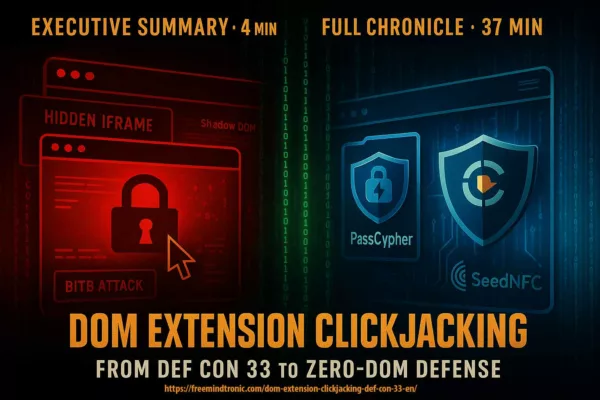
Clickjacking d’extensions DOM (DEF CON 33).
Objectius: seguretat “passwordless” resistent a l’impacte quàntic, gestor sense contrasenya 2026.

Resposta curta

Sí. L’àrab (RTL) i més de 13 idiomes estan embeguts; les traduccions funcionen totalment fora de línia (air-gapped), sense API externes.

Idiomes inclosos

العربية, English, Français, Español, Català, Deutsch, 日本語, 한국어, 简体中文, हिन्दी, Italiano, Português, Română, Русский, Українська — alineats amb el long-tail de gestor sobirà per a desplegaments multiregió (Andorra, Catalunya, Illes Balears, País Valencià, Catalunya Nord, l’Alguer).

Essencials

Sense núvol, sense servidors, sense persistència: els secrets es creen, s’usen i es destrueixen a RAM.

Com funciona

El patró de gestor només RAM i la segmentació de claus eliminen camins d’exfiltració comuns (bases de dades, sincronització, extensions). Nucli de la nostra doctrina gestor sobirà fora de línia.

Ambdós en un sol stack

És un gestor de contrasenyes sobirà fora de línia que també habilita accés sense contrasenya sense FIDO.

Com encaixa

Com a gestor, els secrets només viuen en memòria volàtil. Com a “passwordless”, prova la possessió física entre navegadors i sistemes. Cobreix intencions com millor gestor 2026 fora de línia i gestor sense núvol per a empreses.

Perspectiva operativa

Sí. És sense núvol i sense servidor per disseny, compatible amb escriptori, web i NFC d’Android.

Notes de risc

Sense broker d’identitat, sense tenant SaaS, sense capa d’extensions — coherent amb Zero Trust (verificació local, privilegi mínim). Lectures relacionades:
Debilitats persistents d’OAuth/2FA,
Ús indegut d’App Passwords per APT29.

Què pots esperar

PassCypher no certifica automàticament; facilita resultats (minimització, privilegi mínim, reducció d’impacte) mantenint els secrets locals, aïllats i efímers.

On encaixa

Alineat amb objectius de política a la UE GDPR/NIS2/DORA, EAU PDPL/DESC/IAS, UK (UK GDPR/DPA 2018/NCSC CAF), EUA (NIST SP 800-53/171, SP 800-207 Zero Trust, àmbits HIPAA/GLBA), CN (CSL/DSL/PIPL), JP (APPI), KR (PIPA), IN (DPDP).

Explicació plana

Aquí “resistent a l’impacte quàntic” vol dir resistència estructuralsegmentació i efimeritat en RAM —, no pas nous algorismes PQC.

Elecció de disseny

No substituïm primitives; limitem utilitat i vida del material perquè els fragments aïllats no tinguin valor. S’alinea amb el long-tail de seguretat sense contrasenya resistent a l’impacte quàntic.

Instantània

Evita les capes més atacades: sense WebAuthn, sense extensions de navegador, sense persistència OAuth, sense app-passwords guardades.

Per aprofundir

Lectures recomanades:
Segrest d’API WebAuthn,
DOM extension clickjacking,
Vulnerabilitat persistent d’OAuth (2FA),
APT29 i app-passwords.

Motiu en breu

Per demostrar que la seguretat sobirana, fora de línia i sense contrasenya (només RAM + segmentació) escala globalment — sense núvol ni federació.

Intenció dels premis

Respon a cerques com millor solució de ciberseguretat 2026 i millor gestor de contrasenyes 2026 fora de línia, i reforça el posicionament PassCypher finalista Intersec 2026 amb abast multilingüe (incloent àrab) per a audiències de Dubai i del GCC.

⮞ Aprofundeix — Solucions PassCypher arreu del món

Descobreix on avaluar el nostre gestor de contrasenyes sobirà fora de línia i l’autenticació sense contrasenya sense FIDO a l’EMEA. Aquests enllaços cobreixen opcions de maquinari, aplicacions només RAM i accessoris d’interoperabilitat universal.

AMG PRO (París, França)
KUBB Secure de Bleu Jour (Tolosa, França)
Fullsecure Andorra

Consell: per a enllaçat intern i captura d’intenció de cerca, referencia àncores com /passcypher/offline-password-manager/ i /passcypher/best-password-manager-2026/ quan escaigui.

Això no és un esquema PQC (post-quantum): la protecció prové de la resistència estructural — fragmentació i efimeritat en RAM — descrita com a “resistent a l’impacte quàntic” per disseny.

⮞ Visió estratègica

El reconeixement de Freemindtronic Andorra a Intersec 2026 subratlla que la sobirania és un valor tecnològic universal. En habilitar operacions sense núvol i sense servidor amb autenticació sense contrasenya sense FIDO, l’enfocament Quantum-Resistant Passwordless Manager 2026 traça un camí pragmàtic cap a un estàndard global de confiança digital — nascut a Andorra, reconegut a Dubai, rellevant a l’EMEA, les Amèriques i l’Àsia-Pacífic.
Tycoon 2FA failles OAuth persistantes dans le cloud | PassCypher HSM PGP

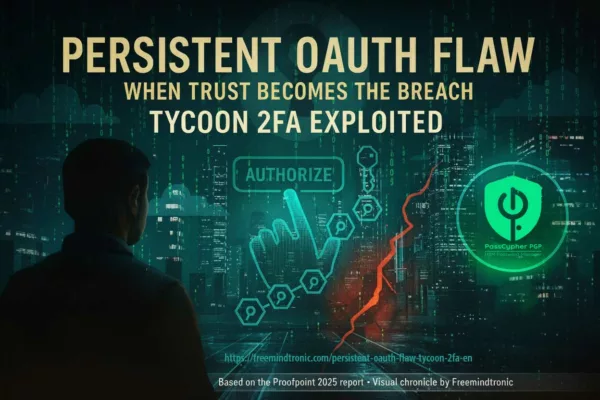
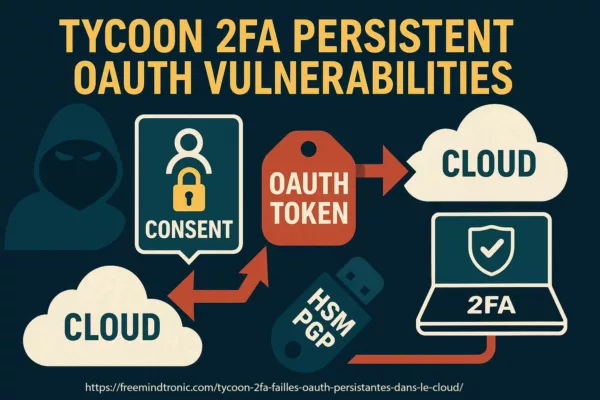
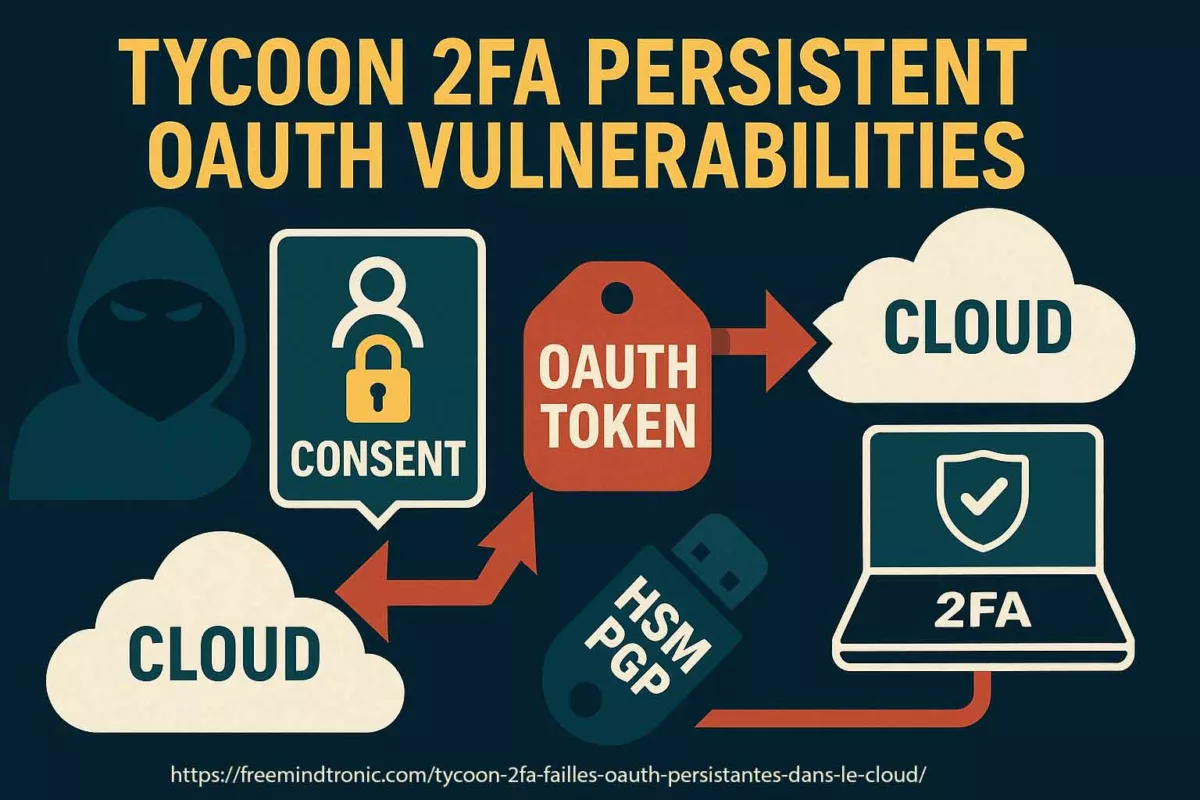
Illustration montrant la faille Tycoon 2FA failles OAuth persistantes : une application OAuth malveillante obtenant un jeton d’accès persistant malgré la double authentification, symbolisée par un cloud vulnérable et un HSM souverain bloquant l’attaque.

Faille OAuth persistante — Tycoon 2FA exploitée — Quand une simple autorisation devient un accès illimité au cloud. Cette chronique technique analyse comment une faille OAuth persistante permet à des acteurs malveillants de détourner des jetons OAuth légitimes pour contourner la MFA (authentification multifacteur) et maintenir un accès persistant au cloud. Elle expose comment Tycoon 2FA met en œuvre cette forme d’attaque OAuth persistante documentée dans le rapport Proofpoint 2025. Enfin, elle démontre comment la sécurité souveraine et l’architecture Zero-Cloud de PassCypher HSM PGP neutralisent, par conception, cette nouvelle génération de failles OAuth persistantes — un modèle de résilience souveraine contre les abus d’autorisation.

Résumé express — analyse technique Tycoon 2FA et failles OAuth persistantes

Ce premier résumé présente les fondements de la nouvelle menace identifiée par Proofpoint dans son rapport du 21 octobre 2025 : les applications OAuth malveillantes. Elles transforment un simple clic sur « Autoriser » en vecteur d’accès persistant, invisible et légitime, capable de survivre à tout changement de mot de passe ou réinitialisation MFA. Elles transforment un simple clic sur « Autoriser » en vecteur d’accès persistant — une persistance post-consentement invisible, capable de survivre à toute réinitialisation MFA.

⚙ Principe d’exploitation

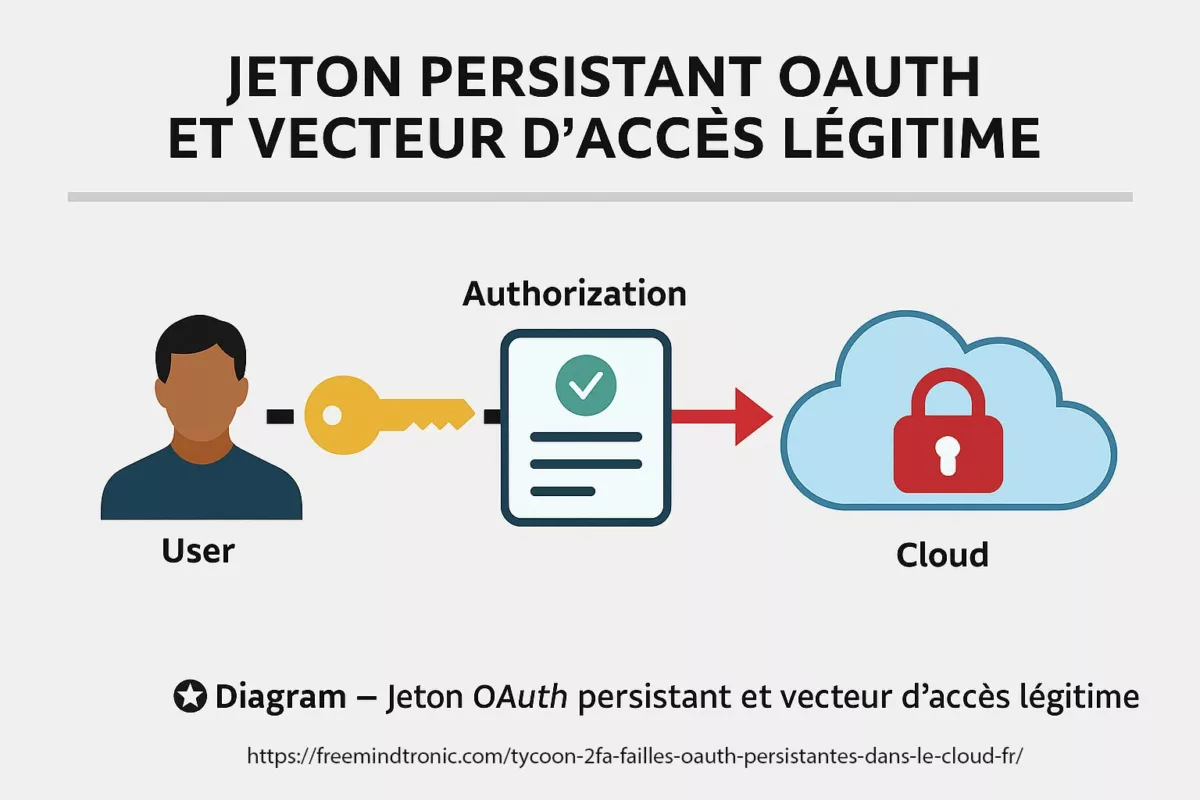
L’utilisateur clique sur “Autoriser” → le jeton est créé + → une phase dite de *persistance post-consentement* s’installe, → l’accès est enregistré côté fournisseur cloud.

L’attaquant exploite ce jeton pour interagir avec les données (mails, fichiers, calendriers) sans jamais repasser par la MFA. Même après rotation de mot de passe, l’accès reste ouvert car le jeton est considéré comme légitime.

Pourquoi c’est grave

Contrairement à une compromission technique classique, cette attaque repose sur une faille d’intention.
Le cloud ne distingue pas l’autorisation légitime d’une autorisation piégée.
La persistance devient alors comportementale — et donc invisible aux SIEM, aux journaux d’accès et aux outils EDR.

Réponse souveraine

Une architecture conceptuelle Zero Cloud comme PassCypher HSM PGP élimine la persistance OAuth à la racine :

  • Pas de jetons ni sessions stockées côté cloud
  • TOTP conditionné à l’URL et validé en environnement local
  • Suppression automatique des cookies de session après chaque usage
  • Authentification par geste physique NFC, hors canal réseau

Le résultat : aucun point d’entrée réutilisable par un jeton OAuth compromis.

Paramètres de lecture

Temps de lecture résumé express : ≈ 4 minutes
Temps de lecture résumé avancé : ≈ 6 minutes
Temps de lecture chronique complète : ≈ 38 minutes
Dernière mise à jour : 2025-10-22
Niveau de complexité : Avancé / Cybersécurité cloud & identités
Densité technique : ≈ 79 %
Langues disponibles : FR · EN
Spécificité : Analyse technique souveraine — OAuth, MFA, jetons d’accès, PassCypher HSM PGP
Ordre de lecture : Résumé → Vecteurs → Défense → Souveraineté
Accessibilité : Optimisé lecteurs d’écran – ancres & résumés inclus
Type éditorial : Chronique techniqueDigital Security
Niveau de criticité : ⚠ Critique — 8 / 10 — exploitation active observée sur Microsoft 365 / Google Workspace
Auteur : Jacques Gascuel, inventeur et fondateur de Freemindtronic Andorra.

Note éditoriale — Ce résumé est basé sur l’étude Proofpoint 2025 “Beyond Credentials” et intègre les contre-mesures souveraines conçues par Freemindtronic pour les environnements hors cloud. Il précède la chronique complète consacrée aux attaques par autorisation persistante OAuth. Ce contenu est rédigé conformément à la Déclaration de transparence IA publiée par Freemindtronic Andorra — FM-AI-2025-11-SMD5.

⮞ En résuméPassCypher HSM PGP intègre plusieurs technologies souveraines qui neutralisent les failles OAuth persistantes par conception. Ces briques cryptologiques assurent une gestion locale, segmentée et contextuelle des secrets, sans dépendance cloud ni serveur.

  • EviPass HSM PGP — Gestionnaire de mots de passe et secrets segmentés, stockés dans un conteneur chiffré AES-256 CBC, inexportable et hors cloud.
  • EviOTP HSM PGP — Générateur local de codes TOTP/HOTP à partir de phrases secrètes inexportables, avec validation sandbox URL avant toute injection.
  • EviBITB — Technologie anti-Browser-in-the-Phishing (BitP), qui détruit automatiquement les iframes de redirection malveillante.
  • Fonctionnement de PassCypher HSM PGP — Explication détaillée de l’architecture souveraine : segmentation des clés, sandbox URL, chiffrement PGP, purge mémoire, fonctionnement offline.
Diagramme des failles OAuth persistantes — Jeton persistant comme vecteur d’accès légitime vers le cloud

Résumé avancé — Tycoon 2FA failles oauth persistantes

Ce résumé avancé se lit en ≈ 6 minutes. Il détaille la mécanique d’abus des applications OAuth (consentement → jeton → persistance), le rôle de Tycoon 2FA (AiTM/PhaaS) et la réponse souveraine PassCypher HSM PGP (Zero-Cloud + contrôle comportemental).

⚙ Chaîne d’attaque Tycoon 2FA / OAuth persistante (opérationnelle)

1) Phishing de marque ⟶ invite OAuth falsifiée (SharePoint/DocuSign/Adobe) ↪
2) Clic « Autoriser » ⟶ jeton OAuth valide (scopes API) ⇢
3) Session déjà active ⟶ pas de TOTP redemandé ↦
4) Accès persistant ⟶ exfiltration mails/fichiers/calendriers ↻ (jusqu’à révocation manuelle)

Contournement TOTP dans les attaques OAuth persistantes

Scénario TOTP requis Jeton OAuth Vecteur actif
Session inactive ✅ Oui (via AiTM) ✅ Obtenu ✅ Oui
Session active ❌ Non ✅ Obtenu ✅ Oui

Exemple terrain — Tycoon 2FA et abus d’autorisations persistantes (AiTM / PhaaS)

Tycoon 2FA orchestre des pages proxifiées (AiTM) ⤴ intercepte les prompts MFA ⤵ et enchaîne vers des autorisations OAuth qui paraissent légitimes. Résultat : jeton valide + persistance + faible détection (activité “autorisée” côté console).

Cartographie synthétique des risques connexes

Vecteur Portée Mitigation prioritaire
Tycoon 2FA (App OAuth) M365 / Google Workspace Admin-consent only · Audit OAuth · HSM local
Impersonation OAuth (endpoints) SaaS / Multi-tenant Validation redirect_uri · Blocage scopes à risque
Vol de jeton (API) APIs / Intégrations Révocation proactive · Rotation · HSM
BitP / iframe hijack Navigateurs Anti-BitP · Iframe-kill · TOTP conditionné

Doctrinal insight

La sécurité ne doit pas réparer la la persistance post-consentement par révocation manuelle, mais la rendre impossible par conception.↦ Zero-Cloud + HSM PGP local : secrets et totp/signatures hors réseau, iframe-kill, purge automatique des sessions ↻, TOTP conditionné à l’URL ⇢ l’attaquant ne peut plus “prolonger” un accès.

☰ Navigation rapide

🔝 Retour en haut

2026 Crypto Currency Cryptocurrency Digital Security

Ledger Security Breaches from 2017 to 2026: How to Protect Yourself from Hackers

2026 Awards Cyberculture Digital Security Distinction Excellence EviOTP NFC HSM Technology EviPass EviPass NFC HSM technology EviPass Technology finalists PassCypher PassCypher

Quantum-Resistant Passwordless Manager — PassCypher finalist, Intersec Awards 2026 (FIDO-free, RAM-only)

2025 Cyberculture Cybersecurity Digital Security EviLink

CryptPeer messagerie P2P WebRTC : appels directs chiffrés de bout en bout

2025 Digital Security Tech Fixes Security Solutions Technical News

SSH Key PassCypher HSM PGP — Sécuriser l’accès multi-OS à un VPS

2025 Cyberculture Digital Security

Authentification multifacteur : anatomie, OTP, risques

2024 Cyberculture Digital Security

Russian Cyberattack Microsoft: An Unprecedented Threat

2021 Cyberculture Digital Security Phishing

Phishing Cyber victims caught between the hammer and the anvil

2024 Articles Digital Security News

Russian Espionage Hacking Tools Revealed

2024 Digital Security Spying Technical News

Side-Channel Attacks via HDMI and AI: An Emerging Threat

2024 Digital Security Technical News

Apple M chip vulnerability: A Breach in Data Security

2023 Digital Security Phishing

BITB Attacks: How to Avoid Phishing by iFrame

2024 Cyberculture Digital Security News Training

Andorra National Cyberattack Simulation: A Global First in Cyber Defense

Articles Digital Security EviVault Technology NFC HSM technology Technical News

EviVault NFC HSM vs Flipper Zero: The duel of an NFC HSM and a Pentester

Articles Cryptocurrency Digital Security Technical News

Securing IEO STO ICO IDO and INO: The Challenges and Solutions

Articles Cyberculture Digital Security Technical News

Protect Meta Account Identity Theft with EviPass and EviOTP

2023 Articles Cyberculture Digital Security Technical News

Strong Passwords in the Quantum Computing Era

2024 Articles Digital Security News Spying

How to protect yourself from stalkerware on any phone

2023 Articles DataShielder Digital Security Military spying News NFC HSM technology Spying

Pegasus: The cost of spying with one of the most powerful spyware in the world

2024 Articles Compagny spying Digital Security Industrial spying Military spying News Spying Zero trust

KingsPawn A Spyware Targeting Civil Society

Les chroniques ci-dessus appartiennent à la rubrique Digital Security. Elles explorent les failles cloud, les vecteurs d’accès persistants et les contre-mesures souveraines développées par Freemindtronic.
Chronique complète — Tycoon 2FA et failles OAuth persistantes

Proofpoint identifie un schéma d’abus centré sur les applications OAuth : légitimes ou imitées, elles obtiennent — via le consentement de l’utilisateur — des jetons d’accès qui permettent un accès persistant aux environnements cloud, sans dépendre des identifiants ni de la MFA. Le vecteur est comportemental : le simple clic sur « Autoriser » devient l’acte d’intrusion.

Le 21 octobre 2025, Proofpoint publie une analyse détaillée montrant comment ces applications sont instrumentalisées pour pénétrer et maintenir un accès dans Microsoft 365, Google Workspace ou Slack. Les jetons d’accès ainsi obtenus survivent aux rotations de mots de passe et aux politiques MFA, tant qu’ils ne sont pas révoqués manuellement. Le résultat est un accès « légitime » exploitable, qui se traduit par une chaîne d’attaque : persistance ↦ exploitation ↦ exfiltration.

Fonctionnement de l’attaque Tycoon 2FA — légitimité et persistance OAuth

L’attaque combine phishing (ou usurpation d’app), consent exploitation et stockage/usage de jetons. La chaîne : phishing → consentement OAuth → jeton valide → maintien de l’accès. L’ordre d’intervention utilisateur rend la tactique difficile à détecter.

Étapes opérationnelles (schéma textuel)

1. ⇢ L’attaquant prépare une application OAuth ou falsifie une invite d’autorisation (brand spoofing). ↪
2. ⇢ La victime clique sur « Autoriser » — le fournisseur délivre un jeton OAuth valide (scope limité ou étendu). ↪
3. ⇢ L’attaquant stocke et utilise le jeton pour accéder aux API (mail, drive, contacts) sans repasser par MFA. ↪
4. ⇢ Le jeton reste actif jusqu’à révocation manuelle — la fenêtre d’accès peut durer des jours à des mois. ↻

Dans de nombreux cas observés, l’interface d’administration ne signale rien d’anormal : l’activité apparaît comme « autorisée » par l’utilisateur. Par conséquent, les SIEM / EDR traditionnels manquent souvent l’indicateur initial, car la compromission n’est pas une exploitation de vulnérabilité logicielle classique mais un abus du flux d’autorisation.

Contournement du TOTP dans les failles OAuth persistantes Tycoon 2FA

Le TOTP n’est pas « cassé » cryptographiquement. Il est contourné par le contexte de session : si l’utilisateur est déjà authentifié, l’invite OAuth ne déclenche pas un second facteur, permettant l’émission d’un jeton sans TOTP. ➜ Le contournement est donc contextuel et dépend de l’état de session.

⤴ Scénarios clés :

  • Session inactive → AitM / interception → TOTP requis → possible mais exploitable. ➜ (moins courant mais possible)
  • Session active → aucune réauthentification TOTP → jeton accordé sans MFA → faille effective. ↦

Exemple d’exploitation Tycoon 2FA : faille OAuth persistante en action

Tycoon 2FA est un Phishing-as-a-Service (PhaaS) de type Adversary-in-the-Middle (AiTM), apparu en 2023 et utilisé massivement pour intercepter l’authentification multifacteur (MFA) et inciter les victimes à accorder des applications OAuth malveillantes. Actif depuis août 2023, ce service fournit aux opérateurs des pages et des flux AiTM capables d’arrêter ou de rediriger les invites MFA, d’afficher des fenêtres OAuth falsifiées et d’extraire en temps réel les jetons et sessions. Les analyses publiques documentent ses domaines, ses modèles de phishing et ses techniques d’évasion. Les campagnes récentes révèlent une focalisation sur Microsoft 365 et Gmail, rendant les environnements SaaS particulièrement vulnérables.

Vers une immunité souveraine : l’exemple PassCypher HSM PGP

Principes techniques appliqués (⇒ implémentation PassCypher) :

  • ↪ Aucune clé privée ni jeton stocké côté cloud — tout est dans le HSM local (NFC/HSM PGP).
  • ↪ TOTP / signature conditionnée à l’URL cible et validée dans un environnement confiné (anti-BitP, detection proxys AiTM).
  • ↪ Auto-destruction des iframes de redirection OAuth et filtrage des redirections non vérifiées (↩ iframe kill).
  • ↪ Suppression automatique des cookies/session terminaux après usage pour éviter toute résurgence de session (↻ purge session).

Le modèle réduit la surface d’attaque en rendant physiquement impossible l’usage d’un jeton volé hors du terminal HSM. (Cas d’usage & architecture détaillés en fin de chronique.)

Tableau comparatif — Tycoon 2FA failles OAuth persistantes et MFA

Faille / attaque Vecteur MFA contournée Persistance Défense efficace
Tycoon 2FA AiTM / App OAuth ✅ Oui ✅ Élevée Audit OAuth, HSM local, blocage consentement utilisateur
OAuth App impersonation Endpoint spoofing ✅ Oui ✅ Moyenne–Élevée Politiques admin consent, revocation proactive
Token theft (API) Jeton exposé ⚠ Partiel ✅ Variable Rotation, revocation, HSM
BitP/iframe hijack Proxy + iframe ✅ Oui ✅ Élevée Anti-BitP, iframe kill, TOTP conditionné

Pour aller plus loin : autres articles sur les failles OAuth et MFA

  • Authentification multifacteur : anatomie, OTP, risques
    Analyse typologique des niveaux d’authentification (0FA à MFA), avec un focus sur les failles comportementales OAuth et les vecteurs d’interception liés aux jetons d’accès. Ce dossier fondateur expose la base doctrinale de la souveraineté numérique appliquée à la MFA.
  • Google OAuth2 security flaw — How to protect yourself from hackers
    Étude d’une faille OAuth2 exploitée pour contourner la 2FA sur les comptes Google. L’article met en lumière les protections souveraines intégrées à PassCypher HSM PGP pour neutraliser ces abus par conception hors cloud.
  • APT29 Exploits App Passwords to Bypass 2FA
    Chronique sur les tactiques d’APT29 pour contourner la MFA via des jetons OAuth et des mots de passe d’application. Elle illustre les limites des systèmes cloud face à des attaques étatiques ciblées.
  • .NET DevExpress Framework UI Security for Web Apps 2025
    Article technique sur l’intégration sécurisée d’OAuth2, MFA et Zero Trust dans les interfaces web. Il complète la réflexion sur les architectures souveraines applicables aux environnements cloud.
  • Rubrique Digital Security
    Accédez à l’ensemble des chroniques Freemindtronic sur les menaces cloud, les détournements OAuth, et les innovations cryptologiques souveraines telles que PassCypher et DataShielder.

Implications réglementaires des failles OAuth persistantes (Tycoon 2FA)

Points pratiques RGPD / NIS2 — OAuth persistante & Tycoon 2FA :

  • RGPD : accès non autorisé → notification & responsabilité si mesures techniques/organisationnelles insuffisantes.
  • NIS2 : obligation de traçabilité et de gestion des accès, politiques de révocation et d’audit.
  • Impact contractuel : clauses SOC/ISO/SLAs pouvant imposer révocation et preuve d’investigation.

Checklist de résilience pour les DSI et RSSI

Action Objectif Urgence
Auditer les applications OAuth autorisées Identifier accès persistants 🔴 Immédiat
Activer Admin Consent Only Bloquer consentements utilisateurs 🔴 Immédiat
Déployer alertes SIEM sur grants/consents Détection précoce 🟠 Haut
Scripts de révocation proactive Réduire fenêtre d’exposition 🔴 Haut
Former utilisateurs sur « Autoriser = risque » Réduire clics de phishing 🟡 Moyen
Adopter HSM local / Zero-Cloud pour accès critiques Éliminer persistance 🟢 Stratégique


Corrélation comportementale : détecter les failles OAuth persistantes en pratique

  • Absence de challenge MFA lors de l’octroi d’un jeton OAuth à haut privilège.
  • App OAuth inconnue utilisant des scopes inhabituels (offline_access, Mail.ReadWrite, etc.).
  • Connexion API persistante malgré la rotation du mot de passe.
  • Flux d’activité “autorisée” avec absence de session interactive correspondante.

La doctrine Freemindtronic recommande de relier ces indices comportementaux à une analyse locale Zero-Cloud, ce qui permet une détection souveraine sans dépendance à une télémétrie externe.

Statistiques d’impact

  • Tycoon / AiTM : plus de 1 100 domaines observés sur une période d’analyse (2023–2024). :contentReference[oaicite:13]{index=13}
  • Campagnes d’usurpation OAuth signalées par Proofpoint durant 2025 (multinationales & secteurs ciblés). :contentReference[oaicite:14]{index=14}
  • Durée moyenne de persistance d’un jeton non révoqué : variable (jours → mois) — dépend des politiques de révocation ; observations montrent fenêtres de plusieurs semaines dans des cas réels.


Technique : configurer les terminaux pour purge automatique + authentification par geste NFC → remise à zéro de l’état de session. Effet : réduction quasi totale de la surface liée aux sessions persistantes OAuth.


Pourquoi cette approche protège contre cette faille et bien d’autres

Mécanisme Protection apportée Failles neutralisées
TOTP conditionné à l’URL Empêche génération hors contexte Tycoon, BitP
Anti-BitP / détection proxy Rejette proxys AiTM AiTM Kits
Auto-destruction iframes Bloque redirections invisibles Iframe hijack
Purge cookies + HSM reconnection Élimine sessions dormantes Jetons dormants


Signaux faibles

Au fil des derniers mois, plusieurs indices discrets mais révélateurs se sont accumulés. La multiplication des plateformes de Phishing-as-a-Service (PhaaS) en est un premier marqueur : après Tycoon 2FA, Whisper 2FA s’impose désormais parmi les acteurs dominants, confirmant l’industrialisation du modèle. Parallèlement, les kits de phishing intègrent de plus en plus de techniques anti-analyse, rendant leur détection et leur étude par les chercheurs en sécurité toujours plus complexe. Enfin, la diversification des marques usurpées, qui s’étend désormais aux secteurs industriels et non plus seulement aux géants du numérique, traduit une volonté d’élargir le spectre des victimes et d’exploiter de nouvelles verticales. Pris isolément, ces phénomènes pourraient sembler anecdotiques. Mais mis bout à bout, ils dessinent une trajectoire inquiétante : celle d’une escalade qualitative des attaques, où la sophistication technique et la variété des cibles convergent pour accroître l’impact potentiel des campagnes de phishing.

Ce que nous n’avons pas abordé volontairement

Cette chronique se concentre sur le pattern OAuth persistent access. Elle n’aborde pas en détail : exploitations supply-chain, CVE spécifiques aux bibliothèques JWT, ou mitigation réseau avancée (WAF tuning) — sujets prévus pour une note technique dédiée.

Vision stratégique

La trajectoire des menaces et des réponses possibles se dessine par étapes. À court terme, l’essor des kits Adversary-in-the-Middle (AiTM) et des plateformes de Phishing-as-a-Service ciblant les comptes SaaS impose une exigence nouvelle : automatiser la révocation des accès et renforcer la visibilité sur les consentements OAuth. À moyen terme, les organisations amorcent une transition vers des architectures hybrides, combinant HSM locaux et approches zero-cloud pour sécuriser les accès sensibles. À long terme, la maturité du secteur devrait conduire à une normalisation des pratiques : standards d’audit OAuth, journalisation obligatoire des grants, et intégration des HSM directement côté endpoints.

Dans cette perspective, Freemindtronic défend une doctrine claire : conditionner l’accès à un environnement validé localement, afin de réduire la surface d’attaque avant même la détection. Cette approche place la souveraineté et la résilience au cœur de la stratégie, en anticipant les évolutions réglementaires et techniques qui façonneront la cybersécurité de demain.


Cas d’usage souverain — PassCypher HSM PGP (Freemindtronic)

Dans le champ de la souveraineté numérique, PassCypher HSM PGP illustre une mise en œuvre concrète de résilience. Les secrets y sont isolés et chiffrés en AES‑256 CBC, grâce à des clés segmentées conservées sur un support physique sécurisé. Chaque génération de code PIN TOTP est conditionnée à l’URL d’origine, empêchant toute dérive contextuelle. En parallèle, l’outil embarqué anti‑BitP procède à la purge automatique des iframes de redirection sessionnelle, neutralisant les tentatives d’interception furtive.

Ce dispositif supprime de facto la possibilité qu’un jeton OAuth persistant soit exploité côté cloud. Il instaure une immunité comportementale totale face aux failles mises en lumière par Tycoon 2FA et autres campagnes d’abus OAuth. L’approche démontre qu’une architecture souveraine peut réduire la surface d’attaque avant même la détection, en conditionnant l’accès à une validation locale et matérielle.

Architecture (schéma conceptuel)

  • Terminal utilisateurNFCHSM PGP local — la clé privée TOTP, les clés segmentées et les secrets sont stockés dans un conteneur chiffré (AES-256 CBC). Ces éléments ne quittent jamais le périmètre matériel NFC du HSM et restent en permanence chiffrés dans le support physique.
  • Validation de contexte (sandbox / URL d’origine) — avant toute opération, le HSM vérifie localement l’URL d’origine (sandbox URL) pour autoriser la génération du code PIN TOTP et l’auto-remplissage du champ correspondant. Toute requête OAuth ou redirection ne correspondant pas à cette URL validée est automatiquement rejetée.
  • Génération locale du PIN TOTP — le HSM dérive et génère le code PIN TOTP à partir d’un seed ou d’une phrase secrète stockée chiffrée via des clés segmentées. Ce secret est inexportable : le calcul du PIN ne peut donc jamais être effectué sans HSM.
  • Iframe-kill & filtrage des redirections (anti BITB) — toutes les formes de redirection via iframe sont automatiquement détruites (auto-destruction), empêchant toute capture invisible du flux d’autorisation.
  • Sessions éphémères & purge automatique — Configurer le navigateur pour ne conserve aucun jeton persistant. Ainsi la session est strictement éphémère, et tous les cookies ou jetons sont purgés à la fermeture du navigateur web ou après usage explicite, réduisant ainsi la surface d’attaque.
  • Confirmation matérielle — l’utilisateur valide physiquement l’opération (geste NFC ou clic sur le champ PIN). La génération du PIN TOTP n’est autorisée que si l’URL d’origine et le contexte ont été validés par le HSM, rendant tout contournement distant impossible.

Effet : le seed, la phrase secrète TOTP et les clés segmentées étant confinés et chiffrés dans le HSM, toute tentative d’exploitation d’un jeton ou d’un code volé hors du terminal échoue systématiquement. La chaîne d’attaque (consentement frauduleux → jeton OAuth → persistance post-consentement) est ainsi brisée à la source, neutralisant les Tycoon 2FA failles OAuth persistantes par conception.

Clarification technique — HSM NFC vs HSM PGP

Il est essentiel de lever une ambiguïté fréquente. Les HSM NFC de PassCypher fonctionnent exclusivement en mode sans contact : dépourvus de port USB, ils valident et exécutent les opérations cryptographiques uniquement en proximité via NFC. Leur logique repose sur une interaction instantanée et locale, garantissant que chaque action est conditionnée par la présence physique du support.

À l’inverse, l’appellation HSM PGP renvoie à des supports de stockage matériels — clés USB, cartes SD, disques durs, SSD ou même CD — qui interagissent avec l’application PassCypher NFC HSM. Ces supports servent de réceptacles pour les clés segmentées et les secrets chiffrés, tout en restant dépendants de la validation NFC pour déclencher les opérations sensibles.

Dans les deux cas, la philosophie reste identique : aucune opération cryptographique n’est autorisée sans validation locale, ce qui réduit drastiquement la surface d’attaque et instaure une barrière matérielle souveraine face aux menaces cloud :

  • Containers chiffrés — les secrets (seed / phrase secrète TOTP, clés segmentées) sont stockés dans des containers chiffrés et restent chiffrés au repos. Ainsi, rien ne circule en clair hors du HSM ou du conteneur chiffré.
  • Déchiffrement en mémoire volatile — le container est déchiffré uniquement en mémoire volatile, et seulement pour la durée d’usage strictement nécessaire ; ensuite, les données sensibles sont immédiatement purgées. Par conséquent, aucune clé persistante en clair n’est écrite sur le poste ou le cloud.
  • Auto-remplissage contrôlé (HSM PGP) — l’auto-remplissage du champ PIN Code TOTP est une fonctionnalité prévue côté HSM PGP : en 2–3 clics l’utilisateur demande la génération du PIN, et le HSM effectue cette action seulement si la sandbox URL (origin / redirect_uri) est validée localement. Cela signifie que l’auto-saisie n’est possible que dans le contexte exact attendu, rendant toute réutilisation par un tiers impossible.
  • Sans port ≠ sans intégration — noter enfin que l’absence de port physique (NFC) n’empêche pas l’intégration avec le poste de travail : la communication se fait via le canal NFC ou via le mécanisme d’interface du HSM PGP; toujours est-il que la surface d’attaque est minimale car les secrets ne quittent jamais le périmètre chiffré.

⮞ En résumé

Les containers restent chiffrés en permanence, ils ne sont déchiffrés qu’en mémoire volatile pour une durée limitée, et l’auto-remplissage TOTP n’est autorisé que si le contexte (sandbox URL) est validé par le HSM — garantissant ainsi une protection opérationnelle contre le détournement de jetons et les Tycoon 2FA failles OAuth persistantes.

Ce que nous avons trouvé insuffisant dans les médias

⮞ Ce qui manque concrètement

  • Peu de médias expliquent en détail les mécanismes de persistance OAuth dans les environnements cloud.
  • Les témoignages de victimes ou d’administrateurs confrontés à ces failles restent extrêmement rares.
  • Absence de vulgarisation claire sur les IoCs et les moyens de détection accessibles au plus grand nombre.

⮞ Ce que nous proposons

  • ✔️ Une documentation bilingue, accessible et vérifiable.
  • ✔️ Des cas d’usage concrets pour les PME, collectivités et indépendants.
  • ✔️ Une typologie claire des risques, des solutions et des responsabilités.

⮞ Objectif

Replacer la victime au centre du discours et offrir des outils concrets pour comprendre, détecter et réagir.

Bibliothèque technique — Tycoon 2FA & failles OAuth persistantes

FAQ express — sécurité OAuth et Tycoon 2FA failles OAuth persistantes

Pourquoi la MFA ne suffit-elle pas ?

Le contournement comportemental de la MFA

La MFA (Multi-Factor Authentication) protège les identifiants, mais pas les décisions de consentement. Ainsi, lorsqu’un utilisateur autorise une application OAuth malveillante, cette action est considérée comme légitime. Par conséquent, Tycoon 2FA exploite ce vecteur pour créer une faille OAuth persistante sans violer la MFA.

Un flux OAuth indépendant du facteur de vérification

Le flux OAuth ne dépend pas directement de la session MFA : il repose sur le consentement utilisateur. En d’autres termes, un simple clic sur “Autoriser” suffit à générer un jeton actif, même dans un environnement protégé par 2FA.

Comment révoquer un jeton OAuth compromis ?

Procédure de révocation manuelle

Pour supprimer une application suspecte, accédez à : Azure AD → Enterprise Applications → Permissions ou Google Security Center → Applications tierces. Ensuite, cliquez sur “Révoquer”. Cela désactive immédiatement le jeton OAuth compromis.

Vers une révocation proactive

En outre, il est conseillé d’automatiser la révocation périodique via API. Ainsi, vous empêchez la persistance indéfinie de jetons OAuth et réduisez la fenêtre d’exposition face aux Tycoon 2FA failles OAuth persistantes.

Les jetons OAuth expirent-ils automatiquement ?

Une durée de vie bien plus longue qu’attendu

Contrairement à un mot de passe, un jeton OAuth ne possède pas toujours d’expiration automatique. De nombreux fournisseurs laissent les jetons actifs jusqu’à révocation manuelle. Cela crée un risque de persistance.

La persistance comportementale des accès

Cette particularité explique pourquoi les attaques de type Tycoon 2FA sont redoutables. L’attaquant conserve un accès actif tant que l’organisation ne procède pas à une révocation explicite du jeton compromis.

PassCypher HSM PGP empêche-t-il le vol de jeton ?

Protection physique et logique du secret

Oui. PassCypher HSM PGP conserve les clés d’accès dans un HSM NFC local. Aucune donnée sensible n’est stockée ni dans le cloud ni sur le terminal. Le jeton OAuth ne peut donc pas exister hors du périmètre souverain.

Neutralisation des failles OAuth persistantes

Grâce à cette approche Zero-Cloud, les Tycoon 2FA failles OAuth persistantes deviennent inopérantes. L’accès repose sur une action physique — un geste NFC — impossible à automatiser ou détourner à distance.

Quel est le lien entre Tycoon 2FA et les attaques AiTM ?

Le rôle du proxy Attacker-in-the-Middle

Tycoon 2FA s’appuie sur des proxys Attacker-in-the-Middle pour intercepter les flux d’authentification légitimes. L’utilisateur croit se connecter à un service authentique, alors que le proxy intercepte la session et injecte un flux OAuth malveillant.

Une chaîne d’attaque automatisée

Cette automatisation rend les attaques massives. En conséquence, les kits PhaaS comme Tycoon 2FA peuvent transformer un simple clic d’utilisateur en compromission durable du cloud.

Peut-on détecter une faille OAuth persistante dans un SIEM ?

Une détection partielle et souvent trompeuse

Les logs cloud enregistrent les autorisations OAuth, mais les classent comme légitimes. Ainsi, le SIEM ne déclenche pas d’alerte. En revanche, un suivi des créations d’applications OAuth non référencées peut révéler des anomalies.

Corrélation comportementale avancée

Il est donc essentiel d’ajouter des règles de corrélation comportementale : absence de TOTP lors du consentement, permissions inhabituelles, ou activité réseau persistante. Cette approche améliore la détection proactive.

Comment limiter le risque de consentement malveillant ?

Activation du mode Admin Consent Only

Activez la politique Admin Consent Only dans vos environnements Microsoft 365 ou Google Workspace. De cette manière, seules les applications validées par un administrateur peuvent être autorisées, bloquant ainsi la plupart des scénarios Tycoon 2FA.

Renforcement par audit périodique

En complément, un audit régulier des autorisations OAuth et une éducation des utilisateurs permettent de réduire la surface d’exploitation des failles OAuth persistantes.

Qu’est-ce qu’une architecture Zero-Cloud ?

Une infrastructure sans dépendance réseau

Une architecture Zero-Cloud élimine tout stockage ou traitement sensible côté cloud. Par conséquent, un jeton OAuth volé devient inutilisable. Cette philosophie est au cœur des solutions DataShielder NFC HSM et PassCypher HSM PGP.

Une doctrine souveraine appliquée

Ce modèle renforce la souveraineté comportementale : la sécurité découle de la conception même du système, non d’un correctif ultérieur.

Quelle différence entre une faille technique et une faille comportementale ?

Une faille d’intention plutôt que de code

Une faille technique découle d’un bug logiciel. À l’inverse, une faille comportementale repose sur une action humaine légitime exploitée à mauvais escient. Tycoon 2FA illustre cette dérive : l’utilisateur agit en confiance, mais crée une persistance.

La souveraineté comportementale comme réponse

En validant localement chaque action via un HSM, on supprime la possibilité de consentement piégé. Ainsi, aucune autorisation OAuth ne peut être abusée sans validation matérielle explicite.

Comment intégrer la souveraineté comportementale dans un SI ?

La sécurité par condition

Appliquer la doctrine Freemindtronic de sécurité par condition consiste à exiger une validation physique ou locale avant chaque opération critique. Cela bloque les flux OAuth externes par conception.

Un contrôle décentralisé et vérifiable

Chaque autorisation devient un événement mesurable, validé par un dispositif HSM souverain. De plus, cette approche est compatible avec les exigences RGPD, NIS2 et DORA, garantissant ainsi une conformité native.

Comment éviter les failles OAuth persistantes ?

Pour éviter les failles OAuth persistantes, il est essentiel de :

  • Ne jamais conserver de jetons OAuth au-delà de leur durée utile
  • Purger automatiquement les sessions et cookies après usage
  • Valider systématiquement l’URL d’origine avant toute autorisation
  • Utiliser un HSM local pour générer les codes TOTP, sans dépendance cloud
  • Bloquer les redirections invisibles (iframe-kill) et surveiller les flux d’autorisation
Qu’est-ce qu’un jeton OAuth persistant ?

Un jeton OAuth persistant est un jeton d’accès qui reste valide au-delà de la session initiale. Il permet à un service tiers d’accéder aux ressources d’un utilisateur sans nouvelle authentification. S’il est volé ou mal géré, il peut être utilisé comme vecteur d’attaque pour contourner la MFA et accéder illégitimement à des données sensibles.

Pourquoi PassCypher HSM PGP est-il souverain ?

PassCypher HSM PGP est souverain car :

  • Il stocke les clés et secrets localement, dans un conteneur chiffré AES-256 CBC
  • Il ne dépend d’aucune infrastructure cloud ou serveur externe
  • Il valide le contexte (sandbox URL) avant toute opération sensible
  • Il génère les codes TOTP localement, sans exportation du seed
  • Il neutralise les redirections invisibles et purge les sessions automatiquement

Cette architecture garantit que l’utilisateur reste maître de ses secrets, sans exposition à des tiers.

Glossaire technique — Tycoon 2FA failles OAuth persistantes dans le cloud

OAuth

Protocole d’autorisation normalisé (RFC 6749) permettant à une application d’accéder à des ressources cloud sans exposer le mot de passe de l’utilisateur. Cependant, lorsqu’il est mal configuré, il devient un vecteur d’attaque favorisant les failles OAuth persistantes, comme celles exploitées par Tycoon 2FA.

Tycoon 2FA

Kit Phishing-as-a-Service (PhaaS) combinant des proxys Attacker-in-the-Middle (AiTM) et des flux OAuth falsifiés. Il permet ainsi de contourner la MFA, d’obtenir des jetons OAuth valides et de créer des accès persistants au cloud. Tycoon 2FA illustre la nouvelle génération d’attaques comportementales OAuth persistantes.

Faille OAuth persistante

Vulnérabilité où un jeton OAuth reste actif même après un changement de mot de passe ou une réinitialisation MFA. En outre, cette faille permet un accès prolongé et invisible. Elle démontre que la compromission peut venir du consentement légitime plutôt que d’un exploit technique.

Jeton OAuth

Jeton d’accès généré par un fournisseur (Microsoft, Google, Slack, etc.). Il accorde temporairement des droits à une application. Néanmoins, en cas d’abus, il devient une backdoor légitime — une des causes principales des Tycoon 2FA failles OAuth persistantes.

AiTM (Attacker-in-the-Middle)

Technique consistant à intercepter les échanges entre un utilisateur et un service. En particulier, Tycoon 2FA s’en sert pour voler cookies et jetons OAuth, contournant la MFA et facilitant les attaques persistantes dans le cloud.

PhaaS (Phishing-as-a-Service)

Modèle d’attaque industrialisé. En effet, il permet à tout acteur malveillant de déployer rapidement des campagnes AiTM ou OAuth persistantes. Des plateformes comme Tycoon 2FA ou EvilProxy en sont des exemples notoires.

MFA (Multi-Factor Authentication)

Méthode d’authentification utilisant plusieurs facteurs. Toutefois, elle peut être contournée lorsque la session est déjà ouverte, rendant inefficace la vérification TOTP. C’est pourquoi les attaques OAuth persistantes représentent une menace même en environnement sécurisé.

TOTP (Time-based One-Time Password)

Code à usage unique fondé sur le temps. Bien qu’il renforce la sécurité, il est vulnérable lorsqu’il est combiné à une session active. Ainsi, dans un scénario Tycoon 2FA, un jeton OAuth peut être obtenu sans que le TOTP soit redemandé.

HSM (Hardware Security Module)

Dispositif matériel protégeant les clés cryptographiques hors ligne. Chez Freemindtronic, il constitue la base d’une architecture Zero-Cloud souveraine, empêchant tout vol de jeton OAuth et neutralisant la persistance par conception.

PGP (Pretty Good Privacy)

Protocole de chiffrement et de signature utilisé dans les solutions Freemindtronic. Par conséquent, l’intégration de PGP dans les HSM NFC permet d’assurer une authentification locale inviolable, sans dépendance au cloud.
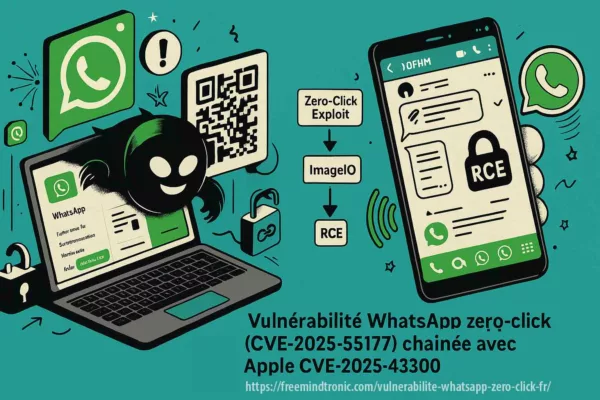

PassCypher HSM PGP

Solution souveraine de Freemindtronic qui stocke les secrets sur un HSM NFC. En outre, chaque action est validée physiquement par l’utilisateur. Ainsi, aucun jeton OAuth ne subsiste dans le cloud, éliminant de fait toute persistance.
DataShielder NFC HSM

Technologie complémentaire à PassCypher, conçue pour chiffrer et protéger les données locales. De plus, elle permet de conserver un contrôle total sur les secrets sans transmission ni stockage distant.

Souveraineté comportementale

Doctrine Freemindtronic fondée sur le principe que la sécurité ne doit pas reposer sur la détection a posteriori, mais sur la validation locale des comportements. En d’autres termes, une action non autorisée devient techniquement impossible.

Zero-Cloud Architecture

Approche qui supprime toute dépendance au cloud. Par conséquent, les attaques par jetons OAuth compromis ne peuvent s’y appliquer. Cette conception assure la résilience souveraine contre les failles OAuth persistantes.

BitP (Browser-in-the-Proxy)

Variante d’attaque où un proxy navigateur capture les sessions. Cependant, les dispositifs Freemindtronic incluent un anti-BitP matériel empêchant toute interception du flux OAuth.

Iframe hijack

Technique d’injection silencieuse d’un cadre web dans une page afin de détourner un flux OAuth. Néanmoins, le mécanisme iframe-kill intégré à PassCypher neutralise ce vecteur de manière systématique.

Admin Consent Only

Politique de sécurité Microsoft et Google imposant que seules les applications approuvées par un administrateur puissent obtenir un consentement OAuth. Ainsi, elle réduit considérablement les risques d’abus observés dans les campagnes Tycoon 2FA.

OAuth scopes

Ensemble de permissions demandées par une application OAuth. Un scope trop large augmente la surface d’exposition. Il est donc essentiel d’en limiter la portée et de vérifier leur légitimité.

Révocation proactive

Processus d’invalidation régulière des jetons OAuth afin d’éviter toute persistance. En outre, cette pratique réduit le risque de compromission comportementale et limite la durée d’exploitation d’un jeton compromis.

Zero Trust Behavioral

Extension du modèle Zero Trust appliquée aux comportements. Ainsi, chaque action est validée localement, empêchant tout usage détourné de jetons OAuth persistants ou de sessions volées.

Chronique souveraine

Format éditorial Freemindtronic associant analyse technique, doctrine de cybersécurité et souveraineté numérique. Il vise notamment à documenter des menaces telles que les Tycoon 2FA failles OAuth persistantes dans les environnements cloud modernes.


CVE-2023-32784 Protection with PassCypher NFC HSM

CVE-2023-32784 Protection with PassCypher NFC HSM and HSM PGP - Digital security solutions

CVE-2023-32784 Protection with PassCypher NFC HSM safeguards your digital secrets. It protects your secrets beyond the compromised operating system perimeter by using NFC/HSM PGP devices encrypted with AES-256 CBC. This ensures optimal protection against advanced attacks like CVE-2023-32784, where secrets stored in memory files like hiberfil.sys and pagefile.sys may be vulnerable to exfiltration. Learn how PassCypher can secure your data even in the event of a system compromise.

Executive Summary — Protect Your Digital Secrets Against CVE-2023-32784 with PassCypher

First, this executive summary (≈ 4 minutes) will provide an overview of the CVE-2023-32784 vulnerability and how PassCypher protects your secrets. Then, the advanced summary will delve into the mechanics of this vulnerability, the risks associated with hibernation and pagefile memory, and specific PassCypher solutions to counter these attacks.

⚡ Discovery and Security Mechanisms

The CVE-2023-32784 vulnerability was discovered in April 2023 and allows attackers to exfiltrate sensitive secrets stored in memory files such as hiberfil.sys and pagefile.sys. The patch to fix this vulnerability was released in May 2023 to secure these vulnerable access points and mitigate the risk of exfiltration. You can review the official patch link here: CVE Details – CVE-2023-32784.

PassCypher NFC HSM uses a Zero Trust architecture and advanced mechanisms such as segmented encryption and NFC contactless authentication to protect your secrets from these attacks. These technologies ensure that even if an attacker gains access to memory, the secrets remain protected.

Source: CVE Details – CVE-2023-32784

✦ Immediate Impacts

  • On the one hand, compromise becomes a persistent state of the terminal, not a one-time incident. Once memory artifacts are extracted, it is difficult to ensure that the system is no longer compromised.
  • On the other hand, security agents lose their ability to prove they are functioning correctly on a potentially compromised environment.
  • As a result, attribution and response become more uncertain, while the exposure window lengthens.

Source: NIST Cybersecurity Framework

⚠ Strategic Message

However, the key element is not just the vulnerability itself, but the trust logic: a compromised system, even without a known signature, can no longer guarantee reliable security. Trust in an environment where secrets are stored becomes fragile if these secrets are vulnerable to covert exfiltration through memory.

Source: NIST Special Publication 800-53: Security and Privacy Controls for Information Systems and Organizations

🛑 When Not to Act

  • First, do not reintroduce secrets (credentials, keys, sensitive data) on a terminal whose integrity has not been verified.
  • Next, do not stack layers of security software that may complicate auditing and increase the attack surface.
  • Finally, do not confuse service return with trust restoration: a quick recovery can mask persistent compromises.

✓ Sovereign Counter-Espionage Principle

Thus, reducing risk does not mean “cleaning” a compromised system but moving trust out of the compromised perimeter: off the OS, off memory, and if necessary off the network. This ensures that secrets remain protected even if the main system environment is compromised.

Reading Time Settings

Executive Summary Reading Time: ≈ 4 minutes
Advanced Summary Reading Time: ≈ 6 minutes
Full Chronicle Reading Time: ≈ 35–40 minutes
Publication Date: 2023-05-10
Last Updated: 2026-01-23
Complexity Level: Advanced — Cybersecurity & Digital Sovereignty
Technical Density: ≈ 65%
Primary Language: EN. FR.
Specificity: Strategic Chronicle — CVE-2023-32784 Vulnerability & Secrets Protection
Reading Order: Executive Summary → Advanced Summary → Zero-Day Exploits → PassCypher Solutions → Residual Risks

Editorial Note

This chronicle is part of the Digital Security section. It extends the analysis of zero-day vulnerabilities and the implications of losing secrets through memory, exploring how PassCypher positions itself as a robust solution against this type of compromise. It does not offer a miracle solution but an alternative security framework, based on sovereign points of failure. This chronicle follows the AI transparency statement of Freemindtronic Andorra — FM-AI-2025-11-SMD5.

Illustration showing the CVE-2023-32784 vulnerability and memory exfiltration risks, including hiberfil.sys, pagefile.sys, and RAM.

For Further Reading

Then, the Advanced Summary delves into the management of the CVE-2023-32784 vulnerability and the implications of advanced digital security.

Enhancing Crypto Wallet Security: How EviSeed and EviVault Could Have Prevented the $41M Crypto Heist

EviSeed and EviVault NFC HSM Technologies could have prevented the $41 million crypto theft by [...]

Strong Passwords in the Quantum Computing Era

How to create strong passwords in the era of quantum computing? Quantum computing is a [...]

2 Comments

Kevin Mitnick’s Password Hacking with Hashtopolis

Password hacking tool: how it works and how to protect yourself Password hacking is a [...]

Chrome V8 confusion RCE — Your browser was already spying

Chrome v8 confusion RCE: This edition addresses impacts and guidance relevant to major English-speaking markets [...]

2 Comments

What is Juice Jacking and How to Avoid It?

Juice Jacking: How to Avoid This Cyberattack Do you often use public USB chargers to [...]

Sovereign SSH Authentication with PassCypher HSM PGP — Zero Key in Clear

SSH Key PassCypher HSM PGP establishes a sovereign SSH authentication chain for zero-trust infrastructures, where [...]

1 Comment

Protect yourself from Pegasus spyware with EviCypher NFC HSM

How to protect yourself from Pegasus spyware with EviCypher NFC HSM Pegasus Spyware: what it [...]

ViperSoftX How to avoid the malware that steals your passwords

ViperSoftX: The Malware that Steals Your Cryptocurrencies and Passwords ViperSoftX is a malware that steals [...]

1 Comment

Espionnage invisible WhatsApp : quand le piratage ne laisse aucune trace

Espionnage invisible WhatsApp n’est plus une hypothèse marginale, mais une réalité technique rendue possible par [...]

EviVault NFC HSM vs Flipper Zero: The duel of an NFC HSM and a Pentester

EviVault NFC HSM vs Flipper Zero: The duel of an NFC HSM and a Pentester [...]

Ledger Security Breaches from 2017 to 2026: How to Protect Yourself from Hackers

Ledger Security Breaches have become a major indicator of vulnerabilities in the global crypto ecosystem. [...]

4 Comments

Cyberattaque HubEE : Rupture silencieuse de la confiance numérique

Cyberattaque HubEE : rupture silencieuse de la confiance numérique. Cette attaque, qui a permis l’exfiltration [...]

Ivanti Zero-Day Flaws: Comprehensive Guide to Secure Your Systems Now

What are Zero-Day Flaws and Why are They Dangerous? A zero-day flaw is a previously [...]

How to protect yourself from stalkerware on any phone

What is Stalkerware and Why is it Dangerous? Stalkerware, including known programs like FlexiSpy, mSpy, [...]

How BIP39 helps you create and restore your Bitcoin wallets

How BIP39 helps you create and restore your Bitcoin wallets Do you struggle to manage [...]

Europol Data Breach: A Detailed Analysis

May 2024: Europol Security Breach Highlights Vulnerabilities In May 2024, Europol, the European law enforcement [...]

Quantum computer 6100 qubits ⮞ Historic 2025 breakthrough

A 6,100-qubit quantum computer marks a turning point in the history of computing, raising unprecedented [...]

1 Comment

KingsPawn A Spyware Targeting Civil Society

  QuaDream: KingsPawn spyware vendor shutting down in may 2023 QuaDream was a company that [...]

Google OAuth2 security flaw: How to Protect Yourself from Hackers

Google OAuth2 security flaw: Strategies Against Persistent Cookie Threats in Online Services Google OAuth2 security [...]

How the attack against Microsoft Exchange on December 13, 2023 exposed thousands of email accounts

How the attack against Microsoft Exchange on December 13, 2023 exposed thousands of email accounts [...]

1 Comment

Pegasus: The cost of spying with one of the most powerful spyware in the world

Pegasus: The Cost of Spying with the Most Powerful Spyware in the World Pegasus is [...]

Confidentialité métadonnées e-mail — Risques, lois européennes et contre-mesures souveraines

La confidentialité des métadonnées e-mail est au cœur de la souveraineté numérique en Europe : [...]

1 Comment

TETRA Security Vulnerabilities: How to Protect Critical Infrastructures

TETRA Security Vulnerabilities: How to Protect Critical Infrastructures from Cyberattacks TETRA (Terrestrial Trunked Radio) is [...]

Android Spyware Threat Clayrat : 2025 Analysis and Exposure

Android Spyware Threat: ClayRat illustrates the new face of cyber-espionage — no exploits needed, just [...]

1 Comment

CVE-2023-32784 Protection with PassCypher NFC HSM

CVE-2023-32784 Protection with PassCypher NFC HSM safeguards your digital secrets. It protects your secrets beyond [...]

RockYou2024: 10 Billion Reasons to Use Free PassCypher

RockYou2024: A Cybersecurity Earthquake The RockYou2024 data leak has shaken the very foundations of global [...]

Kapeka Malware: Comprehensive Analysis of the Russian Cyber Espionage Tool

Kapeka Malware: The New Russian Intelligence Threat   In the complex world of cybersecurity, a [...]

Bot Telegram Usersbox : l’illusion du contrôle russe

Le bot Telegram Usersbox n’était pas un simple outil d’OSINT « pratique » pour curieux [...]

Snake Malware: The Russian Spy Tool

Snake: The Russian malware that steals sensitive information for 20 years Snake is a malware [...]

Browser Fingerprinting Tracking: Metadata Surveillance in 2026

Browser Fingerprinting Tracking today represents one of the true cores of metadata intelligence. Far beyond [...]

2 Comments

Zero-knowledge governance 2026: cryptographic floors

Zero-knowledge gouvernance 2026 : l’expression ne décrit plus seulement une confidentialité “sans clé côté fournisseur”. [...]

Microsoft Outlook Zero-Click Vulnerability: Secure Your Data Now

Microsoft Outlook Zero-Click Vulnerability: How to Protect Your Data Now A critical Zero-Click vulnerability (CVE-2025-21298) [...]

Passkeys Faille Interception WebAuthn | DEF CON 33 & PassCypher

Conseil RSSI / CISO – Protection universelle & souveraine EviBITB (Embedded Browser‑In‑The‑Browser Protection) est une [...]

3 Comments

Russia Blocks WhatsApp: Max and the Sovereign Internet

Step by step, Russia blocks WhatsApp and now openly threatens to “completely block” the messaging [...]

2 Comments

How to Recover and Protect Your SMS on Android

Recover and Protect Your SMS on Android: A Complete Guide First of all, SMS are [...]

CVE-2023-32784 : Pourquoi PassCypher protège vos secrets

PassCypher HSM protège les secrets numériques. Il protège vos secrets numériques hors du périmètre du [...]

1 Comment

Chrome V8 confusió RCE — Actualitza i postura Zero-DOM

Chrome V8 confusió RCE: aquesta edició exposa l’impacte global i les mesures immediates per reduir [...]

Midnight Blizzard Cyberattack Against Microsoft and HPE: What are the consequences?

Midnight Blizzard Cyberattack against Microsoft and HPE: A detailed analysis of the facts, the impacts [...]

2 Comments

DOM Extension Clickjacking — Risks, DEF CON 33 & Zero-DOM fixes

DOM extension clickjacking — a technical chronicle of DEF CON 33 demonstrations, their impact, and [...]

5 Comments

APT29 Spear-Phishing Europe: Stealthy Russian Espionage

APT29 SpearPhishing Europe: A Stealthy LongTerm Threat APT29 spearphishing Europe campaigns highlight a persistent and [...]

3 Comments

Clickjacking extensions DOM: Vulnerabilitat crítica a DEF CON 33

DOM extension clickjacking — el clickjacking d’extensions basat en DOM, mitjançant iframes invisibles, manipulacions del [...]

4 Comments

BadPilot Cyber Attacks: Russia’s Threat to Critical Infrastructures

BadPilot Cyber Attacks: Sandworm’s New Weaponized Subgroup Understanding the rise of BadPilot and its impact [...]

Predator Files: The Spyware Scandal That Shook the World

Predator Files: How a Spyware Consortium Targeted Civil Society, Politicians and Officials Cytrox: The maker [...]

OpenVPN Security Vulnerabilities Pose Global Security Risks

Critical OpenVPN Vulnerabilities Pose Global Security Risks OpenVPN security vulnerabilities have come to the forefront, [...]

WhatsApp Gold arnaque mobile : typologie d’un faux APK espion

WhatsApp Gold arnaque mobile — clone frauduleux d’application mobile, ce stratagème repose sur une usurpation [...]

APT44 QR Code Phishing: New Cyber Espionage Tactics

APT44 Sandworm: The Elite Russian Cyber Espionage Unit Unmasking Sandworm’s sophisticated cyber espionage strategies and [...]

1 Comment

Protect US emails from Chinese hackers with EviCypher NFC HSM?

How EviCypher NFC HSM technology can protect emails from Chinese hackers The Chinese hack on [...]

Persistent OAuth Flaw: How Tycoon 2FA Hijacks Cloud Access

Persistent OAuth Flaw — Tycoon 2FA Exploited — When a single consent becomes unlimited cloud [...]

1 Comment

Zero-Knowledge Downgrade Attacks — Structural Risks

Zero-Knowledge Downgrade Attacks: downgrade paths against Bitwarden, LastPass, and Dashlane show how cryptographic backward compatibility [...]

Spyware ClayRat Android : faux WhatsApp espion mobile

Spyware ClayRat Android illustre la mutation du cyberespionnage : plus besoin de failles, il exploite [...]

2 Comments

BitLocker Security: Safeguarding Against Cyberattacks

Introduction to BitLocker Security If you use a Windows computer for data storage or processing, [...]

1 Comment

Google Sheets Malware: The Voldemort Threat

Sheets Malware: A Growing Cybersecurity Concern Google Sheets, a widely used collaboration tool, has shockingly [...]

Terrapin attack: How to Protect Yourself from this New Threat to SSH Security

Protect Yourself from the Terrapin Attack: Shield Your SSH Security with Proven Strategies SSH is [...]

eSIM Sovereignty Failure: Certified Mobile Identity at Risk

  Runtime Threats in Certified eSIMs: Four Strategic Blind Spots While geopolitical campaigns exploit the [...]

Cyber espionnage zero day : marché, limites et doctrine souveraine

Cyber espionnage zero day : la fin des spywares visibles marque l’entrée dans une économie [...]

Brute Force Attacks: What They Are and How to Protect Yourself

Brute-force Attacks: A Comprehensive Guide to Understand and Prevent Them Brute Force: danger and protection [...]

APT29 Exploits App Passwords to Bypass 2FA

A silent cyberweapon undermining digital trust Two-factor authentication (2FA) was supposed to be the cybersecurity [...]

Vulnérabilité WhatsApp Zero-Click — Actions & Contremesures

Vulnérabilité WhatsApp zero-click (CVE-2025-55177) chaînée avec Apple CVE-2025-43300 permet l’exécution de code à distance via [...]

1 Comment

Ordinateur quantique 6100 qubits ⮞ La percée historique 2025

Ordinateur quantique 6100 qubits marque un tournant dans l’histoire de l’informatique, soulevant des défis sans [...]

Are fingerprint systems really secure? How to protect your data and identity against BrutePrint

Fingerprint Biometrics: An In-Depth Exploration of Security Mechanisms and Vulnerabilities It is a widely recognized [...]

Failles de sécurité Ledger : Analyse 2017-2026 & Protections

Les failles de sécurité Ledger sont au cœur des préoccupations des investisseurs depuis 2017. Cette [...]

1 Comment

Chrome V8 Zero-Day CVE-2025-10585 — Ton navigateur était déjà espionné ?

Chrome V8 zero-day CVE-2025-10585 — Votre navigateur n’était pas vulnérable. Vous étiez déjà espionné !

2 Comments

CryptPeer messagerie P2P WebRTC : appels directs chiffrés de bout en bout

La messagerie P2P WebRTC sécurisée constitue le fondement technique et souverain de la communication directe [...]

2 Comments

Protect Meta Account Identity Theft with EviPass and EviOTP

Protecting Your Meta Account from Identity Theft Meta is a family of products that includes [...]

Missatgeria P2P WebRTC segura — comunicació directa amb CryptPeer

Missatgeria P2P WebRTC segura al navegador és l’esquelet tècnic i sobirà de la comunicació directa [...]

1 Comment

Salt Typhoon & Flax Typhoon: Cyber Espionage Threats Targeting Government Agencies

Salt Typhoon – The Cyber Threat Targeting Government Agencies Salt Typhoon and Flax Typhoon represent [...]

2 Comments

Tycoon 2FA failles OAuth persistantes dans le cloud | PassCypher HSM PGP

Faille OAuth persistante — Tycoon 2FA exploitée — Quand une simple autorisation devient un accès [...]

2 Comments

Email Metadata Privacy: EU Laws & DataShielder

Email metadata privacy sits at the core of Europe’s digital sovereignty: understand the risks, the [...]

2 Comments

Securing IEO STO ICO IDO and INO: The Challenges and Solutions

Securing IEO STO ICO IDO and INO: How to Protect Your Crypto Investments Cryptocurrencies are [...]

Side-Channel Attacks via HDMI and AI: An Emerging Threat

Understanding the Impact and Evolution of Side-Channel Attacks in Modern Cybersecurity Side-channel attacks, also known [...]

Microsoft Vulnerabilities 2025: 159 Flaws Fixed in Record Update

Microsoft: 159 Vulnerabilities Fixed in 2025 Microsoft has released a record-breaking security update in January [...]

Signal Clone Breached: Critical Flaws in TeleMessage

TeleMessage: A Breach That Exposed Cloud Trust and National Security Risks TeleMessage, marketed as a [...]

1 Comment

Andorra National Cyberattack Simulation: A Global First in Cyber Defense

Andorra Cybersecurity Simulation: A Vanguard of Digital Defense Andorra-la-Vieille, April 15, 2024 – Andorra is [...]

Reputation Cyberattacks in Hybrid Conflicts — Anatomy of an Invisible Cyberwar

Synchronized APT leaks erode trust in tech, alliances, and legitimacy through narrative attacks timed with [...]

Remote activation of phones by the police: an analysis of its technical, legal and social aspects

What is the new bill on justice and why is it raising concerns about privacy? [...]

EviCore NFC HSM Credit Cards Manager | Secure Your Standard and Contactless Credit Cards

EviCore NFC HSM Credit Cards Manager is a powerful solution designed to secure and manage [...]

Kismet iPhone: How to protect your device from the most sophisticated spying attack?

Kismet iPhone: How to protect your device from the most sophisticated spying attack using Pegasus [...]

Apple M chip vulnerability: A Breach in Data Security

Apple M chip vulnerability: uncovering a breach in data security Researchers at the Massachusetts Institute [...]

Authentification multifacteur : anatomie, OTP, risques

Authentification Multifacteur : Anatomie souveraine Explorez les fondements de l’authentification numérique à travers une typologie [...]

APT28 spear-phishing: Outlook backdoor NotDoor and evolving European cyber threats

Russian cyberattack on Microsoft by Midnight Blizzard (APT29) highlights the strategic risks to digital sovereignty. [...]

3 Comments

Russian Cyberattack Microsoft: An Unprecedented Threat

Russian cyberattack on Microsoft by Midnight Blizzard (APT29) highlights the strategic risks to digital sovereignty. [...]

1 Comment

APT36 SpearPhishing India: Targeted Cyberespionage | Security

Understanding Targeted Attacks of APT36 SpearPhishing India APT36 cyberespionage campaigns against India represent a focused [...]

2 Comments

Quantum-Resistant Passwordless Manager — PassCypher finalist, Intersec Awards 2026 (FIDO-free, RAM-only)

Quantum-Resistant Passwordless Manager 2026 (QRPM) — Best Cybersecurity Solution Finalist by PassCypher sets a new [...]

4 Comments

5Ghoul: 5G NR Attacks on Mobile Devices

5Ghoul: How Contactless Encryption Can Secure Your 5G Communications from Modem Attacks 5Ghoul is a [...]

1 Comment

Fuite données ministère interieur : messageries compromises et ligne rouge souveraine

Fuite données ministère intérieur. L’information n’est pas arrivée par une fuite anonyme ni par un [...]

Dropbox Security Breach 2024: Phishing, Exploited Vulnerabilities

Phishing Tactics: The Bait and Switch in the Aftermath of the Dropbox Security Breach The [...]

Phishing Cyber victims caught between the hammer and the anvil

Phishing is a fraudulent technique that aims to deceive internet users and to steal their [...]

WhatsApp Hacking: Prevention and Solutions

WhatsApp hacking zero-click exploit (CVE-2025-55177) chained with Apple CVE-2025-43300 enables remote code execution via crafted [...]

6 Comments

Cyberattack Exploits Backdoors: What You Need to Know

Cyberattack Exploits Backdoors: What You Need to Know In October 2024, a cyberattack exploited backdoors [...]

Google Workspace Vulnerability Exposes User Accounts to Hackers

How Hackers Exploited the Google Workspace Vulnerability Hackers found a way to bypass the email [...]

Générateur de mots de passe souverain – PassCypher Secure Passgen WP

Générateur de mots de passe souverain PassCypher Secure Passgen WP pour WordPress — le premier [...]

Russian Espionage Hacking Tools Revealed

Russian Espionage Hacking Tools: Discovery and Initial Findings Russian espionage hacking tools were uncovered by [...]

Darknet Credentials Breach 2025 – 16+ Billion Identities Stolen

Underground Market: The New Gold Rush for Stolen Identities The massive leak of over 16 [...]

The chronicles displayed above ↑ belong to the Digital Security section. They extend the analysis of zero-day vulnerabilities and systemic risks in cybersecurity. Therefore, they provide a strategic perspective on reducing risks regarding digital secrets and the importance of “sovereign points of failure.”

Advanced Summary — Understanding the CVE-2023-32784 Vulnerability

⮞ Reading Note

First, this advanced summary provides a detailed analysis of the CVE-2023-32784 vulnerability, its technical implications, and the risks of secret exfiltration through memory artifacts like hiberfil.sys and pagefile.sys. Then, the full chronicle will offer practical strategies to minimize the impact of this vulnerability, including robust security solutions like PassCypher.

Exploitation of CVE-2023-32784 — Zero-Day Attack on Digital Secrets

First, it is crucial to understand how the CVE-2023-32784 vulnerability can be exploited. This flaw allows an attacker to access digital secrets stored in sensitive memory files such as hiberfil.sys and pagefile.sys. These files may contain critical information such as passwords, encryption keys, and other user secrets. Indeed, attackers can use this vulnerability to exfiltrate data without leaving visible traces, making the attack difficult to detect until sensitive information has already been compromised.

Memory Dump and Pagefile Vulnerabilities

Hibernation and pagefile files are essential components for managing system resources in Windows environments. However, these files can become prime targets for attackers, as they contain portions of system memory, which may include unencrypted secrets. Indeed, when sensitive information is present in memory, it is often written to these files without any form of protection, making them vulnerable to unauthorized access. Once this vulnerability is exploited, an attacker can extract these secrets and use them for malicious purposes, such as credential theft or unauthorized access to secure systems.

Hiberfil and Sensitive Data Exfiltration

Another major attack vector is the exfiltration of secrets stored in the hiberfil.sys file. This file, used for managing hibernation states, contains a full copy of the RAM contents. As a result, if an attacker gains access to this file, they can easily extract sensitive data. However, using security solutions like PassCypher allows these sensitive memory files to be encrypted, preventing data exfiltration in case of a compromise.

Protect Your Secrets: PassCypher NFC HSM

PassCypher NFC HSM protects your digital secrets by storing them outside the compromised operating system, using segmented encryption and contactless NFC authentication. These mechanisms provide maximum protection against attacks like CVE-2023-32784, which exploit vulnerabilities in sensitive memory files like hiberfil.sys and pagefile.sys. Thanks to these technologies, even if the operating system is compromised, your secrets remain protected. Therefore, this solution offers an additional layer of protection, mitigating risks associated with zero-day attacks while enabling data security management at both the physical and network levels, outside the compromised OS perimeter.

Strategic Recommendations for Managing CVE-2023-32784

Businesses and users should implement multi-layered defense strategies to counter the risks associated with this vulnerability. Here are some strategic recommendations:

  • Encrypt hibernation and pagefile files: This prevents unauthorized access to sensitive information stored in system memory.
  • Use advanced protection solutions: Such as PassCypher, which protects your secrets even outside the operating system.
  • Monitor access to sensitive memory files: Implement continuous monitoring of hibernation and pagefile files to detect any unauthorized access attempts.
  • Review secure storage mechanisms: Use secure storage solutions outside the system perimeter for sensitive data, such as NFC physical keys or encrypted storage devices.

In summary, protecting sensitive secrets in a digital environment is becoming a priority as vulnerabilities like CVE-2023-32784 are discovered and exploited. PassCypher stands as an effective defense solution, but it is essential to maintain a proactive security approach by applying preventive measures and integrating robust tools into your system security architecture.

The full chronicle will detail the long-term implications of this vulnerability and how solutions like PassCypher help secure systems in an ever-evolving digital landscape.

Full Chronicle — Understanding and Countering CVE-2023-32784

First, this full chronicle explores in-depth the CVE-2023-32784 vulnerability and its impacts on digital security. Then, we will examine the mechanics of this flaw and best practices for preventing it. You will also discover how solutions like PassCypher can protect you.

Analysis of CVE-2023-32784: A Critical Flaw in Memory Management

The CVE-2023-32784 vulnerability is related to a flaw in the memory management of computer systems. Memory artifacts, such as hibernation files (hiberfil.sys) and pagefile files (pagefile.sys), can contain sensitive information. These files, used to improve system performance, become prime targets for attackers.

Indeed, these files can store secrets such as credentials, encryption keys, and other sensitive data. Once extracted, these data can be used for malicious attacks. This poses a major risk to business confidentiality.

Yes: Memory-Related Flaws Are Still a Concern

Vulnerabilities exposing digital secrets in memory — whether in:

  • the hibernation file (hiberfil.sys),
  • the pagefile (pagefile.sys),
  • or even active RAM memory

continue to be a real concern in 2025–2026.

This is due to the fundamental nature of computing: in order to run programs, sensitive data must sometimes temporarily reside in RAM, including keys, passwords, or authentication tokens. It’s an inherent risk, not a one-time unique vulnerability.

How These Types of Flaws Manifest Today

Memory Exfiltration

This is an attack type where an attacker accesses memory or system artifacts to extract secrets. This type of attack can occur via:

  • Memory dump (complete RAM extraction)
  • Access to swap/pagefile files
  • Accessible debugging
  • High-privilege malware
  • Zero-day exploits in the OS or drivers

Even if a patch fixes a specific vulnerability, another memory vector could be exploited as long as sensitive data is passing through memory unencrypted.

Wider Zero-Day Flaws

Every year, new zero-day vulnerabilities are discovered. Some allow an attacker to read memory or intercept unencrypted secrets — independent of hibernation/pagefile files. For example:

  • Flaws in the OS kernel
  • Flaws in system drivers
  • Flaws in virtualization tools
  • Flaws in memory managers

The ease of execution varies, but the potential impact remains: exfiltration of sensitive memory data.

Memory Leaks in Applications

Many applications, especially those handling secrets and keys, still have:

  • un cleaned buffers
  • uncleared memory allocations
  • clear-text sensitive strings left in RAM

Even modern products can present this type of risk if memory access is not strictly managed.

Evolution of Mitigation Measures in 2025–2026

Vendors have continued to improve protections:

  • Enhanced memory encryption
  • Windows uses Virtual Secure Mode,
  • Linux integrates distributions with strengthened protections (SELinux, AppArmor),
  • and macOS has memory write protections (AMFI).

However, no measure fully eliminates unencrypted memory as long as secrets are passing through it unencrypted.

Modern Mitigation Features

Mitigation Purpose
Memory encryption (TPM/SEV/SME) Hardware memory encryption
ASLR / CFG / DEP Application exploitation mitigation
Credential Guard (Windows) Isolation of secrets in a protected container
Kernel hardening Reducing exploitation vectors

These technologies reduce risks but do not eliminate them completely.

Recent Examples (2024–2026)

Although no flaw is exactly like CVE-2023-32784, several recent vulnerabilities have shown that:

  • secrets could be extracted through memory attacks
  • sensitive keys could be retrieved if they were stored unprotected in RAM.

For example, in the 2024–2025 years, there were:

  • Vulnerabilities in hypervisors allowing access to VM memory
  • Exploits in container tools leaving secrets in memory
  • Security failures in some antivirus or diagnostic tools exposing memory

These vulnerabilities are often classified as CVE with varying severity but a similar consequence: sensitive data in memory exposed.

Lessons and Sustainable Best Practices

What still causes risks today:

  • Programs storing secrets in clear text
  • Accessible memory dumps to attackers
  • Improperly isolated processes
  • Inadequate privileges

Source for Evolution of Memory Flaws:

PassCypher: A Solution to Protect Your Digital Secrets

To counter this vulnerability, PassCypher provides high-quality protection. PassCypher uses segmented encryption and segmented key authentication to secure your digital secrets. This ensures that, even if an attacker accesses memory, the data remains protected.

Furthermore, PassCypher allows you to store your keys and secrets outside the compromised operating system. This added security limits the impact of a compromise. As a result, you can keep your sensitive information secure against zero-day attacks.

Risks of System Memory Compromise with CVE-2023-32784

Exploiting CVE-2023-32784 has significant consequences. The main impact lies in the compromise of software trust. Once an attacker gains access to memory artifacts, they can modify or exfiltrate sensitive data without leaving traces.

Therefore, compromise becomes a persistent state. The integrity of the system is then questioned, making detection and repair tasks more difficult. Traditional security mechanisms are no longer sufficient against such threats.

Sovereign Counter-Espionage Strategy: Trust Beyond the OS

The effective solution to these threats relies on the principle of “sovereign counter-espionage.” This principle involves moving trust outside the compromised perimeter: off the OS, off memory, and even off the network. Thus, even in the event of terminal compromise, your secrets remain protected.

Therefore, PassCypher plays a crucial role in ensuring the security of your sensitive data. It protects your critical information even when the OS is compromised. This minimizes the risk of exfiltration and ensures the digital sovereignty of your systems.

Strategic Recommendations for Businesses

Here are some practical recommendations for businesses and users to protect against CVE-2023-32784:

  • Encrypt all sensitive information: Use robust solutions to protect secrets in memory and system files.
  • Apply multi-layered security: Combine physical and logical strategies to strengthen the protection of digital secrets.
  • Opt for secure storage: Protect your secrets with devices like PassCypher NFC, stored outside the compromised system.
  • Monitor sensitive files: Implement continuous monitoring of files like hiberfil.sys and pagefile.sys to detect unauthorized access attempts.
  • Train your teams: Educate your teams on secrets security and proactive management of zero-day attacks.

Resilience and Defense Against Zero-Day Attacks

In the face of zero-day attacks, it is essential to strengthen system resilience. Protection is not limited to known flaws but also includes preparation for unknown threats. A proactive security approach is critical, integrating advanced tools like encryption and secret management outside the OS perimeter.

In summary, a multi-layered and proactive defense is paramount to defend against complex and persistent attacks.

Now, explore the next section on CVE Detection Solutions, where we will detail advanced strategies for detecting vulnerabilities and zero-day attacks to strengthen the resilience of your systems.

Digital Sovereignty in the Face of Zero-Day Attacks

Digital sovereignty is a key issue in managing the risks associated with zero-day attacks. Businesses and governments must be capable of protecting their critical infrastructures from invisible intrusions. Implementing solutions like PassCypher, which provides protection beyond the operating system perimeter, ensures the confidentiality and security of sensitive data, even against vulnerabilities yet to be discovered.

The adoption of technologies that guarantee digital sovereignty is essential to limit exposure to international cyber threats. Source: The Role of Digital Sovereignty in Cybersecurity

Reducing Risks: Securing Digital Secrets

Facing vulnerabilities like “memory exfiltration,” it is crucial to protect digital secrets through advanced security solutions. PassCypher NFC HSM offers a robust solution for secure storage of sensitive data outside the operating system perimeter, ensuring that even in the event of system compromise, secrets remain protected using enhanced security mechanisms like AES-256 CBC encryption and key segmentation.


CVE Vulnerability Detection Solutions

Detecting CVE flaws like CVE-2023-32784 requires the use of advanced solutions to spot exploitation attempts before they lead to a compromise. Real-time detection solutions should be integrated to monitor the integrity of sensitive memory files and quickly identify unauthorized access attempts.

Additionally, behavior analysis tools can be used to detect suspicious activities on system files, such as hiberfil.sys and pagefile.sys, to interrupt attacks before they cause damage.

Advanced Threat Analysis: CVE and Zero-Day Attacks

Zero-day attacks, such as those exploiting CVE-2023-32784, are particularly difficult to detect as they use vulnerabilities that are unknown to software vendors. These attacks often target flaws in critical system components, such as memory management, to steal sensitive information without triggering alerts.

Therefore, advanced threat analysis is crucial to strengthen systems’ resilience against these attacks. Using behavior detection and threat analysis tools helps identify indicators of compromise before an attack can successfully exfiltrate sensitive data.

The Zero Trust Approach and Secret Protection

The Zero Trust model is based on the fundamental principle that no user or device, internal or external, should be implicitly trusted. Every access attempt, whether from an internal user or an external system, must be verified. By applying this model, companies can limit access to digital secrets, ensuring that no sensitive data is accessible by compromised systems.

Strategic Security Recommendations

In the face of CVE-2023-32784 vulnerability, it is essential to implement robust security measures and adopt a multi-layered defense strategy. Here are some practical recommendations:

  • Encrypt hibernation and pagefile files: This prevents unauthorized access to sensitive information stored in system memory.
  • Use advanced protection solutions: Such as PassCypher, which protects your secrets even outside the operating system.
  • Monitor access to sensitive memory files: Implement continuous monitoring of hibernation and pagefile files to detect any unauthorized access attempts.
  • Review secure storage mechanisms: Use secure storage solutions outside the system perimeter for sensitive data, such as NFC physical keys or encrypted storage devices.

Multi-Layer Defense: Understanding Resilience with PassCypher NFC HSM

To strengthen system resilience against zero-day vulnerabilities, a multi-layered approach is essential. PassCypher NFC HSM offers robust protection with encryption of sensitive memory files, off-OS storage, and proactive monitoring of sensitive system files like hiberfil.sys and pagefile.sys.

PassCypher HSM PGP: Advanced Protection Against Secrets Exfiltration (CVE-2023-32784)

PassCypher HSM PGP is an advanced, fully automated password management solution designed to protect your digital secrets even in the event of system compromise. Using AES-256 CBC PGP encryption, PassCypher HSM PGP ensures the security of information, particularly against vulnerabilities such as CVE-2023-32784, where secrets stored in memory files like hiberfil.sys and pagefile.sys may be compromised. The Zero Trust and Zero Knowledge architecture ensures that secrets remain private and secure, without leaving unauthorized access to your information.

The system encrypts your login credentials using AES-256 CBC PGP, stores them in secure containers, and decrypts them instantly in volatile memory. This approach ensures that no sensitive information is exposed in clear text, even in the event of an attack exploiting vulnerabilities like CVE-2023-32784. Data is immediately erased from memory once used, thus minimizing the risk of exfiltration through compromised memory artifacts.
This guarantees maximum security while ensuring immediate and uncompromised access to your credentials.

With PassCypher HSM PGP, even if an attacker exploits a vulnerability like CVE-2023-32784, your secrets are protected by cutting-edge encryption technologies, and they are wiped from memory immediately after use, significantly reducing the risk of data exfiltration.

For more details on how it works, check the official PassCypher HSM PGP Documentation.

Automated Protection and Secure Storage of Secrets

PassCypher HSM PGP offers a secure container system that automatically encrypts your sensitive information, such as passwords and credentials, using AES-256 CBC PGP encryption. This information is stored on secure physical media (USB, SSD, NAS, etc.), and is instantly decrypted in volatile memory only when used. Even if an attacker gains access to system memory via vulnerabilities like CVE-2023-32784, the data remains protected thanks to secure storage and immediate erasure after use.

Once your credentials are injected into the login fields, the decrypted data is immediately erased from memory, ensuring that no trace of your information remains after use. This approach guarantees the security of your data even if a system is compromised.

Zero Trust and Zero Knowledge: Strengthened Security Architectures

The Zero Trust architecture of PassCypher HSM PGP is based on the fundamental idea that nothing and no one can be implicitly trusted. This means that each access attempt, whether from an internal user or an external system, must be validated.

By combining this architecture with Zero Knowledge, PassCypher HSM PGP ensures that no sensitive data is stored on external servers and that no user identification or account creation is necessary. Everything is processed locally on the device, greatly reducing risks related to data exfiltration.

This allows PassCypher HSM PGP to protect against attacks like CVE-2023-32784, ensuring that data is never exposed in clear text or stored on a server, making it extremely difficult for attackers to access your information.

Segmented Key Management: Maximizing Information Security

PassCypher HSM PGP uses an innovative segmented key management approach, where each encryption key is divided into multiple segments stored on separate physical devices (such as USB keys, external SSDs, etc.). Even if one segment of the key is compromised, the other segments remain protected, ensuring that the information cannot be decrypted without full access to the various key segments.

This model adds an extra layer of security and prevents unauthorized data extraction. If an attacker gains access to part of your system, they will not be able to decrypt your credentials without access to the other physical segments of the key.

Anti-Phishing Protection and Advanced Threat Detection

PassCypher HSM PGP incorporates advanced protection mechanisms against phishing and other malicious attacks, such as redirects to malicious sites (typosquatting). The URL Sandbox technology encapsulates and encrypts the login site URL, preventing any manipulation or redirection to a malicious site. This protection is strengthened against attacks exploiting vulnerabilities like CVE-2023-32784, blocking attempts before they succeed.

Additionally, PassCypher HSM PGP detects and automatically neutralizes Browser-in-the-Browser (BITB) attacks and malicious redirects. These protections enhance user security, ensuring that they always connect to legitimate sites, even if the attacker tries to mislead them.

CVE Detection Solutions

Detecting CVE flaws like CVE-2023-32784 requires the use of advanced solutions to detect exploitation attempts before they cause a compromise. Integrating real-time detection solutions allows monitoring of the integrity of sensitive memory files and quickly identifying unauthorized access attempts.

Additionally, behavior analysis tools can be used to detect suspicious activities on system files, including hiberfil.sys and pagefile.sys, to stop attacks before they cause damage.

Advanced Threat Analysis: CVE and Zero-Day Attacks

Zero-day attacks, such as those exploiting CVE-2023-32784, are particularly difficult to detect because they target vulnerabilities unknown to software vendors. These attacks often exploit flaws in critical system components, such as memory management, to steal sensitive information without triggering alerts.

Therefore, advanced threat analysis is essential for reinforcing system resilience against these attacks. Using behavioral detection and threat analysis tools helps identify indicators of compromise before an attack can successfully exfiltrate sensitive data.

Digital Sovereignty in the Face of Zero-Day Attacks

Digital sovereignty is a key issue in managing the risks associated with zero-day attacks. Companies and governments must be able to protect their critical infrastructures against invisible intrusions. The implementation of solutions like PassCypher, which offers protection beyond the operating system, ensures the confidentiality and security of sensitive data, even when facing vulnerabilities that have not yet been discovered.

Adopting technologies that ensure digital sovereignty is essential to limit exposure to international cyber threats. Source: The Role of Digital Sovereignty in Cybersecurity

Reducing Risks: Securing Digital Secrets

In the face of “memory exfiltration” vulnerabilities, it is crucial to protect digital secrets through advanced security solutions. PassCypher NFC HSM offers a robust solution for securely storing sensitive data outside the operating system perimeter, ensuring that even in the case of a system compromise, secrets remain protected through enhanced security mechanisms such as AES-256 CBC encryption and key segmentation.

PassCypher HSM: A Trusted Solution

In an increasingly complex and vulnerable digital environment, attacks such as CVE-2023-32784 make it essential to have robust security solutions. PassCypher HSM provides advanced protection by storing data outside the compromised operating system and using mechanisms like segmented encryption and NFC contactless authentication.

Awarded as One of the Best Cybersecurity Solutions of 2026

PassCypher HSM was recently recognized as one of the top 5 cybersecurity solutions in 2026 at the InterSec Awards, a distinction that highlights its effectiveness and reliability in tackling advanced threats like those posed by CVE-2023-32784. This recognition further emphasizes PassCypher’s commitment to providing cutting-edge protection for sensitive data, even when the operating system is compromised.

To learn more about this recognition and how PassCypher continues to innovate in cybersecurity, visit PassCypher: Finalist at the InterSec Awards 2026.

Detection Solutions for CVE Vulnerabilities

Detecting CVE vulnerabilities like CVE-2023-32784 requires the use of advanced solutions to spot exploitation attempts before they lead to a breach. Real-time detection solutions can monitor the integrity of sensitive memory files and quickly identify unauthorized access attempts.

Additionally, behavioral analysis tools can be used to detect suspicious activities on system files, particularly hiberfil.sys and pagefile.sys, interrupting attacks before they cause harm.

Advanced Threat Analysis: CVE and Zero-Day Attacks

Zero-day attacks, such as those exploiting CVE-2023-32784, are particularly difficult to detect because they use vulnerabilities unknown to software vendors. These attacks often target critical system components, such as memory management, to steal sensitive information without triggering alerts.

Therefore, advanced threat analysis is essential for strengthening system resilience against such attacks. The use of behavioral detection tools and threat analysis allows for the identification of compromise indicators before an attack successfully exfiltrates sensitive data.

The Zero Trust Approach and Secret Protection

The Zero Trust model is based on the fundamental principle that no user or device, whether internal or external, should be implicitly trusted. Every access attempt, whether from an internal user or an external system, must be verified. By applying this model, businesses can limit access to digital secrets, ensuring that no sensitive data is accessible by compromised systems.

Strategic Security Recommendations

In the face of the CVE-2023-32784 vulnerability, it is imperative to implement robust security measures and adopt a multi-layer defense strategy. Here are some practical recommendations:

  • Encrypt hibernation and paging files: This prevents unauthorized access to sensitive data stored in system memory.
  • Use advanced protection solutions: Like PassCypher, which protects your secrets even outside the operating system.
  • Monitor access to sensitive memory files: Implement continuous monitoring of hibernation and paging files to detect any unauthorized access attempts.
  • Review secure storage mechanisms: Use secure storage solutions outside the system perimeter for sensitive data, such as NFC physical keys or encrypted storage devices.

Multi-Layer Defense: Understanding Resilience with PassCypher NFC HSM

To strengthen system resilience against Zero-Day vulnerabilities, a multi-layer defense approach is crucial. PassCypher NFC HSM offers robust protection with encryption of sensitive memory files, secure off-OS storage, and proactive monitoring of sensitive system files like hiberfil.sys and pagefile.sys.

Managing Digital Sovereignty in the Face of Zero-Day Attacks

Digital sovereignty is an essential concept when managing the risks associated with zero-day attacks. Governments and businesses need to ensure their critical infrastructures are protected from invisible intrusions. By implementing solutions like PassCypher, which offers protection beyond the compromised operating system, the confidentiality and security of sensitive data can be assured, even when vulnerabilities have not yet been discovered.

Adopting technologies that ensure digital sovereignty is key to reducing exposure to international cyber threats. Source: The Role of Digital Sovereignty in Cybersecurity

Reducing Risks: Securing Digital Secrets

With “memory exfiltration” vulnerabilities, it’s critical to protect digital secrets through advanced security solutions. PassCypher NFC HSM offers a robust solution for securely storing sensitive data outside of the operating system perimeter, ensuring that even if the system is compromised, your secrets remain protected through enhanced security mechanisms such as AES-256 CBC encryption and key segmentation.

FAQ – CVE-2023-32784 and Mitigation Measures

Q: What is CVE-2023-32784 and how does it work?

Definition of CVE-2023-32784

A: CVE-2023-32784 is a vulnerability that affects Windows operating systems. It allows attackers to exfiltrate sensitive data from memory files such as hiberfil.sys and pagefile.sys. These files, used for hibernation and virtual memory, may contain unencrypted data like passwords and encryption keys, making them susceptible to unauthorized access if exploited.

Q: How can I mitigate CVE-2023-32784 vulnerabilities?

Mitigation Measures

A: To mitigate CVE-2023-32784, it’s essential to implement encryption on sensitive memory files (like hiberfil.sys and pagefile.sys). Solutions such as PassCypher, which store secrets outside the compromised operating system perimeter and utilize AES-256 CBC encryption, provide an additional layer of protection even if the OS is compromised.

Q: What is the significance of the hiberfil.sys and pagefile.sys files?

Importance of Memory Files

A: These files store system memory contents when the computer is hibernating or when virtual memory is used. hiberfil.sys contains a snapshot of the system’s memory during hibernation, and pagefile.sys stores data from the system’s RAM to disk. Both can be vulnerable if they contain unencrypted sensitive information, making them attractive targets for attackers exploiting CVE-2023-32784.

Q: How does PassCypher protect against this vulnerability?

PassCypher Protection

A: PassCypher protects secrets by storing them outside the operating system and encrypting them with AES-256 CBC. It uses NFC/HSM devices for secure authentication and ensures that sensitive data, including encryption keys and passwords, remains protected even if the system memory is compromised. This reduces the risk of exfiltration through vulnerabilities like CVE-2023-32784.

Q: What are zero-day attacks and how are they related to CVE-2023-32784?

Zero-Day Attacks Explained

A: Zero-day attacks exploit vulnerabilities that are unknown to the software vendor and have not yet been patched. CVE-2023-32784 is a type of zero-day vulnerability that allows attackers to gain unauthorized access to sensitive data in memory files. Since this vulnerability was discovered after it had been exploited, it is classified as a zero-day attack.

Glossary: CVE and Security Terminology

CVE

What is CVE?

Common Vulnerabilities and Exposures. A publicly accessible database that catalogues and references security vulnerabilities discovered in software. CVEs are given unique identifiers to track and provide details about security weaknesses that may impact organizations and users.

Zero-Day

Understanding Zero-Day

An attack that exploits a previously unknown vulnerability in a software application or system, typically before the developer has had a chance to patch it. Zero-day vulnerabilities are dangerous because there are no available defenses against them at the time they are discovered.

Hiberfil.sys

The Role of Hiberfil.sys

A system file used by Windows to store the system’s state during hibernation. When the system enters hibernation, the contents of the RAM are saved to this file, allowing the system to resume where it left off upon rebooting. It may contain sensitive data, which can be targeted by attackers if not encrypted.

Pagefile.sys

About Pagefile.sys

A system file used by Windows to manage virtual memory. When the physical RAM is full, the system writes data to pagefile.sys to free up space. Like hiberfil.sys, pagefile.sys may contain sensitive data and is a potential target for attackers looking to exfiltrate information.

AES-256 CBC

What is AES-256 CBC?

Advanced Encryption Standard (AES) is a symmetric encryption algorithm widely used for securing data. AES-256 CBC (Cipher Block Chaining) is a specific mode of AES encryption that uses a 256-bit key and a chaining mechanism to ensure each block of data is encrypted with the previous one, enhancing security.

NFC/HSM

What is NFC/HSM?

NFC (Near Field Communication) is a short-range wireless technology used for secure data transfer. HSM (Hardware Security Module) is a physical device used to manage and safeguard digital keys. PassCypher uses NFC/HSM for secure authentication and encryption of sensitive data, even in the event of a system compromise.

Additional Resources

For more information on CVE vulnerabilities, digital security, and zero-day attacks, refer to the following resources: