BITB Attacks: How to Avoid Phishing by iFrame

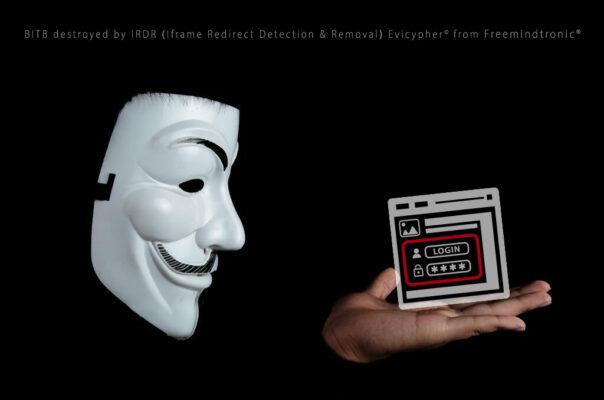
BITB attacks Browser-In-The-Browser remove delete destroy by IRDR Ifram Redirect Detection Removal since EviCypher freeware web extension open-source from Freemindtronic in Andorra
BITB attacks by Jacques Gascuel This article will be updated with any new information on the topic, and readers are encouraged to leave comments or contact the author with any suggestions or additions.

Beware of BitB phishing attacks by iframe!

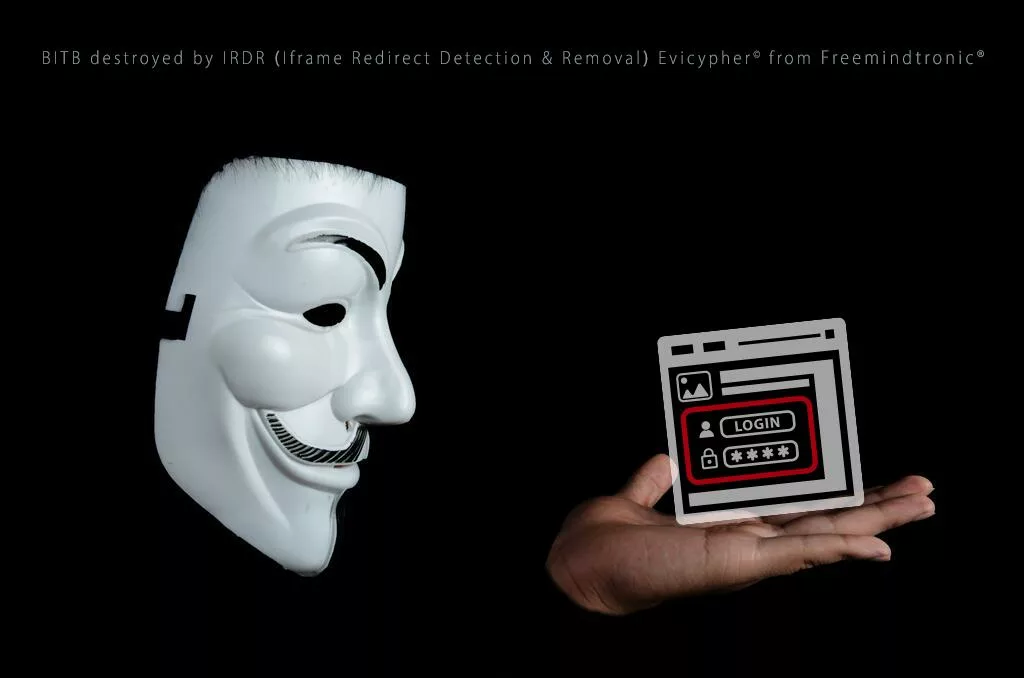
Phishing by iframe is a malicious technique that inserts a fake web page into a legitimate one, to trick users and steal their personal or financial information. This method often targets cryptocurrency holders, especially BitB users. Learn how to spot and avoid BitB phishing attacks by iframe with Freemindtronic.

BITB Attacks: How to Avoid Phishing by iFrame

We have all seen phishing attacks aren’t uncommon, and they demand urgent attention with fake emails and messages at least once.. However, there’s much more in the cybersecurity landscape than just conventional email practices when it comes to phishing. Enterprises that don’t take the necessary precautions can suffer a death blow from a phishing attack. The top line is affected, but the brand’s image and trust can be obliterated if news of a data breach reaches the public.

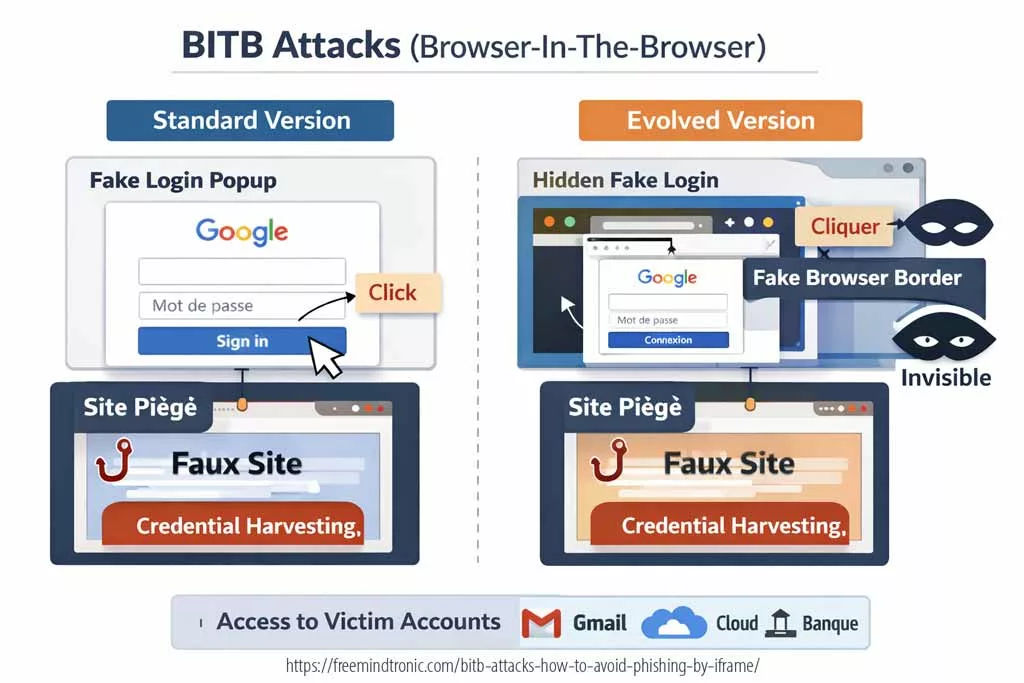
The latest form of phishing scam is the browser in the browser attack (BITB) that simulates a browser window within a web browser and steals sensitive user information. A fraudulent pop-up window caters to the user and asks for their credentials to sign into the website in the previous web browser window, leading to identity theft.

This article explains what BITB attacks are and how they work, what the risks and consequences of BITB attacks are, how to prevent and protect yourself from BITB attacks using EviBITB technology, and how to install EviBITB on your web browser.

What are BITB attacks and how do they work?

BITB stands for Browser-In-The-Browser. This phishing technique creates a fake browser window within your web browser using HTML and CSS code. An iFrame of redirection, which is an invisible element that loads content from another URL, is displayed by this fake window. The iFrame of redirection mimics the appearance and functionality of a legitimate site, such as Google, Facebook, or Outlook, and asks you to enter your authentication information.

This fake window shows a legitimate URL in the address bar, as well as the icon and the title of the original site. That is the problem. Most users rely on checking the URL to verify the authenticity of a site. This makes it very difficult to detect the phishing attempt. This attack can affect you even if you use a secure connection (https).

BITB attacks can bypass many security measures that are designed to prevent phishing. That is why they are very dangerous. For example:

  • BITB attacks do not involve malicious links or domains. Anti-phishing software may fail to detect them because of that.
  • BITB attacks do not intercept your verification codes or tokens. Two-factor authentication may not protect you from them because of that.
  • Password managers may autofill your credentials on the fake window. They may not protect you from BITB attacks because of that.

Therefore, BITB attacks can allow hackers to access your accounts, steal your data, or even take over your identity. They pose a serious threat to your online security and privacy because of that.

How do BITB attacks work?

Two features of modern web development enable BITB attacks: single sign-on (SSO) options and iFrames.

Many websites embed SSO options that allow you to sign in using an existing account from another service, such as Google, Facebook, Apple, or Microsoft. This option is convenient because you do not need to create a new account or remember a new password for each website you visit.

iFrames are elements that can load content from another URL within a web page. They are often used for embedding videos, maps, ads, or widgets on websites.

The attackers do the following steps:

  • They make a phishing website with SSO options.
  • On their phishing website, they embed an iFrame of redirection that leads to their own server with a fake SSO window.
  • Using HTML and CSS code, they design their fake SSO window to imitate a browser window inside the browser.
  • They make their fake SSO window appear when you click on an SSO option on their phishing website.
  • With JavaScript code, they show a legitimate URL in the address bar of their fake SSO window.
  • Using OAuth methods, they request you to enter your credentials on their fake SSO window.
  • To their server, they send your credentials and then redirect you to the real website.

As you can see, BITB attacks are very deceptive and convincing. They can fool even savvy users who check the URL before entering their credentials.

What are the risks and consequences of BITB attacks?

BITB attacks are a serious threat. They can compromise data and identity for users and businesses. Users who fall victim to BITB attacks face these risks and consequences:

  • Their SSO account can be hijacked and all linked services accessed by the attacker.
  • Their personal and financial information can be stolen and used for identity theft, fraud or blackmail.
  • Their devices can be infected by malware or ransomware and their files damaged or encrypted.
  • Their online reputation can be tarnished by spamming or posting malicious content.

Businesses that offer SSO options are also vulnerable to BITB attacks. They can lose trust and loyalty from their customers or employees. Businesses that suffer a data breach due to BITB attacks face these risks and consequences:

  • Their customer or employee data can be exposed, exploited or sold by the attacker or the dark web.
  • Their brand image and reputation can be damaged by negative publicity and customer complaints.
  • Their legal and regulatory compliance can be violated by data protection laws and regulations.
  • Their revenue and profitability can be reduced by customer churn, lawsuits and fines.

Recent Examples of BITB Attacks

BITB attacks are not new, but they have become more sophisticated and widespread in recent years. Here are some examples of BITB attacks that targeted governmental entities:

  • In February 2020, Zscaler revealed a campaign of phishing BitB targeting users of Steam, a video game digital distribution service. The hackers created fake Counter-Strike: Global Offensive (CS: GO) websites that offered free skins or weapons for the game. These websites displayed a fake pop-up window that asked users to sign in with Steam. If users entered their credentials, they were sent to the hackers who could then access their Steam accounts and steal their items.
  • In March 2020, Bitdefender reported a campaign of phishing BitB targeting users of Office 365, a cloud-based suite of productivity applications. The hackers sent emails that pretended to be from Microsoft and asked users to update their Office 365 settings. These emails contained a link that led users to a fake Office 365 website that displayed a fake pop-up window that asked users to sign in with Office 365. If users entered their credentials, they were sent to the hackers who could then access their Office 365 accounts and steal their data.
  • In September 2020, Proofpoint uncovered a campaign of phishing BitB targeting users of Okta, a cloud-based identity and access management service. The hackers sent emails that pretended to be from various organizations and asked users to verify their Okta account. These emails contained a link that led users to a fake Okta website that displayed a fake pop-up window that asked users to sign in with Okta. If users entered their credentials, they were sent to the hackers who could then access their Okta account and compromise their other connected applications.

These examples show that BITB attacks can target any SSO provider and any website or web application that uses SSO. They also show that hackers can use various methods to lure users into clicking on malicious links or entering their credentials on fake windows.

What are some statistics on BITB attacks?

BITB attacks use iFrames to deceive users with fake SSO windows. Here are some statistics on BITB attacks:

  • According to Statista, the number of unique phishing sites detected worldwide reached 2.11 million in the third quarter of 2020, an increase of 10% from the previous quarter.
  • According to The Hacker News, BITB attacks can exploit third-party SSO options embedded on websites such as “Sign in with Google” (or Facebook, Apple, or Microsoft) to create fake browser windows within the browser and spoof legitimate domains.
  • According to Zscaler, BITB attacks have been used in the wild at least once before, in February 2020, to target Steam users by means of fake Counter-Strike: Global Offensive (CS: GO) websites.
  • According to NetSPI, the volume of successful phishing attacks on organizations worldwide in 2021 was highest in Brazil (25%), followed by India (17%), and Mexico (14%).
  • According to DZone, the most targeted industry sectors by phishing attacks as of the third quarter of 2020 were SaaS/Webmail (33%), Financial Institutions (22%), and Payment Services (14%).

How to effectively fight against BITB attacks?

BITB attacks are very hard to detect, but not impossible. There are some signs that can help you spot them and some measures that can help you prevent them. Here are some tips:

  • Always check the URL of the site before entering your credentials. Make sure it matches the domain of the site or the SSO provider that you want to use. Do not rely on the URL displayed on the pop-up window, as it can be fake.
  • Always check the SSL certificate of the site before entering your credentials. Make sure it is valid and issued by a trusted authority. Do not rely on the padlock icon displayed on the pop-up window, as it can be fake.
  • Always use an updated antivirus software and browser extension that can detect and block malicious sites and scripts. They can help you avoid landing on phishing pages or loading fake windows.
  • Always use strong and unique passwords for each site or application that you use. Do not reuse the same password for different accounts, as it can increase the risk of compromise if one of them is breached.
  • Always use two-factor authentication (2FA) for your accounts, especially those that you use for SSO. 2FA adds an extra layer of security by requiring a second factor (such as a code sent to your phone or email) to verify your identity. Having your username and password is less useful for hackers if they need your device or access to your email account too.

How to prevent and protect yourself from BITB attacks using EviBITB technology?

The best way to prevent and protect yourself from BITB attacks is to use EviBITB technology, a technology that allows you to detect and remove redirection iframes from web pages. EviBITB is integrated for free in the free and paid extensions of Freemindtronic that are compatible with NFC HSM devices that use a smartphone or an NFC HSM device. The latter stores encrypted multiple authentication information (username, password, otp) for secure authentication for any website on the internet or intranet.

EviBITB technology also has a system of automatic backup of the URL of connection to the account using a web browser to connect to an online account on the internet or intranet. This extension is paired with the NFC android phone which is itself paired with an NFC HSM where encrypted detailed authentication information such as username, password, and secret keys OTP (TOP or HOTP) are stored. Thus, before authorizing auto-filling of connection fields or auto-connection to an online account, the phone will check beforehand if the connection URL is compliant (sandbox technique). This system adds to EviBITB protection.(click here to learn more about EviBITB)

By using EviBITB technology, you can enjoy many benefits:

  • You can avoid falling victim to BITB attacks that can steal your data or compromise your identity.
  • You can reduce the risk of keylogging or malware infections that can capture your keystrokes or spy on your online activity.
  • You can save time and hassle by using your smartphone or NFC HSM card as an authentication key instead of creating or remembering passwords for each website you visit.
  • You can enjoy a seamless and user-friendly experience by accessing websites with just a tap of your smartphone or NFC HSM card on your computer screen.
  • You can protect your privacy by controlling what data you share with each website you visit, such as your name, email, or profile picture.

By using EviBITB technology, you can be sure that the web page you see is the one you want to see, and that you do not give away your data to hackers.

How can EviBITB protect you from BITB attacks?

EviBITB is a technology that enhances your online security. It is implemented in the freemindtronic extensions that allow secure end-to-end autofill and auto-login from an NFC HSM. It also detects and removes phishing iFrames from your web browser.

EviBITB works with an application installed on an NFC Android phone that is paired with an NFC HSM. The application has a sandbox that checks if the origin URLs saved automatically during the first login are compliant. If they are, it transfers encrypted authentication information to the extension.

EviBITB also analyzes the web page source code and detects any possible BITB iFrames. It looks for hidden elements, suspicious URLs, or mismatched styles that indicate a fake browser window.

When EviBITB detects a BITB iFrame, it alerts you by showing a warning window on your computer screen. This window shows you the redirection iFrame URL and asks you to check if you trust this URL before entering any sensitive information.

How EviBITB technology can improve your browsing experience?

EviBITB technology is a security, performance and privacy enhancer. It removes redirection iframes and improves your browsing experience in several ways:

  • It speeds up web page loading, by avoiding requests to third-party sites.
  • It reduces bandwidth consumption, by saving data transferred to or from iframes.
  • It limits exposure to ads and pop-ups, by blocking their sources in iframes.
  • It prevents online activity tracking, by deleting cookies and data stored by iframes.
  • It enhances readability and usability of web pages, by removing distracting elements from iframes.
  • It increases compatibility and accessibility of web pages, by avoiding conflicts or errors caused by iframes.

With EviBITB technology, you can enjoy a faster, smoother and more private browsing experience, without compromising security or convenience.

How to use EviBITB to protect yourself from BITB attacks?

EviBITB is a technology that detects and removes malicious iFrames that expose you to BITB attacks. These attacks simulate a browser window in a web page to prompt you to enter credentials on a fraudulent site.

When EviBITB detects a suspicious iFrame, it shows a warning window that informs you of the risk. This window also gives you five buttons to act on the BITB iFrame:

  • Close Warning: this button closes the warning window without acting on the BITB iFrame. You can use it if you trust the iFrame URL or want to ignore it.
  • Never Show Warnings On This Site: this button adds the website URL to a list of trusted sites. EviBITB will not alert you of BITB iFrames on these sites. You can use it if you are sure the website is safe and has no malicious iFrames.
  • Destroy: this button deletes the BITB iFrame from the web page source code. You can use it if you do not trust the iFrame URL or want to remove it.
  • Clean Storage: this button clears the data stored by the BITB iFrame in the browser. You can use it if you have been exposed to phishing by iFrame and want to erase any traces.
  • Read More: this button redirects you to a page with more information about EviBITB and its benefits. You can use it if you want to learn more about how EviBITB works and protects you from hackers.

Why you should use EviBITB to secure your online access?

EviBITB is a technology that allows you to use your smartphone or your NFC HSM card as a secure authentication key for any website. With EviBITB, you enjoy many benefits:

  • You avoid BITB attacks that can steal your data or impersonate your identity.
  • These attacks simulate a browser window in a web page to prompt you to enter your credentials on a fraudulent site.
  • You reduce the risk of keylogging or malware infections that can capture your keystrokes or spy on your online activity.
  • You save time and hassle by using your smartphone or NFC HSM card as an authentication key instead of creating or remembering passwords for each website you visit.
  • You enjoy a seamless and user-friendly experience by accessing websites with just a tap of your smartphone or NFC HSM card on your computer screen.
  • You protect your privacy by controlling what data you share with each website you visit, such as your name, email, or profile picture.

By using EviBITB, you can be sure that the web page you see is the one you want to see, and that you do not give away your data to hackers.

How EviBITB can improve your browsing experience?

EviBITB is not only a security tool, but also a performance and privacy enhancer. By removing redirection iframes, EviBITB can improve your browsing experience in several ways:

  • It can speed up the loading of web pages, by avoiding unnecessary or malicious requests to third-party sites.
  • It can reduce the bandwidth consumption, by saving the data that would otherwise be transferred to or from the iframes.
  • It can limit the exposure to ads and pop-ups, by blocking the sources that display them in the iframes.
  • It can prevent the tracking of your online activity, by deleting the cookies and other data that the iframes may store in your browser.
  • It can enhance the readability and usability of web pages, by removing distracting or irrelevant elements from the iframes.
  • It can increase the compatibility and accessibility of web pages, by avoiding potential conflicts or errors caused by the iframes.

By using EviBITB, you can enjoy a faster, smoother and more private browsing experience, without compromising your security or convenience.

How to get started with EviBITB?

Getting started with EviBITB is easy and fast. You just need to follow these steps:

  • Download the EviBITB extension for your web browser based on Chromium or Firefox from Freemindtronic’s official website: https://freemindtronic.com/evibitb-stop-bitb-phishing-attacks/
  • Install the extension on your web browser and follow the instructions to set it up.
  • Get a smartphone or an NFC HSM card compatible with the extension. You can find more information about these devices on Freemindtronic’s website: https://freemindtronic.com/how-does-evibitb-work-detailed-guide/
  • Pair your smartphone or NFC HSM card with your computer using Bluetooth or NFC technology.
  • Start browsing the web securely with EviBITB. Whenever you visit a website that offers SSO options, you will see a green icon on the address bar indicating that EviBITB is active. You can then tap your smartphone or NFC HSM card on your computer screen to authenticate yourself and access the website.

What are some videos on BITB attacks and EviBITB?

If you want to learn more about BITB attacks and EviBITB technology, you can watch some videos on these topics:

  • A video demonstration of a BITB attack by mrd0x:

In conclusion

BITB attacks are a new and sophisticated form of phishing that can steal your credentials by simulating a browser window within your browser. They can bypass many security measures that are designed to prevent phishing and compromise your online security and privacy.

EviBITB is a free technology that detects and removes phishing iFrames from your web browser. It also offers other features to enhance your online security, such as authentication via NFC HSM devices that secure your credentials without typing them on your keyboard.

If you want to benefit from EviBITB technology, you just need to download the extension corresponding to your web browser on Freemindtronic’s official website:

You will also need a smartphone or an NFC HSM card compatible with the extension. You can find more information about these devices on Freemindtronic’s website.

https://freemindtronic.com/evibitb-stop-bitb-phishing-attacks/ :

Don’t wait any longer and try EviBITB now!

Hashtags: #EviBITB #Phishing #Cybersecurity #NFC #HSM

Snake Malware: The Russian Spy Tool

Snake malware: The Russian that steals sensitive information for 20 years

Snake malware by Jacques gascuel This article will be updated with any new information on the topic, and readers are encouraged to leave comments or contact the author with any suggestions or additions.  

Snake: The Russian malware that steals sensitive information for 20 years

Snake is a malware that allows Russian intelligence services to collect and transmit sensitive information from hundreds of infected computers across 50 countries. It is a very sophisticated espionage tool, designed and used by Center 16 of the Federal Security Service of the Russian Federation (FSB) for long-term operations on strategic targets.

An example of technical analysis of Snake malware

To illustrate how Snake malware works in detail, we will use an example of technical analysis conducted by FortiGuard Labs on a fresh variant of Snake keylogger malware. This variant was captured in November 2021 and was delivered as an Excel file with malicious macro code. The main payload of Snake keylogger malware was an executable file named “Requests07520000652.exe”, which the macro code downloaded and executed

Snake malware’s core component

Several embedded resources were contained in the main payload, which was a .NET assembly file. Reflection loaded another .NET assembly file named “Guna.UI2.dll” into memory, which was one of theml”, which was loaded into memory by reflection. This file contained the core functionality of Snake keylogger malware, such as stealing information, taking screenshots, capturing clipboard data, and communicating with a command and control (C2) server.

How Snake malware steals sensitive data

The information stealing module was responsible for collecting various types of sensitive information from the infected system, such as:

  • System information: computer name, user name, operating system version, processor architecture, etc.
  • Saved credentials: passwords stored in browsers (Chrome, Firefox, Edge), email clients (Outlook), FTP clients (FileZilla), etc.
  • Keystrokes: keyboard input from various applications (browsers, email clients, chat programs, etc.)
  • Screenshots: images of the desktop or active window at regular intervals
  • Clipboard data: text or images copied to the clipboard

Snake stored the collected information in a temporary folder with random names and encrypted it with AES.

How Snake malware communicates with its operators

After the previous subsection, you can add this subsection:

The communication module was responsible for sending the encrypted information to a C2 server and receiving commands from it. The C2 server used a domain name that was generated by an algorithm based on the current date. The communication protocol used HTTP POST requests with custom headers and parameters. Snake encoded the data with Base64 and encrypted it with AES.

Some of the commands that the C2 server could send to the malware were:

  • GetInfo: request system information from the malware
  • GetLogs: request keystroke logs from the malware
  • GetClipboard: request clipboard data from the malware
  • GetScreen: demander des captures d’écran du malware
  • Mise à jour : téléchargez et exécutez une version mise à jour du malware
  • Désinstaller: supprimer le malware du système

CVE-2023-32784 : Pourquoi PassCypher protège vos secrets

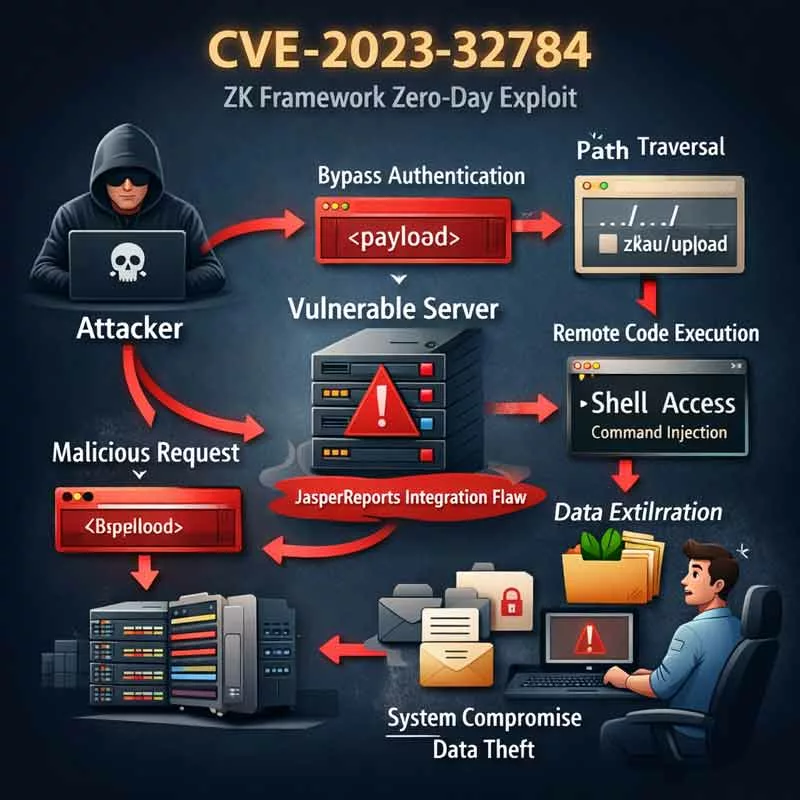
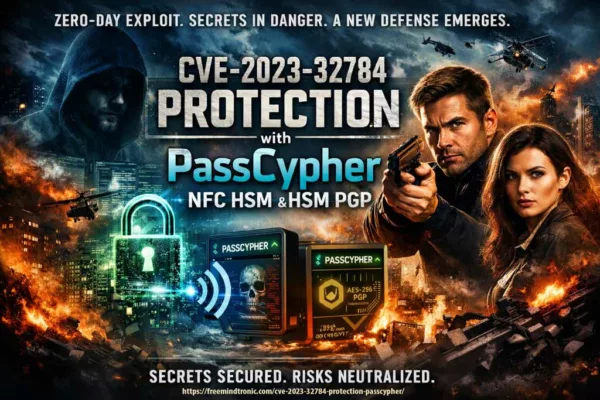
Affiche de cinéma pour CVE-2023-32784, illustrant comment PassCypher protège vos secrets numériques contre les vulnérabilités de mémoire et les attaques zero-day.

PassCypher HSM protège les secrets numériques. Il protège vos secrets numériques hors du périmètre du système d’exploitation compromis. Il utilise des dispositifs NFC /HSM PGP chiffrés en AES-256 CBC. Cela garantit une protection optimale contre des attaques avancées comme CVE-2023-32784, où les secrets stockés dans des fichiers mémoire comme hiberfil.sys et pagefile.sys peuvent être vulnérables à l’exfiltration. Découvrez comment PassCypher peut sécuriser vos données même en cas de compromission du système.

Résumé express — Sécurisez vos secrets numériques contre CVE-2023-32784 avec PassCypher

D’abord, ce résumé express (≈ 4 minutes) vous donnera une vue d’ensemble des enjeux de la vulnérabilité CVE-2023-32784 et de la protection des secrets avec PassCypher. Ensuite, le résumé avancé détaillera les mécanismes de cette vulnérabilité, les risques associés aux fichiers d’hibernation et de pagination, ainsi que les solutions spécifiques de PassCypher pour contrer ces attaques.

⚡ Découverte et Mécanismes de Sécurisation

La vulnérabilité CVE-2023-32784 a été découverte en avril 2023 et permet à un attaquant d’exfiltrer des secrets sensibles stockés dans des fichiers mémoire comme hiberfil.sys et pagefile.sys. Le patch correctif pour cette vulnérabilité a été publié en mai 2023 pour sécuriser ces points d’accès vulnérables et limiter les risques d’exfiltration. Vous pouvez consulter le lien officiel du patch ici : CVE Details – CVE-2023-32784.

PassCypher NFC HSM utilise une architecture Zero Trust et des mécanismes avancés tels que le chiffrement segmenté et l’authentification sans contact NFC pour protéger vos secrets contre ces attaques. Ces technologies garantissent que même si un attaquant parvient à accéder à la mémoire, les secrets restent protégés.

Source : CVE Details – CVE-2023-32784

✦ Impacts immédiats

  • D’une part, la compromission devient un état durable du terminal, et non un incident ponctuel. Une fois que les artefacts mémoire ont été extraits, il est difficile de garantir que le système n’est plus compromis.
  • D’autre part, les agents de sécurité logiciels perdent leur capacité à prouver qu’ils fonctionnent correctement sur un environnement potentiellement compromis.
  • Par conséquent, l’attribution et la réponse deviennent plus incertaines, tandis que la fenêtre d’exposition s’allonge.

Source : NIST Cybersecurity Framework

⚠ Message stratégique

Cependant, l’élément clé n’est pas seulement la vulnérabilité en elle-même, mais la logique de la confiance : un système compromis, même sans signature connue, ne peut plus garantir une sécurité fiable. La confiance dans un environnement où les secrets sont stockés devient fragile si ces secrets sont vulnérables à une exfiltration discrète via la mémoire.

Source : NIST Special Publication 800-53: Security and Privacy Controls for Information Systems and Organizations

🛑 Quand ne pas agir

  • Tout d’abord, ne réintroduisez pas de secrets (identifiants, clés, données sensibles) sur un terminal dont l’intégrité n’est pas attestée.
  • Ensuite, n’empilez pas des couches de sécurité logicielle qui peuvent compliquer l’audit et étendre la surface d’attaque.
  • Enfin, ne confondez pas retour au service et restauration de confiance : une reprise rapide peut masquer des compromissions persistantes.

✓ Principe de contre-espionnage souverain

Ainsi, la réduction du risque ne consiste pas à “nettoyer” un système compromis, mais à déplacer la confiance hors du périmètre compromis : hors OS, hors mémoire, et si nécessaire hors réseau. Cela garantit que les secrets restent protégés même si l’environnement principal du système est compromis.

Paramètres de lecture

Temps de lecture résumé express : ≈ 4 minutes
Temps de lecture résumé avancé : ≈ 6 minutes
Temps de lecture chronique complète : ≈ 35–40 minutes
Date de publication : 2023-05-10
Dernière mise à jour : 2026-01-23
Niveau de complexité : Avancé — Cyber-sécurité & souveraineté numérique
Densité technique : ≈ 65%
Langue principale : FR. EN.
Spécificité : Chronique stratégique — vulnérabilité CVE-2023-32784 & protection des secrets
Ordre de lecture : Résumé express → Résumé avancé → Exploits Zero-Day → Solutions passCypher → Risques résiduels

Note éditoriale

Cette chronique s’inscrit dans la rubrique Digital Security. Elle prolonge l’analyse des vulnérabilités zero-day et des implications de la perte de secrets via la mémoire, en explorant la manière dont PassCypher se positionne comme une solution robuste face à ce type de compromission. Elle ne propose pas de solution miracle, mais un cadre de sécurité alternatif, basé sur des points d’arrêt souverains. Cette chronique suit la déclaration de transparence IA de Freemindtronic Andorra — FM-AI-2025-11-SMD5.

Illustration showing the CVE-2023-32784 vulnerability and memory exfiltration risks, including hiberfil.sys, pagefile.sys, and RAM.
Pour aller plus loin Ensuite, le Résumé avancé explore la gestion de la vulnérabilité CVE-2023-32784 et les implications de la sécurité numérique avancée.
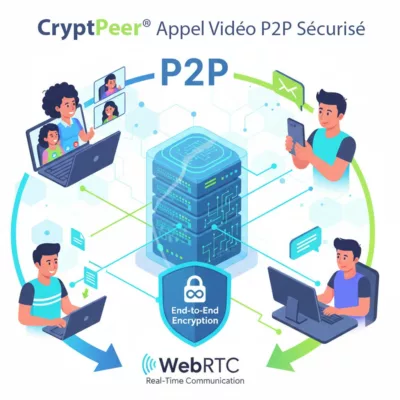
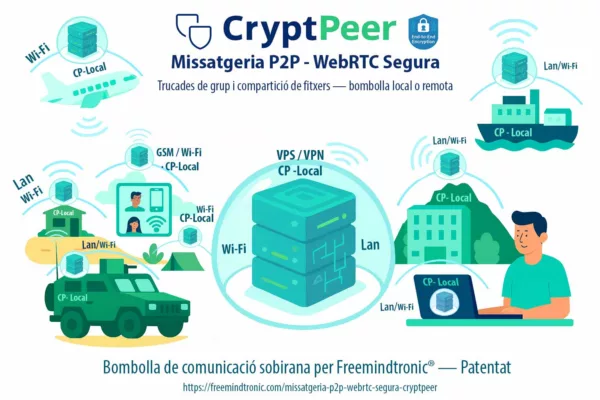
CryptPeer messagerie P2P WebRTC : appels directs chiffrés de bout en bout

La messagerie P2P WebRTC sécurisée constitue le fondement technique et souverain de la communication directe [...]

2 Comments

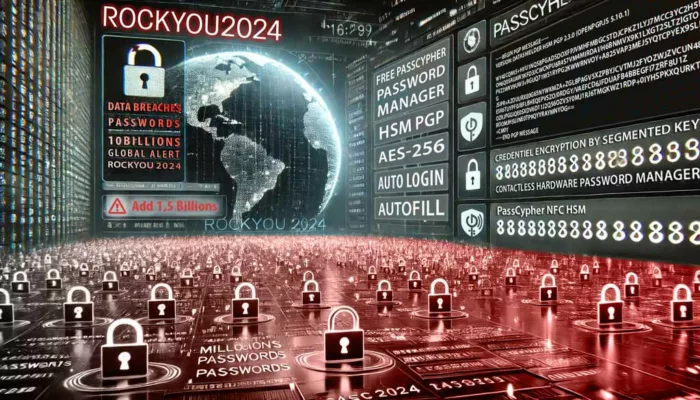
RockYou2024: 10 Billion Reasons to Use Free PassCypher

RockYou2024: A Cybersecurity Earthquake The RockYou2024 data leak has shaken the very foundations of global [...]

Quantum-Resistant Passwordless Manager — PassCypher finalist, Intersec Awards 2026 (FIDO-free, RAM-only)

Quantum-Resistant Passwordless Manager 2026 (QRPM) — Best Cybersecurity Solution Finalist by PassCypher sets a new [...]

4 Comments

Enhancing Crypto Wallet Security: How EviSeed and EviVault Could Have Prevented the $41M Crypto Heist

EviSeed and EviVault NFC HSM Technologies could have prevented the $41 million crypto theft by [...]

DOM Extension Clickjacking — Risks, DEF CON 33 & Zero-DOM fixes

DOM extension clickjacking — a technical chronicle of DEF CON 33 demonstrations, their impact, and [...]

5 Comments

Sovereign SSH Authentication with PassCypher HSM PGP — Zero Key in Clear

SSH Key PassCypher HSM PGP establishes a sovereign SSH authentication chain for zero-trust infrastructures, where [...]

1 Comment

APT28 spear-phishing: Outlook backdoor NotDoor and evolving European cyber threats

Russian cyberattack on Microsoft by Midnight Blizzard (APT29) highlights the strategic risks to digital sovereignty. [...]

3 Comments

Predator Files: The Spyware Scandal That Shook the World

Predator Files: How a Spyware Consortium Targeted Civil Society, Politicians and Officials Cytrox: The maker [...]

APT29 Exploits App Passwords to Bypass 2FA

A silent cyberweapon undermining digital trust Two-factor authentication (2FA) was supposed to be the cybersecurity [...]

Pegasus: The cost of spying with one of the most powerful spyware in the world

Pegasus: The Cost of Spying with the Most Powerful Spyware in the World Pegasus is [...]

CVE-2023-32784 : Pourquoi PassCypher protège vos secrets

PassCypher HSM protège les secrets numériques. Il protège vos secrets numériques hors du périmètre du [...]

1 Comment

Chrome V8 confusion RCE — Your browser was already spying

Chrome v8 confusion RCE: This edition addresses impacts and guidance relevant to major English-speaking markets [...]

2 Comments

Persistent OAuth Flaw: How Tycoon 2FA Hijacks Cloud Access

Persistent OAuth Flaw — Tycoon 2FA Exploited — When a single consent becomes unlimited cloud [...]

1 Comment

Are fingerprint systems really secure? How to protect your data and identity against BrutePrint

Fingerprint Biometrics: An In-Depth Exploration of Security Mechanisms and Vulnerabilities It is a widely recognized [...]

How to Recover and Protect Your SMS on Android

Recover and Protect Your SMS on Android: A Complete Guide First of all, SMS are [...]

Dropbox Security Breach 2024: Phishing, Exploited Vulnerabilities

Phishing Tactics: The Bait and Switch in the Aftermath of the Dropbox Security Breach The [...]

How to protect yourself from stalkerware on any phone

What is Stalkerware and Why is it Dangerous? Stalkerware, including known programs like FlexiSpy, mSpy, [...]

Signal Clone Breached: Critical Flaws in TeleMessage

TeleMessage: A Breach That Exposed Cloud Trust and National Security Risks TeleMessage, marketed as a [...]

1 Comment

BadPilot Cyber Attacks: Russia’s Threat to Critical Infrastructures

BadPilot Cyber Attacks: Sandworm’s New Weaponized Subgroup Understanding the rise of BadPilot and its impact [...]

Zero-knowledge vulnérable : attaques par downgrade contre Bitwarden, LastPass et Dashlane

Zero-knowledge vulnérable : les attaques par downgrade contre Bitwarden, LastPass et Dashlane révèlent comment la [...]

1 Comment

Kevin Mitnick’s Password Hacking with Hashtopolis

Password hacking tool: how it works and how to protect yourself Password hacking is a [...]

Authentification multifacteur : anatomie, OTP, risques

Authentification Multifacteur : Anatomie souveraine Explorez les fondements de l’authentification numérique à travers une typologie [...]

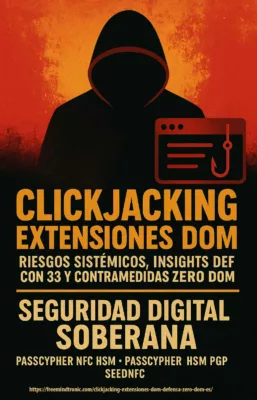
Clickjacking des extensions DOM : DEF CON 33 révèle 11 gestionnaires vulnérables

Clickjacking d’extensions DOM : DEF CON 33 révèle une faille critique et les contre-mesures Zero-DOM

14 Comments

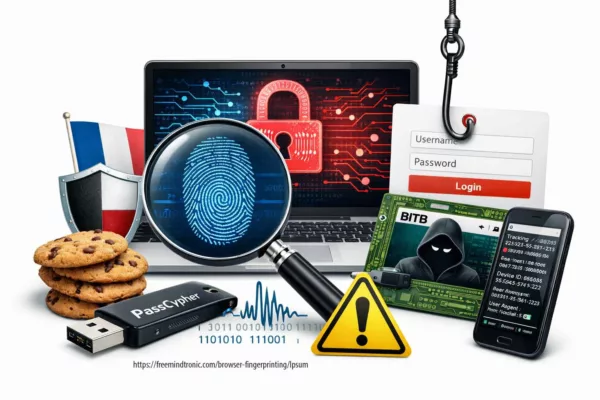
Browser Fingerprinting : le renseignement par métadonnées en 2026

Le browser fingerprinting constitue aujourd’hui l’un des instruments centraux du renseignement par métadonnées appliqué aux [...]

EviVault NFC HSM vs Flipper Zero: The duel of an NFC HSM and a Pentester

EviVault NFC HSM vs Flipper Zero: The duel of an NFC HSM and a Pentester [...]

Strong Passwords in the Quantum Computing Era

How to create strong passwords in the era of quantum computing? Quantum computing is a [...]

2 Comments

Chrome V8 Zero-Day CVE-2025-10585 — Ton navigateur était déjà espionné ?

Chrome V8 zero-day CVE-2025-10585 — Votre navigateur n’était pas vulnérable. Vous étiez déjà espionné !

2 Comments

Cyberattaque HubEE : Rupture silencieuse de la confiance numérique

Cyberattaque HubEE : rupture silencieuse de la confiance numérique. Cette attaque, qui a permis l’exfiltration [...]

OpenVPN Security Vulnerabilities Pose Global Security Risks

Critical OpenVPN Vulnerabilities Pose Global Security Risks OpenVPN security vulnerabilities have come to the forefront, [...]

Zero-knowledge governance 2026: cryptographic floors

Zero-knowledge gouvernance 2026 : l’expression ne décrit plus seulement une confidentialité “sans clé côté fournisseur”. [...]

OpenAI Mixpanel Breach Metadata – phishing risks and sovereign security with PassCypher

AI Mixpanel breach metadata is a blunt reminder of a simple rule: the moment sensitive [...]

1 Comment

Russian Espionage Hacking Tools Revealed

Russian Espionage Hacking Tools: Discovery and Initial Findings Russian espionage hacking tools were uncovered by [...]

Midnight Blizzard Cyberattack Against Microsoft and HPE: What are the consequences?

Midnight Blizzard Cyberattack against Microsoft and HPE: A detailed analysis of the facts, the impacts [...]

2 Comments

Fuite données ministère interieur : messageries compromises et ligne rouge souveraine

Fuite données ministère intérieur. L’information n’est pas arrivée par une fuite anonyme ni par un [...]

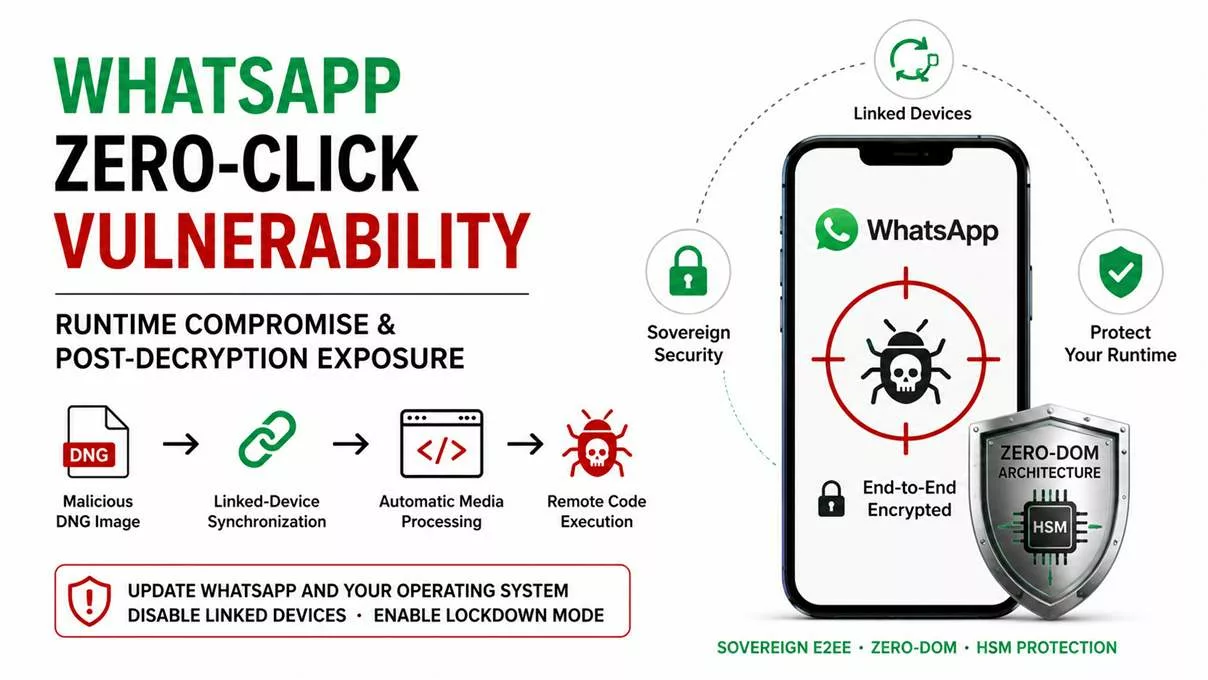
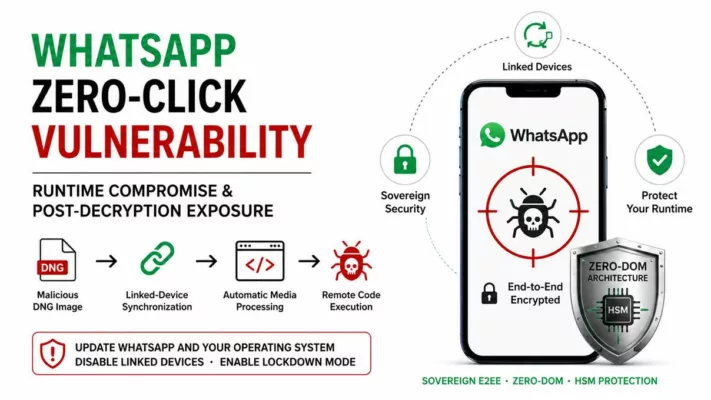
Vulnérabilité WhatsApp Zero-Click — Actions & Contremesures

Vulnérabilité WhatsApp zero-click (CVE-2025-55177) chaînée avec Apple CVE-2025-43300 permet l’exécution de code à distance via [...]

1 Comment

KingsPawn A Spyware Targeting Civil Society

  QuaDream: KingsPawn spyware vendor shutting down in may 2023 QuaDream was a company that [...]

Spyware ClayRat Android : faux WhatsApp espion mobile

Spyware ClayRat Android illustre la mutation du cyberespionnage : plus besoin de failles, il exploite [...]

2 Comments

How the attack against Microsoft Exchange on December 13, 2023 exposed thousands of email accounts

How the attack against Microsoft Exchange on December 13, 2023 exposed thousands of email accounts [...]

1 Comment

Leidos Holdings Data Breach: A Significant Threat to National Security

A Major Intrusion Unveiled In July 2024, the Leidos Holdings data breach came to light, [...]

Confidentialité métadonnées e-mail — Risques, lois européennes et contre-mesures souveraines

La confidentialité des métadonnées e-mail est au cœur de la souveraineté numérique en Europe : [...]

1 Comment

Brute Force Attacks: What They Are and How to Protect Yourself

Brute-force Attacks: A Comprehensive Guide to Understand and Prevent Them Brute Force: danger and protection [...]

Protect US emails from Chinese hackers with EviCypher NFC HSM?

How EviCypher NFC HSM technology can protect emails from Chinese hackers The Chinese hack on [...]

Protect yourself from Pegasus spyware with EviCypher NFC HSM

How to protect yourself from Pegasus spyware with EviCypher NFC HSM Pegasus Spyware: what it [...]

Kismet iPhone: How to protect your device from the most sophisticated spying attack?

Kismet iPhone: How to protect your device from the most sophisticated spying attack using Pegasus [...]

eSIM Sovereignty Failure: Certified Mobile Identity at Risk

  Runtime Threats in Certified eSIMs: Four Strategic Blind Spots While geopolitical campaigns exploit the [...]

WhatsApp Hacking: Prevention and Solutions

WhatsApp hacking zero-click exploit (CVE-2025-55177) chained with Apple CVE-2025-43300 enables remote code execution via crafted [...]

6 Comments

What is Juice Jacking and How to Avoid It?

Juice Jacking: How to Avoid This Cyberattack Do you often use public USB chargers to [...]

Salt Typhoon & Flax Typhoon: Cyber Espionage Threats Targeting Government Agencies

Salt Typhoon – The Cyber Threat Targeting Government Agencies Salt Typhoon and Flax Typhoon represent [...]

2 Comments

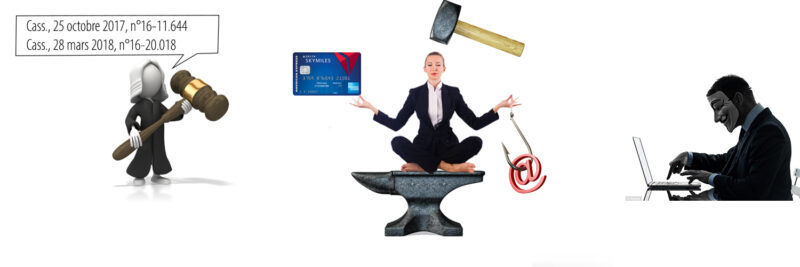
Phishing Cyber victims caught between the hammer and the anvil

Phishing is a fraudulent technique that aims to deceive internet users and to steal their [...]

Kapeka Malware: Comprehensive Analysis of the Russian Cyber Espionage Tool

Kapeka Malware: The New Russian Intelligence Threat   In the complex world of cybersecurity, a [...]

Google Sheets Malware: The Voldemort Threat

Sheets Malware: A Growing Cybersecurity Concern Google Sheets, a widely used collaboration tool, has shockingly [...]

BitLocker Security: Safeguarding Against Cyberattacks

Introduction to BitLocker Security If you use a Windows computer for data storage or processing, [...]

1 Comment

BITB Attacks: How to Avoid Phishing by iFrame

BITB Attacks: How to Avoid Phishing by iFrame We have all seen phishing attacks aren’t [...]

Andorra National Cyberattack Simulation: A Global First in Cyber Defense

Andorra Cybersecurity Simulation: A Vanguard of Digital Defense Andorra-la-Vieille, April 15, 2024 – Andorra is [...]

Securing IEO STO ICO IDO and INO: The Challenges and Solutions

Securing IEO STO ICO IDO and INO: How to Protect Your Crypto Investments Cryptocurrencies are [...]

Cyber espionnage zero day : marché, limites et doctrine souveraine

Cyber espionnage zero day : la fin des spywares visibles marque l’entrée dans une économie [...]

PrintListener: How to Betray Fingerprints

PrintListener: How this Technology can Betray your Fingerprints and How to Protect yourself PrintListener revolutionizes [...]

APT44 QR Code Phishing: New Cyber Espionage Tactics

APT44 Sandworm: The Elite Russian Cyber Espionage Unit Unmasking Sandworm’s sophisticated cyber espionage strategies and [...]

1 Comment

Générateur de mots de passe souverain – PassCypher Secure Passgen WP

Générateur de mots de passe souverain PassCypher Secure Passgen WP pour WordPress — le premier [...]

Side-Channel Attacks via HDMI and AI: An Emerging Threat

Understanding the Impact and Evolution of Side-Channel Attacks in Modern Cybersecurity Side-channel attacks, also known [...]

Snake Malware: The Russian Spy Tool

Snake: The Russian malware that steals sensitive information for 20 years Snake is a malware [...]

Browser Fingerprinting Tracking: Metadata Surveillance in 2026

Browser Fingerprinting Tracking today represents one of the true cores of metadata intelligence. Far beyond [...]

2 Comments

Android Spyware Threat Clayrat : 2025 Analysis and Exposure

Android Spyware Threat: ClayRat illustrates the new face of cyber-espionage — no exploits needed, just [...]

1 Comment

Google OAuth2 security flaw: How to Protect Yourself from Hackers

Google OAuth2 security flaw: Strategies Against Persistent Cookie Threats in Online Services Google OAuth2 security [...]

FormBook Malware: How to Protect Your Gmail and Other Data

How to Protect Your Gmail Account from FormBook Malware Introduction Imagine that you receive an [...]

Zero-Knowledge Downgrade Attacks — Structural Risks

Zero-Knowledge Downgrade Attacks: downgrade paths against Bitwarden, LastPass, and Dashlane show how cryptographic backward compatibility [...]

OpenAI fuite Mixpanel : métadonnées exposées, phishing et sécurité souveraine

OpenAI fuite Mixpanel rappelle que même les géants de l’IA restent vulnérables dès qu’ils confient [...]

1 Comment

Quantum computer 6100 qubits ⮞ Historic 2025 breakthrough

A 6,100-qubit quantum computer marks a turning point in the history of computing, raising unprecedented [...]

1 Comment

WhatsApp Gold arnaque mobile : typologie d’un faux APK espion

WhatsApp Gold arnaque mobile — clone frauduleux d’application mobile, ce stratagème repose sur une usurpation [...]

Email Metadata Privacy: EU Laws & DataShielder

Email metadata privacy sits at the core of Europe’s digital sovereignty: understand the risks, the [...]

2 Comments

Russia Blocks WhatsApp: Max and the Sovereign Internet

Step by step, Russia blocks WhatsApp and now openly threatens to “completely block” the messaging [...]

2 Comments

APT36 SpearPhishing India: Targeted Cyberespionage | Security

Understanding Targeted Attacks of APT36 SpearPhishing India APT36 cyberespionage campaigns against India represent a focused [...]

2 Comments

Reputation Cyberattacks in Hybrid Conflicts — Anatomy of an Invisible Cyberwar

Synchronized APT leaks erode trust in tech, alliances, and legitimacy through narrative attacks timed with [...]

Darknet Credentials Breach 2025 – 16+ Billion Identities Stolen

Underground Market: The New Gold Rush for Stolen Identities The massive leak of over 16 [...]

Cybersecurity Breach at IMF: A Detailed Investigation

Cybersecurity Breach at IMF: A Detailed Investigation Cybersecurity breaches are a growing concern worldwide. The [...]

Apple M chip vulnerability: A Breach in Data Security

Apple M chip vulnerability: uncovering a breach in data security Researchers at the Massachusetts Institute [...]

Espionnage invisible WhatsApp : quand le piratage ne laisse aucune trace

Espionnage invisible WhatsApp n’est plus une hypothèse marginale, mais une réalité technique rendue possible par [...]

Chinese hackers Cisco routers: how to protect yourself?

How Chinese hackers infiltrate corporate networks via Cisco routers A Chinese-backed hacker group, known as [...]

Ivanti Zero-Day Flaws: Comprehensive Guide to Secure Your Systems Now

What are Zero-Day Flaws and Why are They Dangerous? A zero-day flaw is a previously [...]

APT29 Spear-Phishing Europe: Stealthy Russian Espionage

APT29 SpearPhishing Europe: A Stealthy LongTerm Threat APT29 spearphishing Europe campaigns highlight a persistent and [...]

3 Comments

ZenRAT: The malware that hides in Bitwarden and escapes antivirus software

How this malware hides in Bitwarden and escapes antivirus software to steal your information ZenRAT [...]

Microsoft Vulnerabilities 2025: 159 Flaws Fixed in Record Update

Microsoft: 159 Vulnerabilities Fixed in 2025 Microsoft has released a record-breaking security update in January [...]

Microsoft Outlook Zero-Click Vulnerability: Secure Your Data Now

Microsoft Outlook Zero-Click Vulnerability: How to Protect Your Data Now A critical Zero-Click vulnerability (CVE-2025-21298) [...]

Cyberattack Exploits Backdoors: What You Need to Know

Cyberattack Exploits Backdoors: What You Need to Know In October 2024, a cyberattack exploited backdoors [...]

ViperSoftX How to avoid the malware that steals your passwords

ViperSoftX: The Malware that Steals Your Cryptocurrencies and Passwords ViperSoftX is a malware that steals [...]

1 Comment

Silent Whisper espionnage WhatsApp Signal : une illusion persistante

Silent Whisper espionnage WhatsApp Signal est présenté comme une méthode gratuite permettant d’espionner des communications [...]

Terrapin attack: How to Protect Yourself from this New Threat to SSH Security

Protect Yourself from the Terrapin Attack: Shield Your SSH Security with Proven Strategies SSH is [...]

Remote activation of phones by the police: an analysis of its technical, legal and social aspects
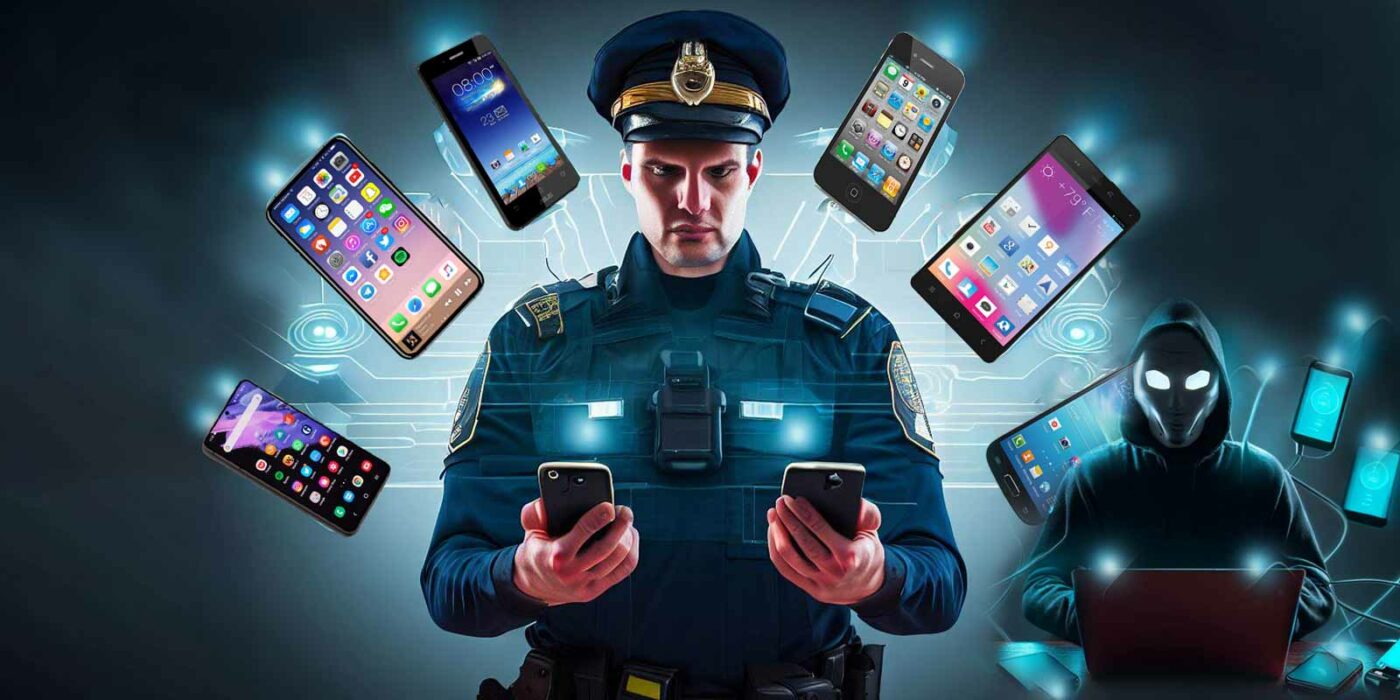
What is the new bill on justice and why is it raising concerns about privacy? [...]

5Ghoul: 5G NR Attacks on Mobile Devices

5Ghoul: How Contactless Encryption Can Secure Your 5G Communications from Modem Attacks 5Ghoul is a [...]

1 Comment

Google Workspace Vulnerability Exposes User Accounts to Hackers

How Hackers Exploited the Google Workspace Vulnerability Hackers found a way to bypass the email [...]

Coinbase blockchain hack: How It Happened and How to Avoid It

How to Prevent Coinbase Blockchain Hack with EviVault NFC HSM Technology What happened to Coinbase [...]

Les chroniques affichées ci-dessus ↑ appartiennent à la section Digital Security. Elles prolongent l’analyse des vulnérabilités zero-day et des risques systémiques dans le domaine de la cybersécurité. En conséquence, elles fournissent une perspective stratégique sur la réduction des risques en matière de secrets numériques et l’importance de “points d’arrêt” souverains.

Résumé avancé — Comprendre la vulnérabilité CVE-2023-32784

⮞ Reading Note

D’abord, ce résumé avancé propose une analyse détaillée de la vulnérabilité CVE-2023-32784, ses implications techniques et les risques d’exfiltration de secrets à travers des artefacts de mémoire comme les fichiers d’hibernation et de pagination. Ensuite, la chronique complète fournira des stratégies pratiques pour minimiser l’impact de cette vulnérabilité, y compris les solutions de sécurité robustes comme PassCypher.

Exploitation de CVE-2023-32784 — L’attaque Zero-Day sur les secrets numériques

Tout d’abord, il est essentiel de comprendre comment la vulnérabilité CVE-2023-32784 peut être exploitée. Cette faille permet à un attaquant d’accéder à des secrets numériques stockés dans des fichiers mémoire sensibles, comme les fichiers d’hibernation (hiberfil.sys) et de pagination (pagefile.sys). Ces fichiers peuvent contenir des informations critiques, telles que des mots de passe, des clés de chiffrement et d’autres secrets utilisateurs.


En effet, les attaquants peuvent utiliser cette vulnérabilité pour exfiltrer des données sans laisser de traces visibles, rendant l’attaque difficile à détecter jusqu’à ce que des informations sensibles aient déjà été compromises.

Dump mémoire et vulnérabilités de pagefile

Les fichiers d’hibernation et de pagination sont des composants essentiels pour la gestion des ressources système dans les environnements Windows. Cependant, ces fichiers peuvent devenir des cibles privilégiées pour les attaquants, car ils contiennent des portions de la mémoire du système, qui peuvent inclure des secrets non chiffrés.

En effet, lorsque des informations sensibles sont présentes dans la mémoire, elles sont souvent écrites dans ces fichiers sans aucune forme de protection, ce qui les rend vulnérables à l’accès non autorisé. Une fois cette vulnérabilité exploitée, un attaquant peut extraire ces secrets et les utiliser à des fins malveillantes, comme le vol d’identifiants ou l’accès à des systèmes sécurisés.

Hiberfil et exfiltration de données sensibles

Un autre vecteur d’attaque majeur est l’exfiltration des secrets stockés dans le fichier hiberfil.sys. Ce fichier, utilisé pour la gestion des états de mise en veille prolongée, contient une copie complète du contenu de la mémoire vive. Par conséquent, si un attaquant parvient à accéder à ce fichier, il peut facilement y extraire des données sensibles.

Cependant, l’utilisation de solutions de sécurité comme PassCypher permet de chiffrer ces fichiers mémoire sensibles, de manière à empêcher l’exfiltration de données en cas de compromission.

Protéger vos secrets : PassCypher NFC HSM

PassCypher NFC HSM protège vos secrets numériques en les stockant en dehors du système d’exploitation compromis, avec un chiffrement segmenté et un authentification sans contact NFC. Ces mécanismes offrent une protection maximale contre les attaques de type CVE-2023-32784, qui exploitent les vulnérabilités dans les fichiers mémoire sensibles comme hiberfil.sys et pagefile.sys. Grâce à ces technologies, même en cas de compromission du système d’exploitation, vos secrets restent protégés.

Par conséquent, cette solution offre une couche supplémentaire de protection qui limite les risques associés aux attaques zero-day, tout en permettant une gestion de la sécurité des données au niveau physique et réseau, en dehors du périmètre OS compromis.

Recommandations stratégiques pour la gestion de CVE-2023-32784

Les entreprises et les utilisateurs doivent mettre en place des stratégies de défense multi-couches pour contrer les risques liés à cette vulnérabilité. Voici quelques recommandations stratégiques :

  • Chiffrez les fichiers d’hibernation et de pagination : Cela permet d’empêcher l’accès non autorisé aux informations sensibles stockées dans la mémoire système.
  • Utilisez des solutions de protection avancées : Comme PassCypher, qui protège vos secrets, même en dehors du système d’exploitation.
  • Surveillez les accès aux fichiers mémoire sensibles : Mettre en place une surveillance continue des fichiers d’hibernation et de pagination pour détecter toute tentative d’accès non autorisé.
  • Revue des mécanismes de stockage sécurisé : Utiliser des solutions de stockage sécurisé hors du périmètre système pour les données sensibles, telles que des clés physiques NFC ou des dispositifs de stockage chiffrés.

En résumé, la protection des secrets sensibles dans un environnement numérique devient une priorité à mesure que les vulnérabilités comme CVE-2023-32784 sont découvertes et exploitées. PassCypher se présente comme une solution de défense efficace, mais il est essentiel de maintenir une approche proactive de la sécurité en appliquant des mesures de prévention et en intégrant des outils robustes dans l’architecture de votre système de sécurité.

Transition
À présent, la chronique complète détaillera les implications à long terme de cette vulnérabilité et la manière dont des solutions comme PassCypher contribuent à sécuriser les systèmes dans un environnement numérique en constante évolution.

Chronique complète — Comprendre et contrer CVE-2023-32784

D’abord, cette chronique complète explore en profondeur la vulnérabilité CVE-2023-32784 et ses impacts sur la sécurité numérique. Ensuite, nous examinerons les mécanismes de cette faille et les meilleures pratiques pour la prévenir. Vous découvrirez également comment des solutions comme PassCypher peuvent vous protéger.

Analyse de CVE-2023-32784 : Une faille critique dans la gestion de la mémoire

La vulnérabilité CVE-2023-32784 est liée à une faille dans la gestion de la mémoire des systèmes informatiques. Les artefacts de mémoire, tels que les fichiers d’hibernation (hiberfil.sys) et de pagination (pagefile.sys), peuvent contenir des informations sensibles. Ces fichiers, utilisés pour améliorer la performance du système, deviennent une cible idéale pour les attaquants.

En effet, ces fichiers peuvent stocker des secrets tels que des identifiants, des clés de chiffrement et d’autres informations sensibles. Une fois extraites, ces données peuvent être utilisées pour des attaques malveillantes. Ce phénomène représente un risque majeur pour la confidentialité des entreprises.

Oui : des failles liées à la mémoire existent toujours

Les vulnérabilités qui exposent des secrets numériques en mémoire — que ce soit dans :

  • le fichier d’hibernation (hiberfil.sys),
  • le fichier de pagination (pagefile.sys),
  • ou même la mémoire RAM active

continuent d’être une préoccupation réelle en 2025–2026.

Cela tient à la nature fondamentale de l’informatique : pour exécuter des programmes, des données sensibles doivent parfois vivre temporairement en mémoire vive, y compris des clés, mots de passe ou jetons d’authentification. C’est un risque inhérent, et pas une vulnérabilité ponctuelle unique.

Comment ces classes de failles se manifestent aujourd’hui

Exfiltration mémoire

C’est une classe d’attaque où un attaquant accède à la mémoire ou à des artefacts système pour extraire des secrets. Ce type d’attaque peut se produire par :

  • Dump mémoire (extraction complète de la RAM)
  • Accès aux fichiers d’échange/pagination
  • Débogage accessible
  • Malware avec privilèges élevés
  • Exploits zero-day dans le système d’exploitation ou dans des pilotes

Même si un patch corrige une vulnérabilité spécifique, un autre vecteur mémoire pourrait être exploité tant que des données sensibles transitent en clair en mémoire.

Failles Zero-Day plus larges

Chaque année, de nouvelles vulnérabilités de type zero-day sont découvertes. Certaines permettent à un attaquant de lire la mémoire ou d’intercepter des secrets en clair — indépendamment des fichiers d’hibernation/pagination. Par exemple :

  • Failles dans le noyau OS
  • Failles dans des pilotes systèmes
  • Failles dans des outils de virtualisation
  • Failles dans des gestionnaires de mémoire

La simplicité d’exécution varie, mais l’effet potentiel reste : exfiltration de données sensibles en mémoire.

Fuites de mémoire dans les applications

Beaucoup de logiciels, notamment ceux lisant des secrets et clés, ont encore :

  • des buffers non nettoyés
  • des allocations de mémoire non effacées
  • des chaînes sensibles laissées en clair en RAM

Même des produits modernes peuvent présenter ce type de risque si l’accès à la mémoire n’est pas strictement géré.

Évolution des contre‑mesures en 2025–2026

Les éditeurs ont continué à améliorer les protections :

  • Chiffrement renforcé en mémoire
  • Windows utilise Virtual Secure Mode,
  • Linux intègre des distributions avec protections renforcées (SELinux, AppArmor),
  • et macOS a des protections en écriture de la mémoire (AMFI).
Mais aucune mesure n’élimine complètement la mémoire non chiffrée tant que des secrets y transitent en clair.
Caractéristiques modernes de mitigation

Mitigation But
Memory encryption (TPM/SEV/SME) Chiffrement de la mémoire vive en hardware
ASLR / CFG / DEP Mitigation d’exploitation d’applications
Credential Guard (Windows) Isolation des secrets dans un conteneur protégé
Kernel hardening Réduction des vecteurs d’exploitation

Ces technologies réduisent les risques mais ne les éliminent pas complètement.

Exemples récents (2024–2026)

Bien qu’aucune faille ne soit exactement identique à CVE-2023-32784, plusieurs vulnérabilités récentes ont montré que :

  • des secrets pouvaient être extraits via des attaques mémoire
  • des clés sensibles pouvaient être récupérées si elles furent stockées non protégées en RAM.

Par exemple, dans les années 2024–2025, il y a eu :

  • Vulnérabilités dans les hyperviseurs permettant d’accéder à la mémoire VM
  • Exploits dans des outils de conteneurs laissant les secrets en mémoire
  • Défaillances de sécurité dans certains antivirus ou outils de diagnostic exposant la mémoire

Ces vulnérabilités sont souvent classées CVE avec des amplitudes différentes mais une conséquence similaire : données sensibles en mémoire exposées.

Leçons et bonnes pratiques durables

Ce qui cause encore des risques aujourd’hui :

  • Les programmes stockant des secrets en clair
  • Les dumps mémoire accessibles à un attaquant
  • Les processus mal isolés
  • Les privilèges inadéquats

Source pour l’évolution des failles mémoire :

PassCypher : Une solution pour protéger vos secrets numériques

Pour contrer cette vulnérabilité, PassCypher offre une protection de haute qualité. PassCypher utilise un chiffrement segmenté et une authentification à clé segmentée pour sécuriser vos secrets numériques. Cela garantit que, même si un attaquant accède à la mémoire, les données restent protégées.

En plus, PassCypher permet de stocker vos clés et secrets à l’extérieur du système d’exploitation compromis. Cette sécurité supplémentaire limite l’impact d’une compromission. De ce fait, vous pouvez garder vos informations sensibles en sécurité contre les attaques zero-day.

Risques de la compromission de la mémoire système avec CVE-2023-32784

L’exploitation de CVE-2023-32784 a des conséquences importantes. L’impact principal réside dans la compromission de la confiance logicielle. Une fois qu’un attaquant accède aux artefacts mémoire, il peut modifier ou exfiltrer des données sensibles sans laisser de trace.

Ainsi, la compromission devient un état persistant. L’intégrité du système est alors mise en question, ce qui complique les tâches de détection et de réparation. Les mécanismes de sécurité traditionnels ne suffisent plus face à de telles menaces.

Stratégie de contre-espionnage souverain : La confiance au-delà de l’OS

La solution efficace face à ces menaces repose sur le principe de “contre-espionnage souverain”. Ce principe consiste à déplacer la confiance hors du périmètre compromis : hors OS, hors mémoire, et même hors réseau. Ainsi, même en cas de compromission du terminal, vos secrets restent protégés.

Par conséquent, PassCypher joue un rôle crucial en garantissant la sécurité de vos données sensibles. Il protège vos informations critiques, même lorsque l’OS est compromis. Cela minimise les risques d’exfiltration et garantit la souveraineté numérique de vos systèmes.

Recommandations stratégiques pour les entreprises

Voici quelques recommandations pratiques pour les entreprises et les utilisateurs afin de se protéger contre la vulnérabilité CVE-2023-32784 :

  • Chiffrez toutes les informations sensibles : Utilisez des solutions robustes pour protéger les secrets dans la mémoire et les fichiers système.
  • Appliquez une sécurité multi-couches : Combinez des stratégies physiques et logiques pour renforcer la protection des secrets numériques.
  • Optez pour un stockage sécurisé : Protégez vos secrets avec des dispositifs comme PassCypher NFC, stockés hors du système compromis.
  • Surveillez les fichiers sensibles : Mettez en place une surveillance continue des fichiers tels que hiberfil.sys et pagefile.sys pour détecter toute tentative d’accès non autorisé.
  • Formez vos équipes : Sensibilisez vos équipes à la sécurité des secrets et à la gestion proactive des attaques zero-day.

Résilience et défense contre les attaques zero-day

Face aux attaques zero-day, il est essentiel de renforcer la résilience des systèmes. La protection ne se limite pas aux failles connues, mais inclut aussi la préparation face aux menaces inconnues. Une approche proactive de la sécurité est cruciale, intégrant des outils avancés comme le chiffrement et la gestion des secrets hors OS.

En résumé, une défense multi-couches et proactive est primordiale pour se prémunir contre les attaques complexes et persistantes.

À présent, explorez la section suivante sur les solutions de détection des failles CVE, où nous détaillerons les stratégies de détection avancée des vulnérabilités et des attaques zero-day pour renforcer la résilience de vos systèmes.

L’Impact de CVE-2023-32784 sur la Confidentialité des Utilisateurs

L’exploitation de CVE-2023-32784 met en lumière un problème majeur concernant la confidentialité des informations personnelles et professionnelles. Les artefacts mémoire, tels que les fichiers d’hibernation (hiberfil.sys) et de pagination (pagefile.sys), peuvent contenir des données sensibles. Si un attaquant parvient à y accéder, il peut récupérer des informations critiques, souvent sans que la victime ne le sache. Ce genre de compromission peut impacter la réputation des entreprises et entraîner des pertes financières.

Une étude menée par le Ponemon Institute sur le coût des violations de données révèle que les entreprises dépensent en moyenne 3,86 millions de dollars pour une violation de données, ce qui montre l’ampleur de l’impact financier pour une organisation.

Les Meilleures Pratiques pour Contourner les Failles Zero-Day

Face à la nature insidieuse des attaques zero-day, il est essentiel pour les entreprises de prendre des mesures proactives pour éviter de devenir une cible. Cela inclut non seulement l’application régulière de mises à jour et de correctifs mais aussi l’adoption de stratégies de défense en profondeur qui rendent difficile l’accès à des secrets numériques, même si un attaquant parvient à exploiter une vulnérabilité inconnue.

Des pratiques telles que la gestion rigoureuse des clés de chiffrement et le chiffrement des fichiers mémoire sensibles (hiberfil.sys, pagefile.sys) peuvent réduire le risque d’exploitation de CVE-2023-32784. CIS Controls recommande des stratégies de sécurité efficaces pour la gestion des risques liés à ces vulnérabilités.

La Sécurisation de la Mémoire du Système : Un Combat Permanent

Les fichiers mémoire, comme hiberfil.sys et pagefile.sys, sont des éléments critiques pour le fonctionnement des systèmes Windows. Toutefois, leur gestion pose un dilemme pour les administrateurs en matière de sécurité. En effet, bien qu’ils améliorent les performances du système, leur contenu peut être utilisé à des fins malveillantes si une vulnérabilité est exploitée.

Les meilleures pratiques de sécurité recommandent de désactiver les fichiers d’hibernation et de pagination lorsque cela est possible. Si ces fichiers doivent être utilisés, leur chiffrement doit être appliqué pour assurer qu’aucune donnée sensible n’est exposée lors d’une intrusion. Source : Microsoft Docs – Windows Hibernation and Paging Files

Exploitation de CVE-2023-32784 — L’attaque invisible

Tout d’abord, il est essentiel de comprendre comment la vulnérabilité CVE-2023-32784 peut être exploitée. Cette faille permet à un attaquant d’accéder à des secrets numériques stockés dans des fichiers mémoire sensibles, comme les fichiers d’hibernation (hiberfil.sys) et de pagination (pagefile.sys). Ces fichiers peuvent contenir des informations critiques telles que des mots de passe, des clés de chiffrement et d’autres secrets utilisateurs.

En effet, les attaquants peuvent utiliser cette vulnérabilité pour exfiltrer des données sans laisser de traces visibles, rendant l’attaque difficile à détecter jusqu’à ce que des informations sensibles aient déjà été compromises. Cette exploitation rend la compromission d’autant plus insidieuse et difficile à contrer avec les mécanismes de sécurité traditionnels.

Dump mémoire et vulnérabilités de pagefile

Les fichiers d’hibernation et de pagination sont des composants essentiels pour la gestion des ressources système dans les environnements Windows. Cependant, ces fichiers peuvent devenir des cibles privilégiées pour les attaquants, car ils contiennent des portions de la mémoire du système, qui peuvent inclure des secrets non chiffrés.

En effet, lorsque des informations sensibles sont présentes dans la mémoire, elles sont souvent écrites dans ces fichiers sans aucune forme de protection, ce qui les rend vulnérables à l’accès non autorisé. Une fois cette vulnérabilité exploitée, un attaquant peut extraire ces secrets et les utiliser à des fins malveillantes, comme le vol d’identifiants ou l’accès à des systèmes sécurisés.

Hiberfil et exfiltration de données sensibles

Un autre vecteur d’attaque majeur est l’exfiltration des secrets stockés dans le fichier hiberfil.sys. Ce fichier, utilisé pour la gestion des états de mise en veille prolongée, contient une copie complète du contenu de la mémoire vive. Par conséquent, si un attaquant parvient à accéder à ce fichier, il peut facilement y extraire des données sensibles.

Cependant, l’utilisation de solutions de sécurité comme PassCypher permet de chiffrer ces fichiers mémoire sensibles, de manière à empêcher l’exfiltration de données en cas de compromission.

Exfiltration de données sensibles via la mémoire : un risque pour tous les gestionnaires de mots de passe

La faille CVE-2023-32784 dans KeePass est un exemple de ce que l’on appelle une vulnérabilité de “dump mémoire”, où un attaquant peut récupérer un mot de passe maître depuis la mémoire d’un système compromis. Bien que cette vulnérabilité concerne directement KeePass, elle met en lumière un problème plus large qui touche tous les logiciels qui manipulent des données sensibles telles que des mots de passe, des clés de chiffrement et des tokens d’authentification.

Gestionnaires de mots de passe et logiciels vulnérables

Bien que la vulnérabilité CVE-2023-32784 soit spécifique à des attaques d’exfiltration via des artefacts mémoire (hiberfil.sys et pagefile.sys), d’autres gestionnaires de mots de passe, tels que Bitwarden, LastPass, et Dashlane, peuvent également être vulnérables à des attaques de clickjacking et exploitation DOM lorsqu’ils utilisent des extensions de navigateur non sécurisées. Ces vulnérabilités peuvent permettre à un attaquant de manipuler les données sensibles via l’interface du navigateur, bien que la gestion en mémoire des données sensibles dans ces outils soit généralement protégée par des mécanismes de chiffrement.
Cependant, les fichiers mémoire (hiberfil.sys, pagefile.sys) restent une cible théorique pour les attaquants si les données ne sont pas correctement protégées en mémoire. Bien que ces gestionnaires chiffrent généralement les données stockées, la mémoire volatile (RAM), où les informations sont temporairement stockées pendant une session active, reste une cible potentielle si elle n’est pas correctement sécurisée.

De plus, PassCypher se distingue en offrant un stockage sécurisé hors du périmètre du système d’exploitation, assurant que les données sensibles restent protégées même si le système est compromis. Cette approche élimine le risque d’exfiltration de données depuis la RAM ou des fichiers système.

Solutions de protection : chiffrement et stockage sécurisé hors OS

Le chiffrement avancé AES-256 CBC et la gestion des clés segmentées de PassCypher NFC HSM permettent de protéger les secrets numériques, même si les fichiers mémoire comme hiberfil.sys et pagefile.sys sont compromis. De plus, le stockage sécurisé hors OS garantit que vos informations restent protégées, même dans des environnements hostiles.
Pour contrer ce type d’attaque, il est essentiel de mettre en place des solutions de sécurité robustes. L’utilisation de dispositifs comme PassCypher NFC HSM permet de sécuriser les données sensibles hors du périmètre du système d’exploitation. Ces dispositifs utilisent des mécanismes de chiffrement avancés (AES-256 CBC) et des clés segmentées, garantissant que même si un attaquant parvient à accéder à la mémoire, les secrets restent protégés. L’intégration de ces solutions réduit considérablement le risque d’exfiltration de données sensibles via la mémoire.

PassCypher NFC HSM : Une Solution Avancée pour la Sécurisation des Secrets

PassCypher NFC HSM protège les secrets numériques en stockant les données sensibles hors du périmètre du système d’exploitation compromis. Utilisant un dispositif NFC sans contact, PassCypher assure une sécurité maximale grâce au chiffrement avancé AES-256 CBC. Cela permet de se prémunir contre les attaques de type CVE-2023-32784, où les secrets stockés dans les fichiers mémoire comme hiberfil.sys et pagefile.sys sont vulnérables.

PassCypher NFC HSM est un gestionnaire de mots de passe matériel sans contact qui permet de stocker et protéger vos secrets numériques, même face à des attaques avancées comme celles exploitant des vulnérabilités telles que vulnérabilité CVE-2023-32784. Ce système de gestion sans contact élimine le besoin d’une connexion Internet ou d’une source d’alimentation pour fonctionner, tout en assurant une sécurité maximale grâce à des technologies comme la segmentation des clés et le chiffrement AES 256 CBC.

Avec sa technologie NFC HSM, PassCypher sécurise vos données en dehors du système d’exploitation, garantissant que vos informations sensibles restent protégées même si le système est compromis. L’authentification sans contact avec une carte NFC ou un dispositif compatible protège vos informations sans exposer vos identifiants ou mots de passe à des attaques de type keylogging ou shoulder surfing.

Stockage sécurisé hors OS avec PassCypher NFC

Pour améliorer encore la sécurité des secrets numériques, PassCypher offre une fonctionnalité de stockage sécurisé hors OS via des dispositifs de stockage NFC. Cette approche permet de protéger les secrets clés et autres données sensibles en dehors des systèmes compromis, garantissant leur sécurité même dans les environnements les plus hostiles.

En effet, l’utilisation de dispositifs NFC comme PassCypher ajoute une couche physique de protection qui empêche l’accès aux secrets, même en cas de compromission totale du système d’exploitation. Ces dispositifs sont également équipés de mécanismes de chiffrement avancés, assurant que les données restent protégées contre toute tentative d’exfiltration ou de vol.

Stockage Sécurisé Hors OS avec PassCypher NFC HSM

Pour renforcer la sécurité des secrets numériques, PassCypher NFC HSM propose un stockage sécurisé hors OS via des dispositifs NFC. En cas de vulnérabilité comme CVE-2023-32784, où des fichiers sensibles comme hiberfil.sys et pagefile.sys peuvent être compromis, PassCypher assure que ces informations restent hors de portée grâce à son système de stockage décentralisé.

L’usage de dispositifs NFC comme PassCypher ajoute une couche de sécurité physique qui empêche l’accès non autorisé aux secrets, même si l’intégrité du système d’exploitation est mise en péril. Grâce à un chiffrement avancé, les données sont protégées contre les tentatives d’exfiltration, qu’elles proviennent d’un logiciel malveillant ou d’un attaquant ayant compromis le terminal.

Technologie NFC et Architecture Zero Trust

L’architecture Zero Trust de PassCypher NFC HSM assure qu’aucune donnée n’est jamais stockée sur un serveur ou une base de données externe. Toutes les données restent localisées sur le dispositif physique, garantissant une sécurité renforcée. En plus, grâce à l’authentification sans contact NFC, l’accès aux secrets numériques est ultra-sécurisé, ne nécessitant aucune intervention manuelle pour gérer les clés de chiffrement ou les mots de passe.

Avantages et Flexibilité de PassCypher NFC HSM

PassCypher NFC HSM se distingue par sa flexibilité, sa compatibilité avec différents systèmes d’exploitation (Windows, Linux, MacOS, Android, iOS) et navigateurs web (Chromium, Firefox). Ce dispositif vous permet de sécuriser vos mots de passe, clé secréte OTP (TOTP/HOTP), et autres informations sensibles sans avoir besoin d’une connexion réseau constante, tout en offrant des fonctionnalités avancées comme la gestion des clés segmentées et la protection contre le phishing grâce à son Authenticator Sandbox.

PassCypher HSM PGP : Protection Avancée Contre les Exfiltrations de Secrets (CVE-2023-32784)

PassCypher HSM PGP est une solution de gestion des mots de passe de pointe, entièrement automatisée, conçue pour protéger vos secrets numériques même en cas de compromission système. Grâce à son chiffrement AES-256 CBC PGP, PassCypher HSM PGP garantit la sécurité des informations, en particulier contre des vulnérabilités telles que CVE-2023-32784, où des secrets stockés dans des fichiers mémoire comme hiberfil.sys et pagefile.sys peuvent être compromis. L’architecture Zero Trust et Zero Knowledge assure que les secrets restent privés et sécurisés, sans laisser d’accès non autorisé à vos informations.

Le système chiffre vos identifiants de connexion à l’aide de l’AES-256 CBC PGP, les stocke dans des conteneurs sécurisés, et les décrypte instantanément en mémoire volatile. Cette approche garantit qu’aucune information sensible n’est exposée en clair, même en cas d’attaque exploitant des vulnérabilités comme CVE-2023-32784. Les données sont immédiatement effacées de la mémoire une fois utilisées, minimisant ainsi le risque d’exfiltration via des artefacts mémoire compromis.
Cela garantit une sécurité maximale tout en assurant un accès instantané et sans compromis à vos identifiants.

Grâce à PassCypher HSM PGP, même si un attaquant exploite une vulnérabilité comme CVE-2023-32784, vos secrets sont protégés par des technologies de chiffrement de pointe, et ils sont éliminés de la mémoire immédiatement après leur utilisation, ce qui réduit considérablement le risque d’exfiltration de données.

Pour plus de détails sur son fonctionnement, consultez la documentation officielle de PassCypher HSM PGP.

Protection Automatisée et Stockage Sécurisé des Secrets

PassCypher HSM PGP offre un système de conteneurs sécurisés qui chiffre automatiquement vos informations sensibles, telles que vos mots de passe et identifiants, en utilisant le chiffrement AES-256 CBC PGP. Ces informations sont stockées sur des supports physiques sécurisés (USB, SSD, NAS, etc.), et sont instantanément décryptées en mémoire volatile uniquement lors de l’utilisation. Même si un attaquant parvient à accéder à la mémoire du système via des vulnérabilités comme CVE-2023-32784, les informations restent protégées grâce au stockage sécurisé et à l’effacement immédiat des données après leur utilisation.

Une fois que vos identifiants sont injectés dans les champs de connexion, les données décryptées sont immédiatement effacées de la mémoire, garantissant ainsi qu’aucune trace de vos informations ne demeure après leur utilisation. Cette approche garantit la sécurité de vos informations même si un système est compromis.

Zero Trust et Zero Knowledge : Des Architectures de Sécurité Renforcées

L’architecture Zero Trust de PassCypher HSM PGP repose sur l’idée fondamentale que rien ni personne ne peut être implicitement approuvé. Cela signifie que chaque demande d’accès aux secrets est validée, qu’elle provienne d’un utilisateur interne ou externe.

En combinant cette architecture avec Zero Knowledge, PassCypher HSM PGP garantit que le système ne conserve aucune donnée sensible sur des serveurs externes et ne nécessite aucune identification ou création de comptes utilisateurs. Tout est traité localement sur l’appareil, ce qui réduit considérablement les risques liés à l’exfiltration de données.

Cela permet à PassCypher HSM PGP de se protéger contre des attaques comme CVE-2023-32784, en veillant à ce que les données ne soient jamais exposées en clair ou stockées sur un serveur, ce qui rend l’accès à vos informations extrêmement difficile pour un attaquant.

Gestion des Clés Segmentées : Sécurisation Maximale des Informations

PassCypher HSM PGP utilise une approche innovante de gestion des clés segmentées, où chaque clé de chiffrement est divisée en plusieurs segments stockés sur des dispositifs physiques séparés (comme des clés USB, SSD externes, etc.). Même si un segment de la clé est compromis, les autres segments restent protégés, assurant ainsi que les informations ne peuvent pas être décryptées sans un accès complet aux différents segments de la clé.

Ce modèle ajoute une couche supplémentaire de sécurité et empêche toute extraction non autorisée des données. Si un attaquant parvient à accéder à une partie de votre système, il ne pourra pas déchiffrer vos identifiants sans l’accès aux autres segments physiques de la clé.

Protection Anti-Phishing et Détection des Menaces Avancées

PassCypher HSM PGP intègre des mécanismes de protection avancée contre le phishing et autres attaques malveillantes, comme les redirections vers des sites malveillants (typosquatting). La technologie Sandbox URL encapsule et chiffre l’URL du site de connexion, empêchant toute tentative de manipulation ou de redirection vers un site malveillant. Cette protection est renforcée contre les attaques exploitant des vulnérabilités comme CVE-2023-32784, bloquant les tentatives avant qu’elles ne réussissent.

En outre, PassCypher HSM PGP détecte et neutralise automatiquement les attaques Browser-in-the-Browser (BITB) et les redirections malveillantes. Ces protections renforcent la sécurité des utilisateurs, garantissant qu’ils se connectent toujours à des sites légitimes, même si l’attaquant tente de les induire en erreur.

Pourquoi PassCypher HSM est une solution de confiance

Dans un environnement numérique de plus en plus complexe et vulnérable aux attaques comme CVE-2023-32784, PassCypher HSM se distingue comme une solution de sécurité essentielle. PassCypher HSM protège les secrets numériques en les stockant à l’extérieur du système d’exploitation compromis et en utilisant des mécanismes avancés comme le chiffrement segmenté et l’authentification sans contact NFC.

Récompensé parmi les meilleures solutions de cybersécurité 2026

PassCypher HSM a récemment été reconnu comme l’une des 5 meilleures solutions de cybersécurité en 2026 lors des InterSec Awards, une distinction qui témoigne de son efficacité et de sa fiabilité face aux menaces avancées, comme celles introduites par CVE-2023-32784. Cette reconnaissance confirme l’engagement de PassCypher à offrir une protection de pointe contre les attaques visant les données sensibles, même lorsque le système d’exploitation est compromis.

Pour en savoir plus sur cette distinction et comment PassCypher continue de repousser les limites de la cybersécurité, vous pouvez consulter PassCypher : Finaliste aux InterSec Awards 2026.

Pourquoi PassCypher HSM est une solution de confiance

Dans un environnement numérique de plus en plus complexe et vulnérable aux attaques comme CVE-2023-32784, PassCypher HSM se distingue comme une solution de sécurité essentielle. PassCypher HSM protège les secrets numériques en les stockant à l’extérieur du système d’exploitation compromis et en utilisant des mécanismes avancés comme le chiffrement segmenté et l’authentification sans contact NFC.

Récompensé parmi les meilleures solutions de cybersécurité 2026

PassCypher HSM a récemment été reconnu comme l’une des 5 meilleures solutions de cybersécurité en 2026 lors des InterSec Awards, une distinction qui témoigne de son efficacité et de sa fiabilité face aux menaces avancées, comme celles introduites par CVE-2023-32784. Cette reconnaissance confirme l’engagement de PassCypher à offrir une protection de pointe contre les attaques visant les données sensibles, même lorsque le système d’exploitation est compromis.

Pour en savoir plus sur cette distinction et comment PassCypher continue de repousser les limites de la cybersécurité, vous pouvez consulter PassCypher : Finaliste aux InterSec Awards 2026.

Solutions de détection des failles CVE

La détection des failles CVE comme CVE-2023-32784 nécessite l’utilisation de solutions avancées pour repérer les tentatives d’exploitation de vulnérabilités avant qu’elles n’entraînent une compromission. L’intégration de solutions de détection en temps réel permet de surveiller l’intégrité des fichiers mémoire sensibles et d’identifier rapidement les tentatives d’accès non autorisé.

En plus, des outils d’analyse de comportement peuvent être utilisés pour détecter les activités suspectes sur les fichiers système, notamment les fichiers hiberfil.sys et pagefile.sys, afin d’interrompre les attaques avant qu’elles ne causent des dommages.

Analyse des menaces avancées : CVE et attaques Zero-Day

Les attaques zero-day, comme celles exploitant CVE-2023-32784, sont particulièrement difficiles à détecter, car elles utilisent des vulnérabilités inconnues des éditeurs de logiciels. Ces attaques ciblent souvent des failles dans les composants critiques du système, tels que la gestion de la mémoire, pour voler des informations sensibles sans déclencher d’alertes.

Par conséquent, une analyse des menaces avancées est essentielle pour renforcer la résilience des systèmes contre ces attaques. L’utilisation d’outils de détection comportementale et d’analyse des menaces permet d’identifier les indicateurs de compromission avant qu’une attaque ne réussisse à exfiltrer des données sensibles.

L’Approche Zero Trust et la Protection des Secrets

Le modèle Zero Trust repose sur le principe fondamental qu’aucun utilisateur ou appareil, interne ou externe, ne doit être implicitement approuvé. Chaque tentative d’accès, qu’elle provienne d’un utilisateur interne ou d’un système externe, doit être vérifiée. En appliquant ce modèle, les entreprises peuvent limiter l’accès aux secrets numériques, en s’assurant qu’aucune donnée sensible n’est accessible par des systèmes compromis.

Recommandations stratégiques de sécurité

Face à la vulnérabilité CVE-2023-32784, il est impératif de mettre en place des mesures de sécurité robustes et d’adopter une stratégie de défense multi-couches. Voici quelques recommandations pratiques :

  • Chiffrez les fichiers d’hibernation et de pagination : Cela permet d’empêcher l’accès non autorisé aux informations sensibles stockées dans la mémoire système.
  • Utilisez des solutions de protection avancées : Comme PassCypher, qui protège vos secrets, même en dehors du système d’exploitation.
  • Surveillez les accès aux fichiers mémoire sensibles : Mettre en place une surveillance continue des fichiers d’hibernation et de pagination pour détecter toute tentative d’accès non autorisé.
  • Revue des mécanismes de stockage sécurisé : Utiliser des solutions de stockage sécurisé hors du périmètre système pour les données sensibles, telles que des clés physiques NFC ou des dispositifs de stockage chiffrés.

Défense multi-couches : comprendre la résilience avec PassCypher NFC HSM

Pour renforcer la résilience des systèmes contre les vulnérabilités de type Zero-Day, une approche multi-couches est indispensable. PassCypher NFC HSM offre une protection robuste avec le chiffrement des fichiers mémoire sensibles, le stockage hors OS, et la surveillance proactive des fichiers système sensibles comme hiberfil.sys et pagefile.sys.

La Gestion de la Souveraineté Numérique Face aux Attaques Zero-Day

La souveraineté numérique est une question clé dans la gestion des risques associés aux attaques zero-day. Les entreprises et les gouvernements doivent être capables de protéger leurs infrastructures critiques contre des intrusions invisibles. L’implémentation de solutions comme PassCypher, qui offre une protection au-delà du système d’exploitation, garantit la confidentialité et la sécurité des données sensibles, même face à des vulnérabilités encore non découvertes.

L’adoption de technologies qui garantissent une souveraineté numérique est essentielle pour limiter l’exposition aux cybermenaces internationales. Source : The Role of Digital Sovereignty in Cybersecurity

Réduire les risques : Sécurisation des secrets numériques

Face aux vulnérabilités de type “exfiltration mémoire”, il est crucial de protéger les secrets numériques via des solutions de sécurité avancées. PassCypher NFC HSM offre une solution robuste pour le stockage sécurisé des données sensibles hors du périmètre du système d’exploitation, garantissant ainsi que même en cas de compromission du système, les secrets restent protégés grâce à des mécanismes de sécurité renforcés, comme le chiffrement AES-256 CBC et la segmentation des clés.

FAQ – CVE-2023-32784 et mesures de mitigation

Q : Comment la vulnérabilité CVE-2023-32784 est-elle exploitée ?
R : Cette vulnérabilité permet à un attaquant d’exfiltrer des données sensibles en accédant aux fichiers mémoire, comme les fichiers d’hibernation (hiberfil.sys) et de pagination (pagefile.sys).
Q : Quelle est la solution pour protéger mes secrets contre cette vulnérabilité ?
R : Utilisez des solutions de chiffrement avancées comme PassCypher, qui sécurisent les fichiers mémoire sensibles et les données stockées hors OS.

Glossaire : Terminologie CVE et sécurité

CVE : Common Vulnerabilities and Exposures. Base de données publique des vulnérabilités de sécurité qui permet de référencer des failles découvertes.
Zero-Day : Attaque qui exploite une vulnérabilité non corrigée et inconnue des développeurs.
Hiberfil.sys : Fichier d’hibernation utilisé pour stocker l’état du système lors de la mise en veille prolongée.
Pagefile.sys : Fichier de pagination utilisé pour stocker des informations de la mémoire virtuelle lorsque la RAM est insuffisante.

Ressources supplémentaires

Pour des informations supplémentaires sur les failles CVE, la sécurité numérique et les attaques zero-day, consultez les ressources suivantes :

ViperSoftX How to avoid the malware that steals your passwords

ViperSoftX How to avoid the malware that steals your passwords

ViperSoftX malware by Jacques gascuel This article will be updated with any new information on the topic, and readers are encouraged to leave comments or contact the author with any suggestions or additions.  

ViperSoftX: The malware that steals your passwords and cryptocurrencies

Do you use password managers or cryptocurrency wallets to secure your online data? Beware, you could be the target of a malware named ViperSoftX, which infiltrates your computer and steals your sensitive information. Find out how it works, how to detect it and how to protect yourself from it in this article.

ViperSoftX: The Malware that Steals Your Cryptocurrencies and Passwords

ViperSoftX is a malware that steals sensitive information from infected computers, including data related to cryptocurrencies and passwords. It was first discovered in 2020 as a JavaScript-based remote access trojan and cryptocurrency hijacker. Since then, it has evolved to become more sophisticated and stealthy, using innovative arrival and execution techniques, enhanced encryption and a malicious extension for web browsers. In this article, we will examine the features, targets and consequences of ViperSoftX malware, as well as how to protect yourself from it.

Global impact of ViperSoftX malware

This is not a regional threat, but a global one. The malware is mostly spread via torrents and software-sharing sites, which attract users from all over the world. According to Avast, the most impacted countries by ViperSoftX in 2022 were India, USA, Italy, and BrazilHowever, Trend Micro reported that the malware also affected a significant number of victims in Australia, Japan, Taiwan, Malaysia and France in 2023. Both enterprises and consumers are at risk of losing their sensitive data and cryptocurrencies to this stealthy malware. Therefore, it is important to raise awareness about the dangers of ViperSoftX and how to prevent its infection.

How to avoid ViperSoftX, the malware that steals your sensitive data

This is malware is dangerous malware that targets Chrome and other browsers, and can steal your passwords from virtual password managers like 1Password or KeePass 2 and virtual cryptocurrency wallets. In this article, you will learn how it works and how to prevent it from infecting your device.

Features of ViperSoftX malware

ViperSoftX is a malware that stands out for its innovative arrival and execution techniques, enhanced encryption and malicious extension for web browsers. VipersoftX is a malware that steals information from infected computers.

What is ViperSoftX and how does it work?

ViperSoftX is a type of malware called infostealer, which means it is designed to steal the data from a device. It was first discovered in 2020 by Fortinet1, and has since evolved to become more sophisticated and stealthy.

ViperSoftX mainly targets the users of Chrome and other browsers, such as Firefox, Opera, Brave and Microsoft Edge. It installs a malicious extension called VenomSoftX on the browser, which can access and extract sensitive information such as browser login data, cryptocurrency wallets, stored credit card information, passwords and more2.

It is a JavaScript-based Remote Access Trojan (RAT) that allows attackers to remotely control the compromised machine and execute various malicious actions. VipersoftX uses advanced obfuscation techniques to hide itself and evade detection from security software, It uses 8 layers of code obfuscation before executing its actual payload. It uses 3 types of obfuscation techniques: AES decryption, character array conversion, and UTF-81 decoding,

It establishes its persistence by copying itself to %APPDATA% and creating a shortcut in the startup directory to invoke it. It uses seemingly legitimate names to disguise itself, such as v pn_port.dll, reg.converter.sys, install.sig, and install.db

The main features of the malware

These features make ViperSoftX malware a serious threat to the security of users and organizations that use cryptocurrencies or password managers.

  • Arrival technique by cracked software: The malware usually poses as a cracked software, an activator or a key generator, which hides the malicious code in the overlay. The malware uses non-malicious files as carriers of the malicious code, such as gup.exe from Notepad++, firefox.exe from Tor or ErrorReportClient.exe from Magix. These files are accompanied by a DLL file that serves as a decryptor and loader of the malicious code. This technique aims to deceive users who are looking for illegal versions of software and to avoid detection by security solutions.
  • Enhanced encryption by byte remapping: The malware uses a sophisticated encryption method that consists of remapping the bytes of the malicious code according to a specific byte map. Without the correct byte map, the encrypted malicious code, including all components and relevant data, cannot be correctly decrypted, making the decryption and analysis of the code longer and more difficult for analysts. The malware also changes its byte map every month, which makes it even harder to track the malicious code.
  • Monthly change of command and control server: The malware communicates with a command and control (C&C) server to send the stolen information and receive instructions. The C&C server also changes every month, according to a predictable algorithm based on the current date. The C&C server uses the HTTPS protocol to encrypt the communication with the malware.
  • Ability to steal data from various cryptocurrency wallets and web browsers: The malware mainly aims to steal data related to cryptocurrencies, such as private keys, passwords and addresses of wallets. The malware targets more than 20 different cryptocurrency wallets, such as Blockchain, Binance, Coinbase, MetaMask or Ledger Live. The malware also installs a malicious extension named VenomSoftX on Chrome, Brave, Edge, Opera and Firefox web browsers. This extension can intercept and modify cryptocurrency transactions made on web browsers. The malware can also steal other sensitive data stored on web browsers, such as cookies, history, bookmarks or autofill data.
  • Detection of two password managers, KeePass 2 and 1Password: The malware checks for files associated with two popular password managers, KeePass 2 and 1Password, on the infected computer. It also tries to steal data stored in the browser extensions of these password managers. It is not clear whether the malware exploits a known vulnerability of the password managers or whether it uses another method to access the saved passwords.

Consequences of information theft by ViperSoftX malware

ViperSoftX is a malware that can cause serious damage to the users and organizations whose data it steals. The consequences of information theft by ViperSoftX malware can include:

  • Loss of money: The malware can steal data related to cryptocurrencies, such as private keys, passwords and addresses of wallets. This can result in the loss of funds stored in these wallets, or the redirection of transactions to the attacker’s accounts. The malware can also steal data related to online banking, credit cards or other payment methods, which can enable the attacker to make fraudulent purchases or transfers using the victim’s identity.
  • Loss of identity or confidentiality: The malware can steal data related to personal or professional identity, such as passport numbers, driver’s license numbers, social security numbers, medical records, online subscriptions, etc. This can result in identity theft, where the attacker can use the victim’s identity to access secure accounts, set up credit cards, apply for loans, or commit other crimes. The malware can also steal data related to confidential or proprietary information, such as software code, algorithms, processes or technologies. This can result in the loss of intellectual property, competitive advantage or trade secrets.
  • Risks for the consumer and enterprise sectors: The malware targets both individual users and organizations that use cryptocurrencies or password managers. For individual users, the malware can compromise their privacy and security, as well as expose them to financial losses or legal liabilities. For organizations, the malware can compromise their reputation and customer trust, as well as expose them to lawsuits, ransomware demands, recovery costs, regulatory fines or penalties

Victims of the ViperSoftX malware and statistics

The ViperSoftX malware has made many victims around the world, especially in France. Some users have lost large amounts of cryptocurrencies due to the theft of their wallet addresses. Others have seen their online accounts hacked due to the theft of their passwords. Here are some testimonies collected from forums or social networks:

  • “I was infected by ViperSoftX two weeks ago. I only realized it when I wanted to make a transfer of bitcoins to another wallet. The address I had copied had been replaced by another one in the clipboard. I lost 0.5 bitcoin, which is about 20,000 euros.”
  • “I got caught by ViperSoftX by downloading a cracked software from a torrent site. The malware installed a malicious extension on my Firefox browser and stole my passwords stored in KeePass. I had to change all my passwords and disinfect my computer with an antivirus.”
  • “ViperSoftX caused me a lot of problems. The malware accessed my personal and professional data by going through the extension of 1Password on Chrome. It used my Gmail account to send spam to my contacts and my PayPal account to make fraudulent purchases.”

According to TrendMicro, the ViperSoftX malware has infected more than 10,000 computers worldwide since its appearance in 2020. The number of victims could be even higher, as the malware is difficult to detect by antivirus.

How does ViperSoftX spread?

The malware also checks if the device has virtual password managers installed, such as 1Password or KeePass 2. These are applications that help users store and manage their passwords securely. ViperSoftX exploits a vulnerability called CVE-2023-24055 to access the data stored by these password managers through their browser extensions3.

ViperSoftX also steals users’ cryptocurrency by attacking wallets and exchanges. It targets the following wallets in particular: Armory, Atomic Wallet, Binance, Bitcoin, Blockstream Green, Coinomi, Delta, Electrum, Exodus, Guarda, Jaxx Liberty, Ledger Live, Trezor Bridge, Coin98, Coinbase and MetaMask.

The stolen data is then sent to a command-and-control (C2) server controlled by the attackers, who can use it for financial gain or sell it to other hackers.

How to protect yourself from ViperSoftX malware

ViperSoftX is a stealthy and dangerous malware that can cause serious damage to your computer and your data. Therefore, you should take some preventive measures to avoid being infected by this malware. Here are some tips to help you protect yourself from ViperSoftX:

  • Avoid cracked software: The malware often arrives as cracked software, an activator or a key generator, which hides the malicious code in the overlay. Avoid downloading or using illegal versions of software or games, as they may contain malware. Only download software from trusted sources and verify their authenticity.
  • Use security software: Use a robust antivirus software that can detect and remove malware from your device. Keep your security software updated and perform regular scans of your device. You can also use a firewall to block unauthorized network connections and a VPN to encrypt your online traffic.
  • Update your browsers and password managers: The malware installs a malicious extension named VenomSoftX on web browsers and steals data from them. It also checks if the device has security software installed, such as Windows Defender or ESET, and activates its camouflage mechanisms accordingly. Update your browsers and password managers regularly to fix any security vulnerabilities. Also, only install extensions from trusted sources and check their permissions and reviews.
  • Backup your data: The malware can steal or encrypt your data, making it inaccessible or unusable. Backup your data regularly to an external storage device or a cloud service, so you can restore it in case of a malware attack. You can also use encryption tools to protect your data from unauthorized access.
  • Be careful with email attachments and links: The malware can also arrive through phishing emails that trick you into clicking on a link or opening an attachment. Be wary of emails that ask you to provide personal or financial information, or that seem to be from unknown or suspicious senders. Also, avoid clicking on links or attachments that look suspicious or irrelevant.
  • Use strong and unique passwords: The malware can steal your passwords for your online accounts, especially for your cryptocurrency wallets and exchange platforms. Use strong and unique passwords for each account, and avoid using the same password for multiple accounts. You can use a password generator or a password manager to create and store strong passwords.
  • Enable two-factor authentication (2FA): The malware can use your stolen passwords to access your accounts and perform fraudulent transactions. Enable two-factor authentication (2FA) whenever possible, which adds an extra layer of security to your login process. 2FA requires you to enter a code sent to your phone or email, or generated by an app, in addition to your password.
  • Avoid downloading and installing software or documents from untrusted sources: The malware often hides behind cracked versions of popular software or games, which are offered on torrent or illegal download sites.
  • Keep your browser and password manager updated: with the latest security patches, and use strong and unique passwords for each account.

How to remove ViperSoftX from your system

ViperSoftX is a malware that can infect your computer and steal your data. If you suspect or know that your computer is already infected by ViperSoftX, you should act quickly to remove it and prevent further damage. Here are some steps to help you remove ViperSoftX from your system:

  • Uninstall malicious programs from Windows: ViperSoftX may have installed some malicious programs on your computer that can interfere with your removal process. To uninstall them, go to Control Panel > Programs > Uninstall a program and look for any suspicious programs that you do not recognize or that you did not install yourself. Select them and click Uninstall.
  • Reset browsers back to default settings: ViperSoftX may have modified your browser settings and installed a malicious extension named VenomSoftX that can steal your data. To reset your browser settings, go to your browser settings and look for an option to reset your browser to its default state. This will remove any malicious extensions, cookies, history, passwords, and other data that ViperSoftX may have added or modified.
  • Use Rkill to terminate suspicious programs: ViperSoftX may have some processes running in the background that can prevent you from removing it. To stop them, use Rkill, a free tool that can terminate any suspicious processes that are running on your computer. Download Rkill from here and run it as administrator. Wait for it to finish scanning and killing any suspicious processes.
  • Use Malwarebytes to remove Trojans and unwanted programs: ViperSoftX is a Trojan malware that can hide itself from antivirus detection by using camouflage mechanisms. It also checks if the device has security software installed, such as Windows Defender or ESET, and activates its camouflage mechanisms accordingly. To remove it, use Malwarebytes, a powerful anti-malware software that can detect and remove ViperSoftX and other threats from your computer. Download Malwarebytes from here and install it. Run a full scan and follow the instructions to quarantine or delete any detected threats.
  • Use HitmanPro to remove rootkits and other malware: ViperSoftX may have some hidden malware components that may have escaped Malwarebytes. To find and remove them, use HitmanPro, a second-opinion scanner that can find and remove any hidden malware that may be on your computer. Download HitmanPro from here and run it. Follow the instructions to scan your computer and remove any remaining malware.
  • Use AdwCleaner to remove malicious browser policies and adware: ViperSoftX may have changed some browser policies or installed some adware on your computer that can display unwanted ads or pop-ups. To clean your browser from them, use AdwCleaner, a free tool that can remove any unwanted policies, extensions, toolbars, ads, or pop-ups that may have been installed by ViperSoftX or other adware. Download AdwCleaner from here and run it. Click Scan Now and then Clean & Repair to remove any detected threats.
  • Perform a final check with ESET Online Scanner: To make sure that your computer is completely free of malware infections, perform a final check with ESET Online Scanner, a free online tool that can scan your computer for any remaining malware infections. It can detect and remove viruses, Trojans, spyware, phishing and other internet threats. To use ESET Online Scanner, go to this website and click Start Scan Now. Accept the terms of use and click Enable ESET LiveGrid feedback system. This will allow ESET to collect anonymous data about detected threats and improve its detection capabilities. Wait for the scan to complete and follow the instructions to delete any detected threats.”

By following these steps, you should be able to remove ViperSoftX from your computer completely. However, you should also change your passwords for your online accounts, especially for your cryptocurrency wallets and exchange platforms

ViperSoftX is a very stealthy malware that can evade antivirus detection by using various techniques. It also checks if the device has security software installed, such as Windows Defender or ESET, and activates its camouflage mechanisms accordingly4.

How to secure your passwords and cryptocurrencies with modern authentication methods?

One of the best ways to protect your passwords and cryptocurrencies from ViperSoftX and other malware is to use modern authentication methods that rely on hardware devices instead of software. These devices are called hardware password managers or cold wallets.

Hardware password manager

A hardware password manager is a device that stores and manages your passwords securely. Unlike a virtual password manager, which runs on your computer or smartphone, a hardware password manager is a separate device that you can carry with you. This way, you can avoid storing your passwords on potentially compromised devices or online services.

A hardware password manager generates and stores strong passwords for your online accounts, which you can access with one master password. To log in to an online service, you can either type the password manually or use the NFC feature of the device to transmit the password to your computer or smartphone.

NFC

NFC (Near Field Communication) is a wireless technology that allows devices to communicate over short distances. You can use NFC for various purposes, such as contactless payments, smart cards, and authentication. By using NFC, you can log in to your online accounts with a simple tap of your hardware password manager on your device.

Some of the benefits of using NFC are:

  • It is fast and convenient: you do not need to type long passwords or scan QR codes.
  • It is secure: NFC uses encryption and authentication protocols to prevent eavesdropping or tampering.
  • It is compatible: NFC works with most:

Cold wallet

A cold wallet is a device that stores your cryptocurrencies offline. Unlike a hot wallet, which is connected to the internet and vulnerable to hacking, a cold wallet is isolated and protected from unauthorized access. To use a cold wallet, you need to transfer your cryptocurrencies from an online platform to the device and vice versa.

A cold wallet generates and stores private keys for your cryptocurrency accounts. A private key is a secret code that allows you to access and control your cryptocurrency funds. You should never share or lose your private key, as it is the only way to access your funds.

Some of the advantages of using a cold wallet are:

  • It is safe and reliable: you do not have to worry about hackers, malware, or phishing attacks.
  • It is easy and convenient: you can manage your funds with a simple interface and a few clicks.
  • It is versatile and compatible: you can store different types of cryptocurrencies on the same device.

One example of a cold wallet that uses NFC technology is the NFC Cold Wallet with EviVault technology from Freemindtronic Andorra. This device allows you to store and manage your cryptocurrencies securely and conveniently with your smartphone.

EviVault Cold Wallet & Hardware Wallet

EviVault is a patented technology that enhances the security and performance of NFC devices. It uses a combination of hardware and software features to protect your data from physical and logical attacks.

Some of the features of EviVault are:

  • It encrypts and authenticates your data with AES-256 and HMAC-SHA256 algorithms.
  • It prevents cloning, tampering, or replay attacks with anti-counterfeiting and anti-replay mechanisms.
  • It detects and blocks brute force attacks with auto unpairing functions traced in a black box.
  • It optimizes the speed and reliability of NFC communication with error correction and data compression techniques.

With EviVault, you can enjoy the benefits of NFC technology without compromising your security or privacy.

The impact of the ViperSoftX malware on businesses

The ViperSoftX malware does not only target individuals, but also businesses. Indeed, the malware can compromise the security of professional data by stealing the passwords of employees or customers. It can also infect the computer network of the company and spread other malware, such as ransomware or cryptominers.

To protect themselves from the ViperSoftX malware, businesses must take several measures:

  • Educate employees about the risks associated with downloading software or documents from unofficial or illegal sources.
  • Use up-to-date and effective antivirus software to detect and remove the malware.
  • Choose secure and reliable password managers, which do not store sensitive data in browser extensions.
  • Check regularly the transactions in cryptocurrencies and the addresses of the wallets.

In conclusion

ViperSoftX is a dangerous malware that can steal your passwords and cryptocurrencies from your virtual password managers and online platforms. To protect yourself from ViperSoftX, you should be careful about what you download and install on your device, keep your software updated and secure, avoid installing unknown or suspicious extensions and backup your data regularly.

To secure your passwords and cryptocurrencies with modern authentication methods, you can use hardware password managers or cold wallets that rely on hardware devices instead of software. These devices use NFC technology to offer you a high level of security and convenience for your online accounts. However, you should also follow some best practices, such as keeping your devices updated and secure, using strong passwords and two-factor authentication, and storing only small amounts of cryptocurrency on online platforms.

What is Juice Jacking and How to Avoid It?

what is juice jacking and how to avoid it

Juice Jacking by Jacques gascuel This article will be updated with any new information on the topic, and readers are encouraged to leave comments or contact the author with any suggestions or additions.  

How to protect yourself from Juice Jacking”

Do you often use public USB chargers to recharge your smartphone or tablet? If so, you may be exposing your device to a cyberattack called Juice Jacking. In this article, we will explain what Juice Jacking is and how to protect yourself from it.

Juice Jacking: How to Avoid This Cyberattack

Do you often use public USB chargers to recharge your smartphone or tablet? If so, you may be exposing your device to a cyberattack called Juice Jacking. This is a type of attack that can steal your data or infect your device when you use a public USB charger. In this article, we will explain what Juice Jacking is and how to protect yourself from it.

What is Juice Jacking?

Juice Jacking is an attack that hackers can perform. They put malware on the public charger’s USB port. When you plug your device into the charger, the malware can access your data or infect your device.

Juice Jacking can take two forms:

  • Data theft: the malware can copy your contacts, photos, messages, passwords or any other sensitive information stored on your device.
  • Malware installation: the malware can install a program that will do malicious things to your device.

The Lack of Awareness and Protection of Juice Jacking Among Users Worldwide

One of the reasons why juice jacking is a serious threat is that many people are unaware of it or do not take precautions when using public USB ports. According to a 2019 study by the University of Illinois at Urbana-Champaign, 64% of Americans use public USB ports to charge their devices, and 15% of them do not know what juice jacking is. The study also found that only 8% of the participants used a USB data blocker or a power-only cable to protect their devices from potential attacks. A similar situation exists in other countries, such as the United Kingdom and Australia. A 2020 study by Comparitech surveyed more than 2,000 people in the UK and found that 45% of them used public USB ports to charge their devices, and 50% of them had never heard of juice jacking. A 2019 study by Finder analyzed the behavior of more than 1,000 people in Australia and found that 41% of them used public USB ports at least once a month, and 21% of them did not know what juice jacking was. These studies show that there is a need for more education and awareness on the risks and prevention of juice jacking.

How to prevent Juice Jacking?

To prevent Juice Jacking, don’t use public USB chargers. Instead, you can use your own charger or a portable battery. However, if you have no choice but to use a public charger, you can take some precautions:

  • Use a USB data blocker. This is a device that blocks the data transfer between the charger and your device. It only allows the power to pass through.
  • Turn off your device before plugging it into the charger. This may reduce the risk of data theft or infection.
  • Use a VPN app on your device. This can encrypt your data and make it harder for hackers to access it.

How to protect yourself from Juice Jacking with EviCore NFC HSM and EviCypher Technology

Juice Jacking is a cyberattack that steals or modifies your data through malicious USB chargers. You need a secure and portable encryption solution to protect yourself from this threat. EviCore NFC HSM and EviCypher technology can help you.

EviCore NFC HSM is a contactless hardware security module (HSM). It stores your sensitive data and protects it with configurable multi-factor authentication. You can access your data with your smartphone via NFC (Near Field Communication).

EviCypher is a hardware encryption device that works with EviCore NFC HSM. It encrypts and decrypts your documents, emails and messages with your smartphone. You can use it with any messaging service and enjoy an advanced electronic signature system.

With EviCore NFC HSM and EviCypher, you can avoid hackers who use malicious USB chargers. Your data are safe and secure offline, without any server or database. To learn more about this innovative technology, visit the website EviCore NFC HSM by Freemindtronic.

EviCore NFC HSM and EviCypher are products and services from Freemindtronic. Freemindtronic is a company specialized in NFC security solutions. It offers the best encryption products on the market.

A more technical explanation by ethical hackers

The Juice Jacking is a cyberattack that exploits the vulnerability of the USB ports that are used for both charging and data transfer. Ethical hackers, who are security professionals who use their skills for good, have demonstrated how this attack works and how to prevent it.

One of the first demonstrations of Juice Jacking was made by researchers from the University of Michigan in 2011 at the DEF CON hacker convention. They set up an informative kiosk on Juice Jacking to raise awareness among visitors about the danger of plugging their devices into public charging stations. When a visitor plugged in their phone, the screen turned red and displayed a warning message: “You should not trust public kiosks with your smart phoneYou should not trust public kiosks with your smart phoneYou should not trust public kiosks with your smart phone”.

The researchers also showed how malicious actors could use the kiosk to steal data, track devices, or compromise them. They also provided information on how to compromise charging kiosks.

Another demonstration was made by security researchersecurity researcher Kyle Osborn in 2012. He published an attack framework called P2P-ADB that uses a USB On-The-Go cable to connect an attacker’s phone to a victim’s device. The framework includes examples and proofs of concept that would allow hackers to unlock locked phones, steal data from a phone, including authentication keys that would allow the attacker to access the owner’s Google account.

In 2013, security researchers from Georgia Tech published a proof of concept of a malicious tool called Mactans that uses the USB charging port of an Apple mobile device. They used low-cost hardware components to build a small malicious wall charger that can inject malware into an iPhone running

In 2014, security researchers Karsten Nohl and Jakob Lell from srlabs published their research on the BadUSB attack at the Black Hat USA conference . They showed how hackers can reprogram USB devices such as flash drives or cables to act as keyboards or network cards and send commands or data to a connected device.

These demonstrations show how Juice Jacking can be performed by skilled hackers who have access to the USB ports or cables in public places. They also show how users can protect themselves by using their own chargers or batteries, using data blockers, turning off their devices, or using VPN apps.

Some examples and testimonials

Juice Jacking is a serious threat for users of public USB chargers. It can compromise your data and your device’s security. Here are some examples and testimonials that illustrate the risks of Juice Jacking:

  • In 2011, at the DEF CON hacker convention, an informative kiosk on Juice Jacking was set up to raise awareness among visitors about the danger of plugging their devices into public charging stations . When a visitor plugged in their phone, the screen turned red and displayed a warning message: “You should not trust public kiosks with your smart phone” .
  • In 2013, security researchers from Georgia Tech presented a proof of concept of a malicious wall charger that could inject malware into an iPhone running the latest version of iOS while it was being charged. The malware bypasses all the built-in security measures in iOS and hides itself in the same way that Apple hides background processes in iOS .
  • In 2019, the Los Angeles County District Attorney warned travelers about Juice Jacking in airports. He advised travelers to use electrical outlets rather than USB ports to charge their devices.
  • In 2020, a French journalist testified that she was a victim of Juice Jacking during a trip to India. She said that her phone was infected by malware after plugging it into a USB port in a hotel. The malware sent her messages asking her to pay a ransom to get her data back.

To illustrate the phenomenon of Juice Jacking further, you can also check out these videos:

  • A video explanation from ZDNet that presents Juice Jacking and its consequences.
  • A video demonstration from ETX Studio that shows how to protect yourself from Juice Jacking with a USB data blocker.
  • A video information from Slate that explains why you should not be afraid of Juice Jacking and how it is unlikely to happen.

Some scientific and statistical sources

Juice Jacking is a topic that interests security researchers and public authorities. Here are some scientific and statistical sources that address Juice Jacking:

  • An academic paper published in 2011 by researchers from the University of Michigan that analyzes the risks associated with using public USB ports and proposes solutions to reduce them.
  • A technical report published in 2014 by researchers from Johns Hopkins University that describes a method to detect and prevent Juice Jacking on Android devices.
  • A study conducted in 2017 by Kaspersky Lab that reveals that 25% of French users have already used a public USB charger and that 12% of them have already suffered a loss or theft of data as a result of such use.

Conclusion

Juice Jacking is a cyberattack that targets users of public USB chargers. It can compromise your data and your device’s security. To avoid it, you should use your own charger or battery whenever possible. If you have to use a public charger, you should use a USB data blocker, turn off your device, or use a VPN app.

We hope this article helped you understand what Juice Jacking is and how to protect yourself from it.

Strong Passwords in the Quantum Computing Era

Strong Passwords in the Quantum Computing

Strong Passwords by Jacques gascuel This article will be updated with any new information on the topic, and readers are encouraged to leave comments or contact the author with any suggestions or additions.  

How to Protect Your Passwords from Quantum Computers Introduction

Do you know that quantum computers could break your passwords in seconds? This could expose your personal and financial data to hackers. To prevent this, you need to create strong passwords that can resist quantum attacks. In this article, you will learn how to do it easily and effectively.

How to create strong passwords in the era of quantum computing?

Quantum computing is a technology that promises to revolutionize the field of computation by exploiting the properties of subatomic particles. It offers unprecedented possibilities for scientific research, artificial intelligence or cryptography. But it also represents a risk for the security of data and online communications. Indeed, quantum computers could be able to crack the secret codes that protect our passwords, our bank accounts or our private messages.

What is quantum computing? What is encryption? What is a brute force attack?How to protect ourselves from this threat? The answer is simple: create strong passwords and resist quantum attacks. But what is a strong password? And how to choose it? Here are some tips to help you strengthen your digital security in the era of quantum computing.

What is quantum computing and how does it work in video?

What is a strong password?

A strong password is a password that is hard to guess or crack by a hacker. It must be composed of at least 12 characters, mix uppercase and lowercase letters, numbers and symbols, and not contain dictionary words, proper names or personal data. For example, “P@ssw0rd123” is not a strong password, because it is too short, too simple and too common. On the other hand, “Qx7!tZ9#rGm4” is a strong password, because it is long, complex and random.

Why is a strong password important?

A strong password is important because it reduces the risk that your account will be hacked by a brute force attack. A brute force attack consists of testing all possible combinations of characters until finding the right password. The longer and more complex the password, the more possible combinations there are, and the more time and resources it takes to crack it.

For example, a password of 8 characters composed only of lowercase letters has about 200 billion (26^8) possible combinations. A classical computer can crack it in a few minutes. But a password of 20 characters composed of letters, numbers and symbols has about 10^39 (95^20) possible combinations. A classical computer would need 766 trillion years to crack it.

But what about quantum computers?

Quantum computers are able to perform calculations much faster and more powerful than classical computers thanks to their ability to manipulate qubits instead of bits. A qubit can take two states simultaneously (0 and 1), which allows it to explore multiple solutions at the same time. Thus, a quantum computer could theoretically crack a password by testing all possible combinations in parallel.

However, there are technical and practical limits to this ability. First, you need to have a quantum computer powerful and stable enough to perform this type of operation. However, current quantum computers are still very rudimentary and only have a limited number of qubits. Second, you need to know the type of encryption used to protect the password. However, there are encryption algorithms that are resistant to quantum attacks, such as symmetric encryption or elliptic curve encryption. Third, you need to have access to the system that stores the password. However, there are security measures that prevent unauthorized access, such as two-factor authentication or account locking after several unsuccessful attempts.

Thus, even if quantum computers represent a potential threat for the security of passwords, they are not yet able to crack them easily. Nevertheless, it is prudent to prepare for the advent of this technology by creating strong passwords and changing them regularly.

How to choose a strong password?

To choose a strong password, there are several methods. Here are some examples:

  • The Diceware method: it consists of randomly choosing several words from a predefined list and separating them by spaces or symbols. For example, “piano cat star 7 &”. This method allows you to create passwords that are easy to remember and hard to crack.
  • The XKCD method: it consists of choosing four random words and assembling them without space. For example, “correcthorsebatterystaple”. This method is inspired by a comic from the XKCD site that shows that this type of password is safer than a complex but short password.

The random generator method: it consists of using an online tool that creates a random password composed of letters, numbers and symbols. For example, “Qx7!tZ9#rGm4”. This is the method implemented in the evicore nfc and evicore hsm technology from Freemindtronic, which features a random password generator with Shannon entropy control. This technology also automatically calculates the number of bits of the generated password based on the type of printable ASCII 95 characters used. This method allows you to create very secure passwords but difficult or impossible to remember, which requires the use of a hardware or virtual password manager. Whatever the method chosen, it is important to follow some rules:

  • Do not use the same password for multiple accounts or services.
  • Do not write the password on a paper or store it on an insecure device.
  • Do not share the password with other people or communicate it by email or phone.
  • Do not use obvious clues or security questions to recover the password in case of forgetfulness.
  • Use a password manager to store and manage your passwords securely.

Tools for creating and protecting strong passwords

If you want to create and protect strong passwords in the age of quantum computing, you can use some of these online tools to help you:

  • Online password generator: A tool that creates a random and strong password composed of letters, numbers and symbols. For example, Mot de passe.xyz is a free and secure online password generator that lets you choose the length and types of characters for your password.
  • Password strength calculator: A tool that calculates the entropy (the number of bits) of a password based on its length and the number of possible characters. For example, Password Entropy Calculator is a free online tool that shows you how strong your password is and how long it would take to crack it.
  • Data breach checker: A tool that checks if your email or phone number has been exposed in a data breach. For example, Have I Been Pwned? is a free online service that lets you check if your personal information has been compromised by hackers.

Using these tools can help you create and protect strong passwords that are resistant to quantum attacks. However, you should also remember to use different passwords for different accounts, change them regularly, and use a password manager to store them safely.

In conclusion

Passwords are essential to protect our privacy and our data online. Faced with the potential threat of quantum computers, it is important to create strong passwords and resist quantum attacks. To do this, we need to choose passwords that are long and complex, change them regularly and manage them with caution. Thus, we will be able to enjoy the benefits of quantum computing without fearing for our digital security.

Protect Your Data from AMOS Malware

AMOS malware protection with Keepser NFC Cold Xallet


AMOS Malware Protection by Jacques gascuel
This article will be updated with any new information on the topic, and readers are encouraged to leave comments or contact the author with any suggestions or additions.
Related topic :
CryptBot malware

Protect Your Mac from AMOS Malware

Are you worried about the threat of AMOS malware on your Mac? Keep your data safe with Keepser Cold Wallet. Learn how this technology can protect your sensitive information from this dangerous malware.

2026 Awards Cyberculture Digital Security Distinction Excellence EviOTP NFC HSM Technology EviPass EviPass NFC HSM technology EviPass Technology finalists PassCypher PassCypher

Quantum-Resistant Passwordless Manager — PassCypher finalist, Intersec Awards 2026 (FIDO-free, RAM-only)

2025 Cyberculture Legal information

French IT Liability Case: A Landmark in IT Accountability

2025 PassCypher Password Products Technical News

Passwordless Password Manager: Secure, One-Click Simplicity to Redefine Access

2024 Articles Technical News

Best 2FA MFA Solutions for 2024: Focus on TOTP & HOTP

2024 Articles Cyberculture Legal information

ANSSI Cryptography Authorization: Complete Declaration Guide

2024 Articles Technical News

New Microsoft Uninstallable Recall: Enhanced Security at Its Core

2024 Articles Cyberculture

EAN Code Andorra: Why It Shares Spain’s 84 Code

2024 Articles Digital Security News

Russian Espionage Hacking Tools Revealed

AMOS Malware Protection with Keepser Cold Wallet

The Threat of AMOS Malware on macOS

AMOS malware is a growing threat to macOS users. Hackers are marketing a new malware for the macOS operating system. Named Atomic Macos Stealer or AMOS, this malicious software is designed to steal user data for $1,000 per month. It extracts passwords from the keychain, steals files on disks, cookies, as well as cards and identification information stored in the browser and tries to extract data from 50 different cryptocurrency wallets. Buyers also benefit from a complete web dashboard to brute force MetaMask.

How AMOS Malware Works

AMOS is capable of accessing iCloud keychain passwords, system information, files from the desktop and documents folder, as well as the Mac password. It is able to infiltrate applications such as Chrome and Firefox and extract autofill information, passwords, cookies, wallets and credit card information. Cryptocurrency wallets such as Electrum, Binance and Atomic are specific targets.

The malware is being propagated using an unsigned disk image file called Setup.dmg. Once executed, the file prompts the victim to enter their system password on a bogus prompt. This allows the malware to escalate privileges and carry out its malicious activities. This technique is similar to that used by other macOS malware, such as MacStealer.

How to Protect Against AMOS Malware

The increase in the deployment of macOS stealer malware by non-state actors highlights the need for users to be cautious when downloading and installing software. The cybersecurity industry recommends that users only download and install software from trustworthy sources, enable two-factor authentication, review app permissions, and refrain from opening suspicious links received via email or SMS messages.

The Solution: Keepser Cold Wallet with EviVault Technology

However, there is a solution to protect your sensitive data against AMOS malware. For only €387, you can purchase two NFC Cold Wallet Keepser from Keepser Group with EviVault technology from Freemindtronic SL. These wallets allow you to store offline and physically externalized from macOS and/or PC computers the private keys and/or seed phrases of cryptocurrency wallets as well as identifier and password pairs. Thus, it will simply be impossible to extract sensitive data from a computer that is not physically present in these computers, even for this AMOS malware.

By using EviVault NFC Cold Wallet technologies from Freemindtronic embedded in Keepser products, you can protect your sensitive data against malware attacks such as AMOS or Cryptbot. These wallets also work on macOS, providing additional protection to Mac users.

The Benefits of EviVault Technology

Thanks to EviVault technology developed by Freemindtronic, the Keepser Cold Wallet is a unique ultra-secure cold storage solution for cryptocurrency wallets, offering anonymous, offline and contactless use via NFC technology, as well as compatibility with NFC Android phones and computer systems via a browser extension.

It’s like they say: “Why pay €1,000 per month to steal sensitive data when you can pay €387 one shot for AMOS malware protection without subscription to protect against it (and other malware like Cryptbot)!” 😉

It is important to take seriously the threats posed by malware such as AMOS and to take the necessary measures to protect your sensitive data. By using advanced technologies such as EviVault NFC Cold Wallet from Freemindtronic embedded in Keepser products, you can ensure that your data is secure.

How Freemindtronic designs eco-friendly security products

By Jacques gascuel
This article will be updated with any new information on the topic, and readers are encouraged to leave comments or contact the author with any suggestions or additions.

2026 Awards Cyberculture Digital Security Distinction Excellence EviOTP NFC HSM Technology EviPass EviPass NFC HSM technology EviPass Technology finalists PassCypher PassCypher

Quantum-Resistant Passwordless Manager — PassCypher finalist, Intersec Awards 2026 (FIDO-free, RAM-only)

2025 Cyberculture Legal information

French IT Liability Case: A Landmark in IT Accountability

2025 PassCypher Password Products Technical News

Passwordless Password Manager: Secure, One-Click Simplicity to Redefine Access

2024 Articles Technical News

Best 2FA MFA Solutions for 2024: Focus on TOTP & HOTP

2024 Articles Cyberculture Legal information

ANSSI Cryptography Authorization: Complete Declaration Guide

2024 Articles Technical News

New Microsoft Uninstallable Recall: Enhanced Security at Its Core

2024 Articles Cyberculture

EAN Code Andorra: Why It Shares Spain’s 84 Code

2024 Articles Digital Security News

Russian Espionage Hacking Tools Revealed

Eco friendly & Data Security

Do you want to know how to protect your data and devices from cyberattacks while being eco-friendly? Do you want to discover a company that designs innovative and sustainable cybersecurity products that respect the planet and society? If yes, then this article is for you. In this article, we will introduce you to Freemindtronic, a company that follows the eco-friendly approach in its research and development of customized cybersecurity and cyber-safety products. We will explain what are the concepts of green tech, eco friendly and circular economy and why they are important for the future of humanity. We will also present the products and services offered by Freemindtronic and their advantages in terms of environmental, social and economic benefits. By reading this article, you will learn how Freemindtronic combines technological innovation and ecological responsibility to meet the current and future needs of its customers. So, don’t wait any longer and read on!

How Freemindtronic designs eco-friendly cybersecurity products

What are green tech, eco friendly and circular economy?

Firstly, green tech, eco friendly and circular economy are concepts that aim to reduce the environmental impact of our human activities while promoting economic and social development. Secondly, they involve rethinking the way we use natural resources, design products and manage waste. Moreover, these concepts are increasingly important in the face of the challenges of climate change, scarcity of raw materials and social inequalities.

Freemindtronic is a company that follows this eco-friendly approach. Based in Andorra and France, it specializes in research and development of customized cybersecurity and cyber-safety products for its clients. In addition, its products are designed with industrial-grade electronic components, manufactured in Europe, and respect the principles of green tech, eco friendly and circular economy.

Among its flagship products, we can mention EVICARD, EVIKEY and EVITAG. These products allow to store, protect, encrypt, decrypt, authenticate, share and control sensitive data with high security and reliability.

  • EVICARD, an NFC card that allows to store and protect sensitive data such as passwords, encryption keys or biometric identifiers. It has an anti-bruteforce system that makes brute force hacking impossible. It is also customizable and reusable at will.
  • EVIKEY, a secure USB key that allows to encrypt and decrypt data on any computer without leaving a trace. It is equipped with a biometric sensor that verifies the identity of the user before allowing access to the data. It is also resistant to shocks, water and extreme temperatures.
  • EVITAG, an NFC tag that allows to create secure links between connected objects or people. It can be used to authenticate, share or control information or actions remotely. It is also programmable and adaptable to different uses.

The benefits of these concepts for the planet and humanity

Freemindtronic est donc un exemple d’entreprise qui allie innovation technologique et responsabilité écologique. Ses produits de cybersécurité et de cybersécurité répondent aux besoins actuels et futurs de ses clients tout en respectant l’environnement et la société.

These products have several environmental, social and economic benefits:

  • They reduce resource consumption by using recyclable or biodegradable materials, optimizing the size and weight of the products, and limiting unnecessary packaging.
  • They extend the lifespan of the products by guaranteeing their reliability, robustness and scalability. Some products are even guaranteed for life by the manufacturer.
  • They recycle resources by offering customers to return used or obsolete products for repair, refurbishment or recycling.
  • They regenerate resources by supporting reforestation or biodiversity protection projects. For example, for each product sold, Freemindtronic plants a tree with the association Reforest’Action.

Freemindtronic: a company that follows the eco-friendly approach

Freemindtronic is therefore an example of a company that combines technological innovation and ecological responsibility. Its cybersecurity and cyber-safety products meet the current and future needs of its customers while respecting the environment and society.

Finally, if you want to know more about Freemindtronic and its products, you can visit its website https://freemindtronic.com or its social networks. You can also contact us for any questions or requests. We will be happy to help you.

Thank you for reading!

Cryptbot malware steals data cryptocurrencies

CryptBot: the malware that targets your data and crypto on Chrome
CryptBot malware By Jacques gascuel
This article will be updated with any new information on the topic, and readers are encouraged to leave comments or contact the author with any suggestions or additions.
Article updated on May 3, 2023
Related topic : Amos malware
 

CryptBot: A Threat to Chrome Users

Cryptbot is a malware that targets Chrome users who store or trade cryptocurrencies. It can steal your data and virtual wallets. Google says it infected 670,000 people in 2022. This article tells you how Cryptbot works, how to detect and remove it, and how to prevent future attacks.

2024 Articles Digital Security News Phishing

Google OAuth2 security flaw: How to Protect Yourself from Hackers

2023 Digital Security Phishing

BITB Attacks: How to Avoid Phishing by iFrame

Articles Digital Security Phishing

Snake Malware: The Russian Spy Tool

Articles Cryptocurrency Digital Security Phishing

ViperSoftX How to avoid the malware that steals your passwords

Articles Phishing

Protect Your Data from AMOS Malware

Articles EviVault Technology Phishing

Cryptbot malware steals data cryptocurrencies

Articles Digital Security Phishing

Kevin Mitnick’s Password Hacking with Hashtopolis

2021 Cyberculture Digital Security Phishing

Phishing Cyber victims caught between the hammer and the anvil

Understanding Cryptbot Malware: A Comprehensive Guide to the Threats and Risks

Cryptbot malware is a serious concern for Chrome users, as it surreptitiously steals their confidential information and digital currencies by hiding in malicious extensions that are installed in the browser without their knowledge. Once installed, it can compromise sensitive information such as passwords, banking logins, private keys of cryptocurrencies and browsing history. Moreover, Cryptbot malware can add malicious code in the web pages to misappropriate cryptocurrencies from the users’ wallets or exchanges. Hence, the security threat posed by this malware is severe and requires immediate attention.

Cryptbot Malware: How it Steals Sensitive Data, Including Cryptocurrency Wallets, from Chrome Users

This type of Trojan malware was first detected in December 2019 and is known for disguising itself as authentic software such as Google Chrome or Google Earth Pro and can be downloaded from counterfeit websites. Upon download and installation, the computer gets infected with Cryptbot along with another Trojan, Vidar, both of which are created to identify and steal sensitive data of Chrome users like:

  • Username and password that are saved in Chrome browser
  • Browser cookies that may contain session or preference information
  • Cryptocurrency wallet data, like Ethereum or Bitcoin
  • Credit card information saved in the browser
  • Desktop or window screenshots

The data that is collected can often be sold to other hackers who may use it for extortion campaigns or data breaches. Moreover, this malware is capable of taking screenshots of active windows or desktop, exposing even more confidential information. Therefore, Cryptbot malware endangers your privacy and security while putting online accounts, identity, money and personal safety at risk. It may also lead to further malware infections or phishing attempts. Hence, safeguarding against Cryptbot malware is essential, and it should be removed if detected.

CryptBot Malware: How It Spreads Through Fraudulent Websites and Phishing Campaigns, and Its Command and Control Server

CryptBot mainly spreads through fraudulent websites that offer modified or pirated versions of legitimate software such as Google Chrome or Google Earth Pro. These websites encourage users to download and run malicious files, which then install CryptBot on their computer.

This malware can also be distributed through phishing campaigns, which involve sending misleading emails to users, impersonating trusted entities such as Google or Microsoft. These emails often contain links or attachments infected.

Once installed on the victim’s computer, CryptBot connects to a command and control (C&C) server, which gives it instructions on the data to collect and send. CryptBot can automatically update itself to avoid detection and stay hidden on the victim’s computer.

Removing CryptBot Malware from Chrome

If you suspect that your Chrome browser is infected with CryptBot malware, you should take immediate action to remove it. Here are some steps you can follow to detect and remove CryptBot:

  • Suspicious Extension Check: Open Chrome and click on the three dots icon on the top right corner. Go to More Tools > Extensions and look for any suspicious extensions that you do not recognize or do not remember installing. Remove them by clicking on the Remove button.
  • Anti-Malware Software Use: Download and install a reputable anti-malware software such as Malwarebytes or Norton. Run a full system scan to detect and remove CryptBot malware from your computer.
  • Chrome Settings Reset: Go to Chrome Settings > Advanced > Reset and clean up > Restore settings to their original defaults. This will reset your browser settings to their default state and remove any unwanted changes made by CryptBot.
  • Password Change: If CryptBot has stolen your passwords, you should change them immediately for all affected accounts.

Detecting CryptBot Malware on Your Computer

It is not always easy to detect the presence of CryptBot on your computer, as it is a discreet and silent malware. However, there are some signs that can alert you:

  • Your computer becomes slower or more unstable
  • Your Chrome browser displays unwanted ads or redirects you to suspicious websites
  • You receive security alerts or password reset requests from your online accounts
  • You notice unusual or unauthorized transactions on your bank accounts or cryptocurrency wallets

If you notice any of these symptoms, it is possible that you are infected by CryptBot. In this case, it is recommended to scan your computer with a reliable and up-to-date antivirus, such as Bitdefender or Malwarebytes. If the scan detects the presence of CryptBot or other threats, follow the instructions to remove them.

Tips for Avoiding CryptBot Malware on Chrome

Best Practices for Computer Security

To avoid being infected by CryptBot malware on Chrome, it is recommended to follow these tips. For this, you need to adopt some good practices of computer security:

  • Only download software from official and verified sources
  • Update your applications and operating system regularly
  • Do not open attachments or links in emails you receive, especially if they come from unknown or unsolicited senders
  • Use a firewall and security software, such as an antivirus or anti-malware. Update them regularly and run full scans of your system
  • Follow email best practices, such as not responding to messages that ask for personal or financial information, or that offer deals that are too good to be true
  • Deploy email security gateways, which filter incoming messages and block those that contain spam, phishing or malware
  • Avoid links and ads that appear on websites you visit, especially if they promise gifts, discounts or free downloads
  • Implement access control, which limits access to sensitive resources and data of your company to authorized people only
  • To enhance the security of your online accounts, enable two-factor or multi-factor authentication which adds an extra layer of protection by requiring a second factor of verification such as a code sent by SMS or a fingerprint..
  • Use the principle of least privilege, which limits the rights and permissions of users to what is strictly necessary to accomplish their tasks
  • Use strong and unique passwords: Use strong and unique passwords for each account, and avoid using the same password for multiple accounts.

Enhancing Protection Against CryptBot Malware on Chrome with EviVault’s End-to-End NFC Cold Wallet Technology

Adopting the best practices for computer security, such as downloading software only from official sources, updating applications, avoiding suspicious links and emails, and using a firewall and anti-malware, can help you avoid CryptBot malware and protect your sensitive data and cryptocurrency. In addition to these tips, you can further enhance your protection by using Freemindtronic’s EviVault technology, which provides end-to-end NFC Cold Wallet protection for your crypto assets. This patented solution adds an extra layer of security against threats like CryptBot malware on Chrome.

Google’s Legal Action Against CryptBot Malware and Its Importance in Protecting Chrome Users

Google has successfully obtained a court order to remove current and future domains linked to the distribution of CryptBot, a malware that poses a threat to Chrome users. Google believes that legal action against such security threats, which abuse legitimate software like Chrome, can be effective. The company used a similar strategy against the alleged operators of the Russian botnet Glupteba in 2021, which resulted in a 78% reduction in Glupteba infections.

However, this court order does not mean that the danger of CryptBot is completely eliminated. The malware is constantly evolving and can still infect systems if users are not careful. It is strongly recommended to follow the advice here, including updating applications and operating systems, downloading software from reliable sources, and regularly checking for the presence of CryptBot.

Click here for download US Court Decision in Google LLC vs CryptBot Case

If you want to review the court decision issued by Judge Valerie Figueredo of the Southern District Court of New York in response to Google LLC’s (“Google”) lawsuit against CryptBot infrastructure and distribution networks, which aimed to reduce the number of victims whose sensitive information, such as usernames, passwords, and cryptocurrencies, the malicious software steals, click on the following link to download the document.

Through this legal action, Google sought to reduce the number of victims who fall prey to CryptBot’s theft of sensitive information. This court decision is a crucial step in the fight against sophisticated and difficult-to-detect malware attacks such as CryptBot.

In the next section, we will delve deeper into CryptBot and its inner workings

Malware Targeting Chrome Users: Understanding the Inner Workings of CryptBot

CryptBot is a type of malware that targets Chrome users by stealing their personal data, including cryptocurrency. But how does this malware infiltrate Chrome and avoid detection by antivirus software, and how does it communicate with its command server? Below is a brief technical explanation of CryptBot for those interested in the details:

  • CryptBot is primarily spread through phishing campaigns that offer a fake Chrome update or other legitimate software that contains a hidden virus. Once installed, the virus creates four files in the %TEMP% folder and activates a disguised BAT file that injects CryptBot into Chrome’s legitimate process. This allows the malware to access and encrypt the user’s data using the AES algorithm before sending it to its command server via an HTTP POST request.
  • In addition to stealing data, CryptBot can receive instructions from the command server via a JSON and AES-based communication protocol. These instructions can include downloading additional malware, updating the configuration settings, or deleting itself as needed.
  • Although CryptBot is a dangerous form of malware, understanding how it works can help users protect themselves from future attacks.

In conclusion, the threat CryptBot poses to the security of your data and cryptocurrencies on Chrome is real, but there are steps you can take to protect yourself. By following the advice we have shared and using Freemindtronic’s EviVault technology embedded in cold wallets such as Keepser, you can strengthen the security of your computer and protect your cryptographic assets from hackers. Don’t forget to share this article with your friends and sign up for our newsletter to receive the latest news on computer security and cryptocurrencies.

The first wood transistor for green electronics


Wood transistor by Jacques gascuel This article will be updated with any new information on the topic, and readers are encouraged to leave comments or contact the author with any suggestions or additions.  

The first wood transistor for green electronics

Wood is a natural and renewable material that can be used for many purposes, from construction to furniture. But did you know that wood can also be used to make electronic devices? In this article, we will introduce you to the first wood transistor ever created, and explain how it works and why it is a promising innovation for green electronics.

What is a wood transistor?

A transistor is a device that can amplify or switch electrical signals. Transistors are the building blocks of modern electronics, such as computers, smartphones, and sensors. They are usually made of silicon, a semiconductor material that can conduct electricity under certain conditions.

However, a wood transistor is a type of transistor that uses wood as the base material instead of silicon. Wood is also a semiconductor, but with different properties than silicon. To make wood transistors, researchers coat thin slices of wood with carbon nanotubes. These are tiny tubes of carbon atoms that have excellent electrical and mechanical properties.

The carbon nanotubes act as electrodes, which are the parts of the transistor that connect to the external circuit. The wood acts as the channel, which is the part of the transistor that controls the flow of current between the electrodes.

How does a wood transistor work?

A wood transistor works by applying a voltage to one of the electrodes, called the gate. This voltage creates an electric field that affects the conductivity of the wood channel. By changing the gate voltage, the current flowing between the other two electrodes, called the source and the drain, can be modulated.

The wood transistor can operate in two modes: depletion mode and enhancement mode. In depletion mode, the wood channel is normally conductive, and the gate voltage can reduce or stop the current flow. In enhancement mode, the wood channel is normally non-conductive, and the gate voltage can increase or start the current flow.

The researchers who developed the wood transistor made an interesting discovery. They found that it can switch between depletion mode and enhancement mode by changing the polarity of the gate voltage. This means that the wood transistor can perform both n-type and p-type functions, which are essential for creating complex electronic circuits.

Why is a wood transistor important?

A wood transistor is important because it offers several advantages over conventional silicon transistors. Some of these advantages are:

  • Wood is abundant, cheap, biodegradable, and renewable, which makes it an environmentally friendly alternative to silicon. Silicon is scarce, expensive, non-biodegradable, and requires high-energy processing.
  • Wood transistors have a low operating voltage, which means they consume less power and generate less heat than silicon transistors. This can improve the energy efficiency and performance of electronic devices.
  • Wood transistors have a high sensitivity to humidity and temperature changes, which makes them suitable for applications such as environmental sensors and smart textiles.
  • Moreover, wood transistors have a flexible and transparent structure, which makes them compatible with flexible and wearable electronics.

What are the challenges and opportunities for wood transistors?

Researchers are still developing wood transistors, and they face some challenges and opportunities for further improvement. Some of these are:

  • The stability and reliability of wood transistors need to be enhanced by optimizing the fabrication process and protecting them from moisture and oxidation.
  • The scalability and integration of wood transistors need to be improved by developing methods to produce large-area and high-density arrays of wood transistors on various substrates.
  • The functionality and diversity of wood transistors need to be expanded by exploring different types of wood materials and carbon nanotube coatings with different properties.
  • The applications and markets for wood transistors need to be explored by collaborating with industry partners and end-users who can benefit from this novel technology.

Conclusion

Wood transistors are a breakthrough innovation that can revolutionize green electronics. They combine the natural advantages of wood with the exceptional properties of carbon nanotubes to create low-power, high-performance, flexible, transparent, and biodegradable electronic devices.

Source

Li, T., Zhu, H., Wang, X. et al. Wood-based fully biodegradable and flexible electronic devices. Nat Electron 4, 33–40 (2021). https://doi.org/10.1038/s41928-020-00518-9

[1] A transistor made of wood: Electrical current modulation in wood electrochemical transistor – https://www.pnas.org/content/118/17/e2026873118