Tag Archives: Cybersecurity

EviDNA DNA Cryptography | Jacques Gascuel Memory

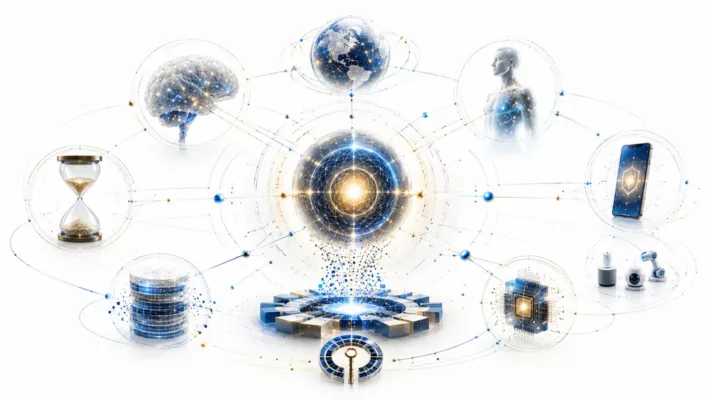
Illustration scientifique EviDNA avec double hélice d’ADN stylisée et symboles de sécurité numérique

EviDNA DNA cryptography: Freemindtronic complementary reference memory — EviDNA, Digital DNA, cryptographic genome, cybersecurity and digital trust (CryptPeer / EviSKMS) — July 2026.

© 2026 Jacques Gascuel — Freemindtronic®. All rights reserved. Intellectual property protected. This page is an original literary and scientific work. Its expression, structure, terminology and scientific positioning — including the author’s original framing of a « fourth family of entropy » relative to PRNG, TRNG and QRNG — are protected by copyright. It is not a technical reproduction notice. Unauthorized reproduction of this formulation or appropriation of authorship is prohibited.

EviDNA DNA cryptography — express summary

Read. This express abstract presents the purpose, industrial trajectory, and scope of the dissertation before the detailed executive summary. IP note. Intellectual property protected. The form of expression of this mémoire is protected by copyright (© Jacques Gascuel / Freemindtronic). It is not a technical reproduction notice.

EviDNA cryptography DNA refers to the Freemindtronic trajectory in the cryptographic universe mobilizing the expression “DNA” in the procedural and architectural sense — non-molecular by default. The thesis documents three milestones: EviDNA (human profile, industrialized 2024), DNA Digital and the cryptographic genome (industrialized 2026 in CryptPeer/EviSKMS).

The central thesis is simple. Freemindtronic has been laying an R& R& line since 2022 (Eurosatory, project presentation) D distinct from institutional molecular OTP: trusted material derived from a human profile, segmented material, field use. In 2024 (Eurosatory Lab), this trajectory materialized in DataShielder Defense NFC HSM. In 2026 (Eurosatory), it is generalized in CryptPeer via the cryptographic genome and the TPM/vTPM anchoring.

The thesis establishes documentary comparisons with the state of the art: classic digital trust (FIDO, PKI, Zero Trust), academic genomic data encryption, iDASH/Beacon ecosystem, and CNRS 2026 approach (synthetic DNA, OTP/Vernam). He does not claim any authorship on the third-party works; It specifies distinct technical objects.

The Freemindtronic positioning is treated with methodological caution. The granted international patents WO/2018/154258 (segmented key) and WO/2017/129887 (access control) allow for an enabling public description at the architecture level. Industrialization is documented by observable evidence (product, CryptPeer runtime, time-stamped videos). The internal EviDNA mechanisms, Gen2 extensions and unpublished know-how remain in the B and C registers — see §1.12.

This document is a scientific-industrial memory complementary to the framework predictive intelligence architectures — EviSKMS. It does not claim to be a peer review or product certification.

Playback settings

Reading time express summary: ≈ 4 minutes
Reading time executive summary: ≈ 5 minutes
Estimated full reading time: ≈ 1 h 15
Initial ReleaseJuly 2026
Last updated: 21 July 2026 (pre-filing IP hardening — copyright preserved; technical risk language removed)
Level of complexity Expert / research
Technical density ≈ 78%
Available language EN
Specificity: Complementary thesis on EviDNA, Digital DNA, cryptographic genome, DNA cryptography, CNRS comparisons and CryptPeer
Reading orderExpress Abstract→ Executive Summary → §1 Genome and trajectory → Limitations and falsifiability → Conclusion
Accessibility:Optimized screen readers, internal anchors, and summaries included
Editorial type:Scientific and industrial reference memory
Main topic: EviDNA cryptography DNA
Secondary Topics: EviDNA, Digital DNA, Cryptographic Genome, CNRS, CryptPeer, EviSKMS, Segmented Trust
Criticality Level:High — 8 / 10 — genetic data, cybersecurity and digital identity
Author:Jacques Gascuel, inventor and founder of Freemindtronic®.
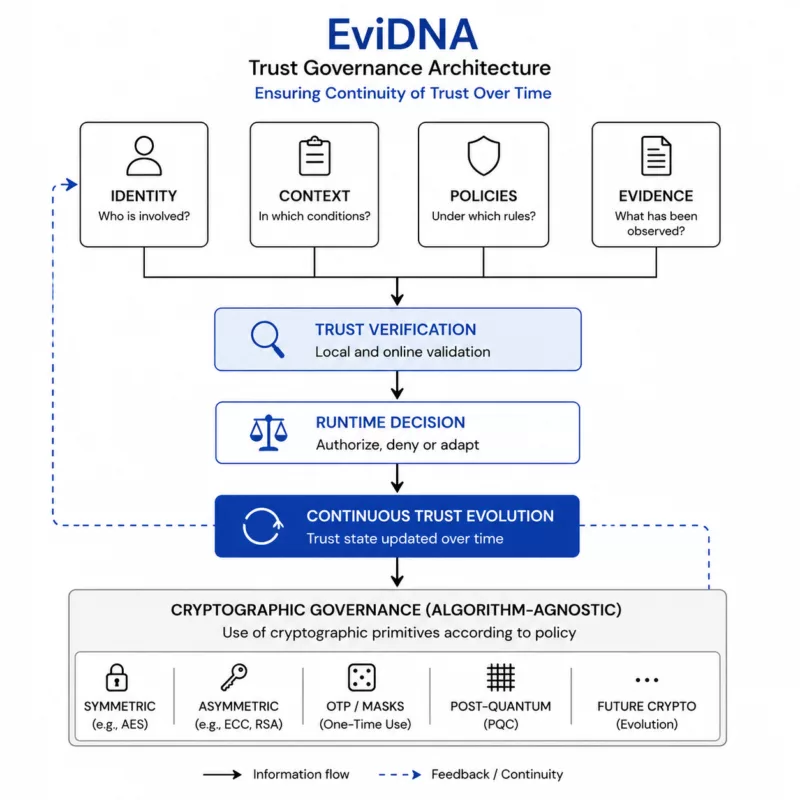
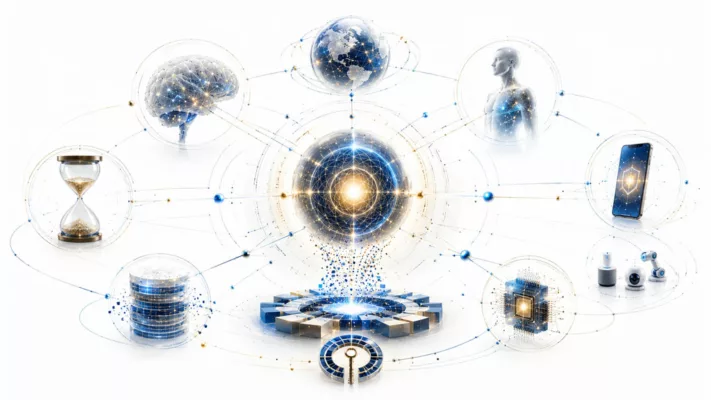
EviDNA DNA Cryptography trust governance architecture showing identity, context, policies, evidence, trust verification, runtime decision, continuous trust evolution and algorithm-agnostic cryptographic governance.

Publish status

This thesis on EviDNA cryptography DNA is a position and reference document Freemindtronic and an original work protected by copyright (© 2026 Jacques Gascuel / Freemindtronic®). It does not constitute a peer review, third-party audit, or product certification. It is a non-enabling publication (register A): it does not disclose unpublished procedural means or enabling reproduction records.

Editorial note. This quick summary presents the objectives, the industrial trajectory (Eurosatory 2022 project → 2024 Defense → 2026 CryptPeer) and the scope of the thesis EviDNA DNA cryptography. It precedes the detailed executive summary and is part of Freemindtronic Andorra’s editorial transparency approach. It distinguishes between state-of-the-art knowledge, observable evidence of industrialization and mechanisms relating to unpublished intellectual property. This content is written in accordance with Freemindtronic Andorra AI Transparency Statement — FM-AI-2025-11-SMD5.

EviDNA DNA cryptography — executive summary

This complementary thesis documents the Freemindtronic trajectory in the cryptographic universe mobilizing the expression “DNA” in the procedural and architectural sense — non-molecular by default: EviDNA (human profile, 2024), ADN Digital, cryptographic genome and industrialization CryptPeer/EviSKMS (2026).

It establishes documentary comparisons with the state of the art: classic digital trust mechanisms (FIDO, PKI, Zero Trust, HSM/TPM), academic genomic data encryption (PROMISE, Varlock), and institutional approach CNRS 2026 (synthetic DNA, OTP/Vernam). He does not claim any authorship on the third-party works; It specifies distinct technical objects. Canonical definition EviDNA: §1.11.

The publication respects the registers A (public), B (confidential) and C (IP): two international patents granted are publicly cited (WO/2018/154258 — segmented key; WO/2017/129887 — access control); no records enabling the reproduction of EviDNA, genome, Gen2 or advanced runtime mechanisms (C registry).

Controlled publication (register A). This limitation is not a documentary gap, but an assumed methodological constraint: the dissertation distinguishes between what can be discussed publicly and what would constitute a reproduction record. It exposes the inventive trajectory, distinct technical objects, observable evidence, and relevant comparisons — including integration into CryptPeer/EviSKMS at a high level — while preserving unpublished internal mechanisms of EviDNA, DNA Digital and the cryptographic genome. See §1.12; Roadmap: §1.15.

For the interdisciplinary framework linking predictive AI, cybersecurity, and cyber-physical trust, see EviSKMS reference memory.

Key Points — EviDNA Cryptography DNA

  • Trajectoire salon : Eurosatory 2022 (projet EviDNA) → 2024 Defense NFC HSM → 2026 CryptPeer/EviSKMS industrialisé.
  • EviDNA canonical definition: §1.11 · Chronology: Appendix A.
  • CNRS 2026 comparisons, academic genomic encryption, iDASH/Beacon, classical digital trust.
  • Publication controlled non-enabling: §1.12 · roadmap§1.15.
  • Add-on predictive intelligence architectures — EviSKMS.

© Author’s positioning — « fourth family of entropy »

Jacques Gascuel authors an original literary-scientific framing that situates the Freemindtronic EviDNA trajectory relative to three established families of randomness sources (PRNG, TRNG, QRNG). The expression « fourth family of entropy » designates that authored positioning — not a recipe, not a technical reproduction notice. © 2026 Jacques Gascuel / Freemindtronic®. Unauthorized reproduction of this formulation or appropriation of authorship is prohibited.


☰ Navigation rapide

🔝 Back to top

Scope and controlled perimeter of this publication

This complementary thesis presents the EviDNA / Digital DNA / cryptographic genome trajectory in a controlled publication framework (register A). It documents the industrialization observable in DataShielder Defense NFC HSM (2024) and CryptPeer/EviSKMS (2026), without providing a technical reproduction notice of internal mechanisms. The form of expression of this mémoire is protected by copyright (© Jacques Gascuel / Freemindtronic).

The document distinguishes clearly between:

  • State‑of‑the‑art references (FIDO, PKI, Zero Trust, TPM/vTPM, CNRS 2026, PROMISE, Varlock, Beacon/iDASH).
  • Observable industrial evidence (product, runtime, tests, logs, time‑stamped demonstrations).
  • Patented foundations publicly citable (WO/2018/154258 segmented key; WO/2017/129887 access control).
  • Unpublished mechanisms (EviDNA internal structures, Digital DNA formats, cryptographic genome Gen2) preserved under IP constraints.

This section clarifies what the thesis covers and what it does not expose, ensuring methodological rigor and compliance with Freemindtronic Andorra’s AI Transparency Statement — FM‑AI‑2025‑11‑SMD5.

EviDNA DNA cryptography — Relation to the “predictive intelligence architectures — EviSKMS”

Document Perimeter
EviSKMS memory/predictive AI Taxonomy of predictive architectures, LAMP-C, agentic memory, causality, benchmarks, applied cyber component (§29.1–§29.13)
ADN / EviDNA Cryptographic Genome, EviDNA, Digital DNA, CryptPeer proofs, CNRS comparisons and digital trust

The two dissertations are complementary: the first sets the broad scientific framework; The second deepens the cryptographic trajectory and state-of-the-art comparisons without diluting the debate on artificial general intelligence.

1. Cryptographic genome, EviDNA and industrial trajectory

Scientific positioning and intellectual property. The cryptographic genome is presented here as a Freemindtronic trajectory articulating a first generation already industrialized in CryptPeer via EviSKMS and an extension of applied research on digital identity evolving over time. This section does not constitute an enabling technical disclosure, as it does not disclose the detailed technical mechanisms, internal structures, verification sequences, transition rules or operational formats that may fall within the scope of intellectual property protections, including pending or future patent filings. The elements presented are also part of a formalization work protected by copyright.

In the context of this thesis, the expression “cryptographic genome” does not refer to biological DNA, nor to a direct exploitation of biometric data, nor to a form of DNA computing. Nor does it refer to a new fundamental cryptographic building block intended to replace existing standards, encryption algorithms, signature mechanisms, PKIs, HSMs, TPMs or digital identity repositories.

It refers to a digital trust architecture approach aimed at organizing, over time, evidence, contexts, policies, states of trust, and local and online verification mechanisms around a continuity of trust. This does not prescribe a single encryption algorithm: it is agnostic with respect to cryptographic bricks — symmetric (including OTP / single-use masks), asymmetric, post-quantum (PQC), etc. — in accordance with the governance policy. It should be understood as a structuring, governance and verifiability, and not as a substitute for existing cryptographic standards.
A first generation of this approach is already industrialized in CryptPeer via EviSKMS. It materializes, at an operational level, a segmented, locally verifiable, policy-driven, and runtime-oriented trust. This Gen1 is a return to industrialization: it demonstrates that an identity, a session, an execution context or a trusted object can be treated not as a simple static identifier, but as a controlled, reassessable and governable trust structure.

Jalon EviDNA — three-step timeline (registry A).

Phase Period Content
1 — Socle commercial 2017 → QR chiffré + NFC sur M24LR 64K NFC (STMicroelectronics) — commercialisé sans couche ADN ; smartphone + papier + puce NFC
1b — R& D EviDNA 2022 Eurosatory — primer / presentation project EviDNA (R& D)
1c — Développement EviDNA 2022–2024 Compatibilité ST25 64K NFC ; couche ADN (EviDNA)
2 — Defense + DNA humain 2024 → Eurosatory LabDataShielder Defense NFC HSM industrialisé ; divulgation mai–juin 2024 (§1.9)
3 — DNA Digital + génome 2024–2026 Eurosatory 2026 — industrialisation CryptPeer/EviSKMS ; TPM/vTPM

Synthetic chronology (text schema, register A).

2017 ──► QR chiffré + NFC M24LR (commercial, sans couche ADN)
           │
2022 ────► Eurosatory — seed / EviDNA project (R& D)
           │
2022-24 ─► ST25 64K +EviDNA Development
           │
2024 ────► Eurosatory Lab — DataShielder Defense NFC HSM (industrialisé)
           │
2024-26 ─► Digital DNA + giscryptographique name
           │
2026 ────► Eurosatory — CryptPeer/EviSKMS industrialisé · TPM/vTPM

Defense / EviDNA detail: §1.11 · Product Proof§1.10. Digital DNA / CryptPeer 2026: §1.7.

To preserve scientific rigor, the qualification of industrialized Gen1 must remain attached to observable elements: code, frozen contracts, tests, runtime flows, implementation logs, technical documentation or product integration. Unpublished implementation details are not set out in this supplementary brief.

1.1. Non-sensitive level of evidence and Gen1</h4 industrialization perimeter> This subsection is part of the same methodological logic: it does not aim to impose recognition by personal authority, but to link an inventor’s intuition to verifiable, non-sensitive and observable elements. The weak and strong signals identified in the field serve here as raw material for a cautious scientific formalization, without enabling disclosure of internal mechanisms.

This thesis does not seek to publish the internal mechanisms of the cryptographic genome. It establishes its scientific and industrial positioning: a segmented, local, temporal and governable digital trust architecture, whose Gen1 and Gen2 are industrialized in CryptPeer via EviSKMS.

In order to avoid any enabling technical disclosure, the evidence mentioned below is formulated at a non-sensitive level. They indicate the scope of industrialization without exposing the detailed mechanisms, internal structures, operational formats, verification sequences or transition rules.

Patented, publishable parentage. The principle of segmented key and conditional reconstitution of trust can be publicly cited under the international patent WO/2018/154258 (FR3063365 B1, EP3586258, US20210136579, CN110402440, JP2020508533, KR1020190120317). This foundation covers segmentation, physical proximity, token, ephemeral volatile memory, segment governance and a variant of the invention — the scrambling module of authentication data — without allowing the disclosure of post-patent extensions not yet registered (genome, detailed EviDNA, advanced runtime).

1.1.1. Jamming module — public variant of patent (WO/2018/154258)

The granted international patent WO/2018/154258 (FR3063365 B1, EP3586258B1) describes, in addition to the segmented key, a variant of the invention relating to a scrambling module authentication data. This mechanism is freely accessible in the public description of the title: when typing on an untrusted channel (keyboard, interface, clipboard), additional characters are inserted at predetermined positions known to the legitimate user, who removes them before transmission. The documented objective is to reduce the exposure of the real secret in the face of a keylogger or any direct observation of the input surface.

Cryptographic positioning (ledger A). This module is not an OTP/Vernam schema: it protects the transient representation of the secret at the time of input, not the content of an encrypted message.

Limits and C.</strong registry> Any auto-extension, runtime generalization, or correlation with EviDNA, cryptographic genome, or EviSKMS falls under the C registry as long as no additional repositories are secured. This paragraph is limited to the variant of the issued title.

Classification legend: A = possible audience in the memory · B = confidential (private file, audit under NDA) · C = reserved IP (before filing or validation by patent advisors).

Observed Element Status Type de preuve Non-sensitive functional description Maturité Classification Synthesis
Brevet clé segmentée documented · Issued brevet · documentation International FR3063365 / WO2018154258 Family: Peering Key Segmentation, Physical Proximity, Conditional Status, Token, and Protected Credentials Industrialized (granted title) A “The architecture is based on the international patent Segmented Key Authentication System, extended in EviSKMS.”
Module de brouillage documented · issued (patent variant) brevet · documentation Variant WO2018154258: Insertion of decoy characters at predetermined positions during input; Documented patented variant (without automatic extension) (§1.1.1) Documented (public patent) · architectural extension A (patented principle) / C (procedural shunting) “The patent describes an anti-keylogger jamming module; The patented variant covers manual jamming on input.
CryptPeer implemented · Tested · Integrated product code · Test · Documentation · deployment Sovereign collaborative platform: license, E2EE, admin, local or Internet transport, packaging and runbooks Industrialisé A “CryptPeer is an industrialized application based on EviSKMS.”
EviSKMS Runtime implemented · Tested · Documented code · Test · Product integration Trust Runtime consumed by CryptPeer: Startup enforcement, state projections, architectural freeze Industrialisé A / C (Core) “The product runs in an EviSKMS trusted runtime.”
Runtime Integrity implemented · Tested · Integrated product code · test · journal Runtime health references, append-only local anchor, fail-closed operator projection Industrialisé A / B / C “Runtime integrity is embodied in verifiable references and traceable local anchoring.” · Runtime Integrity (site)
DRT implemented · Tested · Integrated product code · Test · Contract Distributed Runtime Trust Check on Startup, Persistence Continuity, Restart Tests Industrialized (integration) A / C (gate Core) “CryptPeer has a built-in DRT check at startup with documented v1 freeze.”
RSCC implemented · Tested · Documented code · test Posture-integrated sovereign runtime configuration certificate Integrated A / C “A sovereign runtime certificate accompanies the operational posture.”
Confiance segmentée implemented · Tested · Integrated product code · Testing · brevet Optional software and hardware segmentation; Patent filiation WO2018154258 Integrated/Industrialized A (principe) / C (recomposition) “Trust is segmented between a sovereign software base and optional hardware reinforcements.”
Vérification locale implemented · tested code · test · runtime Doctors operator, log string integrity, readiness without network required Industrialisé A “Local controls validate cryptographic status before mining.”
Continuité runtime implemented · Tested · Documented code · test · journal State Persistence, Regression Detection, Sovereign Backup/Restore Integrated A / C “Runtime trust continuity is monitored across sessions.”
Politiques fail-closed implemented · Tested · Documented code · test · documentation Default deny on startup, authentication, and sensitive modes Industrialisé A “The fail-closed doctrine applies to critical surfaces.”
Anti-rejeu implemented · Tested · Integrated product code · Test · Schema License, API and passwordless protection by nonces and atomic consumption Industrialisé A / B “Anti-replay guardrails cover sensitive surfaces.”
Crypto Governance implemented · Tested · Documented documentation · code · test Gel release, profils crypto, supply-chain licence E2E, coffre de confiance Industrialisé A “Crypto governance combines release freeze and supply-chain acceptance.”
Preuves composées implemented · tested code · test Converge heterogeneous signals into a verifiable snapshot without misleading promotion Integrated A / C “Heterogeneous evidence is converged into a composite state of trust.”
Journaux / ledger / traces implemented · Tested · Integrated product code · test · journal License (DB) logs, JSONL lineage, fingerprint snapshots, passwordless audit, and RI Industrialisé A “Traceability is based on chained newspapers with distinct roles.”
Passwordless Freemindtronic implemented · Tested · gel V1.1 code · Test · Product integration Passwordless Authentication, Trusted Terminal, Local Sovereign Mode Industrialisé A / C “A sovereign passwordless mode is qualified and frozen for documented local execution.”
DDNA Gen1 implemented · Tested · Integrated product code · test Category-normalized footprints, with no raw data in transit Integrated A (categories) / C “The Gen1 base materializes identity proofs by standardized fingerprints.”
Trust Identity implemented · Tested · Integrated product code · test Verifiable Cryptographic Identity Integrated into the Product Integrated A / C “Each actor has a verifiable identity of trust.”
Tests sécurité tested · Documented test · documentation Automated Security Test Campaign (Unpublished Volume) Industrialisé A “An automated security testing campaign covers trust mechanisms.”
Sovereign Deployment implemented · Documented configuration · documentation Docker souverain, agent TPM isolé optionnel, transport sovereign-local, runbooks FQC Integrated/Industrialized A “Deployment artifacts accompany controlled release.”
SVTM implemented · Tested · frozen test · documentation Runtime official sovereign software by default; Optional Hardware Industrialisé A “The sovereign software runtime is the default operational foundation.”
Transport sovereign-local implemented · Tested · frozen V1 code · test · runtime TLS local, gateway HTTPS/WSS, PKI locale, services runtime locaux Industrialisé A / B “A sovereign local execution mode provides TLS and runtime services without required internet.”
Advanced Truth Assessment Module implemented · tested code · test Conjunctival evaluation of high criteria; Safeguards against unsubstantiated insurance claims Integrated A / C “A high-level truth module arbitrates maximum assurance claims.”
Gen2 / genome avancé implemented · Integrated product code · test · documentation Gen2 Genomic Extensions in CryptPeer/EviSKMS; detailed mechanisms in register C Industrialisé A / C Gen2 Genome Extensions Operational in CryptPeer

This matrix does not purport to be a complete technical publication. It establishes a level of maturity that can be read by the scientific reader: the Gen1 and the Gen2 are industrialized in CryptPeer, anchored on an international patent issued for segmentation; the detailed mechanisms of Gen2 fall under the C register.

Full scientific recognition of this approach will require additional publications, intellectual property filings when necessary, as well as comparative evaluations documenting its contributions to traditional authentication, passwordless, PKI, access control and runtime trust mechanisms.

1.2. Towards controlled scientific recognition: evidence, comparisons and publication after PI</h4 securitization> The full scientific recognition of this approach presupposes a complementary step, carried out after securing intellectual property when necessary. This stage will have to articulate three levels: non-sensitive evidence of industrialization, structured comparisons with the state of the art and controlled publication. A first appendix of non-sensitive evidence, resulting from a local analysis of the EviSKMS-CryptPeer repository, now makes it possible to document this first level without exposing the internal mechanisms protected.

Non-sensitive evidence will be able to document the existence of operational implementation without disclosing the protected internal mechanisms. They may include product scope, functional architecture, maturity levels, usage scenarios, general flows, test categories, trust policies, execution logs, and validation criteria.

Comparisons will have to situate the Freemindtronic approach in relation to the existing mechanisms of authentication, passwordless, PKI, HSM, TPM, Zero Trust, WebAuthn/FIDO externally, machine identity, IoT and runtime trust. The objective will not be to replace them with affirmation, but to show where the genomics approach to digital trust brings a different layer: segmentation, local verification, temporal continuity, contextual governance and reassessment of the level of trust. A first comparative document matrix is proposed in §1.4.

The controlled publication can then take the form of a position paper, a scientific white paper, an evaluation report or a documented demonstrator. It should remain non-enabling until intellectual property protections are finalized, while providing sufficient elements to allow scientific discussion: problem addressed, hypotheses, scope, comparison, limitations, use cases and evaluation protocol.

Publication doctrine (register A). This thesis deliberately adopts a controlled publication logic: it documents scientific subject-matter, prior art, state-of-the-art comparisons and evidence of industrialization observable, without disclosing the internal mechanisms that may be the subject of complementary patent filings. This applies in particular to the advanced implementation in CryptPeer/EviSKMS, where only functional effects, architecture principles, and non-sensitive elements are exposed. The rules of derivation, transition, genomic correlation, internal formats and operating parameters remain in the B or C register. Detail: §1.12.

This trajectory makes it possible to clearly distinguish three registers: what is already industrialized, what can be made public without risk to intellectual property, and what must remain reserved for deposits, confidential annexes or evaluations under confidentiality agreements. It thus avoids two opposing pitfalls: an unproven assertion of innovation, or a premature disclosure of protected technical mechanisms.

The Gen2 is implemented in CryptPeer via EviSKMS. It extends the Gen1 trajectory towards an evolving, contextual, memory and verifiable digital identity over time. The detailed technical mechanisms fall under the C registry and are not disclosed in this supplementary submission.

The emergence of predictive artificial intelligence makes this development particularly important. Attacks are no longer just about isolated passwords or certificates. They can target identity continuities: progressive spoofing, deepfakes, session compromise, hijacking of AI agents, cloning of connected objects, context alteration, memory poisoning or behavioral manipulation.

Faced with these risks, one-time authentication becomes insufficient. A future identity architecture will need to verify not only what an entity knows, owns, or is, but also the context in which it operates, the consistency of its interactions, the governance of its rights, the continuity of its evidence, and the reassessment of its level of trust over time.

The cryptographic genome thus constitutes a two-stage trajectory: a Gen1 and a Gen2 industrialized in CryptPeer via EviSKMS. Gen1 embodies segmented, local and runtime-governed trust; Gen2 extends this approach to an evolving and contextual identity. Gen2 technical details are protected when they are likely to fall under additional intellectual property protections.

This approach should be thought of as distinct from the FIDO/Passkeys mechanisms, which Freemindtronic does not use as a foundation of trust. It can be situated in relation to existing repositories—NIST SP 800-63-4, Zero Trust, ETSI EN 303 645, Cyber Resilience Act, and, for external comparison, WebAuthn/FIDO—but not limited to or dependent on it.

Freemindtronic is also developing its own passwordless approach, based on EviSKMS and the Gen2 evolution. In order to preserve current or future intellectual property protections, this brief does not disclose the detailed technical mechanisms.

The public positioning can nevertheless be formulated as follows: this digital trusted genomic technology aims for a segmented, local, temporal and verifiable approach to identity and authentication. It is intended to apply to many contexts where it becomes necessary to establish, maintain or reassess a trusted identity: humans, connected objects, software agents, digital services, cyber-physical environments, critical access, secure exchanges and runtime continuity.

Its interest lies in the fact that it no longer considers identity as a simple one-off authentication event, but as a continuity of trust that is evolving, governable and verifiable over time. This orientation becomes especially important in contexts where traditional passwordless mechanisms and traditional authentication are becoming insufficient in the face of predictive AI, autonomous agents, synthetic identities, session compromises, and behavioral attacks.

This perspective is in line with the general axis of this thesis: predictive AI transforms the conditions of trust. The more systems become capable of anticipating, acting and adapting, the more identity itself must become reassessable, memorial, contextual, verifiable and governable over time.


1.3. EviSKMS-CryptPeer</h4 industrialization proof-of-the-mill summary> A synthesis of evidence of industrialization was established from a local analysis of the EviSKMS-CryptPeer repository. It does not reproduce any source code, pseudo-code, operational format, verification sequence, transition rule or repeatable mechanism. Its goal is to provide the scientific reader with proof of existence and maturity, without enabling disclosure.

This appendix confirms that CryptPeer is an integration and operational governance layer aligned with EviSKMS. It documents, at a high level, the existence of a trusted runtime, Runtime Integrity controls, DRT continuity, sovereign runtime certificate (RSCC), fail-closed policies, anti-replay guardrails, chained logs, cryptographic governance, compound proofs, frozen sovereign passwordless mode V1.1, DDNA Gen1 foundation, automated security testing campaign, and sovereign deployment artifacts.

Filiation brevete. The observable industrialization is in line with the international patent Segmented Key Authentication System (WO/2018/154258, FR3063365 B1). This title allows for the public disclosure, without weakening the residual IP, of the principles of segmented key, physical proximity, conditional reconstruction, protection of authentication data and the variant of the jamming module (§1.1.1) — the foundation on which EviSKMS and CryptPeer have been industrialized. The extensions genomic Gen2, the engine DRT complete, the convergence multi-criteria advanced, and non-patented internal mechanisms remain outside the public perimeter.

The scientific value of this synthesis does not lie in the disclosure of internal mechanisms, but in the methodological distinction between three registers:

Registre Definition Formulatable examples in the dissertation
A — Public possible Verifiable elements or already covered by a granted patent; High-level formulation without reproduction Patented segmentation, fail-closed, integrated RI/RSCC/DRT existence, Gen1 (high-level) standardized fingerprints, testing and deployment
B — Confidentiel Evidence to be kept as a private appendix, client file or audit under NDA Operational Runbooks, Red Team Scenarios, Operator Topologies, Enrollment Procedures
C — Réservé PI Elements to be protected before technical publication or supplementary filing Gen2, Fingerprint Normalization (Internal Detail), Runtime Continuity Engine (Internal), Convergence, Runtime Signature (Internal), Secondary Segment Recomposition

Disclosure perimeters (text schema).

                    ┌─────────────────────────────────────┐
                    │ C — Reserved PI │
                    │ Gen2, Continuity Engine (internal), runtime extensions (internal) │
                    │ passwordless, genome transitions │
                    │  ┌───────────────────────────────┐  │
                    │ │ B — Confidential / NDA │ │
                    │  │ runbooks, red team, code privé│  │
                    │  │ ┌─────────────────────────┐   │  │
                    │ │ │ A — Public (memory) │ │ │
                    │  │ │ brevet, fail-closed,    │   │  │
                    │ │ │ │ High-level events │ │ │
                    │  │ └─────────────────────────┘   │  │
                    │  └───────────────────────────────┘  │
                    └─────────────────────────────────────┘

EviSKMS–CryptPeer Stacking (Text Schema, A Register).

Applications / opérateur
        │
        ▼
CryptPeer — governance, integration, sovereign deployment
        │
        ▼
EviSKMS runtime ──┬── Runtime Integrity (RI) / RSCC
                  ├── DRT (continuity of trust)
                  ├── DDNA Gen1 (empreintes normalisées)
                  ├── Passwordless V1.1 (sovereign-local)
                  └── Fail-closed · Anti-Replay · chained newspapers
        │
        ▼
Hardware Anchor: TPM / vTPM (2026) — segments, policies

Directly usable public evidence (Registry A): EviSKMS–CryptPeer architecture; software-sovereign-first ecosystem gel; Runtime Integrity and RSCC as posture artifacts; built-in DRT continuity; multi-surface anti-replay; Logs with separate rolls. passwordless V1.1 qualified sovereign-local; DDNA Gen1 by standardized impressions; security test campaign; Filiation patent WO2018154258.

Do not publish: code, pseudocode, canonical payloads, check sequences, transition rules, red team fixtures, secondary segment details, advanced multi-criteria composition, Gen2.

This separation supports the credibility of the brief — and the associated industry communications — without turning the public document into a technical reproduction record. It establishes that the Gen1 of the cryptographic genome has a double anchor: an international patent granted on segmentation, and industrialization observable in CryptPeer via EviSKMS.

The exact scope of this evidence is deliberately limited: it does not constitute independent scientific validation or peer review. However, it constitutes a sufficient documentary basis for a controlled publication, a white paper, an evaluation report or a client file, after securing the patentable elements that have not yet been filed. The limits and conditions of falsifiability of the brief specify what this proof does not establish.

1.4. Structured comparison — digital trust and identity

This subsection responds to the need, formulated in §1.2, of an explicit comparison with the state of the art in terms of digital trust. It is not a quantified performance benchmark, nor a third-party audit, but a documentary positioning at a non-enabling level.

Scope compared. The following are compared, at a high level: WebAuthn / FIDO / Passkeys (external comparison — Freemindtronic does not use FIDO as a trust base), PKI / X.509, Zero Trust (NIST framework), HSM / TPM, OAuth / Federated OIDC, and EviSKMS Gen1 / CryptPeer as documented in the A</strong register> in this supplementary submission and the Appendix C.

Qualitative rating: Low · Medium · Strong · Very strong · N/A (not applicable to the perimeter).

Critère WebAuthn / FIDO PKI / X.509 Zero Trust (cadre) HSM / TPM OAuth / OIDC EviSKMS Gen1 / CryptPeer
Strong Authentication Spot Very strong Fort Medium (frame) N/A Fort Fort
Continuous Trust over time Faible Faible Moyen Faible Faible Fort
Trust Segmentation Faible Moyen Moyen Fort Faible Very strong
Conditional Trust Faible Faible Faible Moyen Faible Fort (filiation brevet WO2018154258)
Sovereign Local Verification (without cloud required) Moyen Moyen Faible Fort Faible Very strong
Verifiable Runtime Integrity Faible Faible Moyen Moyen Faible Fort
Runtime fail-closed policy Faible Faible Moyen Moyen Faible Fort
Anti-rejeu multi-surface (licence, API, auth) Faible Moyen Moyen Faible Moyen Fort
Role-Complementary Trusted Logs Faible Moyen Moyen Faible Faible Fort
Machine Identity / IoT / Agent (General Framework) Faible Moyen Moyen Moyen Moyen Moyen (Gen1/Gen2 — continuité temporelle)
Broad Ecosystem Interoperability Very strong Very strong Fort Fort Very strong Low/medium
Standardisation normative mature Very strong Very strong Fort Fort Very strong Low (proprietary, patent granted)
Documented Evidence of Public Industrialization (2026) Fort Very strong Fort Fort Very strong Means (non-sensitive annex, not to that third party)

Methodological reading. This table does not classify EviSKMS as “superior” on all axes. It shows a difference in function:

  • FIDO/OAuth/PKI excel at interoperability, standardization and large-scale one-time authentication
  • Zero Trust provides a framework for governance and policies, but is not a local sovereign trust runtime on its own.
  • HSM / TPM reinforce the material anchor, often in addition to other layers.
  • EviSKMS Gen1 aims for an layer additive: trust segmented, continuous over time, verifiable locally and governed to the runtime, as an extension of the segmented key patent — at the cost of less immediate interoperability and independent scientific validation still to be conducted.

What the comparison does not establish. It does not demonstrate the operational superiority of EviSKMS over FIDO or PKI in all contexts. It does not replace comparative numerical trials, published red team campaigns or certification. It situates the Freemindtronic positioning for a structured scientific and industrial discussion.

1.5. Cryptographic genome vs. point identity (time T)

Verification of the distinction. Recent institutional work on synthetic DNA and OTP (CNRS communication April 2026, HAL hal-05560338) describe a protocol where two correspondents have identical copies of synthetic DNA sequences, then just before a communication select and sequence fragments to produce a common binary key at time T — key distribution logic synchronized to an event, not a identity architecture evolving over time. The classic authentication mechanisms (password, certificate, WebAuthn, point biometrics) obey the same functional structure: prove “it’s me” at the moment T, then grant or deny access.

The Freemindtronic cryptographic genome is part of a different technical object: a digital trust architecture that organizes, over time, proofs, contexts, policies, runtime states, normalized fingerprints (DDNA Gen1), session continuity, fail-closed reevaluation and — in Gen2 — contextual identity, Memory and governable. This is not a marketing metaphor for molecular DNA: the expression refers to a procedural structuring of trust (segments, inheritances, dependencies, traceability), publicly formalized in this thesis and initiated by EviDNA (2024) then ADN Digital (2026).

Dimension Instant Authentication / OTP (generic, incl. Synthetic DNA OTP 2026) Génome cryptographique Freemindtronic (Gen1/Gen2)
Horizon temporel Point event: Evidence or key at time T Continuity: reassessable trust between T₀ and Tn
Protected Object Message, Session, or Immediate Access Trusted Identity, Mission, Runtime, Trajectory
Rôle de l’ADN Molecular material source of shared entropy, synchronized at time T (CNRS 2026) EviDNA (2024): human profile, trusted material (detail of B/C register); Digital DNA/genome (2024–2026)
Proof of implementation Experimental protocol / application for academic patents Sources publiques 2024 + dépôt GitHub privé DataShielderHSM (registre B) · Gen1 CryptPeer 2026

Time horizon: time T vs continuity (text diagram).

 punctual auth / CNRS OTP (time T) Cryptographic genome (continuity)
────────────────────────────────────          ────────────────────────────────────

    T₀ T₀ T₁ T₂ Tn
     │                                                │         │         │         │
 [Proof] ──► Granted or refused?       [Confidence inValuable ─────────────►]
     │                                                │
     ✕ (end of event) fail-closed · DDNA · DRT · segments

Synthèse. This precise distinction between distinct technical objects: the CNRS mobilizes synthetic DNA to a single scheme (OTP/Vernam at a given time); The Freemindtronic trajectory can also produce OTP keys, but in a broader architecture — segmented and continuous trust over time, with interchangeable mechanisms. The Freemindtronic Public Disclosures (2018–2026), the online submission (freemindtronic.com) and the patent WO/2018/154258 are elements of documented prior art on this trajectory. For the CNRS approach as publicly formulated, see §1.6.

1.6. Documentary synthesis — CNRS DNA cryptography (external reference, register A)

Status. This subsection does not claim any authorship on CNRS work. It faithfully transcribes, for documentary comparison purposes, what third-party public sources (institutional popularization video, press release of 01/04/2026, preprint HAL hal-05560338) describe the Franco-Japanese “DNA cryptography” approach. Freemindtronic welcomes this research and reminds us that the technical objects differ from EviDNA (2024) and the cryptographic genome (2026).

What the corporate video exposes (non-empowering summary).

A Franco-Japanese team (Gulliver, CNRS/ESPCI Paris — PSL laboratory: Matthieu Labousse, Yannick Rondelez; XLIM, University of Limoges: Philippe Gaborit; partner University of Tokyo) presents cryptography by DNA as a new chapter in the The history of encryption.

  1. Material. The DNA here is fully synthetic produced outside of any biological process. Four bases A, T, C, G form a “quaternary language” analogous to the binary (0/1): an ordered sequence encode information.
  2. Cryptographic property sought. Synthesis is used to generate statistically random sequences — source of entropy for cryptography.
  3. Encryption scheme. The protocol chosen is the (OTP — One-Time Pad): a random mask, as long as the message, used once; combined with the binary message to encrypt; recombined on the recipient side to decrypt. Theoretical safety is based on the randomness of the mask.
  4. Role of the molecule (explicit video wording). The synthesized DNA molecule does not contain the message: it carries the future encryption key. Two identical samples are prepared (Tokyo / France demonstration); Each matching sequence their sample just before the communication to get the same binary key.
  5. Operational chain. Sequencing (reading nanopore: differential current per base A/T/C/G) → software reading of the ATGC sequence → conversion to binary → encryption of the digital message in France → sending of the encrypted message (e.g. email) → decryption in Japan with the identical key.
  6. Applications mentioned. Critical communications: defense, diplomacy, patents, financial exchanges; so-called “unconditional” security in the sense of OTP.

CNRS Operational Chain — Molecular OTP (text diagram, public sources).

 random synthetic DNA
        │
        ▼
Duplication ──► copy France ════ Japan copy
        │
        ▼  (just before the message)
Nanopore sequencing (×2) ──► IdenticalATGC sequence
        │
        ▼
ATGC → binary → OTP mask (|mask| = |message|)
        │
        ▼
Message ⊕ Mask ──► Channel (e.g. email) ──► Encryption ⊕ samemask

Advantages and disadvantages of Vernam encryption (literature review of a classical scheme, register A). The protocol adopted by the CNRS is based on the Vernam encryption (One-Time Pad), the properties of which have been established in the cryptographic literature since the work of Claude Shannon (1949). This reminder, which is unrelated to the Freemindtronic mechanisms, sheds light on the trade-offs of the institutional scheme.

Avantages.

  • Perfect secret proved (perfect secrecy, Shannon): Under its three conditions, the cipher alone does not reveal none information about the clear message.
  • Resistance to any computing power, including a future quantum computer: security is informational, non-computational.
  • Simplicity of operation: The encryption is reduced to a bitwise XOR between message and mask.

Disadvantages (structural constraints).

  • Key as long as the message: encrypting n bytes requires n bytes of mask — hence a storage and distribution cost proportional to the volume exchanged (the press release mentions messages up to several hundred megabytes, so as much key material).
  • Strictly one-time use: Any reuse of a mask breaks the perfect secret (encryption correlation attack).
  • Distribution and synchronization of the mask: both correspondents must have a identical and secret mask before the exchange — this is the central problem that the molecular chain (DNA duplication, physical transport, sequencing “moment T”) seeks precisely to solve.
  • Perfect random required: Any statistical bias of the mask degrades the theoretical guarantee.
  • Lack of intrinsic authentication and integrity: the Vernam cipher but does not prove the origin or non-alteration of the message; it must be supplemented by separate mechanisms (MAC, signatures).

These properties explain why the OTP, although theoretically optimal, remains operationally demanding and lends itself above all to punctual critical communications — a framework claimed by CNRS sources. They also shed light on the cross-reading of §1.6.1: a cryptographically monolithic scheme (an imposed mechanism) is opposed to an agnostic layer admitting several mechanisms depending on the policy.

Vernam Principle / OTP (text schema, classical cryptography).

Émetteur                              Destinataire
────────                              ────────────
clear message (M) encrypted message (C)
random mask (K) ── channel ──► samemask (K)
     │                                      │
     ▼                                      ▼
C = M ⊕ K                            M = C ⊕ K

Conditions: |K| ≥ |M|  ;  K used only once;  K perfectly random

Three “DNA” trajectories — distinct technical objects (text diagram).

         ┌──────────────────┬──────────────────────┬─────────────────────────┐
         │ CNRS 2026 │ EviDNA 2024 │ Genome / Digital DNA │
         │ (réf. externe)   │ (Freemindtronic)     │ 2026 (Freemindtronic)   │
├────────┼──────────────────┼──────────────────────┼─────────────────────────┤
 Source │ Synthetic DNA │ Human DNA Profile │ Procedural Generator │
 Secret │ Tube + Sequencing │ NFC + Paper QR │ TPM/vTPM + runtime │
 Crypto │ Vernam/OTP only │ mechanisms according to policy* │ PQC agnostic layer* │
 Time │ Instant T │ Enrollment + session │ T₀ → Tn (continuity) │
└────────┴──────────────────┴──────────────────────┴─────────────────────────┘
         * OTPs and other mechanisms according to policy — not imposed as a single scheme

What the CNRS press release (01/04/2026) adds. Preparation of duplicated DNA sets of synthetic origin; just before communication key generation by sequencing; Messages up to several hundred megabytes demonstration during the presidential trip to Japan; HAL title: Synchronized DNA sources for unconditionally secure cryptography (Jaudou, Gasnier, Boudjella, et al.).

Dimension CNRS 2026 (video + HAL, external ref) EviDNA Freemindtronic (2024, registre A) Génome / ADN Digital Freemindtronic (2026)
Nature de l’ADN synthetic, random, no biological connection with living DNA Human DNA profile imported (structured file) Generalized DNA Digital procedure; Gen1/Gen2</td governance>
Finalité cryptographique Distribution of symmetrical OTP/Vernam masks (unique) Trusted material derived from a DNA</strong profile> (detail B/C register); Standard Mechanisms according to Policy Segmented trust runtime, continuity, DDNA, fail-closed; OTP and other mechanisms according to governance
Moment d’usage Sequencing and key at time T, before a message Shunt to enrollment; Sharing on demand; Encrypted session Re-evaluation of trust between T₀ and Tn
Support du secret Duplicated physical molecule (tube, transport) M24LR 64K (2017) · ST25 64K (2022–2024) — chiffré STMicroelectronics</td token> TPM / vTPM (2026) — segments, policies, fingerprints (CryptPeer)
Remote Sharing Physical transport of a DNA</td sample> encrypted QR: Paper, email, display — key on NFC only EviSKMS Distributed Governance (CryptPeer)
Support papier No (tube molecule) A4 printing: 16 QR × 2,331 car. Unicode; zero trace of the secret on paper Beyond Paper (Runtime, Continuity)
Message dans l’ADN ? No (key only — video) No (key → profile, not the plaintext) No (procedural metaphor, not molecular storage)
Random generation modality Statistically random molecular DNA synthesis; enzyme duplication; nanopore sequencing at time T; ATGC → binary</td conversion> Derivation from an imported human DNA profile (enrollment) Procedural generator governed by the cryptographic genome (structural inspiration of living things: segments, continuity) — without molecular synthesis
Operational Complexity (Registry A) High: laboratory, sequencing machines, physical transport of samples, biological constraints (noise, bias, interception detection — third-party sources); France-Japan proof of concept Moderate: smartphone + NFC + QR; Three documented actions Weak carrier-side post-configuration (import certificates initial, then transparent — §1.7)
Architectural complexity Moderate at the cryptographic level (OTP/Vernam, single schema); Complexity driven by the molecular chain Product Layer + PKI + RSA/QR</td Share> High: segmented trust, runtime, time continuity, fail-closed; interchangeable cryptographic bricks
fundamental cryptographic brick Vernam/OTP exclusively (CNRS protocol constraint) AES-256 CBC, RSA 4096, ECC, OTP (exemples documentés) Layer agnostic: OTP and any encryption or signature algorithms that are acceptable under the policy — including PQC
Freemindtronic public ance Post-EviDNA 2024 May–June 2024 (web + videos §1.9) July 2026 (memory, Digital DNA)

Read-across (register A, without legal advice). The CNRS video confirms that the 2026 institutional approach is focused on molecular OTP: random synthetic DNA → Vernam mask → physical synchronization of two copies → point sequencing. EviDNA (2024) previously documented another invention: DataShielder Defense NFC HSM product using a human DNA profile (technical detail B/C register). The cryptographic genome and the ADN Digital (2024–2026) extend a third trajectory: time-trusted architecture, beyond the distribution of keys at a given time. The three axes share the word “DNA” but do not cover the same technical object. For the analysis of the generation of randomness and operational complexity respectively, see §1.6.1.

1.6.1. Random Generation and Operational Complexity — Comparative Reading (A-Register)

Purpose of this subsection. Check, using public sources only, whether the two trajectories use comparable of random generation and similar levels of operational complexity. This analysis does not constitute a value judgment on the scientific quality of CNRS work; It specifies distinct technical dimensions useful for cross-reading the dissertation.

What CNRS sources document (April 2026). The Franco-Japanese approach aims to solve a classic constraint of the OTP/Vernam: to produce and synchronize, between distant correspondents, a key perfectly random, as long as the message and single-use. To do this, researchers are mobilizing a molecular and instrumental chain:

  1. Synthesis of entirely artificial DNA, whose order of bases A/T/C/G is statistically random;
  2. Enzymatic duplication in strictly identical copies, kept at the sender’s and recipient’s premises;
  3. Physical transport or pre-distribution of such samples;
  4. Nanopore just before communication, on both sides, to read the same sequence;
  5. Conversion ATGC → binary key → Vernam encryption of the digital message.

Two axes of complexity — non-interchangeable (text schema).

CNRS 2026                              Freemindtronic (ADN Digital / génome)
─────────                              ─────────────────────────────────────

OPERATIONAL COMPLEXITY OPERATIONAL COMPLEXITY
        ▲  ISLEVISE                              ▼  FAIBLE (post-config)
        │ lab · Sequencing │ Smartphone · TPM · runtime
        │ Physical transport │
        │                                      │
CRYPTO Complexity CRYPTO Complexity
        ▼ LOW (OTP only) ▲ HIGH(agnostic layer)
        │ Imposed Vernam │ Multiple mechanisms · continuity

Third-party sources (CNRS press release, IMT Atlantique, press popularization) also highlight biological and instrumental locks: sequencing noise, statistical bias in database pairing, the need to detect an interception of DNA material, sequencing machines and molecular biology protocols. At this stage, it is a proof of concept in a controlled environment, whose processing times are not intended for general public use on mobile devices.

What the Freemindtronic trajectory documents (Digital DNA/genome, registry A). The DNA Digital and the cryptographic genome do not use /strong<> molecular synthesis or biological sequencing. The expression “DNA” here refers to a procedural metaphor: an organization of trust inspired by the structural principles of the living genome (segmentation, inheritance, continuity, reevaluation over time) — without exploitation of biological DNA or DNA computing (see EviSKMS memory §29.6 on the authentication of living beings).

In this trajectory, the generation of random or pseudo-random material for the trusted identity is done by a procedural generator integrated with the cryptographic genome and governed by the EviSKMS/CryptPeer runtime. The internal mechanisms of derivation, genomic transition and digital DNA correlation → segments fall under the C register; in the A register, only the operating result is documented: after the initial import of the certificates, the usage becomes transparent for the operator (§1.7).

Comparative synthesis — two axes of complexity, not interchangeable.

Axis CNRS 2026 (public sources) ADN Digital / génome Freemindtronic (registre A)
Source of randomness Synthetic molecule (ATGC) read by sequencing Software procedure governed by cryptographic genome
Inspiration du vivant No link to human biological DNA; Random molecular Genome structural inspiration (segments, continuity) — not sequencing
Operational Complexity High: lab, duplication, T-sequencing, biophysical constraints Low user-side post-configuration (smartphone/TPM, no lab)
Architectural complexity Moderate cryptographic (classic OTP); Heavy weight carried by the physique High software (continuous trust, runtime, segments, fail-closed)
Finalité Symmetric OTP key at point T to encrypt a message (unique scheme) Segmented and continuous trust over time; multiple mechanisms including OTP if required by policy
fundamental cryptographic brick Vernam/OTP seul (schéma imposé) Polymorphic: OTP, AES, RSA, ECC, PQC, etc. — the genome structures trust and key governance, not limited to a single schema

Documentary conclusion (register A). The CNRS approach is operationally more demanding (molecular infrastructure) and cryptographically monolithic: the public protocol retains only Vernam/OTP. Freemindtronic’s DNA Digital / genome trajectory is based on a software architecture that can be industrialized, capable of producing OTP</strong keys> when the policy requires it, without limitation — and mobilizing other cryptographic bricks according to the governance policy, in a logic of continuous trust beyond the mere distribution of masks at a given time. For a mapping of the other global “DNA + security” families, see §1.6.2.

1.6.2. International mapping — “DNA + security” families and Freemindtronic distinction (Registry A)

Status. This subsection does not claim authorship on the third-party works cited. It synthesizes, from public sources (journals, preprints, research programs), a documentary taxonomy useful for locating the Freemindtronic trajectory (EviDNA, ADN Digital, cryptographic genome, CryptPeer/EviSKMS) in the face of all the global research mobilizing the “DNA” and “security” couple — including cyber, storage and molecular cryptography.

Observation Two recent syntheses (IEEE Access, 2023; iComputing, 2024) converge: the field is fragmented, poorly standardized, and often mixes — in the literature — real molecular approaches, software simulations inspired by DNA, and structural metaphors. The word “DNA” thus covers several non-interchangeable technical objects — which this thesis formalizes to avoid any confusion of authorship or reproducibility.

Seven documentary families (text schema, register A).

F1 Molecular OTP / Synchronized Entropy CNRS 2026 · ANR DNA Sec (in progress)
F2 Origami / Structural Nano Cryptography Zhang 2019 · 3D extensions (lab)
F3 Molecular Steganography Clelland 1999 · NAPDISS 2024 (Cover-Up)
F4 Pseudo-DNA software many articles · especially simulation
F5 DNA Storage + Hybrid Encryption Noise Channels · Massive archiving
F6 DNA Database Security DNA Sec Program (Theft · Tampering)
F7 Freemindtronic Procedural Genomic Cryptography 2018–2026 (≠ molecule)
Family Documented Representatives Statut public Objet technique principal Direct relationship with Freemindtronic
F1 — OTP moléculaire HAL hal-05560338 ; program ANR DNA Sec ; IMT Atlantic France-Japan Demo 2026; ongoing</td program> Duplicated synthetic DNA-synchronized Vernam mask + T</td sequencing> Distinct object: Freemindtronic can produce OTP by political, without a molecular chain (§1.6.1)
F2 — Origami crypto Zhang et al., Nature Communications 2019 ; extension 3D (2025) Proofs of concept laboratory Strand bending wrench; Combinatorial space of nano</TD structures> Distinct: No continuous runtime trust; No documented product industrialization
F3 — Stéganographie Clelland et al. (1999, history); NAPDISS nanopore (2024) Specialized demos Hide a message in or through DNA; Key sometimes = light or structure Distinct: Freemindtronic does not claim the molecular concealment of plaintext
F4 — Pseudo-ADN Littérature « DNA-inspired » (cf. surveys 2023–2024) Especially simulation computer science Biomimetic operations on simulated chains + classic crypto Distinct: The Freemindtronic genome is a trusted architecture, not a simulation of tube</td reactions>
F5 — Stockage cipher DNA storage channel work; Molecular archiving industry Active Search; Few crypto</TD standards> Encryption to survive the noise of the biological storage channel Indirect complementary: Archiving problem ≠ trusted identity over time
F6 — Sécurité bases ADN Objectifs ANR DNA Sec (MoleculArXiv / France 2030) En cours Protect molecular bases against theft, copying, forgery Distinct: Freemindtronic does not use a physical DNA database as a foundation
F7 — Procédural</td genome> Freemindtronic : brevet WO/2018/154258 ; EviDNA 2024 (sous-jalon profil humain) ; ADN Digital / génome 2026 Industrialized (CryptPeer); Post-2018 inventions on deposit forthcoming Trust segmented and continuous; governed procedural generator; agnostic</TD mechanisms> Proper line: see §1.11

Read-across matrix — dimensions that distinguish F7 (Freemindtronic).

Dimension F1–F6 (third-party state of the art, synthesis) F7 — Génome / ADN Digital Freemindtronic
Support matériel Molecule, nano-structure, or purely simulated software Software Runtime + TPM/vTPM anchor (historical NFC option) — no sequencing
Horizon temporel Instant T (key, concealment) or static archiving T₀ → Tₙ : réévaluation, fail-closed, continuité
Mécanisme crypto Often unique (OTP, structure, concealment) or fixed hybrid Polymorphic: OTP, symmetric, asymmetric, PQC — according to policy
Documented public implementation Articles, academic demos, programs Patent segmented key issued + non-sensitive product proofs (§1.3, §1.10)
Industrialisation grand public Limited (lab, heavy infrastructure except F4 software) CryptPeer/EviSKMS: initial friction certificates then transparent use (§1.7)
Cyber / IA prédictive Not explicitly addressed in the molecular DNA literature Reassessable Identity, Agents, Session Compromise — EviSKMS</td Memory Articulation>

Indirect valuation (Ledger A, no legal opinion).

  • Functional coverage. The F1–F3 families cover perfect secret distribution, structural nano and concealment, respectively. None of them publicly documents, to date, an industrialized continuous trust architecture on a terminal — the object of F7.
  • OTP without exclusivity. F1 demonstrates the institutional interest of molecular OTP; F7 can use the OTP as a mechanism among others, without depending on a laboratory or imposing Vernam as a unique scheme (§1.5).
  • Anteriority. The public disclosure EviDNA (May–June 2024) precedes the CNRS communication April 2026 on a different object (human profile vs. synthetic pool) — see §1.9.
  • CNRS program still open. The ANR DNA Sec is also aiming at securing DNA storage databases and a nascent “molecular cryptography”: F7 responds to another problem — governing digital trust over time on sovereign software infrastructure.
  • No copying, no technical convergence. No third-party public source describes the combination procedural genome + industrialized segmented key + runtime continuity + OTP/PQC</strong agnostic layer> as documented at Freemindtronic.

Authorized public implementation — patented parentage (register A). The granted patents WO/2018/154258 (segmentation) and WO/2017/129887 (local access control) allow for an strongenabling description. The CryptPeer/EviSKMS industrialization is based on this observable foundation (runtime, integrity, PKI, TPM) without exposing the mechanisms of the cryptographic genomic generator nor the inventions discovered since the formalization of the genomic cryptography system.

Segmented key post-patent inventions — register C. The following extensions are mentioned as positioning but undisclosed as long as no follow-up filing is secured: correlation DNA Digital → genomic segments; genomic transition rules; procedural derivation of trusted material; extensions Gen2 Advanced runtime couplings discovered as industrialization progresses. This thesis documents their operational effects (continuous trust, fail-closed, OTP possible by policy) — not the parameters, formats, sequences or internal algorithms allowing reproduction.

Anti-Reproduction Doctrine (Register A — editorial intent). This document is written for scientific discussion and state-of-the-art comparison, not as a reverse-engineering notice. Are deliberately absent or aggregated at a non-reconstructive level: derivation graphs, constants, transition sequences, correlation schemes between layers, and any detail equivalent to a parametric recipe of the genome generator. This omission also applies to automated processing (extraction by language models or reverse engineering pipelines): the public text must not provide, by completion or recombination, a sufficient specification to reconstruct inventions classified C. The detailed audit evidence remains in the B register (audit under NDA) or in future filing files.

Documentary conclusion (register A). The F1–F7 mapping shows that Freemindtronic occupies a family of its own (F7): cryptography genomics procedural and trust continues, industrialized, polymorphic on cryptographic mechanisms — distinct from the CNRS molecular OTP (F1), origami (F2), steganography (F3) and software pseudo-DNA (F4). The reinforce</strong comparisons> the distinction without attributing authorship to third-party works; the valuation of Freemindtronic’s trajectory is based on the public anteriority, the industrialization and the two patented titles issued to date for the documented enabling implementation (access control; segmented key).

1.7. Digital Gen1 DNA — TPM/vTPM anchor and CryptPeer user experience (2026, Registry A)

Relevance to Digital DNA and the cryptographic genome. This subsection complete the 2024–2026 trajectory: it describes how the procedural logic ADN Digital / genome Gen1 materializes in CryptPeer/EviSKMS on the operator experience side — without disclosing the mechanisms genomic shunt or transition (B/C registry).

Hardware anchor evolution (2026). In 2026, the industrialized Gen1 in CryptPeer no longer requires dedicated NFC support (M24LR / ST25): the trusted anchor is based on TPM hardware or vTPM, in continuity with the doctrine software-sovereign-first and the elements already documented in Appendix C (optional TPM agent, EviSKMS runtime) — see also EviSKMS Sovereign Runtime Anchors and EviSKMS Core Runtime (Freemindtronic publications, Registry A). The public interview Eurosatory TV (5 Jul 2026) describes, at the product level, the automatic detection of TPM and the deposition of a non-extractable genomic fingerprint in the chip — popularized formulation correlated with the A</strong registry>; the details of the fingerprint formats are the responsibility of the register C (§1.9.1). The trajectory 2017–2024 (NFC chip) and 2026 (TPM/vTPM) illustrates a generalization: from point-in-time hardware evidence to a time-governed runtime trust.

CryptPeer User Experience (Registry A, Product Level).

Étape Documented Behavior User Friction
Mise en route terminal Import initial of trusted certificates/hardware into the trusted terminal (PKI Runtime) Only sticking point explicitly identified at this point
Exploitation locale (100 % sovereign-local) Communication E2EE, passwordless, runtime EviSKMS — usage transparent après mise en route Low (post-configuration)
Exploitation distante TLS via Let’s Encrypt certificates (or public equivalent) for deployments that are not 100% on-premises Weak; blind server pattern: The server does not read the content of the exchanges

After the initial import of the certificates on the terminal, CryptPeer allows transparent use in 100% local mode; in remote mode, transport relies on Let’s Encrypt in a server blind model where the content remains end-to-end encrypted.

CryptPeer Modes of Exploitation (Text Schema, A Register).

                    ┌── Import initial certificats (friction unique)
                    ▼
              Approved Terminal
                    │
        ┌───────────┴───────────┐
        ▼                       ▼
  100 % sovereign-local    Mode distant
  E2EE · passwordless      TLS Let's Encrypt
  Transparent Blind Server Runtime (E2EE)
        │                       │
        └───────────┬───────────┘
                    ▼
        Confiance continue Gen1 (TPM/vTPM · DDNA · RI)

Limits (Registry A). Correlation details DNA Digital → genomic segments → TPM/vTPM anchor, internal formats, and transition rules fall under the C registry. This paragraph does not constitute a reproduction notice. For the published infrastructure layer (doctrine, PKI, anchors, runtime integrity), see §1.8.

1.8. EviSKMS Technology Publications (Freemindtronic.com, Register A)

Freemindtronic has published on its website four technology pages which complete this thesis on the trajectory DNA Digital / Gen1 genome / CryptPeer — without replacing the evidence appendix or disclosing any enabling mechanism (C registry). They articulate the sovereign doctrine, the PKI evidence-bound, the anchor runtime (TPM) and the integrity runtime — pillars of industrialization 2026.

Publication URL Role in the Digital DNA/genome</th trajectory>
EviSKMS Core Runtime — Sovereign Trust Doctrine & Infrastructure freemindtronic.com/technology/eviskms-core-runtime-sovereign-trust-doctrine-infrastructure/ Doctrinal foundation: segmented trust, fail-closed, offline-first, sovereign orchestration — the foundation of the Gen1 cryptographic <>genome in CryptPeer
EviSKMS PKI Runtime — Sovereign Evidence-Bound PKI freemindtronic.com/eviskms-pki-runtime-sovereign-evidence-bound-public-key-infrastructure/ Segmented certificates governance, detached verification, PKI offline-capable — sheds light on the initial friction (import certificates) and then CryptPeer transparency (§1.7)
EviSKMS Sovereign Runtime Anchors freemindtronic.com/eviskms-sovereign-runtime-anchors/ Anchor TPM-assisted, forensic continuity, out of centralized dependency hardware extension 2026 (TPM/vTPM)
EviSKMS Sovereign Runtime Integrity freemindtronic.com/eviskms-sovereign-runtime-integrity/ Integrity runtime, forensic lineage, governance fail-closed — aligned Runtime Integrity and §1.3

Read-across memory ↔ site. The dissertation formalizes the scientific framework and the trajectory DNA / genome; Freemindtronic pages detail the industrialized sovereign trust infrastructure. Together, they document the continuity DataShielder (NFC, 2017–2024)CryptPeer/EviSKMS (TPM, genome, 2024–2026).

1.9. Public Sources of Disclosure and Anticipation

This section lists time-stamped public disclosures prior art of Freemindtronic inventions — cryptographic genome, ADN Digital, EviDNA, segmented trust — without duplication of enabling mechanisms (A registry only). The common thread is the inventive trajectory (2018 patent → CryptPeer implementations → industrialization); The videos and web publications below are the correlated public proofs. Defense fairs (Eurosatory, etc.) are cited as contexts of disclosure, not as the main subject of the dissertation.

Date Jalon Contenu public formulable Sources
2017 Socle QR chiffré + NFCcommercialisé sans ADN Puce M24LR 64K NFC (STMicroelectronics) ; impression papier, scan smartphone, clé sur support NFC Registers B · §1.10
2016–2020 Patent access control (local wireless) Protected Device/Memory/Device <strong<>/strong> access; Local wireless link (NFC in implementation mode); combined factors; Path closed by default WO/2017/129887 · FR3047099 B1 · bib.
2018–2019 Segmented Key International Patent Key Segmentation, Conditional Reconstruction, Physical Proximity, Token, Protected Credentials WO/2018/154258 · FR3063365 B1 · bib.
2022 Eurosatory — primer EviDNA (R& D, project presentation) DNA Reflection + Cryptography; The trajectory starts with EviDNA Trade Show Presentation — Freemindtronic SL</td Chain>
2022–2024 Développement EviDNA + compatibilité ST25 64K Added ST25 64K NFC (STMicroelectronics) in addition to M24LR; EviDNA layer (human DNA profile); Internal validation 02/02/2024 Dépôt GitHub privé Freemindtronic/DataShielderHSM (registre B) · §1.10
14 May 2024 Eurosatory Lab — publication DataShielder Defence Defense industrialized with DNA</td innovation> Annonce Freemindtronic
25 June 2024 Divulgation publique EviDNA Human DNA Demonstration; DataShielder Defense NFC HSM Vidéo 1 · Video 2
2024–2026 ADN Digital + génome cryptographique Procedural generalization; TPM/vTPM anchoring (without NFC required); CryptPeer transparent post-certificates §1.7 · §1.8 · Videos Jul 2026
5 Juil. 2026 DNA Digital and CryptPeer genomics Genome Generator; authentication over time; CryptPeer/EviSKMS Video 1 — Eurosatory TV · synthesis §1.9.1 · Video 2
1er avr. 2026 Communication CNRS — Cryptography on DNA (external reference) DNA synthetic random; OTP/Vernam; Two physical sequenced copies just before the message. molecule = key, not the plaintext — distinct approach of EviDNA 2024 HAL hal-05560338 · CNRS press release 01/04/2026 · §1.6
juil. 2026 Mémoire et annexe d’industrialisation Scientific Formalization; EviSKMS-CryptPeer Evidence Matrix; Public/Confidential/IP</TD Classification> This document · §1.3
2026 (Eurosatory) ADN Digital / génome — industrialisation CryptPeer Presentation of the show; Gen1/Gen2 genome in CryptPeer/EviSKMS; TPM/vTPM §1.7 · Videos Jul 2026
juil. 2026 Thesis published online Public Reference Predictive Intelligence Architectures / EviSKMS freemindtronic.com — mémoire
2026 Publications technologiques EviSKMS (site Freemindtronic) Doctrine Core Runtime ; PKI evidence-bound ; Runtime Anchors (TPM) ; Runtime Integrity Core Runtime · PKI Runtime · Runtime Anchors · Runtime Integrity · §1.8
1.9.1. Interview Eurosatory TV — cryptographic genome (5 July 2026, register A)

Source and rights. Public interview broadcast on the YouTube channel Eurosatory: https://www.youtube.com/watch?v=amwVAGp9LHw — Jacques Gascuel (Freemindtronic SL) and David Amsellem (AMG PRO, distribution). English subtitles (SBV lounge). This synthesis cite and structure public statements; it does not constitute not an enabling record beyond the A register. It sets out the documentary correlation between the oral disclosure at the fair and the present thesis (copyright on the inventor’s formulation; work of formalization protected).

Objet. Verify, after public broadcast, that the interview remains aligned with the formalized trajectory of the dissertation — segmentation, trust over time, ADN Digital, CryptPeer — and specify what is not disclosed (internal mapping, generator parameters, detailed DDNA formats: registry C).

Chronological synthesis (public statements).

Period Formulation interview Memory Reference
2022 DNA Reflection Primer + Cryptography §1.9 · Eurosatory project
2024 Demonstration with his own DNA EviDNA§1.11
2026 Pathway genome; → AUTH, signature, encryption</TD generator> §1.7 · F7</td family>

Technical topics — read-across register A.

Public Theme (interview) Memory Read Registre
Beyond “it’s you”: validity over time, mission, criteria Confiance continue T₀ → Tₙ ; fail-closed A
Imprint genomics; segmentation (entity key + operator key) Clé segmentée WO/2018/154258 A / C
Modification rejected (e.g. GPS drone) Illustration fail-closed A
ADN Digital: human, animal or synthetic import Post-EviDNA</td procedural generalization> A
CryptPeer: clean genome; Digital</TD DNA generation> Industrialisation Gen1 A / C
Detection TPM; Non-Extractable Footprint §1.7 · Runtime Anchors A
eIDAS ; certificats PQC autonomes §1.8 PKI evidence-bound A
Blind server; ephemeral keys CryptPeer Doctrine — §1.7 A

Formulations to be nuanced. “Impossible to falsify”, “inviolable” or “end of cyberattacks” are part of the vulgarisation salon. The brief translates them into falsifiable terms: segmented trust, fail-closed, attack surface reduction — with no absolute guarantee. See Limits and falsifiability.

Out of scope (register C). Internal mapping, generator algorithms, detailed DDNA formats, ASC modules — §1.12.

Documentary conclusion. The interview publicly confirms the 2024 pivot → 2026 and the focus on segmentation and confidence over time — without reproduction instructions. Bibliography: Eurosatory TV 2026.

1.10. EviDNA Proof of Implementation — DataShielder Defense NFC HSM (Registry A)

The commercial base (encrypted QR + NFC, without DNA) is marketed since 2017 on M24LR 64K NFC (STMicroelectronics). Between 2022 and 2024, Freemindtronic is adding the ST25 64K NFC compatibility and the layer EviDNA (human DNA profile → keys). The Defense with human DNA is publicly disclosed in 2024 (web, videos — §1.9). Between 2024 and 2026, the trajectory extends into ADN Digital and cryptographic genome (CryptPeer/EviSKMS).

Material filiation (register A).

Period Composant NFC (STMicroelectronics) Rôle
2017 → M24LR 64K NFC Encrypted QR Business Base + Hardware Key — without DNA layer
2022–2024 + ST25 64K NFC (compatibility added) Layer support EviDNA; encrypted hardware token (B/C registry detail)
2024 → M24LR + ST25 (Defense) DataShielder Defense NFC HSM — Operational Human DNA

Public Proof of Anteriority (Registry A). The demonstrations and publications of May–June 2024 (§1.9) establish the existence of a product DataShielder Defense NFC HSM mobilizing a human DNA profile for cryptographic trust, without this brief reproducing the detailed technical chain (derivation, encapsulation, sharing) — this is the responsibility of the B/C registry as long as no additional repositories are secured.

What Registry A allows to formulate. Commercial product; NFC hardware support (M24LR / ST25); EviDNA layer publicly documented in 2024; accesscontrol architecture to protected memories (WO/2017/129887) and segmented key (WO/2018/154258); field use without molecular infrastructure. What remains unpublished: derivation parameters profile → trusted material, internal formats, detailed sharing schemes, encrypted QR capabilities, code module names.

Source anchor — two evidentiary registers.

Registre What is established Accès
A — Public Web publication May 14, 2024; videos June 25, 2024; present memoir; Anteriority product without detailed technical chain Third Party Verifiable Without Code Access
B — Internal / confidentiel Code source DataShielder Defense NFC HSM (dépôt GitHub privé Freemindtronic/DataShielderHSM) ; commercialisation socle 2017 (M24LR) ; compatibilité ST25 2022–2024 ; archives produit, factures, attestations ; empreintes SHA-256 Audit under Confidentiality Agreement

Important (Registry A). A GitHub repository private is not a public disclosure in the patent sense: it does not replace public sources (web, video, memory), but reinforce the proof of implementation in the B registry.

The detailed implementation (code structure, modules) falls under the B register. Explicit limits (register A). The public anteriority is based on the demonstrations and publications of 2024, prior to the institutional announcements of 2026; the detailed proof of implementation (private repository, commits, code) falls under the B registry.

Distinction vs CNRS 2026 (registry A). EviDNA mobilizes an imported human DNA <> as a trusted material for encryption and signature (B/C registry detail) — it is not nor a pool of duplicated synthetic DNA, ni a molecular OTP synchronization “just before the message” as described by the CNRS. The cryptographic genome (2026) extends this trajectory towards a trust governed over time; it can produce OTP</strong keys> depending on the governance policy, without limitation to this scheme — beyond the point-in-time identity “it’s me” at time T (§1.5).

Distinction méthodologique 2024 / CNRS 2026 / Freemindtronic 2026. The milestone EviDNA (2024) documents a implemented invention: DataShielder Defense NFC HSM product (technical detail registry B/C), with public disclosure by time-stamped videos (§1.9). The CNRS communication of April 2026 describes a distinct approach (synthetic DNA, OTP/Vernam, HAL hal-05560338). The 2026 Freemindtronic milestone documents the Digital DNA and the cryptographic genome in CryptPeer/EviSKMS. Gen2 is implemented in CryptPeer; mechanisms detailed in register C.

Perceived proximity and risk of confusion. Reading institutional press releases, listening to interviews or watching videos, the public can perceive a strong semantic proximity between “DNA” and “cryptography”. This media proximity must not lead to confusion of authorship or to the absorption of previous inventive trajectories — in particular the cryptographic genome, which aims at a trust continuous over time, distinct from the identity punctual at the time T (“it’s me” at the time of authentication or the generation of OTP keys). See §1.5. For the canonical definition of EviDNA, its direct comparisons and its patented parentage, see §1.11

1.11. EviDNA — technical object, patented parentage and direct comparisons register

© Author’s positioning — « fourth family of entropy »

Jacques Gascuel authors an original literary-scientific framing that situates the Freemindtronic EviDNA trajectory relative to three established families of randomness sources (PRNG, TRNG, QRNG). The expression « fourth family of entropy » designates that authored positioning — not a recipe, not a technical reproduction notice. © 2026 Jacques Gascuel / Freemindtronic®. Unauthorized reproduction of this formulation or appropriation of authorship is prohibited.

Purpose of this section. Centralize, at a non-enabling level, everything that specifically concerns the invention EviDNA (2024): definition, stacking with the segmented key patent, operator pathway, comparisons with the neighboring state of the art, bridge to Digital DNA (2026), limits and regulatory positioning. The internal mechanisms of derivation profile → trusted material fall .

1.11.1. Canonical definition — what EviDNA is (and what it is not)

EviDNA refers to the Freemindtronic layer (public milestone May–June 2024) that mobilizes an imported human DNA profile — a structured file provided by the operator — as trusted material to produce cryptographic material (encryption, signature; mechanisms according to policy — detail registry B/C). It is industrialized in the product DataShielder Defense NFC HSM, on an encrypted QR pad + NFC</strong token> (STMicroelectronics M24LR / ST25).

Affirmation (registre A) Précision
Entrée Human DNA profile imported (enrollment) — no molecular sequencing in the product
Sortie Trusted Hardware for Crypto Operations (Retail B/C)
Support matériel Jeton NFC HSM (clé segmentée sur puce) + QR chiffré sur papier + smartphone
Horizon temporel Enrollment and then sessions — no OTP synchronization “just before the message” (CNRS)
What it isn’t synthetic DNA in pool; molecular origami; DNA steganography; cloud-based genomic storage/analysis platform; Live biometrics at each session

Sub-milestone in the F7.</strong family> In the mapping §1.6.2, EviDNA is the sub-milestone “human profile + NFC product”; DNA Digital / genome (2026) is the procedural generalization without breaking philosophy (materialized trust, not molecule).

1.11.2. Patented parentage and technical stacking (register A)

Patented stack — three separate layers (A register).

Layer Title issued Rôle public dans DataShielder NFC HSM (dont Defense)
Access Control WO/2017/129887 (FR3047099 B1) standalone (serverless) access to a memory or protected device; local wireless communication — NFC in documented embodiment. combined factors; Path closed by default
Segmentation crypto WO/2018/154258 Segmented key, physical proximity, token, conditional reconstruction, scrambling variant (§1.1.1)
Matériau EviDNA Registers B/C Human DNA Profile → Trusted Material — non publicly empowered to date

The industrialization DataShielder (M24LR / ST25, including Defense) combines layer access control (conditional opening of the chip’s protected memories via NFC token terminal ↔ local link) and layer segmentation (154258). Other wireless protocols local (Wi-Fi, Bluetooth, etc.) can extend the sameprinciple depending ondeployment; the NFC mode is the documenté for EviDNA 2024 (§1.10).

2016-2020 WO/2017/129887 — Access control · Local wireless · Protected memory
2018-2019 WO/2018/154258 — segmented key · Proximity · NFC token
        │
2017 ─────┴──► Encrypted QR Base + M24LR NFC (Commercial, DNA-Free)
        │
2022-24 ───► ST25 Compatibility +EviDNA Layer Development 
        │
2024 ──────► EviDNA: Human DNA Profile → Trusted Material
        │         DataShielder Defense NFC HSM
        │
2024-26 ───► Digital DNA + giscryptographique name (gisnisralisation)
        │
2026 ──────► CryptPeer/EviSKMS · TPM/vTPM (NFC non obligatoire)

The EviDNA layer does not replace patents: it stacks on the access control + segmentation base. No parametric correlation profile → segments is published here.

1.11.3. Operator journey — “three gestures” (register A)

Publicly documented (videos §1.9, press sheet): smartphone + paper + NFC chip. The secret of the reconstruction does not lie on paper: the encrypted QR allows remote sharing (email, display) while the hardware key remains on the NFC token only (physical proximity — patented principle).

 Legitimate Operator
     │
     ├─► QR scan (paper or screen) ──► no raw secrets on paper
     │
     ├─► NFC approach (M24LR / ST25) ──► conditional reconstruction (patent)
     │
 └─► Costed/ signed  session ──► memechanisms according to policy (B/C)

Paper printing (A register). A4 support with multiple encrypted QRs; The 2024 press release and demonstrations document a without exposing the secret on paper exchange capability — consistent with the segmented patent doctrine.

1.11.4. Comparison — encryption/computation on genomic data (Registry A)

Another branch of research protects the genomic file itself (cloud storage, homomorphic computation, allele masking) — EviDNA’s distinct object, which uses a profile as crypto trust material, not as a hosted medical database.

Dimension Academic Genomics Encryption EviDNA Freemindtronic (2024)
Protected Object VCF/BAM file, alleles, variants — health data Trusted Material for encryption/signature
Architecture Cloud + HE/masking/selective decryption tokens Terminal + NFC HSM; No Claimed Cloud Genomics Platform
Rôle du profil ADN Content to encrypt, hide, or scan Enrollment Input to Trusted Material (B/C)
Exemples documentés PROMISE ; Varlock ; outsourcing HE génomique DataShielder Defense NFC HSM ; divulgation 2024
Industrialisation produit Clinical trials / research prototypes Commercial since 2017 base; Defence 2024
1.11.5. Comparison — live biometrics and point identity (register A)
Dimension Biometrics / WebAuthn (external comparison) EviDNA
Proof at session Physiological trait live (finger, face) or FIDO</td hardware key> Profile imported to enrollment + NFC</td segmented token>
Révocabilité Biometrics difficult to revocable; Passkeys linked to provider Profile change/re-enrollment possible (Operator Policy — Registry A)
Couplage matériel Often software alone (Passkeys) or built-in sensor Proximity NFC explicit (segmented key patent)
Lien §1.4 / §1.5 Authentication at time T Initiates the continued trust trajectory (genome 2026)

Freemindtronic does not use FIDO as a foundation of trust (§1.4); The table above is an external literature comparison, not an interoperability claim.

1.11.6. Pont EviDNA (2024) → ADN Digital / genome (2026)
Dimension EviDNA 2024 ADN Digital / génome 2026
Matériau Profil ADN humain importé Genome<<>procedural genome/td generator>
Ancrage NFC HSM (M24LR / ST25) TPM / vTPM ; NFC optionnel (historique)
Produit phare DataShielder Defense CryptPeer / EviSKMS
Continuité Sessions product; Segmented Trust Primer T₀ → Tn ; DNA; fail-closed runtime
philosophy unchanged: “DNA” = procedural structuring of trust — not molecule or genomic cloud

EviDNA is not obsolete: it remains the documented founding milestone (prior 2024, video evidence) of the F7 lineage; ADN Digital is the industrialized generalization (§1.7).

1.11.7. Regulatory context, use cases and EviSKMS link (Registry A)

Genetic data (without legal advice). The GDPR treats genetic data as special category (art. 9). EviDNA does not claim not the massive hosting of genomes in the cloud: the profile is mobilized under operator control on terminal and token, in line with a sovereign local logic — distinct from DTC models (consumer tests) whose leaks have illustrated the risks of centralization.

Publicly Documented Use Cases.

  • Defense / counter-espionage — public primer 2022 (defense exhibition); version Defense Eurosatory Lab May 2024 (Freemindtronic announcement).
  • Sensitive exchanges — encryption and authentication with portable trusted hardware (NFC + QR).
  • Remote sharing — Encrypted QR without carrying a molecule or key in plain text on paper.

EviSKMS Memory Link. The authentication of living beings — presence, life, context (EviSKMS memory §29.6) deals with the living/artifact distinction; EviDNA, on the other hand, treats the imported profile as a trusted material produced — complementary axes, objects not confused.

1.11.8. Specific limits EviDNA (Registry A)
  • EviDNA does not provide molecular OTP or perfect informational secrecy in the Shannon sense of the CNRS.</li protocol>
  • It does not constitute a genomics research platform, GWAS cloud or homomorphic computation on third-party genomes.
  • It does not replace medical advice, genetic diagnosis or civil identity eIDAS.
  • The quality and provenance of the imported profile are the responsibility of operator governance (outside the public technical perimeter).
  • The dedicated falsifiable hypotheses are in § Limits — EviDNA component; the derivation mechanisms remain in the register C.

Synthesis (Registry A). EviDNA is the Freemindtronic invention that set the first public milestone of cryptography mobilizing a human DNA profile as a trusted material on commercial product, before the molecular OTP (2026) and distinct of encryption of genomic files. Its documented public implementation is based on the key</strong patent>; Its genomic extensions are part of future deposits. For the framework of assumed non-disclosure (including CryptPeer), see §1.12; For competitive reading and renowned laboratories, §1.13.

1.12. Controlled publication — upcoming complementary patents and CryptPeer scope (register A)

Status. This section explains, in scientific language, why the does not disclose everything — including the implementation in CryptPeer/EviSKMS. This is not an unintentional omission, but a methodological choice related to the protection of intellectual property in the process of being secured.

Principe. As long as complementary inventions (EviDNA detailed, Digital DNA, genome generator, Gen2 extensions, advanced runtime couplings) are not securely deposited, any enabling publication would risk anticipating the state of the art and weakening residual IP. The dissertation thus adopts a posture of non-reproducible scientific discussion: it establishes the problem, the trajectory, the distinctions, the proofs of maturity and the limits — without providing the parameters allowing a reconstruction.

Registre What the Brief Exposes What the brief does not expose (upcoming patents / IP)
A — Public Distinct Technical Objects; Anteriority 2017–2026; CNRS, academic, FIDO/PKI comparisons; segmented key patent (WO/2018/154258); CryptPeer proofs nonsensitive (§1.3); operational effects (fail-closed, continuity, E2EE) Bypass key → profile; genomic transitions; Digital DNA correlation → segments; internal formats; fine</TD governance settings>
B — Confidentiel Code, commits, runbooks, detailed proofs of implementation — auditing under NDA
C — PI Enabling mechanisms for post-patent inventions 2018; extensions discovered during the industrialization of CryptPeer

CryptPeer Perimeter (Registry A). The industrialization CryptPeer/EviSKMS is documented as proof existence and maturity runtime: integrity, evidence-bound PKI, TPM anchors, sovereign passwordless, DRT continuity, test campaign — without genomic core reproduction instructions. The reader can verify that a product exists and works; he cannot, from the dissertation alone, reconstruct inventions classified C. This frontier also applies to automated processing (LLM, assisted reverse engineering).

Closing Wording (Register A). As it stands, the granted international patents WO/2018/154258 and WO/2017/129887 allow for a public description enabling at the architectural level (segmentation; local access control). The derivation EviDNA and the genome remain attested (product, videos, industrialization) but not fully published — pending IP security. This reservation will be gradually lifted by controlled deposits and complementary publications (§1.2).

1.13. Competitive landscape, renowned laboratories and indirect valorization of EviDNA (Registry A)

Objet. Situate EviDNA in relation to the solutions and laboratories which, by their reputation and advancement, structure the “security + DNA / genome” market — without any claim of absolute superiority or legal opinion. The desired effect is a enhancement by documentary contrast: the more credible and active the adjacent state of the art, the more readable the distinct technical object of EviDNA becomes.

Constat. No identified public source documents, to date, the following combination: human DNA profile imported → operational trusted material→ segmented key HSM NFC token → QR encrypted without secrets on paper → commercial product disclosed in 2024. Renowned players mainly deal with other problems — protection of genomic files, OTP molecular, or centralization DTC — which, through intellectual capitalarity, strengthens EviDNA’s positioning rather than weakening it.

Actor / family Type Objet documenté Statut public Report with EviDNA (Registry A)
CNRS / Gulliver / XLIM / IMT — DNA Sec Laboratoires + ANR program molecular OTP; DNA</TD databases> Demo 2026; Current program Distinct — molecule vs human profile produced (§1.6)
PROMISE (CISPA, Universities DE, Heidelberg…) Consortium research EU Genome + smartphone encryption; Genomics Cloud Research; Non-consumer app Distinct — cloud genomic file, not field trust hardware (bib.)
SQUiD (Columbia / precision medicine ecosystem) Recherche HE on genetic data in the public cloud Publié 2024 Distinct — analyse chiffrée en cloud (bib.)
Varlock Recherche Masking + confidential storage sequenced genomes Publié 2021 Distinct — archivage BAM/VCF (bib.)
GenoGuard (EPFL, Cornell Tech…) Recherche Honey encryption ; biobanque mot de passe IEEE S& P 2015 Distinct — stockage long terme génome (bib.)
TX-Phase Recherche Private genome phasing in TEE Genome Research 2025 Distinct — pipeline bioinformatique (bib.)
GeneLock (A.D.A.M. Innovations) Commercial Platform Announced Distributed Fragmentation of Genomic Data Genomic Protection Offer Distinct — protection of genomic assets, not operational NFC profile→key
PrivDNA Service in development WGS air-gapped; Delivery on FIPS</TD encrypted media> Whitepaper public Distinct — sequencing + file delivery, not EviDNA</td segmented trust architecture>
DTC classique (23andMe, Ancestry, etc.) Commercial grand public Centralized DNA Testing; Cloud</TD databases> Industrialized; Documented Incidents Opposite — centralization vs. local sovereignty operator
EviDNA Freemindtronic Product + genome trajectory Human profile → trusted material; NFC HSM + QR; Defence 2024 Commercial; previous public disclosure CNRS 2026 Proper line — see §1.11

Indirect valuation reading (register A).

  • Scientific capital effect. The activity of prestigious laboratories (CNRS/ESPCI, CISPA, Columbia/Broad, EPFL, Genome Research) confirms that the “genome + security” boundary is strategic — but according to technical objects different from that of EviDNA.
  • No documented direct competition. None of the players mentioned publicly claims the same product stack (human profile + segmented NFC key + QR + 2024 defense field use).
  • Apparent complementarity. Cloud/HE searches could coexist with a operational trust layer on the terminal — objects not merged in this thesis.
  • Enhanced Anteriority. The EviDNA disclosure May–June 2024 precedes several recent public milestones (CNRS 2026, SQUiD 2024 in archiving) on related but not identical problems.

Limitations of this analysis (Register A). The table is not intended to be a comprehensive systematic review; It selects representative and verifiable references to inform positioning. The absence of an actor in the table does not mean the absence of related works not cited. Freemindtronic does not minimize the quality of third-party searches; it specifies the non-recouvreance with the EviDNA object.

Synthesis (Registry A). The global landscape validates the importance of the subject while showing that EviDNA occupies a niche of its own: trusted material derived from a human profile, industrialized, anchored on a segmented key patent — beyond genomic storage, homomorphic cloud and molecular OTP. This reading completes the thesis for a documentary closure of the comparative component. For the “genomic privacy” research ecosystem (iDASH, Beacon), see §1.14.

1.14. Genomic privacy — iDASH, Beacon (Broad/Stanford) and scientific equity (Registry A)

Objet. Complete §1.13 by the research on the sharing and re-identification of genomic data — a field that has been structured for more than fifteen years (MIT, Stanford, Broad Institute, Columbia, NIH/iDASH).

Historical observation. As early as 2008, Homer et al. showed that it was possible to infer the presence of an individual in an aggregated dataset (bib.). The Beacon (GA4GH) network enabled binary queries on research cohorts. In 2015, Shringarpure and Bustamante (Stanford) demonstrated re-identification attacks on these services (bib.). The iDASH Genomic Privacy & Security Workshop 2016 devoted tracks to Beacon mitigation and computation on encrypted genomes (bib.).

Family Institutions Problème vs EviDNA
Inférence statistique MIT, Broad… Re-identification from aggregated data Distinct — bases partagées
Beacon / GA4GH Broad, consortiums Federated Sharing Search Distinct — interrogation cohortes
iDASH NIH, universités Benchmarks HE, MPC, Beacon Distinct — archivage/analyse cloud
EviDNA Freemindtronic Profil → confiance locale Proper line§1.11

Capitalarity (Registry A). The intensity of genomic privacy research confirms the strategic importance of genetic data (GDPR art. 9, §1.11.7). No work cited documents the stacking produced EviDNA (2024). iDASH and Beacon indirectly reinforce its valuation by showing the limits of centralized or federated sharing models.

1.15. Roadmap for future publications (Register A)

Status. What can be published after securing PI — without a timetable commitment. Complete§1.12.

Phase Trigger Deliverables Registre
1 — PI EviDNA repositories, Digital DNA, genome, Gen2 Registered securities CA partiel
2 — Science Secure Titles Position Paper; Non-Enabling White Paper A
3 — Preuves NDA Technical Appendix; Client Audit B
4 — Mémoire Jalons PI Revision of this document; Appendix A A
5 — Démo Operator Policy Documented demonstrator without reproduction instructions A / B

Principe. Each phase expands the public register without transforming the memoir into a reproduction record. CryptPeer remains attested in phases 2–3 as proof of maturity runtime.
[/ux_text]

EviDNA cryptography — Limits, falsifiability and scope of validity

What this memoir doesn’t pretend to prove

  • An independent security audit or a certificate of compliance (eIDAS, Common Criteria, FIPS);
  • A published quantitative benchmark opposing EviSKMS to FIDO or PKI in all contexts;
  • An enabling technical notice allowing the reproduction of Gen2 or detailed EviDNA mechanisms (C registry);
  • An equivalence between the Freemindtronic procedural randomness and the CNRS molecular OTP perfect randomness;
  • Clinical or regulatory validation of the use of imported DNA profiles (EviDNA) beyond documented product demonstrations;
  • A substitution for a cloud genomics vault (PROMISE, Varlock, etc.) — separate search object (§1.11.4).

Falsifiable hypotheses — EviDNA (2024)

H-E1 — NFC Segmentation and Proximity. Utterance. Without an approved NFC token and physical proximity in accordance with the patented model, trust reconstitution for an EviDNA session fails (denied or no operation). Rebuttal. Successful session with QR only, with no expected token present.

H-E2 — Absence of paper secrets. Statement. Inspection of the paper medium (printed QR) does not allow the reconstruction of the trusted material equivalent to the NFC token. Refutation. Extraction of complete secrecy from paper alone, reproducible on documented sample.

H-E3 — Uniqueness of the trusted material. Statement. Two distinct DNA profiles, under the same product policy, do not produce an interchangeable trust material (black-box test on observable outputs). Refutation. Collision or interchangeability demonstrated without knowledge of the internal mechanism.

H-E4 — Distinction vs. Molecular OTP. Statement. EviDNA does not require nanopore sequencing or molecular sample duplication for a documented session. Réfutation. Molecular instrumental dependence identical to the CNRS protocol on the same product scope.

H-E5 — Anteriority product. Statement. The time-stamped public sources of May–June 2024 precede the CNRS communication April 2026 on a separate technical object. Rebuttal. Third-party public source establishing a prior disclosure of the same object (human profile + NFC HSM + QR) by another actor.

Falsifiable hypotheses — digital trust component (EviSKMS Gen1)

H-C1 — Continuity vs. point-in-time authentication. Utterance. A segmented trust architecture that is re-evaluated over time, and governed at runtime, reduces spoofing scenarios compared to point-in-time, comparable friction MFA. Refutation. Lack of measurable gain on a predefined battery of scenarios.

H-C2 — Fail-closed runtime. Utterance. If runtime integrity or continuity regression is detected at startup, the system denies exploitation. Rebuttal. Exploitable without alert after controlled corruption of continuity artifacts.

H-C3 — DDNA Gen1 without raw data exposure. Statement. The Gen1 foundation allows traceability by standardized fingerprints without transit of sensitive raw sequences. Refutation. Reproducible leakage of raw data in transit or logs.

H-C4 — Multi-surface anti-replay. Utterance. Anti-replay guardrails prevent successful reuse of queries that have already been consumed. Refutation. Successful replay attack on a qualified surface.

H-C5 — Documented differentiation vs. standards. Statement. EviSKMS Gen1 provides measurable value on at least two criteria of the comparative table §1.4. Refutation. No favorable deviation observable on the tested perimeter.

EviDNA DNA cryptography: PI</h3 constraint> The publishing strategy (A/B/C registries) strengthens IP protection but reduces immediate external tamperability on mechanisms classified C. See §1.2 and the mapping §1.6.2.

Publicly cited issued titles. The patents WO/2018/154258 (segmented key) and WO/2017/129887 (access control) constitute the two granted titles on which the dissertation can rely for an enabling architecture description. All inventions related to genomic cryptographic generator, detailed EviDNA, ADN Digital, extensions Gen2 and discoveries subsequent to the creation of the genomic cryptography system are included in the C register until further deposit.

Publication vs reverse engineering. The dissertation values observable results (product, runtime, comparisons, anteriority) and public patented filiation, without providing a reconstructive specification of the genomic core. This rule also applies to automated uses (LLM, code extraction, assisted reverse engineering): the A register text must not be sufficient, alone or recombined, to deduce internal parameters, transitions or derivations. Detailed evidence is reserved for the B (NDA) registry or intellectual property files in preparation.

CryptPeer and upcoming patents. Implementation in CryptPeer/EviSKMS is attested at the non-enabling level: architecture, functional effects, evidence of industrialization — not the internal mechanisms of segmented key post-patent inventions. This boundary is explained in §1.12. It does not indicate a deficiency in the memory, but a waiting for PI to be secured before any further disclosure.

Conclusion

This thesis establishes that the Freemindtronic trajectory (EviDNA 2024, ADN Digital, cryptographic genome 2026, CryptPeer/EviSKMS) constitutes a distinct object from recent institutional approaches on synthetic DNA and OTP/Vernam (CNRS 2026), while saluting the corresponding academic research.

It documents an industrialization observable (Gen1/Gen2 in CryptPeer) at a non-enabling level, a patented parentage (WO/2018/154258), the canonical definition EviDNA (§1.11), a controlled publication doctrine (§1.12), a international map, a competitive landscape (§1.13), the ecosystem genomic privacy iDASH/ Beacon (§1.14) and a roadmap complementary publications (§1.15).

GDPR positioning (register A, without legal advice). genetic data falls under the Article 9 of the GDPR (special category). EviDNA is part of a logic of minimization and local control by the operator: profile imported as a trusted material on an approved terminal/hardware, without cloud centralization comparable to DTC players (§1.13). Purpose, security (Art. 5 and 32) and impact assessment (Art. 35) remain the responsibility of the data controller — see §1.11.7.

The broader framework — predictive AI, agentic memory, cyber-physical trust — is developed in the EviSKMS reference memory.

EviDNA DNA cryptography — Selected bibliography

Entries cited in this memoir. Full IA bibliography: EviSKMS memory.

Gascuel, J. — Système de contrôle d’accès / Access Control System (2016–2020).

Links: WO/2017/129887 · FR3047099 B1 · EP3408777 Usage: standalone memory/protected device access control; local wireless communication (documented NFC); DataShielder NFC HSM stacking — §1.11.2 · §1.10.

Gascuel, J. — Segmented Key Authentication System (2018–2019).

Links: WO/2018/154258 · FR3063365 B1 Usage: patented parentage, segmented key, conditional trust reconstruction, variant jamming module (§1.1.1).

NIST SP 800-63-4 — Digital Identity Guidelines.

Links: NIST Usage: identity and authentication framework, external comparison.

NIST SP 800-207 — Zero Trust Architecture.

Liens : NIST Usage : comparaison cadre Zero Trust.

FIDO Alliance — Passkeys.

Links: fidoalliance.org/passkeys Usage: WebAuthn/FIDO external comparison (Freemindtronic does not use FIDO as a base).

W3C — Web Authentication Level 3.

Liens : W3C WebAuthn Usage : comparaison externe authentification forte.

ETSI EN 303 645 — Cyber Security for Consumer IoT.

Usage: comparison of IoT and connected objects.

EU Cyber Resilience Act (2024).

Usage: regulatory framework for connected products.

OWASP Top 10 for LLM Applications (2025).

Usage: AI threat context and continuous trust.

Eurosatory TV (2026) — Interview Jacques Gascuel, cryptographic genome and CryptPeer.

Links: YouTube amwVAGp9LHw Usage: public disclosure salon (5 Jul 2026); segmentation; confidence in time; Digital DNA; TPM; synthesis register A §1.9.1 — without enabling reproduction.

CNRS / HAL hal-05560338 (2026) — Synchronized DNA sources for unconditionally secure cryptography.

Links: HAL hal-05560338 Usage: CNRS external reference — OTP/Vernam, synthetic DNA; documentary comparison without claim of authorship.

Survey — DNA-Based Cryptography and Steganography (IEEE Access, 2023).

Links: doi.org/10.1109/access.2023.3324875 Usage: natural taxonomy / pseudo-DNA / steganography; Framework§1.6.2.

A Review of DNA Cryptography (iComputing / Science Partner J., 2024).

Links: doi.org/10.34133/icomputing.0106 Usage: state of the art, lack of standardized protocols; distinction F4 vs F7.

Zhang et al. — DNA origami cryptography for secure communication (Nature Communications, 2019).

Links: doi.org/10.1038/s41467-019-13517-3 Usage: F2 family — structural nanocryptography; indirect comparison.

ANR — DNA Sec : DNA data and Cybersecurity (ANR-24-CE39-3908).

Links: anr.fr · IMT Atlantique DNASec Usage: current F1/F6 program; Context Franco-Japanese research.

PROMISE — Controlling my genome with my smartphone (2021).

Links: doi.org/10.1007/s00392-021-01942-8 Usage: comparison of cloud genomic encryption + smartphone; distinction vs EviDNA (§1.11.4).

Varlock — Privacy-preserving storage of sequenced genomic data (BMC Genomics, 2021).

Links: doi.org/10.1186/s12864-021-07996-2 Usage: masking and confidential storage of sequenced genomes; separate object of EviDNA.

GDPR — Regulation (EU) 2016/679, Art. 9 (genetic data).

Links: EUR-Lex 32016R0679 Usage: special category frame; cautious positioning EviDNA (§1.11.7) — without legal advice.

Blindenbach et al. — SQUiD: ultra-secure storage and analysis of genetic data (Genome Biology, 2024).

Links: doi.org/10.1186/s13059-024-03447-9 Usage: HE / genomics cloud; distinction vs EviDNA (§1.13).

Huang et al. — GenoGuard: Protecting Genomic Data against Brute-Force Attacks (IEEE S& P, 2015).

Liens : doi.org/10.1109/sp.2015.34 Usage : honey encryption biobanque ; objet distinct stockage long terme.

TX-Phase — Secure phasing of private genomes in a trusted execution environment (Genome Research, 2025).

Links: genome.cshlp.org/content/35/12/2626 Usage: TEE and genomic pipeline; indirect comparison §1.13.

Homer et al. — Resolving individuals contributing trace amounts of DNA (PLoS Genetics, 2008).

Links: doi.org/10.1371/journal.pgen.1000167 Usage: genomic re-identification; §1.14.

Shringarpure & Bustamante — Privacy leaks from genomic data sharing beacons (AJHG, 2015).

Links: doi.org/10.1016/j.ajhg.2015.09.010 Usage: Beacon attack; §1.14.

iDASH — Genomic Privacy & Security Workshop 2016.

Links: humangenomeprivacy.org/2016 Usage: genomic privacy benchmarks; §1.14.

GA4GH — Beacon API.

Links: docs.ga4gh.org/beacon Usage: genomic federated sharing; separate from EviDNA (§1.14).

Glossaire

This glossary sets out the vocabulary of this thesis (EviDNA, Digital DNA, cryptographic genome) without constituting a reproducing-enabling record.

EviDNA
open
Freemindtronic Milestone (2024): Trusted hardware derived from an imported human DNA profile, industrialized under DataShielder Defense NFC HSM. Separate object of the CNRS 2026 molecular OTP — see §1.11.
ADN Digital
open
Software procedure governed by the cryptographic genome, without molecular sequencing. Structurally inspired by living things (segments, continuity) to organize trust over time — §1.7.
Génome cryptographique
open
Digital Trust Architecture: Proofs, Segments, Policies, States, and Time Continuity. Does not refer to biological DNA or a single fundamental cryptographic building block — §1.
Human DNA profile
open
A structured file imported by the user to derive EviDNA trusted hardware. Distinct from a pool of random synthetic DNA (CNRS approach) — §1.6.
Matériel de confiance
open
Support (NFC HSM, TPM/vTPM, runtime) carrying key segments and local proofs, without centralized exposure of secrets — patent WO/2018/154258.
Clé segmentée
open
Authentication by complementary segments (context, medium, evidence, policy) rather than a single static factor — subject matter of public patent WO/2018/154258.
DataShielder Defense NFC HSM
open
Industrialized product presented at Eurosatory Lab 2024: ST25 NFC hardware with the EviDNA layer — §1.10.
CryptPeer / EviSKMS
open
Industrialized platform (Eurosatory 2026) materializing the Gen1/Gen2 cryptographic genome: segmented trust, local runtime, TPM/vTPM anchor — §1.3.
Registres A / B / C
open
A: controlled public publication; B: confidential (NDA, audits); C: Undisclosed intellectual property. Architecture Public Enabling Titles: WO/2018/154258 and WO/2017/129887§1.12.
Publication contrôlée
open
Public discourse that distinguishes what can be discussed from what would constitute a reproduction record, as long as the complementary IP is not secure — §1.12.
Briques cryptographiques
open
Standard mechanisms (OTP/Vernam, symmetric, asymmetric, PQC) mobilized according to policy by the genome — without a single imposed scheme, unlike the monolithic molecular OTP — §1.5.
OTP/Vernam
open
One-time pad encryption. Theoretically optimal but demanding in synchronization; the CNRS 2026 approach retains it as a unique scheme via synthetic DNA — §1.6.1.
Confiance continue
open
Dynamic reappraisal of identity, context, and action on the T₀ horizon → Tn, rather than a one-time validation at time T.
Confiance segmentée
open
Proof of trust is based on several complementary segments (medium, context, policy, environment) rather than a unique identifier.
Fail-closed
open
The system denies access or blocks action when a piece of evidence, context, or trust state is uncertain or invalid.
Empreinte génomique
open
Public metaphor (Eurosatory 2026 interview) for a segmented trust criterion related to the procedural genome — TPM anchoring, continuity over time. Does not refer to a molecular fingerprint or an enabling format (C registry) — §1.9.1.
ADN Digital Gen1
open
First generation industrialized in CryptPeer via EviSKMS: local segmented trust, governed by policies, TPM/vTPM anchor — §1.7.
Runtime de confiance
open
Runtime environment where integrity, policies, and trust decisions are evaluated during use — separate from a simple isolated crypto module.

Appendix A — Synthetic prior art chronology (register A)

Objet. Legal reading and press at a glance — synthesis of §1.9 without enabling reproduction.

Period Jalon Nature Antériorité / distinction
2016–2020 WO/2017/129887 (FR3047099) Patent granted Local Access Control — Public Enabling Title
2017 QR + NFC M24LR commercial Product (DNA-free) Previous hardware base
2018–2019 WO/2018/154258 Patent granted Segmented Key — Public Enabling Title
2022 Eurosatory — amorce EviDNA Project / R& D Start of trajectory named EviDNA
mai–juin 2024 Eurosatory Lab — Defense DataShielder Defense NFC HSM Avant CNRS 2026; Separate Object
2026 (Eurosatory) CryptPeer/EviSKMS Industrialized Genome TPM/vTPM — §1.7
juil. 2026 This Submission Formalisation Documentary closure A

Lecture. Trajectoire salon : Eurosatory 2022 (projet) → 2024 (Defense industrialisée) → 2026 (CryptPeer). Filiation continue 2017 → 2026.
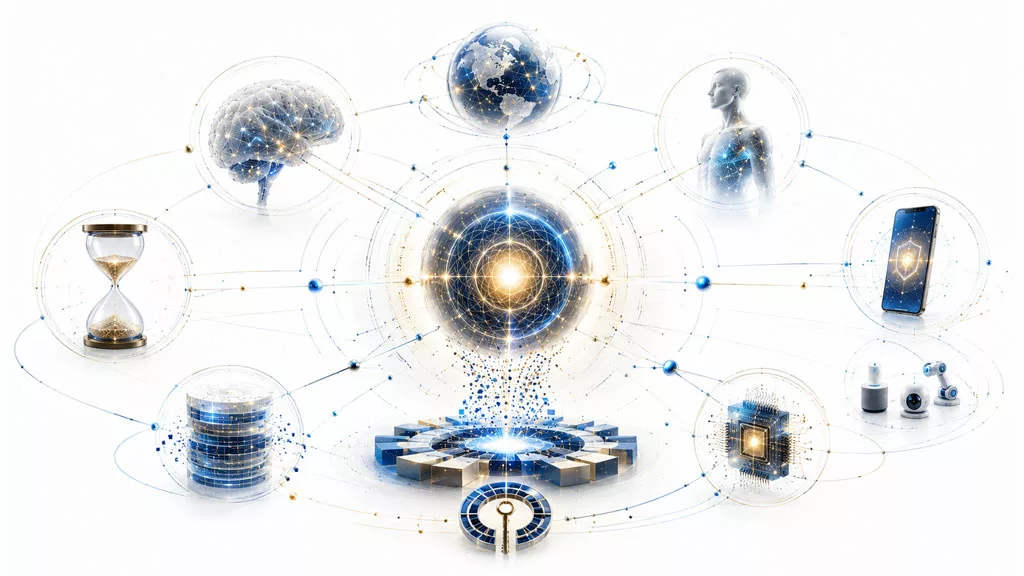
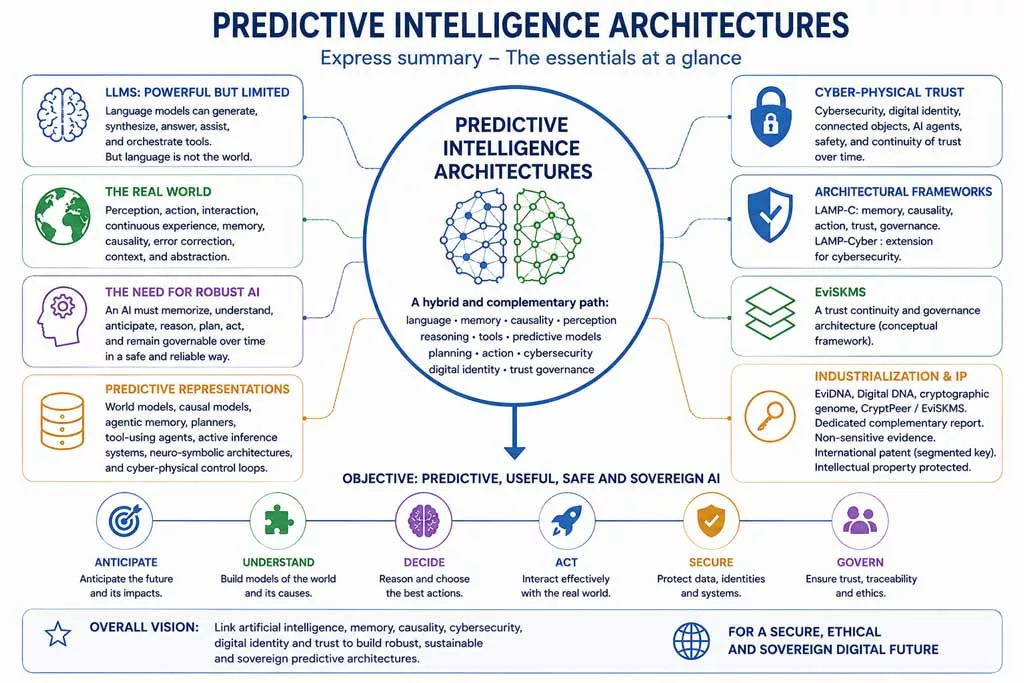
related documents

Predictive Artificial Intelligence Architectures: Freemindtronic EviSKMS R&D Memorandum

Predictive artificial intelligence architectures diagram showing world models, agentic memory, causality, cybersecurity, digital identity, connected devices, cryptographic trust and EviSKMS.

Predictive Artificial Intelligence Architectures: Freemindtronic reference memorandum on Artificial Intelligence, World Models, LAMP-C, Cybersecurity and Cyber-Physical Trust (EviSKMS) — July 2026.
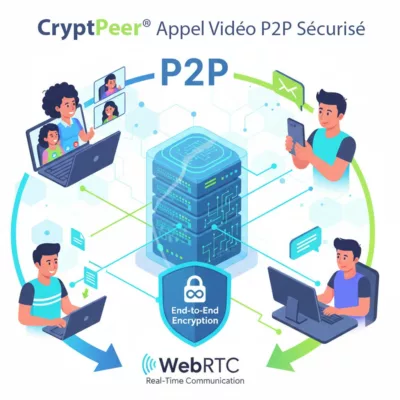
Predictive Artificial Intelligence Architectures — Express Summary

Quick overview. This express summary introduces the purpose, central thesis and scope of this memorandum before the detailed Executive Summary.

Predictive Artificial Intelligence Architectures represent a broader framework for understanding the evolution of Artificial Intelligence (AI). Rather than limiting the future of AI to Large Language Models (LLMs) or solely to World Models, this memorandum explores the convergence of language, memory, causality, perception, planning, action, cybersecurity, digital identity and trust governance.

The central thesis is straightforward. Although LLMs are remarkably powerful, language alone is unlikely to produce a robust, embodied and governable intelligence. An AI capable of anticipating, reasoning, remembering and acting over time will most likely rely on a hybrid architecture combining agentic memory, causal models, predictive representations, tool-using agents, symbolic reasoning, active inference and security-by-design.

Within this framework, World Models play a major, but not exclusive, role. They constitute one family of predictive architectures capable of simulating the evolution of an environment and forecasting the potential consequences of future actions. This memorandum places them within a broader ecosystem where intelligence emerges from the integration of multiple complementary capabilities.

The memorandum also extends this analysis to Cyber-Physical Trust. It connects predictive AI with cybersecurity, digital identity, connected devices, software agents, safety engineering and long-term trust continuity. LAMP-C and LAMP-Cyber are introduced as conceptual architectural frameworks designed to organize memory, causality, action, governance and security within predictive intelligent systems.

The Freemindtronic positioning is presented with methodological caution. EviSKMS, CryptPeer, EviDNA, Digital DNA and the Cryptographic Genome are distinguished through three disclosure levels. The published international patent belongs to the public prior-art record. Observable industrialization is documented through verifiable, non-sensitive evidence. Internal mechanisms, Gen2 extensions and unpublished know-how remain protected under Register C.

This document therefore serves as a scientific and industrial reference memorandum. It does not claim to be a peer-reviewed publication or a definitive experimental validation. Instead, it provides a structured framework for designing future Predictive Artificial Intelligence Architectures capable of integrating AI, memory, causality, cybersecurity, digital identity, cryptography and long-term trust continuity.

Reading Information

Express Summary reading time ≈ 4 minutes
Executive Summary reading time ≈ 6 minutes
Estimated full reading time ≈ 2 hours
First publication August 2022
Last updated July 2026
Complexity level Expert / Research
Technical density ≈ 82%
Available language FR ·  EN
Scope Scientific and industrial memorandum on Predictive Artificial Intelligence Architectures, World Models, Agentic Memory, Causality, Cybersecurity and Cyber-Physical Trust
Recommended reading order Express Summary → Executive Summary → State of the Art → LAMP-C → LAMP-Cyber → Limitations and Falsifiability
Accessibility Optimized for screen readers, internal anchors and structured summaries
Editorial format Scientific and Industrial Reference Memorandum
Primary topic Predictive Artificial Intelligence Architectures
Secondary topics LLMs, World Models, Agentic Memory, Causality, LAMP-C, LAMP-Cyber, Cybersecurity, EviSKMS, Digital Identity and Cyber-Physical Trust
Criticality level High — 8 / 10 — rapid evolution of AI, autonomous agents, cybersecurity and digital identities
Author Jacques Gascuel, inventor and founder of Freemindtronic®.

Predictive Artificial Intelligence Architectures express summary diagram showing the relationships between Large Language Models, World Models, Agentic Memory, LAMP-C, LAMP-Cyber, EviSKMS, Cyber-Physical Trust, Digital Identity, Cybersecurity and Trust Governance.

Publication Status

This memorandum on Predictive Artificial Intelligence Architectures is a Freemindtronic position and reference document. It is neither a peer-reviewed publication, an independent third-party audit nor a product certification.

Editorial Note. This Express Summary outlines the objectives, central thesis and scope of the Predictive Artificial Intelligence Architectures memorandum. It precedes the detailed Executive Summary and forms part of Freemindtronic Andorra’s editorial transparency approach. It clearly distinguishes established scientific knowledge, proposed architectural frameworks, observable industrialization evidence and mechanisms protected by unpublished intellectual property. This content has been prepared in accordance with the Freemindtronic Andorra AI Transparency Statement — FM-AI-2025-11-SMD5.

Predictive Artificial Intelligence Architectures — Executive Summary

Initial Observation

Large Language Models (LLMs) represent a major breakthrough in artificial intelligence. They show that large-scale learning from language can generate coherent text, assist programming, answer questions, summarize documents and orchestrate external tools.

However, this achievement should not be confused with complete general intelligence. Language is a trace of the world; it is not the world itself. Human and animal intelligence learn through continuous experience involving perception, action, memory, error correction, social interaction, causality and abstraction.

LLMs can learn useful internal representations, including spatial and temporal structures. Nevertheless, these representations often remain fragile, format-dependent and insufficient for embodied, robust and planning-oriented understanding. See Gurnee & Tegmark, Berglund et al. and Bender et al..

Proposed Analytical Framework

This memorandum now develops a broader central axis: Predictive Artificial Intelligence Architectures. It does not treat World Models as an exclusive doctrine, but rather as one major family of solutions within a wider architectural framework.

The objective is to analyze how an AI system can remember, abstract, predict, reason causally, plan, act and remain governable.

Predictive representations may take several forms, including explicit World Models, causal models, experiential memories, symbolic planners, tool-using agents, active inference systems, neuro-symbolic architectures and cyber-physical control loops.

The decisive debate is therefore not simply “World Model or not?”. It is rather the following question: which predictive architecture, at which level of abstraction, with which memory, which causality, which capacity for action and which security control?

The Role of World Models

The term “World Model” remains an important reference. It belongs to a scientific tradition rooted in the mental models of Craik, causal models in cognitive science, model-based reinforcement learning described by Sutton & Barto, the World Models of Ha & Schmidhuber, and later JEPA / V-JEPA architectures associated with LeCun, Bardes et al. and Assran et al..

In this memorandum, the World Model becomes one pillar among others, rather than the sole interpretive center.

The general conclusion is that the most credible path will probably be hybrid: language, perception, memory, causality, symbolic reasoning, external tools, predictive models, planning, action, cybersecurity, identity and trust governance.

Freemindtronic Positioning

The trajectory involving the Cryptographic Genome, EviDNA and Digital DNA through CryptPeer/EviSKMS industrialization is documented in a distinct companion memorandum.

This approach assumes an inventor-researcher posture grounded in applied observation, continuous monitoring of the state of the art, identification of weak and strong signals, analysis of hardware and software attack vectors, and the design of sovereign counter-espionage, encryption, authentication and trust solutions.

This field experience does not replace scientific evaluation. It provides the empirical starting point for a vision that must be formalized, protected, compared and tested.

The DNA/EviDNA companion memorandum documents the observable industrialization of EviSKMS-CryptPeer through verifiable elements, including trusted runtime, Runtime Integrity, DRT continuity, RSCC, fail-closed policies, anti-replay mechanisms, chained logs, cryptographic governance, sovereign passwordless operation, DDNA Gen1, security testing campaigns and deployment artifacts.

This appendix discloses no source code, pseudo-code, internal formats or transition rules, in order to preserve current and future intellectual property protections.

The industrial trajectory also relies on an internationally patented foundation: the Segmented-Key Authentication System (FR3063365 B1, WO/2018/154258 family and EP, US, CN, JP and KR extensions).

This granted title enables limited public discussion of the published principles of cryptographic segmentation, physical proximity and conditional trust reconstitution, without exposing Gen2 genomic extensions, the complete DRT engine or EviSKMS mechanisms developed after the founding patent.

Patent / industrialization / confidential tripartition (Register A). Patent WO/2018/154258 constitutes a public document of prior art and technological foundation. CryptPeer/EviSKMS industrialization is documented through observable industrialization elements and non-sensitive evidence (Register A). Genomic extensions, internal mechanisms and unpublished know-how remain protected under Register C.

A chain of time-stamped public disclosures from 2018 to 2026 is listed in the companion memorandum.

For the public reference publication, the present memorandum includes a section on limitations, falsifiability and scope of validity, as well as a short version.

Cryptographic details and CNRS/EviDNA comparisons are addressed in the companion memorandum. These additions aim to distinguish what is demonstrated, what is industrialized, what belongs to applied research and what remains open to independent validation.

Key Points — Predictive Artificial Intelligence Architectures

  • LLMs are powerful, but text alone is probably not sufficient for robust and embodied intelligence.
  • Predictive Artificial Intelligence Architectures connect language, memory, causality, action and governance.
  • LAMP-C and LAMP-Cyber formalize a hybrid pathway applicable to cyber-physical trust.
  • The DNA/EviDNA/Cryptographic Genome details are addressed in the EviDNA companion memorandum.
  • Public disclosure remains controlled through Registers A / B / C.
[/col] [/row]

Predictive Artificial Intelligence Architectures — Foundational Thesis of the Memorandum

This memorandum proposes the following formulation as its scientific foundation.

The next stage of artificial intelligence will not depend on a single paradigm, but on the convergence of language, memory, perception, causality, prediction, action and governance. World Models represent a major pathway for learning how to anticipate the consequences of an action, but they are not the only possible response. Other approaches, including tool-using LLM agents, neuro-symbolic AI, active inference, causal models, reinforcement learning, agentic memory and hybrid architectures, seek to address the same fundamental problem, allowing artificial intelligence to build an actionable representation of its environment, reason about its transformations and act in a controlled manner.

This thesis deliberately shifts the focus of the memorandum. The central issue is no longer to defend one specific school of thought or to oppose LLMs to World Models. The subject becomes broader: identifying the functions required for a robust predictive intelligence architecture.

These functions are: understanding language, perceiving or integrating context, remembering experience, abstracting relevant variables, anticipating possible evolutions, reasoning causally, planning, acting and remaining controllable.

An LLM may be excellent at language. A symbolic engine brings particular strength to formal logic. A causal model clarifies intervention and counterfactual reasoning. A World Model helps predict the evolution of an environment, while active inference seeks to reduce uncertainty through action.

None of these approaches, taken in isolation, is sufficient today to constitute a robust general intelligence.

The research question therefore becomes: how can these capabilities be composed into a coherent, verifiable, secure architecture capable of long-term learning?

Methodological Note — Inventor-Researcher Posture and Applied Observation

This reflection is not limited to a conventional academic approach. It is also grounded in a long inventor-researcher experience, built over more than fifteen years through continuous observation of digital threats, analysis of weak and strong signals, study of hardware and software attack vectors, and the design of digital counter-espionage, encryption, authentication and sovereign trust solutions.

This applied observation posture has gradually led to a core conviction: digital security can no longer be reduced to isolated mechanisms of protection, identification or compliance. It must be understood as a continuity of trust capable of linking identity, context, proof, memory, governance, hardware environment, software runtime and the evolution of threats over time.

The memorandum therefore assumes a dual nature. It engages with the scientific state of the art while also carrying a vision derived from invention, industrialization and operational analysis of attack surfaces. This articulation between documentary research, field observation and technical design forms the basis of the Freemindtronic trajectory around EviSKMS, CryptPeer as an industrialized embodiment of this approach, and the Cryptographic Genome as a conceptual and prospective formalization.

This posture does not claim to replace scientific validation with individual experience. It clarifies the origin of the approach: an architectural hypothesis born from prolonged observation of threats, reinforced by the industrialization of solutions, then formulated as a research framework intended to be compared, evaluated and discussed.

Eurosatory 2022–2026 Trajectory — From Human DNA to the Cryptographic Genome

This inventor-researcher posture was built through successive public milestones. Presentations delivered at Eurosatory between 2022 and 2026 help clarify the evolution of the reasoning, from an initial cyber foundation toward a trust architecture based on human DNA, then toward the Cryptographic Genome as a response to the time factor.

In 2024, this trajectory reached an industrial milestone with DataShielder Defense NFC HSM. The product does not only address the highly secure sharing of cryptographic keys associated with DNA. It also introduces an initial continuity of operational identity. The person who creates the key knows to whom it is transmitted, the recipient holds a trusted NFC device, and importing the key into that device establishes a controlled relationship between identity, physical possession, cryptographic key and encrypted/signed use.

This continuity, however, remains tied to a hardware and transactional perimeter involving the NFC device, the compatible terminal, key validity, media governance and control over the sharing lifecycle. It therefore provides a partial response to trust over time, without fully covering the challenge of a durable, re-evaluable and governable identity in a context where current AI, and later predictive AI architectures, may transform recognition, authentication, decision and trust models.

This shift led, in 2026, to the demonstration of Digital DNA and the Cryptographic Genome Generator. Biological DNA remains usable, but it becomes one possible element within a broader structure designed to organize proof continuity, trust criteria, segmentation, traceability, governance and the evolution of identity over time. This transition is therefore not a rupture. DataShielder Defense NFC HSM provides operational identity continuity, while Digital DNA and the Cryptographic Genome extend this approach toward a durable, contextualized, re-evaluable and governable identity. This evolution constitutes one of the cyber-identity application cases of the present memorandum on Predictive Artificial Intelligence Architectures.

Strict Definitions

To avoid ambiguity, this memorandum uses the following definitions.

Artificial General Intelligence. The ability of a system to learn, reason, plan and act across diverse domains, including novel situations, with robustness and adaptability beyond simple pattern memorization.

World Model. An explicit or implicit internal representation that enables a system to predict the evolution of an environment, especially under the effect of possible actions. See Craik, Ha & Schmidhuber and the World Model for Robot Learning Survey.

Predictive Representation. An internal structure that is not only used to recognize a situation, but also to anticipate its future transformations.

Causality. The ability to distinguish a correlation from a productive mechanism and to reason about what would happen under intervention. See Pearl and Schölkopf et al..

Planning. The ability to evaluate several possible sequences of actions, simulate their consequences and select a trajectory aligned with a goal.

Experiential Memory. A form of memory that stores not only documents or facts, but also episodes, errors, strategies, abstractions and feedback that can be reused for future action. See Du.

Grounding. The relationship between symbols, language, perception, action and environment. The symbol grounding problem is discussed by Harnad.

Predictive Artificial Intelligence Architectures — Introduction

Contemporary artificial intelligence is advancing at an unprecedented pace, driven largely by Large Language Models (LLMs). These systems generate text, answer questions, summarize documents, translate languages, write code, and assist users across a wide range of intellectual tasks.

Their impressive performance can sometimes create the impression that they are approaching artificial general intelligence. This perception, however, deserves careful examination. Large Language Models are trained primarily on vast collections of textual data. They learn to predict the most probable continuation of a sequence by identifying statistical regularities within their training data.

Although this capability is remarkable, it does not necessarily imply a deep understanding of the world. Language describes objects, events, intentions, relationships, and causes, yet it cannot replace perception, action, sensory feedback, or embodied experience.

From the earliest stages of life, humans learn through vision, movement, touch, interaction with objects, the consequences of their actions, social relationships, and continuous experience of the physical world. They progressively construct abstractions, discard irrelevant details, and retain the structures that enable prediction and purposeful action.

The central question therefore becomes: can robust intelligence emerge solely from learning based on text? Or does it require a new generation of architectures capable of integrating language, memory, abstraction, causality, prediction, action, and Trust Governance?

This dissertation adopts the following position: Large Language Models are indispensable, yet they are likely insufficient on their own. World Models represent an important direction, but not the only one. The next stage of AI should instead be conceived as a convergence of Predictive Artificial Intelligence Architectures combining World Models, Neuro-symbolic AI, Causal Models, Active Inference, Tool-using Agents, Agentic Memory, AI Planning, AI Cybersecurity, and Cyber-Physical Trust.

1. Large Language Models — Capabilities and Limitations

Large Language Models are trained on enormous quantities of textual data. Their training corpora may encompass a substantial portion of publicly available Internet content, supplemented by additional sources such as books, scientific articles, web pages, document repositories, software code, and annotated conversations.

The model transforms this massive body of information into internal parameters. This process can be viewed as a form of statistical compression of human language. Rather than memorizing every sentence, the model learns structures, associations, stylistic patterns, grammatical regularities, factual knowledge, and recurring reasoning patterns present within its training data.

This approach enables remarkable performance. LLMs can explain concepts, solve certain classes of problems, reformulate ideas, generate coherent text, and orchestrate external tools. Nevertheless, their operation remains fundamentally grounded in predicting the most probable continuation of a sequence of text.

This limitation explains several well-known challenges, including hallucinations, the absence of native persistent memory, the fragility of certain forms of generalization, difficulty with long-horizon planning, and the lack of direct grounding in the physical world. The critique proposed by Bender et al. reminds us that language alone does not guarantee situated understanding.

A balanced scientific position is therefore not to claim that LLMs never reason. Rather, it is more precise to state that LLMs can produce useful reasoning and acquire certain forms of Predictive Representations of the world, yet these representations are not currently sufficiently stable, causal, embodied, or verifiable to constitute a complete artificial general intelligence.

Predictive Artificial Intelligence Architectures — 2. What LLMs Already Do Well

A rigorous scientific dissertation should not caricature Large Language Models. They are far more than statistical dictionaries. They can learn abstract regularities, perform reasoning expressed in natural language, generate software code, manipulate mathematical representations, invoke external tools, and occasionally infer information that is not explicitly stated in a prompt.

Research such as Gurnee & Tegmark suggests that some language models internally encode spatial and temporal dimensions as exploitable latent structures. This finding indicates that learning from text alone can give rise to latent Predictive Representations of the world.

However, these internal representations should not be confused with robust World Models. The Reversal Curse, for example, demonstrates that a model may learn a relationship in one direction while failing to generalize correctly to the inverse relationship. This fragility suggests that certain capabilities remain strongly dependent on the training distribution and on how a problem is formulated.

The scientific question is therefore not, “Do LLMs understand or not?” Rather, it is: What internal representations do they construct, under which conditions, how robust are these representations, and to what extent can they support causality, Agentic Memory, AI Planning, and purposeful action?

3. The Real Cost of Modern Artificial Intelligence

Massive investment in artificial intelligence is driven primarily by two requirements: computational infrastructure and post-training.

The first concerns the computing resources required to train and deploy modern AI models. Training relies on specialized processors, memory, networking, energy, and large-scale data centers. Inference at scale is also computationally expensive, as every request consumes resources while imposing constraints on latency, availability, and security.

The second concerns post-training. A raw model is not automatically reliable, useful, or safe. It must be refined through supervised learning, human feedback, alignment, filtering, instruction tuning, tool integration, retrieval mechanisms, and security policies.

This reality demonstrates that the raw model alone is insufficient. Modern artificial intelligence already depends on an ecosystem composed of models, data, external memory, tools, guardrails, interfaces, governance policies, infrastructure, and continuous supervision.

This observation reinforces the central thesis of this dissertation: advanced AI will likely not consist of a single isolated model, but rather of a composite architecture.

Predictive Artificial Intelligence Architectures — 4. Human Learning: Sensory Experience, Action, and Abstraction

Comparing a Large Language Model with a young child highlights the fundamental difference between text-based learning and embodied learning.

By the age of four, a child has already experienced thousands of hours of wakefulness. During this period, the child continuously receives visual, auditory, tactile, and motor sensory inputs. The retina does not transmit a raw image directly to the brain; it transforms, filters, and compresses information before sending it through the optic nerve. Although estimates vary, the literature on retinal coding indicates that the transmitted information flow remains substantial. See Koch et al..

Any comparison with the token streams processed by Large Language Models must therefore remain cautious. Human visual experience should not be presented as directly equivalent to textual data. The essential qualitative distinction is that a child learns from a continuous, active, multimodal sensory experience that is intrinsically linked to the consequences of its own actions.

The child observes objects, interacts with them, experiences the consequences, adjusts expectations, memorizes regularities, and progressively constructs abstractions. The child learns that some objects fall, roll, break, resist, disappear behind others, or reappear. At the same time, the child acquires an understanding of intentions, social cues, emotions, and implicit rules.

Human intelligence is therefore not built simply through the accumulation of information. It emerges through experience, interaction, abstraction, prediction, and error correction. This perspective aligns with the work of Lake et al., who emphasize the importance of Causal Models, intuitive physics, intuitive psychology, and rapid generalization.

5. Why Text Alone Is Likely Not Enough

Text is a secondary representation of the world. It describes objects, events, emotions, intentions, and relationships. It is not the world itself.

A model trained exclusively on text learns the regularities of language about the world, but not necessarily the regularities of the world itself. It may learn that people often write “a glass falls and breaks,” yet this knowledge remains mediated through language. It does not arise from direct experience of gravity, fragility, sound, trajectory, or the physical consequences of an action.

This distinction is closely related to the Symbol Grounding Problem discussed by Harnad. A symbol cannot be considered fully understood if it is connected only to other symbols. At least part of its meaning must ultimately be grounded in perception, action, or experience.

This does not imply that text is of limited value. On the contrary, language is an extraordinarily powerful medium for abstraction, cultural transmission, and reasoning. However, language alone appears insufficient to produce robust embodied intelligence.

The most scientifically accurate formulation is therefore that text alone can give rise to rich internal Predictive Representations, yet it does not appear sufficient to build a general intelligence capable of perception, causality, Experiential Memory, AI Planning, and effective action within the physical world.

Predictive Artificial Intelligence Architectures — 6. World Models as a Family of Predictive Architectures: Origins of the Concept

Throughout this dissertation, World Models are no longer treated as the exclusive focus of the discussion. Instead, they are examined as one of the major families of Predictive Artificial Intelligence Architectures because they explicitly formalize a fundamental capability: anticipating how an environment evolves from its current state under possible actions.

The term World Model is not a recent invention. It extends a long-established scientific tradition.

Craik proposed that the mind constructs small-scale internal models of reality, enabling actions to be mentally simulated before being executed. This intuition remains fundamental: thinking consists, in part, of testing possible actions internally before acting in the external world.

Johnson-Laird later developed the theory of mental models, according to which human reasoning relies on internal representations of possible situations.

In artificial intelligence, the concept emerged through model-based reinforcement learning, in which an agent uses a model of environmental dynamics to simulate the consequences of alternative actions. See Sutton & Barto.

The expression World Models became explicit in the work of Ha & Schmidhuber, who learned compressed representations of environments and used them to train autonomous agents. More recently, the JEPA and V-JEPA architectures proposed by LeCun, Bardes et al., and Assran et al. have extended this approach by learning to predict abstract latent representations rather than individual pixels.

The concept itself is therefore not new. What is new is its renewed central role in contemporary discussions about the future of artificial intelligence.

7. World Models as Predictive Representations: A Rigorous Definition

A World Model is a specific form of Predictive Representation: an internal representation that enables a system to predict how an environment is likely to evolve.

Within the broader perspective of this dissertation, it is not presented as the only solution, but rather as a central class of architecture capable of linking state, action, future, and decision-making.

Formally, if a system observes the state of the world at time t, denoted x_t, it constructs an abstract representation s_t. Given a candidate action a_t, the model predicts a future state s_{t+1} or a probability distribution over possible future states.

Observation x_t
      ↓
Encoder E
      ↓
Abstract state s_t
      ↓ + action a_t
Predictor P
      ↓
Predicted future state ŝ_{t+1}

The value of a World Model lies not merely in recognizing the current state of the environment, but in predicting what may happen next.

A system equipped with a World Model can answer the question: What would happen if I performed this action? This question lies at the heart of AI Planning, practical causality, and autonomous intelligence.

Predictive Artificial Intelligence Architectures — 8. Abstraction and Hierarchical Representations

It is impossible to represent the complete state of the world down to its ultimate physical details. Describing an ordinary room at the level of quantum field theory would be impractical: the complete wave function of a macroscopic system cannot be measured, and no realistic computation could predict every physically possible evolution in a useful manner.

Humans do not reason in this way. Instead, they construct abstractions: objects, surfaces, agents, intentions, obstacles, trajectories, rules, tools, and risks. Each level of abstraction discards part of the lower-level detail while preserving the information that is useful for prediction at a given scale.

This hierarchy mirrors the organization of science itself: particle physics, nuclear physics, chemistry, biochemistry, molecular biology, biology, psychology, sociology, and ecology. Each discipline focuses on the level of organization most relevant to its domain.

An effective World Model must therefore learn hierarchical representations. Lower levels may encode shapes, textures, and motion. Intermediate levels may encode objects, relationships, and scenes. Higher levels may encode intentions, constraints, goals, norms, and abstract causal structures.

Intelligence does not consist of preserving every detail, but of constructing the appropriate level of abstraction for effective action.

9. Learning Through Prediction: Encoder, Predictor, and Prediction Error

A system can learn a World Model through self-supervised predictive learning.

  1. It observes the world at time t as input data x_t.
  2. An encoder transforms x_t into an abstract representation s_t.
  3. A predictor estimates the future state ŝ_{t+1}.
  4. The system then observes x_{t+1}.
  5. The same encoder produces the corresponding representation s_{t+1}.
  6. The system minimizes the discrepancy between ŝ_{t+1} and s_{t+1}.

The objective is to make predictions within a meaningful abstract representation space rather than predicting every individual pixel. This is precisely the intuition behind JEPA architectures: learning to predict useful representations instead of reconstructing every detail. See LeCun and Bardes et al..

This learning mechanism fundamentally changes the nature of learning: the system no longer learns merely to recognize the world; it learns to anticipate its evolution.

Predictive Artificial Intelligence Architectures — 10. From Prediction to Planning

Planning requires the ability to simulate multiple possible futures.

To choose an action, an intelligent agent must evaluate several possible trajectories:

Current state
   ├── Action A → Possible future A
   ├── Action B → Possible future B
   └── Action C → Possible future C

The agent then compares these alternative futures according to an objective, a constraint, a cost, or a risk.

This capability is fundamental to model-based reinforcement learning, where an internal model is used to simulate the consequences of actions before they are executed. See Sutton & Barto.

Planning may also be delegated to symbolic engines, constraint solvers, search trees, or formal verification tools. Even in these cases, however, the system must represent states, actions, and transitions. In other words, planning almost always reintroduces some form of World Model.

11. World Models Within Predictive Artificial Intelligence Architectures: Promise and Limitations

This section retains World Models as a major scientific reference while placing them within a broader architectural perspective. Their importance lies not in belonging to a particular school of thought, but in the function they embody: learning useful Predictive Representations that support prediction, AI Planning, and action.

11.1. Generative World Models

The World Models proposed by Ha & Schmidhuber learn a compressed representation of an environment and then use this representation to train an autonomous agent. This approach demonstrates that an agent can learn not only from the real or simulated world, but also from an internally learned model of that world.

Predictive Artificial Intelligence Architectures — 11.2. JEPA, V-JEPA, and Latent-Space Prediction

JEPA and V-JEPA architectures aim to predict abstract representations rather than individual pixels. Their objective is to capture the information that is most relevant for understanding and action, without expending learning capacity on secondary visual details. See LeCun, Bardes et al., and Assran et al..

11.3. World Models in Robotics

World Models have become a major research direction in robotics because they enable systems to predict environmental dynamics, simulate actions, perform planning, and improve out-of-distribution generalization. See World Model for Robot Learning Survey.

11.4. Embodied Robotics and Digital Simulators

Simulation environments and digital twins make it possible to generate rare or hazardous scenarios. They are particularly valuable for autonomous driving, industrial robotics, and physical agents. Nevertheless, a simulation is never a complete representation of the real world and must always be validated against real-world observations.

Predictive Artificial Intelligence Architectures — 11.5. Limitations of World Models

World Models are not a universal solution. They face several fundamental challenges:

  • learning stable abstractions;
  • managing uncertainty and multiple possible futures;
  • distinguishing Causal Models from statistical correlations;
  • avoiding the prediction of irrelevant details;
  • generalizing beyond the training distribution;
  • integrating language, action, and Agentic Memory;
  • evaluating model quality objectively;
  • ensuring safety when actions affect the physical world.

An inaccurate World Model may become dangerous precisely because it appears internally coherent. Consequently, evaluation, Trust Governance, and Runtime Integrity become central requirements.

Predictive Artificial Intelligence Architectures — 12. Competing and Complementary Approaches

This section maps the principal research directions pursuing the same overarching objective: robust reasoning, generalization, AI Planning, memory, hallucination reduction, and reliable action.

12.1. Neuro-symbolic AI

Neuro-symbolic AI combines neural networks with symbolic reasoning, including rules, logic, knowledge graphs, constraint solvers, and inference engines.

This approach is particularly promising in domains where explainability, verification, and regulatory compliance are essential, including law, AI Cybersecurity, mathematics, formal verification, diagnostics, Trust Governance, and safety-critical systems. See Garcez & Lamb, Colelough & Regli, and Yang et al..

Primary strength: explainable and controllable reasoning. Main limitation: limited grounding in perception and the physical world. Relationship to World Models: symbolic systems often perform planning over abstract states and therefore frequently reintroduce a discrete or logical World Model.

12.2. Tool-using LLM Agents, RAG, Memory, and Planning Systems

A major industrial direction consists of using Large Language Models as orchestration engines. They invoke external tools, retrieve information, execute code, consult knowledge bases, rely on external Agentic Memory, and delegate specialized tasks to dedicated modules.

Retrieval-Augmented Generation (RAG) improves factual accuracy by connecting the model to external knowledge sources. See Lewis et al.. Tool-using Agents further extend LLM capabilities through planning, reasoning, tool use, and memory. See Yao et al., Huang et al., and Du.

Primary strength: immediate operational effectiveness. Main limitation: retrieval and external tools do not replace genuine causal understanding. Relationship to World Models: the agent may construct an external task model composed of states, sub-goals, constraints, tools, and memory.

Predictive Artificial Intelligence Architectures — 12.3. Model-Based Reinforcement Learning

Model-based reinforcement learning learns or exploits a model of environmental dynamics. The agent can simulate the consequences of its actions before acting. See Sutton & Barto and Moerland et al..

Primary strength: efficient planning and anticipation. Main limitation: learning reliable models in complex environments remains difficult. Relationship to World Models: this is one of the most explicit forms of a World Model.

12.4. Model-Free Reinforcement Learning

Model-free reinforcement learning learns an action policy directly without constructing an explicit model of the environment. It has achieved remarkable success in games and several simulated environments. See Mnih et al. and Schulman et al..

Primary strength: strong performance in well-defined environments with clear reward functions. Main limitation: high training cost, limited data efficiency, and poor robustness outside the training distribution. Relationship to World Models: although it avoids an explicit World Model, it generally struggles with long-horizon planning and systematic generalization without predictive structure.

12.5. Imitation Learning and Learning from Demonstration

Imitation learning trains a system to reproduce observed behaviors. It plays a central role in robotics, autonomous driving, and software agents.

Primary strength: rapid learning from human demonstrations. Main limitation: behavior may be reproduced without deep understanding, leading to failures outside the training distribution. Relationship to World Models: demonstrations provide trajectories, but the agent often requires a predictive model to adapt to novel situations.

Predictive Artificial Intelligence Architectures — 12.6. Active Inference and the Free Energy Principle

Active Inference, associated with Friston, proposes that intelligent agents act to reduce uncertainty and minimize the discrepancy between predictions and observations. Policies are selected according to their expected ability to minimize free energy by jointly maximizing utility and information gain. See Friston et al. and de Vries.

Primary strength: a unified framework integrating perception, action, and uncertainty. Main limitation: considerable theoretical complexity and limited industrial adoption. Relationship to World Models: Active Inference relies on internal generative models and is therefore closely related to, rather than opposed to, World Models.

12.7. Causal Models and Probabilistic Reasoning

Causal Models seek to distinguish correlation from causation while enabling counterfactual reasoning: what would happen if a variable were changed? See Pearl and Schölkopf et al..

Primary strength: conceptual robustness and intervention capabilities. Main limitation: learning large-scale causal structures automatically remains extremely challenging. Relationship to World Models: a causal model is often an abstract World Model centered on causal mechanisms.

12.8. Neuromorphic and Brain-Inspired Architectures

Neuromorphic architectures investigate spiking neural networks, continuous plasticity, local memory, and highly energy-efficient computation.

Primary strength: biological inspiration and potentially high energy efficiency. Main limitation: lower technological maturity compared with mainstream deep learning architectures. Relationship to World Models: these architectures do not inherently provide a World Model, but they may constitute an effective substrate for continuous learning.

Predictive Artificial Intelligence Architectures — 12.9. Planning Through Search, MCTS, Programs, and Formal Verification

Planning may be performed through explicit search methods, including decision trees, Monte Carlo Tree Search, constraint solvers, theorem provers, and formal verification systems. See Kocsis & Szepesvári and Silver et al..

Primary strength: systematic exploration of alternative scenarios. Main limitation: combinatorial explosion and dependence on a formal representation of states. Relationship to World Models: every search tree assumes states and transitions and therefore relies on some form of World Model.

12.10. Evolutionary AI and Open-Ended Learning

Evolutionary AI seeks to generate increasingly complex behaviors through variation, selection, and open-ended environments. The objective is not merely to optimize a fixed task, but to encourage the emergence of novel capabilities.

Primary strength: open-ended exploration of behavioral diversity. Main limitation: computational cost, unpredictability, and limited controllability. Relationship to World Models: evolved agents may develop internal representations, although these are often difficult to interpret.

12.11. Metacognitive Architectures

Metacognitive architectures provide a system with self-assessment capabilities, enabling it to detect its own errors, estimate uncertainty, decide when to request assistance, verify hypotheses, or revise its strategy.

Primary strength: robustness, self-correction, and operational safety. Main limitation: objectively evaluating the quality of self-assessment remains difficult. Relationship to World Models: metacognition can supervise and regulate the use of a World Model, but it does not replace it.

13. Proposed Taxonomy of Predictive Artificial Intelligence Architectures

This taxonomy proposes seven dimensions for comparing candidate architectures capable of achieving robust artificial general intelligence.

  1. Language: processing symbols, text, instructions, and dialogue.
  2. Perception: learning from images, video, audio, sensors, or the surrounding environment.
  3. Memory: storing, organizing, abstracting, and reusing experience.
  4. Causality: distinguishing correlation, intervention, and consequence.
  5. Action: operating within real, simulated, or software environments.
  6. Prediction: anticipating future states and multiple possible scenarios.
  7. Planning: selecting sequences of actions to achieve a goal.

This taxonomy deliberately avoids classifying approaches according to technological trends or implementation choices. Instead, it organizes them according to the cognitive functions they are required to perform.

The central question therefore becomes: Which architecture most effectively integrates these seven dimensions while ensuring robustness, safety, and verifiability?

Predictive Artificial Intelligence Architectures — 14. Comparative Matrix of Current Approaches

Qualitative scale: Low / Moderate / High / Very High.

Approach Language Perception Memory Causality Action Prediction Planning Primary Limitation
Pure LLM Very High Low Low Moderate/Low Low Linguistic Text-based No direct grounding in the physical world
Agentic LLM Very High Moderate Moderate/High Moderate Moderate Tool-assisted Strong but fragile Dependence on tools and context
RAG High Low Document-based Low Low Low Low/Moderate Retrieval is not understanding
Neuro-symbolic AI Moderate/High Variable Moderate High for rule-based reasoning Variable Moderate Strong logical reasoning Difficult grounding
Model-free RL Low Variable Implicit Low High Weak explicit prediction Moderate High training cost
Model-based RL Variable High Moderate Moderate High High High Difficult model learning
Active Inference Variable High High Probabilistic High High High Theoretical complexity
Causal Models Variable Variable Moderate Very High Variable Strong intervention capability High when structure is known Difficult causal discovery
World Models Variable High High Moderate/High High Very High Very High Difficult evaluation
Neuromorphic AI Low/Moderate Variable Variable Low/Moderate Variable Variable Variable Insufficient maturity
Hybrid Architecture Very High High High High High High High Complex Trust Governance

This comparative matrix shows that World Models are not the only possible path toward advanced intelligence. However, nearly all advanced approaches ultimately face the same fundamental challenge: representing, predicting, remembering, acting, and planning.

15. Proposed Hybrid Architecture: LAMP-C

Epistemological status (Register A). Conceptual architecture · research framework · not experimentally validated at this stage.

To establish this dissertation as a foundation for future research, we propose a conceptual architecture named LAMP-C:

  • L — Language: communication, instruction, and symbolic reasoning expressed through natural language.
  • A — Abstraction: construction of hierarchical and compressed representations.
  • M — Memory: storage, consolidation, forgetting, retrieval, and contradiction management through Agentic Memory and Experiential Memory.
  • P — Prediction / Planning: simulation of possible futures and selection of appropriate actions.
  • C — Causality / Control: intervention, counterfactual reasoning, verification, Runtime Integrity, and Cyber-Physical Trust.
Multimodal perception / data / language
                ↓
          Abstraction Encoder
                ↓
        Experiential Memory
                ↓
       Predictive World Model
                ↓
     Causal and Counterfactual Module
                ↓
 Planning Engine / Symbolic Engine / Tools
                ↓
Action: robot, API, software, or decision
                ↓
     Experience feedback and correction

This architecture is not intended as a finished technical product; it is a conceptual research framework. It provides a basis for comparing existing approaches while identifying the capabilities that remain absent from each of them.

LAMP-C is built upon a central hypothesis: advanced intelligence must be compositional. It does not emerge from a single monolithic model, but from the integration of language, perception, memory, prediction, causality, and control.

Predictive Artificial Intelligence Architectures — 16. Memory, Experience, and Cognitive Continuity

Without memory, an intelligent agent remains largely stateless. It may answer questions within a context window, yet it cannot develop continuity of experience.

Current AI systems are exploring several complementary forms of memory:

  1. Contextual Memory: information available within the model’s context window.
  2. Document Memory: retrieval of documents or passages through RAG.
  3. Episodic Memory: records of interactions, actions, errors, and outcomes.
  4. Semantic Memory: consolidated abstract knowledge.
  5. Procedural Memory: strategies, methods, routines, and acquired skills.
  6. Experiential Memory: action trajectories, feedback, failures, corrections, and accumulated learning.

Modern Tool-using Agents based on Large Language Models already investigate these memory mechanisms. See Du and Zhang et al..

Useful memory should do more than simply accumulate information. It must also filter, consolidate, forget, resolve contradictions, preserve confidentiality, and connect past experience to future decision-making.

A rigorous research program should therefore evaluate not only retrieval performance, but also whether memory genuinely improves decision quality.

17. Causality, Counterfactual Reasoning, and Robustness

Causality represents one of the major boundaries between statistical correlation and robust intelligence.

A statistical model may learn that two events are associated. A Causal Model seeks to understand what produces what. It enables questions such as:

  • What would happen if I intervened on this variable?
  • Does this action cause the observed effect, or merely reveal it?
  • What would have happened if a different action had been taken?

Pearl formalized this distinction through causal and counterfactual reasoning. Schölkopf et al. further discuss the importance of causality for robust learning and out-of-distribution generalization.

A World Model without causality may capture only superficial regularities. Conversely, a Causal Model without perception may lack grounding in reality. A robust hybrid architecture should therefore integrate both.

Predictive Artificial Intelligence Architectures — 18. Scientific Evaluation of Candidate Architectures

To establish this dissertation as the foundation of a research program, its hypotheses must be scientifically falsifiable.

Predictive Artificial Intelligence Architectures — 18.1. Evaluation Framework

A candidate architecture should be evaluated according to ten dimensions:

  1. Prediction: Can it accurately anticipate the evolution of an environment?
  2. Counterfactual Reasoning: Can it simulate “What would happen if…” scenarios?
  3. Planning: Can it select an effective sequence of actions?
  4. Causality: Can it distinguish causal relationships from mere correlations?
  5. Out-of-Distribution Robustness: Can it operate reliably in novel situations?
  6. Long-Term Memory: Does it learn effectively from previous experiences?
  7. Physical or Operational Grounding: Does it integrate language, perception, and action?
  8. Explainability: Can its decisions be understood and analyzed?
  9. Safety: Does it fail safely when necessary?
  10. Trust Governance: Can its capabilities, access rights, and objectives be effectively controlled?

18.2. Falsifiable Hypotheses

Hypothesis H1. An architecture combining a Large Language Model, Experiential Memory, and a latent predictive model performs better on long-horizon planning tasks than a standalone LLM.

Hypothesis H2. Adding a Causal Model improves out-of-distribution robustness under changing environmental conditions.

Hypothesis H3. Consolidated Experiential Memory reduces the recurrence of errors across multi-session tasks.

Hypothesis H4. A Neuro-symbolic AI architecture reduces hallucinations in tasks involving formal constraints.

Hypothesis H5. Latent World Models predict the consequences of physical actions more accurately than purely text-based models.

18.3. Candidate Experimental Protocols

  • Simulated robotic or physics-based environments.
  • Multi-step planning tasks involving hidden constraints.
  • Multi-session memory benchmarks.
  • Causal and counterfactual reasoning benchmarks.
  • Out-of-distribution evaluation scenarios.
  • Formal verification of generated plans.
  • Comparative evaluation of standalone LLMs, Tool-using Agents, LLMs with memory, LLMs with World Models, and the proposed LAMP-C architecture.

19. Mapping the Scientific Debates

A reference document should present scientific disagreements as well as defend its own thesis.

Predictive Artificial Intelligence Architectures — 19.1. Is Text Alone Sufficient?

Some researchers argue that scale, data, and external tools will ultimately enable Large Language Models to build sufficiently rich internal representations. Others contend that text alone cannot provide the grounding required for causal and physically situated intelligence.

19.2. Do Large Language Models Truly Reason?

LLMs sometimes produce reasoning that is useful and convincing. However, distinguishing robust reasoning from the imitation of common reasoning patterns or implicit search within textual representations remains an open scientific question.

19.3. Can Causality Emerge from Scale?

Causal relationships may be learned partially from data, but intervention and counterfactual reasoning often require additional representational structures beyond statistical scaling alone.

Predictive Artificial Intelligence Architectures — 19.4. Is Physical Embodiment Necessary?

Artificial intelligence can clearly be useful without a physical body. However, intelligence approaching that of humans or animals may require some form of embodied experience, whether real or simulated.

19.5. Are Video Models Sufficient?

Video models learn visual dynamics effectively, yet they may still lack causal understanding, intentionality, hidden physical constraints, and validation through interaction with the real world.

19.6. Is Neuro-symbolic AI a Transitional Stage or a Long-Term Direction?

Neuro-symbolic AI may serve either as a reasoning and control layer or as a central component of future hybrid architectures.

Predictive Artificial Intelligence Architectures — 19.7. Are Tool-using Agents a Sustainable Architecture?

They are already highly valuable in industrial applications, but their long-term robustness depends heavily on memory, external tools, verification mechanisms, and effective control.

Predictive Artificial Intelligence Architectures — 20. Proposed Research Program

20.1. Overall Objective

Design and evaluate a hybrid architecture capable of integrating language, perception, memory, prediction, causality, and planning.

20.2. Year 1: Taxonomy and Experimental Foundation

  • Finalize the proposed taxonomy.
  • Develop the comparative evaluation matrix.
  • Select appropriate benchmark suites.
  • Develop an initial prototype combining an LLM, memory, and external tools.
  • Evaluate the limitations of standalone LLMs on planning tasks.

Predictive Artificial Intelligence Architectures — 20.3. Year 2: Memory, Causality, and Latent World Models

  • Integrate Experiential Memory.
  • Add a causal or counterfactual reasoning module.
  • Evaluate a latent predictive model within a simulated environment.
  • Compare model-free RL, model-based RL, and Tool-using Agents.

20.4. Year 3: LAMP-C Architecture and Validation

  • Integrate language, abstraction, memory, prediction, and causality.
  • Evaluate out-of-distribution robustness.
  • Measure reductions in repeated errors.
  • Assess safety and explainability.
  • Publish the framework, experimental results, and identified limitations.

20.5. Scientific Deliverables

  • Position paper.
  • Comparative survey in French and English.
  • LAMP-C taxonomy.
  • Internal benchmark for planning and memory.
  • Experimental prototype.
  • Evaluation report.
  • Continuously maintained annotated bibliography.

21. Risks, Trust Governance, and Safety

Advanced AI architectures introduce specific risks.

A World Model improves planning capabilities, yet more effective planning may also increase a system’s ability to pursue unintended objectives. Persistent memory strengthens continuity but raises important issues regarding confidentiality, the right to be forgotten, and the persistence of erroneous knowledge. External tools improve operational effectiveness but also introduce risks associated with uncontrolled execution.

Trust Governance should therefore be integrated into the architecture from the outset:

  • capability control;
  • logging and traceability;
  • plan verification;
  • operational action limits;
  • clear separation between prediction, decision, and execution;
  • memory management;
  • explainability;
  • auditability;
  • safe failure (fail-safe);
  • goal alignment.

Consequently, any research program on Predictive Artificial Intelligence Architectures must also be conceived as a research program in AI safety and Cyber-Physical Trust.

Predictive Artificial Intelligence Architectures — 22. A Defensible Scientific Position

This dissertation does not claim to demonstrate that World Models constitute the only path toward artificial general intelligence. It defends a broader and more robust position: any architecture aiming to achieve reliable intelligence, planning capabilities, and generalization will need to include, explicitly or implicitly, predictive, memory-based, causal, and actionable capabilities.

This position avoids two extremes. The first would be to reduce Large Language Models to simple systems with no internal representations at all: work such as Gurnee & Tegmark 2023 suggests that they can encode certain spatial and temporal reference structures. The second would be to conclude that text alone is sufficient to produce robust embodied intelligence: limitations such as the Reversal Curse, the absence of direct sensorimotor grounding, and weaknesses in planning indicate that such a conclusion remains fragile.

The defensible thesis is therefore the following:

Large Language Models can make a major contribution to artificial general intelligence, but they need to be integrated with mechanisms for memory, perception, causality, action, control, and prediction. The scientific debate is not limited to “LLMs versus World Models”; it concerns the design of Predictive Artificial Intelligence Architectures capable of linking representation, anticipation, decision-making, and Trust Governance.

This formulation makes the dissertation compatible with competing and complementary approaches, including Neuro-symbolic AI, Tool-using Agents, RAG, Active Inference, causality, embodied robotics, reinforcement learning, and hybrid architectures. It also supports the argument that World Models are less a doctrine than a remarkable instance of a broader cognitive function: anticipating what may happen given the current state and the possible actions. See Craik 1943, Johnson-Laird 1983, Sutton & Barto 2018, Ha & Schmidhuber 2018, and LeCun 2022.

23. State of the Art at the Time of Writing: Research, Industrialization, and Observed Results

State of the art documented up to 2026-07-07; this field is evolving rapidly. This section distinguishes three levels:

  1. scientific research: articles, surveys, benchmarks, and experimental architectures;
  2. industrialized implementation: products, platforms, standards, regulations, or already deployed uses;
  3. observed results: measured benefits, real limitations, disappointing outcomes, or persistent risks.

The objective is not to provide an exhaustive list of AI products, but to position Predictive AI Architectures within their operational reality: what already works, what is progressing, what remains fragile, and what still needs to be demonstrated.

Predictive Artificial Intelligence Architectures — 23.1. Short Synthesis

At the time of writing, the state of the art shows a clear convergence: the most effective systems do not rely on a single component. They generally combine a language model, memory or external retrieval, tools, guardrails, access policies, evaluations, and sometimes specialized modules for vision, planning, cybersecurity, or robotics.

Industrialized LLMs are already effective for writing assistance, code generation, user support, document analysis, augmented search, and support for security teams. However, their limitations remain well documented: hallucinations, context dependence, fragile long-horizon planning, agent security, variable quality of generated code, data leakage risks, and the continuing need for supervision.

World Models and predictive video models are progressing rapidly in research, particularly with V-JEPA 2 and the 2025–2026 surveys on robotics and embodied AI. However, their full industrialization remains limited: results are promising for video understanding, prediction, zero-shot planning, and controlled robotics, but they are not yet equivalent to open-world autonomous general intelligence.

Cybersecurity and Digital Identity approaches are the most industrialized from a normative standpoint: NIST SP 800-63-4, OWASP LLM Top 10, NIST AI RMF, NIST CSF 2.0, ETSI EN 303 645, the Cyber Resilience Act, and the EU AI Act already form a reference foundation. WebAuthn/FIDO and Passkeys may also be cited as external points of comparison for passwordless authentication, without constituting the Freemindtronic trust foundation. The real outcome is clear: digital trust is evolving toward strong identity, security by design, AI risk governance, and phishing resistance. However, the integration of AI, identity, connected objects, and cyber-physical safety remains an emerging field of applied research.

23.2. LLMs and Tool-using Agents: Strong Industrialization, Still Incomplete Robustness

Large Language Models are the most industrialized building blocks of contemporary AI. They are now integrated into office environments, search engines, development platforms, support tools, business assistants, augmented SOCs, and document workflows.

Examples of Already Industrialized Implementations

Domain Implementation Official / Primary Reference Observed Result Persistent Limitation
Software development GitHub Copilot GitHub Copilot, Microsoft Research / arXiv study A controlled experiment measured a task completed 55.8% faster with Copilot. Gains vary depending on the task, prompt quality, expertise, integration, and code security.
Office environments Microsoft 365 Copilot Microsoft 365 Copilot Large-scale deployment within collaborative productivity suites. Productivity is difficult to measure universally; dependence on internal data and governance.
Operational cybersecurity Microsoft Copilot for Security Microsoft Security Copilot, GA details Microsoft reports that experienced analysts were 22% faster and 7% more accurate in an internal study. Results depend on SOC context, data quality, integrations, and human supervision.
SOC and cloud security Google Security Operations / Gemini Google Security Operations, Gemini in SCC Natural-language assistance, contextual summaries, recommendations, and creation of detections/playbooks. Automation must be governed: signal quality, false positives, permissions, and tool security.
RAG and document retrieval Industrial RAG Lewis et al. 2020 Reduction of certain factual hallucinations through document access. RAG does not equal truth: obsolete sources, poisoned documents, poorly ranked context, and residual hallucinations.
Tool-using Agents ReAct, Toolformer, API agents ReAct, Toolformer Enables the integration of reasoning, action, and external tools. Risks of excessive agency, indirect prompt injection, tool misuse, and context leakage.

Expected Real-World Outcome

The realistic short-term outcome is not autonomous artificial general intelligence, but a significant increase in productivity for well-defined tasks, including writing, summarization, information retrieval, standard code generation, SOC investigations, alert triage, document assistance, and the execution of controlled workflows.

When Results Fall Short of Expectations

Results become disappointing when a Large Language Model is expected to provide:

  • guaranteed truth without verification;
  • reliable planning across long sequences of actions;
  • complete causal understanding;
  • safe autonomy without guardrails;
  • ungoverned long-term memory;
  • intrinsic resistance to indirect prompt injection;
  • code quality equivalent to expert human review.

The operational conclusion is therefore straightforward: industrialized LLMs are already highly valuable, but their effectiveness depends on the surrounding architecture, including RAG, memory, external tools, policies, sandboxing, logging, verification, Trust Governance, and human supervision.

23.3. World Models, Video Models, and Robotics: Active Research, Partial Industrialization

World Models represent one of the major research directions for moving beyond token prediction toward the prediction of states, actions, and their consequences.

Recent surveys on World Models in robotics describe these models as predictive representations of how an environment evolves under the influence of actions. They are used for policy learning, AI Planning, simulation, evaluation, synthetic data generation, and video-based robotics. See World Model for Robot Learning: A Comprehensive Survey.

V-JEPA 2 represents an important milestone. Meta presents it as a video-trained model capable of understanding, prediction, zero-shot planning, and robotic control in previously unseen environments. See Meta AI V-JEPA 2 and the official V-JEPA 2 blog.

Current Implementations and Technology Readiness

Approach Status as of July 6, 2026 Observed Results Main Limitation
Predictive video models Advanced research, demonstrators, benchmark evaluations Improved motion understanding, anticipation, and latent representations Limited physical generalization, long-horizon errors, difficult evaluation
World Models for robotics Rapid growth in surveys and research prototypes Planning, imagination, simulation, synthetic data generation Costly and fragile transfer to the real world
Robot Foundation Models / VLA Partial industrialization in controlled robotics Language-to-action instructions and limited manipulation Need for embodied data, retargeting, safety, and robustness
Digital twins / simulators Already deployed across multiple industries Scenario testing, training, and validation Simulation-to-reality gap, incomplete models, validation costs

Expected Real-World Outcome

In the medium term, the expected outcome is AI capable of improving robotics, autonomous driving, simulation, physical planning, digital twins, and cyber-physical systems. However, the credible objective is not yet a universally autonomous general-purpose robot.

Results That Remain Unproven or Disappointing

Current limitations remain substantial:

  • accumulation of prediction errors over long horizons;
  • difficulty in evaluating physical consistency;
  • scarcity of unified benchmark suites;
  • high cost of robotic training data;
  • difficult transfer from Internet video to robotic action;
  • insufficient safety for safety-critical physical actions;
  • the continuing need for memory, causality, and control beyond video prediction alone.

These observations reinforce the central thesis of this dissertation: the future will not consist solely of World Models, but of Predictive Artificial Intelligence Architectures integrating memory, causality, action, and Trust Governance.

Predictive Artificial Intelligence Architectures — 23.4. RAG, Memory, and Agents: Operational Success, Risk of False Confidence

Retrieval-Augmented Generation (RAG) is already widely deployed across industry to connect Large Language Models with document repositories. Its value is clear: reducing certain hallucinations, citing sources, leveraging internal documents, and making AI genuinely useful in professional environments.

However, RAG does not automatically transform an answer into verified truth. A RAG pipeline may fail when:

  • documents are outdated;
  • the vector index retrieves an irrelevant passage;
  • a source contains an indirect prompt injection;
  • document permissions are improperly managed;
  • the model conflates retrieved information with inference;
  • memory preserves a false belief.

Agentic Memory has therefore become a central research topic. Recent surveys on memory for Tool-using Agents already formalize mechanisms for writing, management, retrieval, consolidation, forgetting, contradiction handling, and recall. See Zhang et al. and Du.

Expected Real-World Outcome

RAG and Agentic Memory are already effective for document assistance, customer support, enterprise search, compliance, knowledge retention, augmented SOCs, and domain-specific AI agents.

Potentially Disappointing Outcome

They become hazardous when treated as inherently trustworthy memory systems. Agent memory should instead be governed as a critical asset, including access rights, provenance, versioning, retention policies, forgetting mechanisms, correction procedures, logging, encryption, and revocation.

23.5. Cybersecurity and Digital Identity: Strong Regulatory and Standards-Based Industrialization

Cybersecurity is currently the domain where implementation has progressed furthest through standards and regulatory frameworks.

Already Established Reference Frameworks

Framework Nature Contribution to this Dissertation
OWASP LLM Top 10 2025 GenAI / LLM security framework Formalizes prompt injection, data poisoning, supply-chain attacks, information disclosure, excessive agency, and related threats.
NIST SP 800-63-4 Digital Identity Defines identity proofing, authentication, authenticators, federation, and assurance levels.
NIST AI RMF 1.0 AI Risk Management Provides a framework for AI governance, measurement, risk mapping, and risk management.
NIST CSF 2.0 Cybersecurity Risk Management General governance framework placing governance at the core of cybersecurity.
NIST SP 800-207 Zero Trust Continuous access re-evaluation based on identity, context, policy, and protected resources.
FIDO Passkeys Passwordless authentication Replace shared secrets with phishing-resistant asymmetric cryptography.
W3C WebAuthn Web standard Public-key credential API enabling strong authentication.
Cyber Resilience Act EU Regulation Horizontal cybersecurity requirements for products with digital elements.
EU AI Act EU Regulation Risk-based governance framework for AI systems.
ETSI EN 303 645 IoT Standard Baseline cybersecurity requirements for consumer connected devices.

Expected Real-World Outcome

The practical outcomes are already becoming visible:

  • accelerated deployment of Passkeys and phishing-resistant authentication;
  • a transition from perimeter-based security toward Zero Trust architectures;
  • growing adoption of security by design;
  • mandatory governance of AI and cybersecurity risks;
  • standardization of cybersecurity requirements for connected devices;
  • increased attention to the security of LLMs, RAG systems, and Tool-using Agents.

Disappointing or Insufficient Results

Despite these standards, several challenges remain:

  • uneven adoption of Passkeys;
  • continued dependence on platform ecosystems and portability concerns;
  • biometric authentication still vulnerable to presentation attacks when poorly implemented;
  • IoT ecosystems frequently remain weak in software updates, end-of-life management, and asset inventory;
  • complex regulatory compliance for small and medium-sized enterprises;
  • AI security remains immature when facing attacks targeting Tool-using Agents;
  • a lack of reference frameworks integrating AI, Digital Identity, memory, action, and Cyber-Physical Trust within a single architecture.

It is precisely within this gap that the applied contribution of this dissertation is positioned.

23.6. AI Cybersecurity: A Distinct Discipline in Its Own Right

The industrialization of AI reveals a fundamental distinction:

  • AI for cybersecurity: using AI to strengthen cyber defense;
  • AI cybersecurity: securing AI models, datasets, prompts, tools, agents, memories, and AI supply chains.

The OWASP LLM Top 10 2025 demonstrates that GenAI vulnerabilities extend far beyond prompt injection. They also affect outputs, training data, supply chains, information disclosure, excessively autonomous agents, and model theft. See OWASP GenAI Security Project.

The NIST AI Risk Management Framework provides a broader framework for governing AI-related risks. See NIST AI RMF.

Expected Real-World Outcome

In the short term, organizations will need to integrate AI security into their existing practices, including governance, threat modeling, red teaming, supply-chain security, software security, Identity and Access Management (IAM), logging, tool governance, human oversight, and adversarial testing.

Disappointing Outcome

AI security is still too often applied as an afterthought. Many organizations deploy assistants, RAG systems, or AI agents before defining:

  • which users are authorized to invoke which tools;
  • which data may enter the model context;
  • which forms of memory are permitted;
  • how memorized beliefs or instructions can be revoked;
  • how an entire chain of actions can be audited;
  • how the system should refuse to act under critical uncertainty.

Predictive Artificial Intelligence Architectures — 23.7. Summary of Observed Results: Valuable, but Architecture-Dependent

Domain Industrialization Observed Results Main Limitation Implication for this Dissertation
General-purpose LLMs Very High Writing productivity, summarization, code generation, user assistance Hallucinations, context dependence, security The model alone is insufficient.
Code copilots High Efficiency gains on standardized tasks Quality, integration, security, variable performance Human review and testing remain essential.
Cybersecurity copilots High but tightly governed Faster investigation and alert triage Risk of excessive automation SOC governance remains indispensable.
RAG Very High Context-aware responses False or contaminated sources Requires provenance tracking and access control.
Tool-using Agents Rapidly expanding Multi-step workflow execution Prompt injection and tool abuse Requires sandboxing and capability restrictions.
World Models Advanced research Prediction, video understanding, robotics, simulation Generalization and real-world validation A major pillar, but not a complete solution.
Digital Identity / Passkeys Strong industrialization Improved phishing resistance Adoption and portability Foundation for trustworthy digital identity.
IoT / Cyber-Physical Systems Strong regulatory framework, uneven deployment Lifecycle security requirements Legacy systems, updates, end-of-life management Requires Trust Continuity.
AI Governance Active regulatory development Risk management frameworks Complexity and compliance evidence Requires measurable metrics and auditability.

23.8. State-of-the-Art Conclusion

The state of the art as of July 6, 2026, confirms the central thesis of this dissertation: advanced AI cannot be reduced either to a larger Large Language Model or to an isolated World Model. The most convincing real-world results emerge when systems are architected around verified data, governed memory, constrained tools, strong Digital Identity, logging, evaluation, security, and human supervision.

The most compelling short-term industrial outcome is supervised human augmentation for developers, SOC analysts, legal professionals, researchers, support teams, engineers, and compliance specialists. The greatest disappointments arise when AI is presented as autonomous, inherently reliable, and causally competent without an appropriate control architecture.

The principal contribution of this dissertation is therefore to propose a unifying framework based on Predictive Artificial Intelligence Architectures, in which World Models, Large Language Models, Agentic Memory, Causal Models, Digital Identity, AI Cybersecurity, and Cyber-Physical Trust are integrated within a single analytical framework.
[/ux_text] [/col] [/row]

Predictive Artificial Intelligence Architectures — 24. Benchmarks and Evaluation Protocols

A reference dissertation should propose not only concepts but also evaluation criteria. A candidate Predictive Artificial Intelligence Architecture must be assessed through protocols that measure its ability to predict, plan, remember, act, explain its decisions, and fail safely.

24.1. Evaluating Prediction

Key questions:

  • Can the system accurately predict the evolution of an environment?
  • Can it represent multiple possible futures?
  • Does it distinguish epistemic uncertainty from aleatoric uncertainty?
  • Does it predict in pixel space, token space, or an abstract latent representation?

Relevant references: Ha & Schmidhuber 2018, Moerland et al. 2023, Bardes et al. 2024, Assran et al. 2025.

Predictive Artificial Intelligence Architectures — 24.2. Evaluating Planning

Key questions:

  • Can the system decompose a complex task into manageable steps?
  • Can it compare multiple alternative plans?
  • Can it revise a plan after failure?
  • Can it plan under temporal, energy, or regulatory constraints?

Relevant references: Kocsis & Szepesvári 2006, Silver et al. 2018, Huang et al. 2024, ReAct.

24.3. Evaluating Memory

Key questions:

  • Does the system retain relevant episodes?
  • Can it consolidate experience into abstract knowledge?
  • Can it forget information that is unnecessary or potentially harmful?
  • Can it manage contradictions, corrections, and the right to be forgotten?

Relevant references: Zhang et al. 2024, Du 2026, Lewis et al. 2020.

24.4. Evaluating Causality and Counterfactual Reasoning

Key questions:

  • Can the system distinguish correlation from causation?
  • Can it answer “What would happen if…?” questions?
  • Can it identify the relevant intervention variables?
  • Does it remain robust under distribution shifts?

Relevant references: Pearl 2009, Schölkopf et al. 2021, Lake et al. 2017.

Predictive Artificial Intelligence Architectures — 24.5. Evaluating Out-of-Distribution Robustness

Key questions:

  • Can the system generalize to previously unseen scenes, objects, or rules?
  • Can it recognize its own limitations?
  • Can it suspend an action instead of producing a plausible but incorrect response?

Relevant references: Berglund et al. 2023, Bender et al. 2021, World Model for Robot Learning 2026.
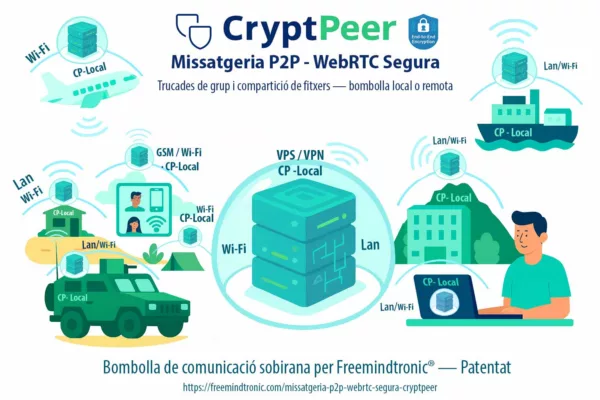
24.6. Evaluating Trust Governance

Key questions:

  • Are generated plans auditable?
  • Is memory fully traceable?
  • Are actions clearly separated from decisions?
  • Are guardrails, uncertainty thresholds, and fail-safe mechanisms implemented?

A comprehensive benchmark should therefore combine prediction tasks, planning tasks, long-term memory tasks, causal reasoning tasks, out-of-distribution evaluations, decision auditing, and safety testing.

25. Agentic Memory: The Missing Link

Memory is often treated as a secondary module. This is a fundamental mistake. Without memory, an intelligent agent possesses no continuity of experience. Without continuity, it cannot learn sustainably from its actions, correct recurring mistakes, manage contradictions, or build a stable functional identity.

A World Model without Experiential Memory risks remaining only a local prediction mechanism. To become a cumulative intelligence, it must be coupled with a memory system capable of preserving experience, extracting abstractions, forgetting irrelevant details, managing contradictions, and reusing acquired knowledge in new situations.

25.1. Three Levels of Memory

  1. Contextual Memory: the information contained within the model’s current context window.
  2. External Memory: documents, vector databases, RAG systems, logs, and knowledge graphs.
  3. Experiential Memory: episodes, errors, decisions, consequences, abstraction, consolidation, and forgetting.

Predictive Artificial Intelligence Architectures — 25.2. The Write–Manage–Read Loop

Recent research formalizes agent memory as a continuous cycle:

Observation / action
        ↓
Memory writing
        ↓
Memory management:
compression, hierarchy, contradiction handling, forgetting
        ↓
Selective retrieval
        ↓
Decision / planning
        ↓
New action

This loop must be integrated with perception, action, access control, and data Trust Governance. See Du 2026 and Zhang et al. 2024.

25.3. Memory and Operational Sovereignty

Agentic Memory also introduces sovereignty requirements, including data localization, encryption, traceability, the right to be forgotten, human oversight, separation between personal and professional memories, and protection against memory poisoning.

Memory is therefore not merely a technical challenge; it is fundamentally a matter of Trust Governance.

Predictive Artificial Intelligence Architectures — 26. AI-TRL Maturity Framework

To transform this dissertation into the foundation of a research program, the maturity of candidate architectures must be assessed. The following framework adapts the spirit of Technology Readiness Levels (TRLs) to Predictive Artificial Intelligence Architectures.

Level Name Description Minimum Expected Evidence
1 Concept Theoretical hypothesis formulated Definition, architecture diagram, hypotheses
2 Simulation Evaluation in a controlled environment Reproducible simulation results
3 Benchmark Validation on standardized tasks Comparative scores with a public evaluation protocol
4 Tool-using Agent Integration of tools, APIs, and information retrieval Action logs and error-control mechanisms
5 Multimodal Perception through images, video, audio, or sensors Multimodal evaluation results
6 Embodied Interaction with robotic systems or rich environments Perception–action feedback loop
7 Causal Validated counterfactual reasoning Interventional testing
8 Robust Out-of-distribution generalization Unseen scenarios and uncertainty detection
9 Governed Auditability, safety, and human oversight Logs, guardrails, and fail-safe mechanisms
10 Operationally Deployable Controlled operational deployment Field validation, supervision, and regulatory compliance

This framework enables meaningful comparisons between approaches without conflating them. A Large Language Model may score very highly on language while remaining limited in embodied interaction. A World Model may excel at prediction while remaining weak in Trust Governance. A hybrid architecture should therefore strive for balanced progress across all dimensions.

27. Manifesto for Predictive, Memory-Driven, and Governable AI

  1. Language is not the world. Text describes reality, but it cannot replace sensory experience, action, or causality.
  2. Predicting tokens is not the same as predicting consequences. An intelligent system that acts must anticipate the effects of its actions.
  3. Memory is not merely a document repository. It should become a continuity of experience through consolidation, forgetting, and controlled contradiction management.
  4. Causality cannot be reduced to correlation. A robust AI system must reason about interventions and counterfactuals.
  5. Planning requires simulatable futures. Choosing an action presupposes comparing multiple possible trajectories.
  6. Action requires safety control. The greater a system’s capacity to act, the greater the need for Trust Governance, auditability, and operational constraints.
  7. Abstraction is prediction-oriented compression. Irrelevant details must be discarded while preserving the variables that matter for prediction.
  8. Artificial general intelligence will most likely be hybrid. Language, perception, Agentic Memory, Causal Models, tools, and latent World Models will need to cooperate.
  9. Evaluation must consider long-term behavior and out-of-distribution performance. Short benchmarks alone cannot adequately measure robustness.
  10. A powerful AI system must know how to fail safely. Refusing, suspending action, requesting verification, or limiting execution may be more intelligent than producing a plausible but incorrect response.

This manifesto summarizes the central ambition of this dissertation: to move beyond generative AI centered on text production toward Predictive Artificial Intelligence Architectures that integrate prediction, Agentic Memory, causality, action, and Trust Governance.

Predictive Artificial Intelligence Architectures — 28. Appendix: Doctoral Research Project / Consortium

28.1. Possible Title

Toward a Hybrid Architecture for Predictive Intelligence: Memory, Causality, World Models, and Tool-using Agents.

Predictive Artificial Intelligence Architectures — 28.2. Research Problem

Current AI architectures excel at language generation. However, they remain fragile when they need to act over time, retain experience, generalize beyond the training distribution, reason causally, and plan within open environments.

This research project aims to study whether a hybrid architecture combining a Large Language Model, a World Model, Agentic Memory, Causal Models, and symbolic control can improve the robustness and governability of autonomous agents.

28.3. Research Hypotheses

  • H1: structured Experiential Memory reduces repeated errors in LLM-based agents.
  • H2: a latent predictive model improves planning compared with purely text-based planning.
  • H3: adding a Causal Model improves out-of-distribution robustness.
  • H4: Neuro-symbolic AI control reduces incoherent or forbidden actions.
  • H5: a hybrid LAMP-C architecture achieves greater governability than a Tool-using LLM Agent alone.

28.4. Scientific Bottlenecks

  • Learning the right abstractions without reconstructing every detail.
  • Combining long-term memory with confidentiality requirements.
  • Evaluating causality and counterfactual reasoning.
  • Controlling action in open environments.
  • Preventing memory poisoning.
  • Maintaining auditability despite opaque neural modules.

Predictive Artificial Intelligence Architectures — 28.5. Methodology

  1. Conduct a structured literature review.
  2. Define internal benchmarks for memory, planning, causality, and safety.
  3. Develop an agentic prototype combining an LLM, RAG, memory, a simulator, and a symbolic verifier.
  4. Progressively integrate a latent predictive model.
  5. Evaluate the system against a standalone LLM, a RAG agent, a Tool-using Agent, an agent with memory, and a hybrid agent.
  6. Analyze failures, including hallucination, causal errors, impossible plans, and contradictory memory.
  7. Publish the results, limitations, and evaluation protocols.

28.6. Deliverables Over 36 Months

Period Deliverable
M0–M6 State of the art, taxonomy, evaluation protocol
M6–M12 Memory / planning / causality benchmark
M12–M18 Minimal LAMP-C prototype
M18–M24 Latent predictive model integration
M24–M30 Out-of-distribution evaluation and Trust Governance
M30–M36 Publication, dataset, benchmark, final framework

28.7. Potential Applications

  • Robotics and embodied agents.
  • Long-term professional assistants.
  • AI Cybersecurity and incident analysis.
  • Governed critical systems.
  • Sovereign off-cloud agents.
  • Decision support under regulatory constraints.

Predictive Artificial Intelligence Architectures — 28.8. Success Criteria

  • Measurable reduction in repeated errors.
  • Improved planning under constraints.
  • Greater out-of-distribution robustness.
  • Complete logging of decisions and actions.
  • Explicit control over action capabilities.
  • Reproducibility of evaluation protocols.

29.4. AI as an Attack Amplifier

AI does not create every risk ex nihilo. However, it changes their scale, speed, credibility, and degree of personalization.

29.4.1. Phishing, Deepfakes, and Augmented Social Engineering

LLMs can generate credible, personalized, multilingual messages tailored to a target’s context. In parallel, voice and video models strengthen identity impersonation through voice or face imitation.

As a result, the risk is no longer limited to password compromise. It increasingly concerns the compromise of the trust relationship: an executive’s voice, a colleague’s message, a falsified video conference, or a misleading operational instruction.

Consequently, identity can no longer rely solely on intuitive human signals. Statements such as “I recognized the voice” or “I saw the person on video” are no longer sufficient for critical operations. Cryptographic proof mechanisms, contextual controls, out-of-band verification, logging, and strong authentication therefore become essential.

29.4.2. Offensive Automation

AI can accelerate:

  • vulnerability discovery;
  • generation of phishing variants;
  • translation and localization of attacks;
  • production of exploitation scripts;
  • analysis of leaked data;
  • target identification;
  • personalization of lures;
  • simulation of conversations;
  • dynamic adaptation to the victim’s responses.

This acceleration requires a shift in defensive strategy. Security can no longer remain purely reactive. It must become predictive, contextual, and capable of rapidly reducing exposure.

29.4.3. Attacks Against Non-Human Identities

Non-human identities are becoming critical assets: API keys, machine certificates, cloud workloads, containers, microservices, connected objects, robots, and AI agents. In many environments, these identities outnumber human users, are harder to inventory, and are less frequently governed with strict controls.

Agentic AI further amplifies this issue. An agent may act on behalf of a user, a service, or an organization. It therefore becomes necessary to define not only who is acting, but also under which delegation, within which scope, with which tools, for how long, with what traceability, and under which revocation mechanism.

29.5. Human Identity: From Point-in-Time Authentication to Trust Continuity

Modern Digital Identity is structured by reference frameworks such as NIST SP 800-63-4, which covers identity proofing, authentication, and federation. Mechanisms such as WebAuthn and FIDO Passkeys significantly improve phishing resistance by replacing shared secrets with public-key proofs bound to an authenticator and to the service context.

However, AI changes the nature of the problem. Strong authentication answers the question: does the person control the authentication factor? It does not always answer the following questions:

  • Is the person acting under coercion?
  • Has the session been hijacked after authentication?
  • Is the requested action consistent with the person’s role?
  • Is the environment trustworthy?
  • Is the behavior abnormal?
  • Is an agent acting on the person’s behalf?
  • Was the decision triggered by deepfake manipulation?

For this reason, authentication must evolve toward Trust Continuity.

29.5.1. Human Trust Factors

Category Examples Associated AI Risk Future Requirement
What I know Password, PIN Phishing, lure generation Reduction of memorized secrets
What I possess Key, card, smartphone, token Theft, malware, relay attack Attestation and local proof
What I am Biometrics Deepfake, artifacts, spoofing PAD, liveness, context
What I do Behavior, keystroke dynamics, usage patterns Mimicry, assisted impersonation Careful and governed profiling
Where I am Geolocation, network, BSSID VPN, spoofing, relay Multi-signal consistency
When I act Time, sequence, frequency Abnormal automation Cadence and anomaly detection
What I act with Device posture, browser, operating system Compromised endpoint Attestation, EDR, trust level
Why I act Apparent intent, task, workflow Manipulation, social engineering Critical contextual verification

29.5.2. From Declared Identity to Proven Identity

A declared identity is an assertion: “I am Jacques,” “I am this sensor,” “I am this agent,” or “I am this service.” By contrast, a proven identity requires a verification mechanism: cryptographic key, certificate, authenticator, biometrics, hardware attestation, proof of presence, proof of possession, proof of context, or proof of behavioral compliance.

In a world shaped by generative AI, declared identity loses value. Proven identity becomes central.

29.5.3. Trust Continuity and Adaptive Decisions

Trust Continuity does not mean unlimited surveillance. Rather, it means that critical decisions must be re-evaluated through a body of evidence proportionate to the risk: identity, context, device, requested action, history, resource sensitivity, and possible consequences.

This logic aligns with the Zero Trust model. The network is no longer assumed to be trustworthy; each access request to a resource must be evaluated according to context, identity, asset, and policy. See NIST SP 800-207.

Predictive Artificial Intelligence Architectures — 29.6. Authentication of Living Beings: Presence, Liveness, Context, and Dignity

The expression “authentication of living beings” must be handled with care. It should not reduce a human being to biometric data. Instead, it should distinguish four levels:

  1. Authentication of a human identity: proof that a person controls factors associated with a Digital Identity.
  2. Proof of presence: proof that an action involves a real human presence in a given context.
  3. Proof of liveness: resistance to artifacts, photos, videos, masks, copied fingerprints, or deepfakes.
  4. Authentication of a non-human living organism: veterinary traceability, research, conservation, food supply chains, transport, and biosafety.

29.6.1. Biometrics and Presentation Attack Detection

Biometrics can strengthen authentication, but they are not secret keys. A face, a voice, or a fingerprint may be exposed, reproduced, or synthesized.

Therefore, biometric security must integrate Presentation Attack Detection (PAD), liveness proof, bias evaluation, data minimization, cryptographic protection, and appeal mechanisms.

The ISO/IEC 30107 standard provides vocabulary and a framework for biometric presentation attack detection. Biometric evaluations such as NIST FRVT provide a performance evaluation framework, although they do not replace a complete system-level security analysis.

29.6.2. Biological Identity and Cryptographic Identity

A major confusion must be avoided: biological DNA, biometrics, and cryptographic identity are not the same type of object.

  • Biological DNA is sensitive biological information that is stable, familial, and strongly protected.
  • Biometrics is a modality for recognizing or verifying a living being.
  • Cryptographic identity is a proof structure based on keys, certificates, signatures, attestations, and protocols.

Expressions such as “Digital DNA” or “Cryptographic Genome” should therefore be understood as structural or procedural metaphors. They refer to the organization of proofs, segments, inheritance mechanisms, dependencies, or trust policies, and not to biological DNA or DNA computing.

29.6.3. Ethical Principles for the Authentication of Living Beings

Principle Meaning
Proportionality Collect only the evidence required for the actual level of risk.
Data Minimization Avoid centralized biometric data whenever local verification is sufficient.
Reversibility Support revocation, renewal, and appeal mechanisms.
Non-reduction Do not equate a human being with a technical identifier.
Local Protection Favor local authentication whenever feasible.
Explainability Provide justified explanations for critical refusals.
Auditability Maintain verifiable records without exposing personal privacy.
Dignity Prevent security from becoming abusive surveillance.

29.7. Machine Identity, Connected Devices, and Non-Human Agents

Connected devices and non-human identities have become central components of modern cybersecurity. A connected object may be an industrial sensor, a medical device, a camera, an access badge, an industrial controller, a vehicle, a smart lock, a robot, a smartphone, a gateway, an environmental probe, or an embedded module.

Reference frameworks such as NISTIR 8259A and ETSI EN 303 645 emphasize that connected devices should provide essential security capabilities, including device identity, secure configuration, data protection, software updates, logging, documentation, vulnerability management, and resilience.

With the emergence of AI, the role of connected devices is evolving. They may now become:

  • a sensor feeding a predictive model;
  • a source of local decision-making;
  • an entry point for an AI agent;
  • a physical actuator;
  • a non-human identity within a chain of trust;
  • a component of a safety-critical system;
  • a node within a predictive risk model.

29.7.1. Non-Human Identity: A Typology

Identity Type Example Primary Risk Recommended Control
Device Sensor, badge, industrial controller Cloning, compromised firmware Hardware identity, secure updates
Workload Container, cloud function Stolen token, lateral movement Attestation, secret rotation
API External service Overprivileged access, API abuse Scopes, quotas, auditing
AI Agent Tool-using assistant Unauthorized actions Capabilities, sandboxing, logging
Robot Industrial arm, drone Physical harm Safety interlocks, fail-safe mechanisms, human oversight
Data Document, embedding, memory Leakage, contamination Provenance, encryption, traceability
Model LLM, vision model, classifier Model extraction, poisoning Trust Governance, versioning, adversarial testing

29.7.2. Lifecycle of an Object Identity

  1. Birth: generation or injection of a root identity.
  2. Provisioning: association with an owner, role, purpose, and policy.
  3. Activation: first controlled deployment.
  4. Attestation: proof of hardware or software integrity.
  5. Operation: normal behavior under proportionate monitoring.
  6. Update: signed patches and verifiable software versions.
  7. Suspension: reduction of privileges following anomaly detection.
  8. Revocation: withdrawal of trust.
  9. Transfer: change of ownership or operational context.
  10. End of Life: secure erasure, decommissioning, and archival of evidence.

29.7.3. Connected Devices and the Cyber Resilience Act

The Cyber Resilience Act establishes horizontal cybersecurity requirements for products with digital elements within the European Union. It reinforces the principle that the security of connected devices and software must be addressed throughout their entire lifecycle, from secure design to vulnerability management.

For this dissertation, this means that Predictive Artificial Intelligence Architectures applied to IoT cannot focus solely on performance. They must also be maintainable, attestable, governable, updateable, and compatible with evolving regulatory requirements.

29.8. World Models as Predictive Models of Trust State

A cyber World Model may represent:

  • human identities;
  • machine identities;
  • connected devices;
  • AI agents;
  • sensitive assets;
  • permissions;
  • sessions;
  • network flows;
  • security events;
  • vulnerabilities;
  • software dependencies;
  • expected behaviors;
  • behavioral deviations;
  • attack paths;
  • mitigation measures;
  • the potential consequences of an action.

Such a model makes it possible to ask counterfactual questions, including:

  • What happens if this token is compromised?
  • What happens if this IoT device falsely reports its status?
  • What happens if this AI agent invokes this API?
  • Which attack path becomes feasible if this key is exposed?
  • Which action most effectively limits propagation?
  • Which evidence is still missing before this operation can be authorized?

This line of reasoning is consistent with Pearl‘s work on causality and with the causal representations proposed by Schölkopf et al.. Advanced cybersecurity should therefore do more than classify events; it should understand dependency relationships and predict the effects of interventions.

29.8.1. Variables of a Predictive Trust Model

Variable Example Predictive Role
Identity Human, device, agent Who is acting?
Authenticator Key, token, biometrics, certificate What evidence supports the identity?
Context Location, network, time, device Is the situation consistent?
Integrity Firmware, endpoint, runtime Is the environment trustworthy?
Behavior Sequences, frequency, volume Is there a behavioral deviation?
Resource File, API, vault, connected object How sensitive is the resource?
Action Read, sign, move, control What are the potential consequences?
Memory History, incidents, errors What is already known?
Causality Dependencies, propagation What could this action trigger?
Policy Rules, obligations, thresholds How should the system respond?
Uncertainty Missing evidence, anomaly Should access or action be restricted?

29.8.2. Compromise Trajectories

Within a predictive approach, an attack is not merely an isolated event. Instead, it follows a trajectory: reconnaissance, initial access, privilege escalation, persistence, lateral movement, exfiltration, manipulation, sabotage, or physical impact.

Accordingly, a cyber World Model should learn both normal and abnormal trajectories before evaluating their possible branching paths. This perspective naturally connects cybersecurity with AI Planning: the objective is not only to understand what has already happened, but also to anticipate what may happen next.

Predictive Artificial Intelligence Architectures — 29.9. LAMP-Cyber Architecture

Epistemological status (Register A). Conceptual extension of LAMP-C · applied research framework · not experimentally validated at this stage.

This section proposes an applied extension of LAMP-C for cybersecurity and safety-critical systems.

LAMP-Cyber stands for:

  • L — Language: operational instructions, security policies, alerts, reports, tickets, and regulatory requirements.
  • A — Abstraction: assets, identities, roles, risks, dependencies, and trust states.
  • M — Memory: behavioral history, incidents, decisions, operational contexts, evidence, and vulnerabilities.
  • P — Prediction: attack trajectories, propagation, Trust Continuity disruption, and potential impact.
  • C — Causality / Control: counterfactual reasoning, access decisions, isolation, revocation, fail-closed behavior, and auditing.
Human / machine / object / agent identity
        ↓
Context: device, network, location, time,
behavior, apparent intent
        ↓
Trust Memory: history, incidents,
evidence, policies
        ↓
Predictive Risk Model:
trajectories, anomalies, propagation
        ↓
Causal / Counterfactual Reasoning:
possible consequences
        ↓
Decision:
authorize, restrict, isolate,
revoke, alert, escalate
        ↓
Verifiable Log:
evidence, Trust Governance,
audit, experiential feedback

29.9.1. Classical IAM versus LAMP-Cyber

Dimension Traditional IAM LAMP-Cyber
Decision model Authentication followed by authorization Continuous and predictive trust assessment
Data considered Identity, group, role, MFA Identity, context, behavior, action, consequences
Time model Point-in-time event Continuously evolving state
Memory Logs and directories Experiential Trust Memory
Causality Limited Counterfactual analysis of consequences
Connected objects Often secondary Non-human identities treated as first-class entities
AI agents Rarely modeled Explicitly governed actors
Safety Limited coverage Integrated cyber-physical approach

29.9.2. Fail-Closed Decision-Making and Trust Continuity

In a critical system, uncertainty should not lead to authorization by default. Instead, the decision may need to become:

  • authorize;
  • authorize with restrictions;
  • request additional evidence;
  • isolate;
  • suspend;
  • revoke;
  • escalate to a human operator;
  • refuse in fail-closed mode.

This logic is particularly important for connected devices, robots, autonomous agents, and critical infrastructure.

29.10. Safety: When Digital Compromise Produces Physical Effects

Cybersecurity protects the confidentiality, integrity, availability, and governance of digital systems. Safety, by contrast, aims to prevent harm to people, property, infrastructure, or the environment.

With AI, IoT, and robotics, this boundary is narrowing. A digital compromise may produce a physical effect:

  • a connected lock opening unexpectedly;
  • an industrial robot moving dangerously;
  • a medical sensor transmitting falsified measurements;
  • a drone changing its trajectory;
  • a vehicle accepting an illegitimate command;
  • a smart building modifying ventilation, temperature, or access control;
  • an energy infrastructure receiving a false instruction;
  • an AI agent triggering an operational action through an API.

Safety therefore introduces an additional question: even if the action is technically authorized, is it safe in this context?

29.10.1. Security–Safety Convergence

Domain Central Question Example
Cybersecurity Is the system compromised? Stolen token, malware, injection
Digital Identity Who is actually acting? Human, agent, machine, connected object
Safety Can the action cause harm? Robot, vehicle, medical device
Trust Governance Who is accountable? Deployer, operator, manufacturer, agent
Predictive Model What is likely to happen next? Propagation, physical effect, cascading failure

29.10.2. Security and Safety of Autonomous Systems

Autonomous systems require stricter Trust Governance than purely text-based applications. An agent that writes a summary may make a mistake. However, an agent acting on a machine, a payment, an identity, or a physical access mechanism can cause real harm.

The EU AI Act adopts a risk-based approach to AI systems. For Predictive Artificial Intelligence Architectures applied to safety-critical contexts, this implies:

  • risk classification;
  • documentation;
  • human oversight;
  • robustness;
  • cybersecurity;
  • traceability;
  • incident management;
  • update control;
  • governance of data and models.

29.11. Identity / Authentication / AI / Connected Devices Matrix

Entity AI-Related Risk Classical Authentication Future Requirement References
Human Deepfake, adaptive phishing, coercion Password, MFA, biometrics Proof of presence, context, behavior, action control NIST 800-63-4, FIDO, WebAuthn
AI Agent Unauthorized actions, tool abuse, contaminated memory API key, token Agentic identity, capabilities, sandboxing, auditability OWASP LLM, NIST AI RMF
IoT Device Cloning, compromised firmware, deceptive sensor Certificate, embedded key Hardware attestation, signed update, expected behavior NISTIR 8259A, ETSI EN 303 645
Robot Dangerous physical action Local control, operator Safety, interlock, fail-safe, risk model EU AI Act
Cloud Service Token theft, privilege escalation, lateral movement IAM, OAuth, certificates Governed non-human identity, rotation, attestation Zero Trust
Sensitive Data Exfiltration, RAG contamination ACL, encryption Provenance, classification, controlled use, secure memory NIST CSF, SSDF
AI Model Extraction, poisoning, dangerous behavior Versioning, API access Model governance, red teaming, continuous evaluation NIST AI RMF, OWASP LLM
Critical Infrastructure Cyber-physical cascade Segmentation, supervision Predictive impact model, fail-closed behavior, resilience ENISA Threat Landscape, NIST CSF

Predictive Artificial Intelligence Architectures — 29.12. Sovereign Dimension: Trust Continuity, Segmented Identity, and Local Proof

Epistemological status (Register A). EviSKMS is presented here as a conceptual framework and an observable industrialization foundation as declared by its author. It has not yet undergone independent third-party auditing. Internal implementation mechanisms remain within Register C.

An original research direction consists of exploring architectures in which trust does not depend exclusively on the cloud, a centralized database, or a permanently available online authority. Such an approach is particularly relevant for:

  • sovereign environments;
  • critical infrastructures;
  • disconnected environments;
  • defense;
  • emergency response;
  • industrial IoT;
  • long-life connected devices;
  • local authentication;
  • AI agents operating under constrained conditions;
  • distributed secret and proof management.

Potential research directions include:

  1. Segmented Identity: separating proofs, authentication factors, secrets, or identity attributes.
  2. Local Authentication: enabling trust decisions without permanent dependence on a remote server.
  3. Local Trust Memory: maintaining a verifiable and controlled trust history.
  4. Trust Continuity: preserving a trusted operational state despite disconnection, network loss, or partial attacks.
  5. Verifiable Proof: logs, digital signatures, attestations, timestamps, and chains of evidence.
  6. Revocation Under Constrained Conditions: local suspension, risk thresholds, and emergency policies.
  7. Zero Trust Compatibility: eliminating implicit trust, even within internal environments.
  8. Protection of Connected Devices: hardware identity, signed updates, and expected behavioral profiles.
  9. AI Agent Control: capabilities, operational scope, Trust Modes, and fail-closed behavior.
  10. Operational Sovereignty: reducing critical dependencies on external services.

Rather than opposing existing standards, this approach should be viewed as complementary. Its objective is to make trust architectures more resilient, locally verifiable, and better aligned with the requirements of safety-critical environments.

29.13. Applied Research Program: Predictive AI, Digital Identity, and Cyber-Physical Trust

29.13.1. Research Question

How can a Predictive Artificial Intelligence Architecture be designed to evaluate, maintain, and govern trust among humans, AI agents, connected devices, and critical infrastructures while limiting the risks of compromise, impersonation, unsafe actions, and excessive dependence on a centralized authority?

29.13.2. Research Hypotheses

Hypothesis Statement Validation Criterion
H-CY1 A Trust Memory improves the detection of behavioral deviations. Reduction of false negatives in multi-stage attack scenarios.
H-CY2 A predictive attack-trajectory model improves response before impact. Reduced mitigation time and limited operational impact.
H-CY3 An agent identity governed by capabilities reduces unauthorized actions. Reduction of tool abuse during adversarial testing.
H-CY4 Continuous contextual authentication reduces post-login impersonation. Detection of session hijacking and behavioral anomalies.
H-CY5 Fail-closed decision-making reduces the impact of uncertain situations. No critical access granted without sufficient evidence.
H-CY6 A local, segmented architecture improves offline resilience. Maintenance of safe operations under degraded conditions.

29.13.3. Scientific Challenges

  • Representing a trust state without creating intrusive surveillance.
  • Connecting identity, behavior, context, and causality within an operational model.
  • Evaluating AI agents against realistic multi-stage attacks.
  • Securing both RAG memories and Experiential Memory.
  • Defining capability policies that are understandable and verifiable.
  • Guaranteeing the safety of cyber-physical actions.
  • Preserving the confidentiality of identity signals.
  • Managing revocation, correction, and forgetting in long-term memory.
  • Preventing unsafe defensive automation.
  • Reconciling operational sovereignty with standards-based interoperability.

29.13.4. Proposed Experimental Architecture

Sources: logs, IAM, EDR, IoT, APIs, RAG,
tickets, policies
        ↓
Normalization and abstraction:
assets, identities, relationships, events
        ↓
Trust Memory:
history, evidence, anomalies, incidents
        ↓
Predictive Model:
attack trajectories, risks,
potential consequences
        ↓
Causal Engine / Rules:
counterfactuals, constraints, policies
        ↓
Governed LLM Agent:
explanation, orchestration,
summarization, human interaction
        ↓
Capability Controller:
authorized tools, thresholds,
sandbox, fail-closed
        ↓
Actions:
alert, restrict, revoke,
isolate, request evidence
        ↓
Audit:
signed logs, replay,
justification, experiential feedback

29.13.5. Dedicated Benchmarks

Benchmark Objective Metrics
Indirect prompt injection Evaluate RAG and external tools Compromise rate, data leakage, correct refusal rate
Contaminated memory Evaluate forgetting and correction Persistence of hostile beliefs, purge time
Session hijacking Evaluate Trust Continuity Post-login detection rate, user friction
Cloned IoT device Evaluate attestation and behavioral validation False positives/negatives, isolation time
Overprivileged AI agent Evaluate capability policies Number of dangerous actions prevented
Decision deepfake Evaluate out-of-band verification Fraudulent validation rate
Attack trajectory Evaluate predictive capability Prediction before impact, mitigation effectiveness
Offline degraded mode Evaluate operational sovereignty Maintenance of safe operations
Cyber-physical scenario Evaluate safety Damage prevented, safe shutdown performance

29.13.6. Dedicated Deliverables

Period Cyber-Safety Deliverable
M0–M6 Taxonomy of human, machine, AI agent, and connected-object identities
M6–M12 Corpus of adversarial AI and identity scenarios
M12–M18 Minimal LAMP-Cyber prototype
M18–M24 Trust Memory and Tool-using Agent benchmarks
M24–M30 IoT, non-human identity, and degraded-mode demonstrator
M30–M36 Trust Governance framework, scientific publication, and evaluation guide

29.14. Bridge to the Companion Dissertation — Digital DNA, EviDNA, and the Cryptographic Genome

Epistemological status (Register A). The Cryptographic Genome is presented here as a conceptual and forward-looking formalization. Its detailed development is provided in a separate companion dissertation, while Gen2 implementation mechanisms remain within Register C.

The topics of the Cryptographic Genome, EviDNA, Digital DNA, documentary comparisons with the current state of the art (CNRS, FIDO, PKI, Zero Trust), and the documented industrialization evidence associated with CryptPeer are presented in a separate companion dissertation. This separation preserves the readability of the present document, which focuses on Predictive Artificial Intelligence Architectures and their applied cybersecurity dimension (§29.1–§29.13).

Companion dissertation: DNA and Cryptography — EviDNA, the Cryptographic Genome, and the State of the Art

Topic Section in the Companion Dissertation
Cryptographic Genome — Gen1/Gen2 evolution §1 — Cryptographic Genome
Industrialization matrix and Registers A/B/C §1.1
Obfuscation module — patented variant and EviSKMS extension §1.1.1
EviSKMS–CryptPeer implementation evidence summary §1.3
Structured comparison of digital trust (FIDO, PKI, EviSKMS) §1.4
Cryptographic Genome versus point-in-time identity §1.5
CNRS — synthetic DNA cryptography (external reference) §1.6
Digital DNA / CryptPeer 2026 §1.7
EviDNA implementation evidence — DataShielder §1.10
Prior art and public disclosures §1.9

Summary (Register A). The Freemindtronic trajectory (patent WO/2018/154258, EviDNA 2024, Cryptographic Genome 2026, and the industrialization of CryptPeer/EviSKMS) extends the sovereign architecture and Trust Continuity concepts introduced in §29.12. It is not presented as the theoretical core of this dissertation on Predictive Artificial Intelligence Architectures; rather, it constitutes a separately documented industrial application.

Patent / Industrialization / Confidentiality Partition (Register A). Patent WO/2018/154258 is a public prior-art document. The industrialization of CryptPeer/EviSKMS is supported by declarative observations and non-sensitive evidence (Register A). Genomic extensions and internal implementation mechanisms belong to Register C.

Inventive Lineage (Register A). Jacques Gascuel, inventor and author of this dissertation, oriented his research around a central observation: as Predictive Artificial Intelligence becomes increasingly capable of anticipating, imitating, and exploiting human behavior, traditional point-in-time authentication becomes progressively insufficient for protecting Digital Identity. This led to the hypothesis that a trusted identity should evolve over time, remain continuously re-evaluable, and be governable in response to the growing capabilities of AI, particularly predictive AI.

This research direction first resulted in the segmented-key patent and subsequently evolved into the conceptual framework of EviSKMS. Following the documented proof of implementation in 2024 of encryption and digital signatures derived from human DNA (the living-being dimension of the EviDNA trajectory), the research later expanded toward a broader conceptual framework for digital trust based on a genomic paradigm (Digital DNA and the Cryptographic Genome). These developments are presented in detail within the companion dissertation.

The present dissertation retains, in §29.12 and §29.13, the scientific framework connecting Predictive Artificial Intelligence, Digital Identity, and Cyber-Physical Trust. The cryptographic mechanisms, DNA/CNRS comparisons, and operational architectures are intentionally reserved for the companion dissertation.
[/ux_text] [/col]

Predictive Artificial Intelligence Architectures — Limitations, Falsifiability, and Scope of Validity

This section consolidates, for Freemindtronic’s public reference publication, material that is distributed elsewhere in the dissertation (§11.5, §18, §19, Appendix A.6). Its purpose is to make the document defensible for a skeptical reader, whether a researcher, auditor, journalist, or industrial partner.

Predictive Artificial Intelligence Architectures — What This Dissertation Does Not Claim to Prove

This document is not:

  • an exhaustive PRISMA-style systematic review;
  • an independent security audit or a compliance attestation (eIDAS, Common Criteria, FIPS, etc.);
  • a published quantitative benchmark comparing EviSKMS with FIDO, PKI, or competing solutions;
  • an enabling technical disclosure allowing reproduction of Gen2 mechanisms or post-patent extensions;
  • peer validation in the strict sense of publication in a peer-reviewed journal.

It is: an interdisciplinary framework for Predictive Artificial Intelligence Architectures; an applied positioning in cybersecurity and Cyber-Physical Trust (§29.1–§29.13); and a bridge to the companion DNA/EviDNA dissertation for cryptographic details and state-of-the-art comparisons.

Scope of Validity by Register

Register Public Scope of Validity Explicit Limitation
AI framework (LAMP-C, taxonomy) Conceptual and methodological; falsifiable hypotheses in §18.2 LAMP-C experimentation has not yet been published as a corpus of results.
State of the art (§23) Documentary synthesis at the time of writing Rapidly evolving field; non-exhaustive scope.
Genome / CryptPeer / EviDNA Developed in the companion dissertation See the limitations and hypotheses H-C1–H-C5 in the DNA/EviDNA dissertation.
Patent WO2018154258 Authorized partial disclosure on segmentation and conditional reconstruction Does not cover genomic extensions or the complete EviSKMS runtime.

Falsifiable Hypotheses — Predictive Artificial Intelligence Dimension

Hypotheses H1 to H5 in §18.2 concern LAMP-C and hybrid architectures integrating memory, causality, World Models, and Neuro-symbolic AI. They remain valid for the AI research dimension of this dissertation.

However, their confirmation or refutation requires the experimental protocols described in §18.3 and §24.

Predictive Artificial Intelligence Architectures — Falsifiable Hypotheses — Digital Trust Dimension (EviSKMS Gen1)

Hypotheses H-C1 to H-C5 concerning continuity, fail-closed behavior, DDNA, anti-replay mechanisms, and differentiation from existing standards are formulated and detailed in the companion DNA/EviDNA dissertation.

Global Refutation Conditions for the Freemindtronic Positioning

The framework defended in this dissertation would be significantly weakened if one of the following conditions were established publicly and reproducibly:

  1. Gen2 presented without register qualification, despite its detailed mechanisms belonging to Register C.
  2. Systemic bypass of fail-closed, RI, or DRT continuity controls within the qualified sovereign-local scope, without a documented corrective measure.
  3. Absence of correlation between the patented segmentation mechanism and the industrialized Gen1 mechanisms, indicating a technical or documentary discontinuity.
  4. Independent benchmark evidence showing that properly deployed MFA/WebAuthn achieves the same temporal continuity and runtime governance properties without an additional layer, across the same adversarial scenarios.
  5. Unintentional enabling disclosure in public communications, including the dissertation, videos, or press releases, allowing a third party to reproduce Gen2 or post-patent extensions.

Methodological Constraint Related to Intellectual Property

The controlled publication strategy based on Registers A / B / C strengthens IP protection. However, it also reduces immediate external falsifiability: a third party cannot reproduce or deeply audit mechanisms classified as Register C without an agreement.

This constraint is intentional. It requires a clear distinction between:

  • what is publicly verifiable, including product existence, declared automated tests, granted patents, and timestamped disclosures;
  • what is verifiable under NDA (Register B);
  • what is deliberately not published (Register C).

Full scientific recognition will require third-party evaluations on authorized scopes, after IP protection has been secured, in accordance with §1.2 of the companion dissertation.

Predictive Artificial Intelligence Architectures — Epistemological Modesty

This dissertation adopts the position of an inventor-researcher: field observation and industrialization provide strong signals, but they do not replace independent validation.

General Conclusion

Large Language Models have demonstrated the power of large-scale statistical learning. They will remain an essential component of modern artificial intelligence, because language is the primary medium of explicit human knowledge.

However, language alone is likely insufficient to produce robust artificial general intelligence. An intelligence capable of action must retain experience, represent context, anticipate the consequences of its actions, reason causally, plan, and control its own limits.

World Models represent a major path toward this capability, but they are not the only one. Neuro-symbolic AI, Tool-using Agents, RAG, persistent memory, reinforcement learning, Active Inference, Causal Models, search-based planning, and embodied architectures each contribute part of the solution.

The central contribution of this dissertation is to shift the analytical focus toward a broader framework: Predictive Artificial Intelligence Architectures. Within this framework, World Models are no longer the school of thought to defend; rather, they become one pillar of a larger architecture grounded in memory, abstraction, causality, action, and Trust Governance.

The applied cybersecurity dimension shows why this approach is becoming critical. Identity, context, memory, behavior, proof, action, and consequence must be connected in order to maintain Trust Continuity between humans, AI agents, machines, and connected devices.

The Cryptographic Genome / EviDNA trajectory, including CryptPeer/EviSKMS industrialization, illustrates this evolution on the sovereign trust side. It is developed in the companion DNA/EviDNA dissertation. The section on limitations and falsifiability specifies the scope of validity of the present document.

A major architectural evolution in AI will likely not consist merely of a larger model. Instead, it will depend on a better-structured architecture: language, abstraction, memory, prediction, causality, action, and control, subject to the methodological limits explicitly stated in this dissertation.

Predictive Artificial Intelligence Architectures — Annotated Scientific Bibliography

This bibliography is designed as an interactive section. Each entry includes a stable internal link, one or more official or primary links, and an indication of how it is used in the dissertation.

Quick Bibliography Index

Cognitive Origins and Symbolic Grounding

Craik, K. J. W. (1943). The Nature of Explanation.

Official / primary links: PhilPapers · Google Books / CUP Archive · Internet Archive. A foundational reference introducing the concept of an internal small-scale model of reality. It is useful for showing that the idea of a World Model predates modern artificial intelligence. Use in this dissertation: historical origins of internal models, mental simulation, and prediction before action. ↩ Back to the bibliography index

Johnson-Laird, P. N. (1983). Mental Models.

Official / primary links: Google Books / Harvard University Press · ACM Guide. A landmark work in cognitive psychology introducing the theory of mental models. It establishes a conceptual bridge between human reasoning and the internal simulation of possible situations. Use in this dissertation: cognition, internal simulation, and reasoning about possible situations. ↩ Back to the bibliography index

Harnad, S. (1990). The Symbol Grounding Problem.

Official / primary links: Oxford Computer Science PDF. A classic paper addressing the challenge of assigning meaning to symbols that are connected only to other symbols. Use in this dissertation: symbolic grounding and the limitations of language in the absence of perception and action. ↩ Back to the bibliography index

Large Language Models (LLMs): Capabilities and Limitations

Bender, E. M., Gebru, T., McMillan-Major, A., & Shmitchell, S. (2021). On the Dangers of Stochastic Parrots: Can Language Models Be Too Big?

Official / primary links: ACM Digital Library · ACM FAccT 2021. A landmark paper arguing that scaling language models does not, by itself, produce grounded understanding. The authors examine issues related to data quality, bias, environmental cost, and the limitations of purely statistical language modeling. Use in this dissertation: critical analysis of LLM limitations, symbolic grounding, and the distinction between language generation and genuine understanding. ↩ Back to the bibliography index

Gurnee, W., & Tegmark, M. (2023). Language Models Represent Space and Time.

Official / primary links: arXiv. This study provides evidence that Large Language Models develop internal representations encoding spatial and temporal relationships, suggesting that statistical learning can produce latent predictive representations extending beyond surface-level language patterns. Use in this dissertation: internal representations in LLMs, latent world representations, and the scientific debate on emergent cognitive capabilities. ↩ Back to the bibliography index

Berglund, L., et al. (2023). The Reversal Curse: LLMs Trained on “A is B” Fail to Learn “B is A”.

Official / primary links: arXiv. This paper introduces the Reversal Curse, demonstrating that language models may learn directional relationships without reliably inferring their inverse. The findings highlight limitations in generalization and relational reasoning. Use in this dissertation: limits of generalization, causal reasoning, and the robustness of internal representations. ↩ Back to the bibliography index

Brown, T. B., et al. (2020). Language Models are Few-Shot Learners.

Official / primary links: arXiv. The foundational GPT-3 paper demonstrating that scaling transformer-based language models enables strong few-shot, one-shot, and zero-shot performance across a wide range of natural language tasks. Use in this dissertation: emergence of in-context learning, scaling laws, and the practical capabilities of Large Language Models. ↩ Back to the bibliography index

OpenAI (2023). GPT-4 Technical Report.

Official / primary links: arXiv. Describes the architecture, evaluation methodology, capabilities, and limitations of GPT-4, including benchmark performance and safety considerations. Use in this dissertation: state of the art in industrial LLMs, evaluation methodology, and current operational capabilities. ↩ Back to the bibliography index

Cognitive Science and Human Learning

Lake, B. M., Ullman, T. D., Tenenbaum, J. B., & Gershman, S. J. (2017). Building Machines That Learn and Think Like People.

Official / primary links: Science. A seminal article arguing that human-level intelligence requires more than statistical pattern matching. The authors advocate integrating compositionality, causality, intuitive physics, intuitive psychology, and efficient learning inspired by cognitive science. Use in this dissertation: cognitive foundations of Predictive Artificial Intelligence Architectures, compositional representations, and causal reasoning. ↩ Back to the bibliography index

Dehaene, S. (2020). How We Learn: Why Brains Learn Better Than Any Machine… for Now.

Official / primary links: Penguin Random House · Collège de France. Dehaene explores the principles underlying human learning, emphasizing attention, active engagement, error correction, abstraction, and consolidation. Use in this dissertation: human learning mechanisms, abstraction, Agentic Memory, and the relationship between learning and prediction. ↩ Back to the bibliography index

Friston, K. (2010). The Free-Energy Principle: A Unified Brain Theory?

Official / primary links: Nature Reviews Neuroscience. This influential paper proposes that biological systems minimize variational free energy through prediction and continual interaction with their environment, providing a theoretical foundation for perception, action, and learning. Use in this dissertation: predictive cognition, Active Inference, and theoretical foundations of predictive intelligence. ↩ Back to the bibliography index

Clark, A. (2013). Whatever Next? Predictive Brains, Situated Agents, and the Future of Cognitive Science.

Official / primary links: Cambridge University Press. Clark argues that cognition is fundamentally predictive, with the brain continuously generating and updating models of the world through perception and action. Use in this dissertation: predictive cognition, World Models, Active Inference, and predictive representations. ↩ Back to the bibliography index

Human Vision and Sensory Processing

Gibson, J. J. (1979). The Ecological Approach to Visual Perception.

Official / primary links: Google Books. Gibson introduced the ecological theory of perception, arguing that perception is fundamentally rooted in direct interaction with the environment rather than in passive image processing. Use in this dissertation: perceptual grounding, embodied intelligence, and the relationship between perception and action. ↩ Back to the bibliography index

Marr, D. (1982). Vision: A Computational Investigation into the Human Representation and Processing of Visual Information.

Official / primary links: MIT Press. A foundational work in computational vision proposing a hierarchical theory of visual processing, from low-level sensory signals to abstract representations. Use in this dissertation: hierarchical representations, abstraction, predictive perception, and World Models. ↩ Back to the bibliography index

DiCarlo, J. J., Zoccolan, D., & Rust, N. C. (2012). How Does the Brain Solve Visual Object Recognition?

Official / primary links: Neuron. This review explains how the primate visual system develops invariant object representations while preserving behaviorally relevant information. Use in this dissertation: perceptual representations, abstraction, and biologically inspired approaches to Predictive Artificial Intelligence Architectures. ↩ Back to the bibliography index

Reinforcement Learning and World Models

Sutton, R. S., & Barto, A. G. (2018). Reinforcement Learning: An Introduction (2nd ed.).

Official / primary links: Official online edition. The reference textbook on reinforcement learning, covering value functions, policy optimization, temporal-difference learning, planning, model-based reinforcement learning, and exploration. Use in this dissertation: reinforcement learning, planning, predictive decision-making, and the foundations of World Models. ↩ Back to the bibliography index

Ha, D., & Schmidhuber, J. (2018). World Models.

Official / primary links: arXiv · Official project website. This pioneering work demonstrates how an agent can learn a compact latent model of its environment and use it for simulation, prediction, and planning before acting. Use in this dissertation: foundational reference for modern World Models, latent predictive representations, and predictive planning. ↩ Back to the bibliography index

Moerland, T. M., Broekens, J., & Jonker, C. M. (2023). Model-Based Reinforcement Learning: A Survey.

Official / primary links: arXiv. A comprehensive survey of model-based reinforcement learning, covering predictive environment models, planning algorithms, uncertainty estimation, and sample-efficient learning. Use in this dissertation: state of the art in model-based reinforcement learning, predictive planning, and World Models. ↩ Back to the bibliography index

Hafner, D., Pasukonis, J., Ba, J., & Lillicrap, T. (2023). Mastering Diverse Domains through World Models.

Official / primary links: arXiv. This paper presents DreamerV3, showing that a single World Model architecture can learn efficiently across a wide range of environments using latent imagination and predictive planning. Use in this dissertation: scalable World Models, latent imagination, generalization, and planning across heterogeneous environments. ↩ Back to the bibliography index

Silver, D., Hubert, T., Schrittwieser, J., et al. (2018). A General Reinforcement Learning Algorithm That Masters Chess, Shogi, and Go through Self-Play.

Official / primary links: Science. The AlphaZero paper demonstrates how planning, self-play, and predictive search can achieve superhuman performance without handcrafted domain knowledge. Use in this dissertation: planning, predictive search, reinforcement learning, and model-guided decision-making. ↩ Back to the bibliography index

Kocsis, L., & Szepesvári, C. (2006). Bandit Based Monte-Carlo Planning.

Official / primary links: Springer. This paper introduces Monte Carlo Tree Search (MCTS) with UCT, a breakthrough planning algorithm that balances exploration and exploitation through predictive simulation. Use in this dissertation: planning, predictive search, decision-making, and simulation-based reasoning. ↩ Back to the bibliography index

JEPA, Video, and Embodied Robotics

Bardes, A. et al. (2024). JEPA / V-JEPA Works.

Official / primary links: arXiv — Revisiting Feature Prediction for Learning Visual Representations from Video. A reference on learning predictive representations in latent space. Use in this dissertation: explaining why predicting abstract representations may be preferable to reconstructing every pixel. ↩ Back to the bibliography index

Assran, M. et al. (2025). V-JEPA 2: Self-Supervised Video Models Enable Understanding, Prediction and Planning.

Official / primary links: arXiv · Meta AI — V-JEPA 2. Useful for discussing video prediction, abstract representations, and physical planning. Use in this dissertation: linking video, physical understanding, prediction, and planning. ↩ Back to the bibliography index

World Model for Robot Learning: A Comprehensive Survey (2026).

Official / primary links: arXiv · arXiv HTML. A recent survey on World Models in robotics, covering their paradigms, applications, limitations, and relationship to planning. Use in this dissertation: 2025–2026 state of the art, embodied robotics, benchmarks, and future research directions. ↩ Back to the bibliography index

A Comprehensive Survey on World Models for Embodied AI (2025).

Official / primary links: arXiv. A survey on World Models for embodied AI. Use in this dissertation: Appendix A.3, robotics, simulation, and embodied AI. ↩ Back to the bibliography index

RAG, Tool-Using Agents, and Agentic Memory

Lewis, P., et al. (2020). Retrieval-Augmented Generation for Knowledge-Intensive NLP Tasks.

Official / primary links: arXiv. This foundational paper introduced Retrieval-Augmented Generation (RAG), combining Large Language Models with external knowledge retrieval to improve factual accuracy and reduce hallucinations. Use in this dissertation: retrieval-augmented reasoning, external knowledge integration, and the limits of document retrieval as a substitute for understanding. ↩ Back to the bibliography index

Yao, S., et al. (2023). ReAct: Synergizing Reasoning and Acting in Language Models.

Official / primary links: arXiv. ReAct demonstrates how interleaving reasoning traces with actions enables Large Language Models to interact more effectively with external tools and environments. Use in this dissertation: Tool-using Agents, reasoning-action loops, planning, and agent orchestration. ↩ Back to the bibliography index

Schick, T., et al. (2023). Toolformer: Language Models Can Teach Themselves to Use Tools.

Official / primary links: arXiv. Toolformer shows that Large Language Models can learn autonomously when and how to invoke external tools during inference, improving task performance without explicit supervision. Use in this dissertation: Tool-using Agents, autonomous tool selection, and hybrid Predictive Artificial Intelligence Architectures. ↩ Back to the bibliography index

Zhang, Y., et al. (2024). A Survey of Memory Mechanisms for Large Language Model Agents.

Official / primary links: arXiv. This survey reviews memory architectures for LLM-based agents, including memory writing, retrieval, consolidation, forgetting, contradiction handling, and long-term knowledge management. Use in this dissertation: Agentic Memory, Experiential Memory, long-term memory architectures, and trust-aware memory management. ↩ Back to the bibliography index

Du, X. (2026). Large Language Model Agent Memory: A Survey.

Official / primary links: arXiv. A comprehensive survey examining memory models for autonomous AI agents, including memory organization, lifecycle management, retrieval strategies, governance, evaluation, and future research directions. Use in this dissertation: Agentic Memory, Experiential Memory, memory governance, and persistent AI agents. ↩ Back to the bibliography index

Predictive Artificial Intelligence Architectures — Limitations and Capabilities of LLMs

Bender, E. M., Gebru, T., McMillan-Major, A., & Mitchell, M. (2021). On the Dangers of Stochastic Parrots.

Official / primary links: ACM DOI · Author PDF. An influential critique of Large Language Models, useful for addressing risks, grounding, bias, and the limits of text-only learning. Use in this dissertation: scientific caution regarding LLMs, scaling risks, and limits of understanding. ↩ Back to the bibliography index

Gurnee, W., & Tegmark, M. (2023). Language Models Represent Space and Time.

Official / primary links: arXiv · Official code. An important reference for qualifying critiques of LLMs: some models appear to encode spatial and temporal representations. Use in this dissertation: acknowledging that LLMs may contain fragments of World Models. ↩ Back to the bibliography index

Berglund, L. et al. (2023). The Reversal Curse.

Official / primary links: arXiv · OpenReview PDF. This work demonstrates a weakness in the relational generalization of autoregressive LLMs. Use in this dissertation: limits of relational reasoning and inverse generalization. ↩ Back to the bibliography index

Cognitive Science and Human Learning

Lake, B. M., Ullman, T. D., Tenenbaum, J. B., & Gershman, S. J. (2017). Building Machines That Learn and Think Like People.

Official / primary links: arXiv · PubMed · Stanford PDF. A major reference in cognitive science for Causal Models, intuitive physics, intuitive psychology, and rapid learning. Use in this dissertation: central argument for moving beyond purely text-based learning. ↩ Back to the bibliography index

Human Vision and Sensory Flow

Koch, K. et al. (2006). How Much the Eye Tells the Brain.

Official / primary links: PMC / NIH · EurekAlert / Penn. This work is useful for cautiously framing comparisons between human visual flow and the textual data processed by LLMs. The order of magnitude of retinal information transmission should be treated carefully; these estimates must not be presented as a strict equivalence between human vision and textual tokens. Use in this dissertation: cautious formulation of the passage on the four-year-old child. ↩ Back to the bibliography index

Predictive Artificial Intelligence Architectures — Reinforcement Learning and World Models

Sutton, R. S., & Barto, A. G. (2018). Reinforcement Learning: An Introduction.

Official / primary links: Official book website · Stanford PDF. A central reference on reinforcement learning, especially the distinction between model-based and model-free methods. Use in this dissertation: foundation for the distinction between action, reward, environment models, and planning. ↩ Back to the bibliography index

Moerland, T. M., Broekens, J., Plaat, A., & Jonker, C. M. (2023). Model-Based Reinforcement Learning: A Survey.

Official / primary links: ACM / Foundations and Trends · arXiv. This survey is useful for positioning model-based reinforcement learning as an approach to planning and anticipation. Use in this dissertation: integration of learning, environmental dynamics, and planning. ↩ Back to the bibliography index

Ha, D., & Schmidhuber, J. (2018). World Models.

Official / primary links: arXiv · Official interactive website. A modern explicit reference on World Models in AI: compressed representation, latent dynamics, and an agent trained within an internal model. Use in this dissertation: modern definition of World Models. ↩ Back to the bibliography index

LeCun, Y. (2022). A Path Towards Autonomous Machine Intelligence.

Official / primary links: OpenReview PDF. A structuring position on the limits of LLMs alone and the need for World Models, memory, perception, and planning. Use in this dissertation: autonomous architecture, latent-space prediction, and the role of memory and action. ↩ Back to the bibliography index

JEPA, Video, and Embodied Robotics

Bardes, A. et al. (2024). JEPA / V-JEPA Works.

Official / primary links: arXiv — Revisiting Feature Prediction for Learning Visual Representations from Video. A reference on learning predictive representations in latent space. Use in this dissertation: explaining why predicting abstract representations may be preferable to reconstructing every pixel. ↩ Back to the bibliography index

Assran, M. et al. (2025). V-JEPA 2: Self-Supervised Video Models Enable Understanding, Prediction and Planning.

Official / primary links: arXiv · Meta AI — V-JEPA 2. Useful for discussing video prediction, abstract representations, and physical planning. Use in this dissertation: connecting video, physical understanding, prediction, and planning. ↩ Back to the bibliography index

World Model for Robot Learning: A Comprehensive Survey (2026).

Official / primary links: arXiv · arXiv HTML. A recent survey on World Models in robotics, including paradigms, applications, limitations, and links with planning. Use in this dissertation: 2025–2026 state of the art, embodied robotics, benchmarks, and research perspectives. ↩ Back to the bibliography index

A Comprehensive Survey on World Models for Embodied AI (2025).

Official / primary links: arXiv. A survey on World Models for embodied AI. Use in this dissertation: Appendix A.3, robotics, simulation, and embodied AI. ↩ Back to the bibliography index

RAG, Tools, Agents, and Memory

Lewis, P. et al. (2020). Retrieval-Augmented Generation for Knowledge-Intensive NLP Tasks.

Official / primary links: arXiv · NeurIPS PDF. A foundational reference for RAG, useful for distinguishing document retrieval from causal understanding. Use in this dissertation: external document memory and the limits of RAG as a substitute for understanding. ↩ Back to the bibliography index

Schick, T. et al. (2023). Toolformer.

Official / primary links: arXiv · ACM Guide. A reference on how language models can learn to use tools. Use in this dissertation: Tool-using Agents, APIs, retrieval, and external computation. ↩ Back to the bibliography index

Yao, S. et al. (2023). ReAct: Synergizing Reasoning and Acting in Language Models.

Official / primary links: arXiv · Google Research Blog · Project / code. A major reference on the integration of reasoning and action in LLM agents. Use in this dissertation: interleaving reasoning and action, Tool-using Agents, and hallucination reduction through interaction. ↩ Back to the bibliography index

Huang, X. et al. (2024). Understanding the Planning of LLM Agents: A Survey.

Official / primary links: arXiv. This survey is useful for planning, memory, reflection, plan selection, and external modules in LLM agents. Use in this dissertation: mapping planning mechanisms in LLM agents. ↩ Back to the bibliography index

Zhang, Z. et al. (2024). A Survey on the Memory Mechanism of Large Language Model based Agents.

Official / primary links: arXiv · ACM TOIS · Associated GitHub. A reference on memory mechanisms in LLM agents. Use in this dissertation: external memory, Agentic Memory, design, and evaluation. ↩ Back to the bibliography index

Du, P. (2026). Memory for Autonomous LLM Agents: Mechanisms, Evaluation, and Emerging Frontiers.

Official / primary links: arXiv · arXiv HTML. A recent survey on autonomous agent memory, including consolidation, recall, forgetting, contradiction, and multimodal memory. Use in this dissertation: Agentic Memory, the write–manage–read loop, and cognitive continuity. ↩ Back to the bibliography index

Neuro-symbolic AI

Garcez, A. d’Avila, & Lamb, L. C. (2023). Neurosymbolic AI: the 3rd wave.

Official / primary links: DOI — Artificial Intelligence Review · Garcez author page. A useful reference for explaining the integration of neural learning and symbolic reasoning. Use in this dissertation: reasoning, rules, explainability, logic, and learning. ↩ Back to the bibliography index

Colelough, B. C., & Regli, W. (2025). Neuro-Symbolic AI in 2024: A Systematic Review.

Official / primary links: arXiv · CEUR Workshop PDF. A recent systematic review of Neuro-symbolic AI. Use in this dissertation: state of the art in Neuro-symbolic AI, gaps, explainability, and metacognition. ↩ Back to the bibliography index

Yang, X.-W. et al. (2025). Neuro-Symbolic Artificial Intelligence: Towards Improving the Reasoning Abilities of Large Language Models.

Official / primary links: arXiv · IJCAI PDF. A survey on the use of Neuro-symbolic AI to strengthen the reasoning capabilities of LLMs. Use in this dissertation: Symbolic→LLM, LLM→Symbolic, and LLM+Symbolic architectures. ↩ Back to the bibliography index

Active Inference

Friston, K. (2010). The Free-Energy Principle: A Unified Brain Theory?

Official / primary links: Nature Reviews Neuroscience · PubMed. A foundational reference on the Free-Energy Principle. Use in this dissertation: perception, action, learning, and uncertainty minimization. ↩ Back to the bibliography index

Friston, K. et al. (2025). Active inference and artificial reasoning.

Official / primary links: arXiv. A recent work connecting Active Inference, reasoning, action selection, and World Models. Use in this dissertation: action selection to reduce uncertainty in World Models. ↩ Back to the bibliography index

de Vries, B. (2026). Active Inference for Physical AI Agents — An Engineering Perspective.

Official / primary links: arXiv. A recent reference on Active Inference applied to physical agents. Use in this dissertation: physical agents, real-time constraints, message passing, and control. ↩ Back to the bibliography index

Predictive Artificial Intelligence Architectures — Causality

Pearl, J. (2009). Causality: Models, Reasoning, and Inference.

Official / primary links: Cambridge University Press · Academic PDF. A foundational reference on causality, interventions, and counterfactual reasoning. Use in this dissertation: distinction between correlation and causality, intervention, and counterfactual reasoning. ↩ Back to the bibliography index

Schölkopf, B. et al. (2021). Toward Causal Representation Learning.

Official / primary links: arXiv · Max Planck publication. An important reference on causality, representations, and out-of-distribution robustness. Use in this dissertation: learning high-level causal variables from low-level observations. ↩ Back to the bibliography index

Predictive Artificial Intelligence Architectures — Model-Free Reinforcement Learning, MCTS, and AlphaZero

Kocsis, L., & Szepesvári, C. (2006). Bandit Based Monte-Carlo Planning.

Official / primary links: Springer (ECML 2006). The seminal publication introducing the UCT algorithm, which established Monte Carlo Tree Search (MCTS) as a practical planning method. Use in this dissertation: search-based planning, decision-making under uncertainty, and predictive exploration. ↩ Back to the bibliography index

Silver, D. et al. (2018). A General Reinforcement Learning Algorithm that Masters Chess, Shogi, and Go through Self-Play.

Official / primary links: Science · Google DeepMind. Introduces AlphaZero, combining deep reinforcement learning with Monte Carlo Tree Search to achieve superhuman performance through self-play. Use in this dissertation: predictive planning, search-guided decision-making, and model-based optimization. ↩ Back to the bibliography index

Predictive Artificial Intelligence Architectures — Cybersecurity, Digital Identity, IoT, and Safety

OWASP Foundation (2025). OWASP Top 10 for Large Language Model Applications 2025.

Official / primary links: OWASP GenAI Security Project. The leading community reference describing the principal security risks affecting LLMs, agentic AI systems, retrieval-augmented generation (RAG), and tool-using agents. Use in this dissertation: AI cybersecurity, prompt injection, excessive agency, model security, supply-chain risks, and Trust Governance. ↩ Back to the bibliography index

National Institute of Standards and Technology (2023). Artificial Intelligence Risk Management Framework (AI RMF 1.0).

Official / primary links: NIST AI RMF. The U.S. reference framework for governing AI risks throughout the system lifecycle. Use in this dissertation: AI Governance, Trust Governance, risk management, evaluation, and oversight of Predictive Artificial Intelligence Architectures. ↩ Back to the bibliography index

National Institute of Standards and Technology (2024). Cybersecurity Framework (CSF 2.0).

Official / primary links: NIST Cybersecurity Framework 2.0. The reference framework for cybersecurity governance and organizational resilience. Use in this dissertation: cybersecurity governance, Cyber-Physical Trust, resilience, and Trust Continuity. ↩ Back to the bibliography index

National Institute of Standards and Technology (2020). SP 800-207 — Zero Trust Architecture.

Official / primary links: NIST SP 800-207. Defines the Zero Trust Architecture model based on continuous verification and context-aware access control. Use in this dissertation: Trust Continuity, adaptive trust decisions, Digital Identity, and Cyber-Physical Trust. ↩ Back to the bibliography index

National Institute of Standards and Technology (2025). SP 800-63-4 — Digital Identity Guidelines.

Official / primary links: NIST SP 800-63-4. The latest NIST guidance on identity proofing, authentication, federation, and authenticator assurance. Use in this dissertation: Digital Identity, continuous authentication, Trust Continuity, and identity governance. ↩ Back to the bibliography index

World Wide Web Consortium (W3C). Web Authentication: WebAuthn Level 3.

Official / primary links: W3C WebAuthn Level 3. The web standard for public-key authentication. Use in this dissertation: phishing-resistant authentication, Digital Identity, and comparison with sovereign trust architectures. ↩ Back to the bibliography index

FIDO Alliance. Passkeys.

Official / primary links: FIDO Alliance — Passkeys. Official documentation describing passwordless authentication based on public-key cryptography. Use in this dissertation: passwordless authentication, Digital Identity, phishing resistance, and comparison with EviSKMS. ↩ Back to the bibliography index

European Telecommunications Standards Institute (ETSI). ETSI EN 303 645 — Cyber Security for Consumer Internet of Things.

Official / primary links: ETSI EN 303 645. The European baseline cybersecurity standard for consumer IoT devices. Use in this dissertation: IoT security, Digital Identity, Cyber-Physical Trust, and connected devices. ↩ Back to the bibliography index

National Institute of Standards and Technology (2020). NISTIR 8259A — IoT Device Cybersecurity Capability Core Baseline.

Official / primary links: NISTIR 8259A. Defines the core cybersecurity capabilities expected from IoT devices. Use in this dissertation: device identity, secure lifecycle management, and Cyber-Physical Trust. ↩ Back to the bibliography index

European Union (2024). Regulation (EU) 2024/1689 — Artificial Intelligence Act.

Official / primary links: EUR-Lex — AI Act. The European regulatory framework governing AI systems according to risk categories. Use in this dissertation: AI Governance, Trust Governance, compliance, and high-risk AI systems. ↩ Back to the bibliography index

European Union (2024). Regulation (EU) 2024/2847 — Cyber Resilience Act.

Official / primary links: EUR-Lex — Cyber Resilience Act. Establishes cybersecurity requirements for products with digital elements throughout their lifecycle. Use in this dissertation: cybersecurity by design, IoT, Digital Identity, Cyber-Physical Trust, and lifecycle governance. ↩ Back to the bibliography index

European Union Agency for Cybersecurity (ENISA). ENISA Threat Landscape 2025.

Official / primary links: ENISA Publications. Annual European analysis of emerging cyber threats and evolving attack trends. Use in this dissertation: cyber risk evolution, AI-enabled threats, Cyber-Physical Trust, and operational resilience. ↩ Back to the bibliography index

European Union Agency for Cybersecurity (ENISA) (2025). ENISA Threat Landscape 2025.

Official / primary links: ENISA Threat Landscape 2025 · Official ENISA PDF. The annual European assessment of the cyber threat landscape, documenting emerging attack trends, adversary capabilities, and major incidents. Use in this dissertation: European cyber context, converging threats, and justification of the applied cybersecurity perspective. ↩ Back to the bibliography index

National Institute of Standards and Technology (2020). NISTIR 8259A — IoT Device Cybersecurity Capability Core Baseline.

Official / primary links: NISTIR 8259A · Official NIST PDF. Defines the baseline cybersecurity capabilities expected of Internet of Things devices, including device identity, secure configuration, data protection, logical interfaces, software updates, and cybersecurity state awareness. Use in this dissertation: IoT Digital Identity, device lifecycle, hardware attestation, and secure maintenance. ↩ Back to the bibliography index

European Telecommunications Standards Institute (ETSI) (2024). ETSI EN 303 645 — Cyber Security for Consumer Internet of Things.

Official / primary links: Official ETSI EN 303 645 (Version 3.1.3). The leading European cybersecurity standard for consumer IoT devices, covering default credentials, vulnerability management, software updates, personal data protection, and attack surface reduction. Use in this dissertation: IoT security, connected devices, minimum cybersecurity requirements, and secure lifecycle management. ↩ Back to the bibliography index

FIDO Alliance. Passkeys and FIDO Authentication.

Official / primary links: Passkeys · FIDO Specifications. Official industry references for phishing-resistant passwordless authentication based on public-key cryptography without shared server-side secrets. Use in this dissertation: Digital Identity, human authentication, local proof of possession, and phishing resistance. ↩ Back to the bibliography index

World Wide Web Consortium (W3C) (2026). Web Authentication: An API for Accessing Public Key Credentials — Level 3.

Official / primary links: WebAuthn Level 3 Specification · W3C Candidate Recommendation Announcement. Defines the WebAuthn API enabling web applications to create and use attested public-key credentials bound to a relying party. Use in this dissertation: Passkeys, strong authentication, phishing resistance, and verified Digital Identity. ↩ Back to the bibliography index

European Commission. European Digital Identity Wallet (EUDI Wallet).

Official / primary links: European Digital Identity Wallet · Architecture and Reference Framework. The European framework for user-controlled digital identity wallets supporting selective disclosure and cross-border interoperability under eIDAS 2. Use in this dissertation: sovereign Digital Identity, identity wallets, user consent, and verifiable attributes. ↩ Back to the bibliography index

National Institute of Standards and Technology (2022). SP 800-218 — Secure Software Development Framework (SSDF) Version 1.1.

Official / primary links: NIST SP 800-218. Defines recommended practices for secure software development throughout the software lifecycle. Use in this dissertation: secure development of AI agents, software tools, dependencies, and software supply chains. ↩ Back to the bibliography index

Cybersecurity and Infrastructure Security Agency (CISA). Secure by Design.

Official / primary links: CISA Secure by Design. Promotes shifting cybersecurity responsibility toward software vendors through security-by-design and security-by-default principles. Use in this dissertation: Secure by Design, AI systems, connected devices, and critical software engineering. ↩ Back to the bibliography index

European Union (2024). Regulation (EU) 2024/2847 — Cyber Resilience Act.

Official / primary links: EUR-Lex — Regulation (EU) 2024/2847. Establishes horizontal cybersecurity requirements for products with digital elements throughout their lifecycle. Use in this dissertation: connected devices, digital products, secure lifecycle management, vulnerability management, and European regulatory compliance. ↩ Back to the bibliography index

European Union (2024). Regulation (EU) 2024/1689 — Artificial Intelligence Act.

Official / primary links: EUR-Lex — Regulation (EU) 2024/1689 · EUR-Lex Summary. The European regulatory framework governing AI systems according to risk categories. Use in this dissertation: AI Governance, high-risk AI systems, safety, human oversight, and traceability. ↩ Back to the bibliography index

ISO/IEC 30107. Information Technology — Biometric Presentation Attack Detection.

Official / primary links: ISO/IEC 30107-1:2023. The ISO/IEC family of standards defining terminology and evaluation methods for biometric Presentation Attack Detection (PAD). Use in this dissertation: authentication of living persons, biometrics, liveness detection, PAD, deepfakes, and presentation attacks. ↩ Back to the bibliography index

National Institute of Standards and Technology. Face Recognition Vendor Test (FRVT).

Official / primary links: NIST FRVT. The NIST evaluation program for facial recognition technologies, providing independent performance assessments across diverse operational scenarios. Use in this dissertation: biometric evaluation, human Digital Identity, and limitations of facial recognition systems. ↩ Back to the bibliography index

Glossary

This glossary extends the analysis of predictive artificial intelligence architectures by connecting concepts from artificial intelligence, memory, causality, cybersecurity, digital identity and trust governance.

Agentopen
A software entity capable of observing an environment, reasoning, making decisions and acting to achieve one or more objectives.
Hybrid architectureopen
An architecture combining complementary approaches such as language models, memory, tools, world models, causal reasoning, symbolic reasoning and planning to improve overall intelligence.
Counterfactualopen
Reasoning about what would have happened if an action, condition or variable had been different.
Latent spaceopen
A compressed internal representation learned by a model to organize complex information into a form suitable for prediction and reasoning.
Experiential memoryopen
Memory storing episodes, actions, decisions, errors and accumulated learning throughout interactions.
Causal modelopen
A model representing cause-and-effect relationships and enabling reasoning about interventions and alternative scenarios.
World modelopen
An internal representation of an environment used to predict its evolution, simulate possible actions and estimate their consequences.
Planningopen
The process of selecting a sequence of actions to achieve an objective while accounting for constraints, uncertainty and expected consequences.
Retrieval-Augmented Generation (RAG)open
An architecture combining a language model with retrieval mechanisms to access external knowledge sources during inference.
Continuous trustopen
An approach in which the trust state is continuously reassessed according to identity, context, behaviour, available evidence and risk.
Non-human identityopen
An identity associated with a device, service, workload, API, software agent, robot or artificial intelligence system.
LAMP-Cyberopen
The cybersecurity extension of LAMP-C, integrating Language, Abstraction, Memory, Prediction and Causality/Control with cyber-physical trust continuity.
Prompt injectionopen
An attack that manipulates the behaviour of a language model or autonomous agent through malicious direct or indirect instructions.
RAG poisoningopen
The compromise or contamination of the retrieval corpus or vector database used by a retrieval-augmented generation system.
Safetyopen
The discipline concerned with preventing harm to people, property, infrastructure or the environment, particularly in cyber-physical systems.
Zero Trustopen
A security model in which no identity, device, network or session is trusted by default. Every access request is evaluated according to identity, context, evidence and applicable policies.
Cyber-physical trustopen
Trust continuity linking digital identity, operational context, physical environment, actions and governance in systems where digital decisions may produce real-world effects.
Fail-closedopen
A security principle whereby access or execution is denied whenever evidence, context or trust cannot be sufficiently established.
Trusted runtimeopen
A controlled execution environment in which system integrity, security policies and trust decisions are continuously evaluated during operation.
Local proofopen
Evidence generated or verified locally, without requiring permanent dependence on a central server, to attest an identity, state or action.
Segmented identityopen
An approach in which identity or trust is established through multiple complementary segments, such as context, hardware, evidence, environment or policy, rather than a single authentication factor.
Cryptographic governanceopen
The set of policies, controls, states, evidence and audit mechanisms governing the lifecycle and use of cryptographic mechanisms.
Falsifiabilityopen
The scientific criterion requiring that a hypothesis can be tested and potentially refuted through observations, measurements or counterexamples.
Cryptographic genomeopen
An architectural metaphor describing a structured organization of trust evidence, states, policies, dependencies and temporal continuity. It does not refer to biological DNA or DNA computing.
DNA cryptographyopen
A family of cryptographic approaches using biological or synthetic DNA as a physical substrate, encoding medium or entropy source. It must not be confused with the Freemindtronic cryptographic genome, which is a digital trust architecture.
[/ux_text] [/col] [/row]

Predictive Artificial Intelligence Architectures — Appendices

The appendices gather material useful for submission, defense, or external positioning of the dissertation, without overloading the main scientific argument: comparative positioning against the state of the art (Appendix A).

Appendix A — Comparative Positioning Against the State of the Art

Predictive Artificial Intelligence Architectures — A.1. Benchmark Status

This benchmark is not an experimental benchmark of algorithmic performance. Rather, it is a documentary, conceptual, and methodological benchmark intended to position this dissertation in relation to major publications and surveys in the field.

It compares the dissertation with three families of sources:

  1. scientific publications specializing in World Models, LLM agents, memory, Neuro-symbolic AI, Active Inference, causality, and reinforcement learning;
  2. cybersecurity, Digital Identity, and governance frameworks produced by reference organizations;
  3. synthesis documents that map a single subfield without proposing a transversal unifying framework.

The objective is to determine whether the dissertation provides distinct value: not by replacing these works, but by connecting them within a common framework oriented toward Predictive Artificial Intelligence Architectures, memory, causality, planning, cybersecurity, safety, and Trust Continuity.

A.2. Comparison Criteria

The benchmark uses nine criteria.

Criterion Question Evaluated
C1 — World Model Coverage Does the document treat World Models as actionable Predictive Representations?
C2 — Comparison of Competing Approaches Does it compare LLMs, Neuro-symbolic AI, reinforcement learning, causality, Active Inference, memory, and agents?
C3 — Memory Dimension Does it integrate memory as a central mechanism of cognitive continuity?
C4 — Causality and Counterfactuality Does it analyze the limits of correlation and the role of causal reasoning?
C5 — Planning and Action Does it connect prediction, decision-making, and action?
C6 — Evaluation and Benchmarks Does it propose falsifiable criteria and validation protocols?
C7 — Cybersecurity, Safety, and Digital Identity Does it extend these concepts to digital trust, humans, machines, AI agents, and connected devices?
C8 — Unifying Architecture Does it propose a reusable architecture or taxonomy?
C9 — Academic Exploitability Can it serve as the foundation for a university dissertation, doctoral project, or research consortium?

A.3. Qualitative Comparison with Major Publications

Source / Source Family Main Contribution Strong Coverage Relative Limitation Compared with This Dissertation Positioning of This Dissertation
World Models — Ha & Schmidhuber (2018) Modern formalization of World Models in AI Latent model, agent, internal environment Does not cover modern competing approaches, cybersecurity, or Digital Identity This dissertation builds on this foundation and integrates it into a broader architecture. See Ha & Schmidhuber — World Models.
LeCun — A Path Towards Autonomous Machine Intelligence (2022) Structuring vision: perception, memory, World Models, and planning Critique of LLMs alone; latent-space prediction Programmatic document, less comparative on cybersecurity and Digital Identity This dissertation extends that intuition by comparing it with other directions. See LeCun — A Path Towards Autonomous Machine Intelligence.
World Model surveys in robotics, 2025–2026 Technical state of the art on embodied World Models Robotics, simulation, datasets, metrics Highly specialized in robotics and embodied AI This dissertation integrates them as one major pillar, while also adding language, memory, Digital Identity, cybersecurity, and governance. See World Model for Robot Learning and A Comprehensive Survey on World Models for Embodied AI.
LLM agent surveys Planning, tools, memory, reflection, and autonomous agents Tool-using textual agents, task decomposition, memory Often centered on LLM orchestration rather than cyber-physical safety This dissertation positions LLM agents as a component, not as a sufficient architecture. See Huang et al. — Understanding the Planning of LLM Agents, ReAct, and Toolformer.
Surveys on Agentic Memory Storage, retrieval, consolidation, and experience Long-term memory for agents Limited connection with World Models, Digital Identity, and cybersecurity This dissertation treats memory as a mechanism of both cognitive continuity and Trust Continuity. See Zhang et al. — Memory Mechanism of LLM Agents and Du — Memory for Autonomous LLM Agents.
Neuro-symbolic AI Reasoning, logic, verification, explainability Rules, constraints, logic, hybridization Less centered on perception, action, and the physical world This dissertation integrates Neuro-symbolic AI as a building block for control and governance. See Garcez & Lamb — Neurosymbolic AI, Colelough & Regli — Neuro-Symbolic AI in 2024, and Yang et al. — Neuro-Symbolic AI and LLM Reasoning.
Active Inference Perception-action, uncertainty reduction, generative model Unified theory of cognition and action More theoretical and difficult to industrialize directly This dissertation positions Active Inference as a closely related path to World Models. See Friston — The Free-Energy Principle, Friston et al. — Active Inference and Artificial Reasoning, and de Vries — Active Inference for Physical AI Agents.
Causality / Causal Representation Learning Interventions, counterfactual reasoning, robustness Causality and out-of-distribution generalization Rarely integrated into complete agentic architectures This dissertation integrates causality as an axis of robustness and auditability. See Pearl — Causality and Schölkopf et al. — Toward Causal Representation Learning.
Cybersecurity / Digital Identity Frameworks Standards, assurance, risks, authentication NIST, ENISA, OWASP, FIDO, eIDAS, CRA, AI Act Do not propose a theory of Predictive Artificial Intelligence Architectures This dissertation connects these frameworks with Predictive AI, agents, Digital Identity, and connected devices. See NIST SP 800-63-4, OWASP GenAI Security Project, and ENISA Threat Landscape 2025.

Predictive Artificial Intelligence Architectures — A.4. Differentiation Matrix

Qualitative scoring: 0 = absent, 1 = weak, 2 = present, 3 = central.

Document / Approach C1 World C2 Competition C3 Memory C4 Causality C5 Action C6 Evaluation C7 Cyber / Identity C8 Architecture C9 Research Project
Ha & Schmidhuber 2018 3 0 1 0 2 1 0 2 1
LeCun 2022 3 1 2 1 3 1 0 3 2
World Models Robot Learning 2026 3 1 1 1 3 3 0 2 2
Embodied World Models 2025 3 1 1 1 3 3 0 2 2
LLM Agent Planning Survey 2024 0 2 2 1 2 2 0 1 1
Agent Memory Surveys 2024–2026 0 1 3 0 1 2 0 1 1
Neuro-symbolic systematic reviews 0 2 1 2 1 2 1 2 1
NIST / OWASP / ENISA / FIDO / eIDAS 0 0 1 1 2 3 3 1 2
Present dissertation 3 3 3 3 3 3 3 3 3

This matrix does not claim that the dissertation is superior to specialized publications within their own domains. The high scores assigned to the present dissertation reflect its cross-disciplinary synthesis function (broad coverage), not experimental superiority in every subfield. A robotics survey remains more precise on robotics; NIST remains more normative on Digital Identity; Ha & Schmidhuber remain more foundational on World Models. Rather, the matrix highlights a difference in function: it does not replace specialized surveys; it connects them within a transversal architecture. See also the digital trust comparison in the companion DNA/EviDNA dissertation, which adopts a more cautious reading of interoperability and standardization.

A.5. Distinctive Contribution of the Dissertation

The dissertation is distinguished by eight contributions.

Contribution 1 — Unifying Framework

It shifts the debate from “World Models versus LLMs” to a broader question: which architectures can connect language, perception, memory, causality, prediction, action, and control?

Contribution 2 — Proposed Taxonomy

The proposed taxonomy of Predictive Artificial Intelligence Architectures classifies architectures according to seven dimensions: language, perception, memory, causality, action, prediction, and planning.

Contribution 3 — LAMP-C Architecture

The LAMP-C architecture proposes a synthetic articulation of language, abstraction, memory, prediction, and causality/control.

Contribution 4 — Cyber-Physical Extension

The LAMP-Cyber dimension applies Predictive Artificial Intelligence Architectures to Trust Continuity among humans, machines, AI agents, and connected devices.

Contribution 5 — From Dissertation to Research Program

The dissertation includes falsifiable hypotheses, an AI-TRL maturity framework, benchmarks, and an applied research program.

Contribution 6 — Patented Lineage and Industrialization Evidence

The dissertation connects the Gen1 Cryptographic Genome with the international segmented-key patent (WO/2018/154258) and a non-sensitive evidence appendix derived from EviSKMS-CryptPeer, with public / confidential / IP classification.

Contribution 7 — Cross-Disciplinary Francophone Positioning

Most specialized publications are in English and segmented by domain. This dissertation offers a structured, interactive, research-oriented synthesis in French.

Contribution 8 — Limitations, Falsifiability, and Public Publication

The dissertation includes a limitations and falsifiability section, a companion DNA/EviDNA dissertation, and a short public version, in order to distinguish demonstration, industrialization, applied research, and validation that remains open.

Freemindtronic Eurosatory 2026 | Sovereign Cyber Defense

Freemindtronic Eurosatory 2026 showcasing sovereign cybersecurity technologies developed in Andorra with AMG PRO for data protection, secure communications, authentication and digital trust continuity


Freemindtronic at Eurosatory 2026

Freemindtronic Eurosatory 2026 marks the third participation of Freemindtronic at the world’s leading defence and security exhibition, together with its French partner AMG PRO.

From 15 to 19 June 2026, visitors will discover Freemindtronic’s latest sovereign cybersecurity and counter-espionage innovations at Eurosatory 2026.

Hall 4 — Stand C286 — Cyber Pole

View Freemindtronic’s official Eurosatory 2026 exhibitor profile

Freemindtronic

Freemindtronic is a research and development company specializing in patented technologies for cybersecurity, security, traceability and dual-use counter-espionage.

The company develops sovereign technologies intended for civilian, industrial, governmental and defense environments.

20 Years of Innovation and R&D

Eurosatory 2026 is expected to be the most ambitious edition ever organized, bringing together global defence, security and resilience stakeholders across more than 185,000 m² of exhibition space.

Over two decades, this journey has resulted in:

  • 42 international patents granted
  • 24 international awards and distinctions
  • Technologies deployed in cybersecurity, cyber safety, traceability and counter-espionage

In 2026, PassCypher received the award for Best Cybersecurity Solution.

Freemindtronic Eurosatory 2026 Technologies

DataShielder

Data protection and encryption technologies.
DataShielder NFC HSM
DataShielder HSM PGP

PassCypher

Award-winning cybersecurity solutions.
PassCypher NFC HSM
PassCypher HSM PGP

EviKey NFC

Contactless trusted authentication technologies.
EviKey NFC Rugged USB Sticks

CryptPeer

Secure peer-to-peer communications.
CryptPeer web site clic here

CryptPeer Defense

Sovereign communications and trust architecture for defense environments.

[/row]

CryptPeer Defense & EviSKMS

CryptPeer Defense integrates EviSKMS, Freemindtronic’s sovereign trust technology designed to support resilient communications, secure identities and autonomous trust services.

Designed for connected, disconnected, hybrid and degraded environments, EviSKMS enables segmented-key management without dependency on centralized infrastructure.
The architecture is intended for defence, critical infrastructure, industrial resilience and autonomous operational environments.
It addresses emerging challenges related to operational resilience, digital sovereignty, secure communications and future autonomous systems.

Visitors interested in evaluating CryptPeer technologies can access a dedicated online environment and discover sovereign communication services designed for trusted operational environments.

EviSKMS combines:

  • Segmented Key Management
  • PKI Compatibility
  • HSM Compatibility
  • TPM Compatibility
  • Sovereign Trust Architecture
  • Offline Operational Capability

From Human DNA to Sovereign Digital Trust

Research initiated in 2022 around Human DNA as a trust material led to the EviDNA program and the exploration of new approaches to digital trust.

In 2024, Freemindtronic demonstrated operational cryptographic workflows using Human DNA Material as a trust foundation.

These works progressively evolved toward broader concepts of:

  • Identity
  • Lineage
  • Inheritance
  • Evolution
  • Continuity

Today these concepts contribute to the development of future sovereign trust architectures designed for resilience, autonomy and trusted digital interactions.

The next evolution of these research works will be discussed during Eurosatory 2026.

Interview Eurosatory 2026

Jacques Gascuel will be interviewed by Aude Leroy during Eurosatory 2026.
The interview will explore the evolution of Freemindtronic’s research from the EviDNA program and Human DNA-based cryptographic trust experiments presented at Eurosatory 2024 to a new generation of sovereign trust technologies that have not yet been publicly disclosed.

This new interview continues the discussion initiated with Aude Leroy at Eurosatory 2024 and highlights the evolution of concepts originally presented around digital identity, cryptographic trust and segmented-key architectures.

Moreover, some of these advances will be discussed publicly for the first time during Eurosatory 2026.

Eurosatory 2024 Interview with Aude Leroy

Watch the official Eurosatory 2024 interview conducted by defence and security journalist Aude Leroy.

During this interview, Jacques Gascuel presented DataShielder Defense, segmented-key technologies, counter-espionage innovations and the EviDNA program, including the use of Human DNA as a cryptographic trust material and the concept of Digital Human DNA.

This interview provides the historical foundation for the technologies and research developments that will be presented at Eurosatory 2026.

Meet Freemindtronic at Eurosatory 2026

Discover CryptPeer Defense live demonstrations and sovereign communication services at Hall 4 – Stand C286.

Hall 4 — Stand C286
AMG PRO — Cyber Pole

Official Eurosatory Exhibitor Profile
Contact CryptPeer Team
Test CryptPeer Online

WebAuthn API Hijacking: A CISO’s Guide to Nullifying Passkey Phishing

Movie poster-style image of a cracked passkey and fishing hook. Main title: 'WebAuthn API Hijacking', with secondary phrases: 'Passkeys Vulnerability', 'DEF CON 33', and 'Why PassCypher Is Not Vulnerable'. Relevant for cybersecurity in Andorra.
WebAuthn API Hijacking: A critical vulnerability, unveiled at DEF CON 33, demonstrates that synced passkeys can be phished in real time. Indeed, Allthenticate proved that a spoofable authentication prompt can hijack a live WebAuthn session.

Executive Summary — The WebAuthn API Hijacking Flaw

▸ Key Takeaway — WebAuthn API Hijacking

We provide a dense summary (≈ 1 min) for decision-makers and CISOs. For a complete technical analysis (≈ 13 min), however, you should read the full article.

Imagine an authentication method lauded as phishing-resistant — namely, synced passkeys — and then exploited live at DEF CON 33 (August 8–11, 2025, Las Vegas). So what was the vulnerability? It was a WebAuthn API Hijacking flaw (an interception attack on the authentication flow), which allowed for passkeys real-time prompt spoofing.

This single demonstration, in fact, directly challenges the proclaimed security of cloud-synced passkeys and opens the debate on sovereign alternatives. We saw two key research findings emerge at the event: first, real-time prompt spoofing (a WebAuthn interception attack), and second, DOM extension clickjacking. Notably, this article focuses exclusively on prompt spoofing because it undeniably undermines the “phishing-resistant” promise for vulnerable synced passkeys.

▸ Summary

The weak link is no longer cryptography; instead, it is the visual trigger. In short, attackers compromise the interface, not the cryptographic key.

Strategic Insight This demonstration, therefore, exposes a historical flaw: attackers can perfectly abuse an authentication method called “phishing-resistant” if they can spoof and exploit the prompt at the right moment.

Chronique à lire
Article to Read
Estimated reading time: ≈ 13 minutes (+4–5 min if you watch the embedded videos)
Complexity level: Advanced / Expert
Available languages: CAT · EN · ES · FR
Accessibility: Optimized for screen readers
Type: Strategic Article
Author: Jacques Gascuel, inventor and founder of Freemindtronic®, designs and patents sovereign hardware security systems for data protection, cryptographic sovereignty, and secure communications. As an expert in ANSSI, NIS2, GDPR, and SecNumCloud compliance, he develops by-design architectures capable of countering hybrid threats and ensuring 100% sovereign cybersecurity.

Official Sources

TL; DR

  • At DEF CON 33 (August 8–11, 2025), Allthenticate researchers demonstrated a WebAuthn API Hijacking path: attackers can hijack so-called “phishing-resistant” passkeys via real-time prompt spoofing.
  • The flaw does not reside in cryptographic algorithms; rather, it’s found in the user interface—the visual entry point.
  • Ultimately, this revelation demands a strategic revision: we must prioritize device-bound passkeys for sensitive use cases and align deployments with threat models and regulatory requirements.

2026 Digital Security

EviDNA DNA Cryptography | Jacques Gascuel Memory

2022 2026 Digital Security

EviDNA cryptographie ADN | mémoire Jacques Gascuel

2025 2026 Digital Security Technical News

Quantum computer 6100 qubits ⮞ Historic 2025 breakthrough

2025 2026 Digital Security

WhatsApp zero-click vulnerability and runtime compromise

2026 Cyber Doctrine Digital Security

Whisper Leak side-channel and LLM token leakage

2023 2026 Digital Security Phishing

BITB Attacks: How to Avoid Phishing by iFrame

2026 Digital Security

Zero-Knowledge Downgrade Attacks — Structural Risks

2025 Cyberculture Digital Security

Browser Fingerprinting Tracking: Metadata Surveillance in 2026

2023 2026 Digital Security

CVE-2023-32784 : Pourquoi PassCypher protège vos secrets

2023 2026 Digital Security

CVE-2023-32784 Protection with PassCypher NFC HSM

2024 Digital Security

Why Encrypt SMS? FBI and CISA Recommendations

2025 Digital Security

Persistent OAuth Flaw: How Tycoon 2FA Hijacks Cloud Access

2026 Crypto Currency Cryptocurrency Digital Security

Ledger Security Breaches from 2017 to 2026: How to Protect Yourself from Hackers

2025 Digital Security

Bot Telegram Usersbox : l’illusion du contrôle russe

2026 Awards Cyberculture Digital Security Distinction Excellence EviOTP NFC HSM Technology EviPass EviPass NFC HSM technology EviPass Technology finalists PassCypher PassCypher

Quantum-Resistant Passwordless Manager — PassCypher finalist, Intersec Awards 2026 (FIDO-free, RAM-only)

2025 Cyberculture Cybersecurity Digital Security EviLink

CryptPeer messagerie P2P WebRTC : appels directs chiffrés de bout en bout

2025 CyptPeer Digital Security EviLink

Missatgeria P2P WebRTC segura — comunicació directa amb CryptPeer

2025 Digital Security

Russia Blocks WhatsApp: Max and the Sovereign Internet

2025 Digital Security

Spyware ClayRat Android : faux WhatsApp espion mobile

2025 Digital Security

Android Spyware Threat Clayrat : 2025 Analysis and Exposure

2023 Digital Security

WhatsApp Hacking: Prevention and Solutions

2025 Digital Security Technical News

Sovereign SSH Authentication with PassCypher HSM PGP — Zero Key in Clear

2025 Digital Security Tech Fixes Security Solutions Technical News

SSH Key PassCypher HSM PGP — Sécuriser l’accès multi-OS à un VPS

2025 Digital Security Technical News

Générateur de mots de passe souverain – PassCypher Secure Passgen WP

2025 Digital Security Technical News

Ordinateur quantique 6100 qubits ⮞ La percée historique 2025

2025 Cyberculture Digital Security

Authentification multifacteur : anatomie, OTP, risques

2025 Digital Security

Email Metadata Privacy: EU Laws & DataShielder

2025 Digital Security

Chrome V8 confusió RCE — Actualitza i postura Zero-DOM

2025 Digital Security

Chrome V8 confusion RCE — Your browser was already spying

2024 Cyberculture Digital Security

Russian Cyberattack Microsoft: An Unprecedented Threat

2025 Digital Security

Chrome V8 Zero-Day: CVE-2025-6554 Actively Exploited

2025 Digital Security

APT29 Exploits App Passwords to Bypass 2FA

2025 Digital Security

Signal Clone Breached: Critical Flaws in TeleMessage

2025 Digital Security

APT29 Spear-Phishing Europe: Stealthy Russian Espionage

2025 Digital Security

APT44 QR Code Phishing: New Cyber Espionage Tactics

2024 Digital Security

BitLocker Security: Safeguarding Against Cyberattacks

2024 Digital Security

French Minister Phone Hack: Jean-Noël Barrot’s G7 Breach

2024 Digital Security

Cyberattack Exploits Backdoors: What You Need to Know

2021 Cyberculture Digital Security Phishing

Phishing Cyber victims caught between the hammer and the anvil

2024 Digital Security

Google Sheets Malware: The Voldemort Threat

2024 Articles Digital Security News

Russian Espionage Hacking Tools Revealed

2024 Digital Security Spying Technical News

Side-Channel Attacks via HDMI and AI: An Emerging Threat

2024 Digital Security Technical News

Apple M chip vulnerability: A Breach in Data Security

Digital Security Technical News

Brute Force Attacks: What They Are and How to Protect Yourself

2023 Digital Security

Predator Files: The Spyware Scandal That Shook the World

2023 Digital Security

5Ghoul: 5G NR Attacks on Mobile Devices

2024 Digital Security

Europol Data Breach: A Detailed Analysis

Digital Security EviToken Technology Technical News

EviCore NFC HSM Credit Cards Manager | Secure Your Standard and Contactless Credit Cards

2024 Cyberculture Digital Security News Training

Andorra National Cyberattack Simulation: A Global First in Cyber Defense

Articles Digital Security EviVault Technology NFC HSM technology Technical News

EviVault NFC HSM vs Flipper Zero: The duel of an NFC HSM and a Pentester

Articles Cryptocurrency Digital Security Technical News

Securing IEO STO ICO IDO and INO: The Challenges and Solutions

Articles Cyberculture Digital Security Technical News

Protect Meta Account Identity Theft with EviPass and EviOTP

2024 Digital Security

Cybersecurity Breach at IMF: A Detailed Investigation

2023 Articles Cyberculture Digital Security Technical News

Strong Passwords in the Quantum Computing Era

2024 Digital Security

PrintListener: How to Betray Fingerprints

In Sovereign Cybersecurity ↑ This article is part of our Digital Security section, continuing our research on zero-trust hardware exploits and countermeasures.

 ▸ Key Points

  • Confirmed Vulnerability: Cloud-synced passkeys (Apple, Google, Microsoft) are not 100% phishing-resistant.
  • New Threat: Real-time prompt spoofing exploits the user interface rather than cryptography.
  • Strategic Impact: Critical infrastructure and government agencies must migrate to device-bound credentials and sovereign offline solutions (NFC HSM, segmented keys).

What is a WebAuthn API Hijacking Attack?

A WebAuthn interception attack via a spoofable authentication prompt (WebAuthn API Hijacking) consists of imitating in real time the authentication window displayed by a system or browser. Consequently, the attacker does not seek to break the cryptographic algorithm; instead, they reproduce the user interface (UI) at the exact moment the victim expects to see a legitimate prompt. Visual lures, precise timing, and perfect synchronization make the deception indistinguishable to the user.

Simplified example:
A user thinks they are approving a connection to their bank account via a legitimate Apple or Google system prompt. In reality, they are interacting with a dialog box cloned by the attacker. As a result, the adversary captures the active session without alerting the victim.
▸ In short: Unlike “classic” phishing attacks via email or fraudulent websites, the real-time prompt spoofing takes place during authentication, when the user is most confident.

History of Passkey / WebAuthn Vulnerabilities

Despite their cryptographic robustness, passkeys — based on the open standards WebAuthn and FIDO2 from the FIDO Alliance — are not invulnerable. The history of vulnerabilities and recent research confirms that the key weakness often lies in the user interaction and the execution environment (browser, operating system). The industry officially adopted passkeys on May 5, 2022, following a commitment from Apple, Google, and Microsoft to extend their support on their respective platforms.

Timeline illustrating the accelerated evolution of Passkey and WebAuthn vulnerabilities from 2012 to 2025, including FIDO Alliance creation, phishing methods, CVEs, and the WebAuthn API Hijacking revealed at DEF CON 33.
Accelerated Evolution of Passkey and WebAuthn Vulnerabilities (2012-2025): A detailed timeline highlighting key security events, from the foundation of the FIDO Alliance to the emergence of AI as a threat multiplier and the definitive proof of the WebAuthn API Hijacking at DEF CON 33.

Timeline of Vulnerabilities

  • SquareX – Compromised Browsers (August 2025):

    At DEF CON 33, a demonstration showed that a malicious extension or script can intercept the WebAuthn flow to substitute keys. See the TechRadar analysis and the SecurityWeek report.

  • CVE-2025-31161 (March/April 2025):

    Authentication bypass in CrushFTP via a race condition. Official NIST Source.

  • CVE-2024-9956 (March 2025):

    Account takeover via Bluetooth on Android. This attack demonstrated that an attacker can remotely trigger a malicious authentication via a FIDO:/ intent. Analysis from Risky.Biz. Official NIST Source.

  • CVE-2024-12604 (March 2025):

    Cleartext storage of sensitive data in Tap&Sign, exploiting poor password management. Official NIST Source.

  • CVE-2025-26788 (February 2025):

    Authentication bypass in StrongKey FIDO Server. Detailed Source.

  • Passkeys Pwned – Browser-based API Hijacking (Early 2025):

    A research study showed that the browser, as a single mediator, can be a point of failure. Read the Security Boulevard analysis.

  • CVE-2024-9191 (November 2024):

    Password exposure via Okta Device Access. Official NIST Source.

  • CVE-2024-39912 (July 2024):

    User enumeration via a flaw in the PHP library web-auth/webauthn-lib. Official NIST Source.

  • CTRAPS-type Attacks (2024):

    These protocol-level attacks (CTAP) exploit authentication mechanisms for unauthorized actions. For more information on FIDO protocol-level attacks, see this Black Hat presentation on FIDO vulnerabilities.

  • First Large-Scale Rollout (September 2022):

    Apple was the first to deploy passkeys on a large scale with the release of iOS 16, making this technology a reality for hundreds of millions of users. Official Apple Press Release.

  • Industry Launch & Adoption (May 2022):

    The FIDO Alliance, joined by Apple, Google, and Microsoft, announced an action plan to extend passkey support across all their platforms. Official FIDO Alliance Press Release.

  • Timing Attacks on keyHandle (2022):

    A vulnerability allowing account correlation by measuring time variations in the processing of keyHandles. See IACR ePrint 2022 article.

  • Phishing of Recovery Methods (since 2017):

    Attackers use AitM proxies (like Evilginx, which appeared in 2017) to hide the passkey option and force a fallback to less secure methods that can be captured. More details on this technique.

AI as a Threat Multiplier

Artificial intelligence is not a security flaw, but a catalyst that makes existing attacks more effective. Since the emergence of generative AI models like GPT-3 (2020) and DALL-E 2 (2022), new capabilities for automating threats have appeared. These developments notably allow for:

  • Large-scale Attacks (since 2022): Generative AI enables attackers to create custom authentication prompts and phishing messages for a massive volume of targets, increasing the effectiveness of phishing of recovery methods.
  • Accelerated Vulnerability Research (since 2023): AI can be used to automate the search for security flaws, such as user enumeration or the detection of logical flaws in implementation code.
Historical Note — The risks associated with spoofable prompts in WebAuthn were already raised by the community in W3C GitHub issue #1965 (before the DEF CON 33 demonstration). This shows that the user interface has long been recognized as a weak link in so-called “phishing-resistant” authentication.

“These recent and historical vulnerabilities highlight the critical role of the browser and the deployment model (device-bound vs. synced). They reinforce the call for sovereign architectures that are disconnected from these vectors of compromise.”

Vulnerability of the Synchronization Model

One of the most debated passkeys security vulnerabilities does not concern the WebAuthn protocol itself, but its deployment model. Most publications on the subject differentiate between two types of passkeys:

  • Device-bound passkeys: Stored on a physical device (like a hardware security key or Secure Enclave). This model is generally considered highly secure because it is not synchronized via a third-party service.
  • Synced passkeys: Stored in a password manager or a cloud service (iCloud Keychain, Google Password Manager, etc.). These passkeys can be synchronized across multiple devices. For more details on this distinction, refer to the FIDO Alliance documentation.

The vulnerability lies here: if an attacker manages to compromise the cloud service account, they could potentially gain access to the synced passkeys across all the user’s devices. This is a risk that device-bound passkeys do not share. Academic research, such as this paper published on arXiv, explores this issue, highlighting that “the security of synced passkeys is primarily concentrated with the passkey provider.”

This distinction is crucial because the implementation of vulnerable synced passkeys contradicts the very spirit of a so-called phishing-resistant MFA, as synchronization introduces an intermediary and an additional attack surface. This justifies the FIDO Alliance’s recommendation to prioritize device-bound passkeys for maximum security.

The DEF CON 33 Demonstration – WebAuthn API Hijacking in Action

WebAuthn API Hijacking is the central thread of this section: we briefly explain the attack path shown at DEF CON 33 and how a spoofable prompt enabled real-time session takeover, before detailing the live evidence and the video highlights.

Passkeys Pwned — DEF CON 33 Talk on WebAuthn

During DEF CON 33, the Allthenticate team presented a talk titled “Passkeys Pwned: Turning WebAuthn Against Itself.”
This session demonstrated how attackers could exploit WebAuthn API Hijacking to
compromise synced passkeys in real time using a spoofable authentication prompt.

By using the provocative phrase “Passkeys Pwned,” the researchers deliberately emphasized that even so-called phishing-resistant credentials can be hijacked when the user interface itself is the weak link.

Evidence of WebAuthn API Hijacking at DEF CON 33

In Las Vegas, at the heart of DEF CON 33 (August 8–11, 2025), the world’s most respected hacker community witnessed a demonstration that made many squirm. In fact, researchers at Allthenticate showed live that a vulnerable synced passkey – despite being labeled “phishing-resistant” – could be tricked. So what did they do? They executed a WebAuthn API Hijacking attack (spoofing the system prompt) of the spoofable authentication prompt type (real-time prompt spoofing). They created a fake authentication dialog box, perfectly timed and visually identical to the legitimate UI. Ultimately, the user believed they were validating a legitimate authentication, but the adversary hijacked the session in real time. This proof of concept makes the “Passkeys WebAuthn Interception Flaw” tangible through a real-time spoofable prompt.

Video Highlights — WebAuthn API Hijacking in Practice

To visualize the sequence, watch the clip below: it shows how WebAuthn API Hijacking emerges from a simple UI deception that aligns timing and look-and-feel with the expected system prompt, leading to seamless session capture.

Official Authors & Media from DEF CON 33
▸ Shourya Pratap Singh, Jonny Lin, Daniel Seetoh — Allthenticate researchers, authors of the demo “Your Passkey is Weak: Phishing the Unphishable”.
Allthenticate Video on TikTok — direct explanation by the team.
DEF CON 33 Las Vegas Video (TikTok) — a glimpse of the conference floor.
Highlights DEF CON 33 (YouTube) — including the passkeys flaw.

▸ Summary

DEF CON 33 demonstrated that vulnerable synced passkeys can be compromised live when a spoofable authentication prompt is inserted into the WebAuthn flow.

Comparison – WebAuthn Interception Flaw: Prompt Spoofing vs. DOM Clickjacking

At DEF CON 33, two major research findings shook confidence in modern authentication mechanisms. Indeed, both exploit flaws related to the user interface (UX) rather than cryptography, but their vectors and targets differ radically.

Architecture comparison of PassCypher vs FIDO WebAuthn authentication highlighting phishing resistance and prompt spoofing risks
Comparison of PassCypher and FIDO WebAuthn architectures showing why Passkeys are vulnerable to WebAuthn API hijacking while PassCypher eliminates prompt spoofing risks.

Real-Time Prompt Spoofing

  • Author: Allthenticate (Las Vegas, DEF CON 33).
  • Target: vulnerable synced passkeys (Apple, Google, Microsoft).
  • Vecteur: spoofable authentication prompt, perfectly timed to the legitimate UI (real-time prompt spoofing).
  • Impact: WebAuthn interception attack that causes “live” phishing; the user unknowingly validates a malicious request.

DOM Clickjacking

  • Authors: Another team of researchers (DEF CON 33).
  • Target: Credential managers, extensions, stored passkeys.
  • Vecteur: invisible iframes, Shadow DOM, malicious scripts to hijack autofill.
  • Impact: Silent exfiltration of credentials, passkeys, and crypto-wallet keys.

▸ Key takeaway: This article focuses exclusively on prompt spoofing, which illustrates a major WebAuthn interception flaw and challenges the promise of “phishing-resistant passkeys.” For a complete study on DOM clickjacking, please see the related article.

Strategic Implications – Passkeys and UX Vulnerabilities

As a result, the “Passkeys WebAuthn Interception Flaw” forces us to rethink authentication around prompt-less and cloud-less models.

  • We should no longer consider vulnerable synced passkeys to be invulnerable.
  • We must prioritize device-bound credentials for sensitive environments.
  • We need to implement UX safeguards: detecting anomalies in authentication prompts and using non-spoofable visual signatures.
  • We should train users on the threat of real-time phishing via a WebAuthn interception attack.
▸ Insight
It is not cryptography that is failing, but the illusion of immunity. WebAuthn interception demonstrates that the risk lies in the UX, not the algorithm.

Regulations & Compliance – MFA and WebAuthn Interception

Official documents such as the CISA guide on phishing-resistant MFA or the OMB M-22-09 directive insist on this point: authentication is “phishing-resistant” only if no intermediary can intercept or hijack the WebAuthn flow.
In theory, WebAuthn passkeys respect this rule. In practice, however, the implementation of vulnerable synced passkeys opens an interception flaw that attackers can exploit via a spoofable authentication prompt.

In Europe, both the NIS2 directive and the SecNumCloud certification reiterate the same requirement: no dependence on un-mastered third-party services.

As such, the “Passkeys WebAuthn Interception Flaw” contradicts the spirit of a so-called phishing-resistant MFA, because synchronization introduces an intermediary.

In other words, a US cloud managing your passkeys falls outside the scope of strict digital sovereignty.

▸ Summary

A vulnerable synced passkey can compromise the requirement for phishing-resistant MFA (CISA, NIS2) when a WebAuthn interception attack is possible.

European & Francophone Statistics – Real-time Phishing and WebAuthn Interception

Public reports confirm that advanced phishing attacks — including real-time techniques — represent a major threat in the European Union and the Francophone area.

  • European Union — ENISA: According to the Threat Landscape 2024 report, phishing and social engineering account for 38% of reported incidents in the EU, with a notable increase in Adversary-in-the-Middle methods and real-time prompt spoofing, associated with WebAuthn interception. Source: ENISA Threat Landscape 2024
  • France — Cybermalveillance.gouv.fr: In 2023, phishing generated 38% of assistance requests, with over 1.5M consultations related to this type of attack. Fake bank advisor scams jumped by +78% vs. 2022, often via spoofable authentication prompts. Source: 2023 Activity Report
  • Canada (Francophone) — Canadian Centre for Cyber Security: The National Cyber Threat Assessment 2023-2024 indicates that 65% of businesses expect to experience a phishing or ransomware attack. Phishing remains a preferred vector for bypassing MFA, including via WebAuthn flow interception. Source: Official Assessment
▸ Strategic Reading
Real-time prompt spoofing is not a lab experiment; it is part of a trend where phishing targets the authentication interface rather than algorithms, with increasing use of the WebAuthn interception attack.

Sovereign Use Case – Neutralizing WebAuthn Interception

In a practical scenario, a regulatory authority reserves synced passkeys for low-risk public portals. Conversely, the PassCypher choice eliminates the root cause of the “Passkeys WebAuthn Interception Flaw” by removing the prompt, the cloud, and any DOM exposure.
For critical systems (government, sensitive operations, vital infrastructure), it deploys PassCypher in two forms:

  • PassCypher NFC HSM — offline hardware authentication, with no server and BLE AES-128-CBC keyboard emulation. Consequently, no spoofable authentication prompt can exist.
  • PassCypher HSM PGP — sovereign management of inexportable segmented keys, with cryptographic validation that is cloud-free and synchronization-free.
    ▸ Result
    In this model, the prompt vector exploited during the WebAuthn interception attack at DEF CON 33 is completely eliminated from critical pathways.

Why PassCypher Eliminates the WebAuthn Interception Risk

PassCypher solutions stand in radical contrast to FIDO passkeys that are vulnerable to the WebAuthn interception attack:

  • No OS/browser prompt — thus no spoofable authentication prompt.
  • No cloud — no vulnerable synchronization or third-party dependency.
  • No DOM — no exposure to scripts, extensions, or iframes.
✓ Sovereignty: By removing the prompt, cloud, and DOM, PassCypher eliminates any anchor point for the WebAuthn interception flaw (prompt spoofing) revealed at DEF CON 33.

PassCypher NFC HSM — Eliminating the WebAuthn Prompt Spoofing Attack Vector

Allthenticate’s attack at DEF CON 33 proves that attackers can spoof any system that depends on an OS/browser prompt. PassCypher NFC HSM removes this vector: there is no prompt, no cloud sync, secrets are encrypted for life in a nano-HSM NFC, and validated by a physical tap. User operation:

  • Mandatory NFC tap — physical validation with no software interface.
  • HID BLE AES-128-CBC Mode — out-of-DOM transmission, resistant to keyloggers.
  • Zero-DOM Ecosystem — no secret ever appears in the browser.

▸ Summary

Unlike vulnerable synced passkeys, PassCypher NFC HSM neutralizes the WebAuthn interception attack because a spoofable authentication prompt does not exist.

WebAuthn API Hijacking Neutralized by PassCypher NFC HSM

Attack Type Vector Status
Prompt Spoofing Fake OS/browser dialog Neutralized (zero prompt)
Real-time Phishing Live-trapped validation Neutralized (mandatory NFC tap)
Keystroke Logging Keyboard capture Neutralized (encrypted HID BLE)

PassCypher HSM PGP — Segmented Keys Against Phishing

The other pillar, PassCypher HSM PGP, applies the same philosophy: no exploitable prompt.
Secrets (credentials, passkeys, SSH/PGP keys, TOTP/HOTP) reside in AES-256 CBC PGP encrypted containers, protected by a patented system of segmented keys.

  • No prompt — so there is no window to spoof.
  • Segmented keys — they are inexportable and assembled only in RAM.
  • Ephemeral decryption — the secret disappears immediately after use.
  • Zero cloud — there is no vulnerable synchronization.

▸ Summary

PassCypher HSM PGP eliminates the attack surface of the real-time spoofed prompt: it provides hardware authentication, segmented keys, and cryptographic validation with no DOM or cloud exposure.

Attack Surface Comparison

Criterion Synced Passkeys (FIDO) PassCypher NFC HSM PassCypher HSM PGP
Authentication Prompt Yes No No
Synchronization Cloud Yes No No
Exportable Private Key No (attackable UI) No No
WebAuthn Hijacking/Interception Present Absent Absent
FIDO Standard Dependency Yes No No
▸ Insight By removing the spoofable authentication prompt and cloud synchronization, the WebAuthn interception attack demonstrated at DEF CON 33 disappears completely.

Weak Signals – Trends Related to WebAuthn Interception

▸ Weak Signals Identified

  • The widespread adoption of real-time UI attacks, including WebAuthn interception via a spoofable authentication prompt.
  • A growing dependency on third-party clouds for identity, which increases the exposure of vulnerable synced passkeys.
  • A proliferation of bypasses through AI-assisted social engineering, applied to authentication interfaces.

Strategic Glossary

A review of the key concepts used in this article, for both beginners and advanced readers.

  • Passkey / Passkeys

    A passwordless digital credential based on the FIDO/WebAuthn standard, designed to be “phishing-resistant.

    • Passkey (singular): Refers to a single digital credential stored on a device (e.g., Secure Enclave, TPM, YubiKey).
    • Passkeys (plural): Refers to the general technology or multiple credentials, including synced passkeys stored in Apple, Google, or Microsoft clouds. These are particularly vulnerable to WebAuthn API Hijacking (real-time prompt spoofing demonstrated at DEF CON 33).
  • Passkeys Pwned

    Title of the DEF CON 33 talk by Allthenticate (“Passkeys Pwned: Turning WebAuthn Against Itself”). It highlights how WebAuthn API Hijacking can compromise synced passkeys in real time, proving that they are not 100% phishing-resistant.

  • Vulnerable synced passkeys

    Stored in a cloud (Apple, Google, Microsoft) and usable across multiple devices. They offer a UX advantage but a strategic weakness: dependence on a spoofable authentication prompt and the cloud.

  • Device-bound passkeys

    Linked to a single device (TPM, Secure Enclave, YubiKey). More secure because they lack cloud synchronization.

  • Prompt

    A system or browser dialog box that requests a user’s validation (Face ID, fingerprint, FIDO key). This is the primary target for spoofing.

  • WebAuthn Interception Attack

    Also known as WebAuthn API Hijacking, this attack manipulates the authentication flow by spoofing the system/browser prompt and imitating the user interface in real time. The attacker does not break cryptography, but intercepts the WebAuthn process at the UX level (e.g., a cloned fingerprint or Face ID prompt). See the official W3C WebAuthn specification and FIDO Alliance documentation.

  • Real-time prompt spoofing

    The live spoofing of an authentication window, which is indistinguishable to the user.

  • DOM Clickjacking

    An attack using invisible iframes and Shadow DOM to hijack autofill and steal credentials.

  • Zero-DOM

    A sovereign architecture where no secret is exposed to the browser or the DOM.

  • NFC HSM

    A secure hardware module that is offline and compatible with HID BLE AES-128-CBC.

  • Segmented keys

    Cryptographic keys that are split into segments and only reassembled in volatile memory.

  • Device-bound credential

    A credential attached to a physical device that is non-transferable and non-clonable.

▸ Strategic Purpose: This glossary shows why the WebAuthn interception attack targets the prompt and UX, and why PassCypher eliminates this vector by design.

Technical FAQ (Integration & Use Cases)

  • Q: Are there any solutions for vulnerable passkeys?

    A: Yes, in a hybrid model. Keep FIDO for common use cases and adopt PassCypher for critical access to eliminate WebAuthn interception vectors.

  • Q: What is the UX impact without a system prompt?

    A: The action is hardware-based (NFC tap or HSM validation). There is no spoofable authentication prompt or dialog box to impersonate, resulting in a total elimination of the real-time phishing risk.

  • Q: How can we revoke a compromised key?

    A: You simply revoke the HSM or the key itself. There is no cloud to purge and no third-party account to contact.

  • Q: Does PassCypher protect against real-time prompt spoofing?

    A: Yes. The PassCypher architecture completely eliminates the OS/browser prompt, thereby removing the attack surface exploited at DEF CON 33.

  • Q: Can we integrate PassCypher into a NIS2-regulated infrastructure?

    A: Yes. The NFC HSM and HSM PGP modules comply with digital sovereignty requirements and neutralize the risks associated with vulnerable synced passkeys.

  • Q: Are device-bound passkeys completely inviolable?

    A: No, but they do eliminate the risk of cloud-based WebAuthn interception. Their security then depends on the hardware’s robustness (TPM, Secure Enclave, YubiKey) and the physical protection of the device.

  • Q: Can a local malware reproduce a PassCypher prompt?

    A: No. PassCypher does not rely on a software prompt; the validation is hardware-based and offline, so no spoofable display exists.

  • Q: Why do third-party clouds increase the risk?

    A: Vulnerable synced passkeys stored in a third-party cloud can be targeted by Adversary-in-the-Middle or WebAuthn interception attacks if the prompt is compromised.

CISO/CSO Advice – Universal & Sovereign Protection

To learn how to protect against WebAuthn interception, it’s important to know that EviBITB (Embedded Browser-In-The-Browser Protection) is a built-in technology in PassCypher HSM PGP, including its free version. t automatically or manually detects and removes redirection iframes used in BITB and prompt spoofing attacks, thereby eliminating the WebAuthn interception vector.

  • Immediate Deployment: It is a free extension for Chromium and Firefox browsers, scalable for large-scale use without a paid license.
  • Universal Protection: It works even if the organization has not yet migrated to a prompt-free model.
  • Sovereign Compatibility: It works with PassCypher NFC HSM Lite (99 €) and the full PassCypher HSM PGP (129 €/year).
  • Full Passwordless: Both PassCypher NFC HSM and HSM PGP can completely replace FIDO/WebAuthn for all authentication pathways, with zero prompts, zero cloud, and 100% sovereignty.

Strategic Recommendation:
Deploy EviBITB immediately on all workstations to neutralize BITB/prompt spoofing, then plan the migration of critical access to a full-PassCypher model to permanently remove the attack surface.

Frequently Asked Questions for CISOs/CSOs

Q: What is the regulatory impact of a WebAuthn interception attack?

A: This type of attack can compromise compliance with “phishing-resistant” MFA requirements defined by CISA, NIS2, and SecNumCloud. In case of personal data compromise, the organization faces GDPR sanctions and a challenge to its security certifications.

Q: Is there a universal and free protection against BITB and prompt spoofing?

A: Yes. EviBITB is an embedded technology in PassCypher HSM PGP, including its free version. It blocks redirection iframes (Browser-In-The-Browser) and removes the spoofable authentication prompt vector exploited in WebAuthn interception. It can be deployed immediately on a large scale without a paid license.

Q: Are there any solutions for vulnerable passkeys?

A: Yes. PassCypher NFC HSM and PassCypher HSM PGP are complete sovereign passwordless solutions: they allow authentication, signing, and encryption without FIDO infrastructure, with zero spoofable prompts, zero third-party clouds, and a 100% controlled architecture.

Q: What is the average budget and ROI of a migration to a prompt-free model?

A: According to the Time Spent on Authentication study, a professional loses an average of 285 hours/year on classic authentications, representing an annual cost of about $8,550 (based on $30/h). PassCypher HSM PGP reduces this time to ~7 h/year, and PassCypher NFC HSM to ~18 h/year. Even with the full model (129 €/year) or the NFC HSM Lite (99 € one-time purchase), the breakeven point is reached in a few days to a few weeks, and net savings exceed 50 times the annual cost in a professional context.

Q: How can we manage a hybrid fleet (legacy + modern)?

A: Keep FIDO for low-risk uses while gradually replacing them with PassCypher NFC HSM and/or PassCypher HSM PGP in critical environments. This transition removes exploitable prompts and maintains application compatibility.

Q: What metrics should we track to measure the reduction in attack surface?

A: The number of authentications via system prompts vs. hardware authentication, incidents related to WebAuthn interception, average remediation time, and the percentage of critical accesses migrated to a sovereign prompt-free model.

CISO/CSO Action Plan

Priority Action Expected Impact
Implement solutions for vulnerable passkeys by replacing them with PassCypher NFC HSM (99 €) and/or PassCypher HSM PGP (129 €/year) Eliminates the spoofable prompt, removes WebAuthn interception, and enables sovereign passwordless access with a payback period of days according to the study on authentication time
Migrate to a full-PassCypher model for critical environments Removes all FIDO/WebAuthn dependency, centralizes sovereign management of access and secrets, and maximizes productivity gains measured by the study
Deploy EviBITB (embedded technology in PassCypher HSM PGP, free version included) Provides immediate, zero-cost protection against BITB and real-time phishing via prompt spoofing
Harden the UX (visual signatures, non-cloneable elements) Complicates UI attacks, clickjacking, and redress
Audit and log authentication flows Detects and tracks any attempt at flow hijacking or Adversary-in-the-Middle attacks
Align with NIS2, SecNumCloud, and GDPR Reduces legal risk and provides proof of compliance
Train users on spoofable interface threats Strengthens human vigilance and proactive detection

Strategic Outlook

The message from DEF CON 33 is clear: authentication security is won or lost at the interface. In other words, as long as the user validates graphical authentication prompts synchronized with a network flow, real-time phishing and WebAuthn interception will remain possible.

Thus, prompt-free and cloud-free models — embodied by sovereign HSMs like PassCypher — radically reduce the attack surface.

In the short term, generalize the use of device-bound solutions for sensitive applications. In the medium term, the goal is to eliminate the spoofable UI from critical pathways. Ultimately, the recommended trajectory will permanently eliminate the “Passkeys WebAuthn Interception Flaw” from critical pathways through a gradual transition to a full-PassCypher model, providing a definitive solution for vulnerable passkeys in a professional context.

APT44 QR Code Phishing: New Cyber Espionage Tactics

Illustration of a Russian APT44 (Sandworm) cyber spy exploiting QR codes to infiltrate Signal, highlighting advanced phishing techniques and vulnerabilities in secure messaging platforms.
APT44 QR Code Phishing: A New Era of Cyber Espionage — Jacques Gascuel unveils the latest phishing techniques exploiting QR codes, exposing vulnerabilities in secure messaging platforms like Signal. Learn how these attacks compromise communications and discover best practices to defend against evolving threats.

APT44 QR Code Phishing: How Russian Hackers Exploit Signal

APT44 (Sandworm), Russia’s elite cyber espionage unit, has launched a wave of QR Code Phishing attacks targeting Signal Messenger, leading to one of the largest Signal security breaches to date. Exploiting the growing use of QR codes, these state-sponsored cyber attacks compromised over 500 accounts, primarily within the Ukrainian military, media, and human rights communities. This article explores how QR code scams have evolved into sophisticated espionage tools and offers actionable steps for phishing prevention.

APT44 Sandworm: The Elite Russian Cyber Espionage Unit

Unmasking Sandworm’s sophisticated cyber espionage strategies and their global impact.

APT44, widely recognized as Sandworm, has been at the core of several global cyber espionage operations. The group’s latest method — QR code phishing — targets platforms trusted for privacy, exploiting their vulnerabilities to gain unauthorized access.

Specifically, Russian groups, such as UNC5792 and UNC4221, use malicious QR codes to link victims’ Signal accounts to attacker-controlled devices, enabling real-time interception of messages.

How APT44 Uses QR Codes to Infiltrate Signal

Breaking down APT44’s phishing process and how it targets Signal’s encryption loopholes.

The Google Threat Analysis Group (TAG) discovered that APT44 has been deploying malicious QR codes disguised as legitimate Signal invites or security notifications. When victims scan these QR codes, their devices unknowingly link to systems controlled by APT44, enabling real-time access to sensitive conversations.

APT44 QR Code Phishing Attack Flow

Step-by-step analysis of APT44’s QR code phishing methodology.

APT44 QR Code Phishing Attack Flow Diagram showing malicious QR code creation, distribution, data exfiltration, and remote control. APT44 QR Code Phishing Attack Flow Diagram showing malicious QR code creation, distribution, data exfiltration, and remote control.

APT44’s Cyber Espionage Timeline (2022-2025)

Tracking APT44’s evolution: From NotPetya to global QR code phishing campaigns.

📅 Date 💣 Attack 🎯 Target ⚡ Impact
June 2022 NotPetya Variant Ukrainian Government Critical infrastructure disruption
February 2024 QR Code Phishing Ukrainian Military & Journalists 500+ Signal accounts compromised
January 2025 QR Code Phishing 2.0 Global Signal Users Wider-scale phishing

Google Unveils Advanced Phishing Techniques

Insights from Google TAG on the most sophisticated QR code phishing tactics used by Russian hackers.

Recent investigations by the Google Threat Analysis Group (TAG), published on February 19, 2025, have exposed sophisticated phishing techniques used by Russian cyber units, notably UNC5792 and UNC4221, to compromise Signal Messenger accounts. These threat actors have refined their methods by deploying malicious QR codes that mimic legitimate Signal linking features, disguised as official security prompts or Signal invites.

When unsuspecting users scan these QR codes, their Signal accounts become silently linked to attacker-controlled devices, granting real-time access to private conversations and the ability to manipulate communications.

Key Discoveries:

  • Malicious QR Codes: Hackers use fake Signal invites and security warnings embedded with dangerous QR codes that trick users into linking their accounts.
  • Real-Time Access: Once connected, attackers gain instant access to sensitive conversations, allowing them to monitor or even alter the communication flow.
  • Expanded Target Base: While the initial campaign focused on Ukrainian military and media personnel, the phishing campaign has now expanded across Europe and North America, targeting dissidents, journalists, and political figures.

📖 Source: Google TAG Report on APT44

Expanding Global Impact of APT44’s Cyber Campaigns

How APT44’s QR code phishing campaigns went global, targeting high-profile individuals.

Initially focused on Ukrainian military personnel, journalists, and human rights activists, APT44’s QR code phishing campaign has now evolved into a global cyber espionage threat. Cybersecurity experts have observed a significant expansion of APT44’s operations, targeting dissidents, activists, and ordinary users across Europe and North America. This shift highlights APT44’s intention to influence political discourse, monitor critical voices, and destabilize democratic institutions beyond regional conflicts.

The widespread use of QR codes in secure communication platforms like Signal has made it easier for attackers to exploit unsuspecting users, despite the platform’s robust encryption protocols. The attackers’ focus on exploiting social engineering tactics rather than breaking encryption underscores a growing vulnerability in user behavior rather than technical flaws.

Global Implications:

  • Cross-Border Threats: Russian cyber units now pose risks to journalists, politicians, human rights defenders, and activists worldwide, extending their espionage campaigns far beyond Ukraine.
  • Application Vulnerabilities: Even platforms known for strong encryption, like Signal, are susceptible if users unknowingly link their accounts to compromised devices.
  • Rising QR Code Exploits: A 40% surge in QR code phishing attacks was reported globally in 2024 (CERT-UA), signaling a broader trend in cyber espionage techniques.

These developments highlight the urgent need for international cooperation and proactive cybersecurity measures. Governments, tech companies, and cybersecurity organizations must work together to improve user education, strengthen security protocols, and share threat intelligence to counter these evolving threats.

Why This Timeline Matters

  • Awareness: Helps cybersecurity teams predict APT44’s next move by analyzing past behaviors.
  • Real-Time Updates: Encourages regular threat monitoring as tactics evolve.
  • Proactive Defense: Organizations can fine-tune incident response plans based on historical attack patterns.

Who’s Been Targeted?

APT44 primarily focuses on:

  • Ukrainian military personnel using Signal for tactical communications.
  • Journalists and media personnel the ongoing conflict (Pegasus Spyware) have been prime targets.
  • Human rights activists and government officials.

Key Insights & Building Long-Term Resilience Against APT44’s QR Code Cyber Threats

Best practices and lessons learned to prevent future phishing attacks.

The Google Threat Analysis Group (TAG) has revealed how Russian cyber units, notably APT44, employ malicious QR codes that mimic legitimate Signal linking features. When unsuspecting users scan these codes, their Signal accounts are silently connected to attacker-controlled devices, granting real-time access to sensitive conversations. This sophisticated phishing method bypasses even the strongest encryption by targeting user behavior rather than exploiting technical vulnerabilities.

While QR codes have become a convenient tool for users, they have also opened new avenues for cyber espionage. The evolving tactics of APT44 emphasize the importance of proactive cybersecurity strategies, especially as QR code phishing continues to rise globally.

Lessons Learned from APT44’s Attacks

  • Messaging Security Isn’t Bulletproof: Even end-to-end encrypted platforms like Signal can be compromised if attackers manipulate users into linking their accounts to malicious devices.
  • Vigilance Is Global: The expansion of APT44’s operations beyond Ukraine highlights that users worldwide—including journalists, activists, and politicians—are increasingly at risk.
  • QR Code Phishing Is Rising: The 40% increase in QR code phishing attacks (CERT-UA, 2024) shows that these techniques are becoming a preferred tool for state-sponsored hackers.
  • High-Value Targets Remain Vulnerable: Journalists, activists, and dissidents continue to be primary targets, echoing tactics seen in other high-profile spyware campaigns like Pegasus.

Best Practices for Long-Term Resilience

Simple yet effective strategies to protect against QR code phishing attacks.

To mitigate risks and strengthen defenses against QR code phishing attacks, individuals and organizations should implement the following measures:

  • Keep apps and systems up to date to patch potential vulnerabilities.
  • Verify the authenticity of QR codes before scanning—especially in messaging platforms.
  • Regularly audit linked devices within apps like Signal to detect unauthorized connections.
  • Follow official cybersecurity alerts from trusted agencies like CISA and CERT-UA for the latest threat updates.

The Broader Lessons: Safeguarding Global Communications

The critical need for user awareness and international cooperation in combating state-sponsored cyber threats.

APT44’s phishing campaigns highlight the fragility of even the most secure communication systems when user trust is exploited. State-sponsored cyber espionage will continue to evolve, focusing on social engineering tactics rather than technical hacks.

  • Education Is Key: Raising awareness about QR code phishing is critical in safeguarding both individual users and organizations.
  • Collaboration Is Crucial: International cooperation between governments, tech companies, and cybersecurity agencies is essential to build more resilient defenses.
  • Technical Safeguards Matter: Enhanced security features—such as device linking verifications and multi-factor authentication—can help prevent unauthorized access.

As cybercriminal tactics grow more sophisticated, vigilance, education, and proactive security strategies remain the strongest lines of defense against global cyber threats.

International Efforts & Strategic Insights to Counter APT44’s QR Code Phishing

How governments and tech companies are collaborating to neutralize global phishing threats.

As APT44’s cyber campaigns expand globally, the response from governmental agencies, tech companies, and cybersecurity bodies has intensified. The evolution of APT44’s tactics—from traditional malware attacks like NotPetya to advanced QR code phishing—has highlighted the urgent need for collaborative defense strategies and strengthened cybersecurity protocols.

Consistent Evolution of APT44’s Tactics

APT44’s shift from malware to social engineering: What cybersecurity teams need to know.

APT44 has demonstrated its ability to adapt and diversify its attack strategies over time, continually evolving to exploit emerging vulnerabilities:

  • From Malware to Social Engineering: Transitioning from large-scale malware like the NotPetya variant to more targeted QR code phishing and supply chain exploits.
  • Infrastructure Disruption: APT44 has prioritized attacks on critical infrastructures, including energy grids and water supplies, causing widespread disruptions.
  • Global Expansion in 2025: Initially focused on Ukrainian targets, the group has broadened its reach, now actively targeting users across Europe and North America.

International Countermeasures Against QR Code Phishing

The global response to APT44’s expanding cyber campaigns and what’s being done to stop them.

Recognizing the growing threat of APT44’s cyber campaigns, both government bodies and tech companies have stepped up efforts to contain the spread and impact of these attacks.

Collaborative Countermeasures

  • Google & Messaging Platforms: Tech companies like Google are partnering with messaging platforms (e.g., Signal) to detect phishing campaigns early and eliminate platform vulnerabilities exploited by malicious QR codes.
  • CERT-UA & Global Cybersecurity Agencies: Agencies such as CERT-UA are actively sharing real-time threat intelligence with international partners, creating a united front against evolving APT44 tactics.

Policy Updates & User Protections

  • Signal’s Enhanced Security Protocols: In response to these breaches, Signal has rolled out stricter device-linking protocols and strengthened two-factor authentication to prevent unauthorized account access.
  • Awareness Campaigns: Government and private organizations have launched global initiatives aimed at educating users about the risks of scanning unverified QR codes, promoting cyber hygiene and encouraging regular device audits.

Proactive Strategies for Users & Organizations

Empowering individuals and companies to defend against APT44’s evolving phishing tactics.

Building resilience against APT44’s phishing attacks requires both policy-level changes and individual user awareness:

  • Always verify the authenticity of QR codes before scanning.
  • Regularly audit linked devices in messaging platforms to identify unauthorized connections.
  • Stay informed through official alerts from cybersecurity bodies like CERT-UA and CISA.
  • Encourage education and awareness on evolving phishing tactics among both end-users and organizations.

The Bigger Picture: A Global Call for Cyber Resilience

Why international collaboration is key to protecting digital infrastructures worldwide.

APT44’s ability to consistently evolve and scale its operations from regional conflicts to global cyber campaigns underlines the importance of international cooperation in cybersecurity. By working together, governments, tech companies, and users can build a stronger defense against increasingly sophisticated state-sponsored attacks.

As cyber threats continue to adapt, only a coordinated and proactive approach can ensure the integrity of critical systems and protect the privacy of global communications.

Proactive Cybersecurity Measures Against QR Code Phishing

Techniques and tools to detect and block advanced QR code phishing attacks.

In response to APT44’s phishing techniques Digital Security, it is crucial to educate users about the risks of scanning unsolicited QR codes. Enforcing security protocols can mitigate potential breaches, and implementing cutting-edge technology to detect and block phishing attempts is more crucial than ever.

To stay protected from APT44 QR Code Phishing attacks:

  • Scrutinize QR Codes Before Scanning
  • Update Messaging Apps Regularly
  • Monitor Linked Devices
  • Use QR Code Scanners with Threat Detection

🆔 Protecting Against Identity Theft with DataShielder NFC HSM Auth

How Freemindtronic’s DataShielder protects users from phishing attacks and identity theft.

Phishing attacks often aim to steal user identities to bypass security systems. DataShielder NFC HSM Auth enhances security by providing robust identity verification, ensuring that even if attackers gain access to messaging platforms, they cannot impersonate legitimate users.

Its AES-256 CBC encryption and unique NFC-based authentication block unauthorized access, even during advanced phishing attempts like APT44’s QR code scams.

🔗 Learn more about DataShielder NFC HSM Auth and how it combats identity theft

Stopping Cyber Espionage Before It Starts with DataShielder NFC HSM & DataShielder HSM PGP

The role of hardware-based encryption in preventing cyber espionage.

With DataShielder NFC HSM, even if attackers successfully link your Signal account through QR code phishing, your messages remain encrypted and unreadable. Only the hardware-stored key can decrypt the data, ensuring absolute privacy—even during a breach.

Cyber espionage techniques, such as QR code phishing used by groups like APT44, expose serious vulnerabilities in secure messaging platforms like Signal. Even when sophisticated attacks succeed in breaching a device, the use of advanced encryption solutions like DataShielder NFC HSM and DataShielder HSM PGP can prevent unauthorized access to sensitive data.

💡 Why Use DataShielder for Messaging Encryption?

  • End-to-End Hardware-Based Encryption: DataShielder NFC HSM and HSM PGP employ AES-256 CBC encryption combined with RSA 4096-bit key sharing, ensuring that messages remain unreadable even if the device is compromised.
  • Protection Against Advanced Threats: Since encryption keys are stored offline within the NFC HSM hardware and never leave the device, attackers cannot extract them—even if they gain full control over the messaging app.
  • Independent of Device Security: Unlike software-based solutions, DataShielder operates independently of the host device’s security. This means even if Signal or another messaging app is compromised, the attacker cannot decrypt your messages without physical access to the DataShielder module.
  • Offline Operation for Ultimate Privacy: DataShielder works without an internet connection or external servers, reducing exposure to remote hacking attempts and ensuring complete data isolation.
  • PGP Integration for Enhanced Security: The DataShielder HSM PGP browser extension enables PGP encryption for emails and messaging platforms, allowing users to protect communications beyond Signal, including Gmail, Outlook, and other web-based services.

🔒 How DataShielder Counters QR Code Phishing Attacks

QR code phishing attacks often trick users into linking their accounts to malicious devices. However, with DataShielder NFC HSM, even if a phishing attempt is successful in gaining access to the app, the contents of encrypted messages remain inaccessible without the physical NFC HSM key. This ensures that:

  • Messages remain encrypted even if Signal is hijacked.
  • Attackers cannot decrypt historical or future communications without the hardware key.
  • Real-time encryption and decryption occur securely within the DataShielder module, not on the vulnerable device.

💬 Protecting More Than Just Signal

Expanding DataShielder’s protection to email, cloud storage, and instant messaging platforms.

While this article focuses on Signal, DataShielder NFC HSM and DataShielder HSM PGP support encryption across various messaging platforms, including:

  • 📱 Signal
  • ✉️ Email services (Gmail, Outlook, ProtonMail, etc.)
  • 💬 Instant messaging apps (WhatsApp, Telegram, etc.)
  • 📂 Cloud services and file transfers

Even If Hacked, Your Messages Stay Private

Unlike standard encryption models where attackers can read messages once they gain account access, DataShielder NFC HSM ensures that only the physical owner of the NFC HSM key can decrypt messages.

🛡️ Zero-Access Security: Even if attackers link your Signal account to their device, they cannot read your messages without the physical NFC HSM.

💾 Hardware-Based Encryption: AES-256 CBC and RSA 4096 ensure that all sensitive data remains locked inside the hardware key.

Post-Attack Resilience: Compromised devices can’t expose past or future conversations without the NFC HSM.

🚀 Strengthen Your Defense Against Advanced ThreatsCyber Threats

Why organizations need hardware-based encryption to protect sensitive data from sophisticated attacks.

In an era where phishing attacks and cyber espionage are increasingly sophisticated, relying solely on application-level security is no longer enough. DataShielder NFC HSM Lite or Master and DataShielder HSM PGP provide an extra layer of defense, ensuring that even if attackers breach the messaging platform, they remain locked out of your sensitive data.

Collaborative Efforts to Thwart APT44’s Attacks

Cybersecurity experts and organizations worldwide are joining forces to prevent QR code phishing:

  • Google Threat Intelligence Group — Continues to track APT44’s evolving tactics. (Google TAG Report)
  • CERT-UA — Provides real-time alerts to Ukrainian organizations. (CERT-UA Alert)
  • Signal Developers — Introduced stricter device-linking protocols in response to these attacks. (Signal Security Update)

Strategies for Combating APT44’s Phishing Attacks

Collaboration among cybersecurity professionals is essential to develop effective defenses against sophisticated threats like those posed by APT44. Sharing knowledge about QR code phishing and other tactics enhances our collective security posture.

The Broader Lessons: Safeguarding Global Communications

The revelations surrounding APT44’s phishing campaigns offer critical lessons on the evolving landscape of state-sponsored cyber espionage:

  • Messaging Security Isn’t Bulletproof: Even end-to-end encrypted platforms like Signal can be compromised through social engineering tactics like QR code phishing.
  • Global Awareness Is Key: Users beyond conflict zones are now prime targets, emphasizing the importance of widespread cybersecurity education.
  • QR Code Phishing on the Rise: The surge in QR code-based scams underscores the need for both user vigilance and technical safeguards.

As cybercriminal tactics evolve, so too must our defenses. Collaborative efforts between tech companies, governments, and end-users are essential to protect global communications.

Additional Resources

📖 Official Reports and Alerts

🔗 Related Freemindtronic Articles

Microsoft Outlook Zero-Click Vulnerability: Secure Your Data Now

Microsoft Outlook Zero-Click vulnerability warning with encryption symbols and a secure lock icon in a professional workspace.
Microsoft Outlook Zero-Click vulnerability: Jacques Gascuel updates this post with the latest insights on Zero Trust and Zero Knowledge encryption. Share your comments or suggestions to enhance the discussion.

Critical Microsoft Outlook Security Flaw: Protect Your Data Today

The critical Zero-Click vulnerability (CVE-2025-21298) affecting Microsoft Outlook, allowing attackers to exploit systems without user interaction. Learn how Zero Trust and Zero Knowledge encryption with DataShielder solutions can safeguard your communications against modern cyber threats.

2025 Cyber Doctrine Cyberculture

Uncodified UK constitution & digital sovereignty

2025 Cyberculture Cybersecurity Digital Security EviLink

CryptPeer messagerie P2P WebRTC : appels directs chiffrés de bout en bout

2025 Cyber Doctrine Cyberculture

Souveraineté individuelle numérique : fondements et tensions globales

2025 Cyberculture

Louvre Security Weaknesses — ANSSI Audit Fallout

Microsoft Outlook Zero-Click Vulnerability: How to Protect Your Data Now

A critical Zero-Click vulnerability (CVE-2025-21298) has been discovered in Microsoft Outlook, exposing millions of users to severe risks. This Zero-Click Remote Code Execution (RCE) attack allows hackers to exploit systems using a single malicious email—no user interaction required. Rated 9.8/10 for severity, it highlights the urgent need for adopting Zero Trust security models and Zero Knowledge encryption to protect sensitive data.

Key Dates and Statistics

  • Discovery Date: Publicly disclosed on January 14, 2025.
  • Patch Release Date: Addressed in Microsoft’s January 2025 Patch Tuesday updates.
  • Severity: Scored 9.8/10 on the CVSS scale, emphasizing its critical impact.

Learn More: Visit the National Vulnerability Database (CVE-2025-21298) for complete technical details.

Microsoft acknowledged this vulnerability and released updates to mitigate the risks. Users are strongly advised to install the patches immediately:

Why Is This Vulnerability So Dangerous?

Zero-click exploitation: No clicks or user interaction are needed to execute malicious code.
Critical Impact: Threatens data confidentiality, integrity, and availability.
Massive Reach: Affects millions of users relying on Microsoft Outlook for communication.
Zero-Day Nature: Exploits previously unknown vulnerabilities, exposing unpatched systems to data theft, ransomware, and breaches.

How to Protect Yourself

1️⃣ Update Microsoft Outlook Immediately: Apply the latest security patches to close this vulnerability.
2️⃣ Use Plain Text Email Mode: Minimize the risk of malicious code execution.
3️⃣ Avoid Unsolicited Files: Do not open attachments, particularly RTF files, or click on unknown links.
4️⃣ Adopt Zero Trust and Zero Knowledge Security Solutions: Secure your communications with cutting-edge tools designed for complete data privacy.

Other Critical Vulnerabilities in Microsoft Systems

The CVE-2025-21298 vulnerability is not an isolated incident. Just recently, a similar zero-click vulnerability in Microsoft Exchange (CVE-2023-23415) exposed thousands of email accounts to remote code execution attacks. Both cases highlight the increasing sophistication of attackers and the urgent need for stronger security frameworks.

Visual: How Zero Trust and Zero Knowledge Encryption Work

Below is a diagram that explains how Zero Trust and Zero Knowledge encryption enhance cybersecurity:

Diagram Overview:

  • Zero Trust Layer: Verifies every access request from users, devices, and services using multi-factor authentication.
  • Zero Knowledge Layer: Ensures encryption keys are stored locally and inaccessible to any external entity, including service providers.
  • Result: Fully encrypted data protected by end-to-end encryption principles.

A Related Attack on Microsoft Exchange

This vulnerability is not an isolated event. In a similar case, the attack against Microsoft Exchange on December 13, 2023, exposed thousands of email accounts due to a critical zero-day flaw. This attack highlights the ongoing risks to messaging systems like Outlook and Exchange.

🔗 Learn more about this attack and how it compromised thousands of accounts: How the attack against Microsoft Exchange exposed thousands of email accounts.

Enhance Your Security with DataShielder NFC HSM Solutions

DataShielder NFC HSM combines Zero Trust and Zero Knowledge encryption to deliver unmatched protection. It offers end-to-end encryption for all major platforms, including Outlook, Gmail, WhatsApp, Thunderbird, and more.

Explore Our Solutions DataShielder:

  • NFC HSM Master: Secure large-scale communications with military-grade encryption.
  • NFC HSM Lite: Perfect for individuals and small businesses.
  • NFC HSM Auth: Combines authentication and encryption for secure messaging.
  • NFC HSM M-Auth: Ideal for mobile professionals needing flexible encryption solutions.
  • HSM PGP: Advanced PGP encryption for files and communications.

Why Choose DataShielder?

  • Zero Trust Encryption: Every access point is verified to ensure maximum security.
  • Zero Knowledge Privacy: Data remains private, inaccessible even to encryption providers.
  • Uncompromising Protection: Messages are encrypted at all times, even during reading.
  • Cross-Platform Compatibility: Seamlessly works across NFC-compatible Android devices and PCs.

How to Defending Against Keyloggers: A Complete Guide

Protect Against Keyloggers - Shadowy hands reaching for a laptop keyboard with digital security icons and warning signs
Defending Against Keyloggers with advanced and effective strategies is essential in today’s cybersecurity landscape. This post provides comprehensive steps for Defending Against Keyloggers, enabling you to secure your digital life effectively. By following our expert guidance, you’ll enhance the security of your sensitive data and be better prepared against emerging keylogger tactics.

How to Shield Your Digital Life from Keystroke Loggers: An Expert’s Guide

Defending Against Keyloggers is essential to protect your sensitive data. Keyloggers are silent tools that record every keystroke, exposing sensitive data to cyber threats. This guide explores high-profile breaches, innovative attack methods, and strategic defenses. It offers a comprehensive strategy to secure your sensitive data against these ubiquitous threats and provides effective solutions for enhanced protection. Stay informed and proactive with our expert advice in the constantly evolving cybersecurity landscape.

2026 Tech Fixes Security Solutions

Service premier plan Android : Sécurité et contrôle utilisateur

2025 Digital Security Tech Fixes Security Solutions Technical News

SSH Key PassCypher HSM PGP — Sécuriser l’accès multi-OS à un VPS

2025 Tech Fixes Security Solutions

Secure SSH key for VPS with PassCypher HSM PGP

2025 Tech Fixes Security Solutions Technical News

SSH VPS Sécurisé avec PassCypher HSM

2025 Tech Fixes Security Solutions

NFC HSM SSL Cert IP: Trigger HTTPS Certificate Issuance DNS-less

2025 Tech Fixes Security Solutions

Let’s Encrypt IP SSL: Secure HTTPS Without a Domain

2025 Tech Fixes Security Solutions

Emoji and Character Equivalence: Accessible & Universal Alternatives

What is a keylogger?

Successfully Defending Against Keyloggers involves understanding that they are software or hardware tools specifically designed to track and record keystrokes, usually without the user’s knowledge. They are used in both legitimate (e.g., parental controls) and malicious (e.g., spying and password theft) contexts.

History of Keyloggers

Keyloggers started as simple hardware devices in the early eras of computing. Originally, they were used for legitimate monitoring purposes, such as tracking employee performance or collecting data for ergonomic studies.

Over time, these devices have evolved into more sophisticated software tools. In the 1990s, the first keylogging software emerged, often used by system administrators to diagnose technical problems. However, these tools were quickly misused for malicious purposes.

Today, keyloggers are advanced cyber threats. They can be embedded in malware, disguised in legitimate applications, and even deployed remotely. Thanks to advances in artificial intelligence and machine learning, some keyloggers can adapt to user behavior, making them even more difficult to detect.

In summary, the history of keyloggers illustrates a significant transformation. Defending against keyloggers has become crucial to protect sensitive data and prevent complex cybercrimes. To do this, it is essential to implement robust security strategies and remain vigilant against these evolving threats.

This historical transformation underscores why Defending Against Keyloggers is vital today for data security and cybercrime prevention. With this historical perspective, it’s clear that Defending Against Keyloggers requires a proactive approach that adapts to evolving technology.

Keyloggers: The Maelstrom of Cyberattacks

Defending Against Keyloggers is crucial as these threats become increasingly invasive, representing a serious and growing danger in the digital era.

Considered one of the most invasive forms of cyberattacks, keyloggers represent a significant and growing threat in the digital age, requiring a robust and adaptive cybersecurity posture.

The Evolution of Keyloggers

Keyloggers have evolved from simple monitoring tools to sophisticated cyber threats capable of stealing large amounts of personal and corporate data. Understanding their history and mechanisms can significantly improve our defensive strategies.

Keyloggers pose a serious security threat because they silently capture keystrokes to steal sensitive data. Whether software or hardware, they discreetly record every keystroke you make on your keyboard without your knowledge. They can capture sensitive data such as passwords, credit card numbers, and private conversations. Software keyloggers run silently in the background of your system, while hardware keyloggers are physically connected to the device, often via a USB port. This guide explores how they work, introduces real-world attacks, and offers robust strategies to protect against them.

Future Trends in Keylogger Technology

Keylogger technology is rapidly evolving, posing new challenges in cybersecurity. With the expansion of the Internet of Things (IoT), the number of connected devices is increasing, creating more entry points for cyberattacks, including keyloggers. Thus, robust IoT security measures are required to protect sensitive data (CISAs).

Additionally, advances in artificial intelligence (AI) and machine learning (ML) have led to more sophisticated keyloggers. Attackers use AI-based keyloggers that adapt to user behavior, making them more difficult to detect. Therefore, AI-based defensive strategies are essential to identify and mitigate these threats (NISTs).

Finally, the increasing reliance on cloud services introduces new vulnerabilities. Cybercriminals target cloud environments with keyloggers to capture data from remote sessions or shared virtual machines. To counter these threats, organizations must adopt enhanced cloud security protocols, such as Zero Trust architectures and continuous remote access point (CISA) monitoring.

Implementing advanced AI-based defense tactics is crucial for Defending Against Keyloggers, as these threats continue to evolve with new technologies.

Distinction Between System Monitors and Keyloggers

While both tools monitor user activity, system monitors monitor overall system operations without necessarily logging keystrokes, unlike keyloggers that specifically capture and record keystrokes.

Keylogger Definitions: Distinguishing Between System Monitors and Keyloggers

  • System Monitor : These tools offer comprehensive monitoring capabilities, including keylogging, screen capture, and user activity monitoring, to ensure thorough security assessments.
  • Keystroke Logger : Focused on recording keystrokes typed on a keyboard, keystroke loggers discreetly capture sensitive information without the user’s knowledge.

Types of Keyloggers and How to Protect Yourself from Them

  • Hardware keyloggers : These devices are physically connected to the computer and can intercept keystrokes directly from the hardware before the data reaches the operating system. They require physical access to install and are undetectable by software security solutions.
  • Software keyloggers : These are programs installed on a computer that run invisibly and record every keystroke. They can be installed remotely via malware and are more versatile than hardware keyloggers, capturing screenshots and clipboard data in addition to keystrokes.

Alarming Statistics on Keylogger Attacks

Recent trends reveal a slight decline in keylogger detection, from 1,682 cases in the first quarter to 1,343 in the second quarter of 2024. However, the risk persists significantly. In 2023, keylogger attacks increased by 30%, causing major financial losses and data breaches affecting thousands of individuals:

  • Average cost of a breach : Each incident costs approximately $4.24 million.
  • Time to detection : It takes an average of 287 days to identify and contain a breach.
  • Business impact : 60% of small businesses go out of business within six months of an attack.

These figures underscore the urgency of implementing robust and adaptive security strategies to protect IT systems against this persistent cyber threat.

Real-life examples of keylogger attacks

Keylogger Acoustic Attack (March 2024)

Researchers have recently developed a side-channel acoustic attack that can identify keystrokes based on keystroke patterns. This sophisticated method highlights how even ambient noise can be used to infer sensitive information, illustrating the evolution of keylogging techniques.

Misuse of Apple’s “Find My” network (November 2023)

Innovative keylogging attacks exploited Apple’s “Find My” network, using it to transmit data captured by keyloggers into keyboards. This shows how standard network services can be hijacked for data theft.

Campagne Snake Keylogger (2024)

A recent variant of the Snake Keylogger has proven to be very effective, usually spreading through phishing campaigns with malicious Office documents. Once opened, these files initiate keylogger downloads, highlighting the need for vigilance with attachments.

Androxgh0st Trojan Surge (avril 2024)

The Androxgh0st Trojan, now widely used in botnet operations on Windows, Mac, and Linux, targets sensitive information through complex, cross-platform attacks. The increase in activity of this Trojan underscores the importance of multi-layered defenses.

Phishing with built-in keylogger (September 2022)

In a particularly targeted phishing campaign, the attackers used fake state reimbursement platforms to capture keystrokes in real-time, demonstrating the risks posed by sophisticated and localized phishing methods.

The LastPass Attack (November 2022)

A major attack on LastPass involved a keylogger installed on a DevOps engineer’s computer, which had serious repercussions for users and the company. This incident underscores the critical need for secure device management.

The Evolution of Agent Tesla (August 2020)

The infamous Agent Tesla keylogger has been updated to target credentials on web browsers, VPNs, and various apps, marking its evolution into a versatile tool for credential theft.

How Keyloggers Are Designed

Defending Against Keyloggers involves understanding how these threats are designed as both software and hardware. While software-based keyloggers integrate with systems to monitor digital keystrokes, hardware keyloggers physically attach to keyboards to intercept data before it reaches the computer.

Keylogger Attack Methods

Keyloggers work by:

  • Keystroke timing: Recording the exact moment when each key is pressed.
  • Duration and speed : Measures the duration and speed of pressing the keys.
  • Key identity : Identification of the specific keys used.
  • Screen Capture : Taking snapshots of the screen to capture information captured during secure sessions.

Detailed Keylogger Mechanics

Keyloggers work by monitoring keyboard input, storing data, and then transmitting it to a third party. Advanced versions can also capture screenshots, track user behavior, and record app usage.

Keylogger Design and Implementation

Keyloggers can be implemented as software installed directly on a device or as hardware plugged into a keyboard connection. They integrate deeply with the operating system to stay hidden from the user and antivirus programs.

The Consequences of Keylogger Infiltration

Victims of keyloggers can suffer significant financial losses, identity theft, and a serious breach of privacy, leading to long-term security issues.

Effective Steps for Defending Against Keyloggers

Use advanced antivirus solutions, perform regular system audits, and use safe browsing practices to protect against the stealthy nature of keyloggers.

Types of Keyloggers: Exploring Software Keylogger Logging

  • User-mode keyloggers : These work at the application layer and are easier to install, but also easier to detect and remove.
  • Kernel-mode keyloggers : These work at the core of the operating system, capturing keystrokes with elevated privileges and are significantly harder to combat.

API-Based, Form-Based, and Kernel-Based Keyloggers

  • API-based keyloggers : Intercept API calls to capture keystrokes.
  • Form-based keyloggers : Target data entered into forms on websites and apps.
  • Kernel-based keyloggers : Work in the operating system kernel to record keystrokes, often bypassing conventional security measures.

Recognize emerging variants of keyloggers

Keylogger technology is advancing rapidly, with new forms designed to target cloud-based services and IoT devices, areas once thought to be less vulnerable to keylogging. In addition, AI-driven keyloggers adapt their methods, making them even more stealthy and efficient. Staying on top of these trends allows you to better protect yourself from keyloggers as they evolve.

Leverage advanced defensive tools

Newly developed real-time behavioral analytics tools can detect unusual typing patterns, quickly identifying suspicious behavior associated with keyloggers. Some of these tools even leverage AI to predict and block keylogging attempts before data can be compromised.

Advanced Protection with PassCypher Tools for Defending Against Keyloggers

When Defending Against Keyloggers, traditional measures like antivirus software are essential, yet PassCypher HSP PGP offers more advanced protection, but tools like PassCypher HSP PGP offer enhanced protection.

Strengthen your security with PassCypher HSM PGP and PassCypher NFC HSM. These tools incorporate 2FA OTP (TOTP and HOTP), providing robust defenses against keyloggers on NFC-enabled computers and Android devices.

When it comes to defending against keylogger attacks, traditional approaches such as antivirus software or system audits provide essential layers of protection, but don’t necessarily eliminate all vulnerabilities. However, PassCypher HSP PGP and PassCypher NFC HSM offer an advanced solution by completely bypassing common keylogging vulnerabilities.

Why are PassCypher solutions keylogger-proof?

PassCypher HSP PGP and PassCypher NFC HSM are designed to neutralize keylogger threats by eliminating keystroke dependency, clipboard access, and on-screen password visibility:

  • No keystroke or clipboard usage: PassCypher does not rely on the keyboard or clipboard, making keyloggers inefficient because they cannot capture keystrokes or clipboard data.
  • Invisible display of credentials: Credentials are never displayed in plain text, preventing screenshot keyloggers or malware from intercepting.
  • Strong encryption and NFC security: Using NFC technology, PassCypher NFC HSM directly transfers encrypted credentials, protecting the login data within the NFC computer or android phone.

Learn more about the PassCypher ecosystem:

The hardware password manager:

Navigating Between Legal and Illegal Uses of Keyloggers: Legal and Ethical Perspectives

While some companies legitimately use keyloggers to monitor employee activities, cybercriminals exploit them to perpetrate crimes such as identity theft and financial fraud. These opposing uses generate significant ethical and legal controversies.

Legal and Ethical Considerations

Exploring the legal framework for keyloggers is complex, as their use raises important privacy and consent issues. Legally, the use of keyloggers may be permitted under certain conditions, such as monitoring employees with explicit consent and valid justification. However, their misuse can lead to serious privacy violations, which are severely regulated by strict data protection laws like the General Data Protection Regulation (GDPR) in Europe. It is imperative that organizations understand and comply with regulatory frameworks to avoid legal and ethical consequences, while balancing the needs of security with the rights of individuals.

Clarifying Legal Ambiguities

Understanding the fluctuating laws regarding keyloggers is essential, as they can vary between legitimate surveillance and a violation of privacy. This legal ambiguity underscores the importance for users and businesses to familiarize themselves with the legal nuances in order to remain compliant.

International Legal Responses

Faced with the misuse of keylogging technologies, global legislatures are strengthening regulation. In the United States, laws like the Electronic Communications Privacy Act (ECPA) protect against the unlawful interception of electronic communications. These measures aim to strictly regulate the use of these technologies and to sanction their illegitimate use, thus ensuring the protection of personal data and confidentiality.

The Current State of Keystroke Logging Threats in 2024/2025

With the rise of remote work and the rise of digital communication, keylogging threats are more prevalent than ever, highlighting the need for continued advancements in cybersecurity measures.

Industry-Specific Keylogger Attacks

Keyloggers target industries such as finance and healthcare because of their valuable data. For example, bank keyloggers capture account information and passwords, resulting in financial fraud.

Recognize emerging variants of keyloggers

Emerging keyloggers use AI to adapt to user behaviors, making detection even more difficult. They can predict typing patterns and adjust their methods accordingly.

Real-life examples of keylogger attacks

Recent keylogger attacks include using audio-based side-channel attacks to crack keystrokes and exploiting network services such as Apple’s “Find My” to transmit recorded data.

Advanced defensive tactics for Defending Against Keyloggers

Keylogger protection requires strategies that go beyond basic antivirus tools. For a complete defense, the combination of advanced techniques with simpler and accessible methods strengthens your cybersecurity.

Behavioral Biometrics

Behavioral biometrics analyzes your unique patterns, detecting unusual behaviors that could signal a keylogger. Although the configuration can be complex, this method is particularly effective in high-security environments. For many users, simpler biometric data, such as fingerprints or facial recognition, provides strong and accessible layers of security. In fact, the National Institute of Standards and Technology (NIST) SP 800-63B highlights the power of multi-factor and biometric authentication, explaining how unique user characteristics enhance security

System Audits and File Integrity Monitoring

Regular system audits help identify unauthorized changes in files or configurations where keyloggers may be hiding. The tools built into most operating systems can make this task manageable:

  • Windows Defender has file integrity monitoring that notifies you of changes.
  • The macOS Activity Monitor and Task Manager on Windows reveal unexpected apps and activities.

These tools may seem technical but are effective. Even for individual users, simply checking for unusual behavior or unexpected pop-ups is a convenient and straightforward approach to staying vigilant.

AI-driven security tools

AI-powered security software is evolving and becoming more user-friendly for individuals, not just businesses. Programs such as Malwarebytes and Norton Antivirus use AI to detect suspicious behavior in real-time. By learning and adapting to new threats, these tools are especially useful against the evolution of keylogger techniques. On this topic, the MIT Technology Review on AI and Cybersecurity discusses the role of AI in cybersecurity, showing how it effectively detects sophisticated threats like keyloggers.

Proactive measures to prevent keystrokes from being logged

Implementing strong cybersecurity practices, such as using secure password managers, enabling multi-factor authentication, and educating users about phishing, can effectively mitigate keylogging risks.

Defensive Strategies Against Keyloggers

Deploying AI-based security tools, conducting regular system audits, and using behavioral biometrics are effective against keyloggers. Programs like Malwarebytes offer real-time threat detection and response capabilities.

Key Criteria for Choosing Anti-Keylogger Software

Select the software based on its detection capabilities, ease of use, and support. Consider features such as heuristic analysis, which identifies potentially harmful software based on behavior.

Creating a complete cybersecurity ecosystem with PassCypher

Defending Against Keyloggers successfully requires more than tools—it necessitates a holistic cybersecurity strategy, integrating solutions like PassCypher HSM PGP, integrating strategies like PassCypher HSM PGP. PassCypher, with its free and advanced solutions such as PassCypher HSM PGP and PassCypher NFC HSM, plays a pivotal role in this strategy. Beyond technology solutions, implementing robust security policies, ongoing training programs, and rigorous procedures is critical to fortifying cybersecurity. These measures ensure comprehensive protection against cyber threats, allowing businesses and individuals to safely navigate the digital age. By adopting this holistic approach, which integrates preventive measures and cutting-edge solutions, cyber resilience against keylogging threats and other cybercrimes is strengthened.

Leverage reliable resources and benchmarks

Use guidelines from the National Institute of Standards and Technology (NIST) and updates from the Cybersecurity and Infrastructure Security Agency (CISA) to stay informed about best practices and the latest threats.

PassCypher Integration: A Robust Technology Ecosystem

PassCypher HSM PGP, with its 100% free version, offers an extra layer of security that is accessible to everyone, ranging from privacy-conscious individuals to companies looking to protect their sensitive data. By integrating NFC technology and state-of-the-art encryption, PassCypher creates an ecosystem where data is effectively protected from keyloggers, while being easy to deploy and use.

Impacts on businesses and individuals

Keyloggers pose a significant threat to both businesses and individuals, leading to financial losses, reputational damage, and privacy violations. The free version of PassCypher HSM PGP allows every user, regardless of financial capacity, to access high-level security tools. For businesses, this translates into a reduced risk of cyberattacks and for individuals, it provides peace of mind by securing their daily transactions and communications.

Why choose PassCypher?

PassCypher stands out not only for its free but also for its ability to offer enhanced security without increased complexity. This tool allows users to browse the internet, make financial transactions or communicate securely, without worrying that their keystrokes will be recorded by malware. For businesses, using PassCypher can also be a point of differentiation, building customer confidence in their ability to protect user data.

Stay up to date with the latest keylogger incidents

To protect against keyloggers, it’s essential to stay informed about the most recent incidents, as new keylogger-based attacks and phishing campaigns emerge every year. In 2023-2024, keyloggers have been used in sophisticated cyberattacks around the world, targeting industries and users in new ways. The evidence of these incidents shows that keylogger threats continue to evolve. By understanding how these attacks occur, you can better prepare your defenses.

Understanding Keylogger Threats: Frequently Asked Questions

Keyloggers are a hidden but significant threat to cybersecurity. In this FAQ section, we answer the most common inquiries on keyloggers to help clarify complex concepts and provide actionable insights.

FAQ

Software keyloggers

These programs run discreetly in the background of the computer, recording every keystroke. They can be installed through malware or accidentally downloaded together with other applications. These keyloggers can not only capture keystrokes but also record screenshots and monitor internet activity.

Hardware keyloggers

These devices are usually small physical devices that connect between the keyboard and the computer’s USB or PS/2 port. They log keystrokes directly from the keyboard before the information is transmitted to the operating system. Their physical presence makes them detectable by visual inspection, but they are often very discreet and difficult to notice.

No, keyloggers are tools that can be used for both legitimate monitoring and malicious activities.

Regular scans with updated antivirus software and monitoring for unusual system behavior are effective detection methods.

Although less common, mobile devices can indeed be compromised by keyloggers, especially through malicious apps or compromised security software.

Using comprehensive security solutions like PassCypher and maintaining vigilant cybersecurity practices are your best defenses.

Disconnect from the internet, change all passwords on a secure device, and use a trusted malware removal tool to clean the infected system.

Software keyloggers

These programs run discreetly in the background of the computer, recording every keystroke. They can be installed through malware or accidentally downloaded together with other applications. These keyloggers can not only capture keystrokes but also record screenshots and monitor internet activity.

Hardware keyloggers

These devices are usually small physical devices that connect between the keyboard and the computer’s USB or PS/2 port. They log keystrokes directly from the keyboard before the information is transmitted to the operating system. Their physical presence makes them detectable by visual inspection, but they are often very discreet and difficult to notice.

Detection of software keyloggers:

  1. Use of antivirus and anti-malware software: Make sure your security software is up to date and perform regular scans. Many modern security software programs are equipped to detect keyloggers.
  2. System Process Monitoring: Use the Task Manager to monitor running processes. Unknown or suspicious processes that use high resources can be signs of a keylogger.
  3. Checking startup programs: Review the programs that launch when your computer starts. Keyloggers can set up an auto-start to stay active.

Hardware Keylogger Detection:

  1. Physical inspection: Regularly check the connections between your keyboard and your computer. Look for any unusual devices plugged into the USB or PS/2 port where the keyboard connects.
  2. Check for unknown devices: Monitor your device manager for any unknown or unrecognized hardware that might be connected to your system.

Use our password management software

PassCypher HSM PGP in its free or advanced version or hardware version with PassCyppher NFC HSM to secure your NFC Android phone as well

Robust security

Install and maintain trusted antivirus software that includes protection against keyloggers.

Update your operating system and applications

Regular updates often fix security vulnerabilities that could be exploited by keyloggers.

Be careful with downloads

Avoid downloading software from unverified sources. Favor the official websites of the publishers to reduce the risk of downloading malicious applications.

Education and awareness

Learn how to recognize phishing attempts and other techniques used to install keyloggers. Don’t click on suspicious links or attachments in emails or messages.

Use of password managers

Password managers can autofill your login information without you having to hit the keys, reducing the risks associated with software keyloggers.

Multi-factor authentication (MFA)

Use PassCypher NFC HSM also handles 2FA/MFA OTP two-factor authentication keys (TOTP and HOTP) when possible, especially for important accounts like email and bank accounts. This adds an extra layer of security that doesn’t rely solely on passwords.

Use robust security software

Install and maintain trusted antivirus software that includes protection against keyloggers.

Update your operating system and applications

Regular updates often fix security vulnerabilities that could be exploited by keyloggers.

Be careful with downloads

Avoid downloading software from unverified sources. Favor the official websites of the publishers to reduce the risk of downloading malicious applications.

Education and awareness

Learn how to recognize phishing attempts and other techniques used to install keyloggers. Don’t click on suspicious links or attachments in emails or messages.

Use of password managers

Password managers can autofill your login information without you having to hit the keys, reducing the risks associated with software keyloggers.

Electronic Warfare in Military Intelligence

Realistic depiction of electronic warfare in military intelligence with modern equipment and personnel analyzing communication signals on white background

Electronic Warfare in Military Intelligence by Jacques gascuel I will keep this article updated with any new information, so please feel free to leave comments or contact me with suggestions or additions.his article will be updated with any new information on the topic, and readers are encouraged to leave comments or contact the author with any suggestions or additions.  

The Often Overlooked Role of Electronic Warfare in Military Intelligence

Electronic Warfare in Military Intelligence has become a crucial component of modern military operations. This discipline discreetly yet vitally protects communications and gathers strategic intelligence, providing armed forces with a significant tactical advantage in an increasingly connected world.

2025 Cyber Doctrine Cyberculture

Uncodified UK constitution & digital sovereignty

2025 Cyberculture Cybersecurity Digital Security EviLink

CryptPeer messagerie P2P WebRTC : appels directs chiffrés de bout en bout

2025 Cyber Doctrine Cyberculture

Souveraineté individuelle numérique : fondements et tensions globales

2025 Cyberculture

Louvre Security Weaknesses — ANSSI Audit Fallout

Historical Context: The Evolution of Electronic Warfare in Military Intelligence

From as early as World War II, electronic warfare established itself as a critical strategic lever. The Allies utilized jamming and interception techniques to weaken Axis forces. This approach was notably applied through “Operation Ultra,” which focused on deciphering Enigma messages. During the Cold War, major powers refined these methods. They incorporated intelligence and countermeasures to secure their own networks.

Today, with rapid technological advancements, electronic warfare combines state-of-the-art systems with sophisticated intelligence strategies. It has become a cornerstone of modern military operations.

These historical foundations underscore why electronic warfare has become indispensable. Today, however, even more advanced technologies and strategies are essential to counter new threats.

Interception and Monitoring Techniques in Electronic Warfare for Military Intelligence

In military intelligence, intercepting enemy signals is crucial. France’s 54th Electronic Warfare Regiment (54e RMRT), the only regiment dedicated to electronic warfare, specializes in intercepting adversary radio and satellite communications. By detecting enemy frequencies, they enable the armed forces to collect critical intelligence in real time. This capability enhances their ability to anticipate enemy actions.

DataShielder NFC HSM Master solutions bolster these capabilities by securing the gathered information with Zero Trust and Zero Knowledge architecture. This ensures the confidentiality of sensitive data processed by analysts in the field.

Current technological advancements paired with electronic warfare also spotlight the modern threats that armed forces must address.

Emerging Technologies and Modern Threats

Electronic warfare encompasses interception, jamming, and manipulation of signals to gain a strategic edge. In a context where conflicts occur both on the ground and in the invisible spheres of communications, controlling the electromagnetic space has become essential. Powers such as the United States, Russia, and China invest heavily in these technologies. This investment serves to disrupt enemy communications and safeguard their own networks.

Recent conflicts in Ukraine and Syria have highlighted the importance of these technologies in disrupting adversary forces. Moreover, new threats—such as cyberattacks, drones, and encrypted communications—compel armies to innovate. Integrating artificial intelligence (AI) and 5G accelerates these developments. DataShielder HSM PGP Encryption meets the need for enhanced protection by offering robust, server-free encryption, ideal for high-security missions where discretion is paramount.

While these technological advancements are crucial, they also pose complex challenges for the military and engineers responsible for their implementation and refinement.

Change to: Challenges of Electronic Warfare in Military Intelligence: Adaptation and Innovation

Despite impressive advancements, electronic warfare must continually evolve. The rapid pace of innovation renders cutting-edge equipment quickly obsolete. This reality demands substantial investments in research and development. It also requires continuous training for electronic warfare specialists.

DataShielder products, such as DataShielder NFC HSM Auth, play a pivotal role in addressing these challenges. For instance, NFC HSM Auth provides secure, anonymous authentication, protecting against identity theft and AI-assisted threats. By combining advanced security with ease of use, these solutions facilitate adaptation to modern threats while ensuring the protection of sensitive information.

These advances pave the way for emerging technologies, constantly reshaping the needs and methods of electronic warfare.

Analyzing Emerging Technologies: The Future of Electronic Warfare

Integrating advanced technologies like AI is vital for optimizing electronic warfare operations. AI automates interception and jamming processes, increasing military system responsiveness. DataShielder NFC HSM Auth fits seamlessly into this technological environment by protecting against identity theft, even when AI is involved. Post-quantum cryptography and other advanced security techniques in the DataShielder range ensure lasting protection against future threats.

To better understand the real-world application of these technologies, insights from field experts are essential.

Case Studies and Operational Implications: The Testimony of Sergeant Jérémy

Insights from the Field: The Realities of Electronic Warfare Operations

In the field of electronic warfare, the testimony of Sergeant Jérémy, a member of the 54th Transmission Regiment (54e RMRT), provides a deeper understanding of the challenges and operational reality of a job that is both technical, discreet, and demanding. Through his accounts of operations in Afghanistan, Jérémy illustrates how electronic warfare can save lives by providing essential support to ground troops.

Real-Time Threat Detection and Protection in Combat Zones

During his mission in Afghanistan, at just 19, Jérémy participated in radiogoniometry operations, identifying the location of electromagnetic emissions. In one convoy escort mission, his equipment detected signals from enemy forces, indicating a potential ambush. Thanks to this detection, he alerted his patrol leader, allowing the convoy to take defensive measures. This type of mission demonstrates how electronic warfare operators combine technical precision and composure to protect deployed units.

Tactical Jamming and Strategic Withdrawals

In another operation, Jérémy and his team helped special forces withdraw from a combat zone by jamming enemy communications. This temporary disruption halted adversary coordination, giving allied troops the necessary time to retreat safely. However, this technique is not without risks: while crucial, jamming also prevents allied forces from communicating, adding complexity and stress for operators. This mission underscores the delicate balance between protecting allies and disorganizing the enemy, a daily challenge for electronic warfare specialists.

The Role of Advanced Equipment in Electronic Warfare Missions

On missions, the 54e RMRT uses advanced interception, localization, and jamming equipment. These modern systems, such as radiogoniometry and jamming devices, have become essential for the French Army in electronic intelligence and neutralizing adversary communications. However, these missions are physically and psychologically demanding, requiring rigorous training and a capacity to work under high pressure. Sergeant Jérémy’s testimony reminds us of the operational reality behind each technology and demonstrates the rigor with which electronic warfare operators must adapt and respond.

To listen to the complete testimony of Sergeant Jérémy and learn more about his journey, you can access the full podcast here.

Examining the methods of other nations also reveals the varied approaches to electronic warfare.

International Military Doctrines in Electronic Warfare for Military Intelligence

Military doctrines in electronic warfare vary from one country to another. For example, the United States integrates electronic warfare and cyber operations under its “multi-domain operations.” Meanwhile, Russia makes electronic warfare a central element of hybrid operations, combining jamming, cyberattacks, and disinformation. This diversity shows how each country adapts these technologies based on its strategic goals and specific threats.

The growing importance of electronic warfare is also reflected in international alliances, where cooperation is essential to address modern threats.

NATO’s Role in Electronic Warfare

Electronic warfare is also crucial for military alliances such as NATO. Multinational exercises allow for testing and perfecting electronic warfare capabilities, ensuring that allied forces can protect their communications and disrupt those of the enemy. This cooperation strengthens the effectiveness of electronic warfare operations. It maximizes the resilience of allied networks against modern threats.

Recent events demonstrate how electronic warfare continues to evolve to meet the demands of modern battlefields.

Recent Developments in Electronic Warfare

In 2024, the U.S. military spent $5 billion on improving electronic warfare capabilities, notably during the Valiant Shield 2024 exercise. During this event, innovative technologies like DiSCO™ (Distributed Spectrum Collaboration and Operations) were tested. This technology enables real-time spectrum data sharing for the rapid reprogramming of electronic warfare systems. These developments highlight the growing importance of spectral superiority in modern conflicts.

In Ukraine, electronic warfare allowed Russian forces to jam communications and simulate signals to disorient opposing units. This capability underscores the need to strengthen GPS systems and critical communications.

In response to these developments, advanced technological solutions like those of DataShielder provide concrete answers.

Integrating DataShielder Solutions

In the face of rising identity theft and AI-assisted cyber espionage threats, innovative solutions like DataShielder NFC HSM Auth and DataShielder HSM PGP Encryption have become indispensable. Each DataShielder device operates without servers, databases, or user accounts, enabling end-to-end anonymity in real time. By encrypting data through a segmented AES-256 CBC, these products ensure that no trace of sensitive information remains on NFC-enabled Android phones or computers.

  • DataShielder NFC HSM Master: A robust counter-espionage tool that provides AES-256 CBC encryption with segmented keys, designed to secure communications without leaving any traces.
  • DataShielder NFC HSM Auth: A secure authentication module essential for preventing identity theft and AI-assisted fraud in high-risk environments.
  • DataShielder NFC HSM Starter Kit: This all-in-one kit offers complete data security with real-time, contactless encryption and authentication, ideal for organizations seeking to implement comprehensive protection from the outset.
  • DataShielder NFC HSM M-Auth: A flexible solution for mobile authentication, enabling secure identity verification and encryption without dependence on external networks.
  • DataShielder PGP HSM Encryption: Offering advanced PGP encryption, this tool ensures secure communication even in compromised network conditions, making it ideal for sensitive exchanges.

By leveraging these solutions, military intelligence and high-security organizations can securely encrypt and authenticate communications. DataShielder’s technology redefines how modern forces protect themselves against sophisticated cyber threats, making it a crucial component in electronic warfare.

The convergence between cyberwarfare and electronic warfare amplifies these capabilities, offering new opportunities and challenges.

Cyberwarfare and Electronic Warfare in Military Intelligence: A Strategic Convergence

Electronic warfare operations and cyberattacks, though distinct, are increasingly interconnected. While electronic warfare neutralizes enemy communications, cyberattacks target critical infrastructure. Together, they create a paralyzing effect on adversary forces. This technological convergence is now crucial for modern armies. Products like DataShielder NFC HSM Master and DataShielder HSM PGP Encryption guarantee secure communications against combined threats.

This convergence also raises essential ethical and legal questions for states.

Legal and Ethical Perspectives on Electronic Warfare

With its growing impact, electronic warfare raises ethical and legal questions. Should international conventions regulate its use? Should new laws be created to govern the interception and jamming of communications? These questions are becoming more pressing as electronic warfare technologies improve.

In this context, the future of electronic warfare points toward ever more effective technological innovations.

Looking Ahead: New Perspectives for Electronic Warfare in Military Intelligence

The future of electronic warfare will be shaped by AI integration and advanced cryptography—key elements for discreet and secure communications. DataShielder NFC HSM Master and DataShielder HSM PGP Encryption are examples of modern solutions. They ensure sensitive data remains protected against interception, highlighting the importance of innovation to counter emerging threats.

New Microsoft Uninstallable Recall: Enhanced Security at Its Core

laptop displaying Microsoft Uninstallable Recall feature, highlighting TPM-secured data and uninstall option, with a user's hand interacting, on a white background.

Unveil Microsoft’s Enhanced Uninstallable Recall for Total Data Security

Microsoft Uninstallable Recall: Learn how Microsoft has significantly upgraded the security of its Recall activity journal, now featuring an easy-to-use uninstall option and protection through a secure enclave with stronger authentication. Read the full article to explore these advanced security features and improvements.

2025 Digital Security Technical News

Sovereign SSH Authentication with PassCypher HSM PGP — Zero Key in Clear

2025 Digital Security Tech Fixes Security Solutions Technical News

SSH Key PassCypher HSM PGP — Sécuriser l’accès multi-OS à un VPS

2025 Digital Security Technical News

Générateur de mots de passe souverain – PassCypher Secure Passgen WP

2025 2026 Digital Security Technical News

Quantum computer 6100 qubits ⮞ Historic 2025 breakthrough

2025 Digital Security Technical News

Ordinateur quantique 6100 qubits ⮞ La percée historique 2025

2025 Tech Fixes Security Solutions Technical News

SSH VPS Sécurisé avec PassCypher HSM

2025 PassCypher Password Products Technical News

Passwordless Password Manager: Secure, One-Click Simplicity to Redefine Access

Stay informed with our posts dedicated to Technical News to track its evolution through our regularly updated topics.

Microsoft’s Uninstallable Recall, written by Jacques Gascuel, CEO of Freemindtronic, fixes earlier security issues by processing data in a TPM-secured enclave and giving users complete control over data. You can uninstall Recall easily, wiping all data for enhanced privacy. Stay informed on these security updates and more in our tech solutions.

Microsoft’s Revamped Recall System

Microsoft recently overhauled its Recall feature, which had faced criticism for security and privacy issues. The new version delivers enhanced protection and better control over personal data, responding directly to concerns raised by users and privacy experts.

Key Features of Microsoft’s New Uninstallable Recall

Recall is an activity journal that allows users to retrieve information based on past actions, utilizing AI-analyzed screenshots. In its first iteration, the tool faced backlash because data was stored insecurely, making it easily accessible to others sharing the same device.

Microsoft responded by overhauling the architecture of Recall. Now, all data processing occurs within a Trusted Platform Module (TPM)-protected secure enclave. Access to information requires Windows Hello authentication or a PIN, ensuring that only authorized users can unlock the encrypted data.

Enhanced Data Protection with Microsoft’s Uninstallable Recall

Microsoft significantly improved the security architecture of Recall. All data is now encrypted and stored within the TPM chip, and multi-factor authentication further protects user information. Recent updates to Recall ensure that sensitive information is automatically filtered out, including passwords, personal identification numbers, and credit card details.

These changes align with the security mechanisms found in BitLocker, which also uses TPM to safeguard encryption keys. Freemindtronic has noted the similarities between Recall and BitLocker’s multi-layer encryption and user-focused security enhancements.

How to Enable and Remove Microsoft’s New Recall

With the updated Uninstallable Recall, Microsoft gives users full control over the feature. Recall is opt-in—it remains off unless activated by the user, and it can be uninstalled easily at any time. Microsoft has confirmed that when Recall is uninstalled, all related data is permanently deleted, further addressing privacy concerns.

Additional Security Measures

Microsoft also introduced several improvements to Recall, including:

  • Private browsing compatibility: Users can now prevent Recall from saving sessions during private browsing.
  • Sensitive content filtering: By default, Recall filters out sensitive data such as passwords and personal details.
  • Custom permissions: Users can choose what data Recall tracks and restrict it to specific apps or activities.

These updates reflect Microsoft’s commitment to providing robust data protection, and as seen in similar tools like BitLocker, Microsoft emphasizes TPM-based encryption to secure user data​. Freemindtronic highlighted that BitLocker uses multi-layer encryption and TPM to secure sensitive information from unauthorized access​.

Business and Consumer Advantages of Microsoft’s Enhanced Recall

These enhancements have significant implications for both businesses and individual users. Companies can benefit from the enhanced data protection, especially when managing sensitive information across multiple devices. Users working in shared environments can rest assured knowing their personal data is encrypted and secured, even if the device is shared.

Moreover, this follows a pattern of Microsoft’s continuous security efforts, as seen in the resolution of BitLocker access issues caused by a faulty Crowdstrike update. The incident demonstrated the importance of robust encryption and key management tools like PassCypher NFC HSM.

Availability of the Uninstallable Recall Feature

The new Recall feature will be available to Windows Insiders in October 2024. It is integrated with Copilot+ PCs, designed to provide comprehensive security without sacrificing usability​.

Why Microsoft’s Recall Is a Step Forward in Data Security

With the Uninstallable Recall, Microsoft demonstrates its commitment to developing tools that balance user privacy and productivity. The integration of TPM-encrypted data storage, biometric authentication, and flexible permissions makes Recall one of the most secure data management systems available today, alongside established solutions like BitLocker.