

May
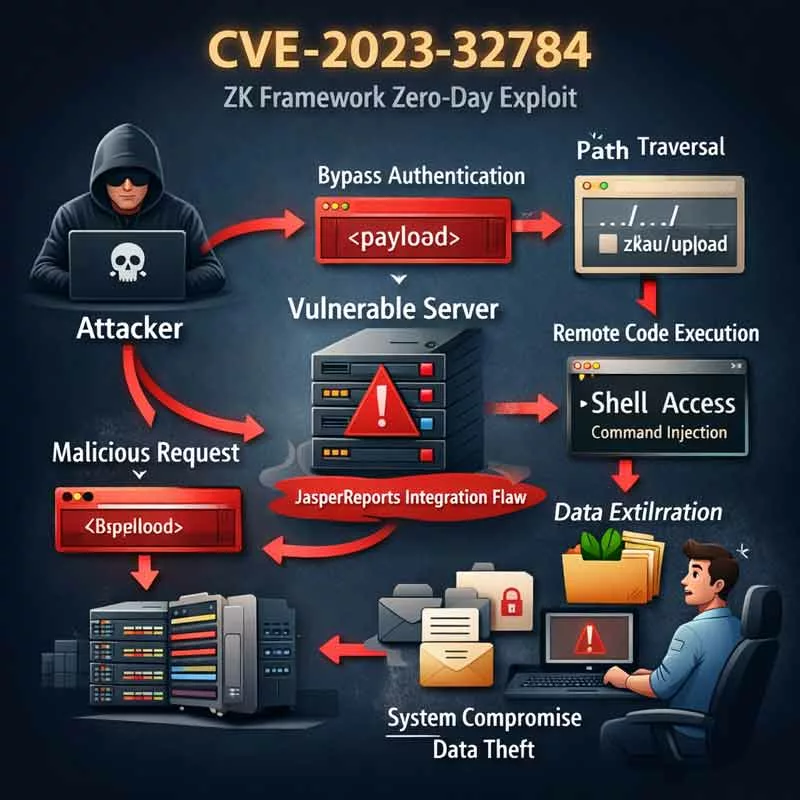
CVE-2023-32784 Protection with PassCypher NFC HSM safeguards your digital secrets. It protects your secrets beyond the compromised operating system perimeter by using NFC/HSM PGP devices encrypted with AES-256 CBC. This ensures optimal protection against advanced attacks like CVE-2023-32784, where secrets stored in memory files like hiberfil.sys and pagefile.sys may be vulnerable to exfiltration. Learn how PassCypher can secure your data even in the event of a system compromise.
Executive Summary — Protect Your Digital Secrets Against CVE-2023-32784 with PassCypher
First, this executive summary (≈ 4 minutes) will provide an overview of the CVE-2023-32784 vulnerability and how PassCypher protects your secrets. Then, the advanced summary will delve into the mechanics of this vulnerability, the risks associated with hibernation and pagefile memory, and specific PassCypher solutions to counter these attacks.
⚡ Discovery and Security Mechanisms
The CVE-2023-32784 vulnerability was discovered in April 2023 and allows attackers to exfiltrate sensitive secrets stored in memory files such as hiberfil.sys and pagefile.sys. The patch to fix this vulnerability was released in May 2023 to secure these vulnerable access points and mitigate the risk of exfiltration. You can review the official patch link here: CVE Details – CVE-2023-32784.
PassCypher NFC HSM uses a Zero Trust architecture and advanced mechanisms such as segmented encryption and NFC contactless authentication to protect your secrets from these attacks. These technologies ensure that even if an attacker gains access to memory, the secrets remain protected.
Source: CVE Details – CVE-2023-32784
✦ Immediate Impacts
- On the one hand, compromise becomes a persistent state of the terminal, not a one-time incident. Once memory artifacts are extracted, it is difficult to ensure that the system is no longer compromised.
- On the other hand, security agents lose their ability to prove they are functioning correctly on a potentially compromised environment.
- As a result, attribution and response become more uncertain, while the exposure window lengthens.
Source: NIST Cybersecurity Framework
⚠ Strategic Message
However, the key element is not just the vulnerability itself, but the trust logic: a compromised system, even without a known signature, can no longer guarantee reliable security. Trust in an environment where secrets are stored becomes fragile if these secrets are vulnerable to covert exfiltration through memory.
Source: NIST Special Publication 800-53: Security and Privacy Controls for Information Systems and Organizations
🛑 When Not to Act
- First, do not reintroduce secrets (credentials, keys, sensitive data) on a terminal whose integrity has not been verified.
- Next, do not stack layers of security software that may complicate auditing and increase the attack surface.
- Finally, do not confuse service return with trust restoration: a quick recovery can mask persistent compromises.
✓ Sovereign Counter-Espionage Principle
Thus, reducing risk does not mean “cleaning” a compromised system but moving trust out of the compromised perimeter: off the OS, off memory, and if necessary off the network. This ensures that secrets remain protected even if the main system environment is compromised.
Reading Time Settings
Executive Summary Reading Time: ≈ 4 minutes
Advanced Summary Reading Time: ≈ 6 minutes
Full Chronicle Reading Time: ≈ 35–40 minutes
Publication Date: 2023-05-10
Last Updated: 2026-01-23
Complexity Level: Advanced — Cybersecurity & Digital Sovereignty
Technical Density: ≈ 65%
Primary Language: EN. FR.
Specificity: Strategic Chronicle — CVE-2023-32784 Vulnerability & Secrets Protection
Reading Order: Executive Summary → Advanced Summary → Zero-Day Exploits → PassCypher Solutions → Residual Risks
Editorial Note
This chronicle is part of the Digital Security section. It extends the analysis of zero-day vulnerabilities and the implications of losing secrets through memory, exploring how PassCypher positions itself as a robust solution against this type of compromise. It does not offer a miracle solution but an alternative security framework, based on sovereign points of failure. This chronicle follows the AI transparency statement of Freemindtronic Andorra — FM-AI-2025-11-SMD5.
For Further Reading
Then, the Advanced Summary delves into the management of the CVE-2023-32784 vulnerability and the implications of advanced digital security.

WhatsApp Gold arnaque mobile : typologie d’un faux APK espion
WhatsApp Gold arnaque mobile — clone frauduleux d’application mobile, ce stratagème repose sur une usurpation [...]
Nov
Signal Clone Breached: Critical Flaws in TeleMessage
TeleMessage: A Breach That Exposed Cloud Trust and National Security Risks TeleMessage, marketed as a [...]
1 Comment
May

Browser Fingerprinting : le renseignement par métadonnées en 2026
Le browser fingerprinting constitue aujourd’hui l’un des instruments centraux du renseignement par métadonnées appliqué aux [...]
Jan

CVE-2023-32784 : Pourquoi PassCypher protège vos secrets
PassCypher HSM protège les secrets numériques. Il protège vos secrets numériques hors du périmètre du [...]
1 Comment
May

Coinbase blockchain hack: How It Happened and How to Avoid It
How to Prevent Coinbase Blockchain Hack with EviVault NFC HSM Technology What happened to Coinbase [...]
Aug

Protect US emails from Chinese hackers with EviCypher NFC HSM?
How EviCypher NFC HSM technology can protect emails from Chinese hackers The Chinese hack on [...]
Jul
ZenRAT: The malware that hides in Bitwarden and escapes antivirus software
How this malware hides in Bitwarden and escapes antivirus software to steal your information ZenRAT [...]
Sep

Salt Typhoon & Flax Typhoon: Cyber Espionage Threats Targeting Government Agencies
Salt Typhoon – The Cyber Threat Targeting Government Agencies Salt Typhoon and Flax Typhoon represent [...]
2 Comments
Nov

Zero-knowledge vulnérable : attaques par downgrade contre Bitwarden, LastPass et Dashlane
Zero-knowledge vulnérable : les attaques par downgrade contre Bitwarden, LastPass et Dashlane révèlent comment la [...]
2 Comments
Feb

RockYou2024: 10 Billion Reasons to Use Free PassCypher
RockYou2024: A Cybersecurity Earthquake The RockYou2024 data leak has shaken the very foundations of global [...]
Jul

Darknet Credentials Breach 2025 – 16+ Billion Identities Stolen
Underground Market: The New Gold Rush for Stolen Identities The massive leak of over 16 [...]
Jun

FormBook Malware: How to Protect Your Gmail and Other Data
How to Protect Your Gmail Account from FormBook Malware Introduction Imagine that you receive an [...]
Nov
APT29 Spear-Phishing Europe: Stealthy Russian Espionage
APT29 SpearPhishing Europe: A Stealthy LongTerm Threat APT29 spearphishing Europe campaigns highlight a persistent and [...]
3 Comments
Apr

Andorra National Cyberattack Simulation: A Global First in Cyber Defense
Andorra Cybersecurity Simulation: A Vanguard of Digital Defense Andorra-la-Vieille, April 15, 2024 – Andorra is [...]
Apr

Whisper Leak side-channel and LLM token leakage
Whisper Leak side-channel: token-length leakage, semantic inference, and the structural limits of HTTPS in large [...]
Feb

Google Workspace Vulnerability Exposes User Accounts to Hackers
How Hackers Exploited the Google Workspace Vulnerability Hackers found a way to bypass the email [...]
Aug

Ivanti Zero-Day Flaws: Comprehensive Guide to Secure Your Systems Now
What are Zero-Day Flaws and Why are They Dangerous? A zero-day flaw is a previously [...]
Feb


Enhancing Crypto Wallet Security: How EviSeed and EviVault Could Have Prevented the $41M Crypto Heist
EviSeed and EviVault NFC HSM Technologies could have prevented the $41 million crypto theft by [...]
Sep

Cyberattack Exploits Backdoors: What You Need to Know
Cyberattack Exploits Backdoors: What You Need to Know In October 2024, a cyberattack exploited backdoors [...]
Oct

Cybersecurity Breach at IMF: A Detailed Investigation
Cybersecurity Breach at IMF: A Detailed Investigation Cybersecurity breaches are a growing concern worldwide. The [...]
Mar

Kevin Mitnick’s Password Hacking with Hashtopolis
Password hacking tool: how it works and how to protect yourself Password hacking is a [...]
Apr

Quantum computer 6100 qubits ⮞ Historic 2025 breakthrough
A 6,100-qubit quantum computer marks a turning point in the history of computing, raising unprecedented [...]
1 Comment
Oct
Russian Cyberattack Microsoft: An Unprecedented Threat
Russian cyberattack on Microsoft by Midnight Blizzard (APT29) highlights the strategic risks to digital sovereignty. [...]
1 Comment
Jul

KingsPawn A Spyware Targeting Civil Society
QuaDream: KingsPawn spyware vendor shutting down in may 2023 QuaDream was a company that [...]
Apr
Russia Blocks WhatsApp: Max and the Sovereign Internet
Step by step, Russia blocks WhatsApp and now openly threatens to “completely block” the messaging [...]
2 Comments
Nov
Persistent OAuth Flaw: How Tycoon 2FA Hijacks Cloud Access
Persistent OAuth Flaw — Tycoon 2FA Exploited — When a single consent becomes unlimited cloud [...]
1 Comment
Oct

How to Recover and Protect Your SMS on Android
Recover and Protect Your SMS on Android: A Complete Guide First of all, SMS are [...]
Aug

Strong Passwords in the Quantum Computing Era
How to create strong passwords in the era of quantum computing? Quantum computing is a [...]
2 Comments
May

Chrome V8 confusion RCE — Your browser was already spying
Chrome v8 confusion RCE: This edition addresses impacts and guidance relevant to major English-speaking markets [...]
2 Comments
Sep
Google Sheets Malware: The Voldemort Threat
Sheets Malware: A Growing Cybersecurity Concern Google Sheets, a widely used collaboration tool, has shockingly [...]
Sep
APT28 spear-phishing: Outlook backdoor NotDoor and evolving European cyber threats
Russian cyberattack on Microsoft by Midnight Blizzard (APT29) highlights the strategic risks to digital sovereignty. [...]
3 Comments
Apr

APT44 QR Code Phishing: New Cyber Espionage Tactics
APT44 Sandworm: The Elite Russian Cyber Espionage Unit Unmasking Sandworm’s sophisticated cyber espionage strategies and [...]
1 Comment
Feb

Snake Malware: The Russian Spy Tool
Snake: The Russian malware that steals sensitive information for 20 years Snake is a malware [...]
May
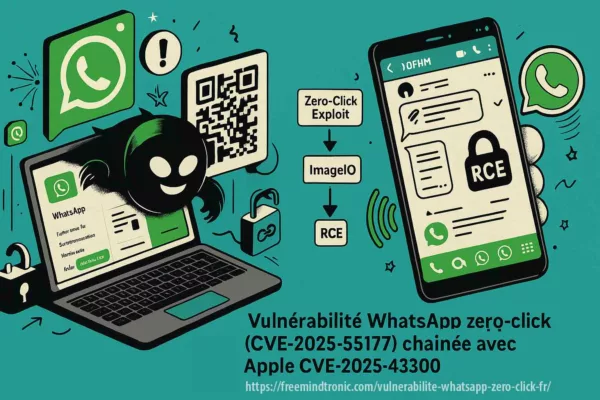
Vulnérabilité WhatsApp Zero-Click — Actions & Contremesures
Vulnérabilité WhatsApp zero-click (CVE-2025-55177) chaînée avec Apple CVE-2025-43300 permet l’exécution de code à distance via [...]
1 Comment
Sep

Kismet iPhone: How to protect your device from the most sophisticated spying attack?
Kismet iPhone: How to protect your device from the most sophisticated spying attack using Pegasus [...]
Jan

Email Metadata Privacy: EU Laws & DataShielder
Email metadata privacy sits at the core of Europe’s digital sovereignty: understand the risks, the [...]
2 Comments
Sep
Microsoft Vulnerabilities 2025: 159 Flaws Fixed in Record Update
Microsoft: 159 Vulnerabilities Fixed in 2025 Microsoft has released a record-breaking security update in January [...]
Jan
APT29 Exploits App Passwords to Bypass 2FA
A silent cyberweapon undermining digital trust Two-factor authentication (2FA) was supposed to be the cybersecurity [...]
Jun

Dropbox Security Breach 2024: Phishing, Exploited Vulnerabilities
Phishing Tactics: The Bait and Switch in the Aftermath of the Dropbox Security Breach The [...]
May

Quantum-Resistant Passwordless Manager — PassCypher finalist, Intersec Awards 2026 (FIDO-free, RAM-only)
Quantum-Resistant Passwordless Manager 2026 (QRPM) — Best Cybersecurity Solution Finalist by PassCypher sets a new [...]
4 Comments
Nov
Kapeka Malware: Comprehensive Analysis of the Russian Cyber Espionage Tool
Kapeka Malware: The New Russian Intelligence Threat In the complex world of cybersecurity, a [...]
Apr

Ledger Security Breaches from 2017 to 2026: How to Protect Yourself from Hackers
Ledger Security Breaches have become a major indicator of vulnerabilities in the global crypto ecosystem. [...]
5 Comments
Dec

Russian Espionage Hacking Tools Revealed
Russian Espionage Hacking Tools: Discovery and Initial Findings Russian espionage hacking tools were uncovered by [...]
Aug

How the attack against Microsoft Exchange on December 13, 2023 exposed thousands of email accounts
How the attack against Microsoft Exchange on December 13, 2023 exposed thousands of email accounts [...]
1 Comment
Feb
WhatsApp Hacking: Prevention and Solutions
WhatsApp hacking zero-click exploit (CVE-2025-55177) chained with Apple CVE-2025-43300 enables remote code execution via crafted [...]
6 Comments
Jan
BadPilot Cyber Attacks: Russia’s Threat to Critical Infrastructures
BadPilot Cyber Attacks: Sandworm’s New Weaponized Subgroup Understanding the rise of BadPilot and its impact [...]
Feb

Cyber espionnage zero day : marché, limites et doctrine souveraine
Cyber espionnage zero day : la fin des spywares visibles marque l’entrée dans une économie [...]
Jan
Générateur de mots de passe souverain – PassCypher Secure Passgen WP
Générateur de mots de passe souverain PassCypher Secure Passgen WP pour WordPress — le premier [...]
Oct

Are fingerprint systems really secure? How to protect your data and identity against BrutePrint
Fingerprint Biometrics: An In-Depth Exploration of Security Mechanisms and Vulnerabilities It is a widely recognized [...]
Oct

Predator Files: The Spyware Scandal That Shook the World
Predator Files: How a Spyware Consortium Targeted Civil Society, Politicians and Officials Cytrox: The maker [...]
Oct

PrintListener: How to Betray Fingerprints
PrintListener: How this Technology can Betray your Fingerprints and How to Protect yourself PrintListener revolutionizes [...]
Feb

Passkeys Faille Interception WebAuthn | DEF CON 33 & PassCypher
Conseil RSSI / CISO – Protection universelle & souveraine EviBITB (Embedded Browser‑In‑The‑Browser Protection) est une [...]
3 Comments
Aug

Europol Data Breach: A Detailed Analysis
May 2024: Europol Security Breach Highlights Vulnerabilities In May 2024, Europol, the European law enforcement [...]
May
BitLocker Security: Safeguarding Against Cyberattacks
Introduction to BitLocker Security If you use a Windows computer for data storage or processing, [...]
1 Comment
Feb

EviCore NFC HSM Credit Cards Manager | Secure Your Standard and Contactless Credit Cards
EviCore NFC HSM Credit Cards Manager is a powerful solution designed to secure and manage [...]
Jun

Google OAuth2 security flaw: How to Protect Yourself from Hackers
Google OAuth2 security flaw: Strategies Against Persistent Cookie Threats in Online Services Google OAuth2 security [...]
Jan
Clickjacking des extensions DOM : DEF CON 33 révèle 11 gestionnaires vulnérables
Clickjacking d’extensions DOM : DEF CON 33 révèle une faille critique et les contre-mesures Zero-DOM
14 Comments
Aug
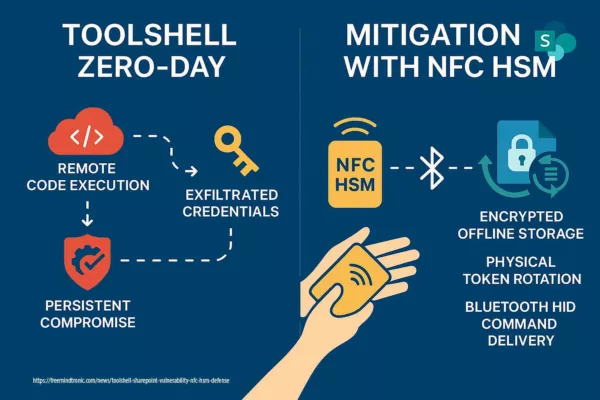

Confidentialité métadonnées e-mail — Risques, lois européennes et contre-mesures souveraines
La confidentialité des métadonnées e-mail est au cœur de la souveraineté numérique en Europe : [...]
1 Comment
Sep
Missatgeria P2P WebRTC segura — comunicació directa amb CryptPeer
Missatgeria P2P WebRTC segura al navegador és l’esquelet tècnic i sobirà de la comunicació directa [...]
1 Comment
Nov
DOM Extension Clickjacking — Risks, DEF CON 33 & Zero-DOM fixes
DOM extension clickjacking — a technical chronicle of DEF CON 33 demonstrations, their impact, and [...]
5 Comments
Aug

Protect yourself from Pegasus spyware with EviCypher NFC HSM
How to protect yourself from Pegasus spyware with EviCypher NFC HSM Pegasus Spyware: what it [...]
Aug

Protect Meta Account Identity Theft with EviPass and EviOTP
Protecting Your Meta Account from Identity Theft Meta is a family of products that includes [...]
May

Browser Fingerprinting Tracking: Metadata Surveillance in 2026
Browser Fingerprinting Tracking today represents one of the true cores of metadata intelligence. Far beyond [...]
2 Comments
Feb

OpenVPN Security Vulnerabilities Pose Global Security Risks
Critical OpenVPN Vulnerabilities Pose Global Security Risks OpenVPN security vulnerabilities have come to the forefront, [...]
Aug
SSH Key PassCypher HSM PGP — Sécuriser l’accès multi-OS à un VPS
SSH Key PassCypher HSM PGP fournit une chaîne souveraine : génération locale de clés SSH [...]
1 Comment
Oct

Microsoft Outlook Zero-Click Vulnerability: Secure Your Data Now
Microsoft Outlook Zero-Click Vulnerability: How to Protect Your Data Now A critical Zero-Click vulnerability (CVE-2025-21298) [...]
Jan
APT36 SpearPhishing India: Targeted Cyberespionage | Security
Understanding Targeted Attacks of APT36 SpearPhishing India APT36 cyberespionage campaigns against India represent a focused [...]
2 Comments
May

Silent Whisper espionnage WhatsApp Signal : une illusion persistante
Silent Whisper espionnage WhatsApp Signal est présenté comme une méthode gratuite permettant d’espionner des communications [...]
Jan

Leidos Holdings Data Breach: A Significant Threat to National Security
A Major Intrusion Unveiled In July 2024, the Leidos Holdings data breach came to light, [...]
Jul
Clickjacking extensions DOM: Vulnerabilitat crítica a DEF CON 33
DOM extension clickjacking — el clickjacking d’extensions basat en DOM, mitjançant iframes invisibles, manipulacions del [...]
4 Comments
Aug

5Ghoul: 5G NR Attacks on Mobile Devices
5Ghoul: How Contactless Encryption Can Secure Your 5G Communications from Modem Attacks 5Ghoul is a [...]
1 Comment
Dec

OpenAI fuite Mixpanel : métadonnées exposées, phishing et sécurité souveraine
OpenAI fuite Mixpanel rappelle que même les géants de l’IA restent vulnérables dès qu’ils confient [...]
1 Comment
Dec
eSIM Sovereignty Failure: Certified Mobile Identity at Risk
Runtime Threats in Certified eSIMs: Four Strategic Blind Spots While geopolitical campaigns exploit the [...]
Jul
Cyberattaque HubEE : Rupture silencieuse de la confiance numérique
Cyberattaque HubEE : rupture silencieuse de la confiance numérique. Cette attaque, qui a permis l’exfiltration [...]
Jan

Chinese hackers Cisco routers: how to protect yourself?
How Chinese hackers infiltrate corporate networks via Cisco routers A Chinese-backed hacker group, known as [...]
Oct

Midnight Blizzard Cyberattack Against Microsoft and HPE: What are the consequences?
Midnight Blizzard Cyberattack against Microsoft and HPE: A detailed analysis of the facts, the impacts [...]
2 Comments
Mar

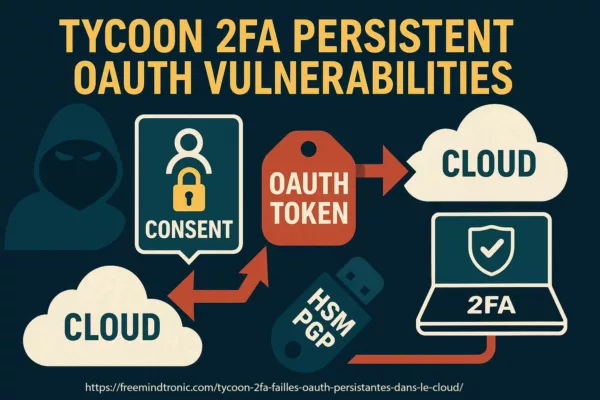
Tycoon 2FA failles OAuth persistantes dans le cloud | PassCypher HSM PGP
Faille OAuth persistante — Tycoon 2FA exploitée — Quand une simple autorisation devient un accès [...]
2 Comments
Oct

Spyware ClayRat Android : faux WhatsApp espion mobile
Spyware ClayRat Android illustre la mutation du cyberespionnage : plus besoin de failles, il exploite [...]
2 Comments
Oct
TETRA Security Vulnerabilities: How to Protect Critical Infrastructures
TETRA Security Vulnerabilities: How to Protect Critical Infrastructures from Cyberattacks TETRA (Terrestrial Trunked Radio) is [...]
Nov

BITB Attacks: How to Avoid Phishing by iFrame
Browser-in-the-Browser (BITB) attacks: interface forgery through redirection iframes and the structural limits of browser trust. [...]
May
Apple M chip vulnerability: A Breach in Data Security
Apple M chip vulnerability: uncovering a breach in data security Researchers at the Massachusetts Institute [...]
Mar

Securing IEO STO ICO IDO and INO: The Challenges and Solutions
Securing IEO STO ICO IDO and INO: How to Protect Your Crypto Investments Cryptocurrencies are [...]
Jun

What is Juice Jacking and How to Avoid It?
Juice Jacking: How to Avoid This Cyberattack Do you often use public USB chargers to [...]
May

Reputation Cyberattacks in Hybrid Conflicts — Anatomy of an Invisible Cyberwar
Synchronized APT leaks erode trust in tech, alliances, and legitimacy through narrative attacks timed with [...]
Jul

CryptPeer messagerie P2P WebRTC : appels directs chiffrés de bout en bout
La messagerie P2P WebRTC sécurisée constitue le fondement technique et souverain de la communication directe [...]
2 Comments
Nov

Chrome V8 confusió RCE — Actualitza i postura Zero-DOM
Chrome V8 confusió RCE: aquesta edició exposa l’impacte global i les mesures immediates per reduir [...]
Sep

How to protect yourself from stalkerware on any phone
What is Stalkerware and Why is it Dangerous? Stalkerware, including known programs like FlexiSpy, mSpy, [...]
Jan

How BIP39 helps you create and restore your Bitcoin wallets
How BIP39 helps you create and restore your Bitcoin wallets Do you struggle to manage [...]
May
Android Spyware Threat Clayrat : 2025 Analysis and Exposure
Android Spyware Threat: ClayRat illustrates the new face of cyber-espionage — no exploits needed, just [...]
1 Comment
Oct

Terrapin attack: How to Protect Yourself from this New Threat to SSH Security
Protect Yourself from the Terrapin Attack: Shield Your SSH Security with Proven Strategies SSH is [...]
Jan

OpenAI Mixpanel Breach Metadata – phishing risks and sovereign security with PassCypher
AI Mixpanel breach metadata is a blunt reminder of a simple rule: the moment sensitive [...]
1 Comment
Jan

Failles de sécurité Ledger : Analyse 2017-2026 & Protections
Les failles de sécurité Ledger sont au cœur des préoccupations des investisseurs depuis 2017. Cette [...]
1 Comment
Jan
The chronicles displayed above ↑ belong to the Digital Security section. They extend the analysis of zero-day vulnerabilities and systemic risks in cybersecurity. Therefore, they provide a strategic perspective on reducing risks regarding digital secrets and the importance of “sovereign points of failure.”
Advanced Summary — Understanding the CVE-2023-32784 Vulnerability
⮞ Reading Note
First, this advanced summary provides a detailed analysis of the CVE-2023-32784 vulnerability, its technical implications, and the risks of secret exfiltration through memory artifacts like hiberfil.sys and pagefile.sys. Then, the full chronicle will offer practical strategies to minimize the impact of this vulnerability, including robust security solutions like PassCypher.
Exploitation of CVE-2023-32784 — Zero-Day Attack on Digital Secrets
First, it is crucial to understand how the CVE-2023-32784 vulnerability can be exploited. This flaw allows an attacker to access digital secrets stored in sensitive memory files such as hiberfil.sys and pagefile.sys. These files may contain critical information such as passwords, encryption keys, and other user secrets. Indeed, attackers can use this vulnerability to exfiltrate data without leaving visible traces, making the attack difficult to detect until sensitive information has already been compromised.
Memory Dump and Pagefile Vulnerabilities
Hibernation and pagefile files are essential components for managing system resources in Windows environments. However, these files can become prime targets for attackers, as they contain portions of system memory, which may include unencrypted secrets. Indeed, when sensitive information is present in memory, it is often written to these files without any form of protection, making them vulnerable to unauthorized access. Once this vulnerability is exploited, an attacker can extract these secrets and use them for malicious purposes, such as credential theft or unauthorized access to secure systems.
Hiberfil and Sensitive Data Exfiltration
Another major attack vector is the exfiltration of secrets stored in the hiberfil.sys file. This file, used for managing hibernation states, contains a full copy of the RAM contents. As a result, if an attacker gains access to this file, they can easily extract sensitive data. However, using security solutions like PassCypher allows these sensitive memory files to be encrypted, preventing data exfiltration in case of a compromise.
Protect Your Secrets: PassCypher NFC HSM
PassCypher NFC HSM protects your digital secrets by storing them outside the compromised operating system, using segmented encryption and contactless NFC authentication. These mechanisms provide maximum protection against attacks like CVE-2023-32784, which exploit vulnerabilities in sensitive memory files like hiberfil.sys and pagefile.sys. Thanks to these technologies, even if the operating system is compromised, your secrets remain protected. Therefore, this solution offers an additional layer of protection, mitigating risks associated with zero-day attacks while enabling data security management at both the physical and network levels, outside the compromised OS perimeter.
Strategic Recommendations for Managing CVE-2023-32784
Businesses and users should implement multi-layered defense strategies to counter the risks associated with this vulnerability. Here are some strategic recommendations:
- Encrypt hibernation and pagefile files: This prevents unauthorized access to sensitive information stored in system memory.
- Use advanced protection solutions: Such as PassCypher, which protects your secrets even outside the operating system.
- Monitor access to sensitive memory files: Implement continuous monitoring of hibernation and pagefile files to detect any unauthorized access attempts.
- Review secure storage mechanisms: Use secure storage solutions outside the system perimeter for sensitive data, such as NFC physical keys or encrypted storage devices.
In summary, protecting sensitive secrets in a digital environment is becoming a priority as vulnerabilities like CVE-2023-32784 are discovered and exploited. PassCypher stands as an effective defense solution, but it is essential to maintain a proactive security approach by applying preventive measures and integrating robust tools into your system security architecture.
The full chronicle will detail the long-term implications of this vulnerability and how solutions like PassCypher help secure systems in an ever-evolving digital landscape.
Full Chronicle — Understanding and Countering CVE-2023-32784
First, this full chronicle explores in-depth the CVE-2023-32784 vulnerability and its impacts on digital security. Then, we will examine the mechanics of this flaw and best practices for preventing it. You will also discover how solutions like PassCypher can protect you.
Analysis of CVE-2023-32784: A Critical Flaw in Memory Management
The CVE-2023-32784 vulnerability is related to a flaw in the memory management of computer systems. Memory artifacts, such as hibernation files (hiberfil.sys) and pagefile files (pagefile.sys), can contain sensitive information. These files, used to improve system performance, become prime targets for attackers.
Indeed, these files can store secrets such as credentials, encryption keys, and other sensitive data. Once extracted, these data can be used for malicious attacks. This poses a major risk to business confidentiality.
Yes: Memory-Related Flaws Are Still a Concern
Vulnerabilities exposing digital secrets in memory — whether in:
- the hibernation file (hiberfil.sys),
- the pagefile (pagefile.sys),
- or even active RAM memory —
continue to be a real concern in 2025–2026.
This is due to the fundamental nature of computing: in order to run programs, sensitive data must sometimes temporarily reside in RAM, including keys, passwords, or authentication tokens. It’s an inherent risk, not a one-time unique vulnerability.
How These Types of Flaws Manifest Today
Memory Exfiltration
This is an attack type where an attacker accesses memory or system artifacts to extract secrets. This type of attack can occur via:
- Memory dump (complete RAM extraction)
- Access to swap/pagefile files
- Accessible debugging
- High-privilege malware
- Zero-day exploits in the OS or drivers
Even if a patch fixes a specific vulnerability, another memory vector could be exploited as long as sensitive data is passing through memory unencrypted.
Wider Zero-Day Flaws
Every year, new zero-day vulnerabilities are discovered. Some allow an attacker to read memory or intercept unencrypted secrets — independent of hibernation/pagefile files. For example:
- Flaws in the OS kernel
- Flaws in system drivers
- Flaws in virtualization tools
- Flaws in memory managers
The ease of execution varies, but the potential impact remains: exfiltration of sensitive memory data.
Memory Leaks in Applications
Many applications, especially those handling secrets and keys, still have:
- un cleaned buffers
- uncleared memory allocations
- clear-text sensitive strings left in RAM
Even modern products can present this type of risk if memory access is not strictly managed.
Evolution of Mitigation Measures in 2025–2026
Vendors have continued to improve protections:
- Enhanced memory encryption
- Windows uses Virtual Secure Mode,
- Linux integrates distributions with strengthened protections (SELinux, AppArmor),
- and macOS has memory write protections (AMFI).
However, no measure fully eliminates unencrypted memory as long as secrets are passing through it unencrypted.
Modern Mitigation Features
| Mitigation | Purpose |
|---|---|
| Memory encryption (TPM/SEV/SME) | Hardware memory encryption |
| ASLR / CFG / DEP | Application exploitation mitigation |
| Credential Guard (Windows) | Isolation of secrets in a protected container |
| Kernel hardening | Reducing exploitation vectors |
These technologies reduce risks but do not eliminate them completely.
Recent Examples (2024–2026)
Although no flaw is exactly like CVE-2023-32784, several recent vulnerabilities have shown that:
- secrets could be extracted through memory attacks
- sensitive keys could be retrieved if they were stored unprotected in RAM.
For example, in the 2024–2025 years, there were:
- Vulnerabilities in hypervisors allowing access to VM memory
- Exploits in container tools leaving secrets in memory
- Security failures in some antivirus or diagnostic tools exposing memory
These vulnerabilities are often classified as CVE with varying severity but a similar consequence: sensitive data in memory exposed.
Lessons and Sustainable Best Practices
What still causes risks today:
- Programs storing secrets in clear text
- Accessible memory dumps to attackers
- Improperly isolated processes
- Inadequate privileges
Source for Evolution of Memory Flaws:
PassCypher: A Solution to Protect Your Digital Secrets
To counter this vulnerability, PassCypher provides high-quality protection. PassCypher uses segmented encryption and segmented key authentication to secure your digital secrets. This ensures that, even if an attacker accesses memory, the data remains protected.
Furthermore, PassCypher allows you to store your keys and secrets outside the compromised operating system. This added security limits the impact of a compromise. As a result, you can keep your sensitive information secure against zero-day attacks.
Risks of System Memory Compromise with CVE-2023-32784
Exploiting CVE-2023-32784 has significant consequences. The main impact lies in the compromise of software trust. Once an attacker gains access to memory artifacts, they can modify or exfiltrate sensitive data without leaving traces.
Therefore, compromise becomes a persistent state. The integrity of the system is then questioned, making detection and repair tasks more difficult. Traditional security mechanisms are no longer sufficient against such threats.
Sovereign Counter-Espionage Strategy: Trust Beyond the OS
The effective solution to these threats relies on the principle of “sovereign counter-espionage.” This principle involves moving trust outside the compromised perimeter: off the OS, off memory, and even off the network. Thus, even in the event of terminal compromise, your secrets remain protected.
Therefore, PassCypher plays a crucial role in ensuring the security of your sensitive data. It protects your critical information even when the OS is compromised. This minimizes the risk of exfiltration and ensures the digital sovereignty of your systems.
Strategic Recommendations for Businesses
Here are some practical recommendations for businesses and users to protect against CVE-2023-32784:
- Encrypt all sensitive information: Use robust solutions to protect secrets in memory and system files.
- Apply multi-layered security: Combine physical and logical strategies to strengthen the protection of digital secrets.
- Opt for secure storage: Protect your secrets with devices like PassCypher NFC, stored outside the compromised system.
- Monitor sensitive files: Implement continuous monitoring of files like hiberfil.sys and pagefile.sys to detect unauthorized access attempts.
- Train your teams: Educate your teams on secrets security and proactive management of zero-day attacks.
Resilience and Defense Against Zero-Day Attacks
In the face of zero-day attacks, it is essential to strengthen system resilience. Protection is not limited to known flaws but also includes preparation for unknown threats. A proactive security approach is critical, integrating advanced tools like encryption and secret management outside the OS perimeter.
In summary, a multi-layered and proactive defense is paramount to defend against complex and persistent attacks.
Now, explore the next section on CVE Detection Solutions, where we will detail advanced strategies for detecting vulnerabilities and zero-day attacks to strengthen the resilience of your systems.
Digital Sovereignty in the Face of Zero-Day Attacks
Digital sovereignty is a key issue in managing the risks associated with zero-day attacks. Businesses and governments must be capable of protecting their critical infrastructures from invisible intrusions. Implementing solutions like PassCypher, which provides protection beyond the operating system perimeter, ensures the confidentiality and security of sensitive data, even against vulnerabilities yet to be discovered.
The adoption of technologies that guarantee digital sovereignty is essential to limit exposure to international cyber threats. Source: The Role of Digital Sovereignty in Cybersecurity
Reducing Risks: Securing Digital Secrets
Facing vulnerabilities like “memory exfiltration,” it is crucial to protect digital secrets through advanced security solutions. PassCypher NFC HSM offers a robust solution for secure storage of sensitive data outside the operating system perimeter, ensuring that even in the event of system compromise, secrets remain protected using enhanced security mechanisms like AES-256 CBC encryption and key segmentation.
CVE Vulnerability Detection Solutions
Detecting CVE flaws like CVE-2023-32784 requires the use of advanced solutions to spot exploitation attempts before they lead to a compromise. Real-time detection solutions should be integrated to monitor the integrity of sensitive memory files and quickly identify unauthorized access attempts.
Additionally, behavior analysis tools can be used to detect suspicious activities on system files, such as hiberfil.sys and pagefile.sys, to interrupt attacks before they cause damage.
Advanced Threat Analysis: CVE and Zero-Day Attacks
Zero-day attacks, such as those exploiting CVE-2023-32784, are particularly difficult to detect as they use vulnerabilities that are unknown to software vendors. These attacks often target flaws in critical system components, such as memory management, to steal sensitive information without triggering alerts.
Therefore, advanced threat analysis is crucial to strengthen systems’ resilience against these attacks. Using behavior detection and threat analysis tools helps identify indicators of compromise before an attack can successfully exfiltrate sensitive data.
The Zero Trust Approach and Secret Protection
The Zero Trust model is based on the fundamental principle that no user or device, internal or external, should be implicitly trusted. Every access attempt, whether from an internal user or an external system, must be verified. By applying this model, companies can limit access to digital secrets, ensuring that no sensitive data is accessible by compromised systems.
Strategic Security Recommendations
In the face of CVE-2023-32784 vulnerability, it is essential to implement robust security measures and adopt a multi-layered defense strategy. Here are some practical recommendations:
- Encrypt hibernation and pagefile files: This prevents unauthorized access to sensitive information stored in system memory.
- Use advanced protection solutions: Such as PassCypher, which protects your secrets even outside the operating system.
- Monitor access to sensitive memory files: Implement continuous monitoring of hibernation and pagefile files to detect any unauthorized access attempts.
- Review secure storage mechanisms: Use secure storage solutions outside the system perimeter for sensitive data, such as NFC physical keys or encrypted storage devices.
Multi-Layer Defense: Understanding Resilience with PassCypher NFC HSM
To strengthen system resilience against zero-day vulnerabilities, a multi-layered approach is essential. PassCypher NFC HSM offers robust protection with encryption of sensitive memory files, off-OS storage, and proactive monitoring of sensitive system files like hiberfil.sys and pagefile.sys.
PassCypher HSM PGP: Advanced Protection Against Secrets Exfiltration (CVE-2023-32784)
PassCypher HSM PGP is an advanced, fully automated password management solution designed to protect your digital secrets even in the event of system compromise. Using AES-256 CBC PGP encryption, PassCypher HSM PGP ensures the security of information, particularly against vulnerabilities such as CVE-2023-32784, where secrets stored in memory files like hiberfil.sys and pagefile.sys may be compromised. The Zero Trust and Zero Knowledge architecture ensures that secrets remain private and secure, without leaving unauthorized access to your information.
The system encrypts your login credentials using AES-256 CBC PGP, stores them in secure containers, and decrypts them instantly in volatile memory. This approach ensures that no sensitive information is exposed in clear text, even in the event of an attack exploiting vulnerabilities like CVE-2023-32784. Data is immediately erased from memory once used, thus minimizing the risk of exfiltration through compromised memory artifacts.
This guarantees maximum security while ensuring immediate and uncompromised access to your credentials.
With PassCypher HSM PGP, even if an attacker exploits a vulnerability like CVE-2023-32784, your secrets are protected by cutting-edge encryption technologies, and they are wiped from memory immediately after use, significantly reducing the risk of data exfiltration.
For more details on how it works, check the official PassCypher HSM PGP Documentation.
Automated Protection and Secure Storage of Secrets
PassCypher HSM PGP offers a secure container system that automatically encrypts your sensitive information, such as passwords and credentials, using AES-256 CBC PGP encryption. This information is stored on secure physical media (USB, SSD, NAS, etc.), and is instantly decrypted in volatile memory only when used. Even if an attacker gains access to system memory via vulnerabilities like CVE-2023-32784, the data remains protected thanks to secure storage and immediate erasure after use.
Once your credentials are injected into the login fields, the decrypted data is immediately erased from memory, ensuring that no trace of your information remains after use. This approach guarantees the security of your data even if a system is compromised.
Zero Trust and Zero Knowledge: Strengthened Security Architectures
The Zero Trust architecture of PassCypher HSM PGP is based on the fundamental idea that nothing and no one can be implicitly trusted. This means that each access attempt, whether from an internal user or an external system, must be validated.
By combining this architecture with Zero Knowledge, PassCypher HSM PGP ensures that no sensitive data is stored on external servers and that no user identification or account creation is necessary. Everything is processed locally on the device, greatly reducing risks related to data exfiltration.
This allows PassCypher HSM PGP to protect against attacks like CVE-2023-32784, ensuring that data is never exposed in clear text or stored on a server, making it extremely difficult for attackers to access your information.
Segmented Key Management: Maximizing Information Security
PassCypher HSM PGP uses an innovative segmented key management approach, where each encryption key is divided into multiple segments stored on separate physical devices (such as USB keys, external SSDs, etc.). Even if one segment of the key is compromised, the other segments remain protected, ensuring that the information cannot be decrypted without full access to the various key segments.
This model adds an extra layer of security and prevents unauthorized data extraction. If an attacker gains access to part of your system, they will not be able to decrypt your credentials without access to the other physical segments of the key.
Anti-Phishing Protection and Advanced Threat Detection
PassCypher HSM PGP incorporates advanced protection mechanisms against phishing and other malicious attacks, such as redirects to malicious sites (typosquatting). The URL Sandbox technology encapsulates and encrypts the login site URL, preventing any manipulation or redirection to a malicious site. This protection is strengthened against attacks exploiting vulnerabilities like CVE-2023-32784, blocking attempts before they succeed.
Additionally, PassCypher HSM PGP detects and automatically neutralizes Browser-in-the-Browser (BITB) attacks and malicious redirects. These protections enhance user security, ensuring that they always connect to legitimate sites, even if the attacker tries to mislead them.
CVE Detection Solutions
Detecting CVE flaws like CVE-2023-32784 requires the use of advanced solutions to detect exploitation attempts before they cause a compromise. Integrating real-time detection solutions allows monitoring of the integrity of sensitive memory files and quickly identifying unauthorized access attempts.
Additionally, behavior analysis tools can be used to detect suspicious activities on system files, including hiberfil.sys and pagefile.sys, to stop attacks before they cause damage.
Advanced Threat Analysis: CVE and Zero-Day Attacks
Zero-day attacks, such as those exploiting CVE-2023-32784, are particularly difficult to detect because they target vulnerabilities unknown to software vendors. These attacks often exploit flaws in critical system components, such as memory management, to steal sensitive information without triggering alerts.
Therefore, advanced threat analysis is essential for reinforcing system resilience against these attacks. Using behavioral detection and threat analysis tools helps identify indicators of compromise before an attack can successfully exfiltrate sensitive data.
Digital Sovereignty in the Face of Zero-Day Attacks
Digital sovereignty is a key issue in managing the risks associated with zero-day attacks. Companies and governments must be able to protect their critical infrastructures against invisible intrusions. The implementation of solutions like PassCypher, which offers protection beyond the operating system, ensures the confidentiality and security of sensitive data, even when facing vulnerabilities that have not yet been discovered.
Adopting technologies that ensure digital sovereignty is essential to limit exposure to international cyber threats. Source: The Role of Digital Sovereignty in Cybersecurity
Reducing Risks: Securing Digital Secrets
In the face of “memory exfiltration” vulnerabilities, it is crucial to protect digital secrets through advanced security solutions. PassCypher NFC HSM offers a robust solution for securely storing sensitive data outside the operating system perimeter, ensuring that even in the case of a system compromise, secrets remain protected through enhanced security mechanisms such as AES-256 CBC encryption and key segmentation.
PassCypher HSM: A Trusted Solution
In an increasingly complex and vulnerable digital environment, attacks such as CVE-2023-32784 make it essential to have robust security solutions. PassCypher HSM provides advanced protection by storing data outside the compromised operating system and using mechanisms like segmented encryption and NFC contactless authentication.
Awarded as One of the Best Cybersecurity Solutions of 2026
PassCypher HSM was recently recognized as one of the top 5 cybersecurity solutions in 2026 at the InterSec Awards, a distinction that highlights its effectiveness and reliability in tackling advanced threats like those posed by CVE-2023-32784. This recognition further emphasizes PassCypher’s commitment to providing cutting-edge protection for sensitive data, even when the operating system is compromised.
To learn more about this recognition and how PassCypher continues to innovate in cybersecurity, visit PassCypher: Finalist at the InterSec Awards 2026.
Detection Solutions for CVE Vulnerabilities
Detecting CVE vulnerabilities like CVE-2023-32784 requires the use of advanced solutions to spot exploitation attempts before they lead to a breach. Real-time detection solutions can monitor the integrity of sensitive memory files and quickly identify unauthorized access attempts.
Additionally, behavioral analysis tools can be used to detect suspicious activities on system files, particularly hiberfil.sys and pagefile.sys, interrupting attacks before they cause harm.
Advanced Threat Analysis: CVE and Zero-Day Attacks
Zero-day attacks, such as those exploiting CVE-2023-32784, are particularly difficult to detect because they use vulnerabilities unknown to software vendors. These attacks often target critical system components, such as memory management, to steal sensitive information without triggering alerts.
Therefore, advanced threat analysis is essential for strengthening system resilience against such attacks. The use of behavioral detection tools and threat analysis allows for the identification of compromise indicators before an attack successfully exfiltrates sensitive data.
The Zero Trust Approach and Secret Protection
The Zero Trust model is based on the fundamental principle that no user or device, whether internal or external, should be implicitly trusted. Every access attempt, whether from an internal user or an external system, must be verified. By applying this model, businesses can limit access to digital secrets, ensuring that no sensitive data is accessible by compromised systems.
Strategic Security Recommendations
In the face of the CVE-2023-32784 vulnerability, it is imperative to implement robust security measures and adopt a multi-layer defense strategy. Here are some practical recommendations:
- Encrypt hibernation and paging files: This prevents unauthorized access to sensitive data stored in system memory.
- Use advanced protection solutions: Like PassCypher, which protects your secrets even outside the operating system.
- Monitor access to sensitive memory files: Implement continuous monitoring of hibernation and paging files to detect any unauthorized access attempts.
- Review secure storage mechanisms: Use secure storage solutions outside the system perimeter for sensitive data, such as NFC physical keys or encrypted storage devices.
Multi-Layer Defense: Understanding Resilience with PassCypher NFC HSM
To strengthen system resilience against Zero-Day vulnerabilities, a multi-layer defense approach is crucial. PassCypher NFC HSM offers robust protection with encryption of sensitive memory files, secure off-OS storage, and proactive monitoring of sensitive system files like hiberfil.sys and pagefile.sys.
Managing Digital Sovereignty in the Face of Zero-Day Attacks
Digital sovereignty is an essential concept when managing the risks associated with zero-day attacks. Governments and businesses need to ensure their critical infrastructures are protected from invisible intrusions. By implementing solutions like PassCypher, which offers protection beyond the compromised operating system, the confidentiality and security of sensitive data can be assured, even when vulnerabilities have not yet been discovered.
Adopting technologies that ensure digital sovereignty is key to reducing exposure to international cyber threats. Source: The Role of Digital Sovereignty in Cybersecurity
Reducing Risks: Securing Digital Secrets
With “memory exfiltration” vulnerabilities, it’s critical to protect digital secrets through advanced security solutions. PassCypher NFC HSM offers a robust solution for securely storing sensitive data outside of the operating system perimeter, ensuring that even if the system is compromised, your secrets remain protected through enhanced security mechanisms such as AES-256 CBC encryption and key segmentation.
FAQ – CVE-2023-32784 and Mitigation Measures
Q: What is CVE-2023-32784 and how does it work?
Definition of CVE-2023-32784
A: CVE-2023-32784 is a vulnerability that affects Windows operating systems. It allows attackers to exfiltrate sensitive data from memory files such as hiberfil.sys and pagefile.sys. These files, used for hibernation and virtual memory, may contain unencrypted data like passwords and encryption keys, making them susceptible to unauthorized access if exploited.
Q: How can I mitigate CVE-2023-32784 vulnerabilities?
Mitigation Measures
A: To mitigate CVE-2023-32784, it’s essential to implement encryption on sensitive memory files (like hiberfil.sys and pagefile.sys). Solutions such as PassCypher, which store secrets outside the compromised operating system perimeter and utilize AES-256 CBC encryption, provide an additional layer of protection even if the OS is compromised.
Q: What is the significance of the hiberfil.sys and pagefile.sys files?
Importance of Memory Files
A: These files store system memory contents when the computer is hibernating or when virtual memory is used. hiberfil.sys contains a snapshot of the system’s memory during hibernation, and pagefile.sys stores data from the system’s RAM to disk. Both can be vulnerable if they contain unencrypted sensitive information, making them attractive targets for attackers exploiting CVE-2023-32784.
Q: How does PassCypher protect against this vulnerability?
PassCypher Protection
A: PassCypher protects secrets by storing them outside the operating system and encrypting them with AES-256 CBC. It uses NFC/HSM devices for secure authentication and ensures that sensitive data, including encryption keys and passwords, remains protected even if the system memory is compromised. This reduces the risk of exfiltration through vulnerabilities like CVE-2023-32784.
Q: What are zero-day attacks and how are they related to CVE-2023-32784?
Zero-Day Attacks Explained
A: Zero-day attacks exploit vulnerabilities that are unknown to the software vendor and have not yet been patched. CVE-2023-32784 is a type of zero-day vulnerability that allows attackers to gain unauthorized access to sensitive data in memory files. Since this vulnerability was discovered after it had been exploited, it is classified as a zero-day attack.
Glossary: CVE and Security Terminology
CVE
What is CVE?
Common Vulnerabilities and Exposures. A publicly accessible database that catalogues and references security vulnerabilities discovered in software. CVEs are given unique identifiers to track and provide details about security weaknesses that may impact organizations and users.
Zero-Day
Understanding Zero-Day
An attack that exploits a previously unknown vulnerability in a software application or system, typically before the developer has had a chance to patch it. Zero-day vulnerabilities are dangerous because there are no available defenses against them at the time they are discovered.
Hiberfil.sys
The Role of Hiberfil.sys
A system file used by Windows to store the system’s state during hibernation. When the system enters hibernation, the contents of the RAM are saved to this file, allowing the system to resume where it left off upon rebooting. It may contain sensitive data, which can be targeted by attackers if not encrypted.
Pagefile.sys
About Pagefile.sys
A system file used by Windows to manage virtual memory. When the physical RAM is full, the system writes data to pagefile.sys to free up space. Like hiberfil.sys, pagefile.sys may contain sensitive data and is a potential target for attackers looking to exfiltrate information.
AES-256 CBC
What is AES-256 CBC?
Advanced Encryption Standard (AES) is a symmetric encryption algorithm widely used for securing data. AES-256 CBC (Cipher Block Chaining) is a specific mode of AES encryption that uses a 256-bit key and a chaining mechanism to ensure each block of data is encrypted with the previous one, enhancing security.
NFC/HSM
What is NFC/HSM?
NFC (Near Field Communication) is a short-range wireless technology used for secure data transfer. HSM (Hardware Security Module) is a physical device used to manage and safeguard digital keys. PassCypher uses NFC/HSM for secure authentication and encryption of sensitive data, even in the event of a system compromise.
Additional Resources
For more information on CVE vulnerabilities, digital security, and zero-day attacks, refer to the following resources: