Electronic Warfare in Military Intelligence by Jacques gascuel I will keep this article updated with any new information, so please feel free to leave comments or contact me with suggestions or additions.his article will be updated with any new information on the topic, and readers are encouraged to leave comments or contact the author with any suggestions or additions.
The Often Overlooked Role of Electronic Warfare in Military Intelligence
Electronic Warfare in Military Intelligence has become a crucial component of modern military operations. This discipline discreetly yet vitally protects communications and gathers strategic intelligence, providing armed forces with a significant tactical advantage in an increasingly connected world.
2026 Cyber Doctrine Cyberculture
January 4, 2026
2025 Cyber Doctrine Cyberculture
December 10, 2025
2025 Cyber Doctrine Cyberculture
December 10, 2025
2025 Cyberculture EviLink
November 25, 2025
2025 Cyberculture Cybersecurity Digital Security EviLink
November 14, 2025
2025 Cyber Doctrine Cyberculture
November 10, 2025
2025 Cyberculture
November 9, 2025
2025 Cyberculture
November 9, 2025
Historical Context: The Evolution of Electronic Warfare in Military Intelligence
From as early as World War II, electronic warfare established itself as a critical strategic lever. The Allies utilized jamming and interception techniques to weaken Axis forces. This approach was notably applied through “Operation Ultra,” which focused on deciphering Enigma messages. During the Cold War, major powers refined these methods. They incorporated intelligence and countermeasures to secure their own networks.
Today, with rapid technological advancements, electronic warfare combines state-of-the-art systems with sophisticated intelligence strategies. It has become a cornerstone of modern military operations.
These historical foundations underscore why electronic warfare has become indispensable. Today, however, even more advanced technologies and strategies are essential to counter new threats.
Interception and Monitoring Techniques in Electronic Warfare for Military Intelligence
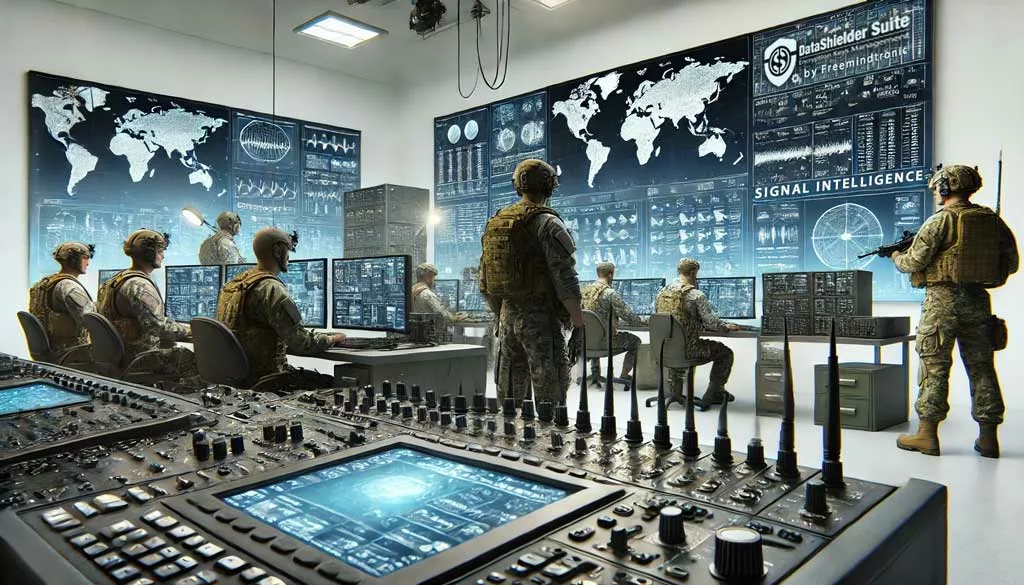
In military intelligence, intercepting enemy signals is crucial. France’s 54th Electronic Warfare Regiment (54e RMRT), the only regiment dedicated to electronic warfare, specializes in intercepting adversary radio and satellite communications. By detecting enemy frequencies, they enable the armed forces to collect critical intelligence in real time. This capability enhances their ability to anticipate enemy actions.
DataShielder NFC HSM Master solutions bolster these capabilities by securing the gathered information with Zero Trust and Zero Knowledge architecture. This ensures the confidentiality of sensitive data processed by analysts in the field.
Current technological advancements paired with electronic warfare also spotlight the modern threats that armed forces must address.
Emerging Technologies and Modern Threats
Electronic warfare encompasses interception, jamming, and manipulation of signals to gain a strategic edge. In a context where conflicts occur both on the ground and in the invisible spheres of communications, controlling the electromagnetic space has become essential. Powers such as the United States, Russia, and China invest heavily in these technologies. This investment serves to disrupt enemy communications and safeguard their own networks.
Recent conflicts in Ukraine and Syria have highlighted the importance of these technologies in disrupting adversary forces. Moreover, new threats—such as cyberattacks, drones, and encrypted communications—compel armies to innovate. Integrating artificial intelligence (AI) and 5G accelerates these developments. DataShielder HSM PGP Encryption meets the need for enhanced protection by offering robust, server-free encryption, ideal for high-security missions where discretion is paramount.
While these technological advancements are crucial, they also pose complex challenges for the military and engineers responsible for their implementation and refinement.
Change to: Challenges of Electronic Warfare in Military Intelligence: Adaptation and Innovation
Despite impressive advancements, electronic warfare must continually evolve. The rapid pace of innovation renders cutting-edge equipment quickly obsolete. This reality demands substantial investments in research and development. It also requires continuous training for electronic warfare specialists.
DataShielder products, such as DataShielder NFC HSM Auth, play a pivotal role in addressing these challenges. For instance, NFC HSM Auth provides secure, anonymous authentication, protecting against identity theft and AI-assisted threats. By combining advanced security with ease of use, these solutions facilitate adaptation to modern threats while ensuring the protection of sensitive information.
These advances pave the way for emerging technologies, constantly reshaping the needs and methods of electronic warfare.
Analyzing Emerging Technologies: The Future of Electronic Warfare
Integrating advanced technologies like AI is vital for optimizing electronic warfare operations. AI automates interception and jamming processes, increasing military system responsiveness. DataShielder NFC HSM Auth fits seamlessly into this technological environment by protecting against identity theft, even when AI is involved. Post-quantum cryptography and other advanced security techniques in the DataShielder range ensure lasting protection against future threats.
To better understand the real-world application of these technologies, insights from field experts are essential.
Case Studies and Operational Implications: The Testimony of Sergeant Jérémy
Insights from the Field: The Realities of Electronic Warfare Operations
In the field of electronic warfare, the testimony of Sergeant Jérémy, a member of the 54th Transmission Regiment (54e RMRT), provides a deeper understanding of the challenges and operational reality of a job that is both technical, discreet, and demanding. Through his accounts of operations in Afghanistan, Jérémy illustrates how electronic warfare can save lives by providing essential support to ground troops.
Real-Time Threat Detection and Protection in Combat Zones
During his mission in Afghanistan, at just 19, Jérémy participated in radiogoniometry operations, identifying the location of electromagnetic emissions. In one convoy escort mission, his equipment detected signals from enemy forces, indicating a potential ambush. Thanks to this detection, he alerted his patrol leader, allowing the convoy to take defensive measures. This type of mission demonstrates how electronic warfare operators combine technical precision and composure to protect deployed units.
Tactical Jamming and Strategic Withdrawals
In another operation, Jérémy and his team helped special forces withdraw from a combat zone by jamming enemy communications. This temporary disruption halted adversary coordination, giving allied troops the necessary time to retreat safely. However, this technique is not without risks: while crucial, jamming also prevents allied forces from communicating, adding complexity and stress for operators. This mission underscores the delicate balance between protecting allies and disorganizing the enemy, a daily challenge for electronic warfare specialists.
The Role of Advanced Equipment in Electronic Warfare Missions
On missions, the 54e RMRT uses advanced interception, localization, and jamming equipment. These modern systems, such as radiogoniometry and jamming devices, have become essential for the French Army in electronic intelligence and neutralizing adversary communications. However, these missions are physically and psychologically demanding, requiring rigorous training and a capacity to work under high pressure. Sergeant Jérémy’s testimony reminds us of the operational reality behind each technology and demonstrates the rigor with which electronic warfare operators must adapt and respond.
To listen to the complete testimony of Sergeant Jérémy and learn more about his journey, you can access the full podcast here.
Examining the methods of other nations also reveals the varied approaches to electronic warfare.
International Military Doctrines in Electronic Warfare for Military Intelligence
Military doctrines in electronic warfare vary from one country to another. For example, the United States integrates electronic warfare and cyber operations under its “multi-domain operations.” Meanwhile, Russia makes electronic warfare a central element of hybrid operations, combining jamming, cyberattacks, and disinformation. This diversity shows how each country adapts these technologies based on its strategic goals and specific threats.
The growing importance of electronic warfare is also reflected in international alliances, where cooperation is essential to address modern threats.
NATO’s Role in Electronic Warfare
Electronic warfare is also crucial for military alliances such as NATO. Multinational exercises allow for testing and perfecting electronic warfare capabilities, ensuring that allied forces can protect their communications and disrupt those of the enemy. This cooperation strengthens the effectiveness of electronic warfare operations. It maximizes the resilience of allied networks against modern threats.
Recent events demonstrate how electronic warfare continues to evolve to meet the demands of modern battlefields.
Recent Developments in Electronic Warfare
In 2024, the U.S. military spent $5 billion on improving electronic warfare capabilities, notably during the Valiant Shield 2024 exercise. During this event, innovative technologies like DiSCO™ (Distributed Spectrum Collaboration and Operations) were tested. This technology enables real-time spectrum data sharing for the rapid reprogramming of electronic warfare systems. These developments highlight the growing importance of spectral superiority in modern conflicts.
In Ukraine, electronic warfare allowed Russian forces to jam communications and simulate signals to disorient opposing units. This capability underscores the need to strengthen GPS systems and critical communications.
In response to these developments, advanced technological solutions like those of DataShielder provide concrete answers.
Integrating DataShielder Solutions
In the face of rising identity theft and AI-assisted cyber espionage threats, innovative solutions like DataShielder NFC HSM Auth and DataShielder HSM PGP Encryption have become indispensable. Each DataShielder device operates without servers, databases, or user accounts, enabling end-to-end anonymity in real time. By encrypting data through a segmented AES-256 CBC, these products ensure that no trace of sensitive information remains on NFC-enabled Android phones or computers.
- DataShielder NFC HSM Master: A robust counter-espionage tool that provides AES-256 CBC encryption with segmented keys, designed to secure communications without leaving any traces.
- DataShielder NFC HSM Auth: A secure authentication module essential for preventing identity theft and AI-assisted fraud in high-risk environments.
- DataShielder NFC HSM Starter Kit: This all-in-one kit offers complete data security with real-time, contactless encryption and authentication, ideal for organizations seeking to implement comprehensive protection from the outset.
- DataShielder NFC HSM M-Auth: A flexible solution for mobile authentication, enabling secure identity verification and encryption without dependence on external networks.
- DataShielder PGP HSM Encryption: Offering advanced PGP encryption, this tool ensures secure communication even in compromised network conditions, making it ideal for sensitive exchanges.
By leveraging these solutions, military intelligence and high-security organizations can securely encrypt and authenticate communications. DataShielder’s technology redefines how modern forces protect themselves against sophisticated cyber threats, making it a crucial component in electronic warfare.
The convergence between cyberwarfare and electronic warfare amplifies these capabilities, offering new opportunities and challenges.
Cyberwarfare and Electronic Warfare in Military Intelligence: A Strategic Convergence
Electronic warfare operations and cyberattacks, though distinct, are increasingly interconnected. While electronic warfare neutralizes enemy communications, cyberattacks target critical infrastructure. Together, they create a paralyzing effect on adversary forces. This technological convergence is now crucial for modern armies. Products like DataShielder NFC HSM Master and DataShielder HSM PGP Encryption guarantee secure communications against combined threats.
This convergence also raises essential ethical and legal questions for states.
Legal and Ethical Perspectives on Electronic Warfare
With its growing impact, electronic warfare raises ethical and legal questions. Should international conventions regulate its use? Should new laws be created to govern the interception and jamming of communications? These questions are becoming more pressing as electronic warfare technologies improve.
In this context, the future of electronic warfare points toward ever more effective technological innovations.
Looking Ahead: New Perspectives for Electronic Warfare in Military Intelligence
The future of electronic warfare will be shaped by AI integration and advanced cryptography—key elements for discreet and secure communications. DataShielder NFC HSM Master and DataShielder HSM PGP Encryption are examples of modern solutions. They ensure sensitive data remains protected against interception, highlighting the importance of innovation to counter emerging threats.